
Search
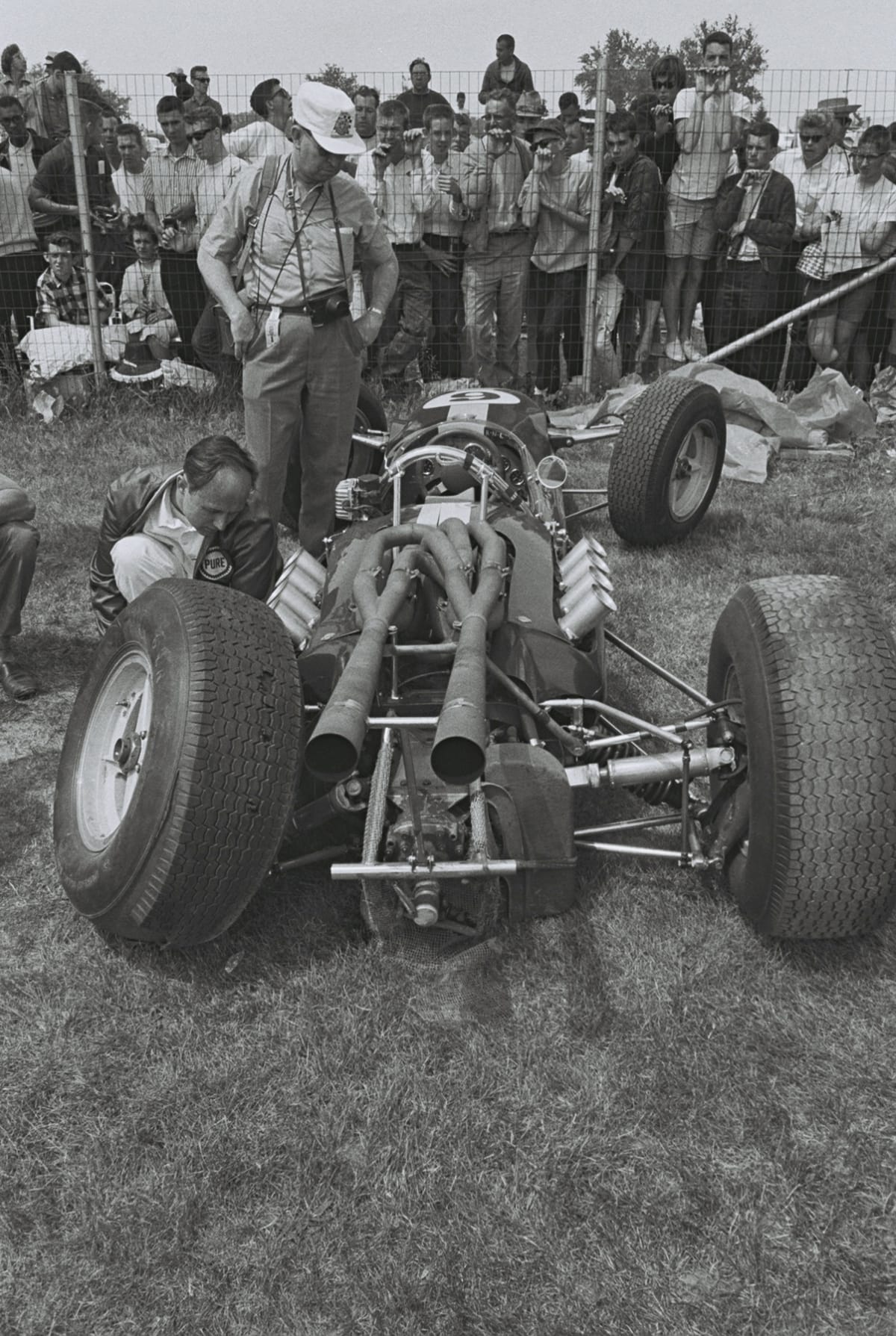
- Jim Clark's Damaged #6 Lotus-Ford, 1964 Indianapolis 500, Indianapolis, Indiana, May 1964 - Defective tires ended Jim Clark's run at the 1964 Indianapolis 500. At 47 laps into the race, the tread separated from Clark's left rear tire, starting a chain reaction that destroyed his left rear suspension. Clark's teammate, Dan Gurney, pulled out of the race after 110 laps, fearing the same problem. A.J. Foyt took the checkered flag.
- May 01, 1964
- Collections - Artifact
Jim Clark's Damaged #6 Lotus-Ford, 1964 Indianapolis 500, Indianapolis, Indiana, May 1964
Defective tires ended Jim Clark's run at the 1964 Indianapolis 500. At 47 laps into the race, the tread separated from Clark's left rear tire, starting a chain reaction that destroyed his left rear suspension. Clark's teammate, Dan Gurney, pulled out of the race after 110 laps, fearing the same problem. A.J. Foyt took the checkered flag.
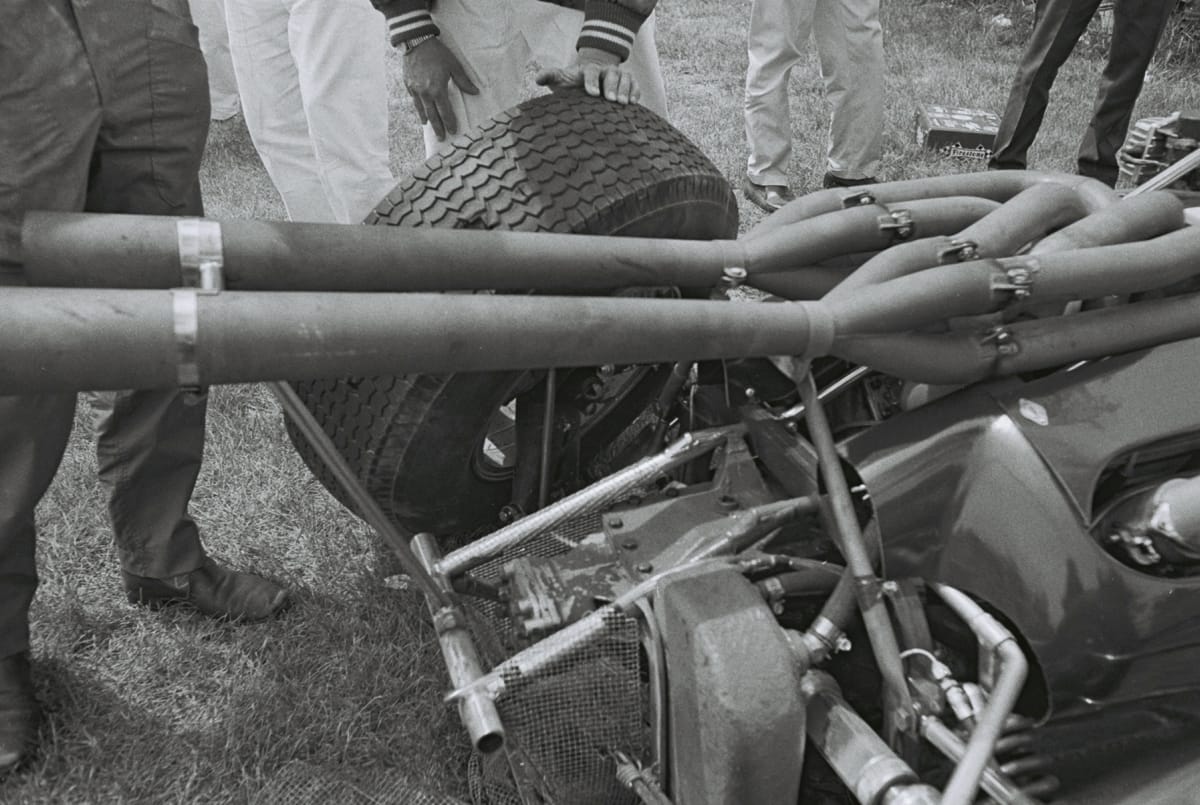
- Jim Clark's Damaged #6 Lotus-Ford, 1964 Indianapolis 500, Indianapolis, Indiana, May 1964 - Defective tires ended Jim Clark's run at the 1964 Indianapolis 500. At 47 laps into the race, the tread separated from Clark's left rear tire, starting a chain reaction that destroyed his left rear suspension. Clark's teammate, Dan Gurney, pulled out of the race after 110 laps, fearing the same problem. A.J. Foyt took the checkered flag.
- May 01, 1964
- Collections - Artifact
Jim Clark's Damaged #6 Lotus-Ford, 1964 Indianapolis 500, Indianapolis, Indiana, May 1964
Defective tires ended Jim Clark's run at the 1964 Indianapolis 500. At 47 laps into the race, the tread separated from Clark's left rear tire, starting a chain reaction that destroyed his left rear suspension. Clark's teammate, Dan Gurney, pulled out of the race after 110 laps, fearing the same problem. A.J. Foyt took the checkered flag.
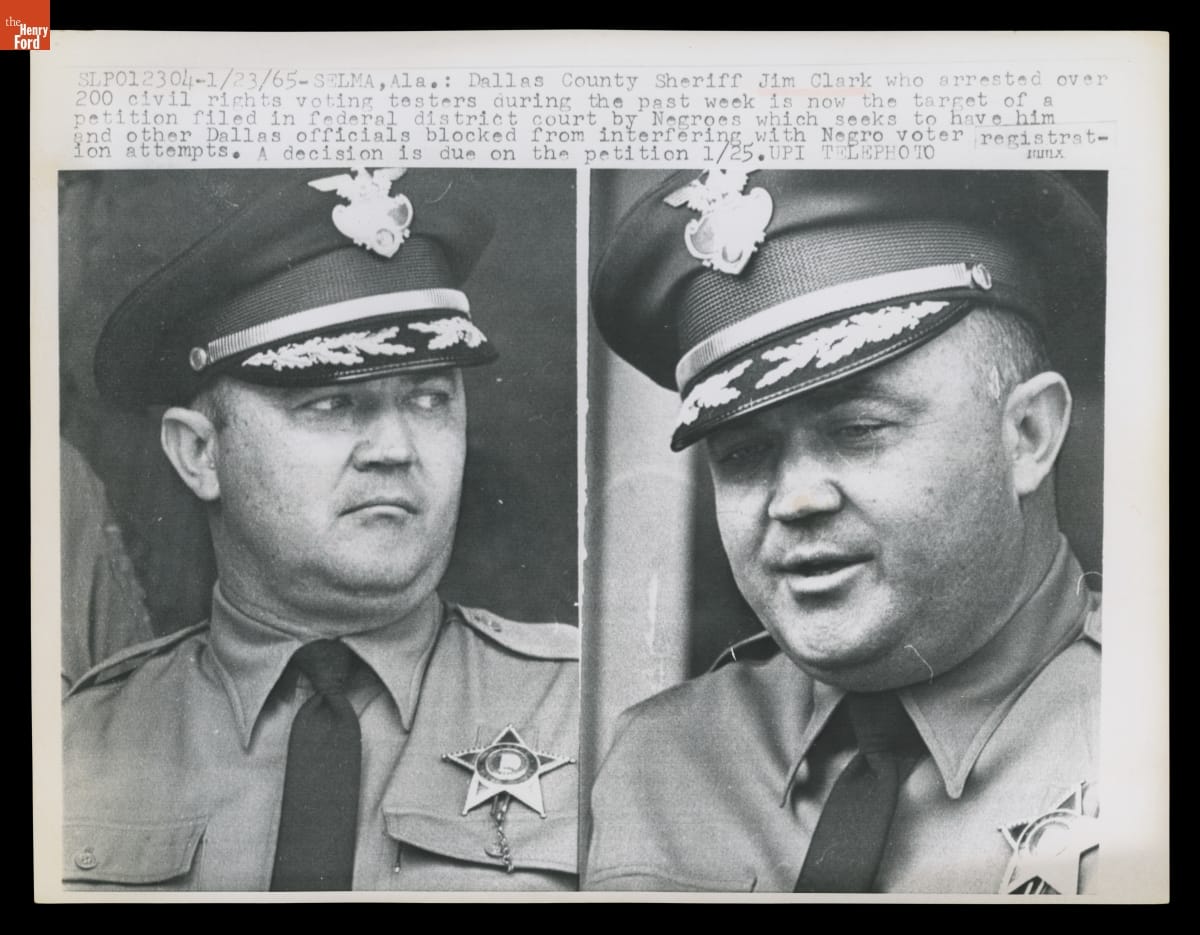
- Dallas County Sheriff Jim Clark, January 23, 1965 -
- January 01, 1965
- Collections - Artifact
Dallas County Sheriff Jim Clark, January 23, 1965
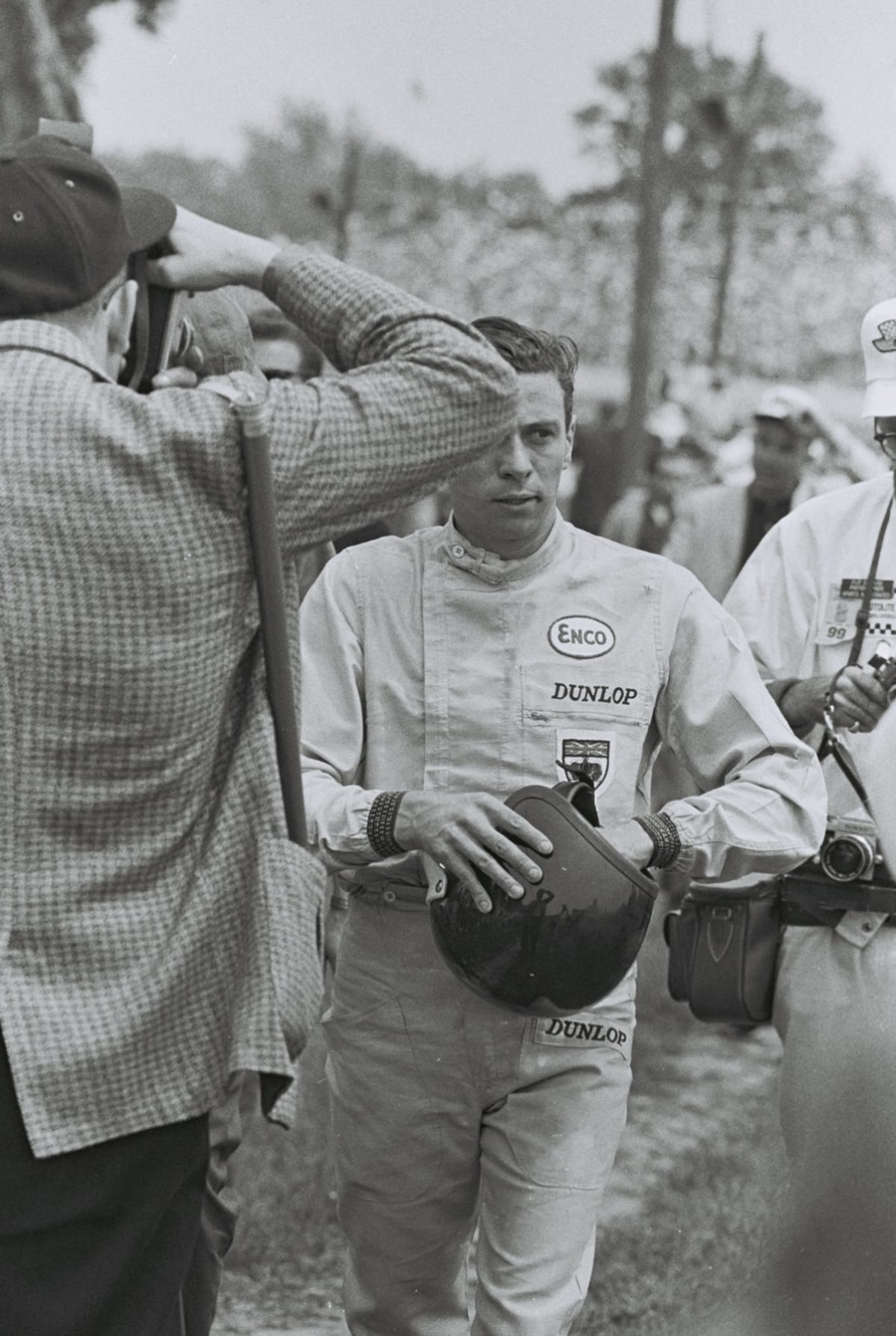
- Jim Clark, 1964 Indianapolis 500, Indianapolis, Indiana, May 1964 - Defective tires ended Jim Clark's run at the 1964 Indianapolis 500. At 47 laps into the race, the tread separated from Clark's left rear tire, starting a chain reaction that destroyed his left rear suspension. Clark skillfully ditched the damaged car in the speedway infield. He walked away from the scene disappointed, but safe.
- May 01, 1964
- Collections - Artifact
Jim Clark, 1964 Indianapolis 500, Indianapolis, Indiana, May 1964
Defective tires ended Jim Clark's run at the 1964 Indianapolis 500. At 47 laps into the race, the tread separated from Clark's left rear tire, starting a chain reaction that destroyed his left rear suspension. Clark skillfully ditched the damaged car in the speedway infield. He walked away from the scene disappointed, but safe.
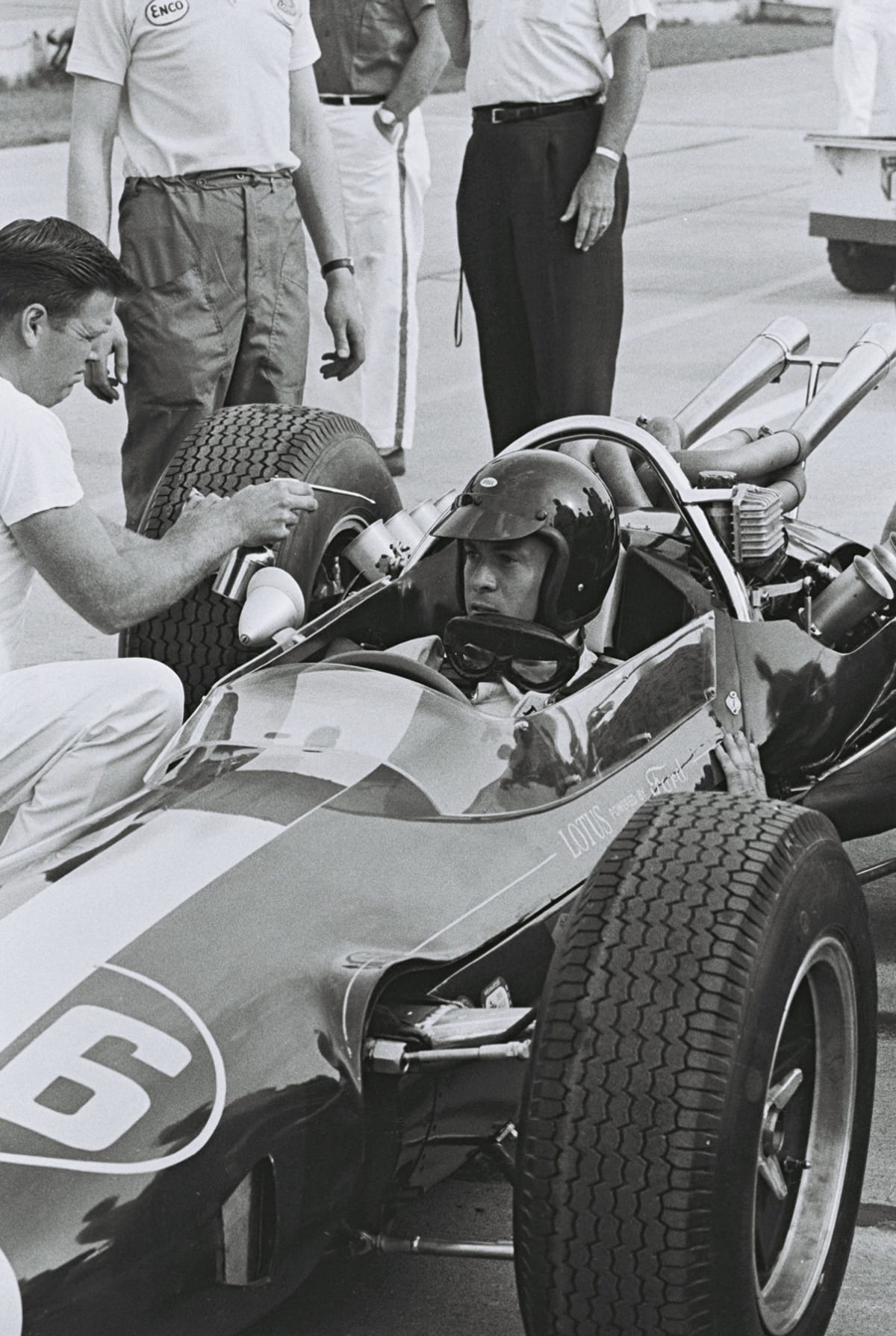
- Jim Clark, 1964 Indianapolis 500, Indianapolis, Indiana, May 1964 - Jimmy Clark made his second attempt to win the Indianapolis 500 with a rear-engine Lotus-Ford in 1964. He had finished second and taken Rookie of the Year honors the year before, and he came into 1964 heavily favored. But defective tires ended Clark's race after 47 laps. A.J. Foyt took the checkered flag in a front-engine roadster.
- May 01, 1964
- Collections - Artifact
Jim Clark, 1964 Indianapolis 500, Indianapolis, Indiana, May 1964
Jimmy Clark made his second attempt to win the Indianapolis 500 with a rear-engine Lotus-Ford in 1964. He had finished second and taken Rookie of the Year honors the year before, and he came into 1964 heavily favored. But defective tires ended Clark's race after 47 laps. A.J. Foyt took the checkered flag in a front-engine roadster.
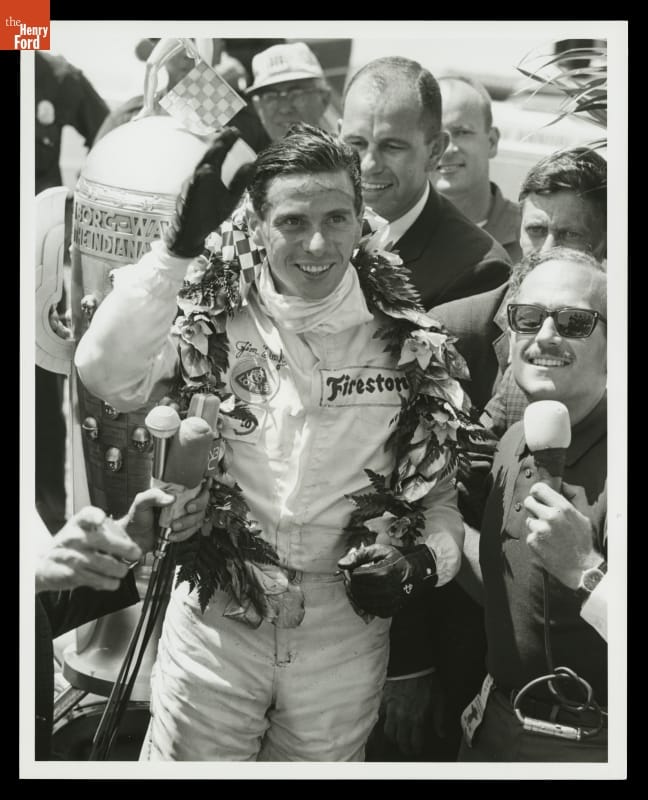
- Jim Clark after Winning the 1965 Indianapolis 500 Race - This photograph shows the victorious Jim Clark after his 1965 Indianapolis 500 win. Clark drove an innovative British-made Lotus Type 38 chassis powered by a rear-mounted Ford V-8 engine. The car's builder, Colin Chapman (in sunglasses), beams next to the driver.
- May 01, 1965
- Collections - Artifact
Jim Clark after Winning the 1965 Indianapolis 500 Race
This photograph shows the victorious Jim Clark after his 1965 Indianapolis 500 win. Clark drove an innovative British-made Lotus Type 38 chassis powered by a rear-mounted Ford V-8 engine. The car's builder, Colin Chapman (in sunglasses), beams next to the driver.
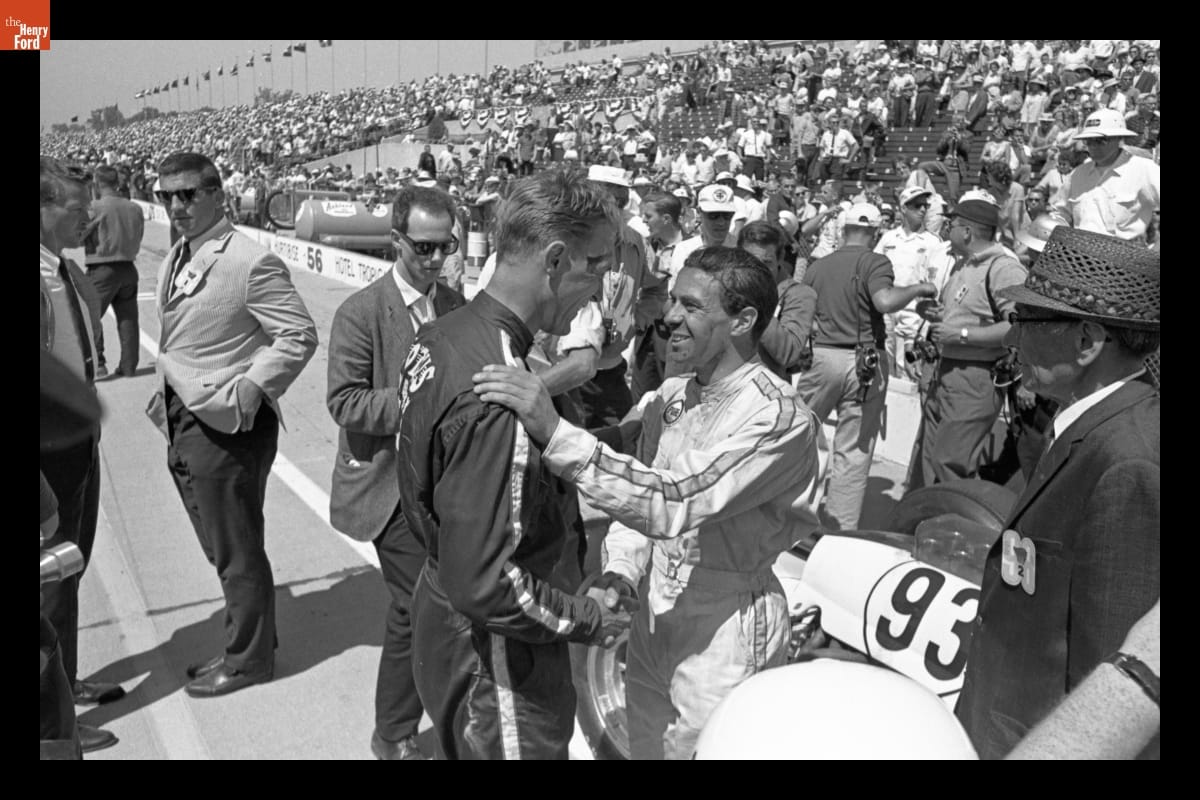
- Dan Gurney and Jim Clark at Indianapolis 500, May 30, 1963 -
- May 30, 1963
- Collections - Artifact
Dan Gurney and Jim Clark at Indianapolis 500, May 30, 1963
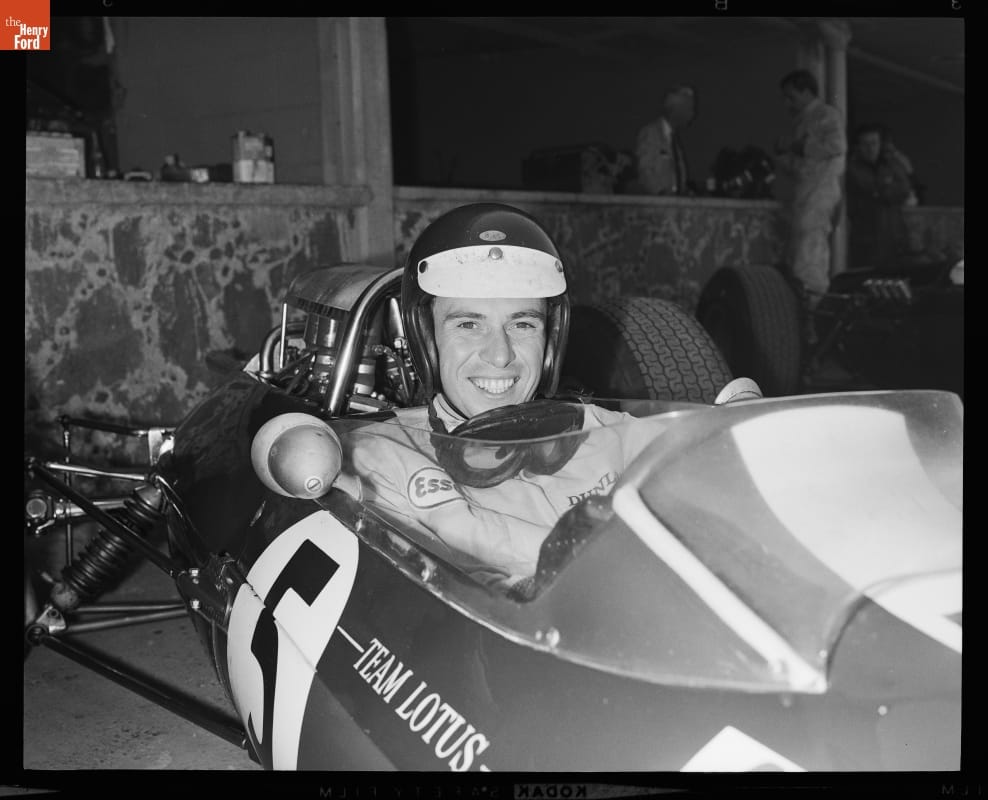
- Jim Clark, 1965 Mexican Grand Prix, Mexico City, Mexico, October 1965 - Jim Clark was one of the most successful and versatile racing drivers of the 1960s. Between 1960 and 1968, he competed in 72 Formula One championship events and won 25 of them. Clark won World Drivers' Championships in 1963 and 1965, and he won the Indianapolis 500 in 1965 too. He spent much of his career with Britain's Team Lotus.
- October 01, 1965
- Collections - Artifact
Jim Clark, 1965 Mexican Grand Prix, Mexico City, Mexico, October 1965
Jim Clark was one of the most successful and versatile racing drivers of the 1960s. Between 1960 and 1968, he competed in 72 Formula One championship events and won 25 of them. Clark won World Drivers' Championships in 1963 and 1965, and he won the Indianapolis 500 in 1965 too. He spent much of his career with Britain's Team Lotus.
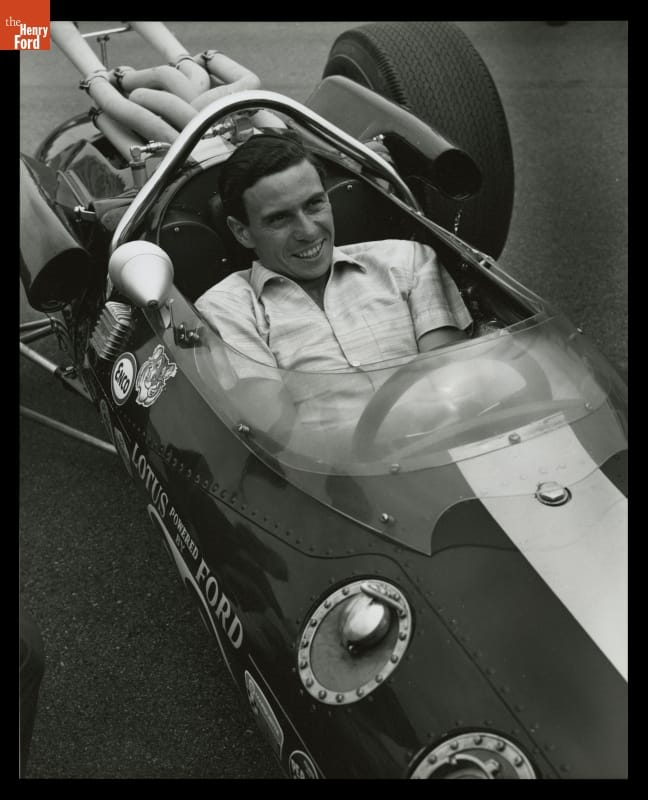
- Jim Clark in Lotus Racer at the Indianapolis 500 Race, 1965 - Scotsman Jim Clark was photographed in his #82 Lotus-Ford Type 38 in 1965. Clark finished second at the 1963 Indianapolis 500, and he was forced out early by tire and suspension damage in 1964. The third time was the charm when, in 1965, Clark became the first driver to win Indy with a rear-engine car -- and the first foreign driver to win since 1916.
- May 01, 1965
- Collections - Artifact
Jim Clark in Lotus Racer at the Indianapolis 500 Race, 1965
Scotsman Jim Clark was photographed in his #82 Lotus-Ford Type 38 in 1965. Clark finished second at the 1963 Indianapolis 500, and he was forced out early by tire and suspension damage in 1964. The third time was the charm when, in 1965, Clark became the first driver to win Indy with a rear-engine car -- and the first foreign driver to win since 1916.
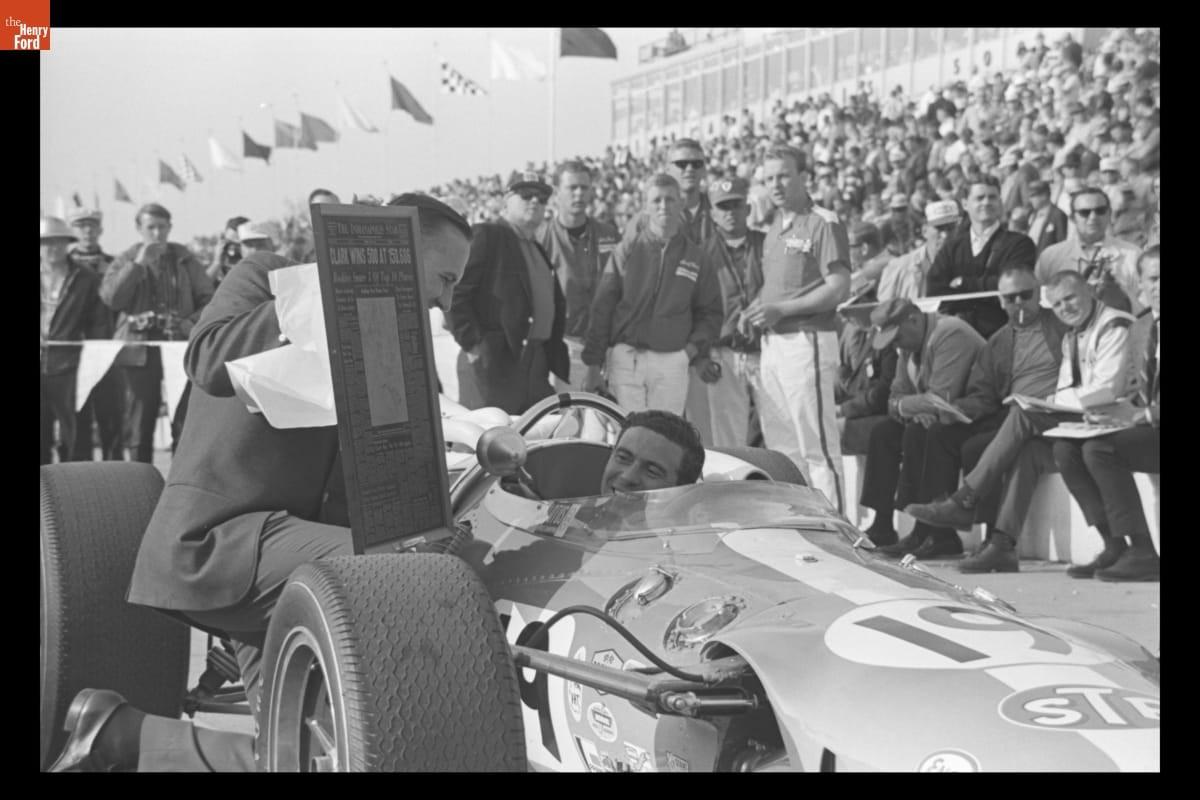
- Jim Clark in Lotus-Ford Race Car at Indianapolis 500, May 1966 - Dave Friedman has captured and preserved auto racing history through his own photography and his collection of works by other photographers. This image documents the weeks-long events surrounding the fiftieth running of the Indianapolis 500. Indy rookie Graham Hill finished first. Hill was one of only seven drivers to complete the race after crashes and mechanical failures thinned the original field of thirty-three.
- May 30, 1966
- Collections - Artifact
Jim Clark in Lotus-Ford Race Car at Indianapolis 500, May 1966
Dave Friedman has captured and preserved auto racing history through his own photography and his collection of works by other photographers. This image documents the weeks-long events surrounding the fiftieth running of the Indianapolis 500. Indy rookie Graham Hill finished first. Hill was one of only seven drivers to complete the race after crashes and mechanical failures thinned the original field of thirty-three.