
Search
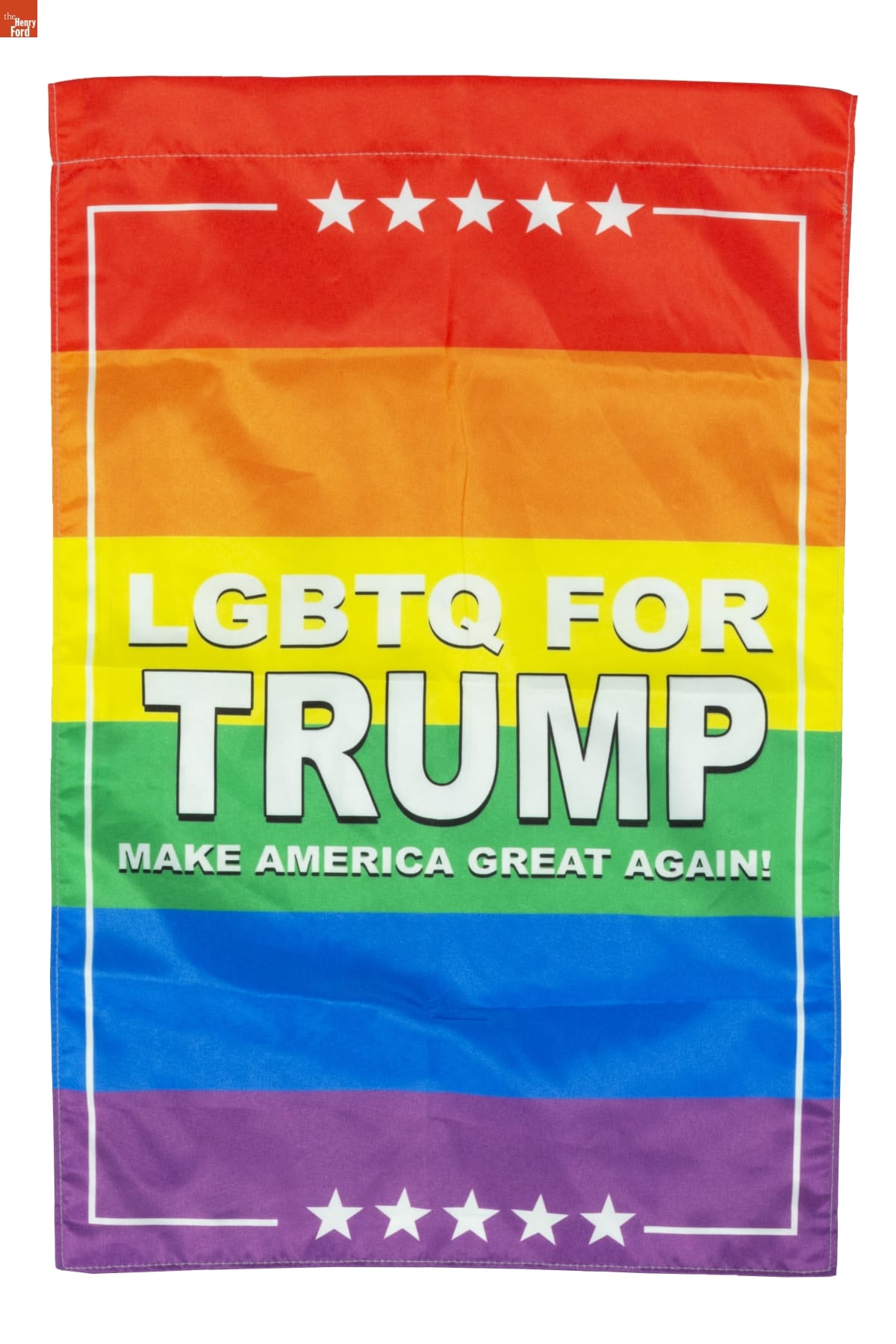
- "LGBTQ for Trump – Make America Great Again!" Flag, 2020 - Many Americans who identified as LGBTQ found it hard to support President Donald Trump's reelection in 2020. The president, however, did find limited support. Some within the gay community backed Trump's economic policies or his focus on security and quality-of-life issues. Others refused to be defined by divisive identity politics. Nevertheless, their numbers were small compared to the rest of the LGBTQ community.
- 2020
- Collections - Artifact
"LGBTQ for Trump – Make America Great Again!" Flag, 2020
Many Americans who identified as LGBTQ found it hard to support President Donald Trump's reelection in 2020. The president, however, did find limited support. Some within the gay community backed Trump's economic policies or his focus on security and quality-of-life issues. Others refused to be defined by divisive identity politics. Nevertheless, their numbers were small compared to the rest of the LGBTQ community.
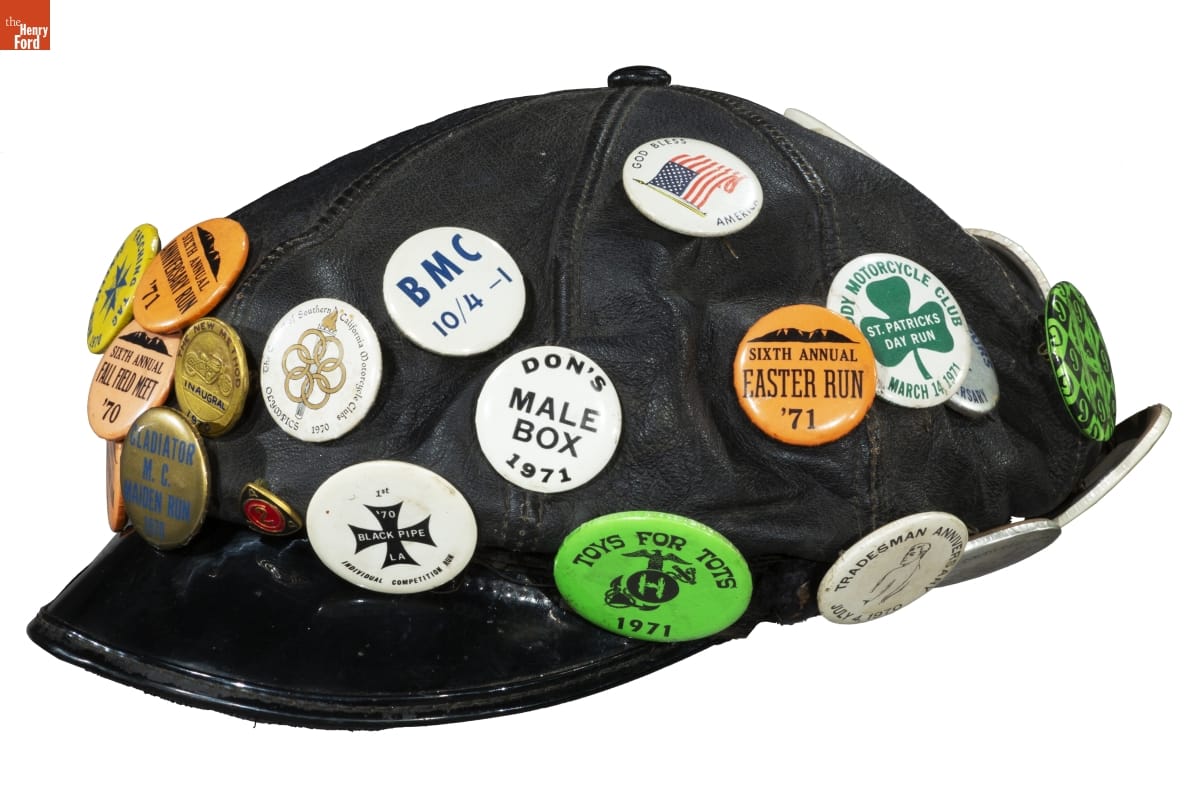
- Motorcycle Cap with Buttons Commemorating LGBTQ+ Events and Places, 1969-1971 - Gay motorcycle clubs began to form in California just after World War II, and leather was the staple material of their uniforms. This counterculture movement prioritized the hyper masculine, which appealed to many gay men who had long been stereotyped as effeminate. Biker clubs also provided a mobile social network when persecution and the threat of police raids were ever-present at established gay locales.
- 1969-1971
- Collections - Artifact
Motorcycle Cap with Buttons Commemorating LGBTQ+ Events and Places, 1969-1971
Gay motorcycle clubs began to form in California just after World War II, and leather was the staple material of their uniforms. This counterculture movement prioritized the hyper masculine, which appealed to many gay men who had long been stereotyped as effeminate. Biker clubs also provided a mobile social network when persecution and the threat of police raids were ever-present at established gay locales.
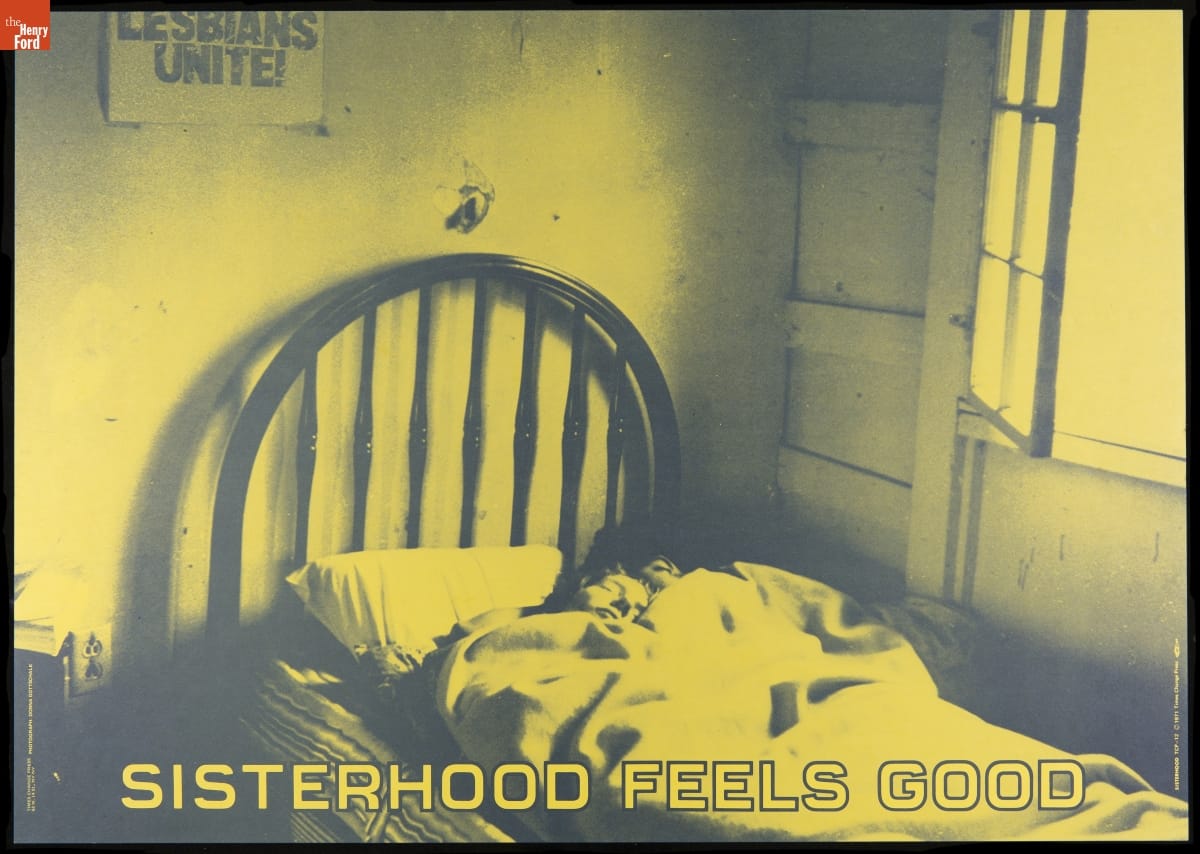
- Poster, "Sisterhood Feels Good," 1971 - Often capturing private moments in close quarters, Donna Gottshalk's photographs depict the quiet activism of being queer in the 1960s and 1970s. This image, titled "Sleepers, Limerick, PA," depicts two women in bed, with a "Lesbians Unite!" sign hanging on the wall. Many people involved in organizing feminist and gay rights groups hung this image--turned into a poster--in their homes.
- 1971
- Collections - Artifact
Poster, "Sisterhood Feels Good," 1971
Often capturing private moments in close quarters, Donna Gottshalk's photographs depict the quiet activism of being queer in the 1960s and 1970s. This image, titled "Sleepers, Limerick, PA," depicts two women in bed, with a "Lesbians Unite!" sign hanging on the wall. Many people involved in organizing feminist and gay rights groups hung this image--turned into a poster--in their homes.
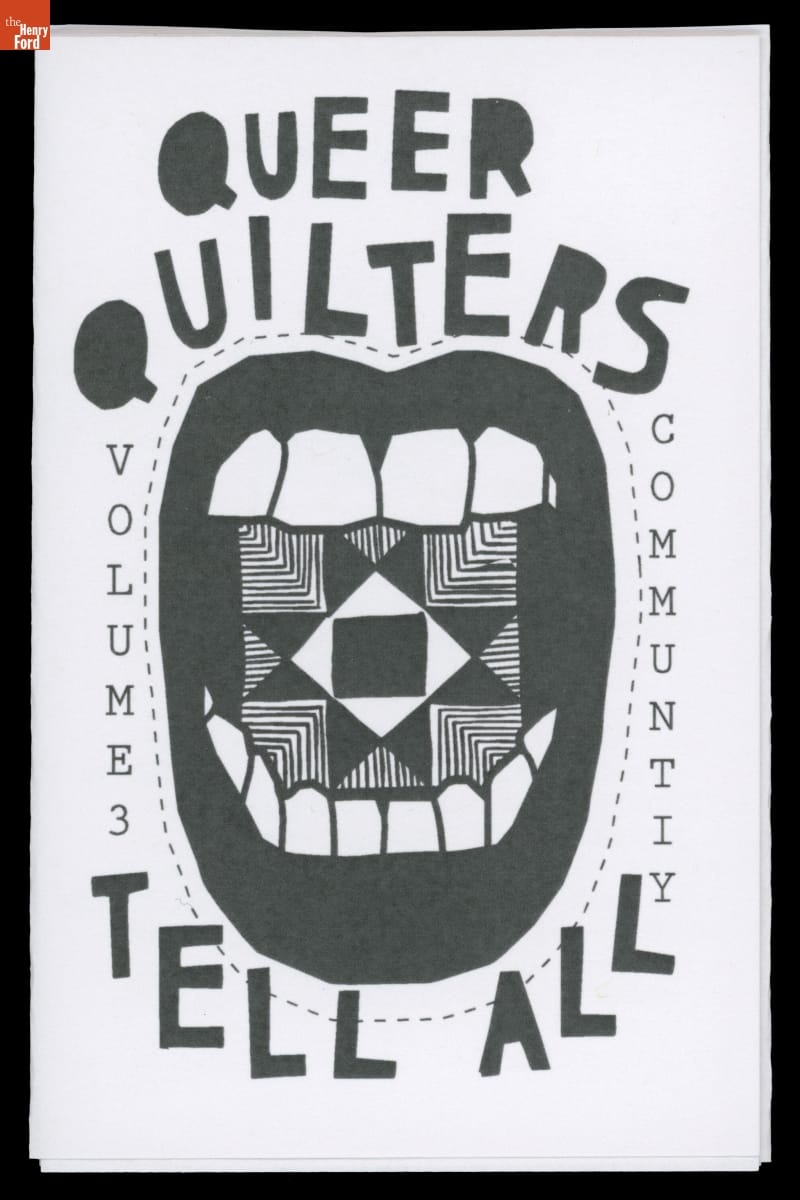
- Zine, "Queer Quilters Tell All, Volume 3: Community," circa 2020 - Gay textile artist Zak Foster created a series of zines with fellow quilter Grace Rother as "a love offering . . . to all the queer folks in the quilting community." Each issue contains stories from queer-identifying quilters. The zines discuss personal experiences with quilting, the larger queer quilting community, and the power of quilts as vehicles for change.
- circa 2020
- Collections - Artifact
Zine, "Queer Quilters Tell All, Volume 3: Community," circa 2020
Gay textile artist Zak Foster created a series of zines with fellow quilter Grace Rother as "a love offering . . . to all the queer folks in the quilting community." Each issue contains stories from queer-identifying quilters. The zines discuss personal experiences with quilting, the larger queer quilting community, and the power of quilts as vehicles for change.
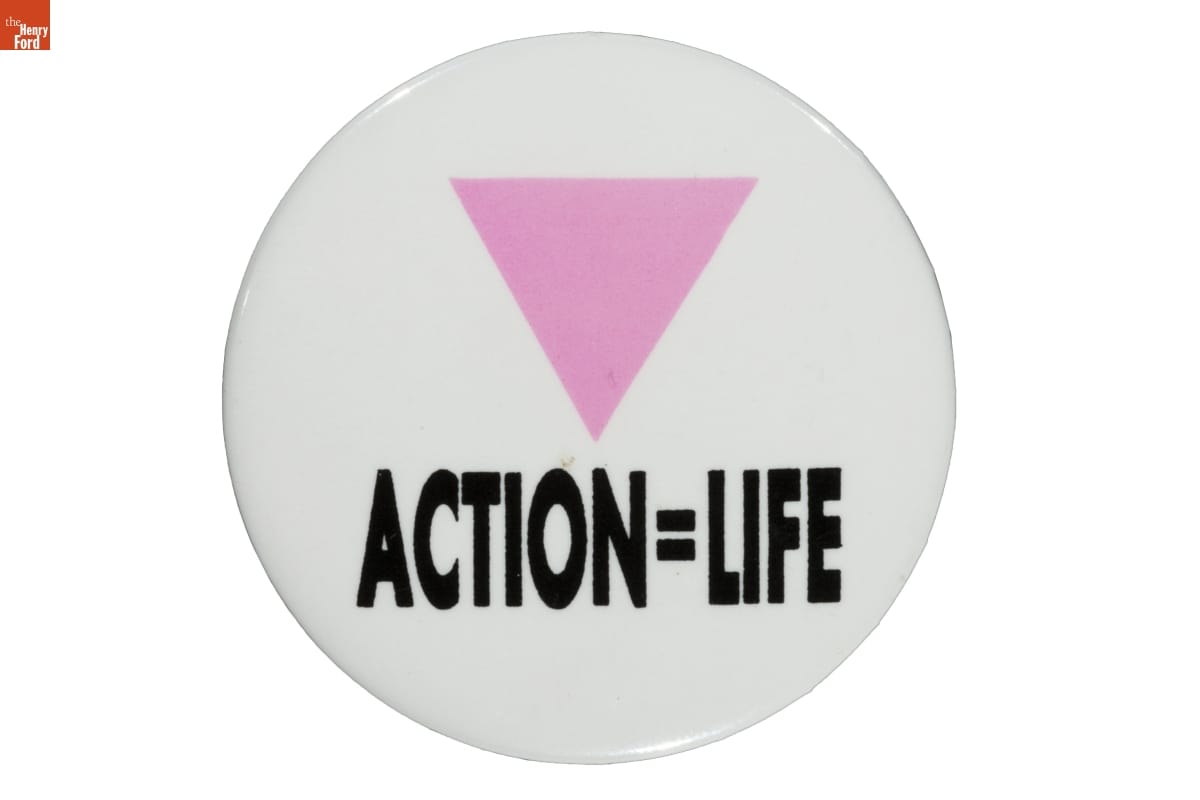
- "Action = Life" Button, 1989 - These buttons feature a symbol once weaponized against the LGBTQ+ community and later reclaimed. The pink triangle has roots in the Holocaust, when Nazis forced queer people to wear a pink triangle as a form of identification and persecution. By repurposing these symbols, a shared and recognizable language of identity and solidarity is created among LGBTQ+ people and allies.
- 1989
- Collections - Artifact
"Action = Life" Button, 1989
These buttons feature a symbol once weaponized against the LGBTQ+ community and later reclaimed. The pink triangle has roots in the Holocaust, when Nazis forced queer people to wear a pink triangle as a form of identification and persecution. By repurposing these symbols, a shared and recognizable language of identity and solidarity is created among LGBTQ+ people and allies.
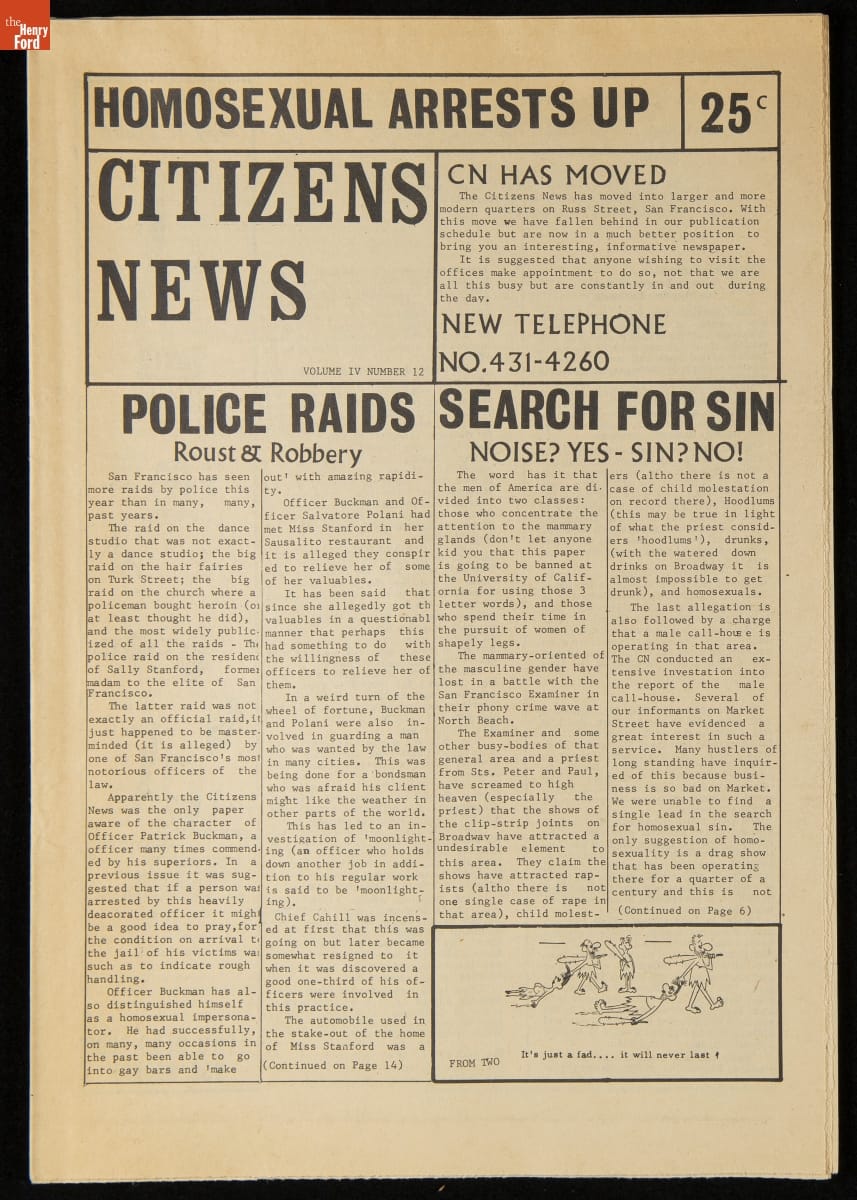
- Citizens News, Volume IV, Number 12, 1964-1965 - LGBTQ+ newspapers became more available beginning in the 1950s as organizations added print media to their activist tool kit. These newspapers were a regionally focused way to rally the LGBTQ+ community, share information, and fight discrimination. Many of these newspapers came to rely on gay bars as a location for disbursement as they were among the only private gay spaces in many cities.
- 1964-1965
- Collections - Artifact
Citizens News, Volume IV, Number 12, 1964-1965
LGBTQ+ newspapers became more available beginning in the 1950s as organizations added print media to their activist tool kit. These newspapers were a regionally focused way to rally the LGBTQ+ community, share information, and fight discrimination. Many of these newspapers came to rely on gay bars as a location for disbursement as they were among the only private gay spaces in many cities.
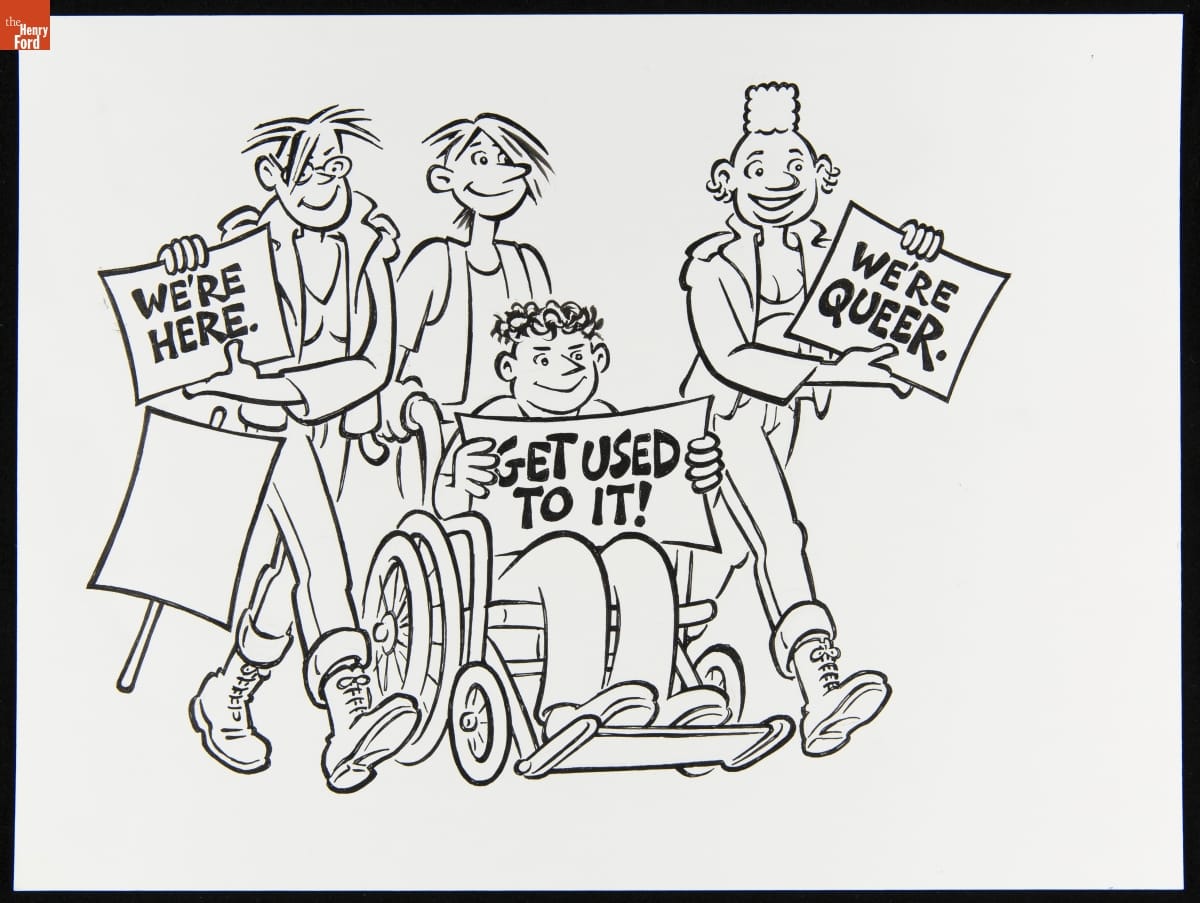
- Illustration, "We're Here. We're Queer. Get Used to It!," circa 1995 - Howard Cruse was an alternative comics artist and graphic novelist. In the 1970s, he was involved with the underground "comix" scene, which published content on topics forbidden by the mainstream comic authorities. In 1995, Cruse released his acclaimed graphic novel, Stuck Rubber Baby, which provides an account of a fictional character experiencing racism and homophobia in the American South during the 1960s Civil Rights Movement.
- circa 1995
- Collections - Artifact
Illustration, "We're Here. We're Queer. Get Used to It!," circa 1995
Howard Cruse was an alternative comics artist and graphic novelist. In the 1970s, he was involved with the underground "comix" scene, which published content on topics forbidden by the mainstream comic authorities. In 1995, Cruse released his acclaimed graphic novel, Stuck Rubber Baby, which provides an account of a fictional character experiencing racism and homophobia in the American South during the 1960s Civil Rights Movement.
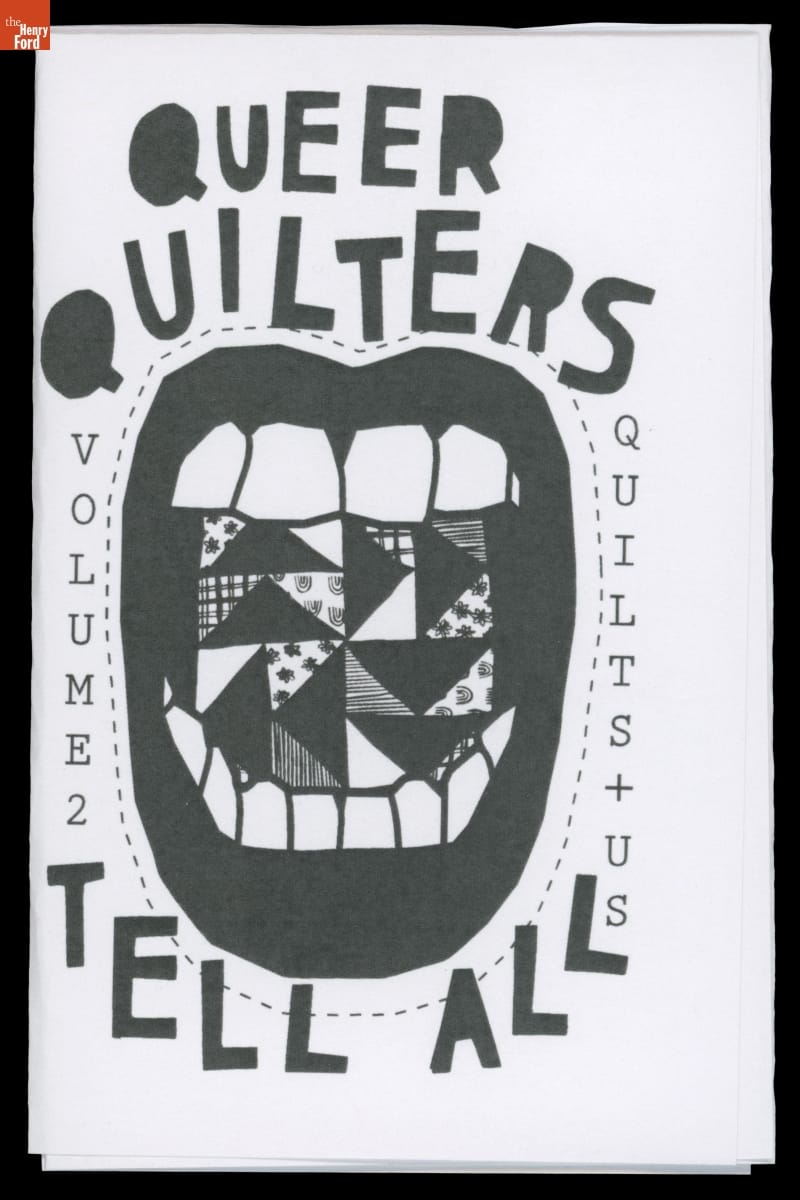
- Zine, "Queer Quilters Tell All, Volume 2: Quilts + Us," circa 2020 - Gay textile artist Zak Foster created a series of zines with fellow quilter Grace Rother as "a love offering . . . to all the queer folks in the quilting community." Each issue contains stories from queer-identifying quilters. The zines discuss personal experiences with quilting, the larger queer quilting community, and the power of quilts as vehicles for change.
- circa 2020
- Collections - Artifact
Zine, "Queer Quilters Tell All, Volume 2: Quilts + Us," circa 2020
Gay textile artist Zak Foster created a series of zines with fellow quilter Grace Rother as "a love offering . . . to all the queer folks in the quilting community." Each issue contains stories from queer-identifying quilters. The zines discuss personal experiences with quilting, the larger queer quilting community, and the power of quilts as vehicles for change.
- OUT!: LGBTQ+ Visibility and Identity Leadership Spotlight - Today we'e excited to share our latest THF Conversation with our partners at @GeneralMotors. Our own Cynthia Jones sits down Sabin Blake — General Motors Director, North American Business Communications to discuss how GM’s Employee Resource Groups are bringing our whole selves to work in an inclusive environment, empowering collaboration, and creating an innovative workplace.

- August 12, 2022
- Collections - Video
OUT!: LGBTQ+ Visibility and Identity Leadership Spotlight
Today we'e excited to share our latest THF Conversation with our partners at @GeneralMotors. Our own Cynthia Jones sits down Sabin Blake — General Motors Director, North American Business Communications to discuss how GM’s Employee Resource Groups are bringing our whole selves to work in an inclusive environment, empowering collaboration, and creating an innovative workplace.
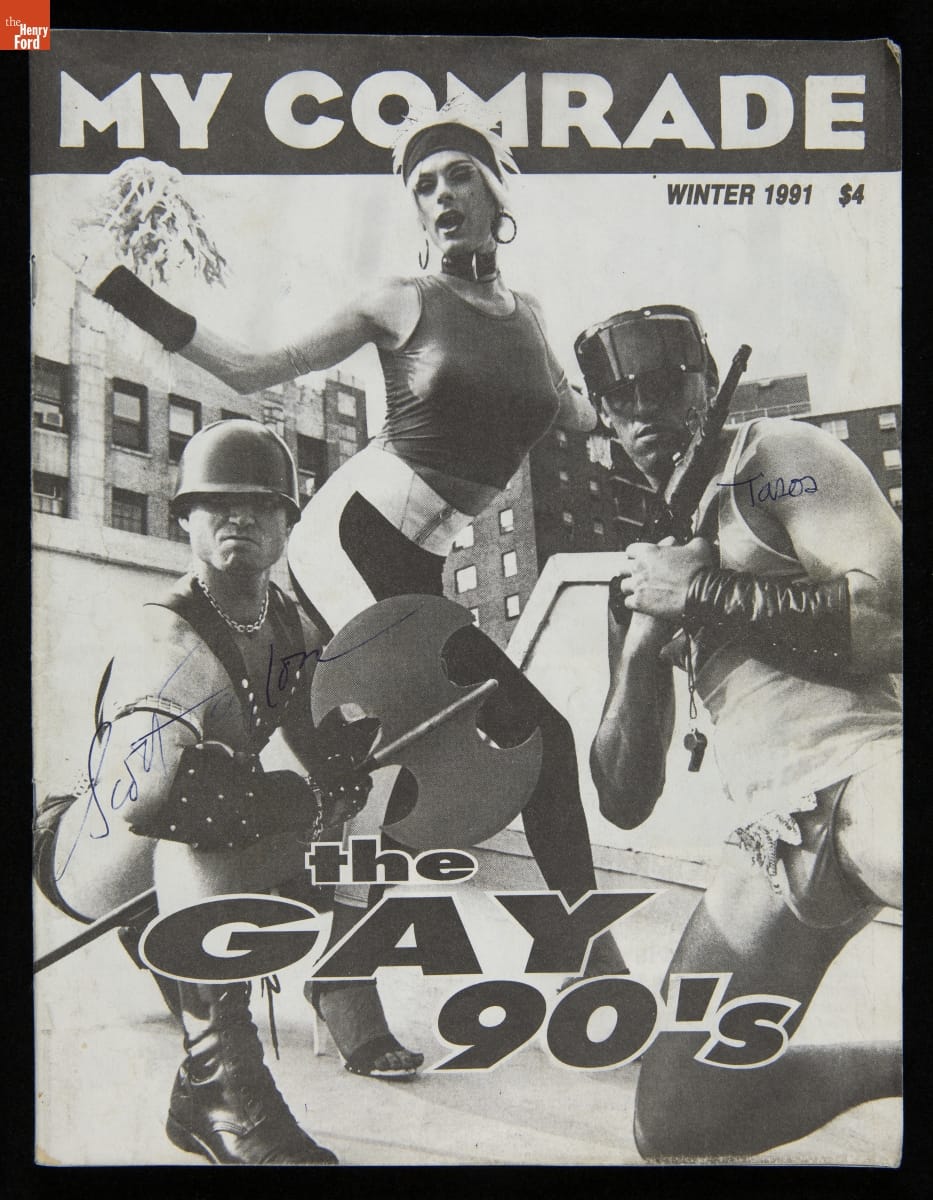
- "My Comrade" and "Sister!" Magazines, Winter 1991 - <em>My Comrade</em> was an underground "zine" launched in 1987 by drag queen Linda Simpson. The magazine was an irreverent platform for LGBTQ+ culture and politics in NYC's East Village, advertising itself as "the court jester of the queer press." <em>My Comrade</em> focused on drag queens, and the flip side of each issue also contained <em>Sister!</em>--a zine celebrating lesbian community.
- 1991
- Collections - Artifact
"My Comrade" and "Sister!" Magazines, Winter 1991
My Comrade was an underground "zine" launched in 1987 by drag queen Linda Simpson. The magazine was an irreverent platform for LGBTQ+ culture and politics in NYC's East Village, advertising itself as "the court jester of the queer press." My Comrade focused on drag queens, and the flip side of each issue also contained Sister!--a zine celebrating lesbian community.