
Search
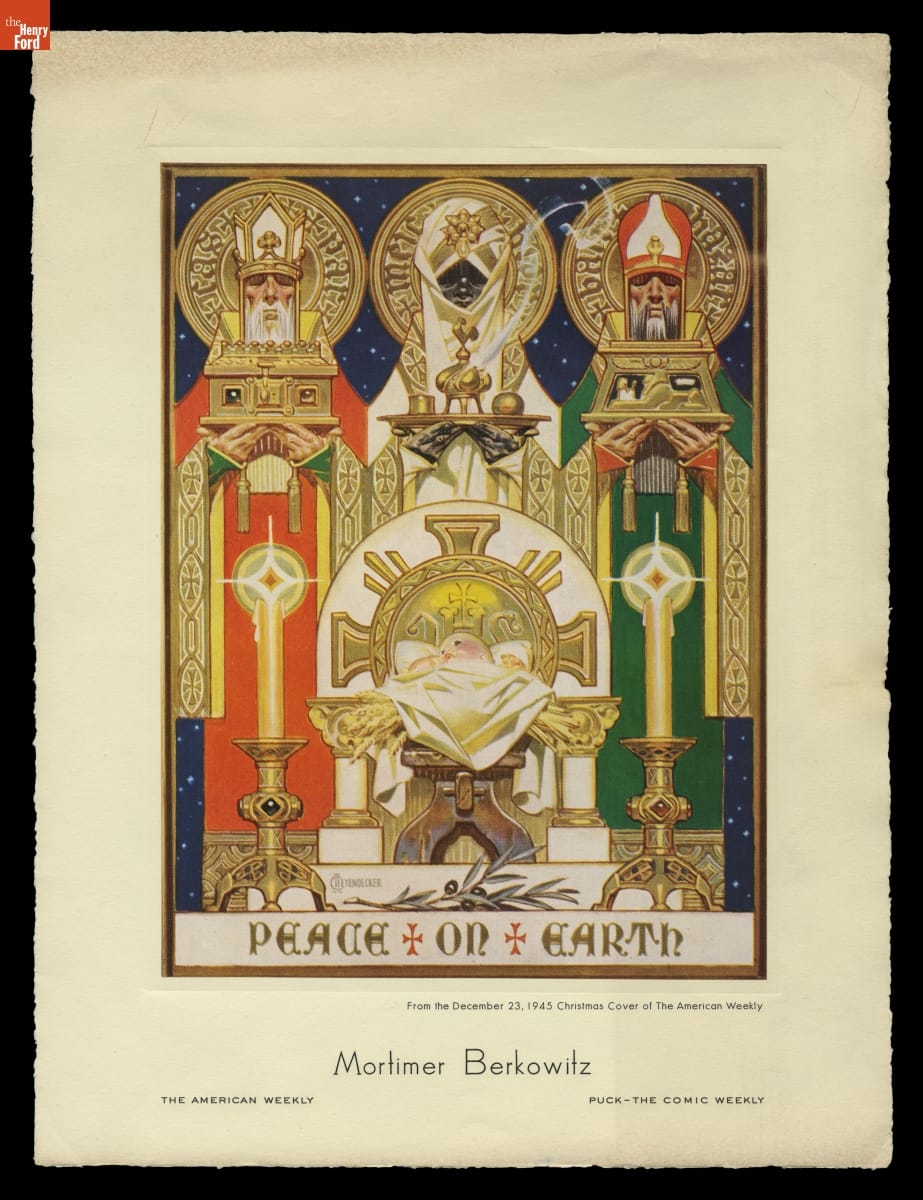
- "Peace on Earth" from the Christmas Cover of The American Weekly, December 23, 1945 - Commercial artist J.C. Leyendecker (1874-1951) contributed to nearly every major national magazine, completing more than 500 cover illustrations over the course of his career. Leyendecker became known for imaginative cover illustrations -- especially those depicting holiday traditions -- that not only appealed to readers at busy newsstands but captured and helped shape the imagery of American culture.
- 1945
- Collections - Artifact
"Peace on Earth" from the Christmas Cover of The American Weekly, December 23, 1945
Commercial artist J.C. Leyendecker (1874-1951) contributed to nearly every major national magazine, completing more than 500 cover illustrations over the course of his career. Leyendecker became known for imaginative cover illustrations -- especially those depicting holiday traditions -- that not only appealed to readers at busy newsstands but captured and helped shape the imagery of American culture.
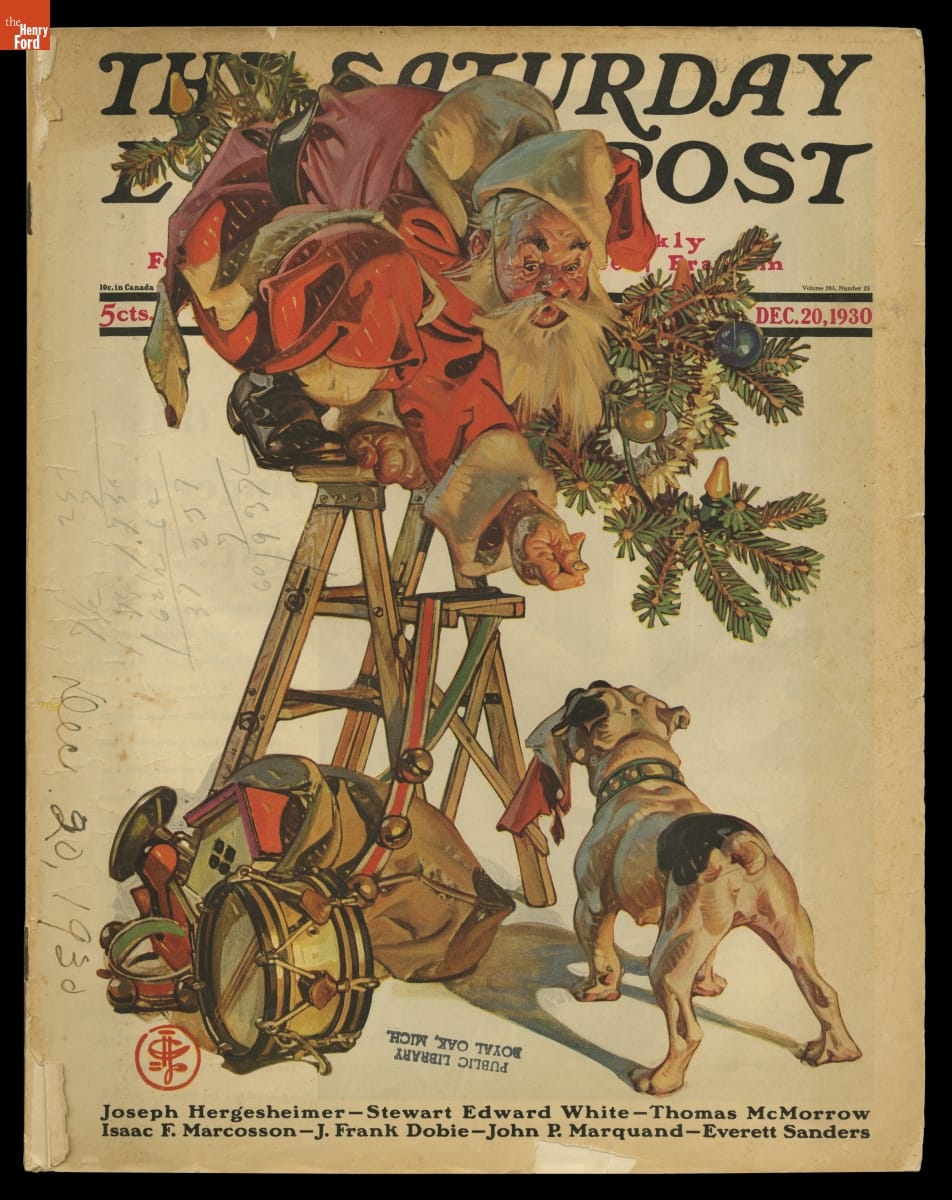
- "The Saturday Evening Post," December 20, 1930 - <em>The Saturday Evening Post</em>, first published in 1821 as a four-page weekly newspaper, became one of America's most popular weekly publications by the mid-1900s. The magazine contained news, commentaries, fiction, and general interest articles. But its most distinctive feature was its front cover illustrations by artists such as George Hughes, John Falter, J.C. Leyendecker, and Norman Rockwell.
- December 20, 1930
- Collections - Artifact
"The Saturday Evening Post," December 20, 1930
The Saturday Evening Post, first published in 1821 as a four-page weekly newspaper, became one of America's most popular weekly publications by the mid-1900s. The magazine contained news, commentaries, fiction, and general interest articles. But its most distinctive feature was its front cover illustrations by artists such as George Hughes, John Falter, J.C. Leyendecker, and Norman Rockwell.
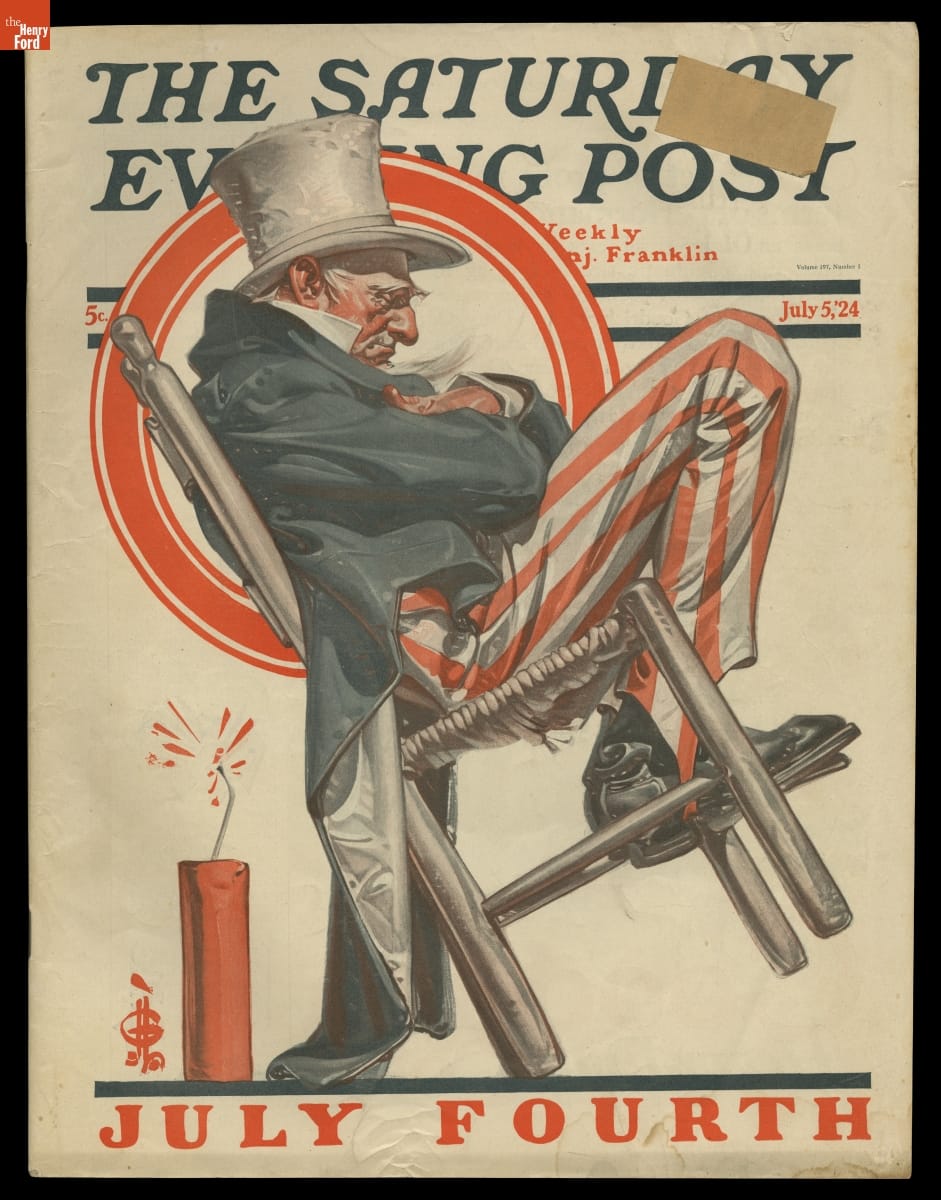
- "The Saturday Evening Post," July 5, 1924 - <em>The Saturday Evening Post</em>, first published in 1821 as a four-page weekly newspaper, became one of America's most popular weekly publications by the mid-1900s. The magazine contained news, commentaries, fiction, and general interest articles. But its most distinctive feature was its front cover illustrations by artists such as George Hughes, John Falter, J.C. Leyendecker, and Norman Rockwell.
- July 05, 1924
- Collections - Artifact
"The Saturday Evening Post," July 5, 1924
The Saturday Evening Post, first published in 1821 as a four-page weekly newspaper, became one of America's most popular weekly publications by the mid-1900s. The magazine contained news, commentaries, fiction, and general interest articles. But its most distinctive feature was its front cover illustrations by artists such as George Hughes, John Falter, J.C. Leyendecker, and Norman Rockwell.
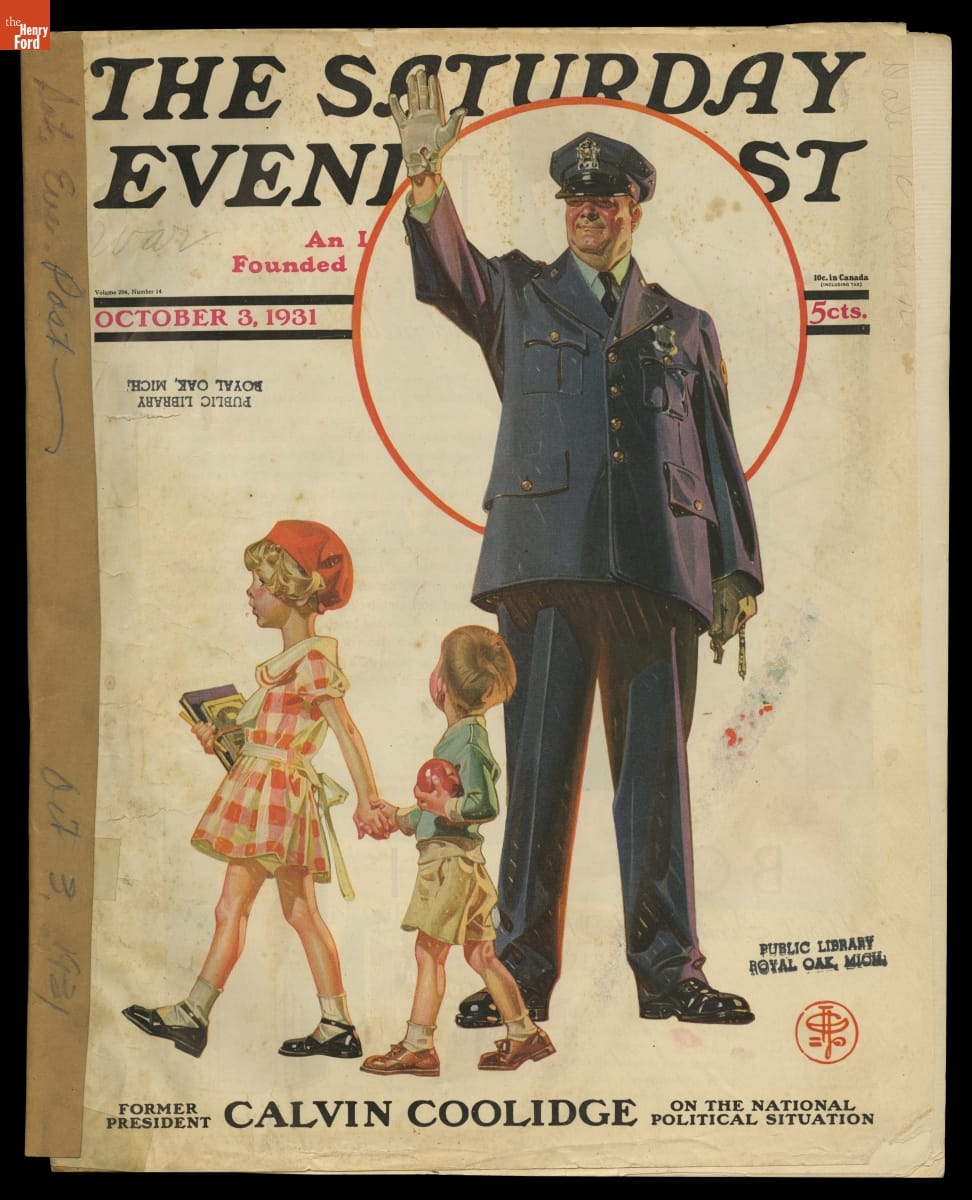
- "The Saturday Evening Post," October 3, 1931 - <em>The Saturday Evening Post</em>, first published in 1821 as a four-page weekly newspaper, became one of America's most popular weekly publications by the mid-1900s. The magazine contained news, commentaries, fiction, and general interest articles. But its most distinctive feature was its front cover illustrations by artists such as George Hughes, John Falter, J.C. Leyendecker, and Norman Rockwell.
- October 03, 1931
- Collections - Artifact
"The Saturday Evening Post," October 3, 1931
The Saturday Evening Post, first published in 1821 as a four-page weekly newspaper, became one of America's most popular weekly publications by the mid-1900s. The magazine contained news, commentaries, fiction, and general interest articles. But its most distinctive feature was its front cover illustrations by artists such as George Hughes, John Falter, J.C. Leyendecker, and Norman Rockwell.
- "The Saturday Evening Post," November 12, 1910 - <em>The Saturday Evening Post</em>, first published in 1821 as a four-page weekly newspaper, became one of America's most popular weekly publications by the mid-1900s. The magazine contained news, commentaries, fiction, and general interest articles. But its most distinctive feature was its front cover illustrations by artists such as George Hughes, John Falter, J.C. Leyendecker, and Norman Rockwell.
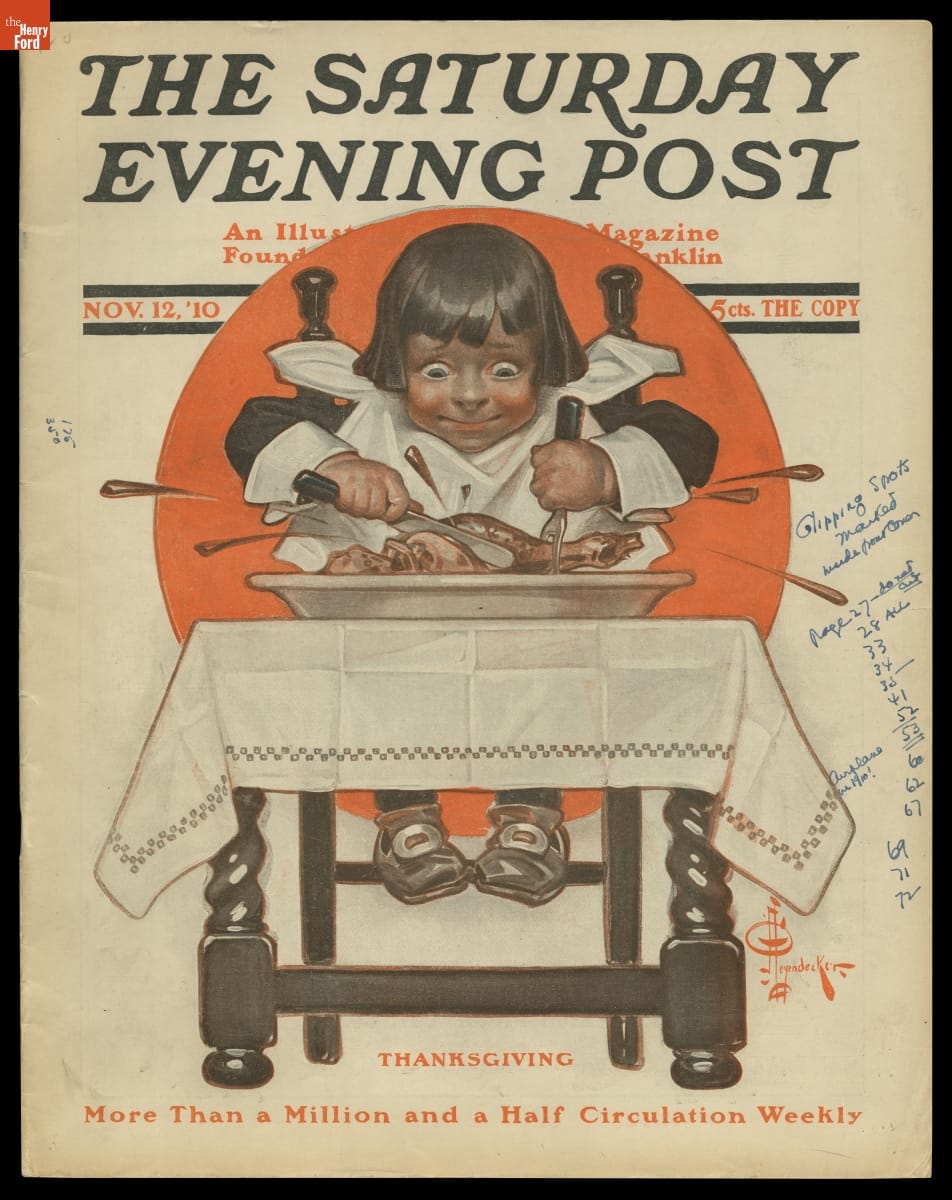
- November 12, 1910
- Collections - Artifact
"The Saturday Evening Post," November 12, 1910
The Saturday Evening Post, first published in 1821 as a four-page weekly newspaper, became one of America's most popular weekly publications by the mid-1900s. The magazine contained news, commentaries, fiction, and general interest articles. But its most distinctive feature was its front cover illustrations by artists such as George Hughes, John Falter, J.C. Leyendecker, and Norman Rockwell.
- World War I Poster, "U.S.A. Bonds, Third Liberty Loan Campaign, Boy Scouts of America," 1917 - Commercial artist J.C. Leyendecker (1874-1951) was known for advertising and magazine illustrations that told a complete, compelling story through a single image. During both World War I and II, the U.S. government called on Leyendecker to create posters in support of the war effort. This one promoted war bonds sold by the Boy Scouts of America in 1918.
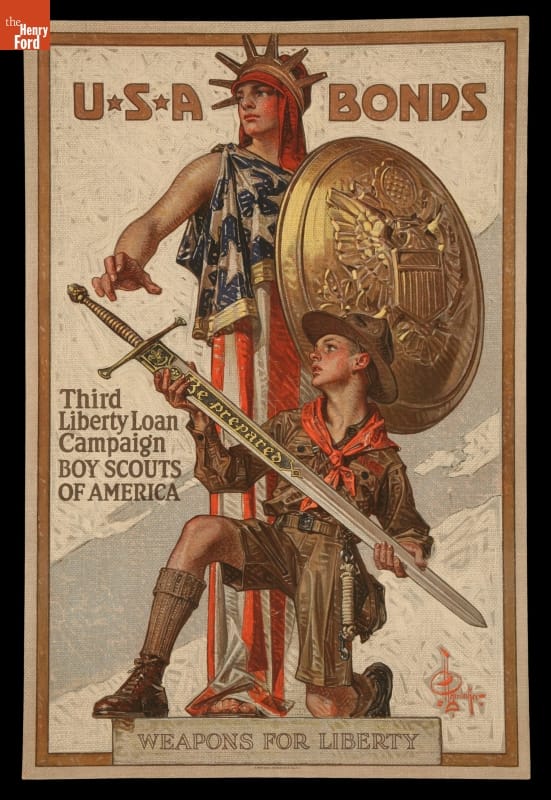
- 1917
- Collections - Artifact
World War I Poster, "U.S.A. Bonds, Third Liberty Loan Campaign, Boy Scouts of America," 1917
Commercial artist J.C. Leyendecker (1874-1951) was known for advertising and magazine illustrations that told a complete, compelling story through a single image. During both World War I and II, the U.S. government called on Leyendecker to create posters in support of the war effort. This one promoted war bonds sold by the Boy Scouts of America in 1918.
- "Tips and Pointers for Underwear Salesmen," 1923 - The Cooper Underwear Company, later renamed Jockey, produced this book to promote sales of its patented Kenosha Klosed Krotch union suit. It included advertising suggestions and information about materials, manufacturing, styles, and fit. The cover image, known as the "man on the bag," was created by popular commercial illustrator J.C. Leyendecker. It became central to the company's brand identity.
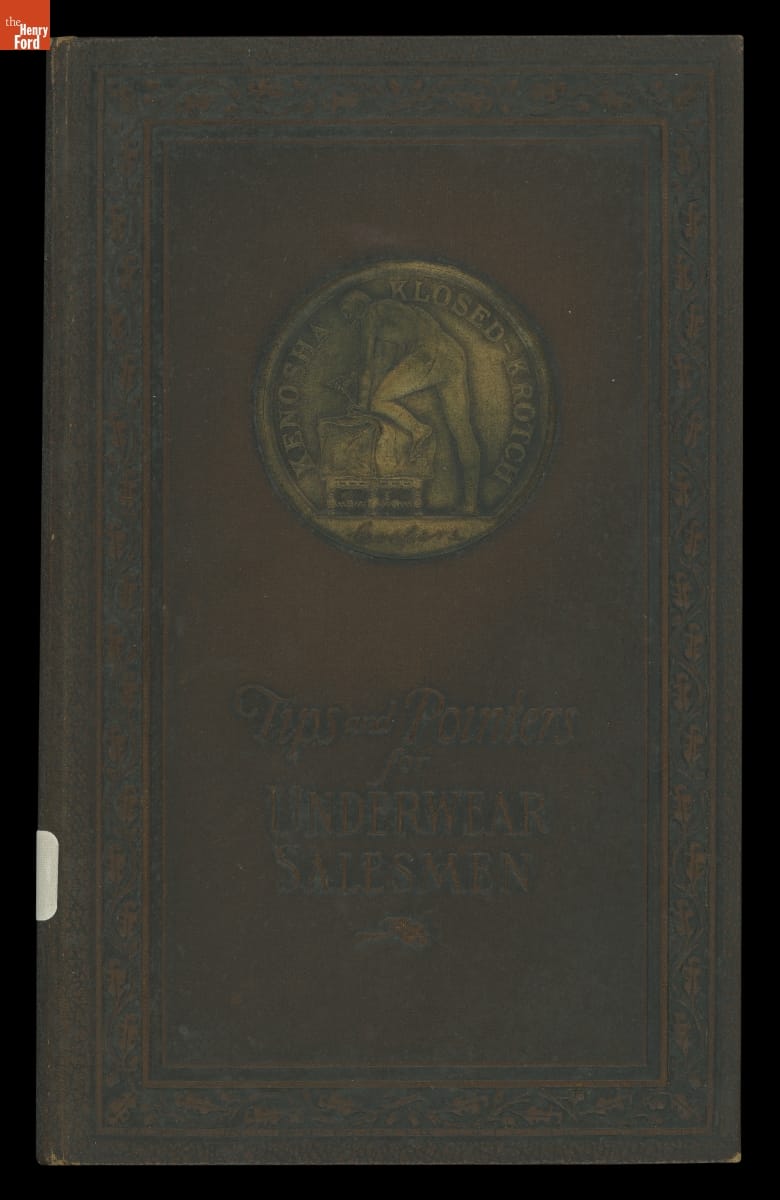
- 1923
- Collections - Artifact
"Tips and Pointers for Underwear Salesmen," 1923
The Cooper Underwear Company, later renamed Jockey, produced this book to promote sales of its patented Kenosha Klosed Krotch union suit. It included advertising suggestions and information about materials, manufacturing, styles, and fit. The cover image, known as the "man on the bag," was created by popular commercial illustrator J.C. Leyendecker. It became central to the company's brand identity.
- "The Saturday Evening Post," December 24, 1938 - <em>The Saturday Evening Post</em>, first published in 1821 as a four-page weekly newspaper, became one of America's most popular weekly publications by the mid-1900s. The magazine contained news, commentaries, fiction, and general interest articles. But its most distinctive feature was its front cover illustrations by artists such as George Hughes, John Falter, J.C. Leyendecker, and Norman Rockwell.
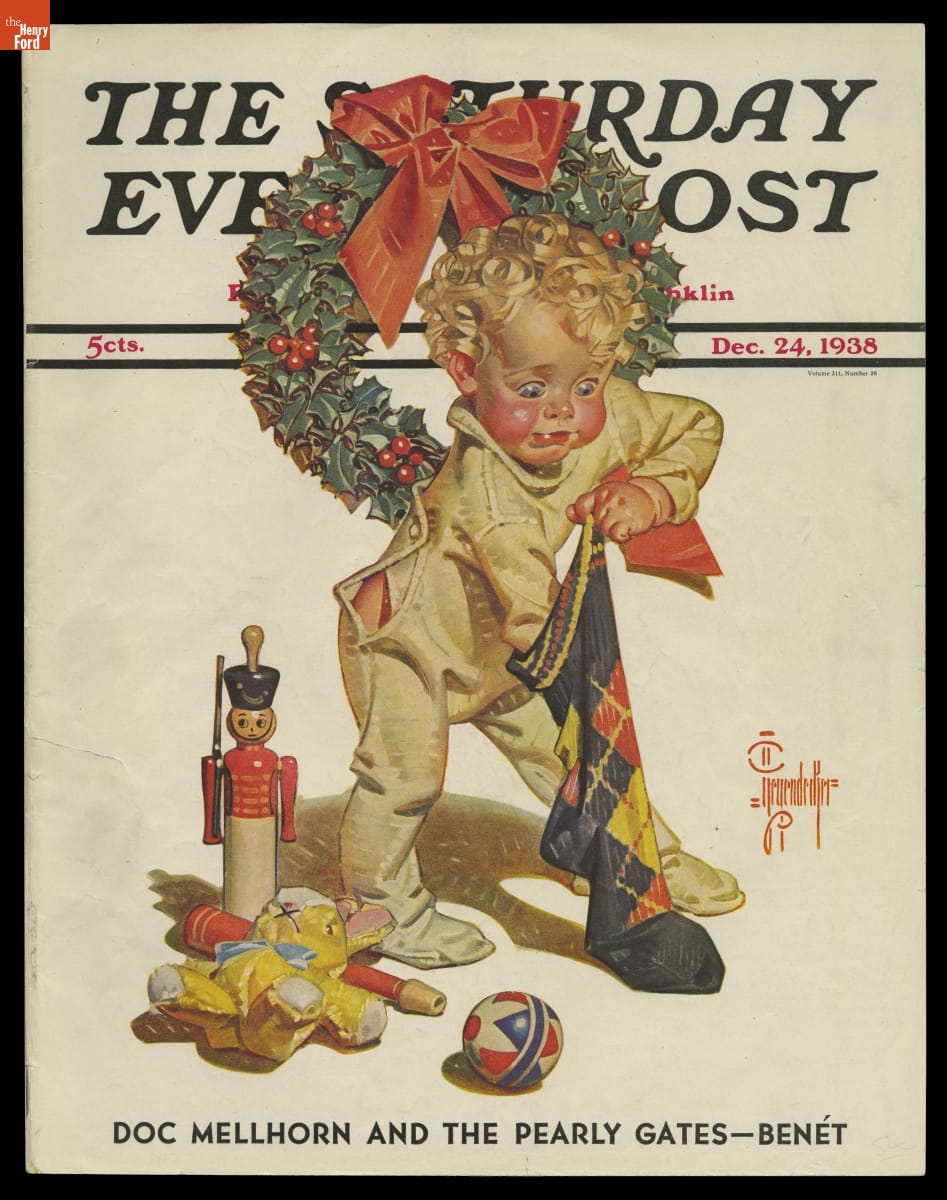
- December 24, 1938
- Collections - Artifact
"The Saturday Evening Post," December 24, 1938
The Saturday Evening Post, first published in 1821 as a four-page weekly newspaper, became one of America's most popular weekly publications by the mid-1900s. The magazine contained news, commentaries, fiction, and general interest articles. But its most distinctive feature was its front cover illustrations by artists such as George Hughes, John Falter, J.C. Leyendecker, and Norman Rockwell.
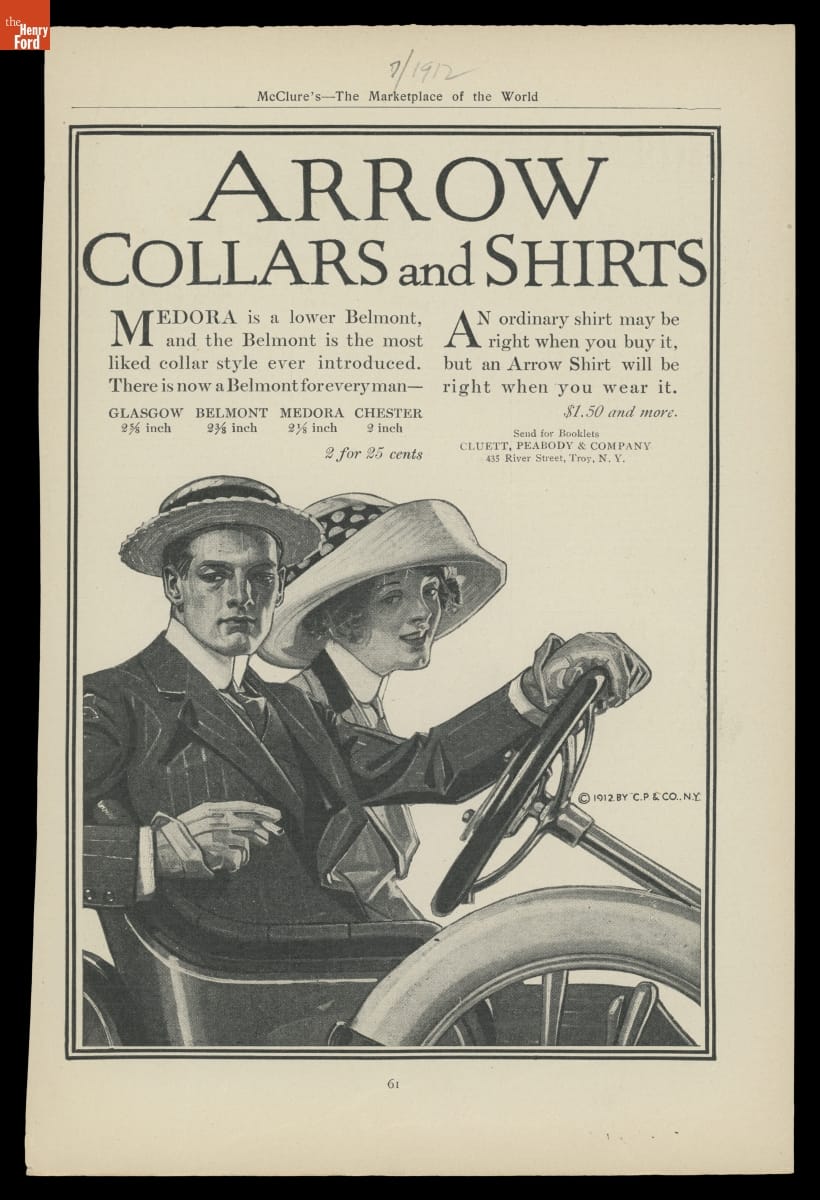
- "Arrow Collars and Shirts," Advertisement from Collier's Magazine, 1912 - Commercial illustrator J.C. Leyendecker (1874-1951) produced illustrations of handsome men who exuded style and sophistication for a long-running campaign advertising Cluett Peabody & Co.'s line of Arrow brand shirts, collars, and cuffs. These popular images, known collectively as the Arrow Collar Man, became a cultural phenomenon that set a new standard for men’s fashion and beauty.
- circa 1912
- Collections - Artifact
"Arrow Collars and Shirts," Advertisement from Collier's Magazine, 1912
Commercial illustrator J.C. Leyendecker (1874-1951) produced illustrations of handsome men who exuded style and sophistication for a long-running campaign advertising Cluett Peabody & Co.'s line of Arrow brand shirts, collars, and cuffs. These popular images, known collectively as the Arrow Collar Man, became a cultural phenomenon that set a new standard for men’s fashion and beauty.
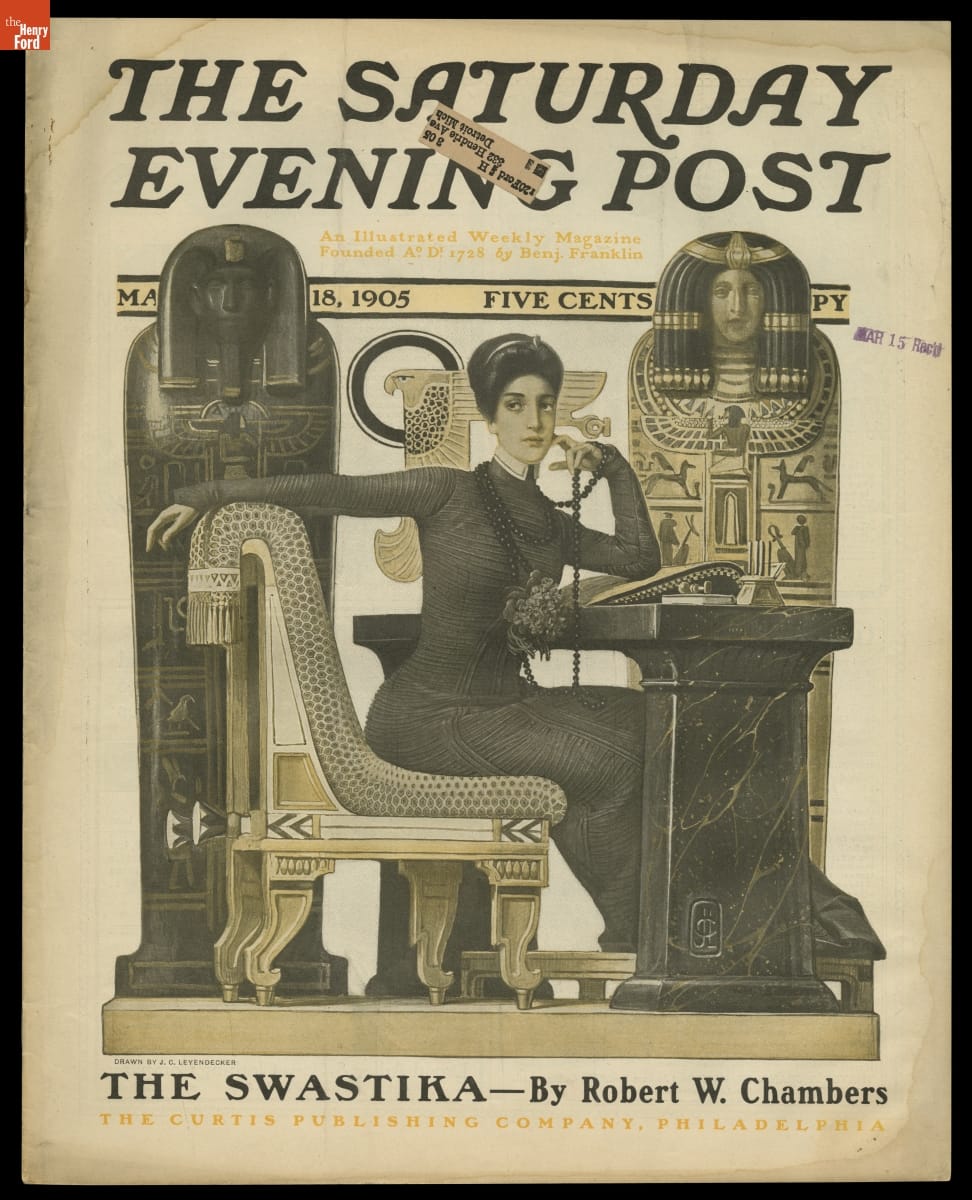
- "The Saturday Evening Post," March 18, 1905 - <em>The Saturday Evening Post</em>, first published in 1821 as a four-page weekly newspaper, became one of America's most popular weekly publications by the mid-1900s. The magazine contained news, commentaries, fiction, and general interest articles. But its most distinctive feature was its front cover illustrations by artists such as George Hughes, John Falter, J.C. Leyendecker, and Norman Rockwell.
- March 18, 1905
- Collections - Artifact
"The Saturday Evening Post," March 18, 1905
The Saturday Evening Post, first published in 1821 as a four-page weekly newspaper, became one of America's most popular weekly publications by the mid-1900s. The magazine contained news, commentaries, fiction, and general interest articles. But its most distinctive feature was its front cover illustrations by artists such as George Hughes, John Falter, J.C. Leyendecker, and Norman Rockwell.