
Search
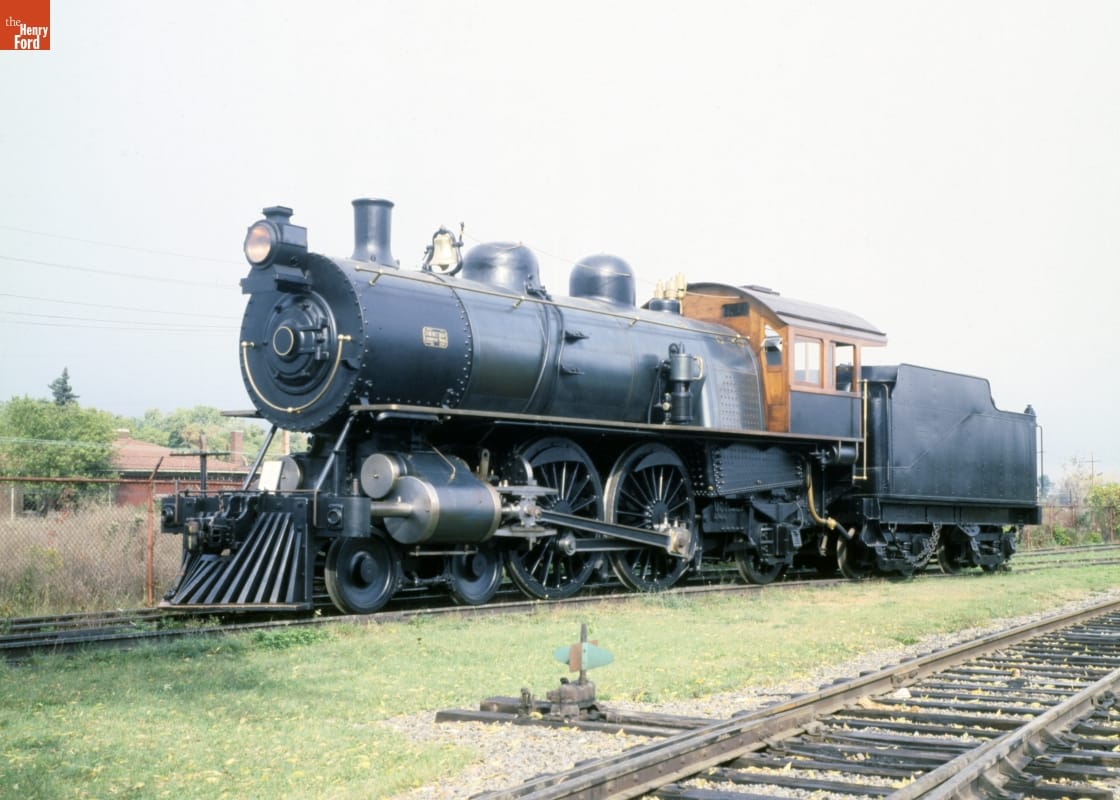
- American Locomotive Company Steam Locomotive, 1902 - The American Locomotive Company of Schenectady, New York, built this locomotive in 1902. It is a 4-4-2 Atlantic type, with four leading wheels, four driving wheels, and two trailing wheels. The Atlantic was designed to pull light wooden passenger cars at high speeds. This locomotive operated on the Michigan Central Railroad's Detroit-Chicago line until heavier steel cars made it obsolete.
- 1902
- Collections - Artifact
American Locomotive Company Steam Locomotive, 1902
The American Locomotive Company of Schenectady, New York, built this locomotive in 1902. It is a 4-4-2 Atlantic type, with four leading wheels, four driving wheels, and two trailing wheels. The Atlantic was designed to pull light wooden passenger cars at high speeds. This locomotive operated on the Michigan Central Railroad's Detroit-Chicago line until heavier steel cars made it obsolete.
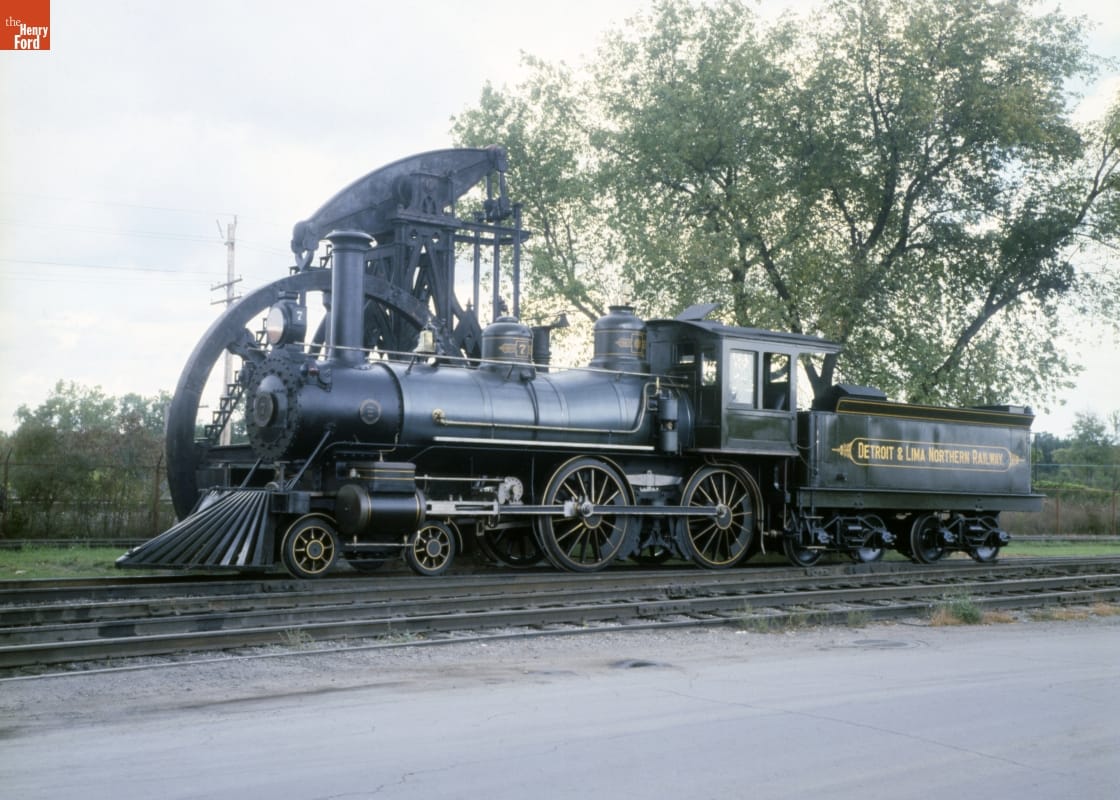
- Baldwin Locomotive Works Steam Locomotive, 1897 - This locomotive pulled passenger trains on the Detroit & Lima Northern Railway, a predecessor of the Detroit, Toledo & Ironton Railroad. After Henry Ford purchased the DT&I in 1920, this engine was the first modified under his extensive plan for improvements to the line. Ford adopted the locomotive as his favorite and donated it to The Henry Ford in 1930.
- 1897
- Collections - Artifact
Baldwin Locomotive Works Steam Locomotive, 1897
This locomotive pulled passenger trains on the Detroit & Lima Northern Railway, a predecessor of the Detroit, Toledo & Ironton Railroad. After Henry Ford purchased the DT&I in 1920, this engine was the first modified under his extensive plan for improvements to the line. Ford adopted the locomotive as his favorite and donated it to The Henry Ford in 1930.
- Part -
- Collections - Artifact
Part
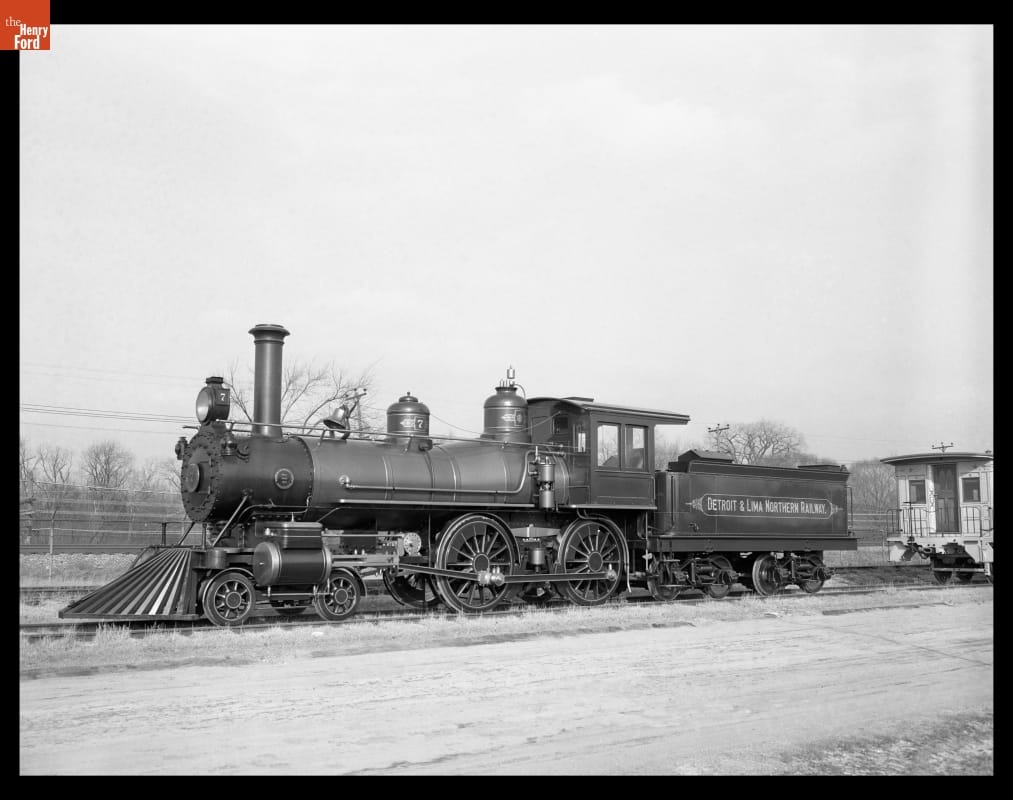
- 1897 Baldwin Locomotive Works Steam Locomotive, December 1955 - This 4-4-0 American-type locomotive pulled passenger trains on the Detroit & Lima Northern Railway, a predecessor of the Detroit, Toledo & Ironton Railroad. The 4-4-0, with four leading wheels, four driving wheels, and no trailing wheels, was a popular design on 19th-century U.S. railroads. Its small size and light weight were well suited to rough track.
- December 13, 1955
- Collections - Artifact
1897 Baldwin Locomotive Works Steam Locomotive, December 1955
This 4-4-0 American-type locomotive pulled passenger trains on the Detroit & Lima Northern Railway, a predecessor of the Detroit, Toledo & Ironton Railroad. The 4-4-0, with four leading wheels, four driving wheels, and no trailing wheels, was a popular design on 19th-century U.S. railroads. Its small size and light weight were well suited to rough track.
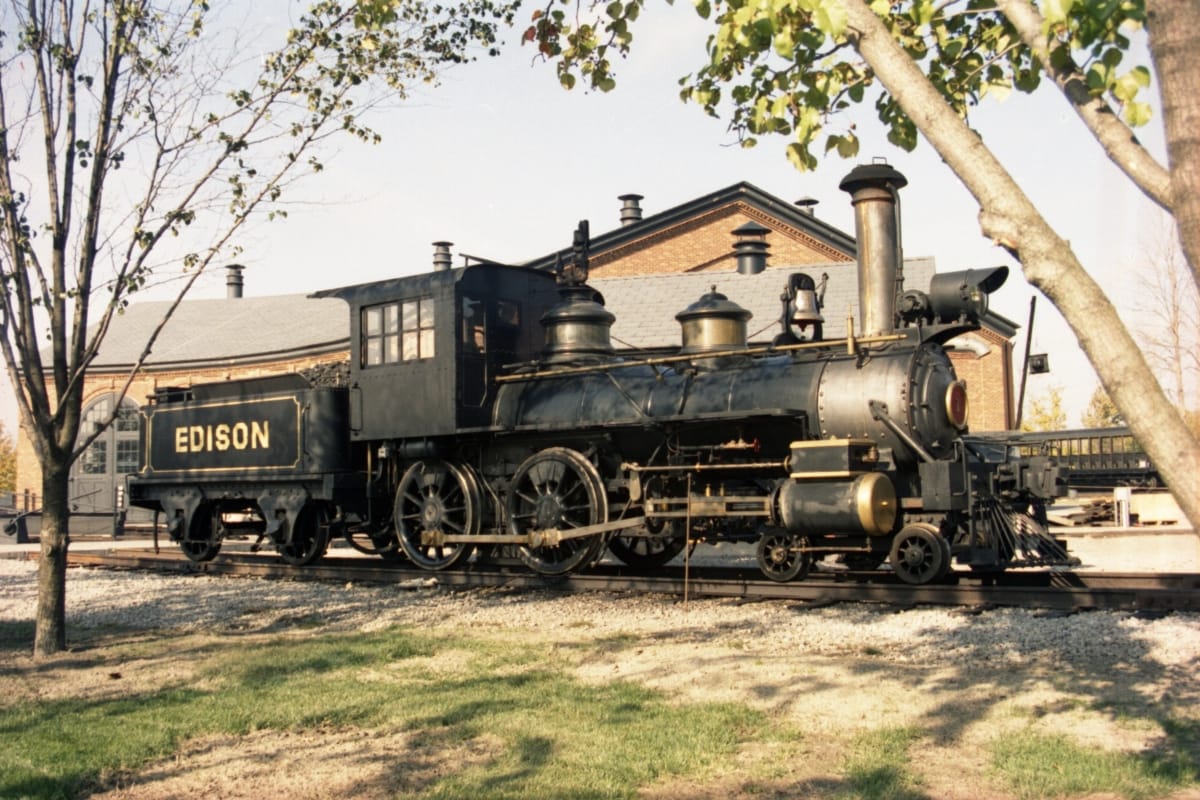
- "Edison" Steam Locomotive - <EM>Edison</EM> is based on an 0-4-0 switcher locomotive built about 1870 by Manchester Locomotive Works. Henry Ford purchased the switcher from Edison Portland Cement Company in 1932. Mr. Ford had the locomotive rebuilt into a 4-4-0 wheel arrangement by staff at Ford Motor Company's Rouge locomotive shop. <EM>Edison</EM> later went into regular service on Greenfield Village's railroad.
- 1932
- Collections - Artifact
"Edison" Steam Locomotive
Edison is based on an 0-4-0 switcher locomotive built about 1870 by Manchester Locomotive Works. Henry Ford purchased the switcher from Edison Portland Cement Company in 1932. Mr. Ford had the locomotive rebuilt into a 4-4-0 wheel arrangement by staff at Ford Motor Company's Rouge locomotive shop. Edison later went into regular service on Greenfield Village's railroad.
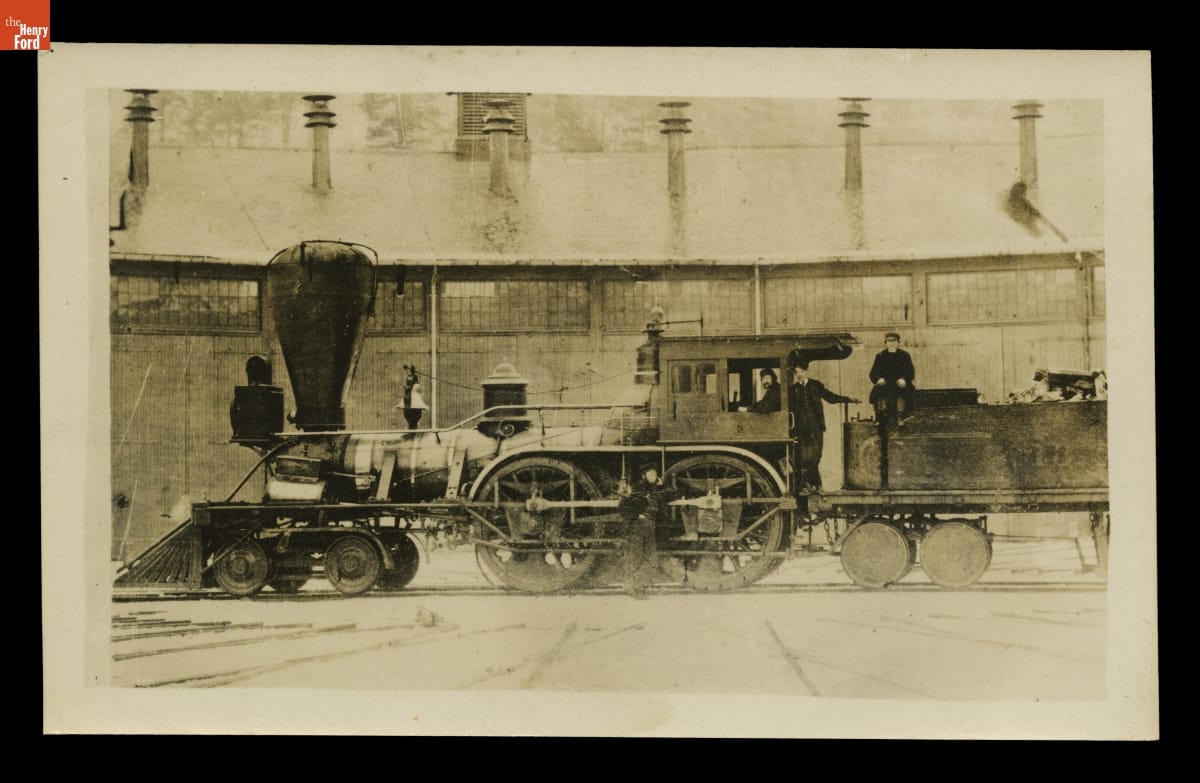
- Locomotive, circa 1865 - Few machines symbolized the United States in the mid-1800s like the 4-4-0 steam locomotive. Its design -- with four leading wheels, four driving wheels, and no trailing wheels -- was well suited for rough track and sharp curves. Equally capable of hauling freight and passengers, the 4-4-0 was so widely used that it became known simply as the "American" type.
- 1865
- Collections - Artifact
Locomotive, circa 1865
Few machines symbolized the United States in the mid-1800s like the 4-4-0 steam locomotive. Its design -- with four leading wheels, four driving wheels, and no trailing wheels -- was well suited for rough track and sharp curves. Equally capable of hauling freight and passengers, the 4-4-0 was so widely used that it became known simply as the "American" type.
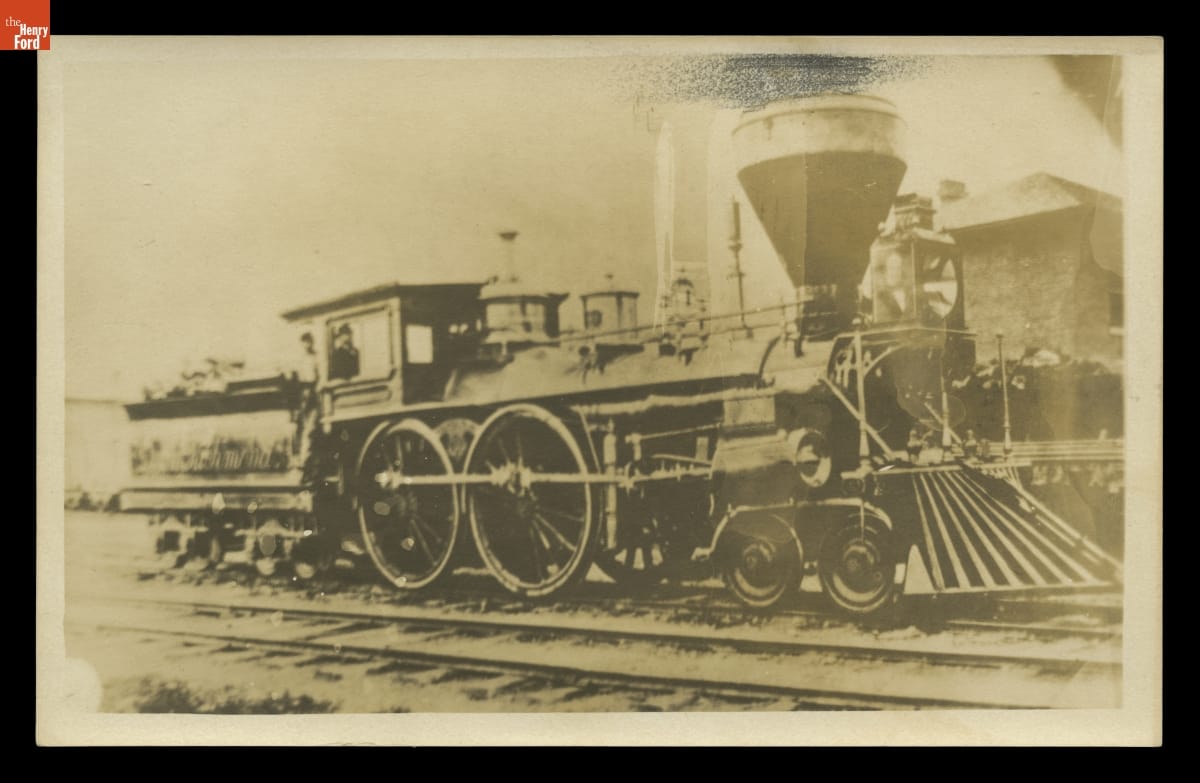
- Locomotive, circa 1865 - Few machines symbolized the United States in the mid-1800s like the 4-4-0 steam locomotive. Its design -- with four leading wheels, four driving wheels, and no trailing wheels -- was well suited for rough track and sharp curves. Equally capable of hauling freight and passengers, the 4-4-0 was so widely used that it became known simply as the "American" type.
- 1865
- Collections - Artifact
Locomotive, circa 1865
Few machines symbolized the United States in the mid-1800s like the 4-4-0 steam locomotive. Its design -- with four leading wheels, four driving wheels, and no trailing wheels -- was well suited for rough track and sharp curves. Equally capable of hauling freight and passengers, the 4-4-0 was so widely used that it became known simply as the "American" type.
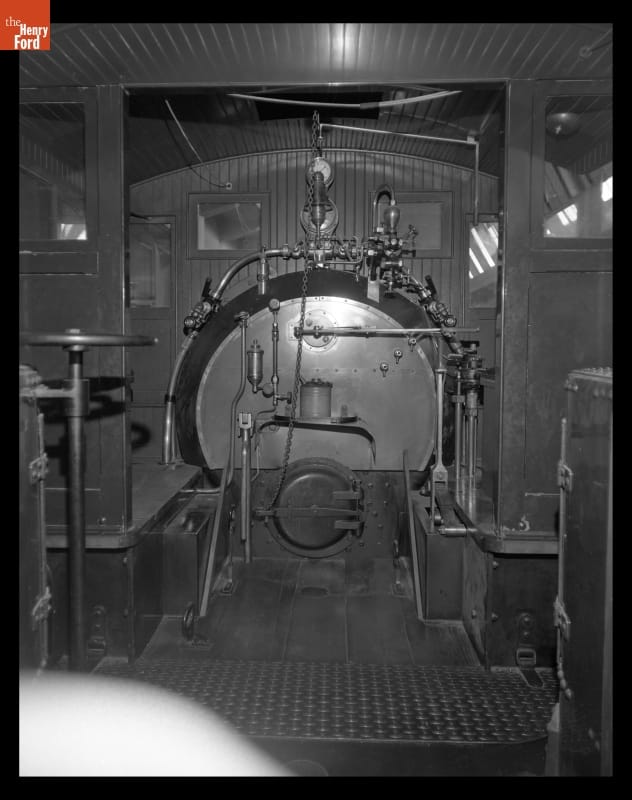
- Interior of 1897 Baldwin Locomotive Works Steam Locomotive, January 1961 - This view inside the 1897 Baldwin's cab provides a good look at the locomotive's backhead -- the rear end of the boiler -- and controls. The vertical lever at right is the reverser, which controls the timing by which steam is sent into the cylinders. The horizontal lever at center is the throttle. The door below it opens into the locomotive's firebox.
- January 06, 1961
- Collections - Artifact
Interior of 1897 Baldwin Locomotive Works Steam Locomotive, January 1961
This view inside the 1897 Baldwin's cab provides a good look at the locomotive's backhead -- the rear end of the boiler -- and controls. The vertical lever at right is the reverser, which controls the timing by which steam is sent into the cylinders. The horizontal lever at center is the throttle. The door below it opens into the locomotive's firebox.
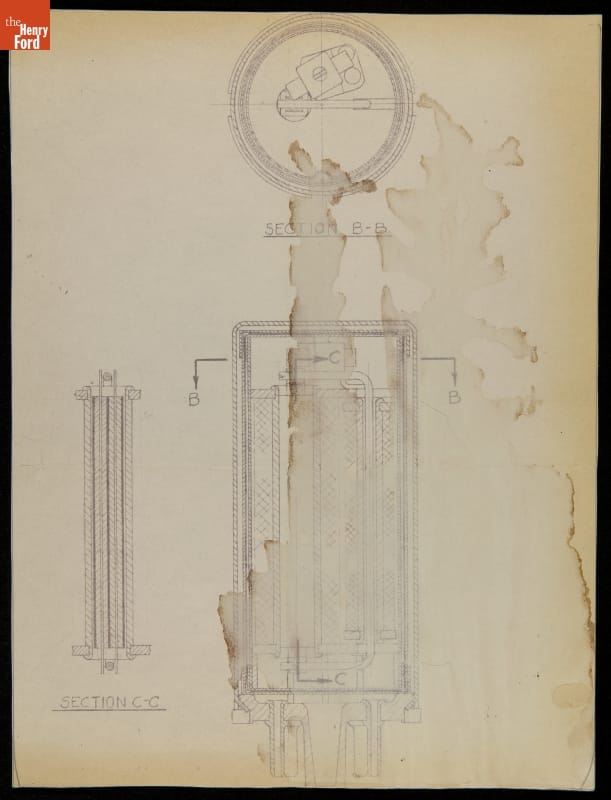
- Parts Diagram -
- Collections - Artifact
Parts Diagram
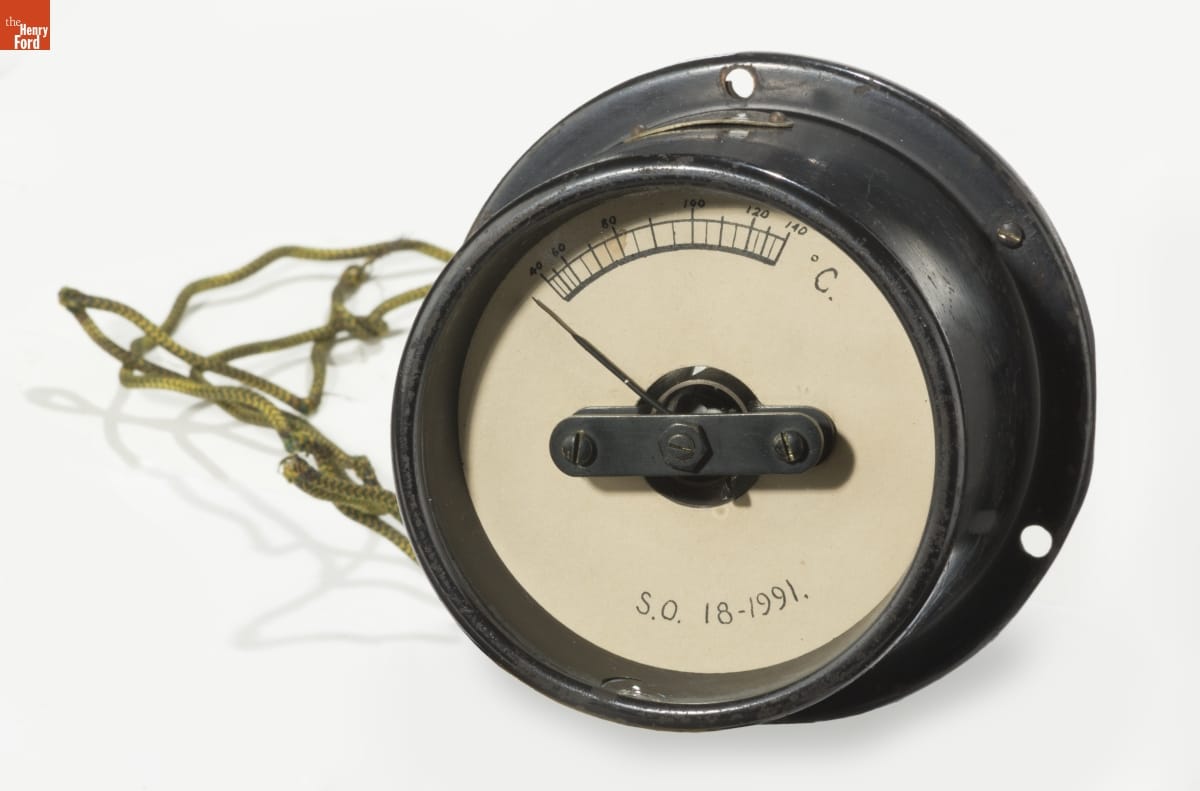
- Locomotive Temperature Gauge -
- Collections - Artifact
Locomotive Temperature Gauge