
Search
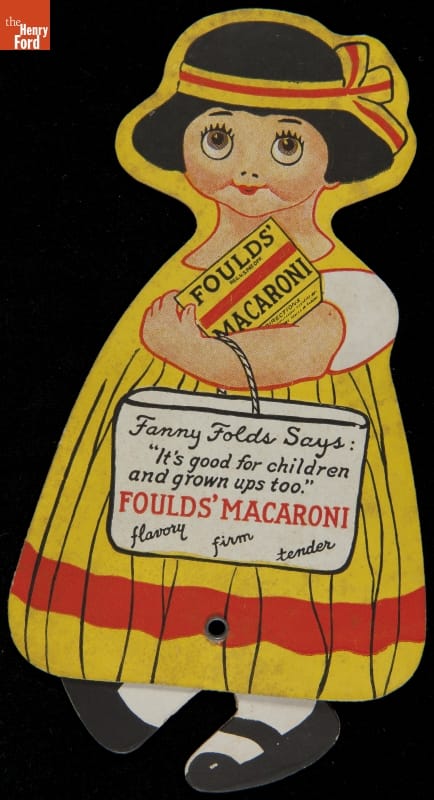
- Trade Card for Foulds' Macaroni, 1922 - In the last third of the nineteenth century, American consumers could choose from an unprecedented variety of goods and services. Seeking to distinguish certain products and businesses from the competition, advertisers began to print and distribute trade cards. Though the popularity of these cards diminished after 1900, some companies employed the informative, often vibrant little advertisements well into the twentieth century.
- 1922
- Collections - Artifact
Trade Card for Foulds' Macaroni, 1922
In the last third of the nineteenth century, American consumers could choose from an unprecedented variety of goods and services. Seeking to distinguish certain products and businesses from the competition, advertisers began to print and distribute trade cards. Though the popularity of these cards diminished after 1900, some companies employed the informative, often vibrant little advertisements well into the twentieth century.
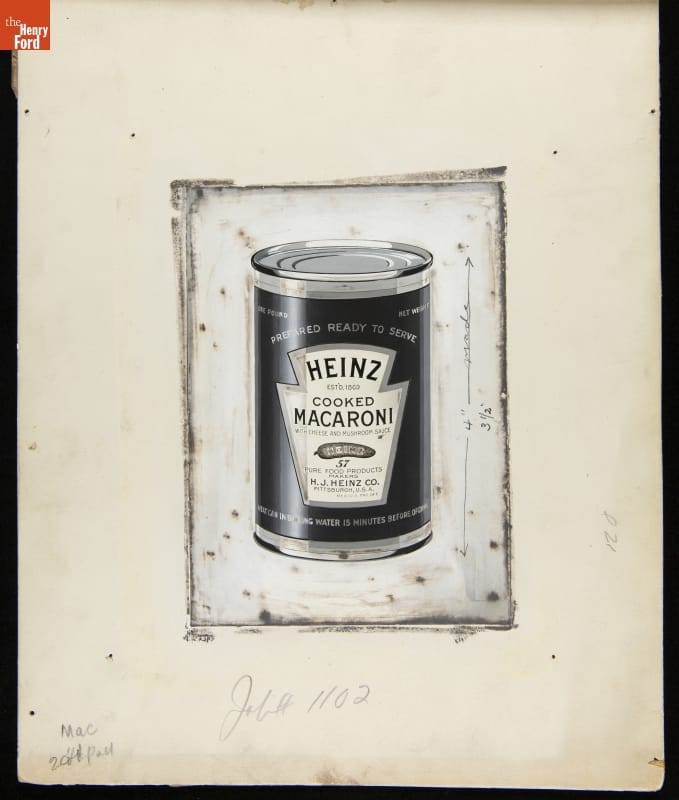
- Drawing of Heinz Cooked Macaroni Can, circa 1920 - The H.J. Heinz Company employed ambitious and comprehensive advertising strategies to meet consumers at home, in stores, and everywhere in between. Drawings, illustrations and modified photographs of Heinz products were often used for advertising and in publications. This advertising layout represents a step in the marketing process where the size and arrangement are taken into consideration before the final advertisement is created.
- circa 1920
- Collections - Artifact
Drawing of Heinz Cooked Macaroni Can, circa 1920
The H.J. Heinz Company employed ambitious and comprehensive advertising strategies to meet consumers at home, in stores, and everywhere in between. Drawings, illustrations and modified photographs of Heinz products were often used for advertising and in publications. This advertising layout represents a step in the marketing process where the size and arrangement are taken into consideration before the final advertisement is created.
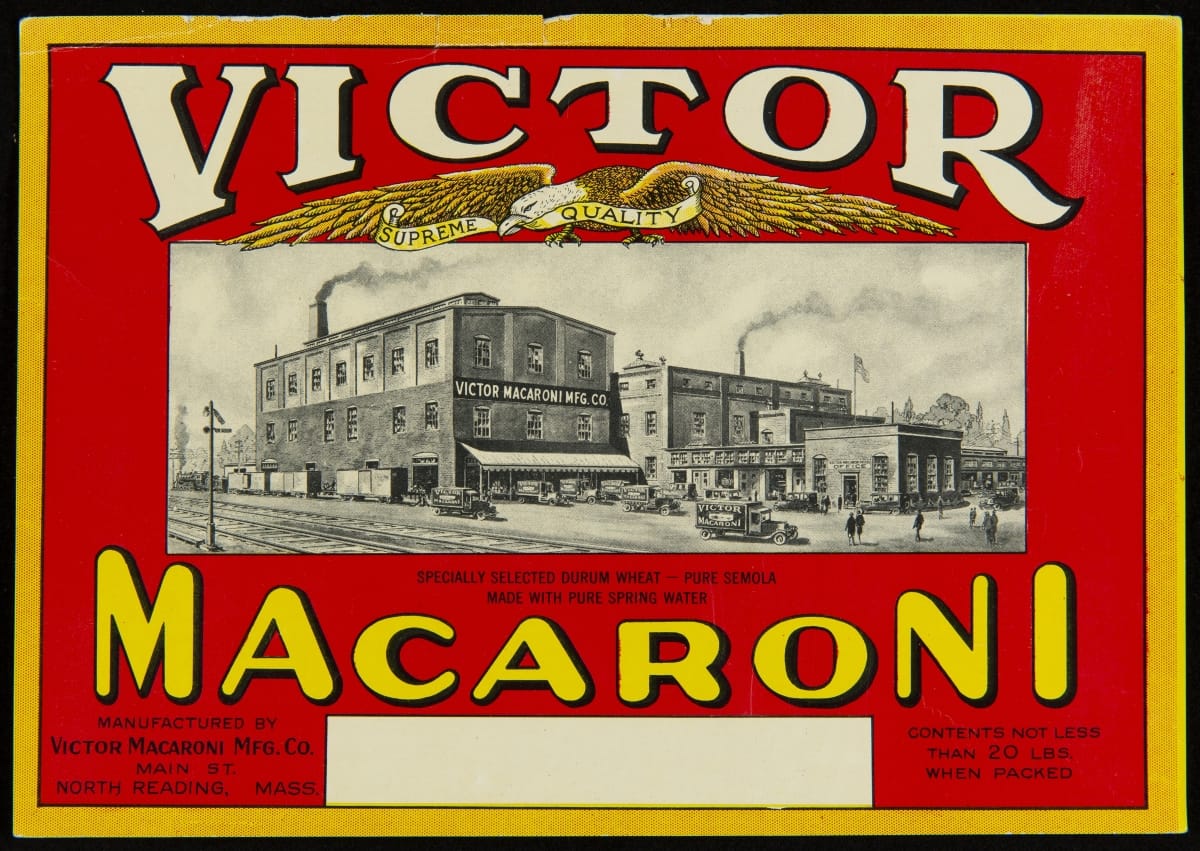
- Crate Label, "Victor Brand Macaroni," circa 1928 -
- circa 1928
- Collections - Artifact
Crate Label, "Victor Brand Macaroni," circa 1928
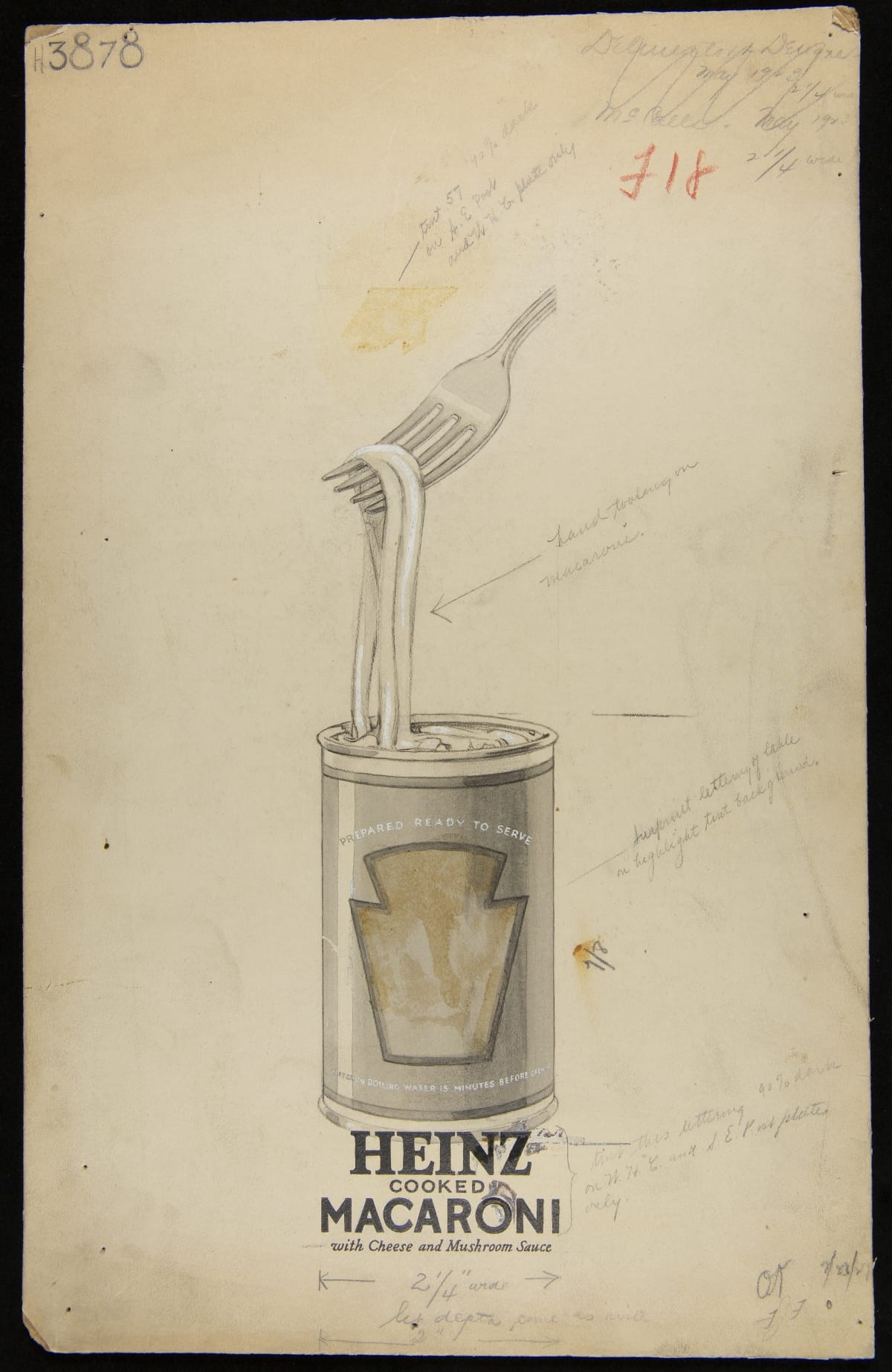
- Advertising Layout for Heinz Cooked Macaroni, 1923 - The H.J. Heinz Company marketed their products in stores, magazines, on trade cards, and even on streetcars. This advertising layout drawing represents one of the steps in the marketing process in which the drawing, size, and shading are taken into consideration before the final advertisement is created.
- 1923
- Collections - Artifact
Advertising Layout for Heinz Cooked Macaroni, 1923
The H.J. Heinz Company marketed their products in stores, magazines, on trade cards, and even on streetcars. This advertising layout drawing represents one of the steps in the marketing process in which the drawing, size, and shading are taken into consideration before the final advertisement is created.
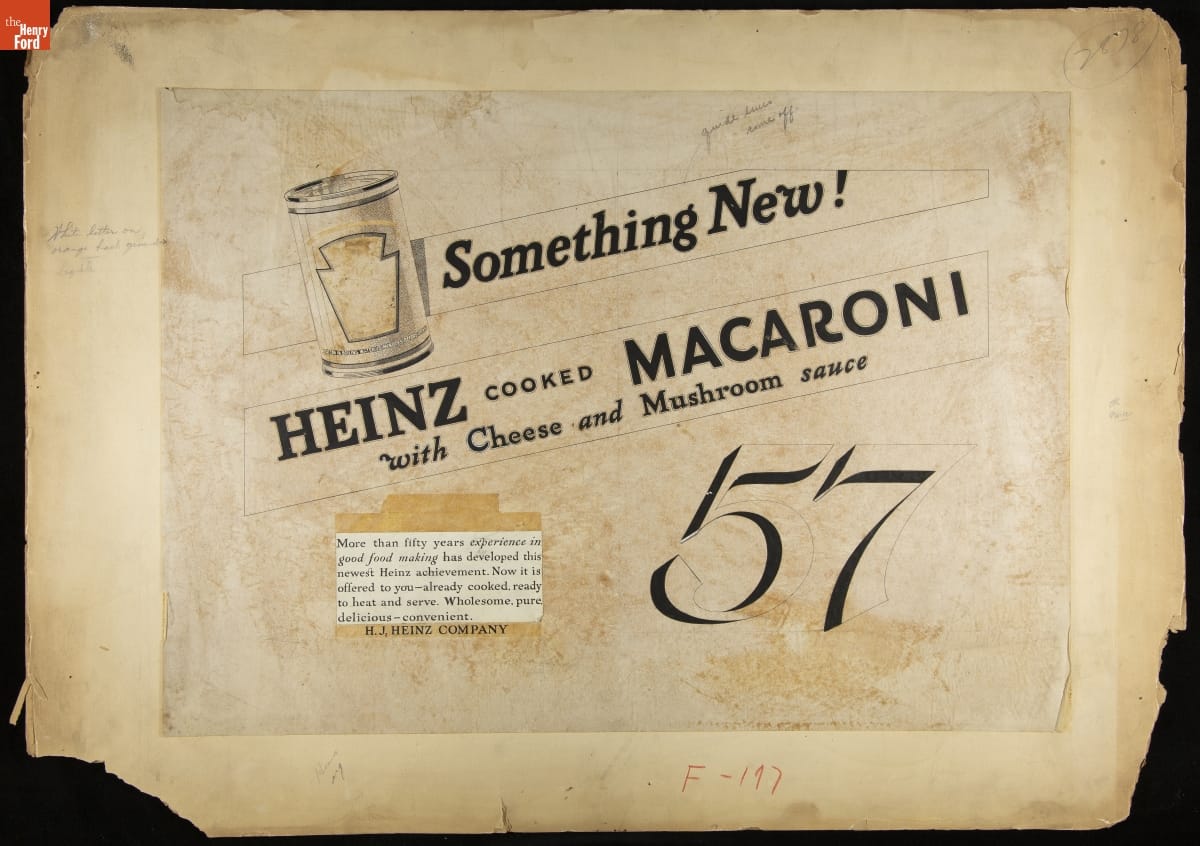
- Advertising Layout for Heinz Cooked Macaroni, circa 1920 - The H.J. Heinz Company marketed their products in stores, magazines, on trade cards, and even on streetcars. This advertising text layout represents one of the steps in the marketing process where font, size, and arrangement are all considered before the final advertisement is created.
- circa 1920
- Collections - Artifact
Advertising Layout for Heinz Cooked Macaroni, circa 1920
The H.J. Heinz Company marketed their products in stores, magazines, on trade cards, and even on streetcars. This advertising text layout represents one of the steps in the marketing process where font, size, and arrangement are all considered before the final advertisement is created.
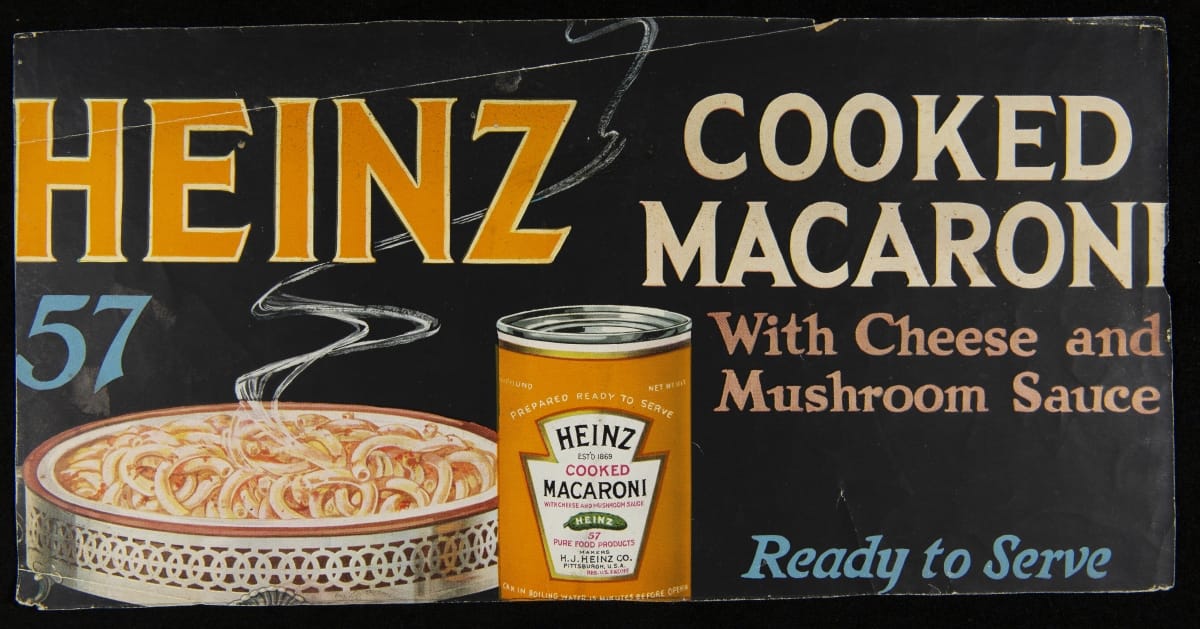
- Streetcar Advertising Poster for Heinz Cooked Macaroni, circa 1925 - Henry J. Heinz rarely missed an opportunity to market his "57 Varieties" -- a catchy slogan he created despite offering a line of more than 60 packaged food products. A prolific promoter, Heinz aimed to reach consumers in stores, at home, and everywhere in-between. This colorful poster advertised Heinz Cooked Macaroni to passengers riding in a streetcar.
- circa 1925
- Collections - Artifact
Streetcar Advertising Poster for Heinz Cooked Macaroni, circa 1925
Henry J. Heinz rarely missed an opportunity to market his "57 Varieties" -- a catchy slogan he created despite offering a line of more than 60 packaged food products. A prolific promoter, Heinz aimed to reach consumers in stores, at home, and everywhere in-between. This colorful poster advertised Heinz Cooked Macaroni to passengers riding in a streetcar.
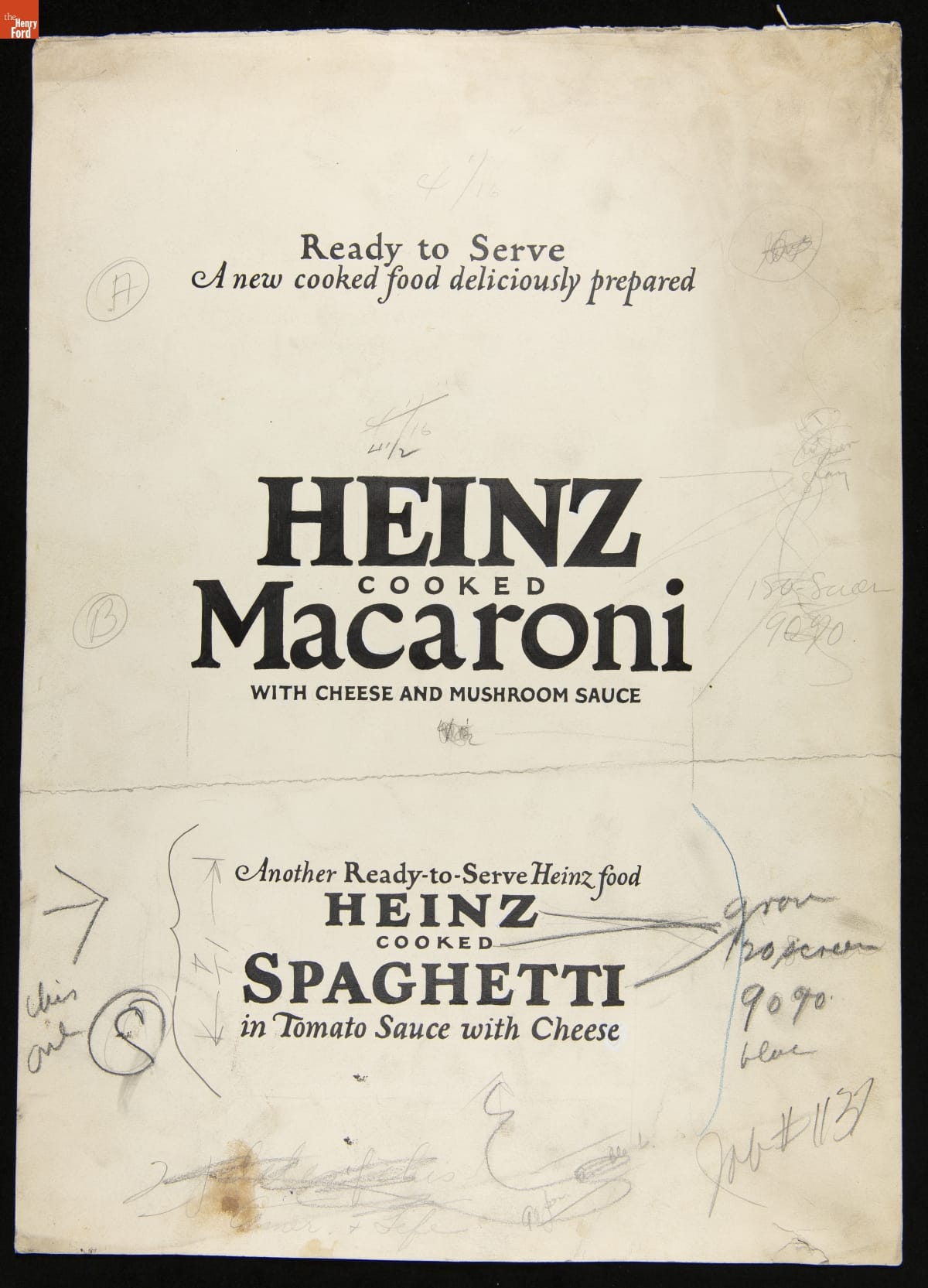
- Advertising Layout for Heinz "Ready to Serve" Macaroni and Spaghetti, 1920-1930 - The H.J. Heinz Company marketed their products in stores, magazines, on trade cards, and even on streetcars. This advertising text layout represents one of the steps in the marketing process where font, size, and arrangement are all considered before the final advertisement is created.
- 1920-1930
- Collections - Artifact
Advertising Layout for Heinz "Ready to Serve" Macaroni and Spaghetti, 1920-1930
The H.J. Heinz Company marketed their products in stores, magazines, on trade cards, and even on streetcars. This advertising text layout represents one of the steps in the marketing process where font, size, and arrangement are all considered before the final advertisement is created.
- Drawing of a Face on Macaroni Noodle by Jason Polan, circa 2013 - Jason Polan was a Michigan-born, New York-based illustrator whose visual storytelling sought to elevate the everyday—with humor and care. This collection documents Polan's life and prolific art practice, spanning childhood to adulthood; he was also a convener of creative communities. Inspiration, ideation, and completed projects are represented in preparatory material, printed matter, publications, product design, artwork, and personal collecting.

- circa 2013
- Collections - Artifact
Drawing of a Face on Macaroni Noodle by Jason Polan, circa 2013
Jason Polan was a Michigan-born, New York-based illustrator whose visual storytelling sought to elevate the everyday—with humor and care. This collection documents Polan's life and prolific art practice, spanning childhood to adulthood; he was also a convener of creative communities. Inspiration, ideation, and completed projects are represented in preparatory material, printed matter, publications, product design, artwork, and personal collecting.
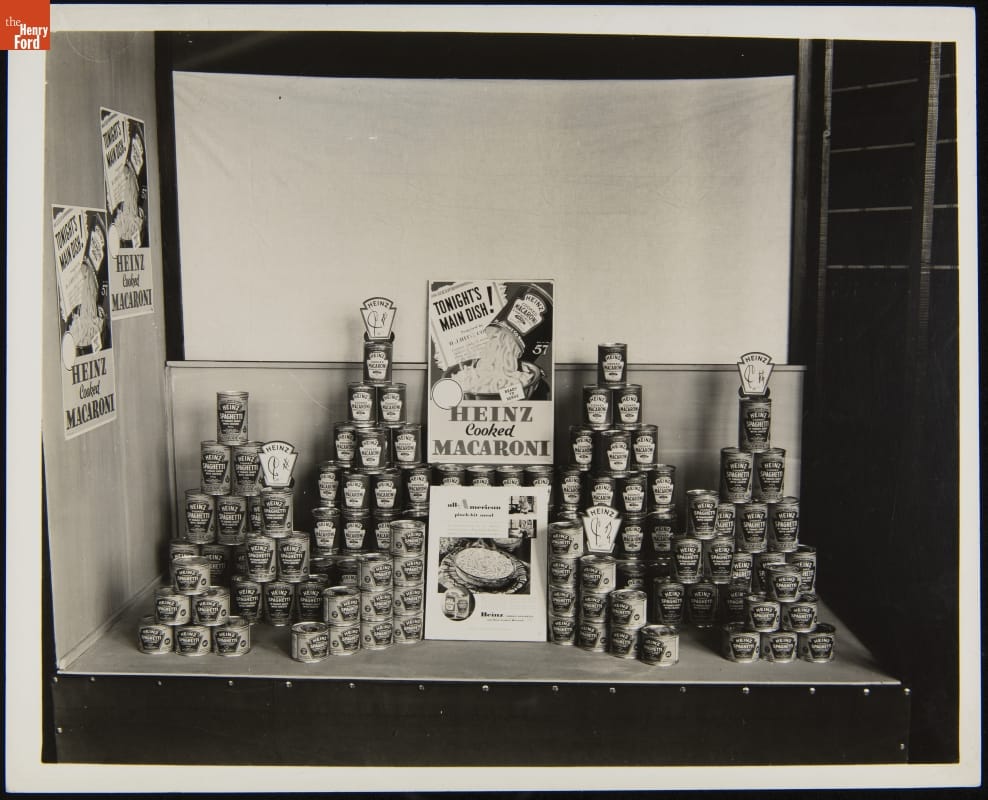
- Store Display of Heinz Macaroni and Spaghetti, with Two Advertising Posters, circa 1930 - The H.J. Heinz Company was at the forefront of creative marketing in the manufactured food industry. Its comprehensive advertising strategy included elaborate product displays in local grocery stores where shoppers were greeted with colorful posters and meticulously designed arrangements of canned and jarred products. This photograph shows an example of such product displays.
- circa 1930
- Collections - Artifact
Store Display of Heinz Macaroni and Spaghetti, with Two Advertising Posters, circa 1930
The H.J. Heinz Company was at the forefront of creative marketing in the manufactured food industry. Its comprehensive advertising strategy included elaborate product displays in local grocery stores where shoppers were greeted with colorful posters and meticulously designed arrangements of canned and jarred products. This photograph shows an example of such product displays.
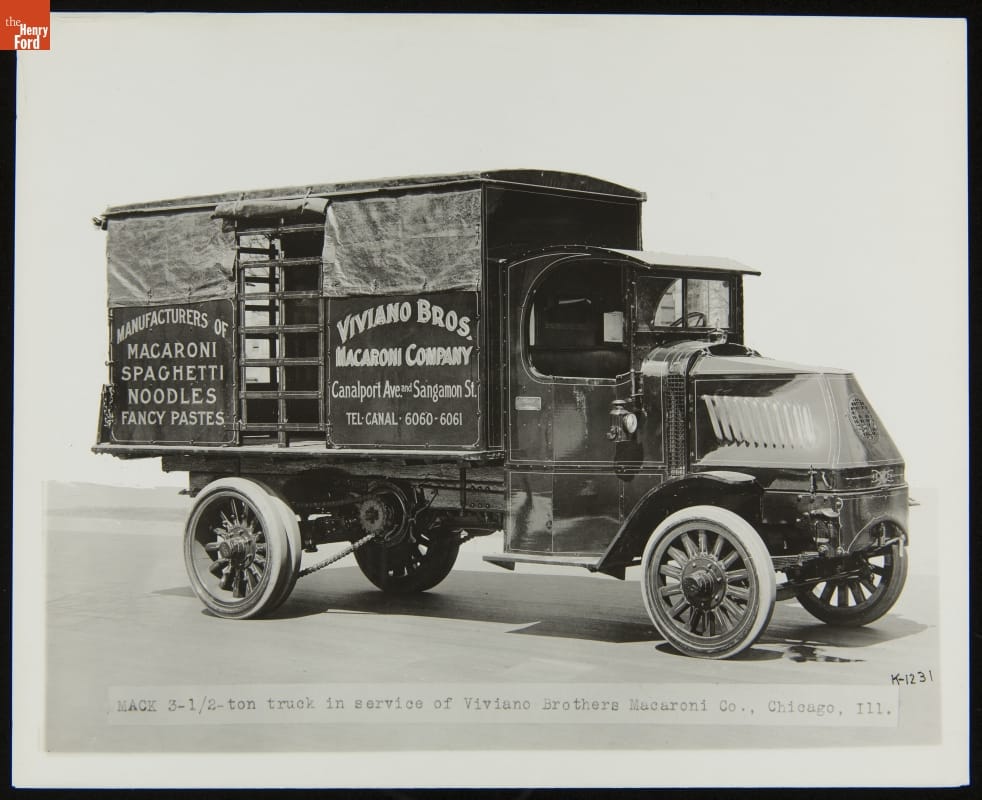
- Mack Model AC Stake Truck in Service of Viviano Brothers Macaroni Company, Chicago, Illinois, 1911-1916 - Founded in Brooklyn, New York, in 1900, Mack Brothers Company relocated to Allentown, Pennsylvania, in 1905 and adopted the name Mack Trucks in 1922. The company introduced its heavy-duty Model AC truck in 1916. The model remained in production until 1938, and Mack built more than 40,000 units. The Model AC's distinctive hood set it apart from other trucks.
- 1911-1916
- Collections - Artifact
Mack Model AC Stake Truck in Service of Viviano Brothers Macaroni Company, Chicago, Illinois, 1911-1916
Founded in Brooklyn, New York, in 1900, Mack Brothers Company relocated to Allentown, Pennsylvania, in 1905 and adopted the name Mack Trucks in 1922. The company introduced its heavy-duty Model AC truck in 1916. The model remained in production until 1938, and Mack built more than 40,000 units. The Model AC's distinctive hood set it apart from other trucks.