
Search
- Introducing the Main Storage Building - Get an introduction to our newest collections storage facility, the Main Storage Building, including the work we do and the artifacts we store there.

- November 26, 2021
- Collections - article
Introducing the Main Storage Building
Get an introduction to our newest collections storage facility, the Main Storage Building, including the work we do and the artifacts we store there.
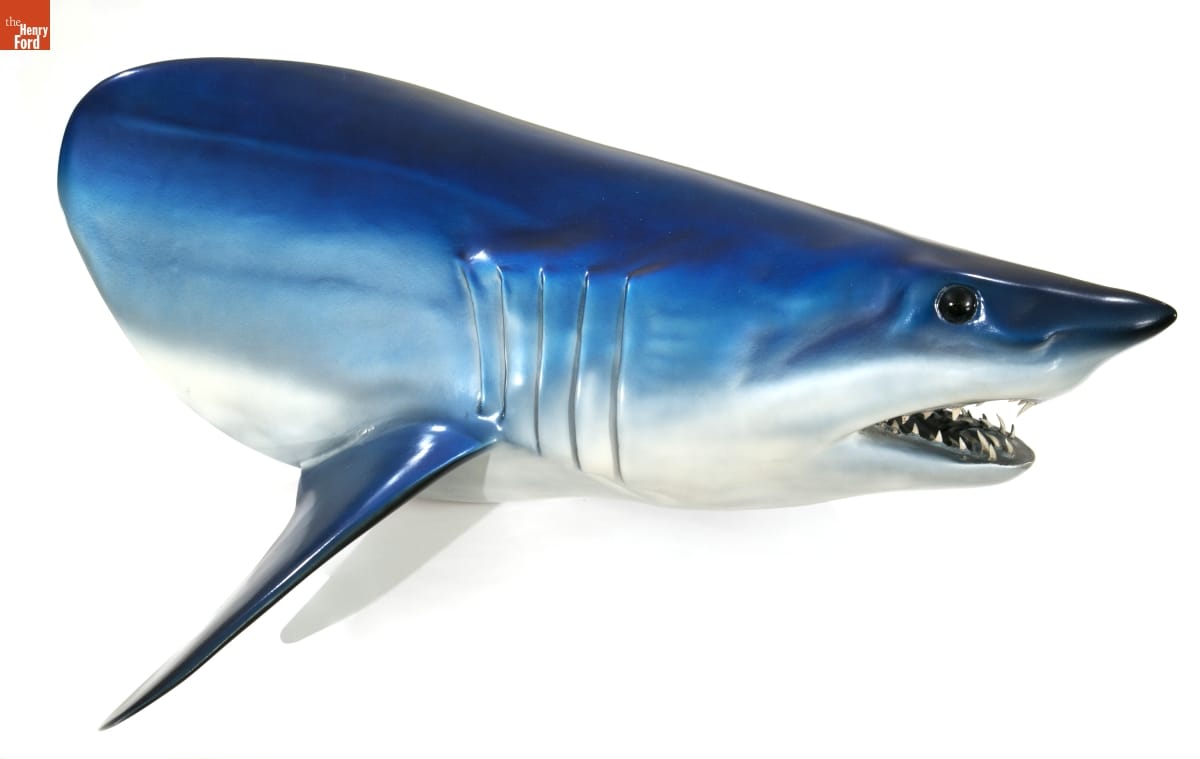
- Noteworthy Artifacts from Our Main Storage Building - Main Storage Building, or MSB, is The Henry Ford's newest collections storage building, with 178,000 square feet of space dedicated exclusively to keeping our artifacts safe and sound. To celebrate moving over 40,000 objects into the new space, a project completed in 2021, some of our staff call out favorite artifacts that now call MSB home.
- November 22, 2021
- Collections - Set
Noteworthy Artifacts from Our Main Storage Building
Main Storage Building, or MSB, is The Henry Ford's newest collections storage building, with 178,000 square feet of space dedicated exclusively to keeping our artifacts safe and sound. To celebrate moving over 40,000 objects into the new space, a project completed in 2021, some of our staff call out favorite artifacts that now call MSB home.
- Photographing Artifacts in Our Main Storage Building - Discover how our newest collections storage facility is not just a place to store artifacts, but a place to photograph them as well.

- November 25, 2021
- Collections - article
Photographing Artifacts in Our Main Storage Building
Discover how our newest collections storage facility is not just a place to store artifacts, but a place to photograph them as well.
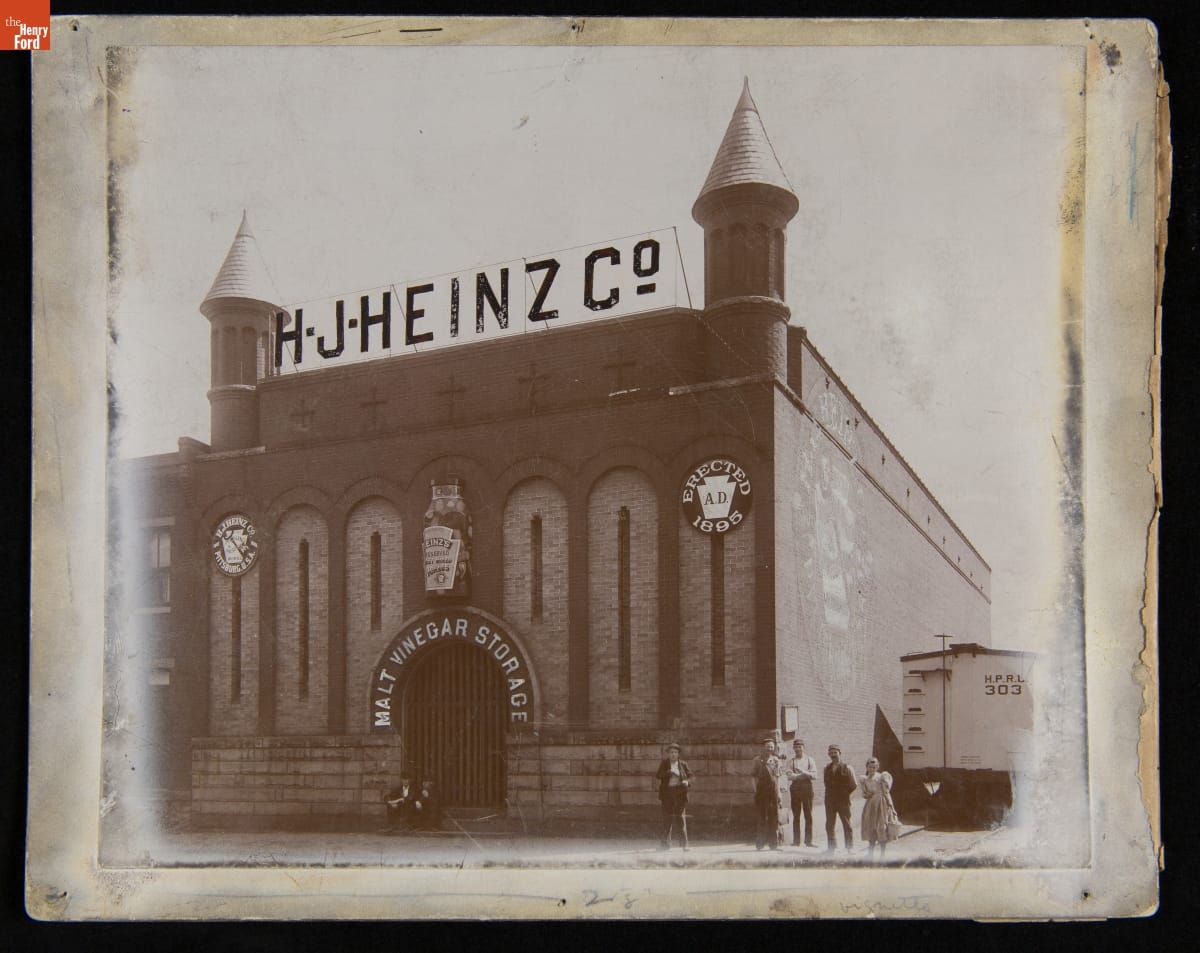
- H.J. Heinz's Malt Vinegar Storage Building, circa 1904 - Photographs of the H.J. Heinz factory -- including buildings, employees, and the manufacturing process -- were often taken and then modified for advertising and publications. This advertising layout shows the Heinz Malt Vinegar Storage Building.
- circa 1904
- Collections - Artifact
H.J. Heinz's Malt Vinegar Storage Building, circa 1904
Photographs of the H.J. Heinz factory -- including buildings, employees, and the manufacturing process -- were often taken and then modified for advertising and publications. This advertising layout shows the Heinz Malt Vinegar Storage Building.
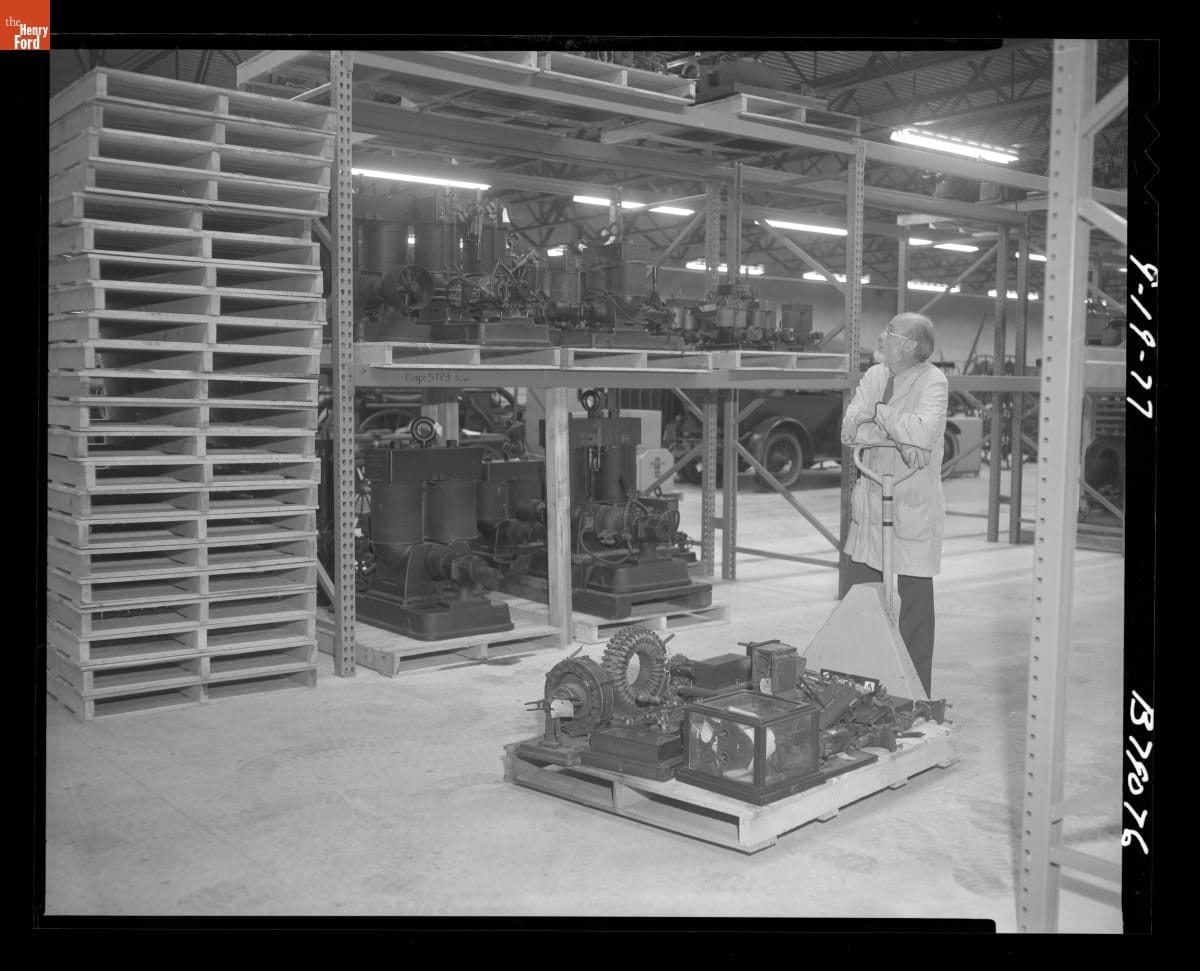
- Employee Robert Springer in Storage Building, Henry Ford Museum, 1977 -
- October 01, 1977
- Collections - Artifact
Employee Robert Springer in Storage Building, Henry Ford Museum, 1977
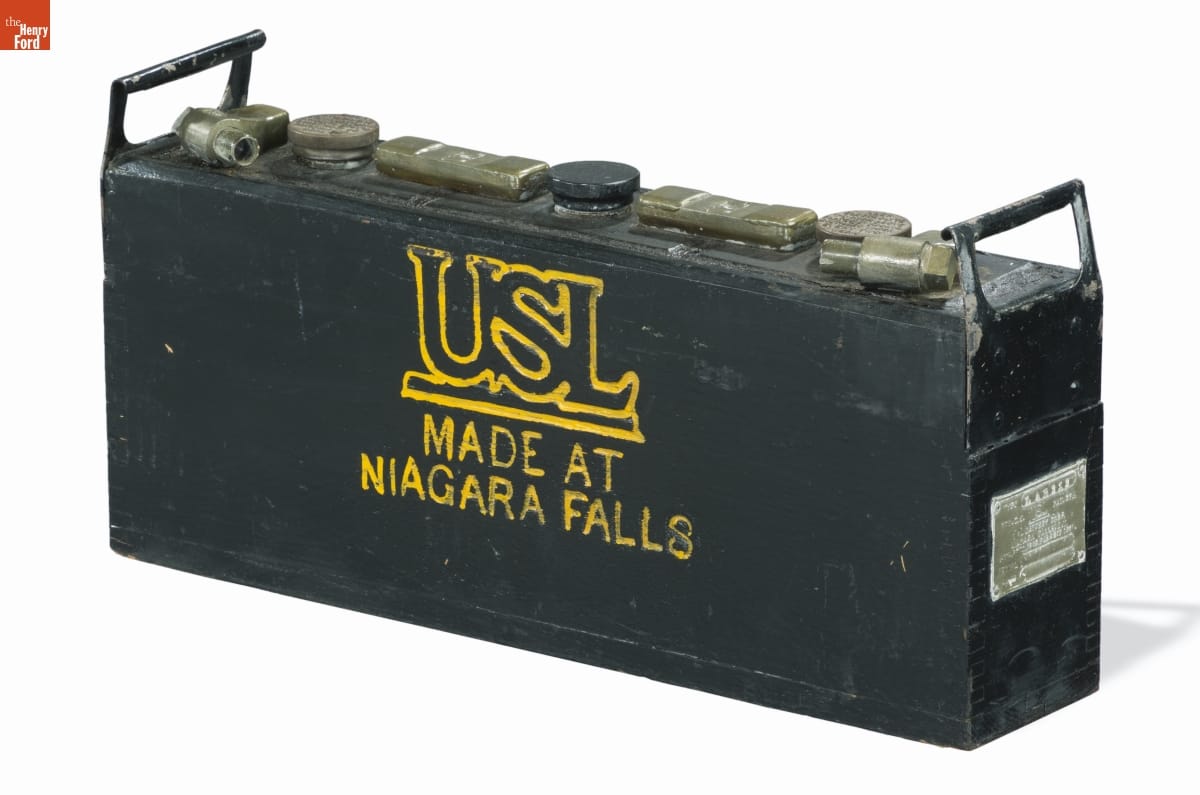
- Storage Battery -
- Collections - Artifact
Storage Battery
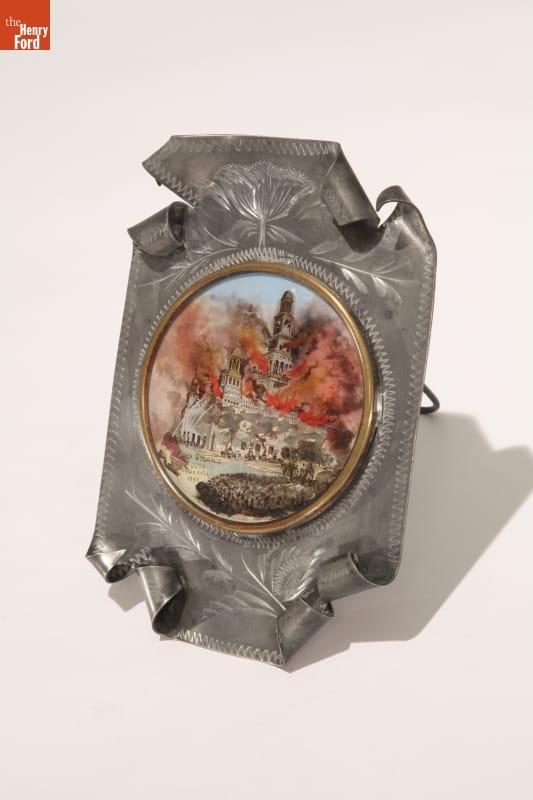
- Souvenir Painting of Columbian Exposition Cold Storage Building Fire, 1893 - On July 10, 1893 the Cold Storage Building at Chicago's World's Columbian Exposition was destroyed by fire. The building stored perishable food used by fair vendors and also doubled as an ice rink. The scene of its destruction is depicted in this small painting. The fire did not deter visitors -- over 100,000 visited the fair the following day.
- July 10, 1893
- Collections - Artifact
Souvenir Painting of Columbian Exposition Cold Storage Building Fire, 1893
On July 10, 1893 the Cold Storage Building at Chicago's World's Columbian Exposition was destroyed by fire. The building stored perishable food used by fair vendors and also doubled as an ice rink. The scene of its destruction is depicted in this small painting. The fire did not deter visitors -- over 100,000 visited the fair the following day.
- Exposing the Collections Storage Building - As part of a three-year IMLS-funded grant project, we've been transforming our Collections Storage Building (CSB). See the changes for yourself.

- April 02, 2020
- Collections - article
Exposing the Collections Storage Building
As part of a three-year IMLS-funded grant project, we've been transforming our Collections Storage Building (CSB). See the changes for yourself.
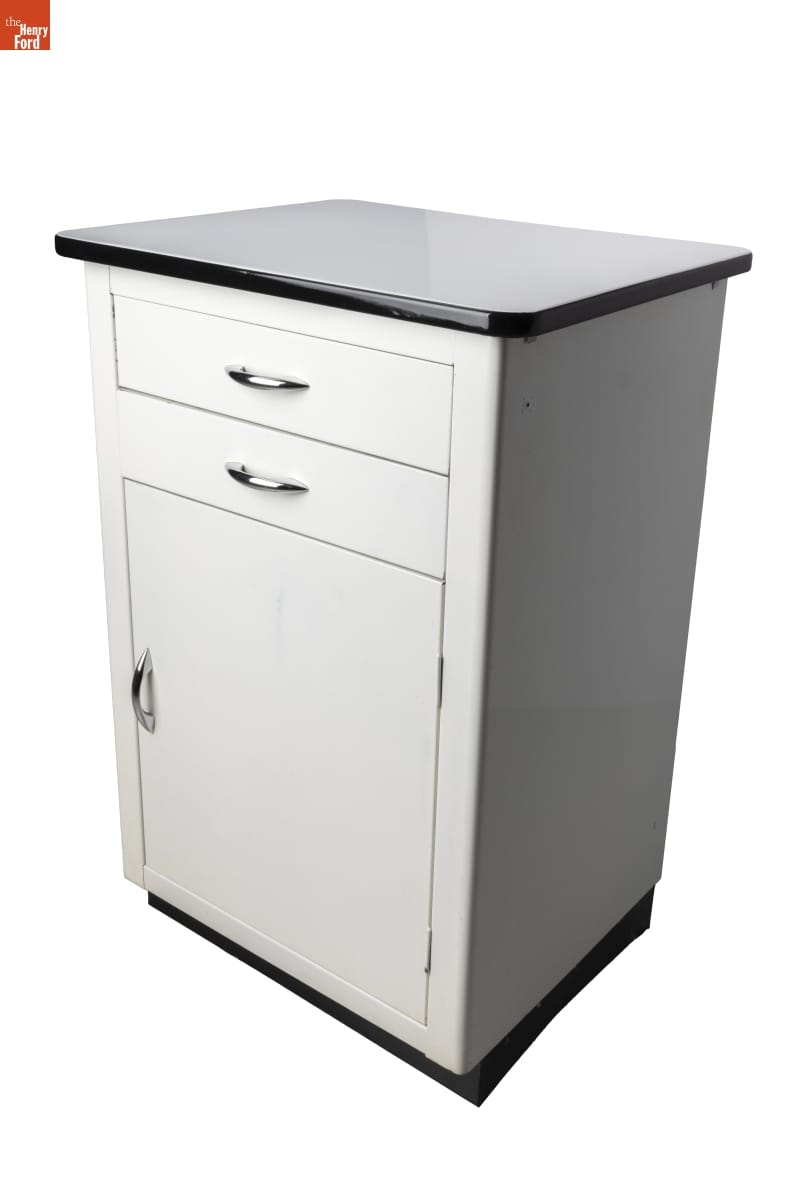
- Storage Cabinet, circa 1960 - Velma Truant (1928-2021) began her hairstyling career at the Detroit Hudson's department store salon in the late 1940s. When she left Hudson's in 1963 to care for her young daughter, Truant set up a salon to serve clients from the basement of her Allen Park, Michigan, home. She stored a range of equipment, such as hairbrushes and rollers, in this cabinet.
- circa 1960
- Collections - Artifact
Storage Cabinet, circa 1960
Velma Truant (1928-2021) began her hairstyling career at the Detroit Hudson's department store salon in the late 1940s. When she left Hudson's in 1963 to care for her young daughter, Truant set up a salon to serve clients from the basement of her Allen Park, Michigan, home. She stored a range of equipment, such as hairbrushes and rollers, in this cabinet.
- Storage Chest, 1880-1920 -
- 1880-1920
- Collections - Artifact
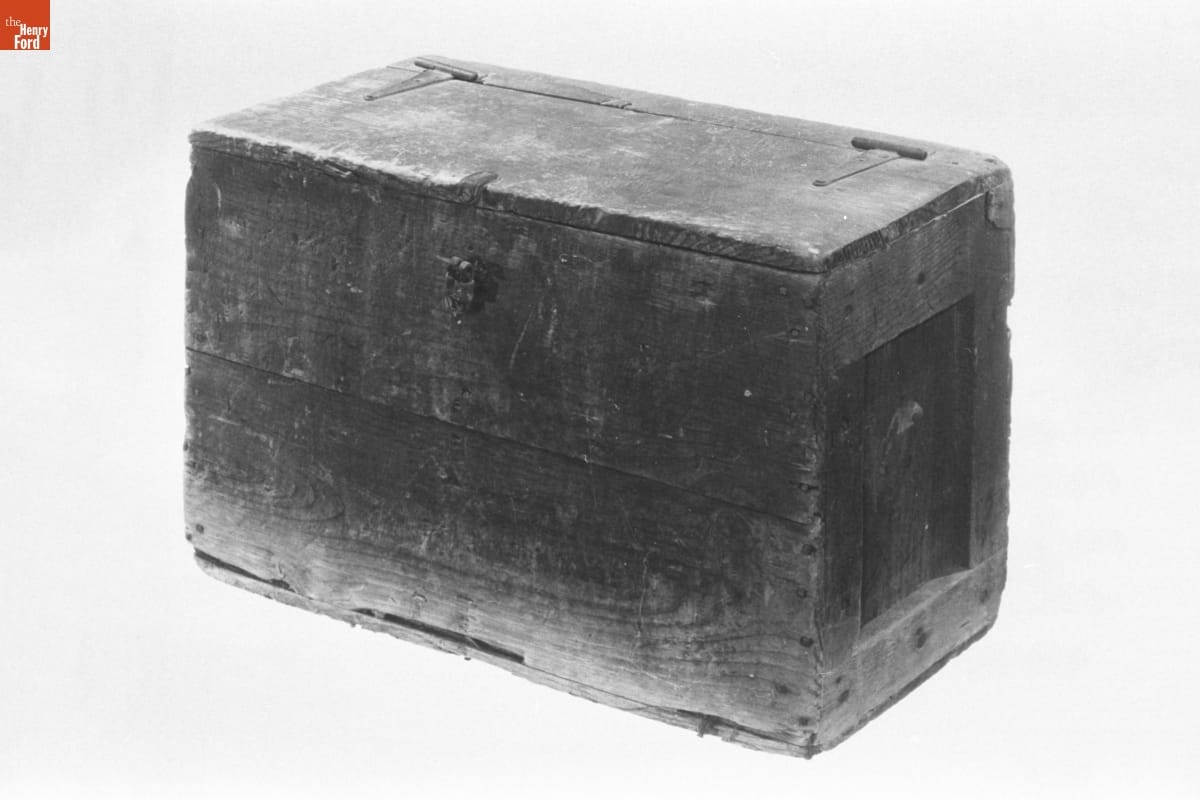
Storage Chest, 1880-1920