
Search
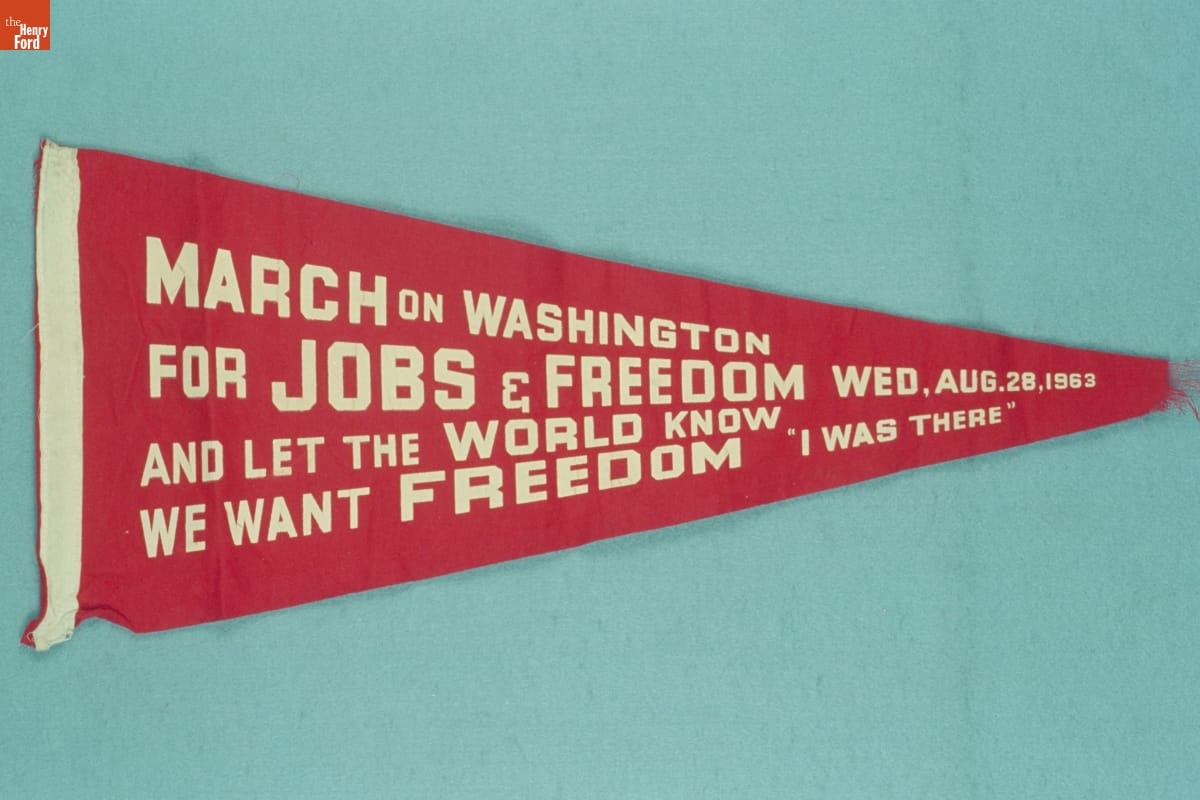
- Pennant, March on Washington for Jobs and Freedom, 1963 - More than 250,000 civil rights advocates showed up at this peaceful march to support unity, jobs, and a new Civil Rights bill being proposed by President Kennedy. Television viewers nationwide watched African Americans and whites march together, united behind a common cause. Songs and speeches at this march included Martin Luther King, Jr.'s famous "I Have a Dream" speech.
- August 28, 1963
- Collections - Artifact
Pennant, March on Washington for Jobs and Freedom, 1963
More than 250,000 civil rights advocates showed up at this peaceful march to support unity, jobs, and a new Civil Rights bill being proposed by President Kennedy. Television viewers nationwide watched African Americans and whites march together, united behind a common cause. Songs and speeches at this march included Martin Luther King, Jr.'s famous "I Have a Dream" speech.
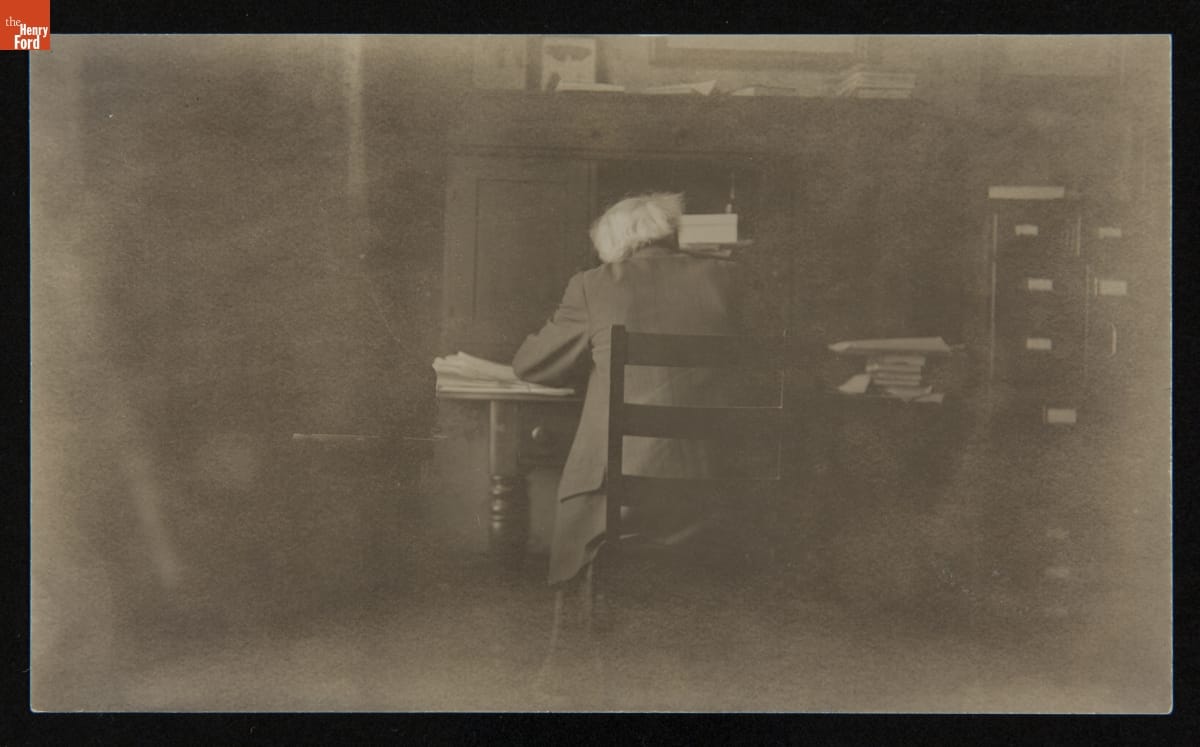
- John Burroughs "On the Job," circa 1917 - John Burroughs (1837-1921) was an internationally known naturalist and writer whose nature essays were well-received in both literary and scientific circles. From his home in the Catskills of upstate New York, Burroughs wrote mostly about what could be found in accessible and familiar landscapes. He wanted his readers to appreciate the natural world that surrounded them.
- circa 1917
- Collections - Artifact
John Burroughs "On the Job," circa 1917
John Burroughs (1837-1921) was an internationally known naturalist and writer whose nature essays were well-received in both literary and scientific circles. From his home in the Catskills of upstate New York, Burroughs wrote mostly about what could be found in accessible and familiar landscapes. He wanted his readers to appreciate the natural world that surrounded them.
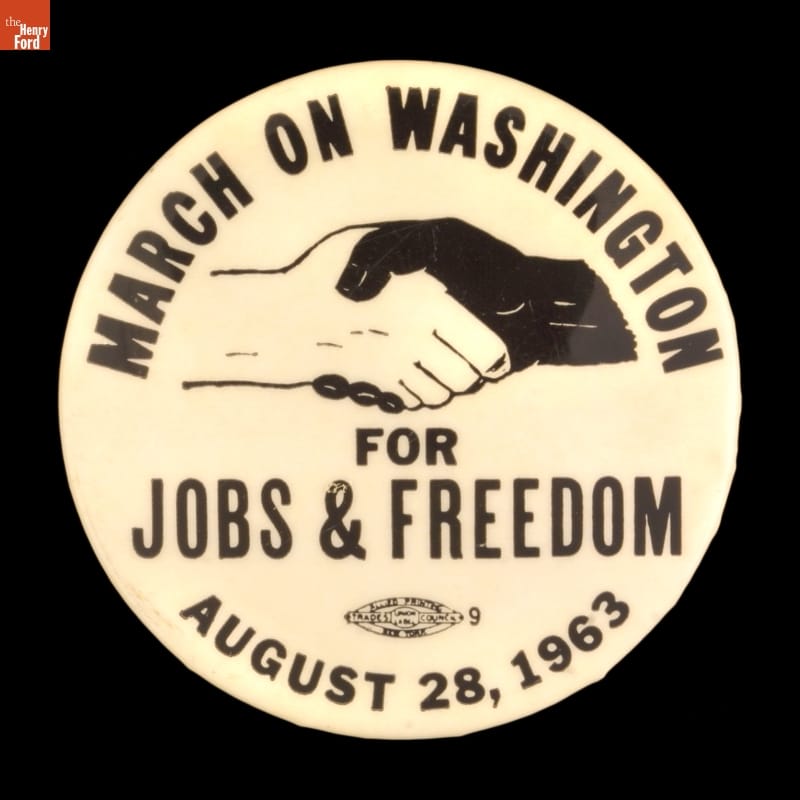
- Button, March on Washington for Jobs and Freedom, 1963 - More than 250,000 civil rights advocates showed up at this peaceful march to support unity, jobs, and a new Civil Rights bill being proposed by President Kennedy. Television viewers nationwide watched African Americans and whites march together, united behind a common cause. Songs and speeches at this march included Martin Luther King, Jr.'s famous "I Have a Dream" speech.
- August 28, 1963
- Collections - Artifact
Button, March on Washington for Jobs and Freedom, 1963
More than 250,000 civil rights advocates showed up at this peaceful march to support unity, jobs, and a new Civil Rights bill being proposed by President Kennedy. Television viewers nationwide watched African Americans and whites march together, united behind a common cause. Songs and speeches at this march included Martin Luther King, Jr.'s famous "I Have a Dream" speech.
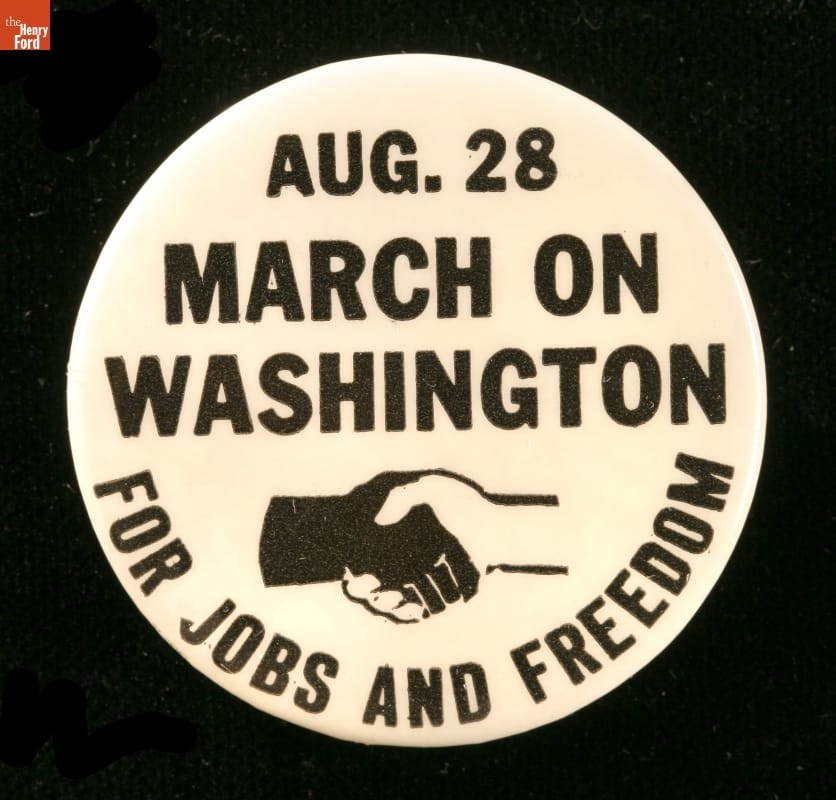
- Button, March on Washington for Jobs and Freedom, 1963 - More than 250,000 civil rights advocates showed up at this peaceful march to support unity, jobs, and a new Civil Rights bill being proposed by President Kennedy. Television viewers nationwide watched African Americans and whites march together, united behind a common cause. Songs and speeches at this march included Martin Luther King, Jr.'s famous "I Have a Dream" speech.
- August 28, 1963
- Collections - Artifact
Button, March on Washington for Jobs and Freedom, 1963
More than 250,000 civil rights advocates showed up at this peaceful march to support unity, jobs, and a new Civil Rights bill being proposed by President Kennedy. Television viewers nationwide watched African Americans and whites march together, united behind a common cause. Songs and speeches at this march included Martin Luther King, Jr.'s famous "I Have a Dream" speech.
- Gordon Job Press, circa 1865 - The Gordon Franklin was a popular platen job press in the 19th century, celebrated for its innovative ink distribution. Its inventor, George P. Gordon, a Spiritualist, claimed that Benjamin Franklin described the press to him in a dream. J.H. Crouse of Chicago used this press for small jobs, printing patent medicine labels and church bulletins to cover college expenses.
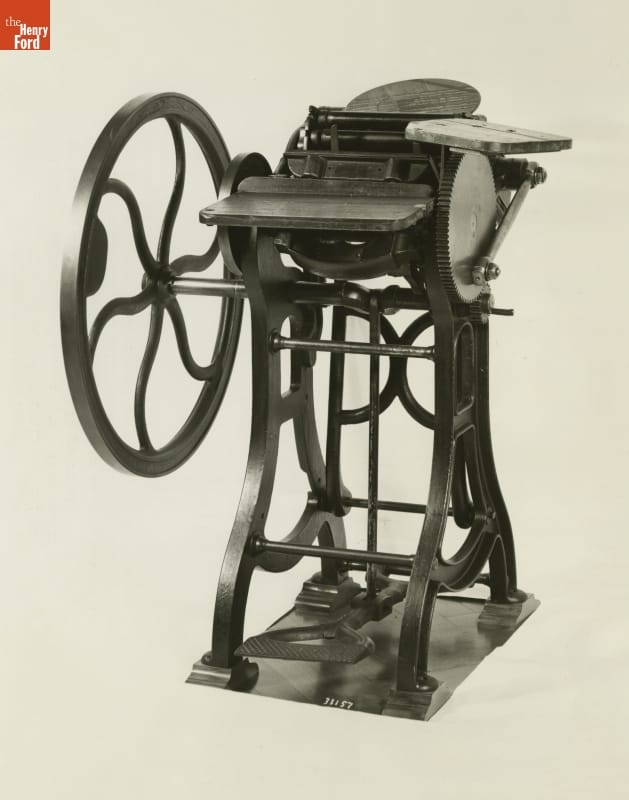
- circa 1865
- Collections - Artifact
Gordon Job Press, circa 1865
The Gordon Franklin was a popular platen job press in the 19th century, celebrated for its innovative ink distribution. Its inventor, George P. Gordon, a Spiritualist, claimed that Benjamin Franklin described the press to him in a dream. J.H. Crouse of Chicago used this press for small jobs, printing patent medicine labels and church bulletins to cover college expenses.
- Adams Bed and Platen Job Press, 1859-1868 - The job press was used for short runs of small items like business cards, handbills, and small books. Its foot-operated treadle made printing efficient--typical operators could produce 1000 prints per hour. This job press could also be adapted to run on steam power, allowing the print process to become mechanized for even greater output.
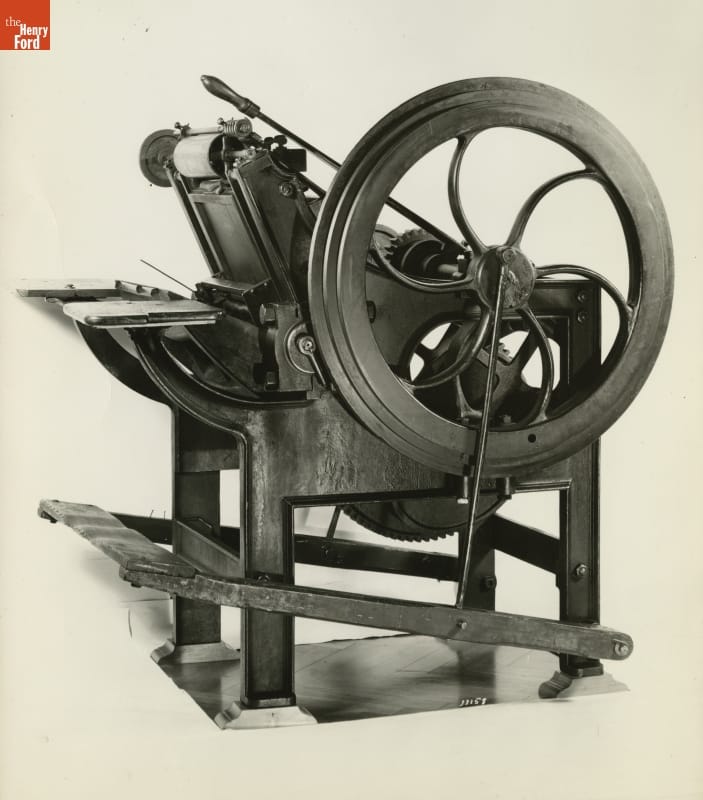
- 1859-1868
- Collections - Artifact
Adams Bed and Platen Job Press, 1859-1868
The job press was used for short runs of small items like business cards, handbills, and small books. Its foot-operated treadle made printing efficient--typical operators could produce 1000 prints per hour. This job press could also be adapted to run on steam power, allowing the print process to become mechanized for even greater output.
- Button, "JOIN Union for Jobs or Income Now," circa 1968 -
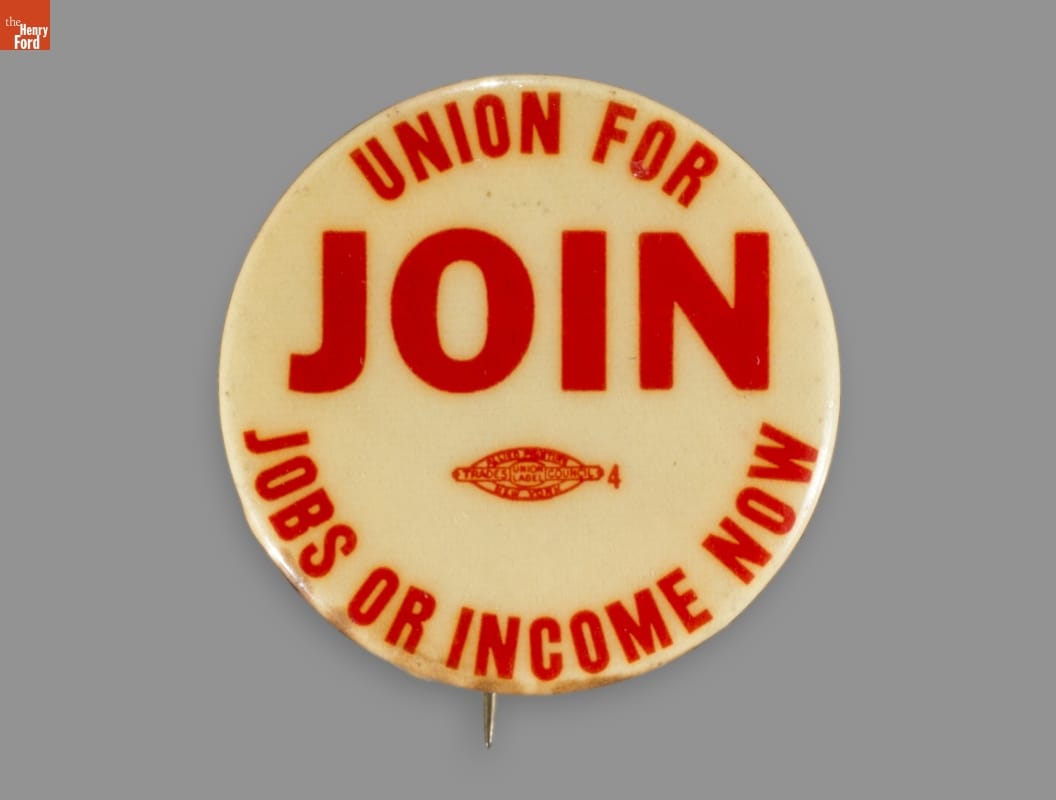
- circa 1968
- Collections - Artifact
Button, "JOIN Union for Jobs or Income Now," circa 1968
- "A Revolutionary Vehicle for a Thousand Jobs," Universal Jeep Advertisement, 1945 - Willys-Overland built more than half of the 650,000 jeeps manufactured for the Allies during World War II. Afterward, Willys sold civilian versions. The company marketed its civilian Jeep as a functional, versatile vehicle suitable for many different jobs -- from pulling farm equipment, to plowing snow, to simply running errands around town.
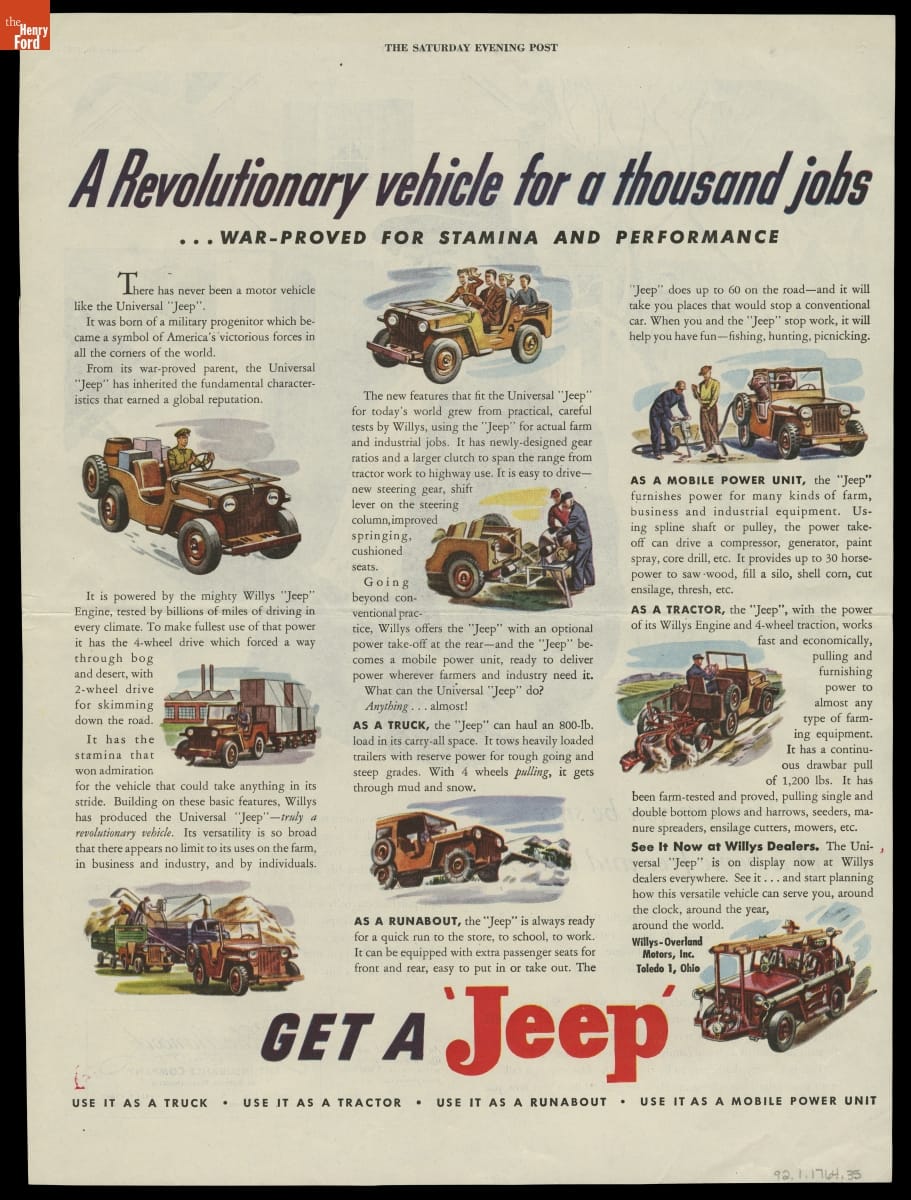
- November 10, 1945
- Collections - Artifact
"A Revolutionary Vehicle for a Thousand Jobs," Universal Jeep Advertisement, 1945
Willys-Overland built more than half of the 650,000 jeeps manufactured for the Allies during World War II. Afterward, Willys sold civilian versions. The company marketed its civilian Jeep as a functional, versatile vehicle suitable for many different jobs -- from pulling farm equipment, to plowing snow, to simply running errands around town.
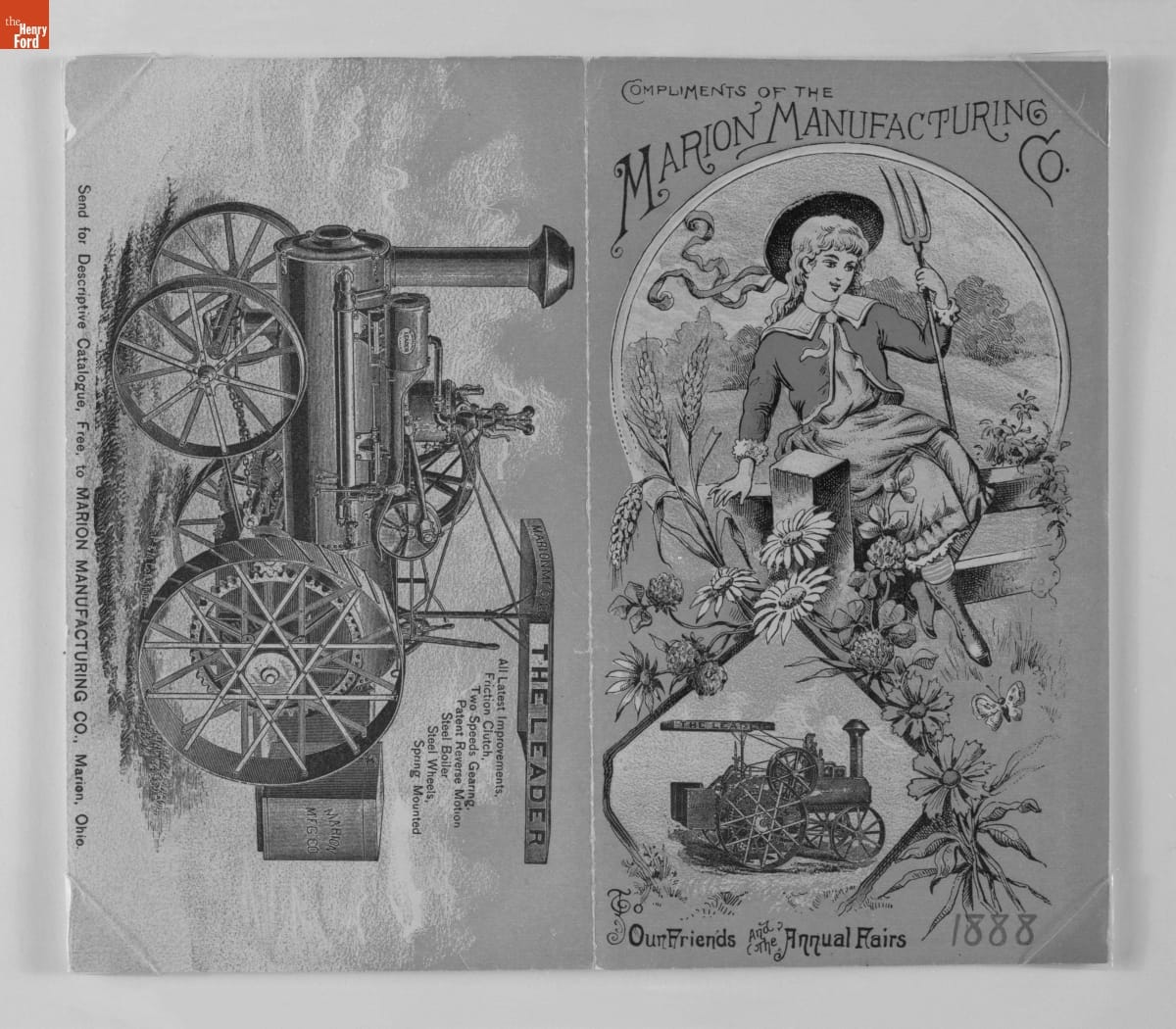
- Trade Card for Marion Manufacturing's "Leader" Machinery, 1888 - In the last third of the nineteenth century, an unprecedented variety of consumer goods and services flooded the American market. Advertisers, armed with new methods of color printing, bombarded potential customers with trade cards. Americans enjoyed and often saved the vibrant little advertisements found in product packages or distributed by local merchants. Many survive as historical records of commercialism in the United States.
- 1888
- Collections - Artifact
Trade Card for Marion Manufacturing's "Leader" Machinery, 1888
In the last third of the nineteenth century, an unprecedented variety of consumer goods and services flooded the American market. Advertisers, armed with new methods of color printing, bombarded potential customers with trade cards. Americans enjoyed and often saved the vibrant little advertisements found in product packages or distributed by local merchants. Many survive as historical records of commercialism in the United States.
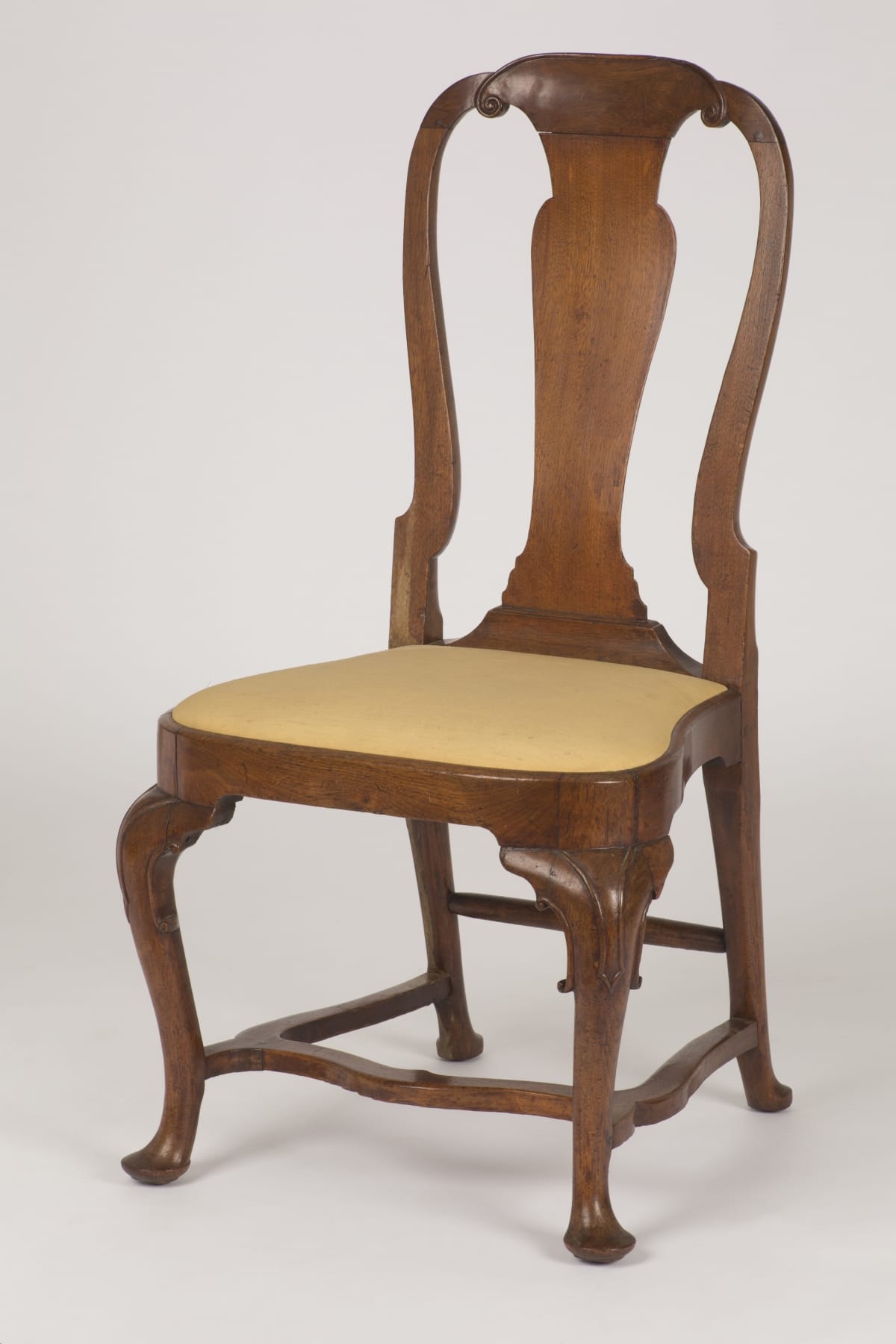
- Side Chair, Made by Job Townsend, 1740-1760 -
- 1740-1760
- Collections - Artifact
Side Chair, Made by Job Townsend, 1740-1760