
Search
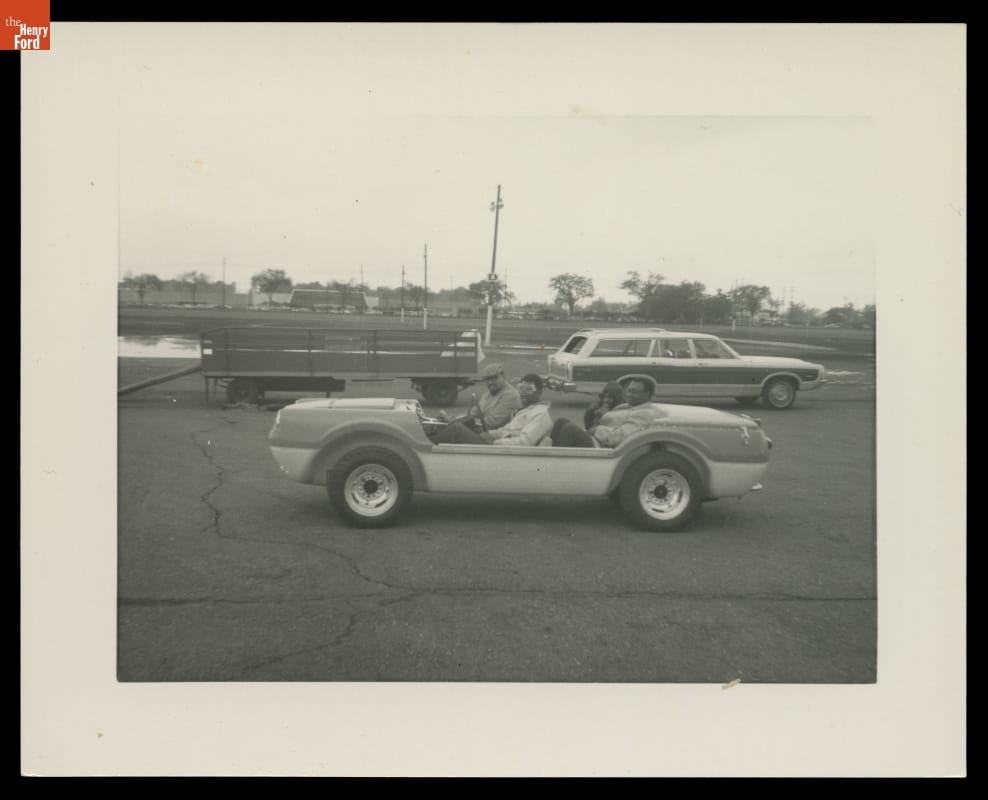
- McKinley Thompson and Crew Testing the Warrior Concept Car, 1969 - Automotive designer McKinley Thompson envisioned a rugged, easy-to-build automobile that could be manufactured and sold in developing countries. He built a working prototype on a Renault 10 chassis and gave it a buoyant plastic body and removable top. Thompson named his car the Warrior. Despite his efforts, Thompson was unable to interest automakers or investors in his idea.
- 1969
- Collections - Artifact
McKinley Thompson and Crew Testing the Warrior Concept Car, 1969
Automotive designer McKinley Thompson envisioned a rugged, easy-to-build automobile that could be manufactured and sold in developing countries. He built a working prototype on a Renault 10 chassis and gave it a buoyant plastic body and removable top. Thompson named his car the Warrior. Despite his efforts, Thompson was unable to interest automakers or investors in his idea.
- McKinley Thompson, Jr.: Designer, Maker, Aspiring Entrepreneur - While working for Ford Motor Company, the first African American automobile designer, McKinley Thompson, Jr., conceived of an idea for an all-terrain vehicle that would do for Third World countries what the Model T did for America.

- May 19, 2020
- Collections - article
McKinley Thompson, Jr.: Designer, Maker, Aspiring Entrepreneur
While working for Ford Motor Company, the first African American automobile designer, McKinley Thompson, Jr., conceived of an idea for an all-terrain vehicle that would do for Third World countries what the Model T did for America.
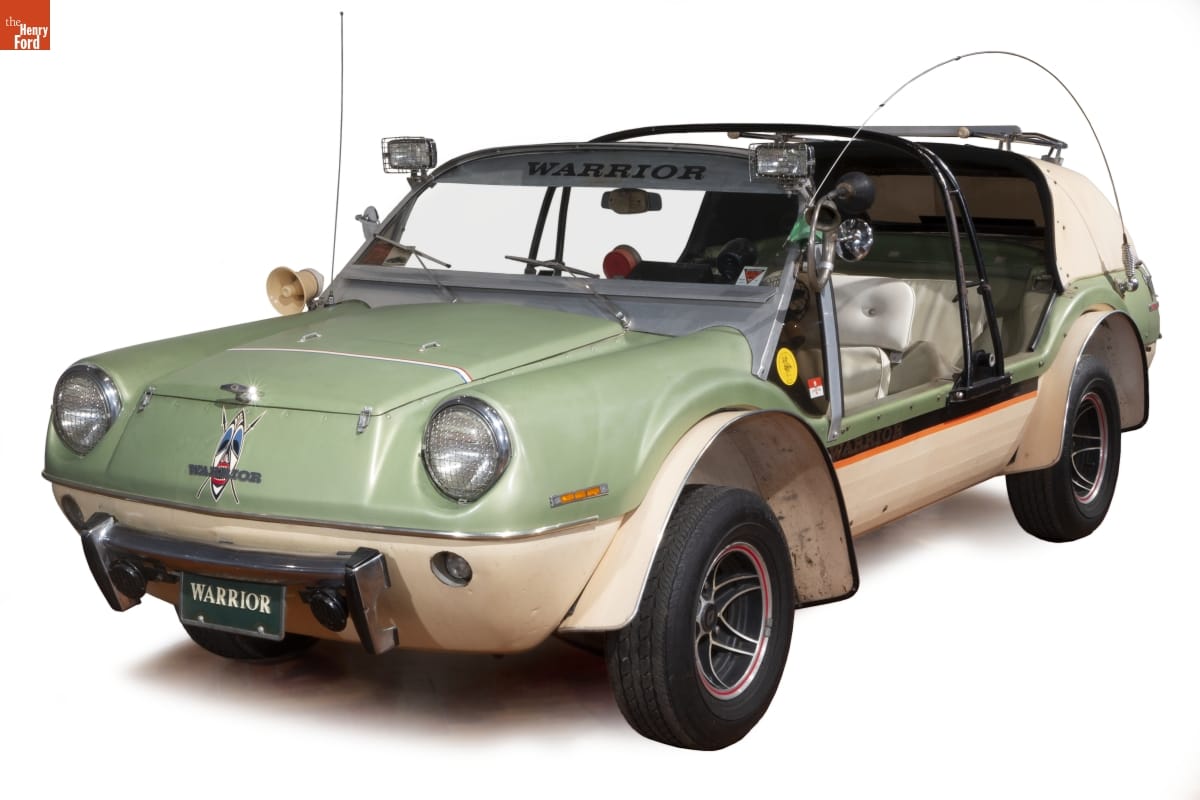
- 1974 Warrior Concept Car - When McKinley Thompson, Jr., joined Ford Motor Company in 1956, he was one of the automotive industry's first African American designers. In 1974 he completed a rugged, easy-to-build vehicle designed for developing countries: the Warrior. Thompson's prototype, built on a Renault 10 chassis, featured a buoyant plastic body and a removable top. Thompson couldn't interest automakers or investors in his bold idea.
- 1974
- Collections - Artifact
1974 Warrior Concept Car
When McKinley Thompson, Jr., joined Ford Motor Company in 1956, he was one of the automotive industry's first African American designers. In 1974 he completed a rugged, easy-to-build vehicle designed for developing countries: the Warrior. Thompson's prototype, built on a Renault 10 chassis, featured a buoyant plastic body and a removable top. Thompson couldn't interest automakers or investors in his bold idea.
- The Warrior - Dig into the story of McKinley Thompson, the first African American automotive designer, and the Warrior, the all-terrain vehicle Thompson designed for countries of the Global South.

- February 24, 2014
- Collections - article
The Warrior
Dig into the story of McKinley Thompson, the first African American automotive designer, and the Warrior, the all-terrain vehicle Thompson designed for countries of the Global South.
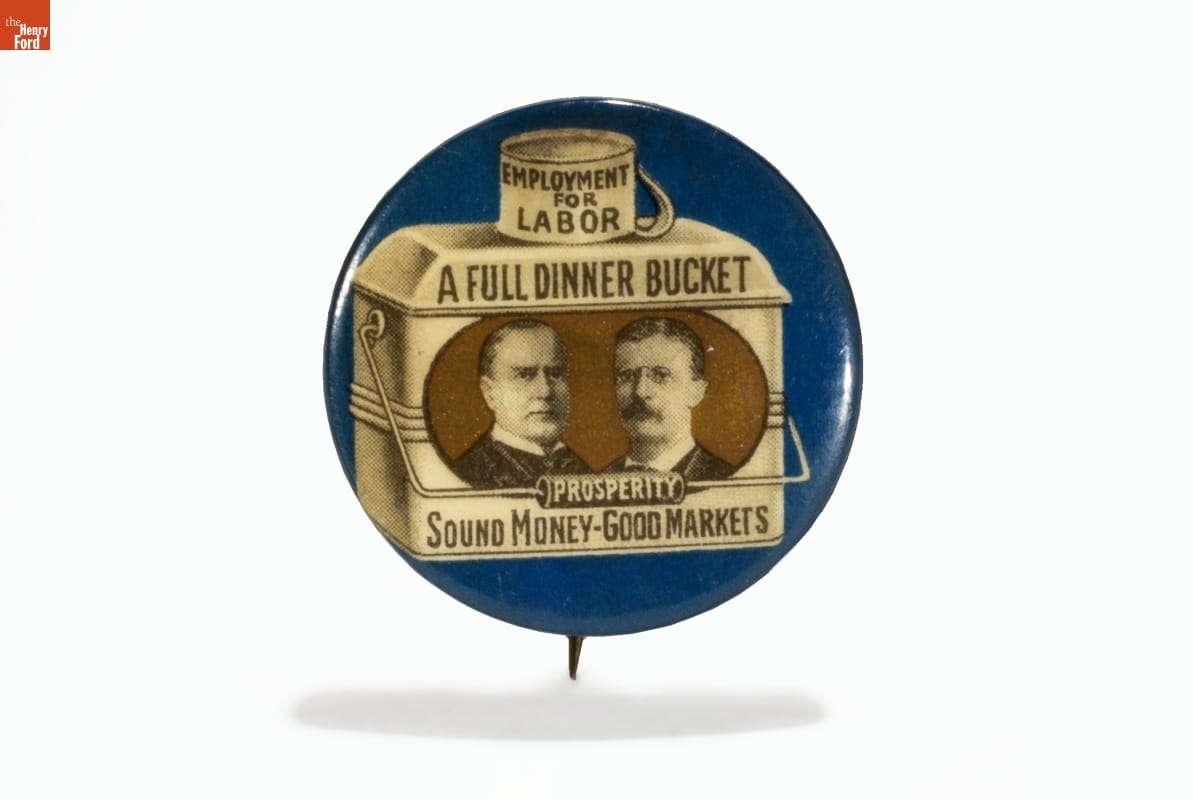
- McKinley-Roosevelt Campaign Button, 1900 - Republicans renominated President William McKinley for a second term in 1900. During McKinley's first administration (1896-1900), America had recovered from the economic depression that began in 1893. This campaign button touted that prosperity to a key Republican voting bloc: blue-collar workers. These working-class voters backed economic policies that kept them working and their dinner buckets full. McKinley won.
- 1900
- Collections - Artifact
McKinley-Roosevelt Campaign Button, 1900
Republicans renominated President William McKinley for a second term in 1900. During McKinley's first administration (1896-1900), America had recovered from the economic depression that began in 1893. This campaign button touted that prosperity to a key Republican voting bloc: blue-collar workers. These working-class voters backed economic policies that kept them working and their dinner buckets full. McKinley won.
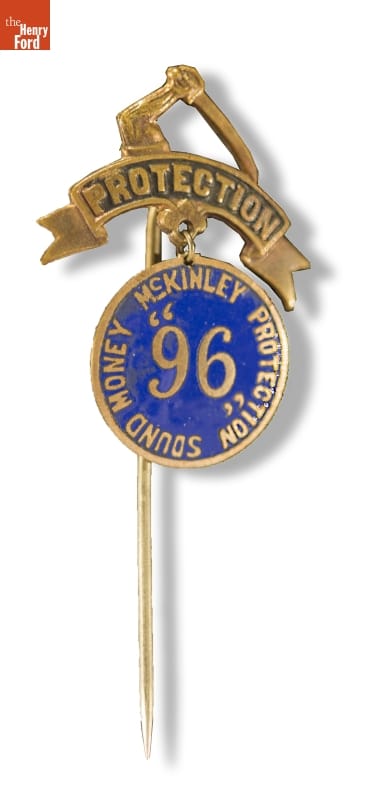
- William McKinley Campaign Stickpin, 1896 - In 1896, the Republicans nominated William McKinley for president. McKinley and the Republican Party advocated for the continued use of a stable, gold-backed dollar and protective tariffs to pull the country out of its economic depression. Supporters touted McKinley and his twin campaign themes of "Sound Money" and "Protection." It must have worked -- McKinley won.
- 1896
- Collections - Artifact
William McKinley Campaign Stickpin, 1896
In 1896, the Republicans nominated William McKinley for president. McKinley and the Republican Party advocated for the continued use of a stable, gold-backed dollar and protective tariffs to pull the country out of its economic depression. Supporters touted McKinley and his twin campaign themes of "Sound Money" and "Protection." It must have worked -- McKinley won.
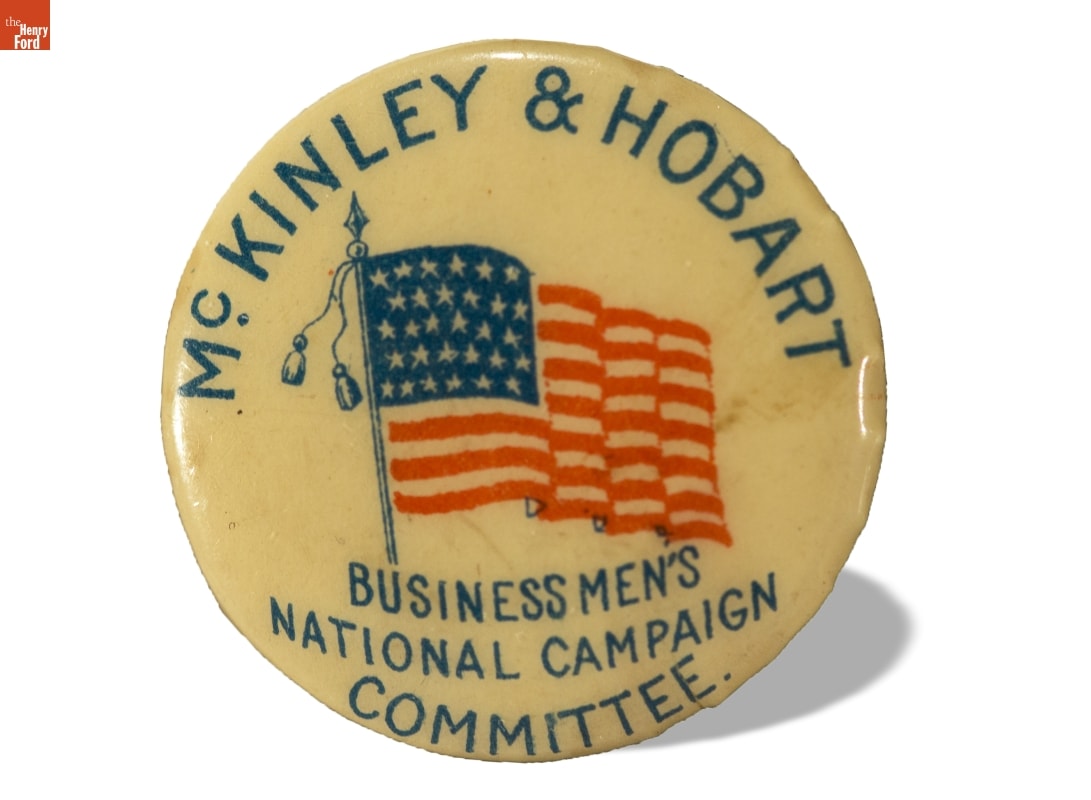
- McKinley-Hobart Campaign Button, 1896 - In 1896, America was still reeling from a depression that began in 1893 during the previous Democratic administration. The Republican Party promised a return to prosperity and nominated William McKinley for president. Thousands visited the nominee at his home in Canton, Ohio, where he delivered his campaign speeches. Voters approved and sent McKinley and his running mate, Garret Hobart, to Washington.
- 1896
- Collections - Artifact
McKinley-Hobart Campaign Button, 1896
In 1896, America was still reeling from a depression that began in 1893 during the previous Democratic administration. The Republican Party promised a return to prosperity and nominated William McKinley for president. Thousands visited the nominee at his home in Canton, Ohio, where he delivered his campaign speeches. Voters approved and sent McKinley and his running mate, Garret Hobart, to Washington.
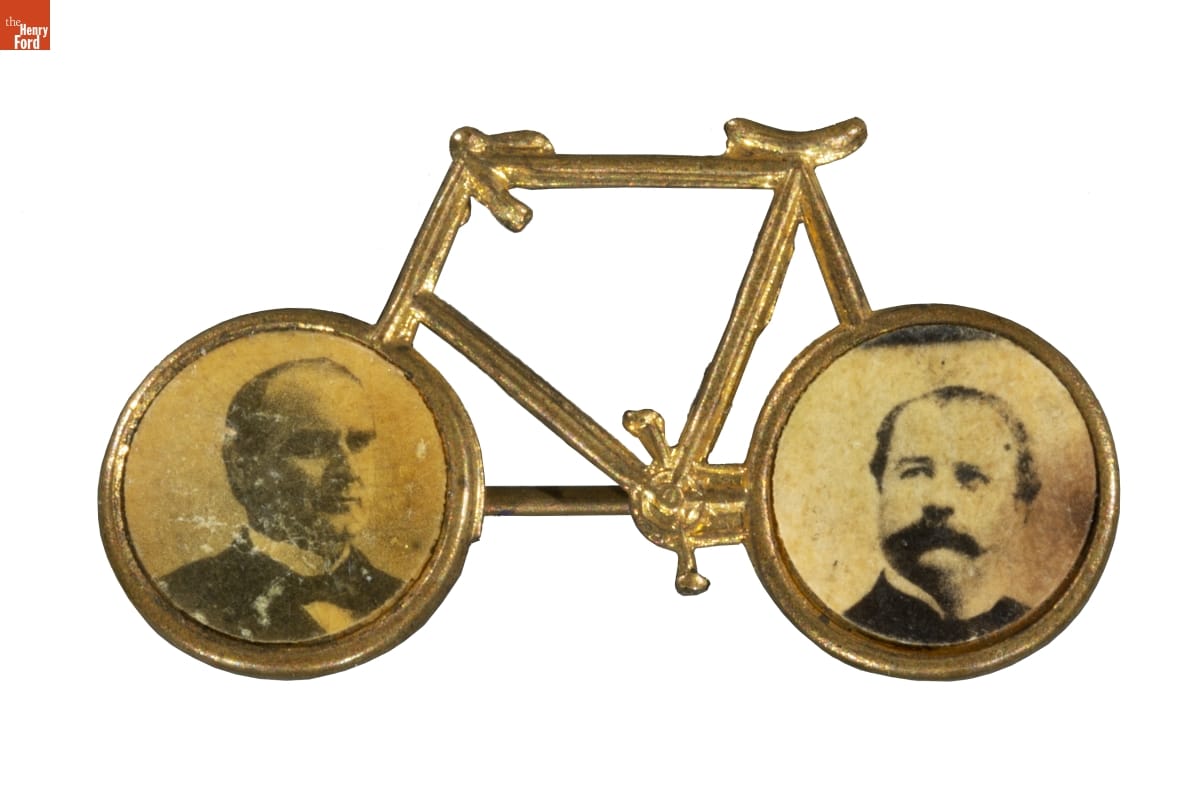
- McKinley-Hobart Campaign Pin, 1896 - Political pins and buttons tell us who voters supported and what issues they viewed as important. People who wore pins like this backed William McKinley and Garret Hobart, the Republican Party's 1896 presidential ticket. They may also have supported the Good Roads Movement -- a favorite cause of bicyclists in the 1890s. The movement lobbied state and federal governments for funds to improve roads.
- 1896
- Collections - Artifact
McKinley-Hobart Campaign Pin, 1896
Political pins and buttons tell us who voters supported and what issues they viewed as important. People who wore pins like this backed William McKinley and Garret Hobart, the Republican Party's 1896 presidential ticket. They may also have supported the Good Roads Movement -- a favorite cause of bicyclists in the 1890s. The movement lobbied state and federal governments for funds to improve roads.
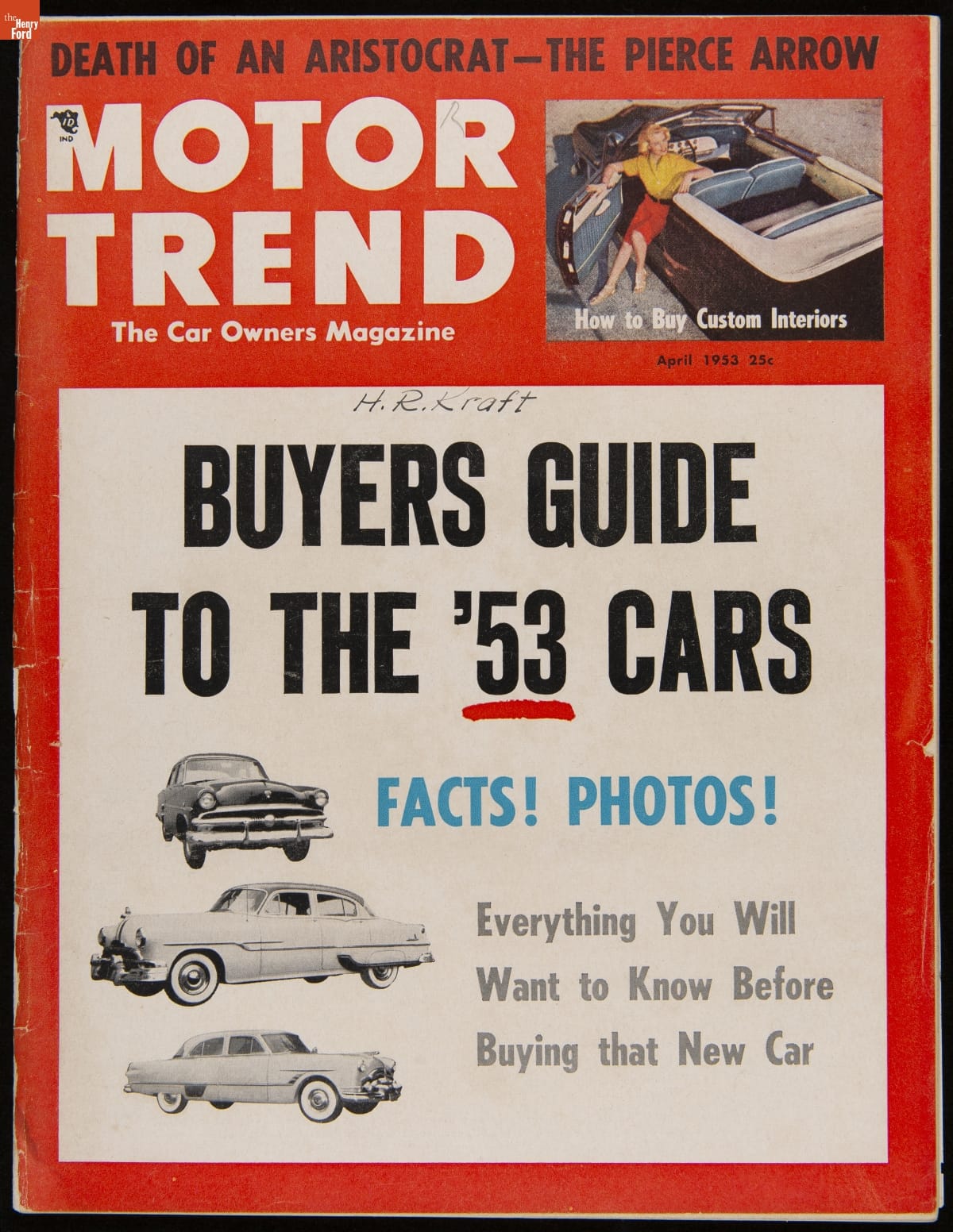
- "Death of an Aristocrat - The Pierce Arrow," Motor Trend Magazine, Vol. 5, No. 4, April 1953 - In 1953, <em>Motor Trend</em> magazine sponsored a contest for readers interested in careers in automotive design. Entrants submitted drawings, sketches, and photos showing their design proposals, along with essays predicting automotive design trends over the next ten years. Five winners each received a $2,000 scholarship to the prestigious Art Center School in Los Angeles.
- April 01, 1953
- Collections - Artifact
"Death of an Aristocrat - The Pierce Arrow," Motor Trend Magazine, Vol. 5, No. 4, April 1953
In 1953, Motor Trend magazine sponsored a contest for readers interested in careers in automotive design. Entrants submitted drawings, sketches, and photos showing their design proposals, along with essays predicting automotive design trends over the next ten years. Five winners each received a $2,000 scholarship to the prestigious Art Center School in Los Angeles.
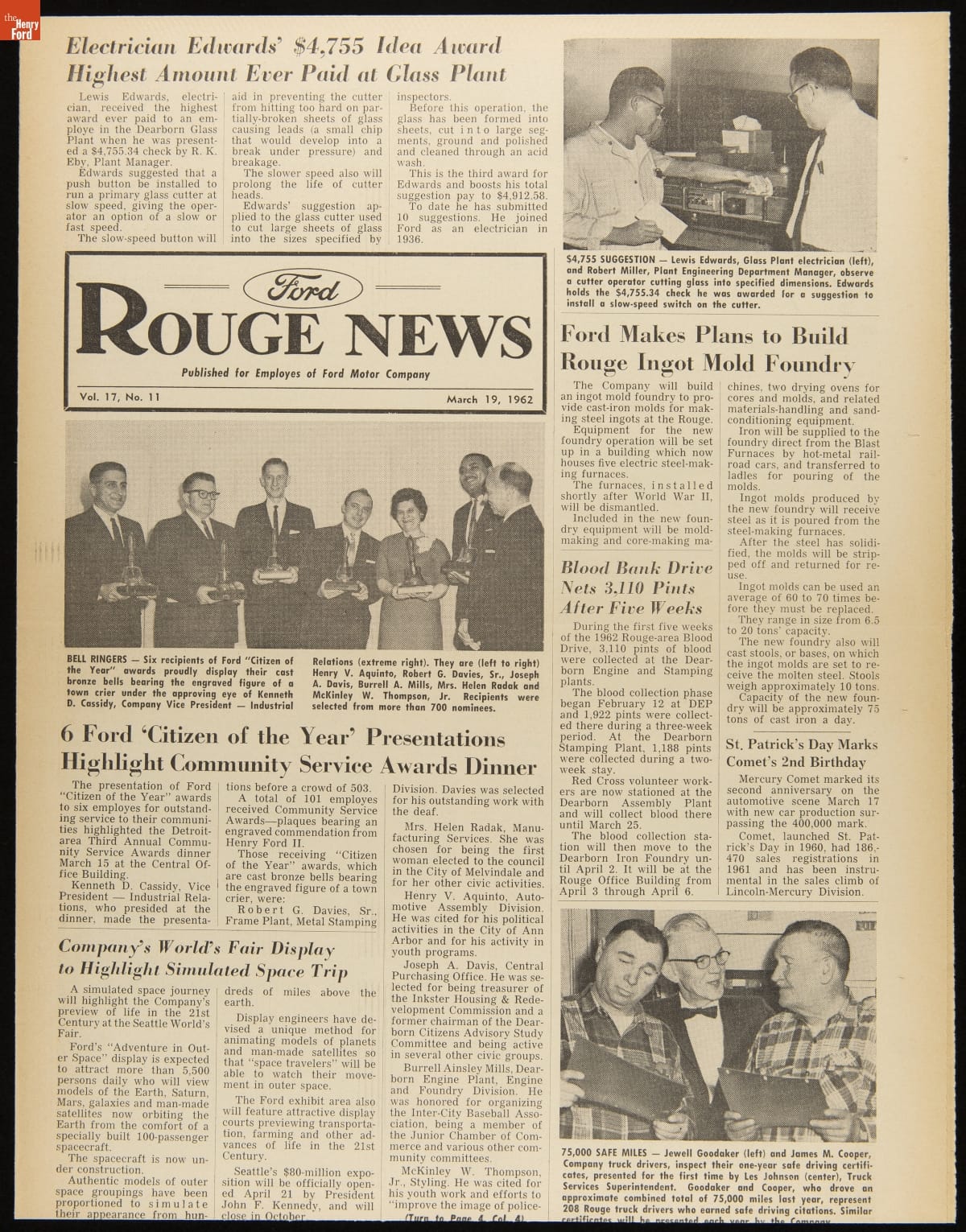
- Ford Motor Company Publication, "Rouge News," Volume 17, No. 11, March 19, 1962 - <em>Rouge News</em>, the newsletter published for employees of Ford Motor Company's Rouge factory complex, celebrated winners of Ford's "Citizen of the Year" award in this issue from March 1962. According to the article, the six winners demonstrated outstanding service to their communities by volunteering in various charitable, civic, and youth-oriented activities.
- March 19, 1962
- Collections - Artifact
Ford Motor Company Publication, "Rouge News," Volume 17, No. 11, March 19, 1962
Rouge News, the newsletter published for employees of Ford Motor Company's Rouge factory complex, celebrated winners of Ford's "Citizen of the Year" award in this issue from March 1962. According to the article, the six winners demonstrated outstanding service to their communities by volunteering in various charitable, civic, and youth-oriented activities.