
Search
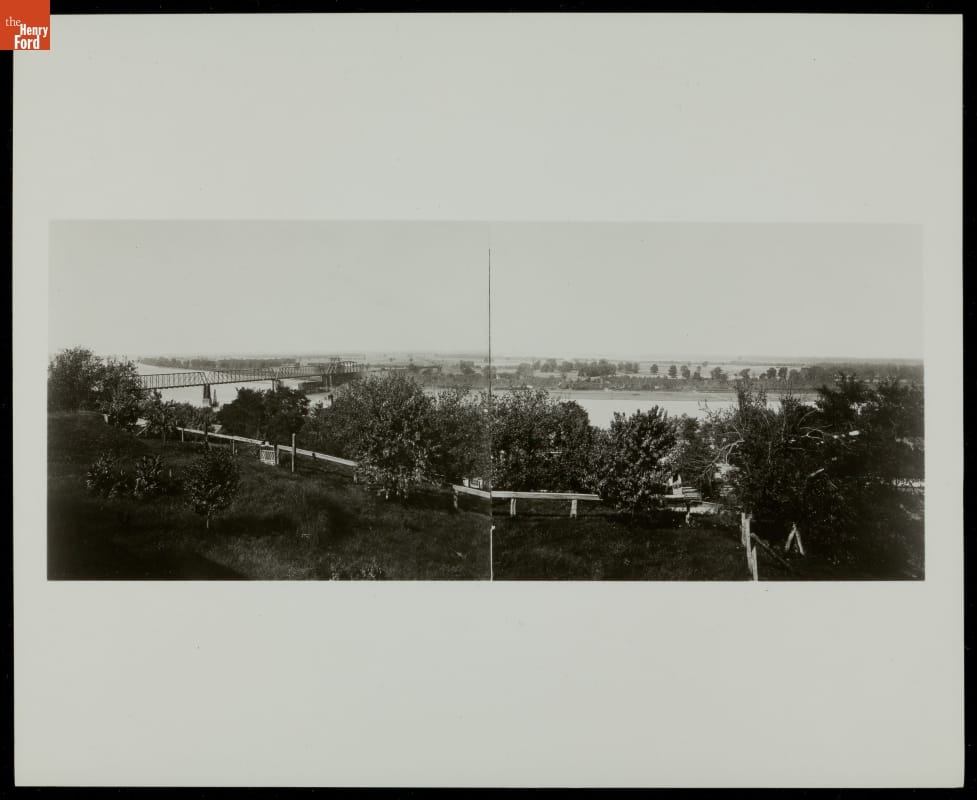
- Panorama of the Missouri River at Glasgow, Missouri, 1890-1900 - For nearly thirty years, 1895 to 1924, the Detroit Publishing Company was one of the major image publishers in the world. The company had a wide-ranging stock of original photographs, including many scenes from across North America. This panorama shows Glasgow, Missouri, where an early railroad bridge spanned the Missouri River.
- 1890-1900
- Collections - Artifact
Panorama of the Missouri River at Glasgow, Missouri, 1890-1900
For nearly thirty years, 1895 to 1924, the Detroit Publishing Company was one of the major image publishers in the world. The company had a wide-ranging stock of original photographs, including many scenes from across North America. This panorama shows Glasgow, Missouri, where an early railroad bridge spanned the Missouri River.
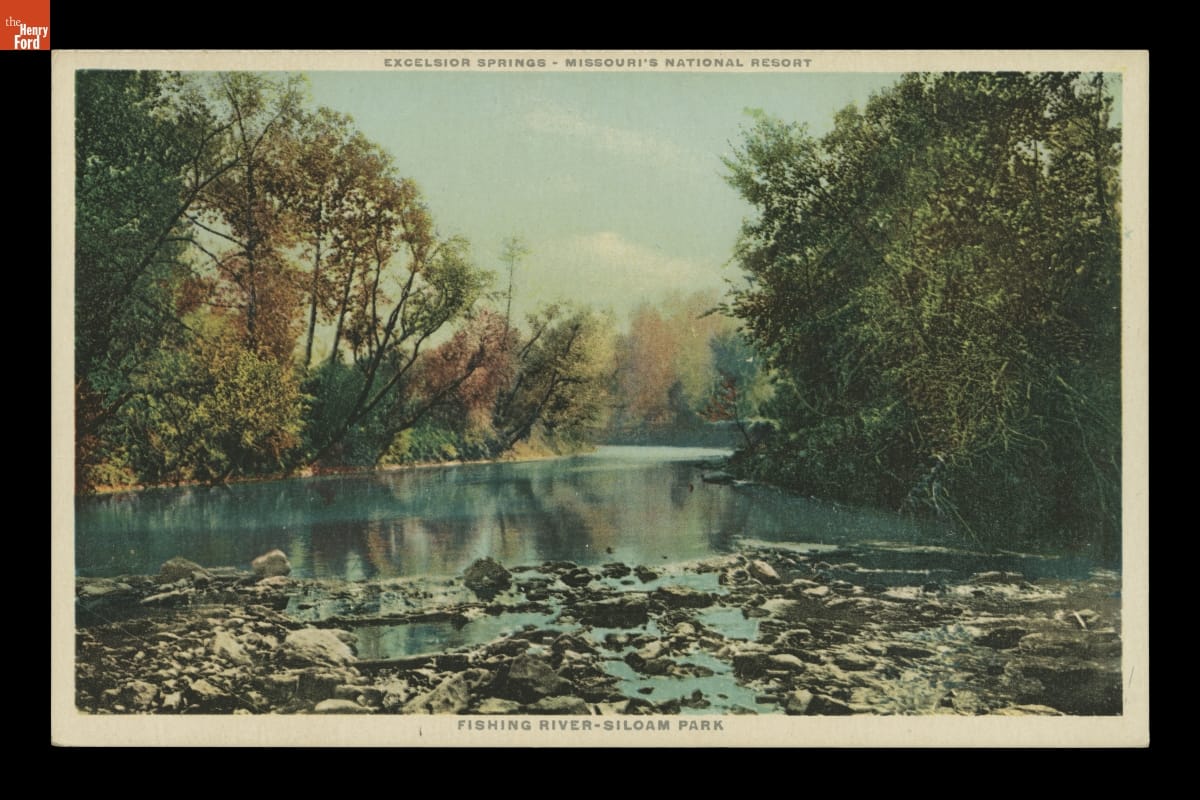
- "Excelsior Springs, Missouri's National Resort, Fishing River, Siloam Park," circa 1910 - From 1895 to 1924, the Detroit Publishing Company was one of the major image publishers in the world. It had a wide-ranging stock of original photographs, many of which were colored using the company's patented "Phostint" process. Popular "Phostint" postcards, the Detroit Publishing Company claimed, were delicately "executed in Nature's Coloring" to be truthful, tasteful, beautiful, and educational.
- circa 1910
- Collections - Artifact
"Excelsior Springs, Missouri's National Resort, Fishing River, Siloam Park," circa 1910
From 1895 to 1924, the Detroit Publishing Company was one of the major image publishers in the world. It had a wide-ranging stock of original photographs, many of which were colored using the company's patented "Phostint" process. Popular "Phostint" postcards, the Detroit Publishing Company claimed, were delicately "executed in Nature's Coloring" to be truthful, tasteful, beautiful, and educational.
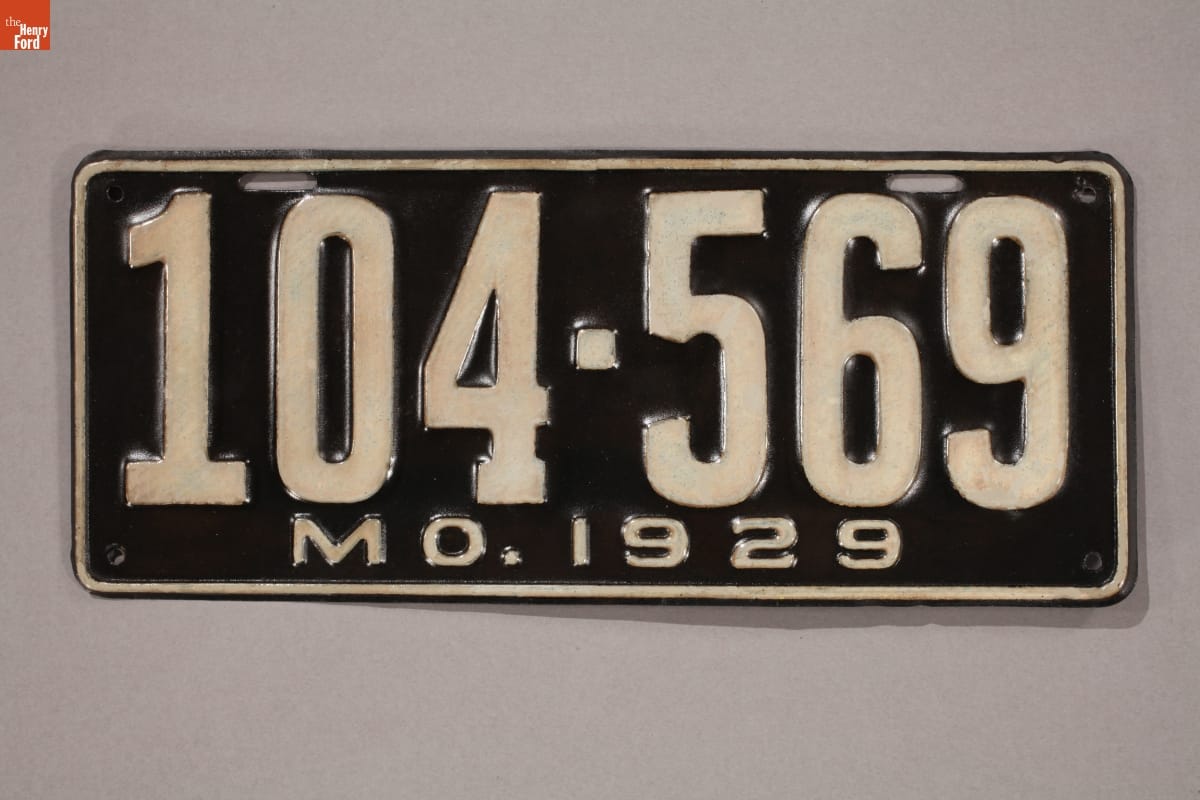
- Missouri License Plate, 1929 - Early state-issued license plates were made of porcelain-coated iron. Later, states stamped tin, steel, or even copper to make plates. During the Second World War several states used fiberboard. Plate colors varied and some states added symbols, mottoes, or other design elements. Today, states use reflective sheeting to coat a standard-sized aluminum blank which is then stamped and decorated.
- 1929
- Collections - Artifact
Missouri License Plate, 1929
Early state-issued license plates were made of porcelain-coated iron. Later, states stamped tin, steel, or even copper to make plates. During the Second World War several states used fiberboard. Plate colors varied and some states added symbols, mottoes, or other design elements. Today, states use reflective sheeting to coat a standard-sized aluminum blank which is then stamped and decorated.
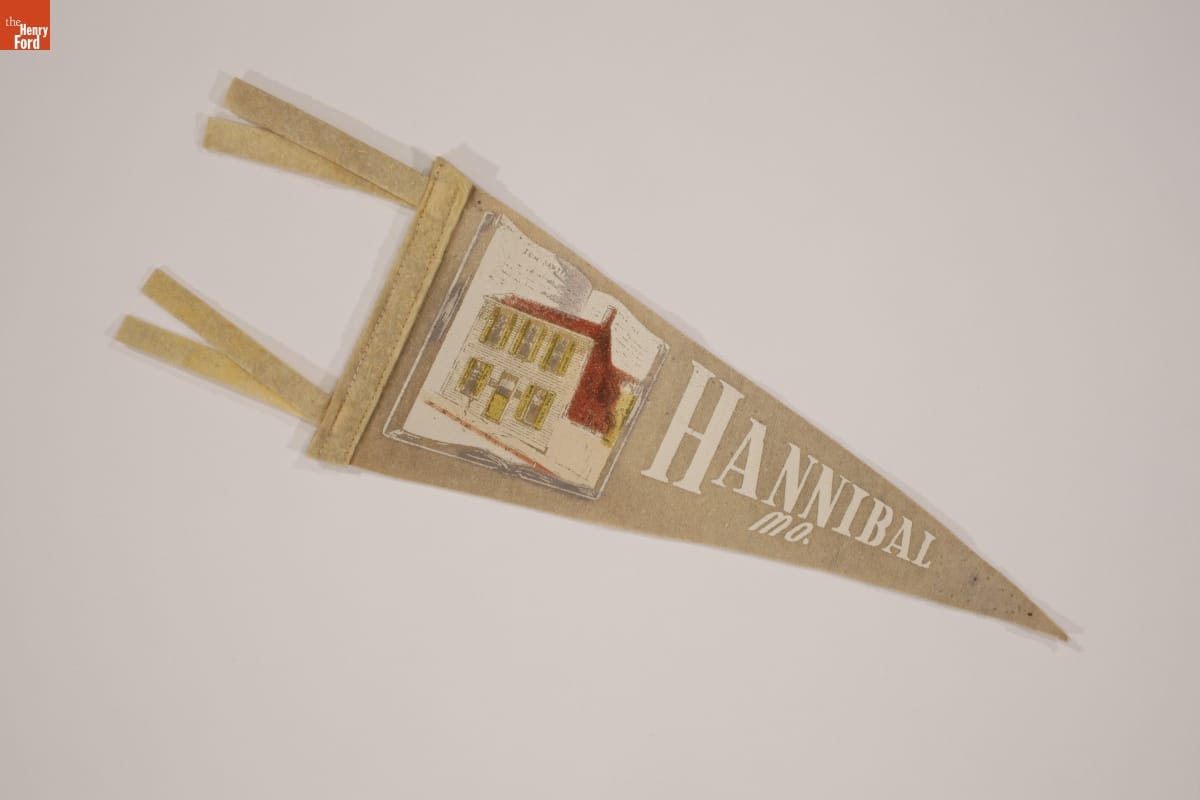
- Hannibal, Missouri Pennant, 1945-1960 - Travelers often return home with souvenirs that serve as tangible reminders of places visited. Felt pennants were a popular choice of vacationing Americans after World War II. This example is from the boyhood home of author Mark Twain. It depicts <EM>The Adventures of Tom Sawyer</EM> -- a famous Mark Twain novel inspired by the town of Hannibal, Missouri.
- 1945-1960
- Collections - Artifact
Hannibal, Missouri Pennant, 1945-1960
Travelers often return home with souvenirs that serve as tangible reminders of places visited. Felt pennants were a popular choice of vacationing Americans after World War II. This example is from the boyhood home of author Mark Twain. It depicts The Adventures of Tom Sawyer -- a famous Mark Twain novel inspired by the town of Hannibal, Missouri.
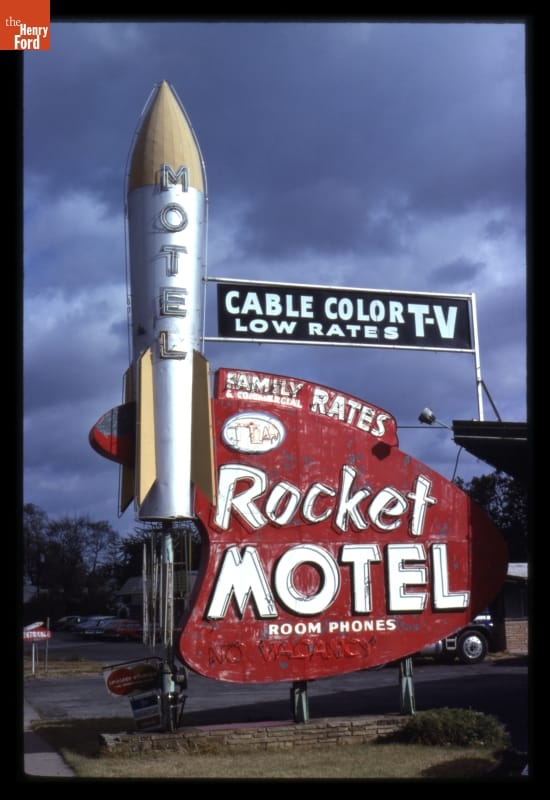
- Rocket Motel Sign, Joplin, Missouri, 1979 - In the mid-1970s, John Margolies began to assemble a visual record of America's built roadside landscape. Over the following three decades, he traveled thousands of miles to photograph the overlooked and often quickly vanishing structures that had grown out of American automobile culture and main street commerce. His photographs of hotels, motels, diners, service stations, drive-ins and attractions celebrate and capture a unique chapter of American history.
- 1979
- Collections - Artifact
Rocket Motel Sign, Joplin, Missouri, 1979
In the mid-1970s, John Margolies began to assemble a visual record of America's built roadside landscape. Over the following three decades, he traveled thousands of miles to photograph the overlooked and often quickly vanishing structures that had grown out of American automobile culture and main street commerce. His photographs of hotels, motels, diners, service stations, drive-ins and attractions celebrate and capture a unique chapter of American history.
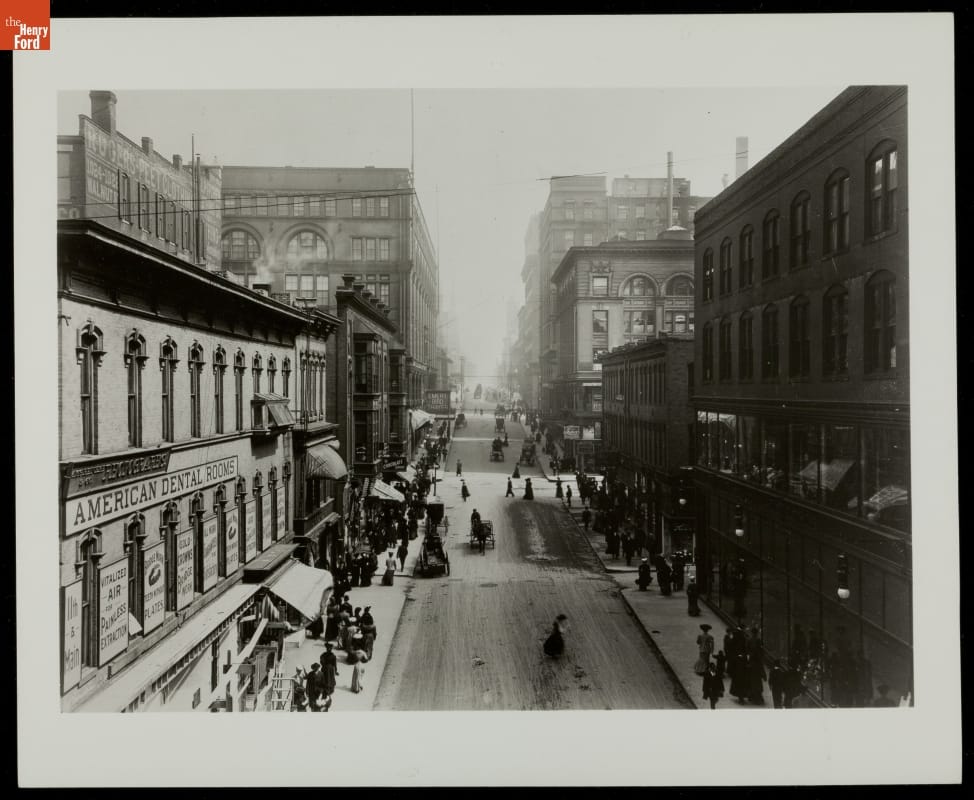
- Petticoat Lane, Kansas City, Missouri, circa 1906 - From 1895 to 1924, the Detroit Publishing Company was one of the major image publishers in the world. The company had a wide-ranging stock of original photographs, including many scenes from across North America. This rooftop view shows Petticoat Lane, a popular shopping district with department stores and specialty shops on 11th Street in Kansas City, Missouri.
- circa 1906
- Collections - Artifact
Petticoat Lane, Kansas City, Missouri, circa 1906
From 1895 to 1924, the Detroit Publishing Company was one of the major image publishers in the world. The company had a wide-ranging stock of original photographs, including many scenes from across North America. This rooftop view shows Petticoat Lane, a popular shopping district with department stores and specialty shops on 11th Street in Kansas City, Missouri.
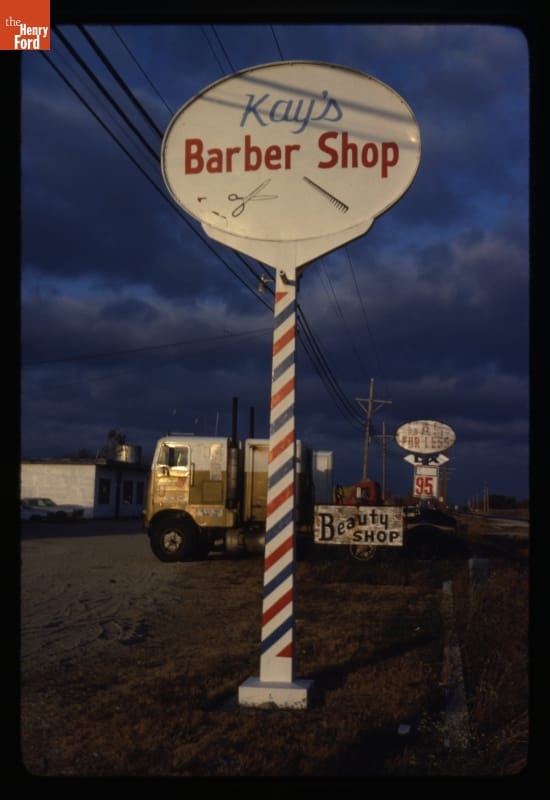
- Kay's Barber Shop Sign, Duenweg, Missouri, 1979 - In the mid-1970s, John Margolies began to assemble a visual record of America's built roadside landscape. Over the following three decades, he traveled thousands of miles to photograph the overlooked and often quickly vanishing structures that had grown out of American automobile culture and main street commerce. His photographs of hotels, motels, diners, service stations, drive-ins and attractions celebrate and capture a unique chapter of American history.
- 1979
- Collections - Artifact
Kay's Barber Shop Sign, Duenweg, Missouri, 1979
In the mid-1970s, John Margolies began to assemble a visual record of America's built roadside landscape. Over the following three decades, he traveled thousands of miles to photograph the overlooked and often quickly vanishing structures that had grown out of American automobile culture and main street commerce. His photographs of hotels, motels, diners, service stations, drive-ins and attractions celebrate and capture a unique chapter of American history.
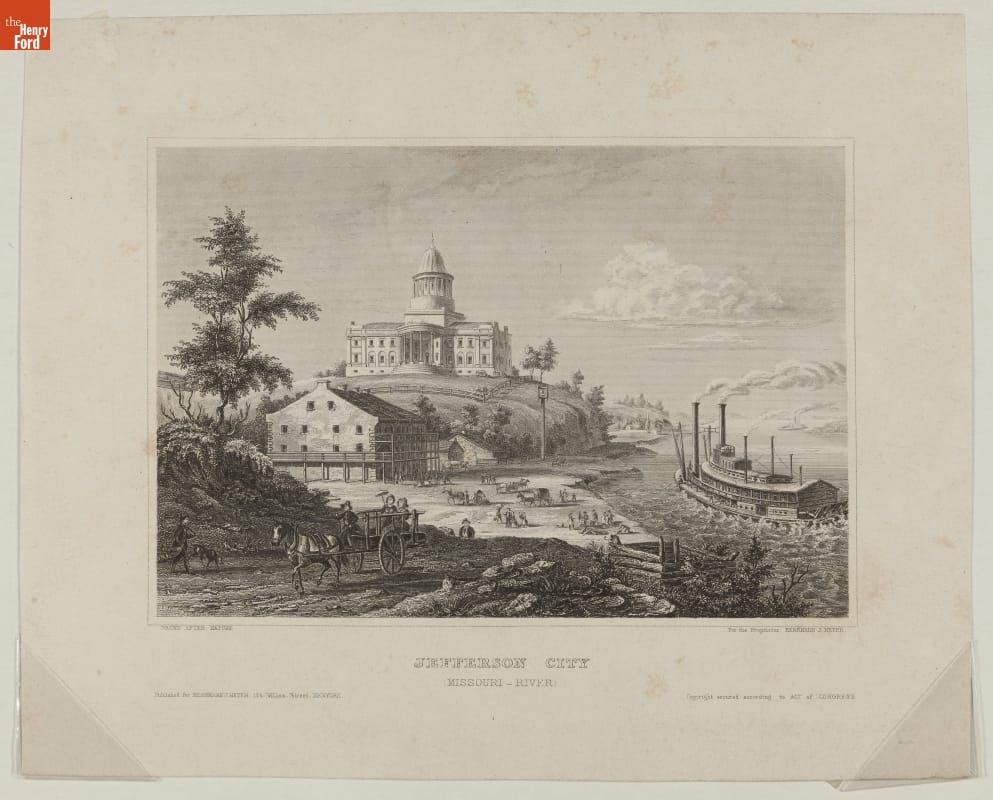
- Steel Engraving, "Jefferson City, Missouri River," circa 1840 - This circa 1840 steel engraving depicts the growing town of Jefferson City, Missouri, on the Missouri River. Chosen as the state capital in 1821, this rendering of Jefferson City is dominated by the domed Capitol building sitting on a bluff, overlooking the river landing and a passing steamboat.
- circa 1840
- Collections - Artifact
Steel Engraving, "Jefferson City, Missouri River," circa 1840
This circa 1840 steel engraving depicts the growing town of Jefferson City, Missouri, on the Missouri River. Chosen as the state capital in 1821, this rendering of Jefferson City is dominated by the domed Capitol building sitting on a bluff, overlooking the river landing and a passing steamboat.
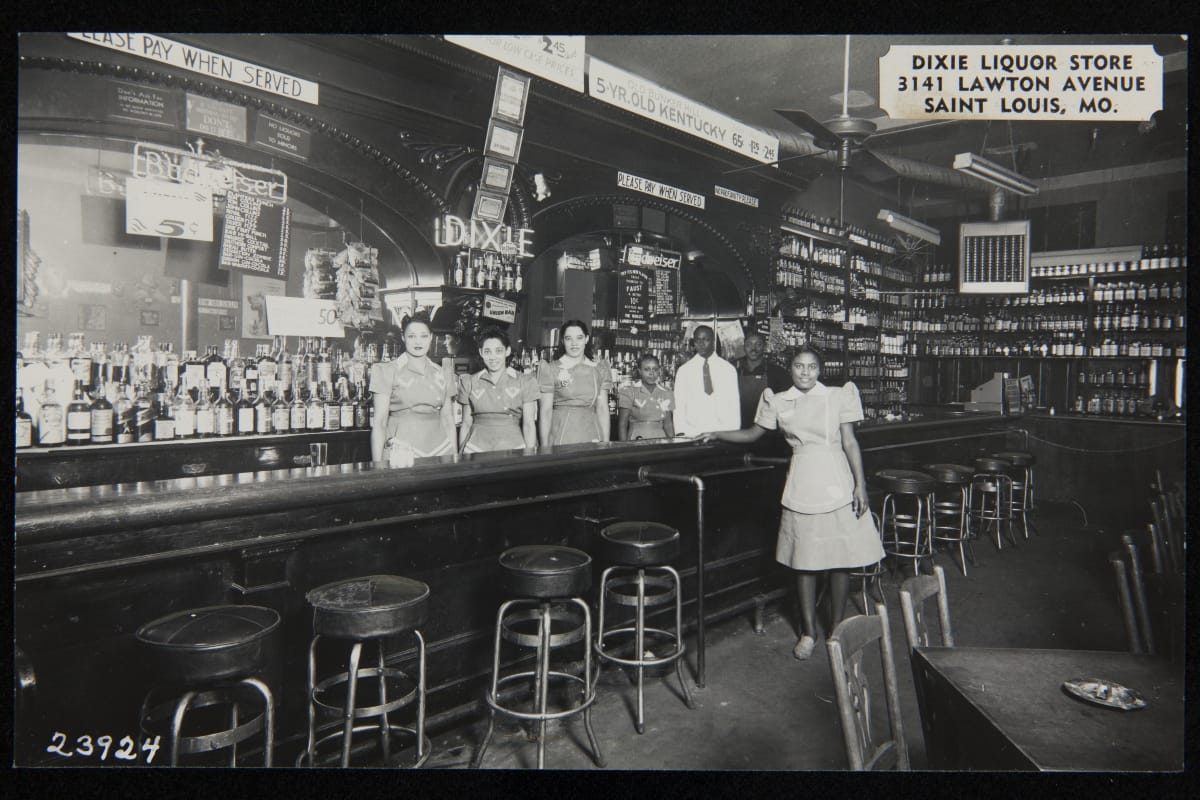
- Dixie Liquor Store, St. Louis, Missouri, 1935-1950 - Photographic cards like this one, with their glued-on labels, were a preliminary step taken by Dexter Press before producing postcards for small-business owners to mail or hand out to customers. During the first half of the 20th century, racial segregation was a pervasive feature in St. Louis, Missouri. This African-American-run liquor store catered to black customers in the local community.
- 1935-1950
- Collections - Artifact
Dixie Liquor Store, St. Louis, Missouri, 1935-1950
Photographic cards like this one, with their glued-on labels, were a preliminary step taken by Dexter Press before producing postcards for small-business owners to mail or hand out to customers. During the first half of the 20th century, racial segregation was a pervasive feature in St. Louis, Missouri. This African-American-run liquor store catered to black customers in the local community.
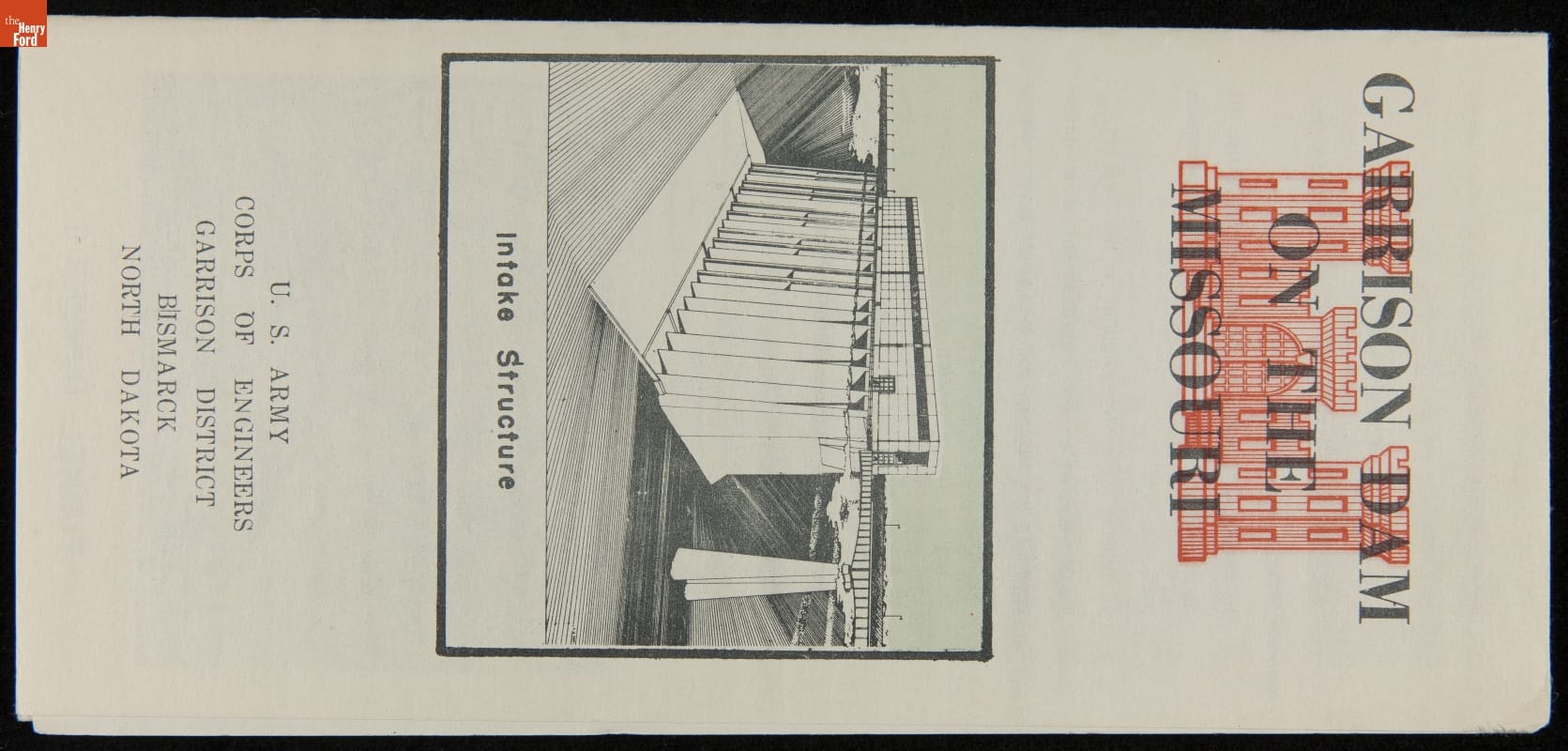
- Brochure, "Garrison Dam on the Missouri," circa 1950 -
- circa 1950
- Collections - Artifact
Brochure, "Garrison Dam on the Missouri," circa 1950