
Search
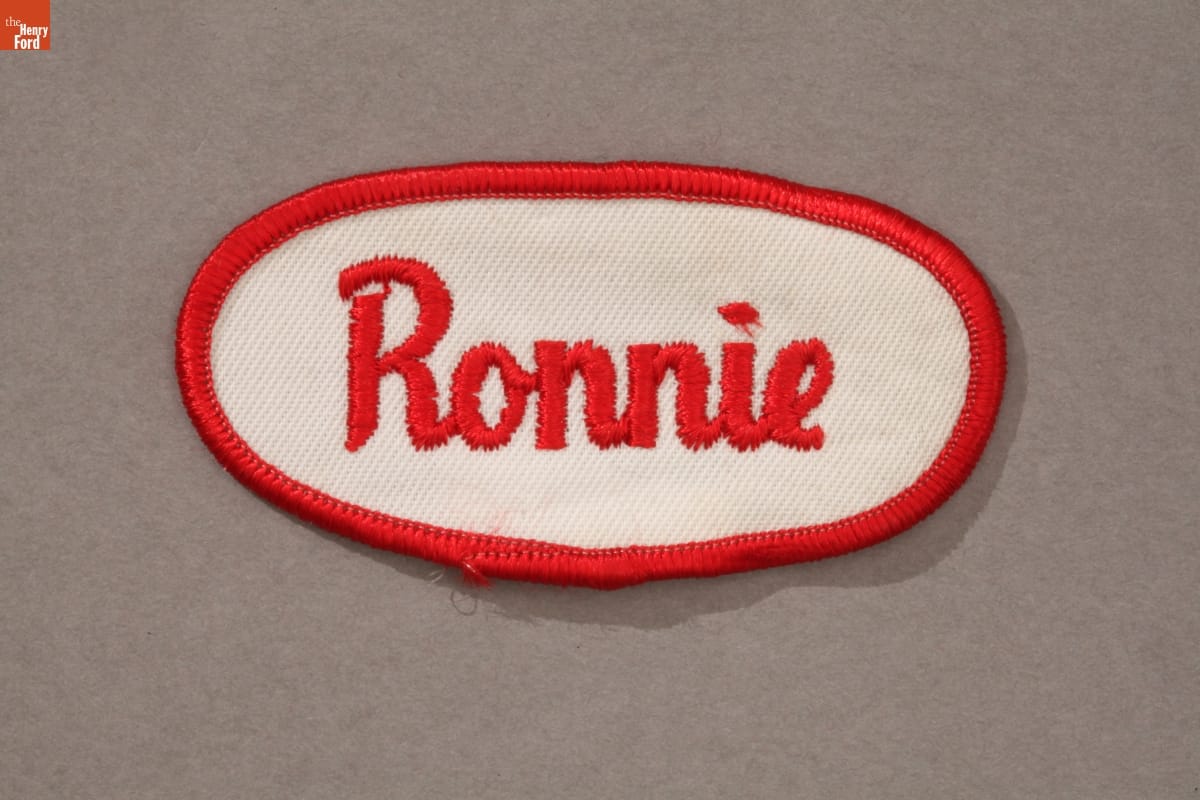
- Uniform Name Patch, 1958-1973 - A skilled -- and trusted -- mechanic readily found fans among car owners, who enthusiastically recommended him to family and friends. Customers marveled at seasoned mechanics who could diagnose a problem by the sound of the engine, the smell of gas-fouled plugs, or the pattern of wear on visible parts.
- 1958-1973
- Collections - Artifact
Uniform Name Patch, 1958-1973
A skilled -- and trusted -- mechanic readily found fans among car owners, who enthusiastically recommended him to family and friends. Customers marveled at seasoned mechanics who could diagnose a problem by the sound of the engine, the smell of gas-fouled plugs, or the pattern of wear on visible parts.
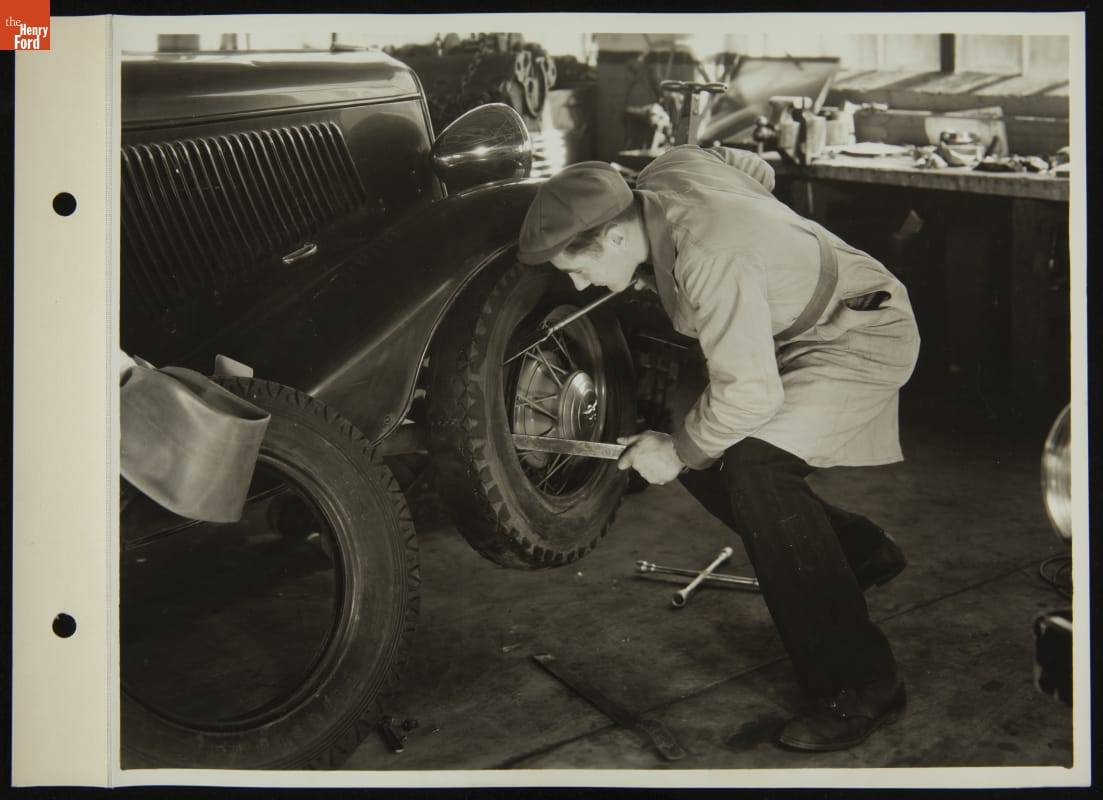
- Attendant Changing Tire, March 1935 - Tire irons were used to pry the bead -- or edge -- of an automobile tire away from the wheel rim. Typically, they were used in pairs to work the tire off gradually. These tools were essential when tires still featured separate inner tubes, but they became less important following the move to tubeless tires in the 1950s.
- March 14, 1935
- Collections - Artifact
Attendant Changing Tire, March 1935
Tire irons were used to pry the bead -- or edge -- of an automobile tire away from the wheel rim. Typically, they were used in pairs to work the tire off gradually. These tools were essential when tires still featured separate inner tubes, but they became less important following the move to tubeless tires in the 1950s.
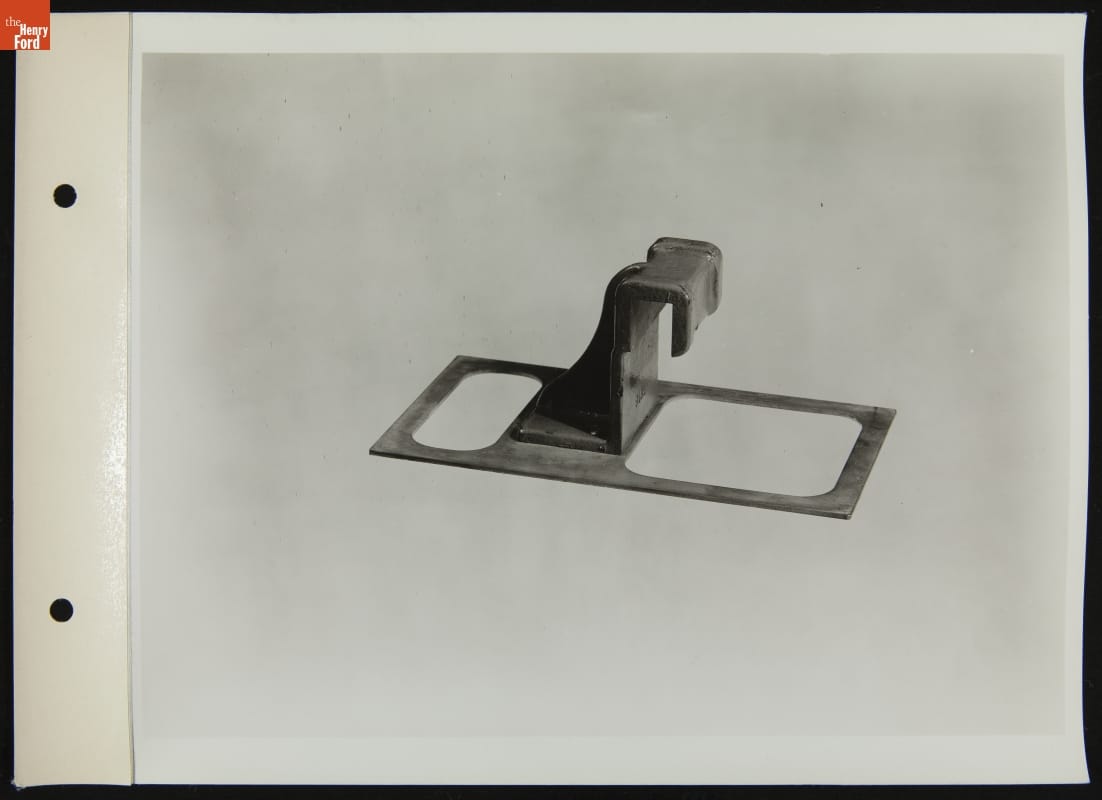
- Caster Change King Pin, August 1936 - The kingpin was an important part of Ford Motor Company's solid-axle front suspension design used in the 1930s. It was mounted at the end of the axle, and the wheel pivoted around it when the car was steered. The kingpin's inclination -- its angle compared to the centerline of the front wheel -- was checked as part of a wheel alignment inspection.
- August 26, 1936
- Collections - Artifact
Caster Change King Pin, August 1936
The kingpin was an important part of Ford Motor Company's solid-axle front suspension design used in the 1930s. It was mounted at the end of the axle, and the wheel pivoted around it when the car was steered. The kingpin's inclination -- its angle compared to the centerline of the front wheel -- was checked as part of a wheel alignment inspection.
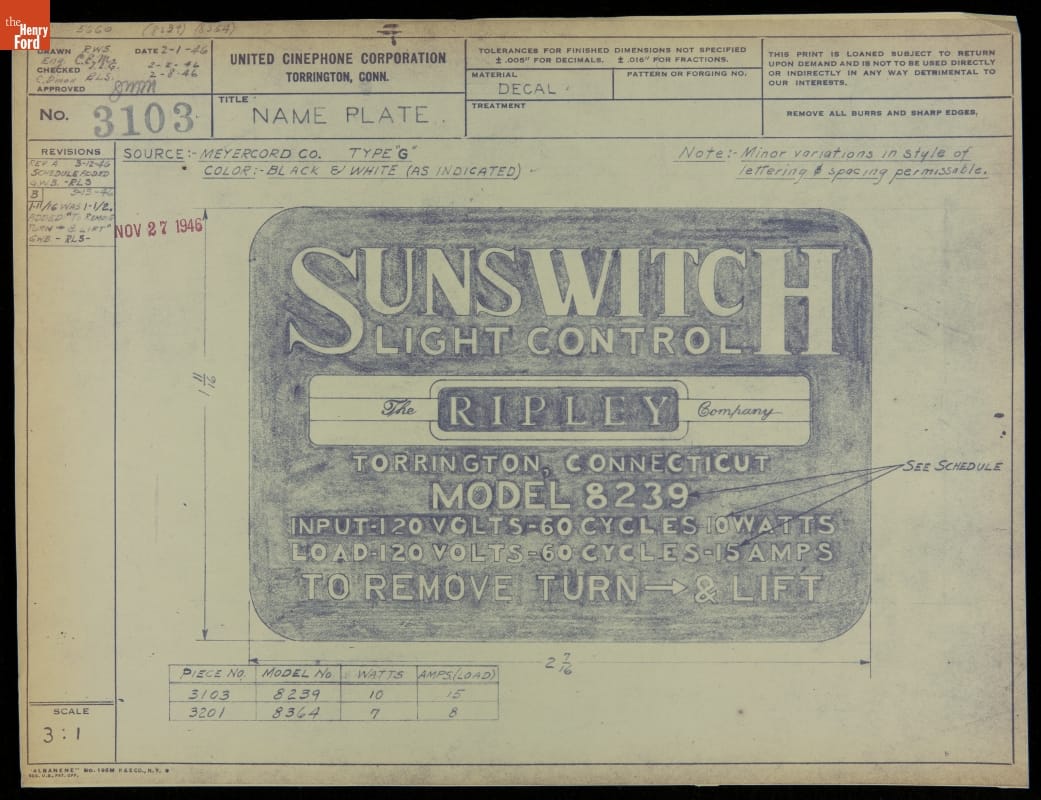
- Name Plate, Reference Number 3103, 1946 - George Devol was a problem solver and prolific inventor, particularly in the area of automation. Around 1940, Devol developed the "Sun Switch," a photoelectric switch, to regulate light levels. Lighting for streets, factories and other public, private and business areas could be turned on and off reliably and efficiently with this device. This technical drawing defined the design requirements for one of its components.
- February 01, 1946
- Collections - Artifact
Name Plate, Reference Number 3103, 1946
George Devol was a problem solver and prolific inventor, particularly in the area of automation. Around 1940, Devol developed the "Sun Switch," a photoelectric switch, to regulate light levels. Lighting for streets, factories and other public, private and business areas could be turned on and off reliably and efficiently with this device. This technical drawing defined the design requirements for one of its components.
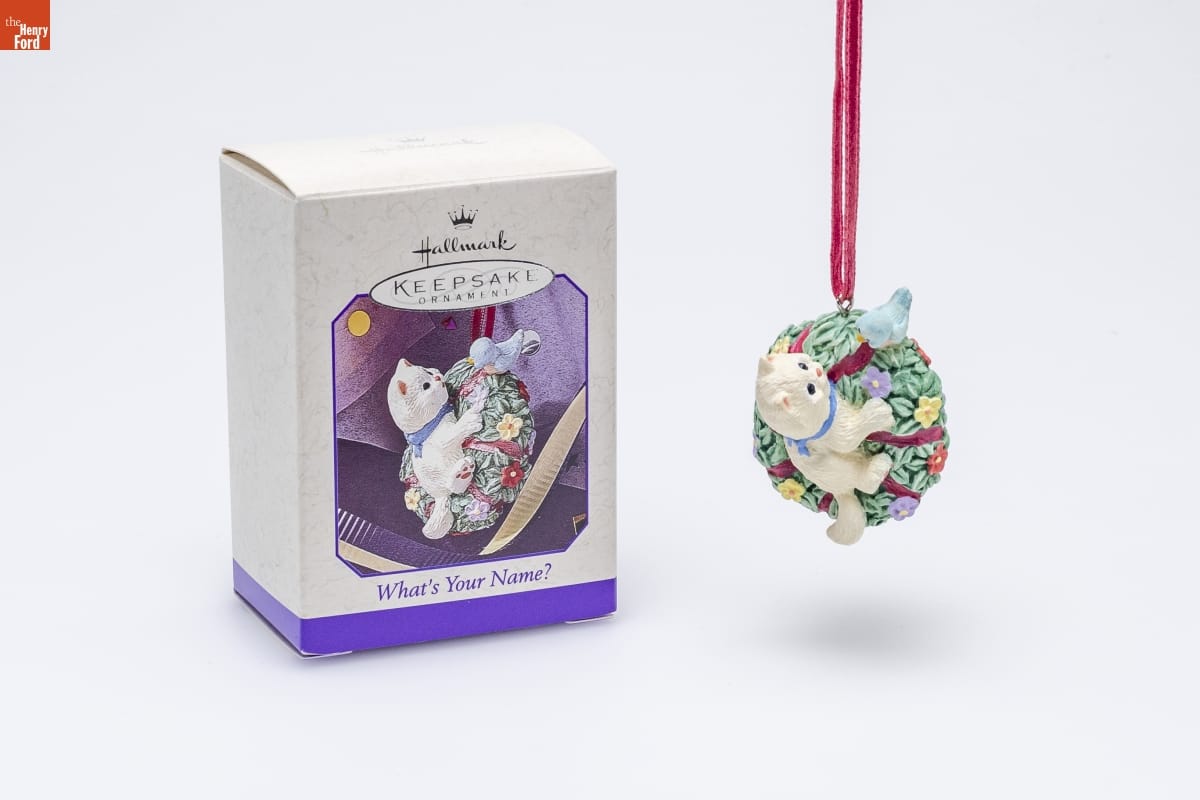
- Hallmark "What's Your Name" Spring Ornament, 1998 - Hallmark introduced a line of Christmas ornaments in 1973. These ornaments appealed to customers' interest in marking memories, commemorating milestones, and expressing one's personality and unique tastes. This success led the company to produce ornaments for other holidays. Hallmark marketed and sold Easter and springtime ornaments in several series dating back to the 1990s.
- 1998
- Collections - Artifact
Hallmark "What's Your Name" Spring Ornament, 1998
Hallmark introduced a line of Christmas ornaments in 1973. These ornaments appealed to customers' interest in marking memories, commemorating milestones, and expressing one's personality and unique tastes. This success led the company to produce ornaments for other holidays. Hallmark marketed and sold Easter and springtime ornaments in several series dating back to the 1990s.
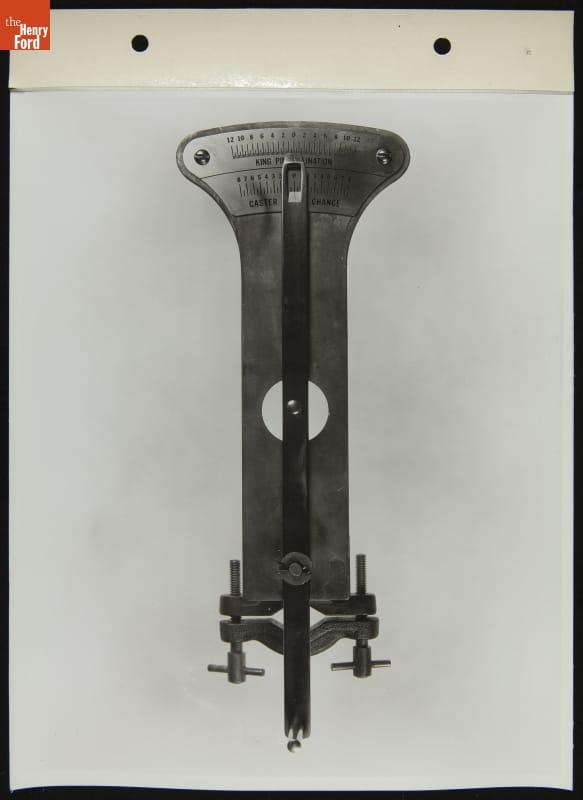
- Caster Change King Pin, August 1936 - The kingpin was an important part of Ford Motor Company's solid-axle front suspension design used in the 1930s. It was mounted at the end of the axle, and the wheel pivoted around it when the car was steered. The kingpin's inclination -- its angle compared to the centerline of the front wheel -- was checked as part of a wheel alignment inspection.
- August 26, 1936
- Collections - Artifact
Caster Change King Pin, August 1936
The kingpin was an important part of Ford Motor Company's solid-axle front suspension design used in the 1930s. It was mounted at the end of the axle, and the wheel pivoted around it when the car was steered. The kingpin's inclination -- its angle compared to the centerline of the front wheel -- was checked as part of a wheel alignment inspection.
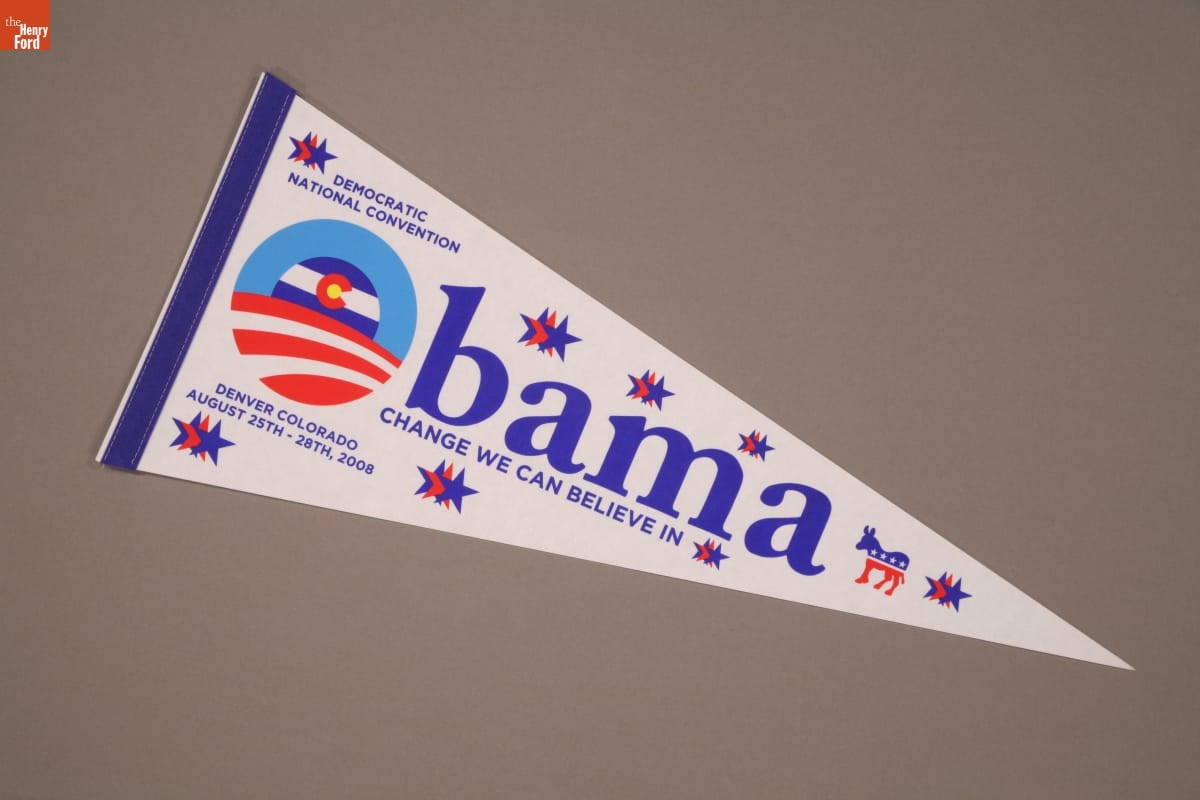
- Pennant, "Obama: Change We Can Believe In," 2008 - Democrat presidential nominee, Senator Barack Obama, campaigned on themes of "Hope" and "Change." These positive messages spoke to an American public beset by years of conflict in Iraq and reeling from a recent financial crisis. These twin themes also reflected Americans' belief in an inclusive multicultural society. In November 2008, voters elected Obama -- the first African American president of the United States.
- August 01, 2008
- Collections - Artifact
Pennant, "Obama: Change We Can Believe In," 2008
Democrat presidential nominee, Senator Barack Obama, campaigned on themes of "Hope" and "Change." These positive messages spoke to an American public beset by years of conflict in Iraq and reeling from a recent financial crisis. These twin themes also reflected Americans' belief in an inclusive multicultural society. In November 2008, voters elected Obama -- the first African American president of the United States.
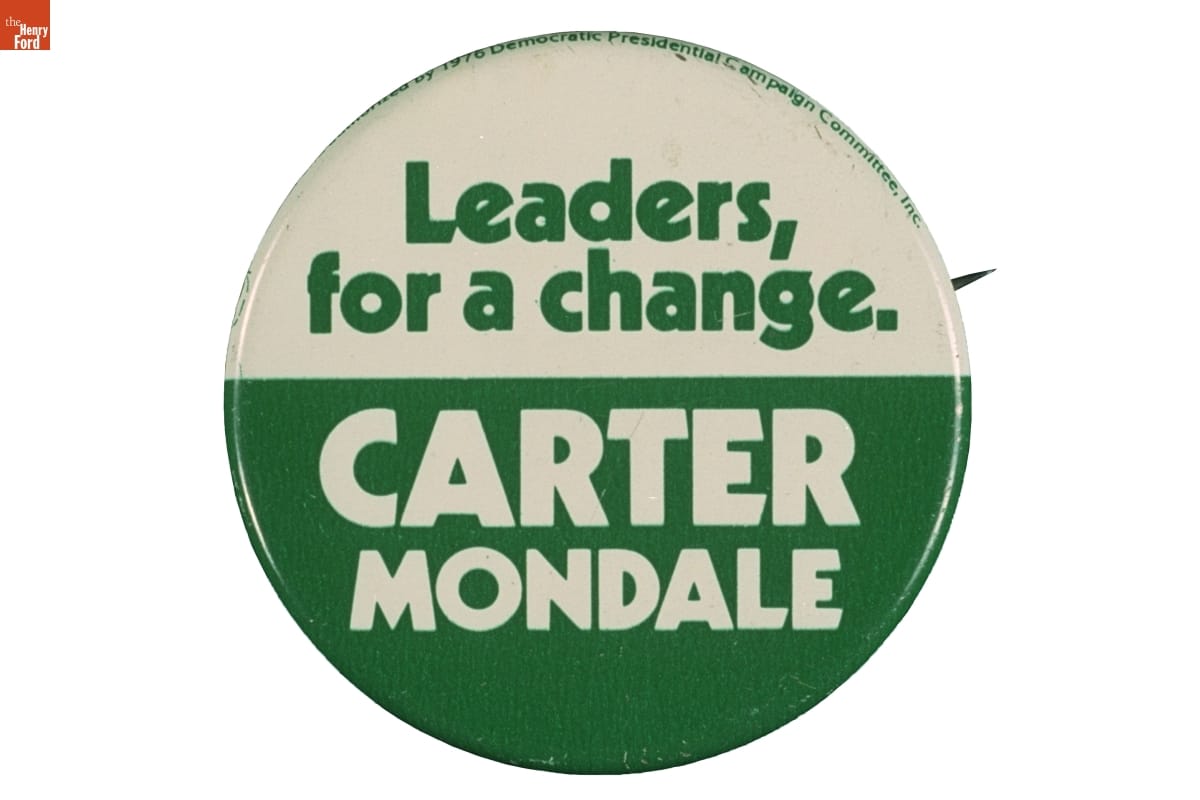
- Leaders, for a change Carter Mondale Button, 1976 - Democrat Jimmy Carter faced incumbent President Gerald Ford in the 1976 Presidential election. Carter, the one-time Governor of Georgia, ran as a Washington outsider--something that appealed to many voters in the post-Vietnam War and Watergate eras. Ford portrayed Carter as inexperienced, while Carter tied Ford to disgraced former President Nixon, whom Ford had pardoned. The election was close, but Carter prevailed.
- 1976
- Collections - Artifact
Leaders, for a change Carter Mondale Button, 1976
Democrat Jimmy Carter faced incumbent President Gerald Ford in the 1976 Presidential election. Carter, the one-time Governor of Georgia, ran as a Washington outsider--something that appealed to many voters in the post-Vietnam War and Watergate eras. Ford portrayed Carter as inexperienced, while Carter tied Ford to disgraced former President Nixon, whom Ford had pardoned. The election was close, but Carter prevailed.
- Hallmark "Superman: Quick-Change Artist" Christmas Ornament, 2007 - Already known for greeting cards, Hallmark introduced a line of Christmas ornaments in 1973. The company's annual release of an increasing array of ornaments revolutionized Christmas decorating, appealing to customers' interest in marking memories and milestones as well as expressing one's personality and unique tastes.

- 2007
- Collections - Artifact
Hallmark "Superman: Quick-Change Artist" Christmas Ornament, 2007
Already known for greeting cards, Hallmark introduced a line of Christmas ornaments in 1973. The company's annual release of an increasing array of ornaments revolutionized Christmas decorating, appealing to customers' interest in marking memories and milestones as well as expressing one's personality and unique tastes.
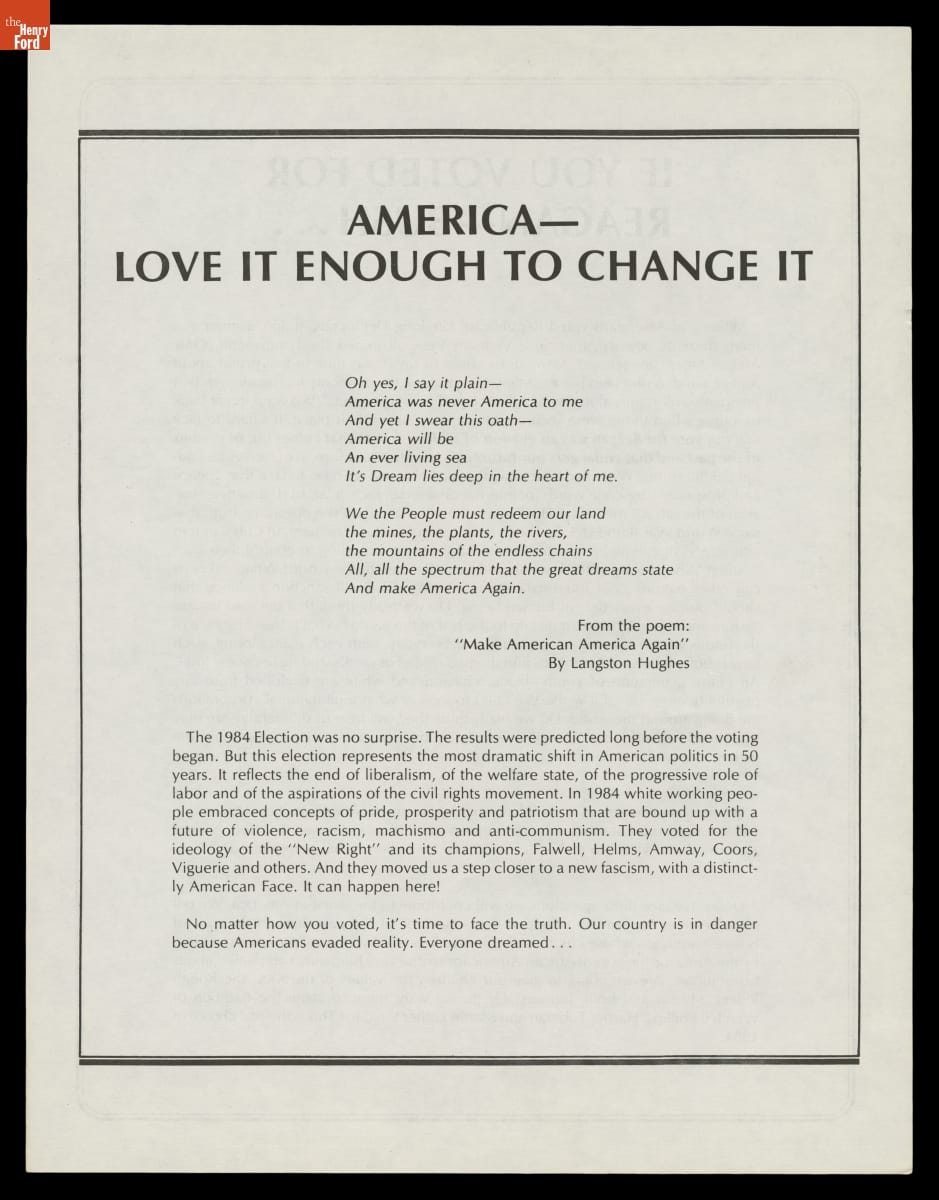
- "America -- Love It Enough to Change It," 1984 - Writer, political philosopher, and activist Grace Lee Boggs championed grassroots activism from the 1940s until the 2010s. Her published articles, pamphlets, and books encouraged all Americans to reimagine themselves and their communities from the inside out. "America-- Love It Enough to Change It" was her reaction to the 1984 election and the forthcoming second Reagan term
- 1984
- Collections - Artifact
"America -- Love It Enough to Change It," 1984
Writer, political philosopher, and activist Grace Lee Boggs championed grassroots activism from the 1940s until the 2010s. Her published articles, pamphlets, and books encouraged all Americans to reimagine themselves and their communities from the inside out. "America-- Love It Enough to Change It" was her reaction to the 1984 election and the forthcoming second Reagan term