
Search
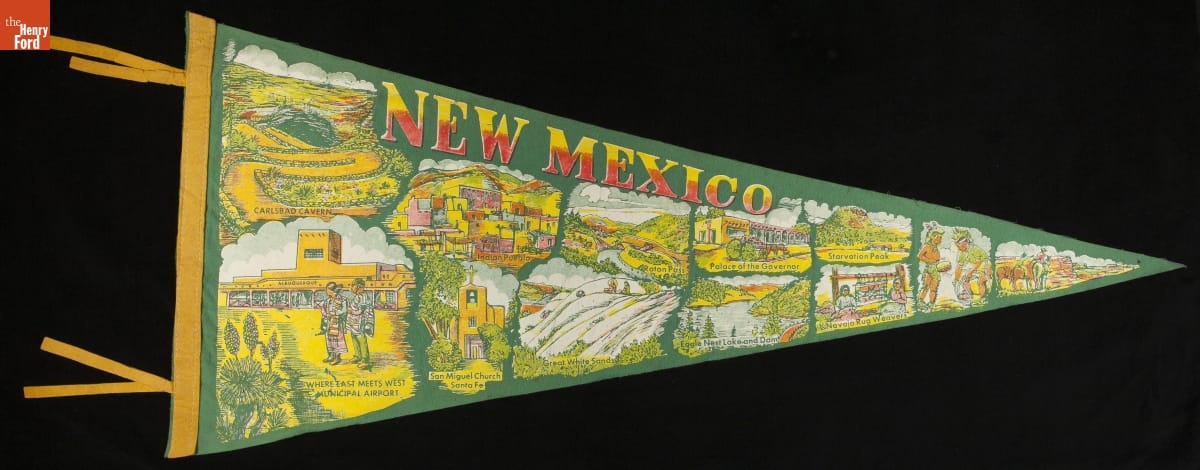
- Pennant, "New Mexico," 1940-1965 - Tourists purchase simple, inexpensive souvenirs as proof of their travels. These mementos transport vacationers back to the places they visited and the things they did. In the mid-20th century, felt pennants were trendy. While travelers to New Mexico may not have seen all the state's popular tourist attractions depicted on this pennant, they could have this keepsake to remember their visit.
- 1940-1965
- Collections - Artifact
Pennant, "New Mexico," 1940-1965
Tourists purchase simple, inexpensive souvenirs as proof of their travels. These mementos transport vacationers back to the places they visited and the things they did. In the mid-20th century, felt pennants were trendy. While travelers to New Mexico may not have seen all the state's popular tourist attractions depicted on this pennant, they could have this keepsake to remember their visit.
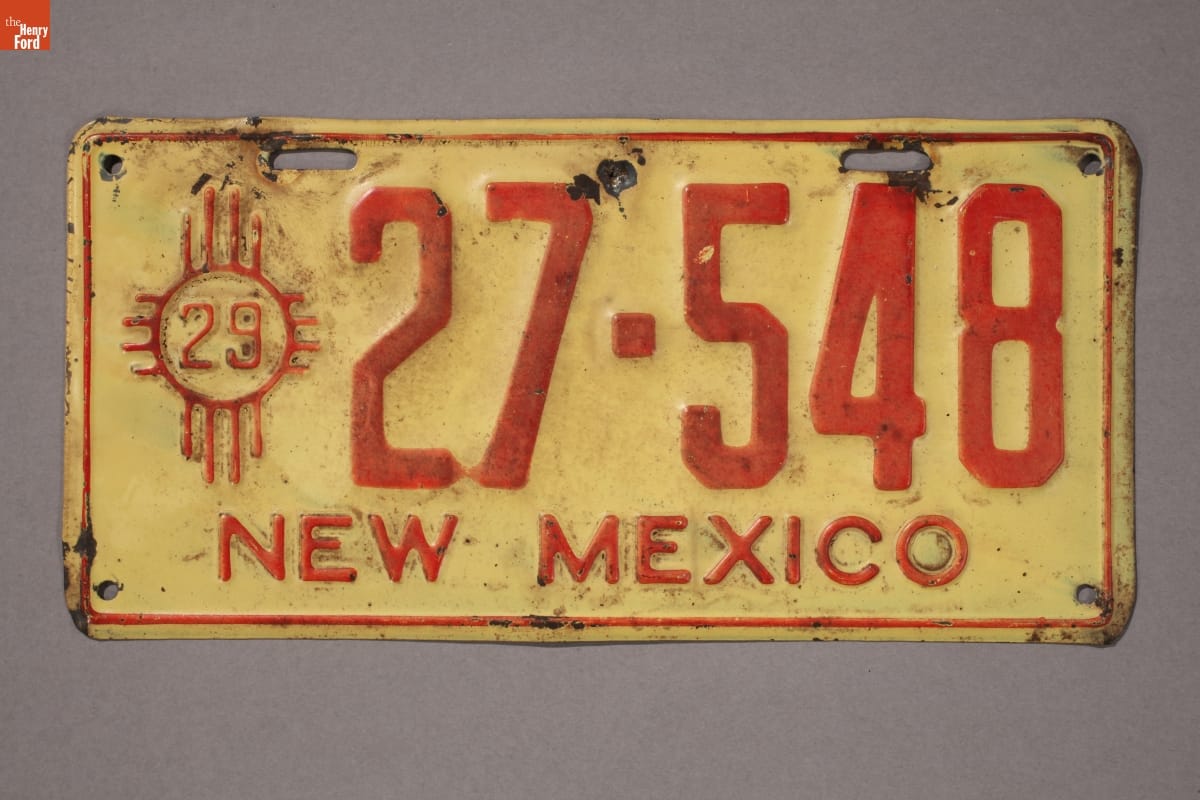
- New Mexico License Plate, 1929 - Early state-issued license plates were made of porcelain-coated iron. Later, states stamped tin, steel, or even copper to make plates. During the Second World War several states used fiberboard. Plate colors varied and some states added symbols, mottoes, or other design elements. Today, states use reflective sheeting to coat a standard-sized aluminum blank which is then stamped and decorated.
- 1929
- Collections - Artifact
New Mexico License Plate, 1929
Early state-issued license plates were made of porcelain-coated iron. Later, states stamped tin, steel, or even copper to make plates. During the Second World War several states used fiberboard. Plate colors varied and some states added symbols, mottoes, or other design elements. Today, states use reflective sheeting to coat a standard-sized aluminum blank which is then stamped and decorated.
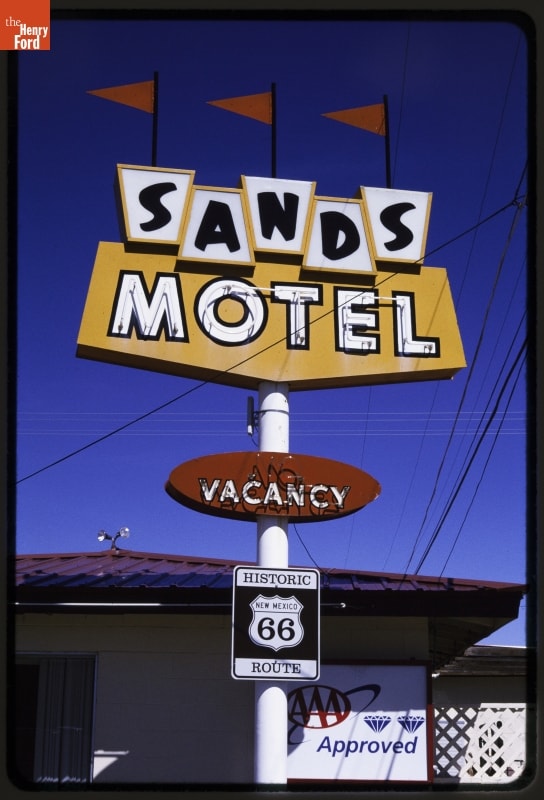
- Sands Motel, Grants, New Mexico, 2003 - In the mid-1970s, John Margolies began to assemble a visual record of America's built roadside landscape. Over the following three decades, he traveled thousands of miles to photograph the overlooked and often quickly vanishing structures that had grown out of American automobile culture and main street commerce. His photographs of hotels, motels, diners, service stations, drive-ins and attractions celebrate and capture a unique chapter of American history.
- 2003
- Collections - Artifact
Sands Motel, Grants, New Mexico, 2003
In the mid-1970s, John Margolies began to assemble a visual record of America's built roadside landscape. Over the following three decades, he traveled thousands of miles to photograph the overlooked and often quickly vanishing structures that had grown out of American automobile culture and main street commerce. His photographs of hotels, motels, diners, service stations, drive-ins and attractions celebrate and capture a unique chapter of American history.
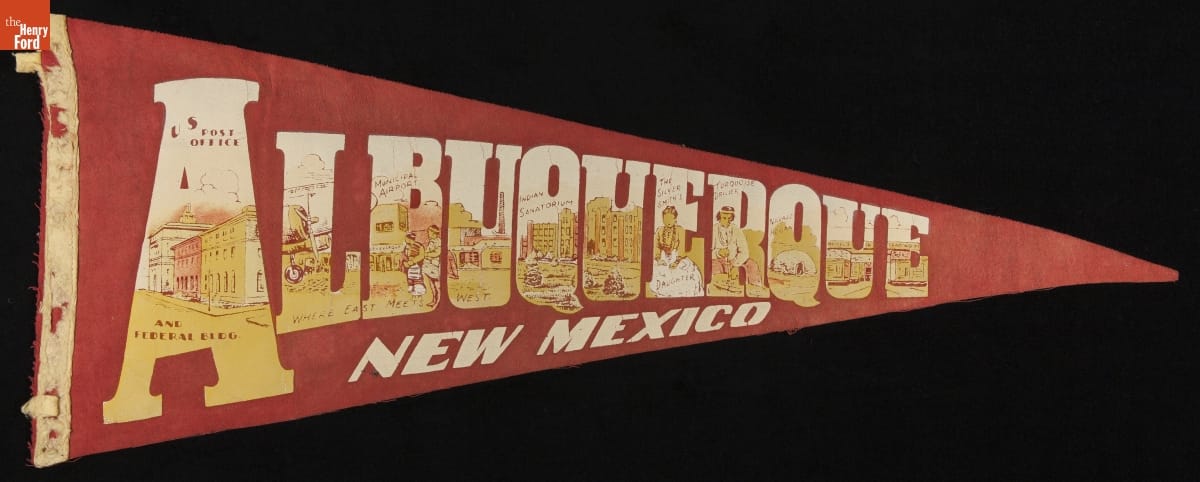
- Pennant, "Albuquerque, New Mexico," 1940-1965 - Tourists purchase simple, inexpensive souvenirs as proof of their travels. These mementos transport vacationers back to the places they visited and the things they did. In the mid-20th century, felt pennants were trendy. This pennant with local attractions depicted in the letters of the city's name helped vacationers relive their trip to Albuquerque, New Mexico.
- 1940-1965
- Collections - Artifact
Pennant, "Albuquerque, New Mexico," 1940-1965
Tourists purchase simple, inexpensive souvenirs as proof of their travels. These mementos transport vacationers back to the places they visited and the things they did. In the mid-20th century, felt pennants were trendy. This pennant with local attractions depicted in the letters of the city's name helped vacationers relive their trip to Albuquerque, New Mexico.
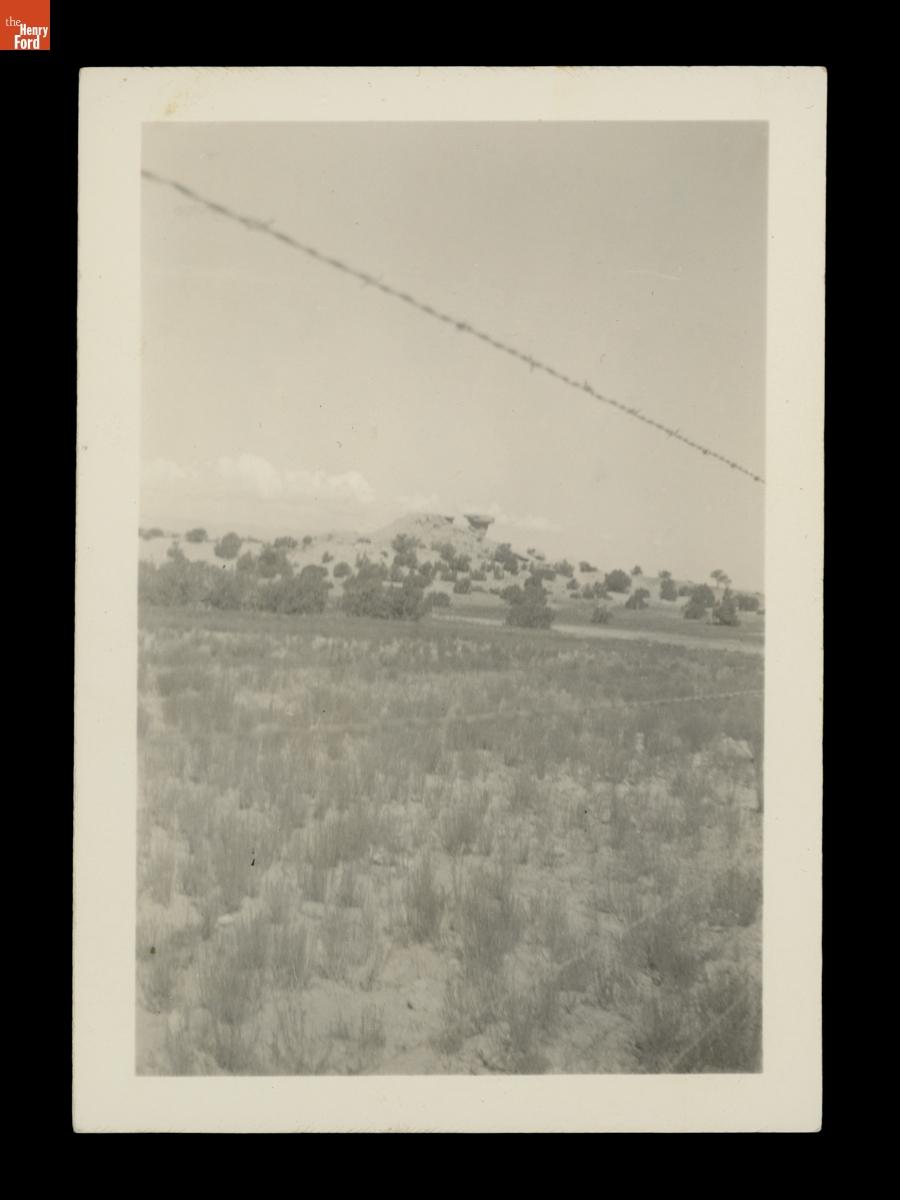
- Camel Rock, Santa Fe, New Mexico -
- Collections - Artifact
Camel Rock, Santa Fe, New Mexico
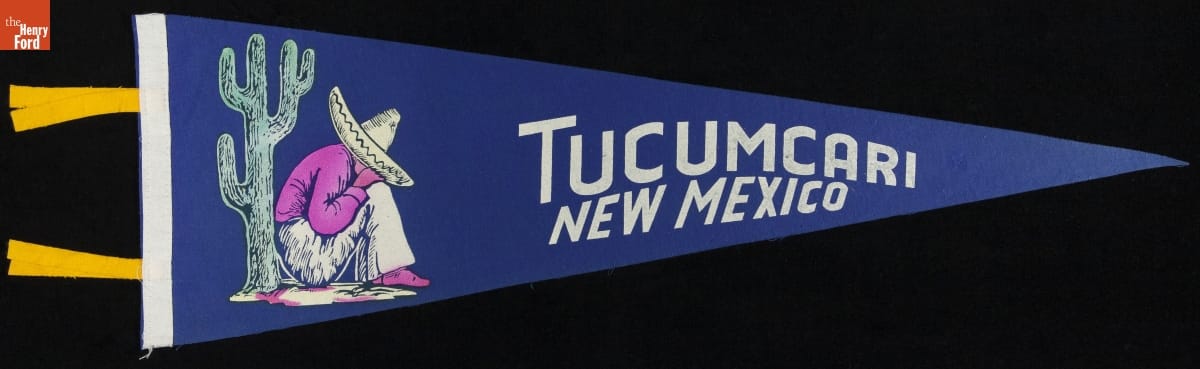
- Pennant, "Tucumcari, New Mexico," 1940-1965 - The "Sleeping Mexican" became a common ethnic caricature in the mid-20th century, especially in the American Southwest. The image, like the one on this pennant, reinforced a prejudice held by many non-Hispanic Americans that Mexicans were "lazy." Today, some Hispanics have embraced the caricature as a hard-working Mexican who is only resting after a long day's work -- turning the negative stereotype on its head.
- 1940-1965
- Collections - Artifact
Pennant, "Tucumcari, New Mexico," 1940-1965
The "Sleeping Mexican" became a common ethnic caricature in the mid-20th century, especially in the American Southwest. The image, like the one on this pennant, reinforced a prejudice held by many non-Hispanic Americans that Mexicans were "lazy." Today, some Hispanics have embraced the caricature as a hard-working Mexican who is only resting after a long day's work -- turning the negative stereotype on its head.
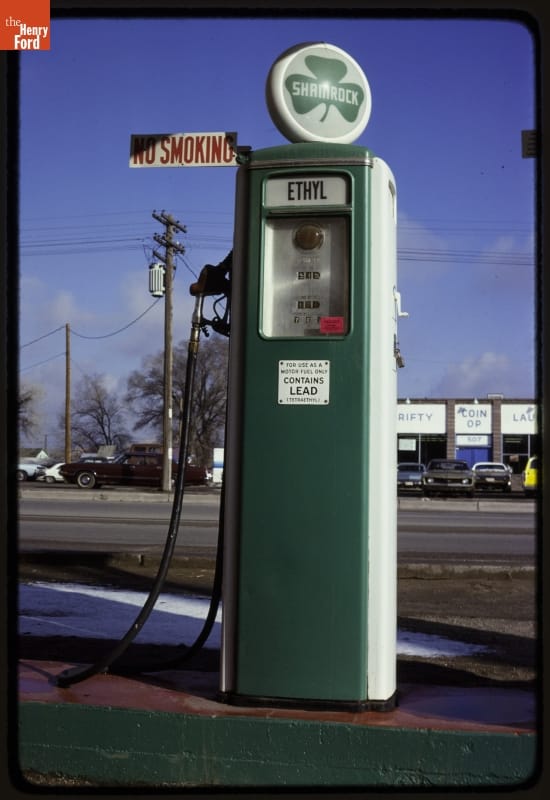
- Shamrock Gas Pump, Albuquerque, New Mexico, 1979 - In the mid-1970s, John Margolies began to assemble a visual record of America's built roadside landscape. Over the following three decades, he traveled thousands of miles to photograph the overlooked and often quickly vanishing structures that had grown out of American automobile culture and main street commerce. His photographs of hotels, motels, diners, service stations, drive-ins and attractions celebrate and capture a unique chapter of American history.
- 1979
- Collections - Artifact
Shamrock Gas Pump, Albuquerque, New Mexico, 1979
In the mid-1970s, John Margolies began to assemble a visual record of America's built roadside landscape. Over the following three decades, he traveled thousands of miles to photograph the overlooked and often quickly vanishing structures that had grown out of American automobile culture and main street commerce. His photographs of hotels, motels, diners, service stations, drive-ins and attractions celebrate and capture a unique chapter of American history.
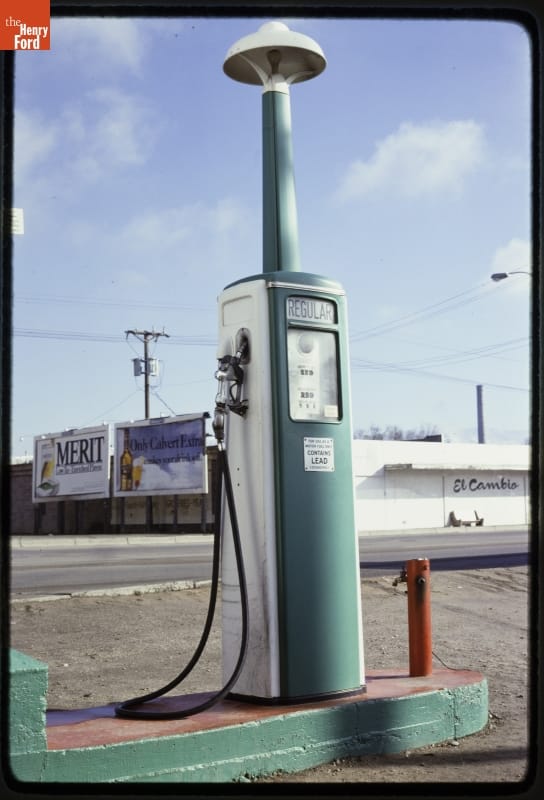
- Shamrock Gas Pump, Albuquerque, New Mexico, 1979 - In the mid-1970s, John Margolies began to assemble a visual record of America's built roadside landscape. Over the following three decades, he traveled thousands of miles to photograph the overlooked and often quickly vanishing structures that had grown out of American automobile culture and main street commerce. His photographs of hotels, motels, diners, service stations, drive-ins and attractions celebrate and capture a unique chapter of American history.
- 1979
- Collections - Artifact
Shamrock Gas Pump, Albuquerque, New Mexico, 1979
In the mid-1970s, John Margolies began to assemble a visual record of America's built roadside landscape. Over the following three decades, he traveled thousands of miles to photograph the overlooked and often quickly vanishing structures that had grown out of American automobile culture and main street commerce. His photographs of hotels, motels, diners, service stations, drive-ins and attractions celebrate and capture a unique chapter of American history.
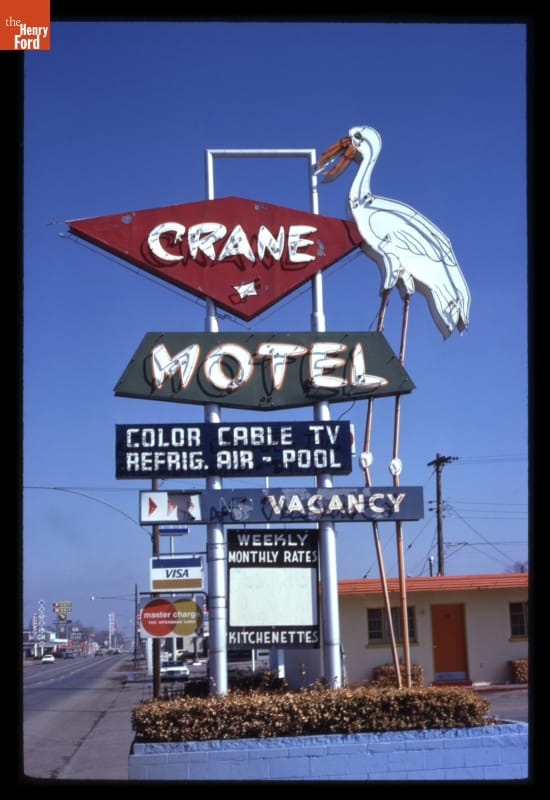
- Crane Motel Sign, Roswell, New Mexico, 1979 - In the mid-1970s, John Margolies began to assemble a visual record of America's built roadside landscape. Over the following three decades, he traveled thousands of miles to photograph the overlooked and often quickly vanishing structures that had grown out of American automobile culture and main street commerce. His photographs of hotels, motels, diners, service stations, drive-ins and attractions celebrate and capture a unique chapter of American history.
- 1979
- Collections - Artifact
Crane Motel Sign, Roswell, New Mexico, 1979
In the mid-1970s, John Margolies began to assemble a visual record of America's built roadside landscape. Over the following three decades, he traveled thousands of miles to photograph the overlooked and often quickly vanishing structures that had grown out of American automobile culture and main street commerce. His photographs of hotels, motels, diners, service stations, drive-ins and attractions celebrate and capture a unique chapter of American history.
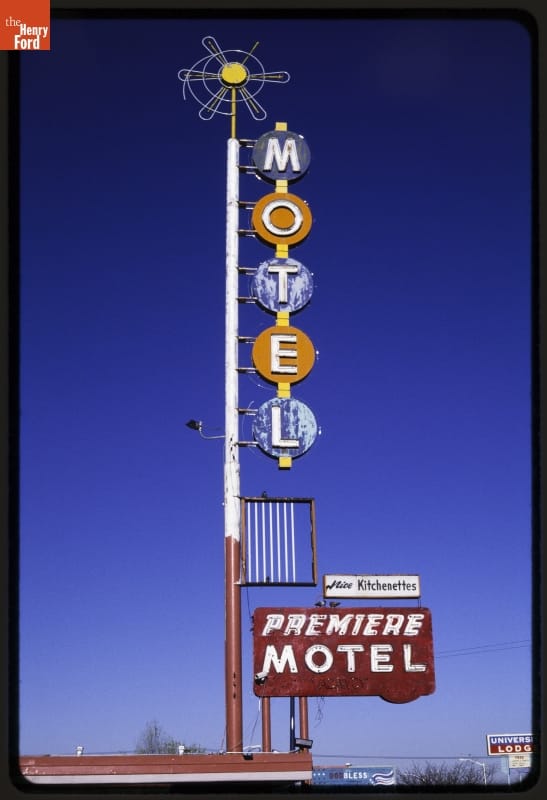
- Premiere Motel Sign, Albuquerque, New Mexico, 2003 - In the mid-1970s, John Margolies began to assemble a visual record of America's built roadside landscape. Over the following three decades, he traveled thousands of miles to photograph the overlooked and often quickly vanishing structures that had grown out of American automobile culture and main street commerce. His photographs of hotels, motels, diners, service stations, drive-ins and attractions celebrate and capture a unique chapter of American history.
- 2003
- Collections - Artifact
Premiere Motel Sign, Albuquerque, New Mexico, 2003
In the mid-1970s, John Margolies began to assemble a visual record of America's built roadside landscape. Over the following three decades, he traveled thousands of miles to photograph the overlooked and often quickly vanishing structures that had grown out of American automobile culture and main street commerce. His photographs of hotels, motels, diners, service stations, drive-ins and attractions celebrate and capture a unique chapter of American history.