
Search
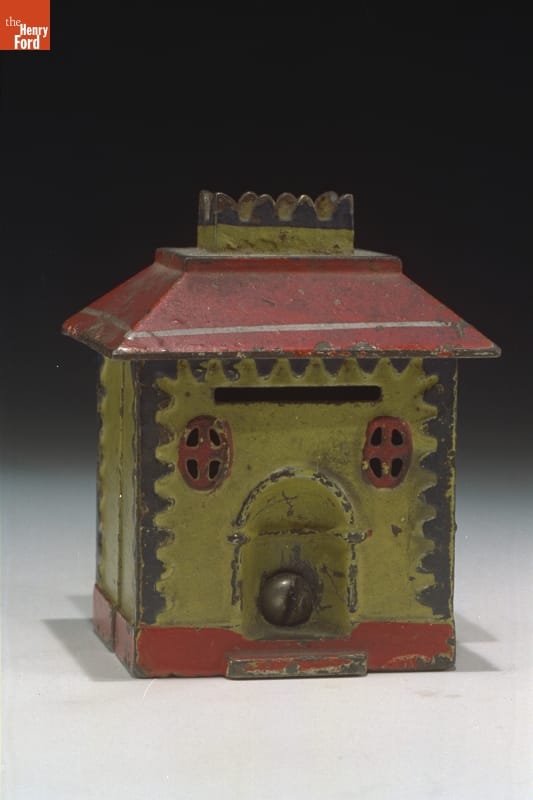
- Bank Building Bank, 1870-1930 - In the late-19th and early-20th centuries, several manufacturers marketed cast-iron toy banks to parents as a way to encourage thrift in children. Some banks used mechanical actions to deposit a coin, while others, like this one, just had a slot where the coin was dropped. These simple banks came in a variety of shapes that delighted children of all ages.
- 1870-1930
- Collections - Artifact
Bank Building Bank, 1870-1930
In the late-19th and early-20th centuries, several manufacturers marketed cast-iron toy banks to parents as a way to encourage thrift in children. Some banks used mechanical actions to deposit a coin, while others, like this one, just had a slot where the coin was dropped. These simple banks came in a variety of shapes that delighted children of all ages.
- Bank -
- Collections - Artifact
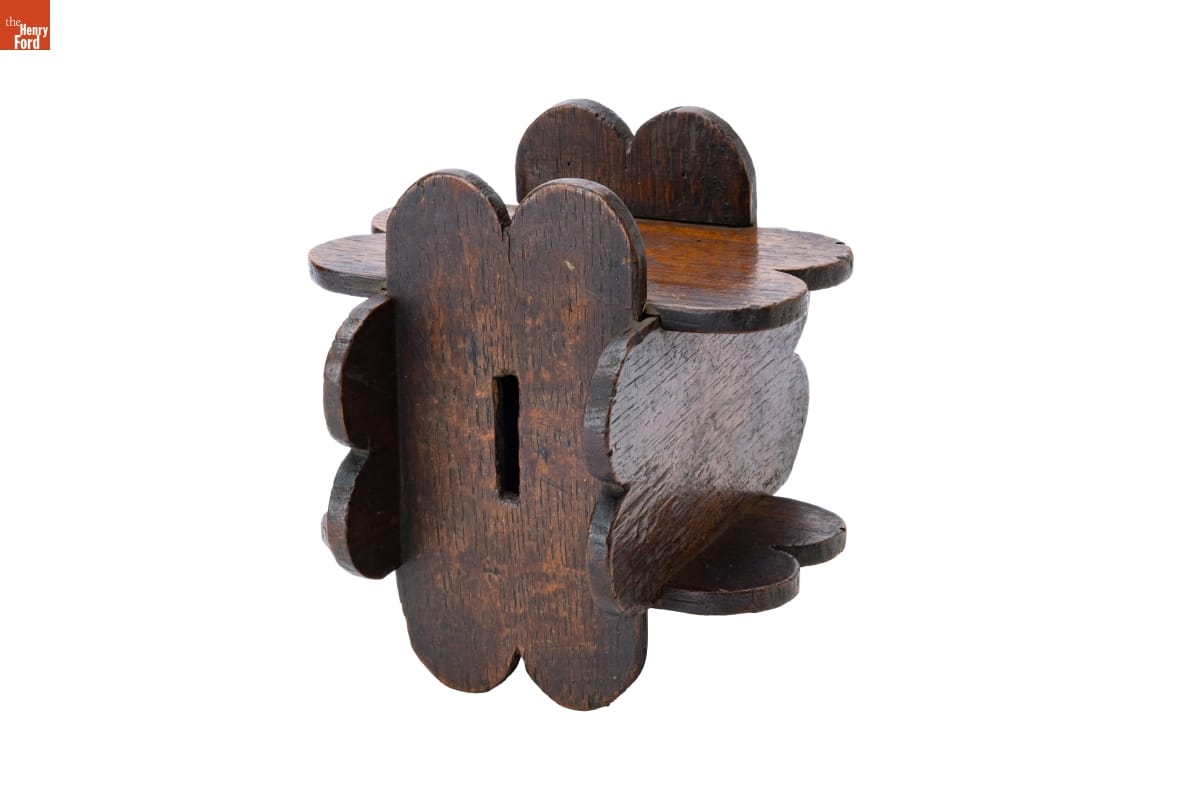
Bank
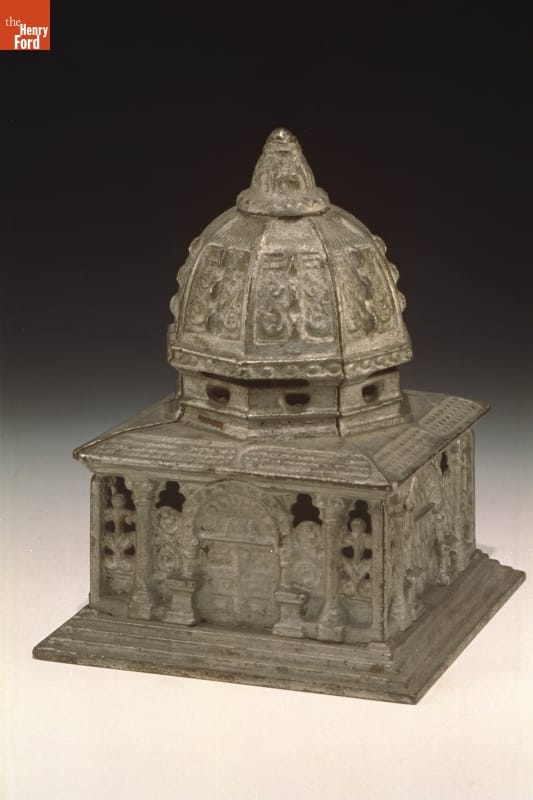
- "Columbia Bank" Building Bank, 1895-1912 - In the late-19th and early-20th centuries, several manufacturers marketed cast-iron toy banks to parents as a way to encourage thrift in children. Some banks used mechanical actions to deposit a coin, while others, like this one, just had a slot where the coin was dropped. These simple banks came in a variety of shapes that delighted children of all ages.
- 1895-1912
- Collections - Artifact
"Columbia Bank" Building Bank, 1895-1912
In the late-19th and early-20th centuries, several manufacturers marketed cast-iron toy banks to parents as a way to encourage thrift in children. Some banks used mechanical actions to deposit a coin, while others, like this one, just had a slot where the coin was dropped. These simple banks came in a variety of shapes that delighted children of all ages.
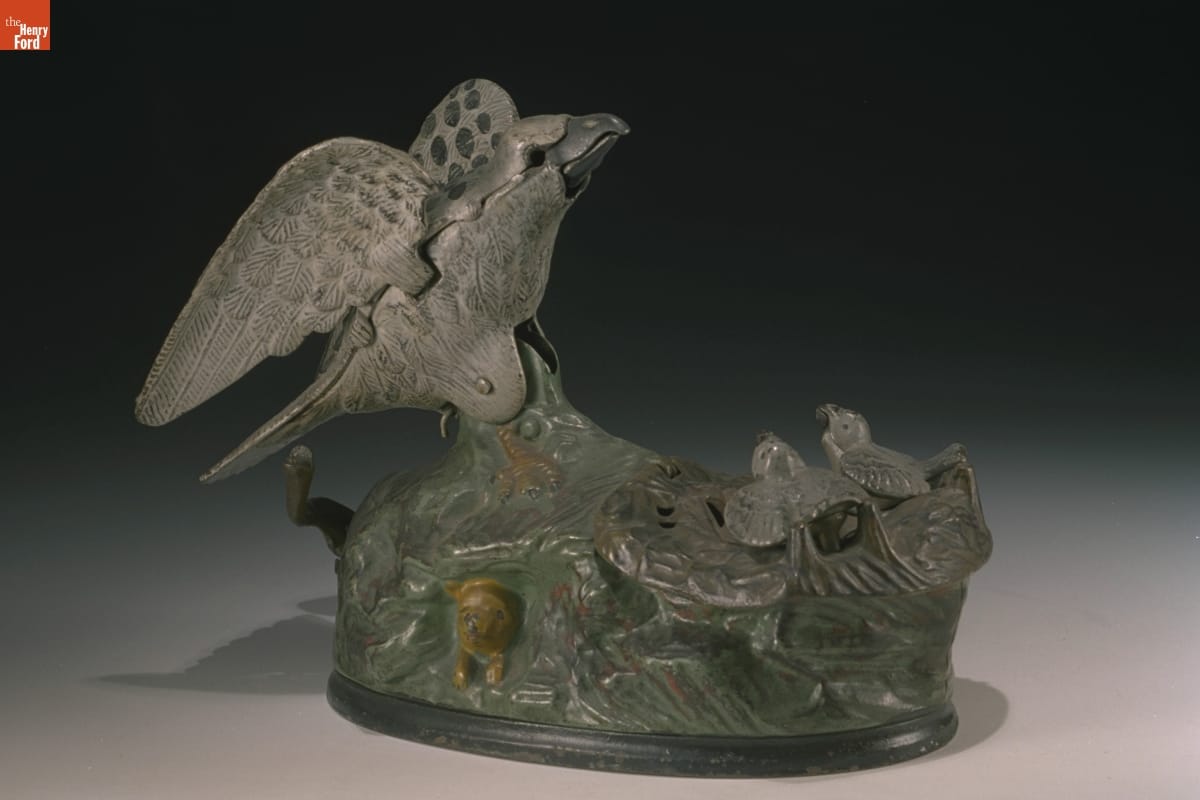
- "Eagle Bank" Mechanical Bank, 1883-1910 - Saving money can be fun. Beginning in the late 1800s, families could purchase banks that used ingenious mechanisms to deposit money. This mechanical bank has an eagle that looks as if it is feeding its young. Place a coin in the eagle's mouth and depress the lever; the eagle will lurch forward and deposit the coin.
- 1883-1910
- Collections - Artifact
"Eagle Bank" Mechanical Bank, 1883-1910
Saving money can be fun. Beginning in the late 1800s, families could purchase banks that used ingenious mechanisms to deposit money. This mechanical bank has an eagle that looks as if it is feeding its young. Place a coin in the eagle's mouth and depress the lever; the eagle will lurch forward and deposit the coin.
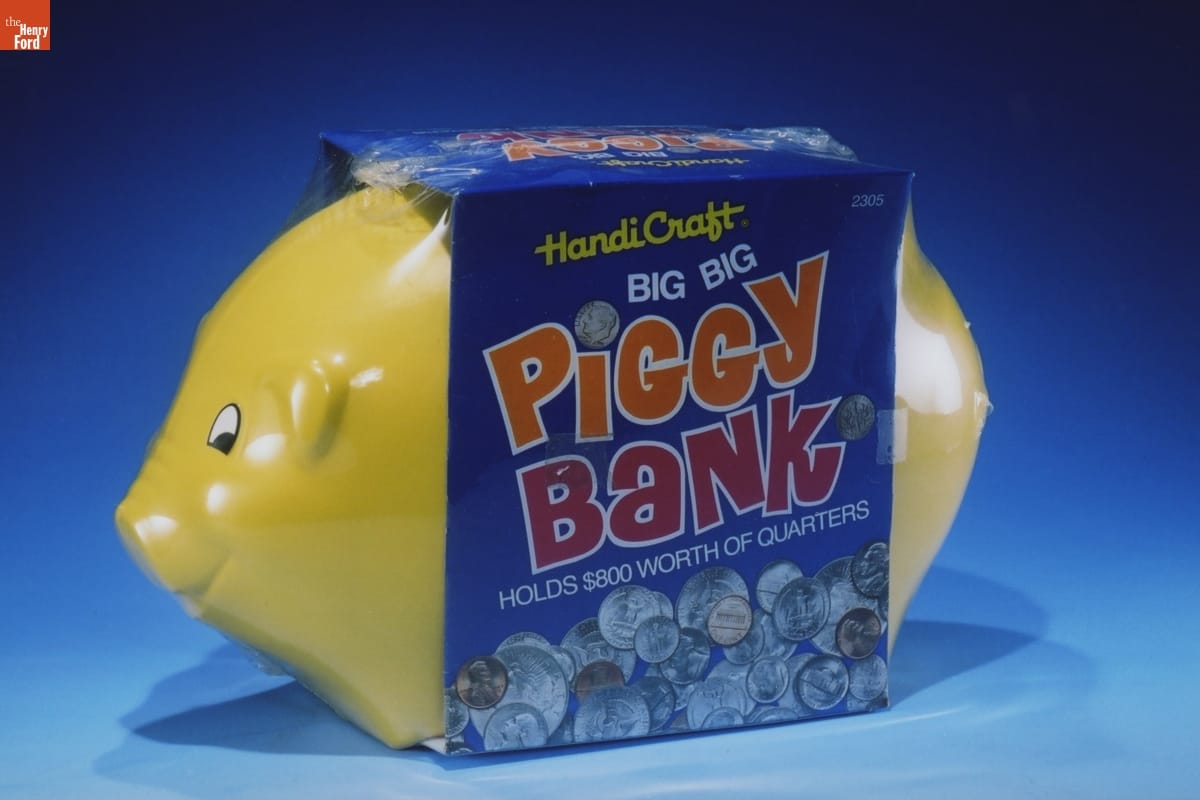
- Piggy Bank, 1991 - Still banks provide a simple way to save money. You place your coin in the slot then let it drop -- there are no mechanical devices. Still banks come in a variety of interesting and decorative shapes, including buildings, people, and animals. This yellow plastic "piggy" bank -- a popular form used for saving money -- was made in 1991.
- 1991
- Collections - Artifact
Piggy Bank, 1991
Still banks provide a simple way to save money. You place your coin in the slot then let it drop -- there are no mechanical devices. Still banks come in a variety of interesting and decorative shapes, including buildings, people, and animals. This yellow plastic "piggy" bank -- a popular form used for saving money -- was made in 1991.
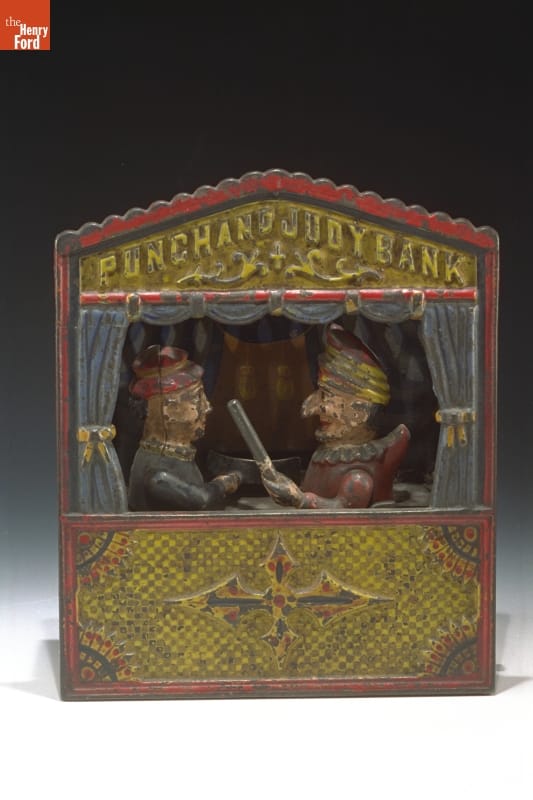
- "Punch and Judy Bank" Mechanical Bank, 1884-1895 - Punch and Judy puppet shows -- portable and easy to stage on a street corner, in a park, or as part of a traveling circus -- attracted Americans of all ages during the 1800s. "Bad boy" Punch always managed to get away with mischief -- much to the delight of his audience. Punch & Judy even inspired toy versions of themselves.
- 1884-1895
- Collections - Artifact
"Punch and Judy Bank" Mechanical Bank, 1884-1895
Punch and Judy puppet shows -- portable and easy to stage on a street corner, in a park, or as part of a traveling circus -- attracted Americans of all ages during the 1800s. "Bad boy" Punch always managed to get away with mischief -- much to the delight of his audience. Punch & Judy even inspired toy versions of themselves.
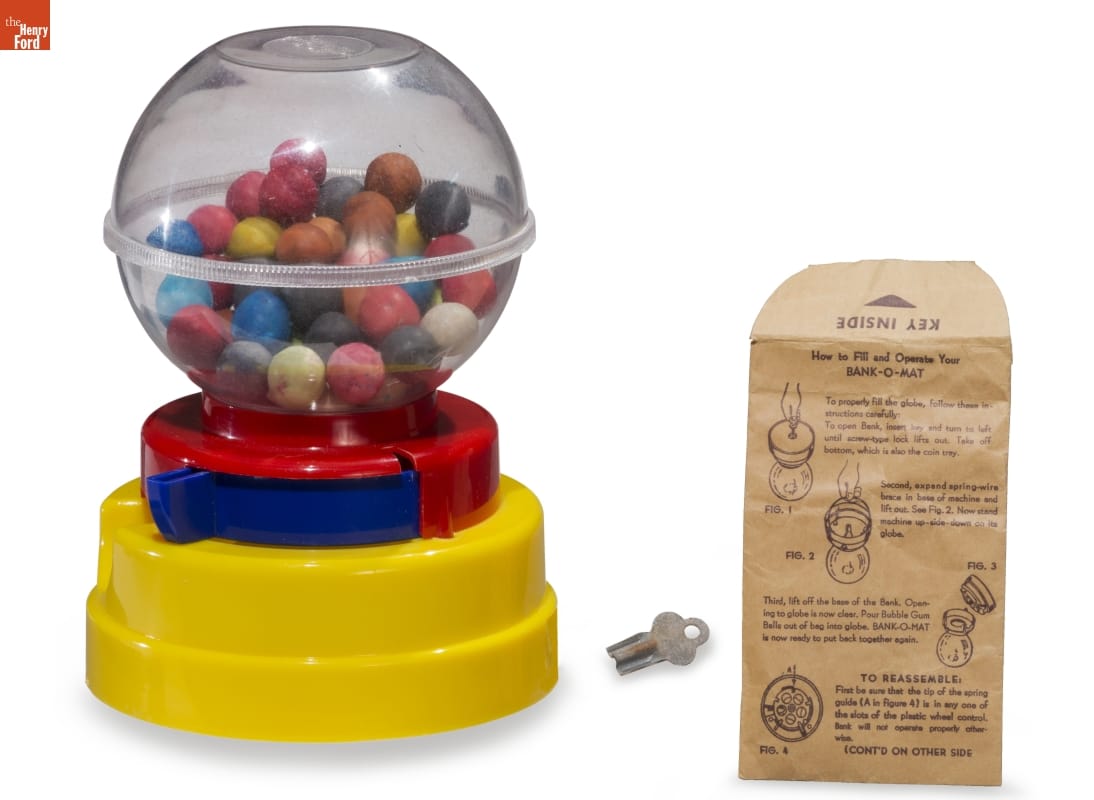
- "Bank-O-Mat," Bank and Gumball Machine, circa 1960 - This toy Bank-O-Mat gumball machine gave kids a treat and, at the same time, helped them save money. Children deposited a coin in the slot and then pushed the lever to drop the money into the till. Another mechanism turned and dropped a gumball -- a treat for the thrifty child.
- circa 1960
- Collections - Artifact
"Bank-O-Mat," Bank and Gumball Machine, circa 1960
This toy Bank-O-Mat gumball machine gave kids a treat and, at the same time, helped them save money. Children deposited a coin in the slot and then pushed the lever to drop the money into the till. Another mechanism turned and dropped a gumball -- a treat for the thrifty child.
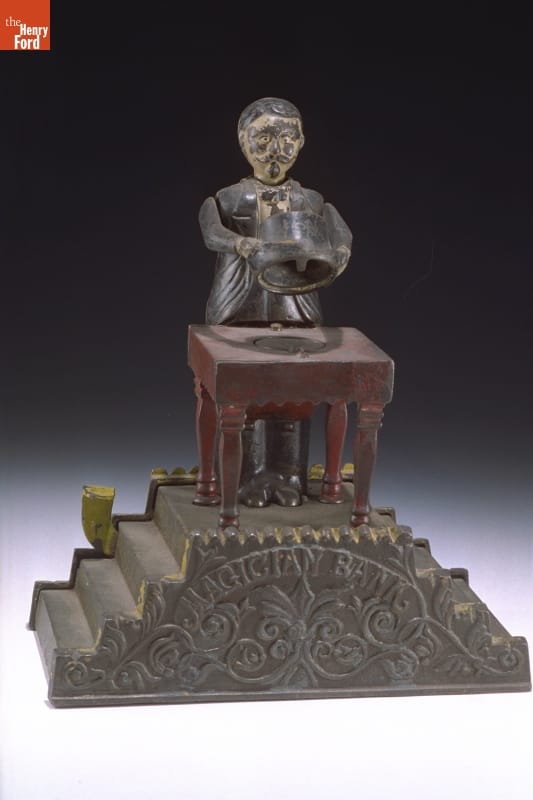
- Magician Bank, 1901-1920 - Cast iron mechanical banks, which used ingenious mechanisms to deposit money, became particularly popular between 1870 and 1930. Banks were produced in a variety of forms, such as this magician. When the lever on the step is depressed, a coin placed on the table "disappears" under the table while the magician lowers his hat over the coin and nods his head.
- 1901-1920
- Collections - Artifact
Magician Bank, 1901-1920
Cast iron mechanical banks, which used ingenious mechanisms to deposit money, became particularly popular between 1870 and 1930. Banks were produced in a variety of forms, such as this magician. When the lever on the step is depressed, a coin placed on the table "disappears" under the table while the magician lowers his hat over the coin and nods his head.
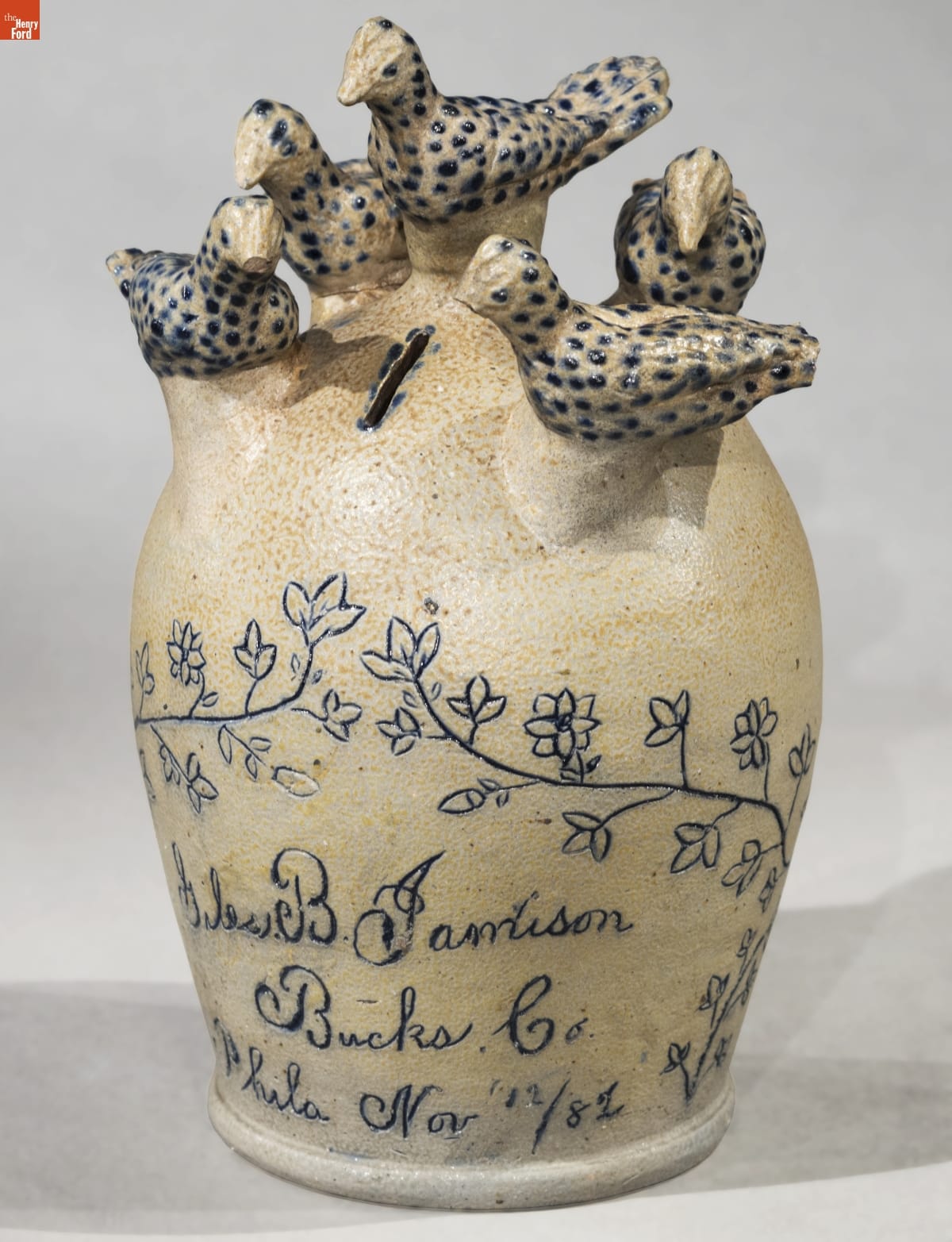
- Stoneware Toy Bank, 1882 - This toy bank was made of a durable, leak-proof pottery called stoneware, shaped on a potter's wheel. The orange-peel-like outer glaze was created when the potter threw handfuls of common rock salt into a white-hot kiln during the piece' firing. Salt-glazed stoneware pieces were decorated with an amazing array of designs, including the playful birds and flowers on this piece.
- 1882
- Collections - Artifact
Stoneware Toy Bank, 1882
This toy bank was made of a durable, leak-proof pottery called stoneware, shaped on a potter's wheel. The orange-peel-like outer glaze was created when the potter threw handfuls of common rock salt into a white-hot kiln during the piece' firing. Salt-glazed stoneware pieces were decorated with an amazing array of designs, including the playful birds and flowers on this piece.
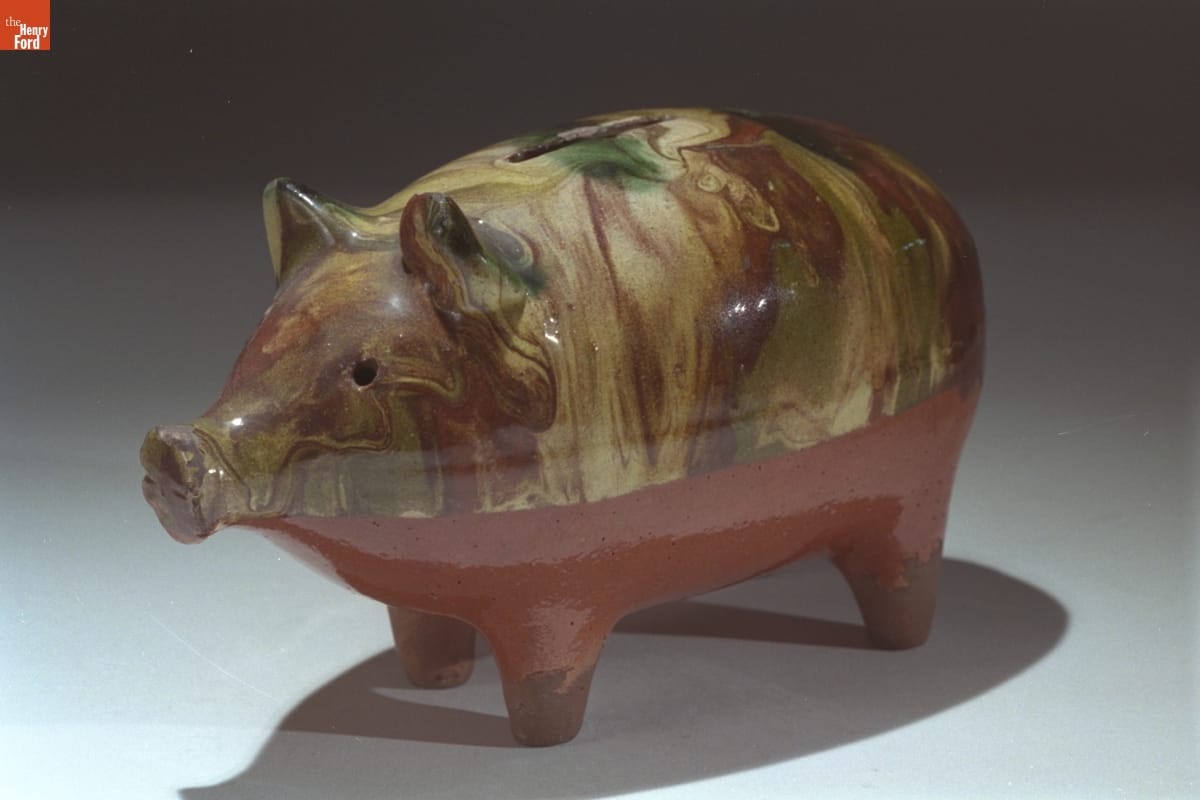
- Piggy Bank, 1870-1920 - In the late-19th and early-20th centuries, toy banks were marketed to parents as a way to encourage thrift in children. Some banks used mechanical actions to deposit a coin, while others, like this one, just had a slot where the coin was dropped. These simple banks came in a variety of shapes that delighted children of all ages.
- 1870-1920
- Collections - Artifact
Piggy Bank, 1870-1920
In the late-19th and early-20th centuries, toy banks were marketed to parents as a way to encourage thrift in children. Some banks used mechanical actions to deposit a coin, while others, like this one, just had a slot where the coin was dropped. These simple banks came in a variety of shapes that delighted children of all ages.