
Search
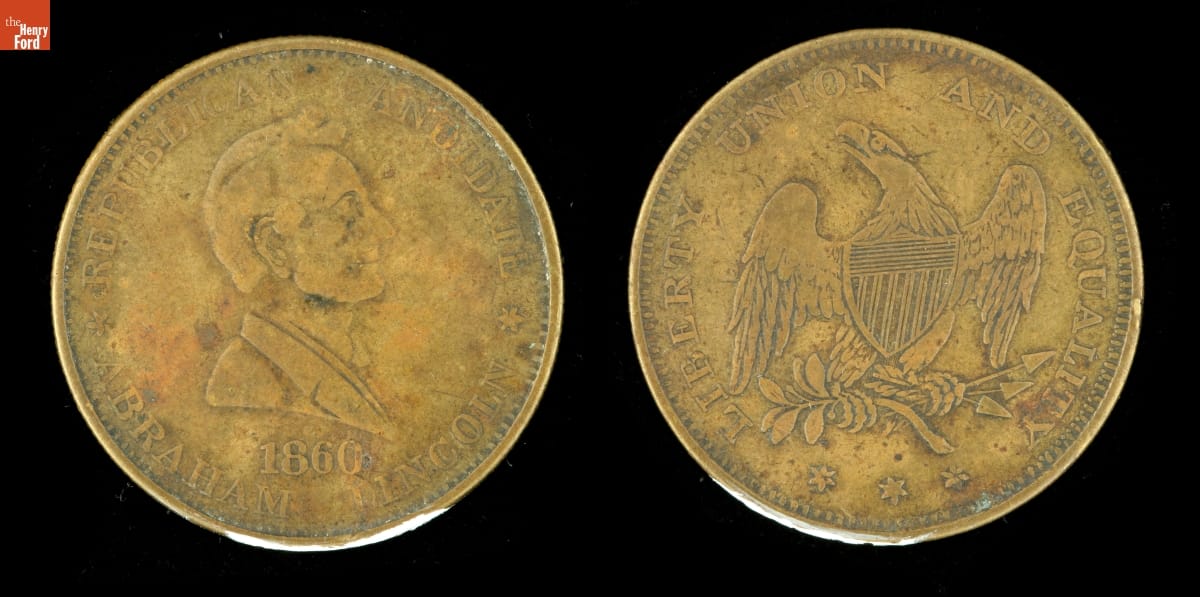
- Presidential Campaign Medallion, "Abraham Lincoln: Republican Candidate," 1860 - The possessor of this small token supported Abraham Lincoln for president in 1860. Trinkets, such as this one, reminded American citizens why they backed certain parties and candidates. This brass token portrays the Republican candidate on the front and the slogan "Liberty Union and Equality" on the back.
- 1860
- Collections - Artifact
Presidential Campaign Medallion, "Abraham Lincoln: Republican Candidate," 1860
The possessor of this small token supported Abraham Lincoln for president in 1860. Trinkets, such as this one, reminded American citizens why they backed certain parties and candidates. This brass token portrays the Republican candidate on the front and the slogan "Liberty Union and Equality" on the back.
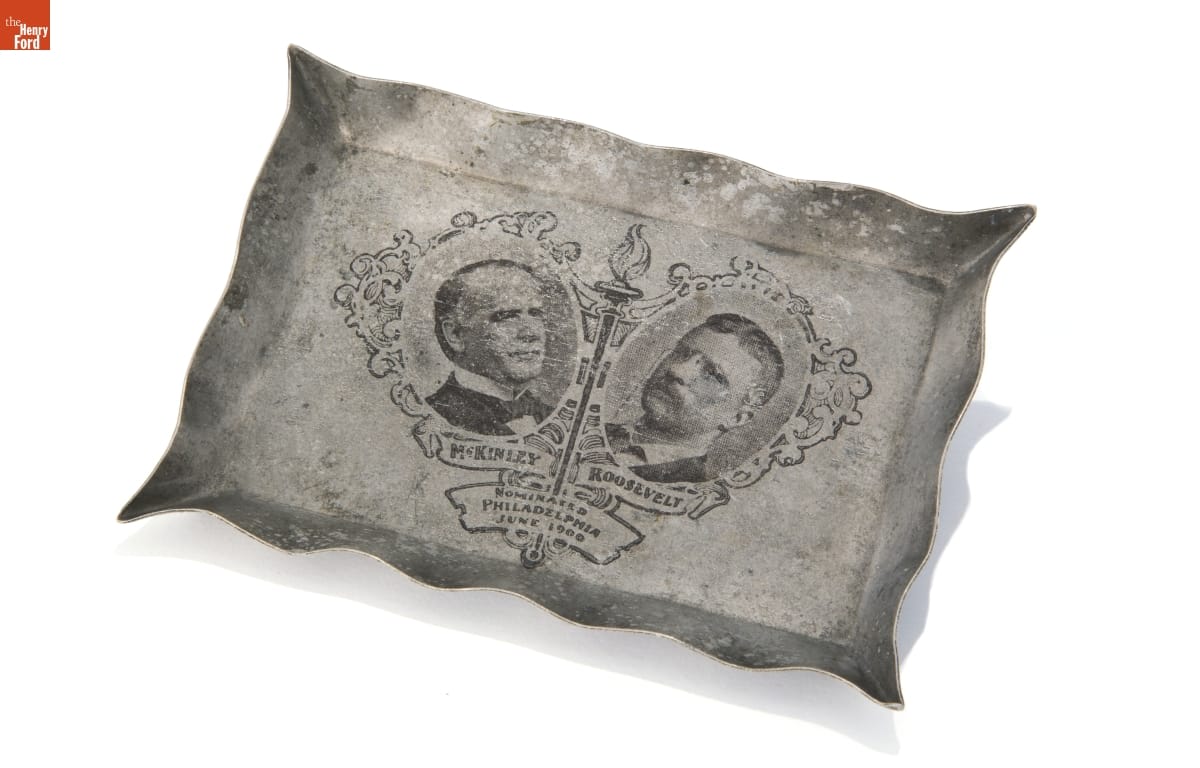
- Ashtray Featuring Theodore Roosevelt and William McKinley, Republican Candidates for 1900 Presidential Election, 1900 - Republicans renominated President William McKinley for a second term in 1900. During McKinley's first administration, America had recovered from the economic depression that began in 1893, and the country emerged victorious from the recent Spanish-American War. Only one question remained for the Republican Party: who should be vice president? Delegates chose Theodore Roosevelt, the popular war hero and reform governor of New York.
- 1900
- Collections - Artifact
Ashtray Featuring Theodore Roosevelt and William McKinley, Republican Candidates for 1900 Presidential Election, 1900
Republicans renominated President William McKinley for a second term in 1900. During McKinley's first administration, America had recovered from the economic depression that began in 1893, and the country emerged victorious from the recent Spanish-American War. Only one question remained for the Republican Party: who should be vice president? Delegates chose Theodore Roosevelt, the popular war hero and reform governor of New York.
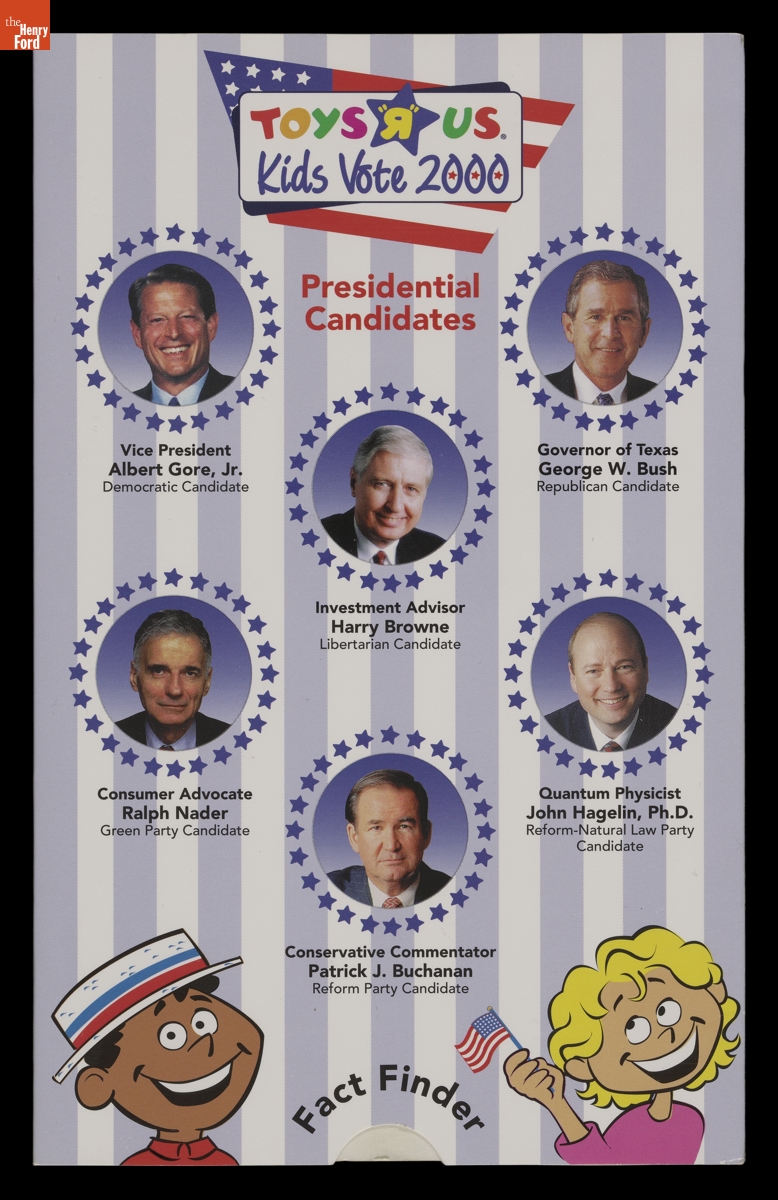
- Toys "R" Us Kids Vote 2000 Presidential Candidates and Fact Finder Movable Card, 2000 -
- 2000
- Collections - Artifact
Toys "R" Us Kids Vote 2000 Presidential Candidates and Fact Finder Movable Card, 2000
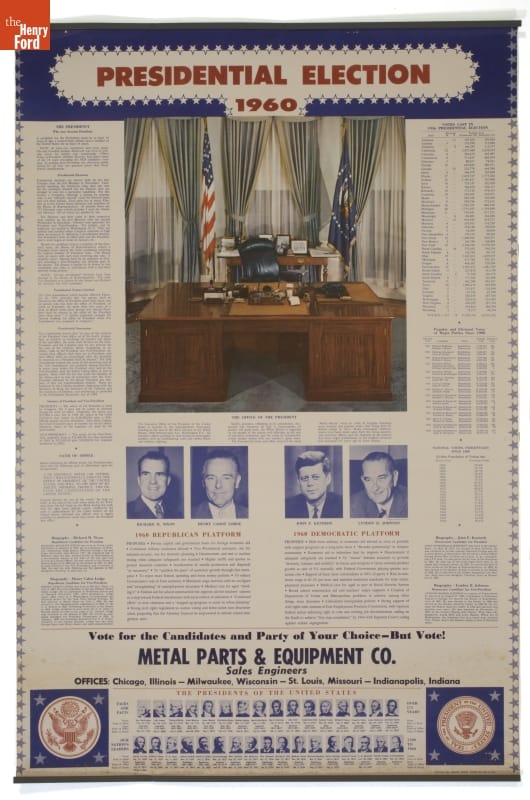
- Poster, "Presidential Election 1960: Vote for the Candidates and Party of Your Choice--But Vote!" - This poster reminded voters of the upcoming national election of 1960. It included information about U.S. presidential elections, political party platforms, and votes cast by state in the 1956 election. It also provided biographies of the presidential candidates, Vice President Nixon and Senator Kennedy. This poster, hung on a shop wall, also served as advertising for the Metal Parts and Equipment Company.
- 1960
- Collections - Artifact
Poster, "Presidential Election 1960: Vote for the Candidates and Party of Your Choice--But Vote!"
This poster reminded voters of the upcoming national election of 1960. It included information about U.S. presidential elections, political party platforms, and votes cast by state in the 1956 election. It also provided biographies of the presidential candidates, Vice President Nixon and Senator Kennedy. This poster, hung on a shop wall, also served as advertising for the Metal Parts and Equipment Company.
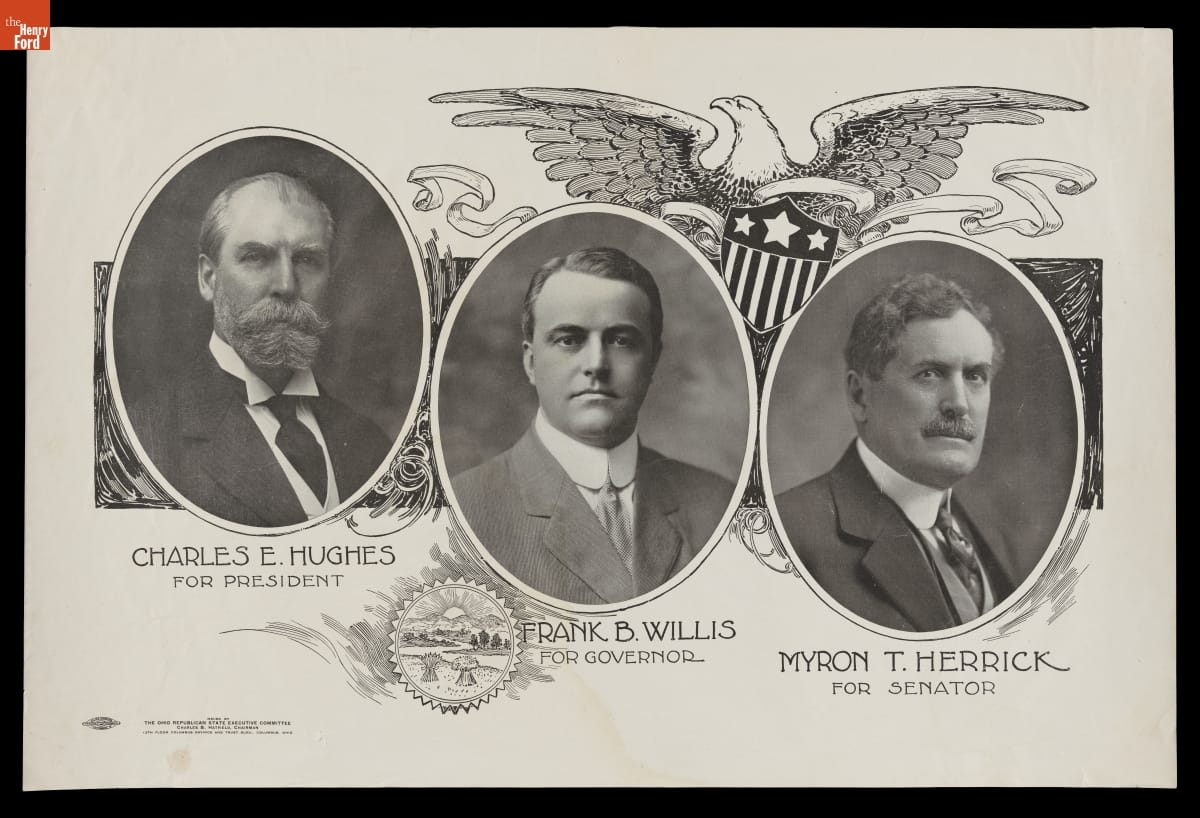
- Political Poster, Republican Candidates from Ohio, 1916 -
- 1916
- Collections - Artifact
Political Poster, Republican Candidates from Ohio, 1916
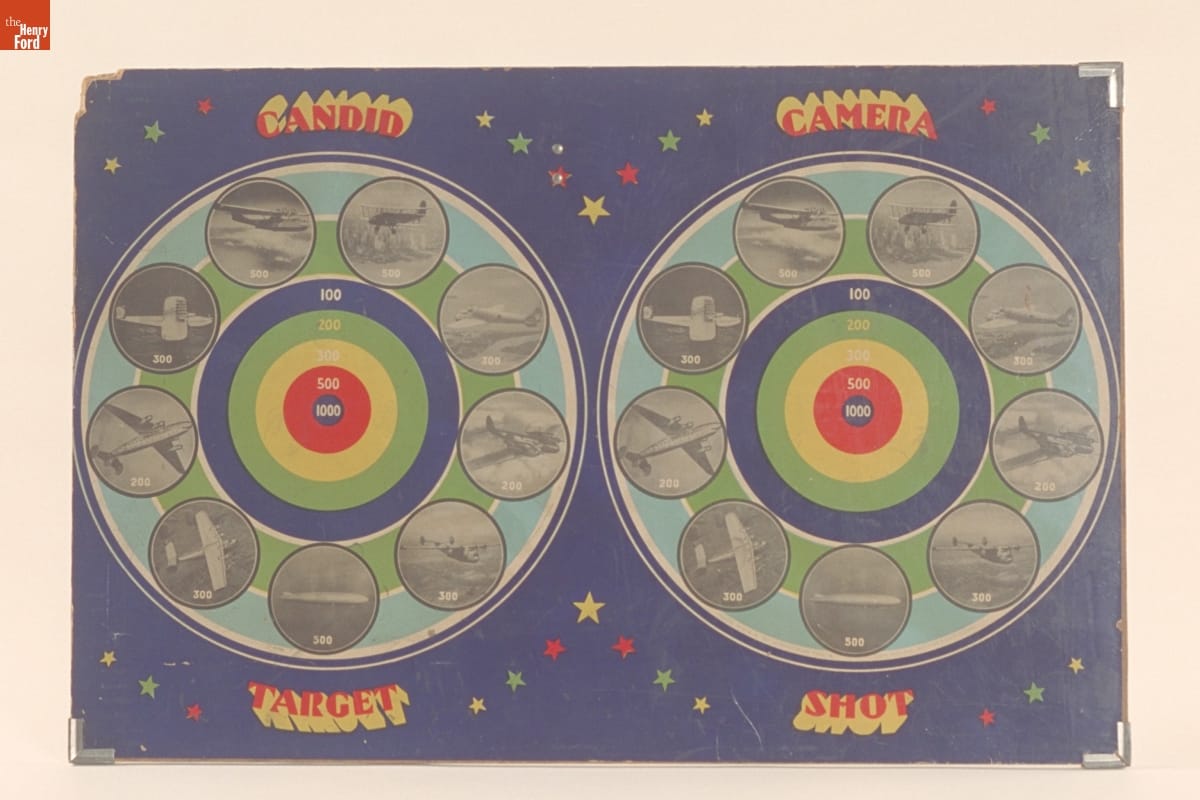
- Candid Camera Target Shot Game, 1940-1950 -
- 1940-1950
- Collections - Artifact
Candid Camera Target Shot Game, 1940-1950
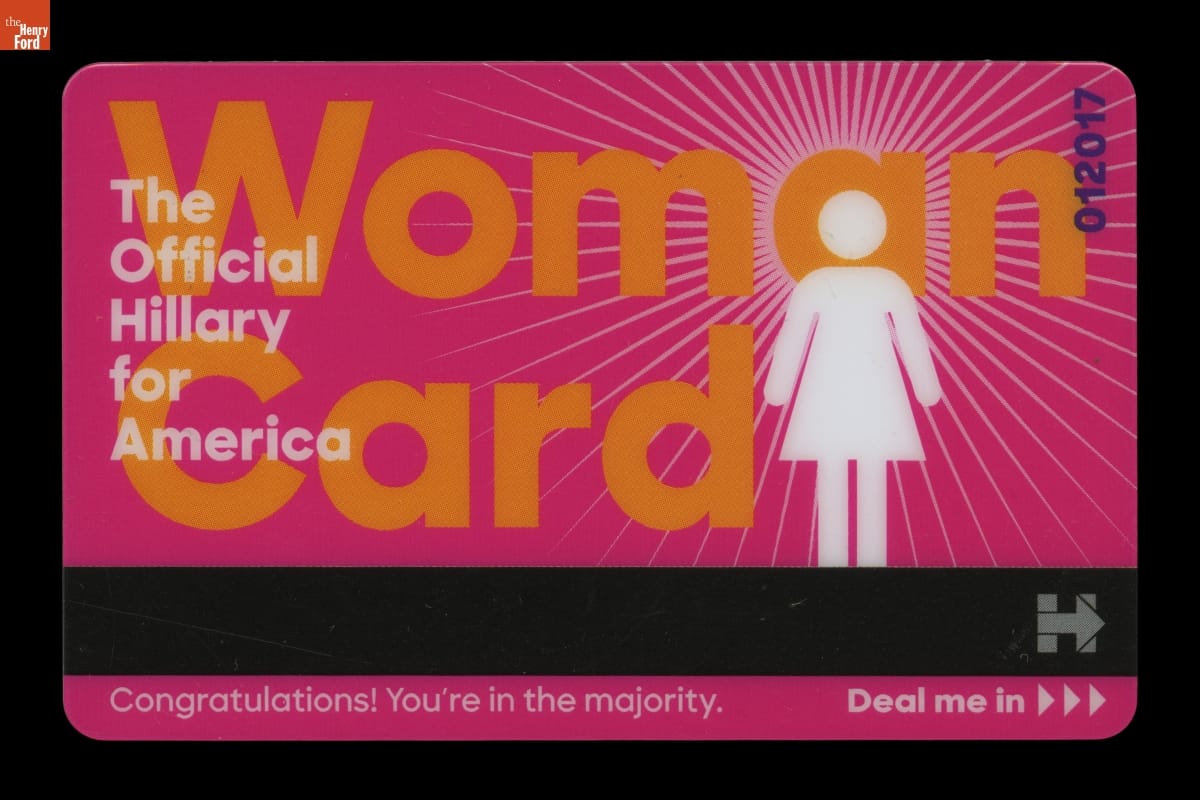
- Hillary Clinton Campaign "Woman Card," 2016 - Hillary Clinton, the 2016 Democratic Party's presidential nominee, issued "woman cards" after derogatory remarks from her Republican opponent, Donald Trump. Trump believed Clinton's only success came in exploiting her gender, or "playing the woman card" -- belittling her accomplishments and those of other women. "Woman cards" became a hit among Clinton's supporters who backed her fight for women's rights.
- 2016
- Collections - Artifact
Hillary Clinton Campaign "Woman Card," 2016
Hillary Clinton, the 2016 Democratic Party's presidential nominee, issued "woman cards" after derogatory remarks from her Republican opponent, Donald Trump. Trump believed Clinton's only success came in exploiting her gender, or "playing the woman card" -- belittling her accomplishments and those of other women. "Woman cards" became a hit among Clinton's supporters who backed her fight for women's rights.
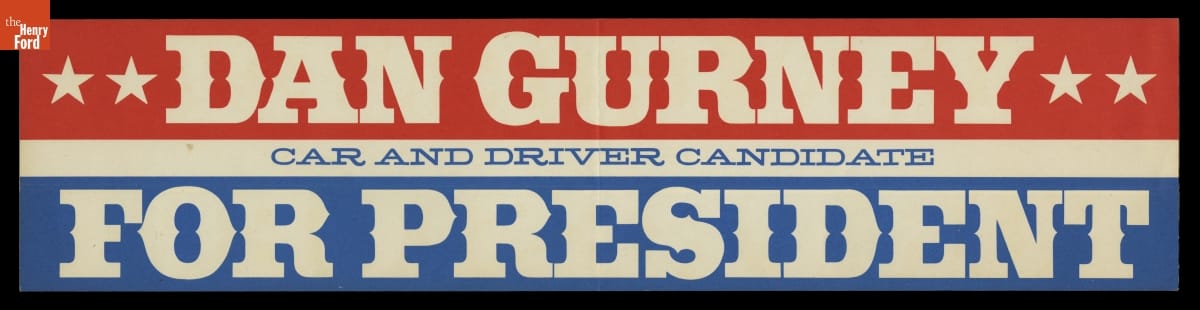
- Dan Gurney, Car and Driver Candidate for President, 1964 - In 1964, <EM>Car and Driver</EM> launched a tongue-in-cheek campaign supporting race driver Dan Gurney for President of the United States. No other candidate, the magazine wrote, represented the needs of the enthusiast driver. Throughout that summer and fall, "Dan Gurney for President" editorials and advertisements appeared in each issue and, for $1, readers could mail-order Gurney bumper stickers and buttons.
- 1964
- Collections - Artifact
Dan Gurney, Car and Driver Candidate for President, 1964
In 1964, Car and Driver launched a tongue-in-cheek campaign supporting race driver Dan Gurney for President of the United States. No other candidate, the magazine wrote, represented the needs of the enthusiast driver. Throughout that summer and fall, "Dan Gurney for President" editorials and advertisements appeared in each issue and, for $1, readers could mail-order Gurney bumper stickers and buttons.
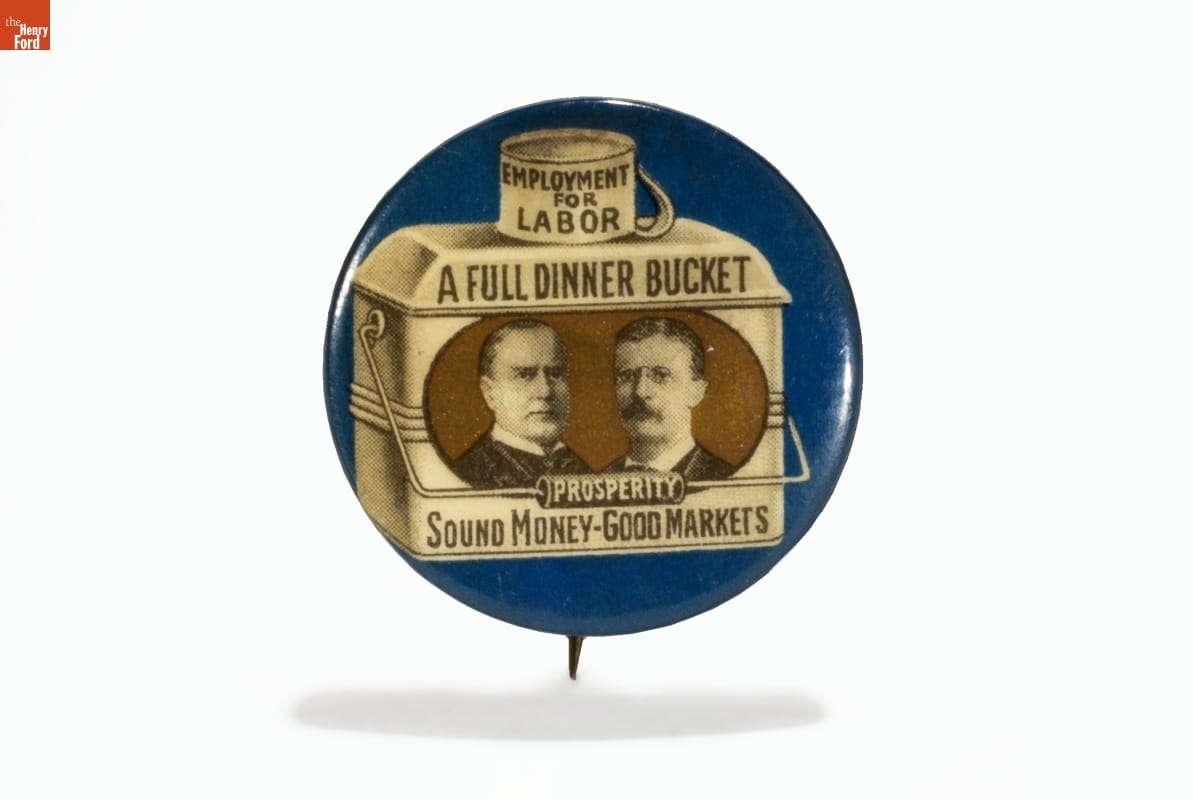
- McKinley-Roosevelt Campaign Button, 1900 - Republicans renominated President William McKinley for a second term in 1900. During McKinley's first administration (1896-1900), America had recovered from the economic depression that began in 1893. This campaign button touted that prosperity to a key Republican voting bloc: blue-collar workers. These working-class voters backed economic policies that kept them working and their dinner buckets full. McKinley won.
- 1900
- Collections - Artifact
McKinley-Roosevelt Campaign Button, 1900
Republicans renominated President William McKinley for a second term in 1900. During McKinley's first administration (1896-1900), America had recovered from the economic depression that began in 1893. This campaign button touted that prosperity to a key Republican voting bloc: blue-collar workers. These working-class voters backed economic policies that kept them working and their dinner buckets full. McKinley won.
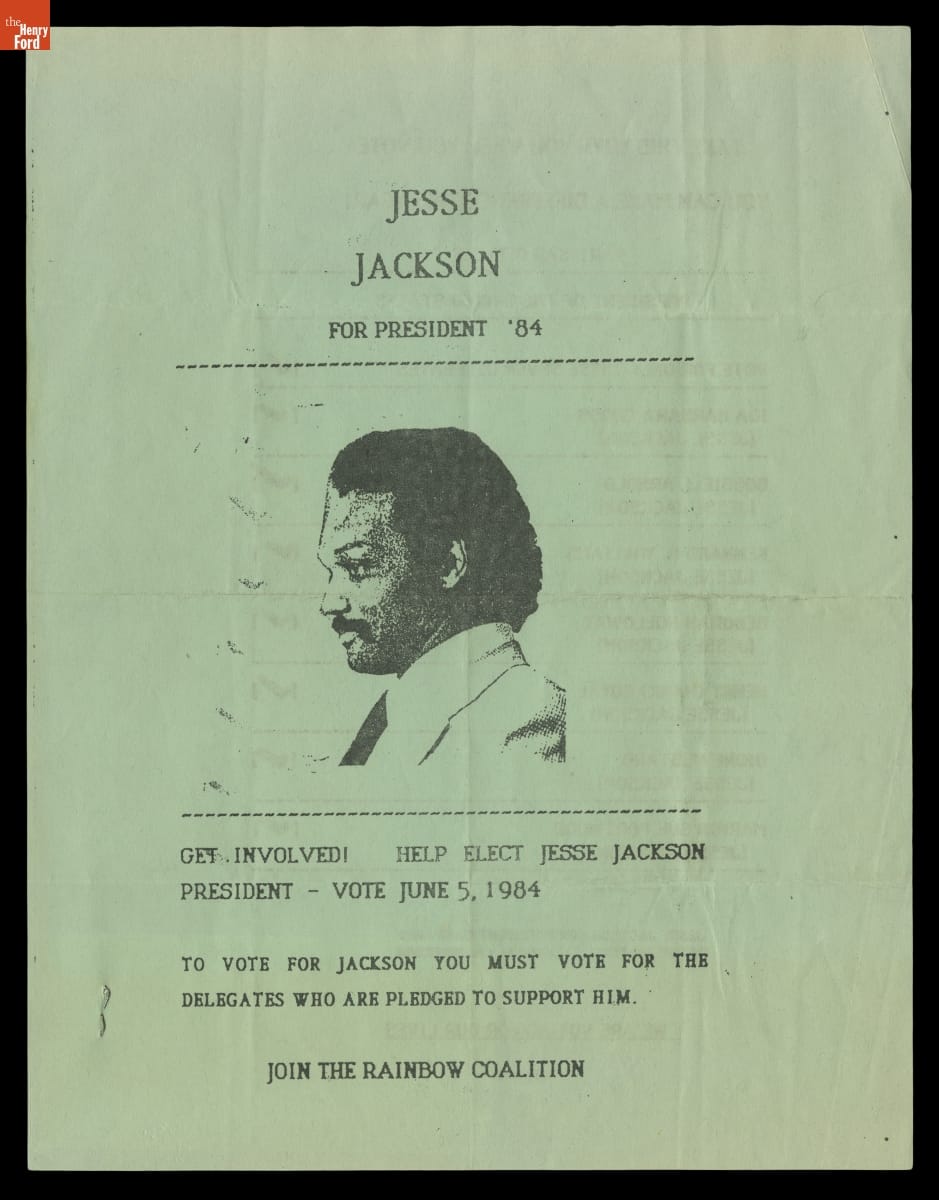
- "Jesse Jackson for President '84," June 1984 - Civil rights activist and organizer Jesse Jackson ran for the Democratic Presidential nomination in 1984. Jackson had served in various civil rights organizations during the 1960s and 1970s. He then went on to create PUSH (People United to Save Humanity) [1971] and the National Rainbow Coalition [1984] to help give a voice to underserved Americans. Jackson garnered several million votes but lost the nomination.
- 02 June 1984-05 June 1984
- Collections - Artifact
"Jesse Jackson for President '84," June 1984
Civil rights activist and organizer Jesse Jackson ran for the Democratic Presidential nomination in 1984. Jackson had served in various civil rights organizations during the 1960s and 1970s. He then went on to create PUSH (People United to Save Humanity) [1971] and the National Rainbow Coalition [1984] to help give a voice to underserved Americans. Jackson garnered several million votes but lost the nomination.