
Search
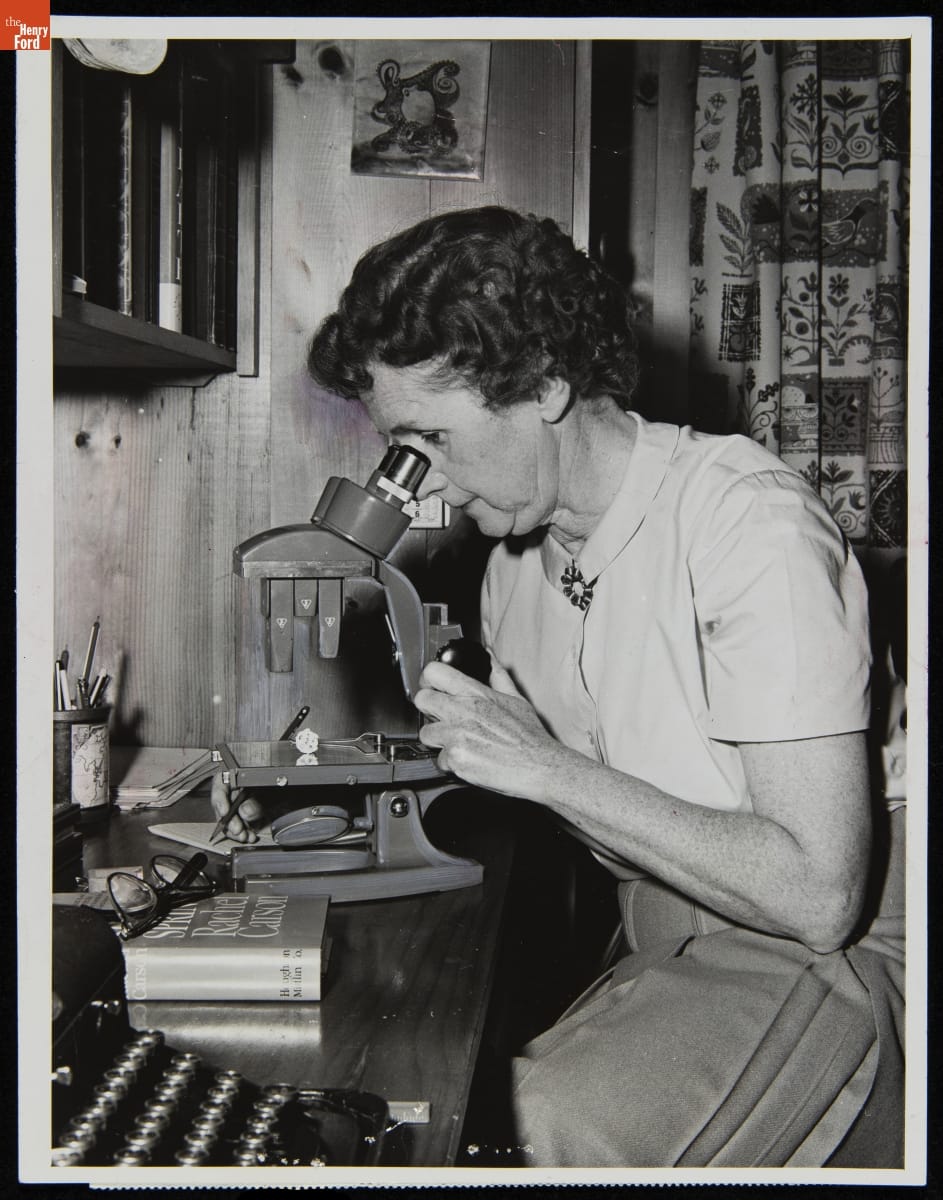
- Rachel Carson Using a Microscope, September 1962 - Marine biologist Rachel Carson's book, <em>Silent Spring</em>, helped spark the 1960s environmental movement. Carson stressed the detrimental effects of pesticide use, including DDT, on natural ecosystems and human health. Her testimony before the U.S. Congress and other evidence led to national legislation to mitigate environmental damage including the creation of the U.S. Environmental Protection Agency (1970) and banning DDT (1972).
- September 04, 1962
- Collections - Artifact
Rachel Carson Using a Microscope, September 1962
Marine biologist Rachel Carson's book, Silent Spring, helped spark the 1960s environmental movement. Carson stressed the detrimental effects of pesticide use, including DDT, on natural ecosystems and human health. Her testimony before the U.S. Congress and other evidence led to national legislation to mitigate environmental damage including the creation of the U.S. Environmental Protection Agency (1970) and banning DDT (1972).
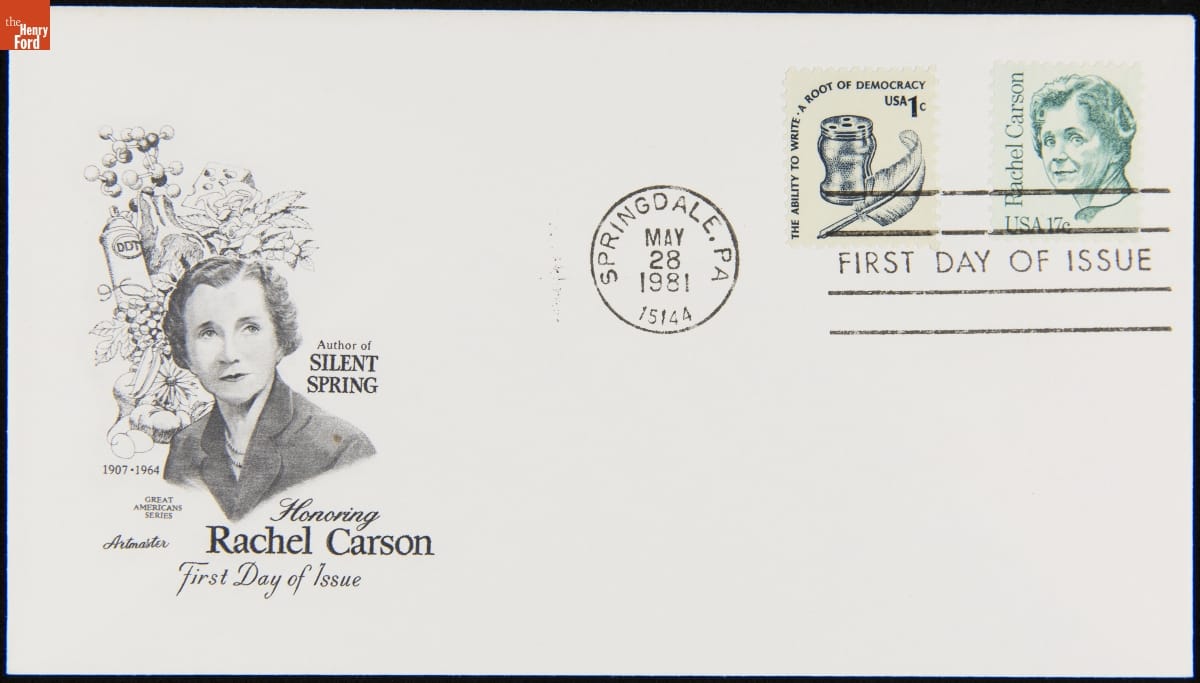
- First Day Cover Honoring Rachel Carson, May 28, 1981 - Marine biologist Rachel Carson helped spark the environmental movements of the 1960s with her book <EM>Silent Spring</EM>. It described how widespread pesticide use, in particular DDT, was harming and killing birds and other animals as well as threatening the health of humans. Her book helped the general population understand the interconnected nature of ecosystems and how localized polluting affects larger natural systems.
- May 28, 1981
- Collections - Artifact
First Day Cover Honoring Rachel Carson, May 28, 1981
Marine biologist Rachel Carson helped spark the environmental movements of the 1960s with her book Silent Spring. It described how widespread pesticide use, in particular DDT, was harming and killing birds and other animals as well as threatening the health of humans. Her book helped the general population understand the interconnected nature of ecosystems and how localized polluting affects larger natural systems.
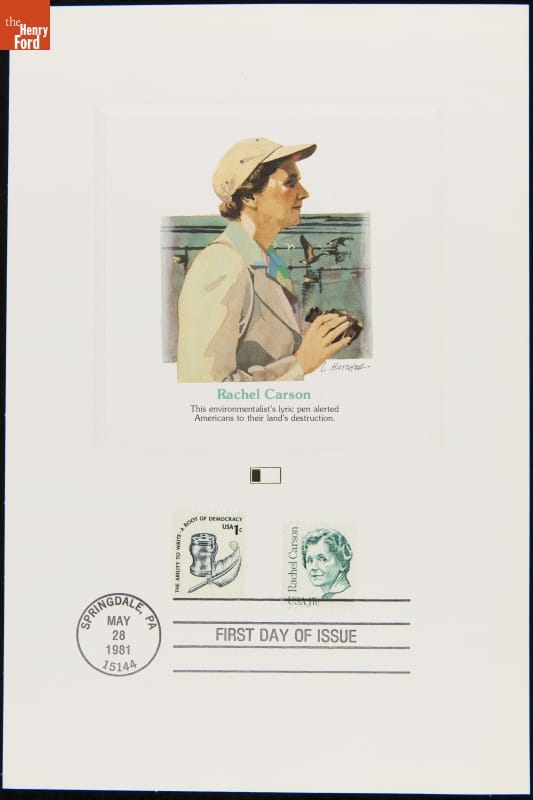
- First Day Cover Honoring Rachel Carson, May 28, 1981 - Marine biologist Rachel Carson helped spark the environmental movements of the 1960s with her book <EM>Silent Spring</EM>. It described how widespread pesticide use, in particular DDT, was harming and killing birds and other animals as well as threatening the health of humans. Her book helped the general population understand the interconnected nature of ecosystems and how localized polluting affects larger natural systems.
- May 28, 1981
- Collections - Artifact
First Day Cover Honoring Rachel Carson, May 28, 1981
Marine biologist Rachel Carson helped spark the environmental movements of the 1960s with her book Silent Spring. It described how widespread pesticide use, in particular DDT, was harming and killing birds and other animals as well as threatening the health of humans. Her book helped the general population understand the interconnected nature of ecosystems and how localized polluting affects larger natural systems.
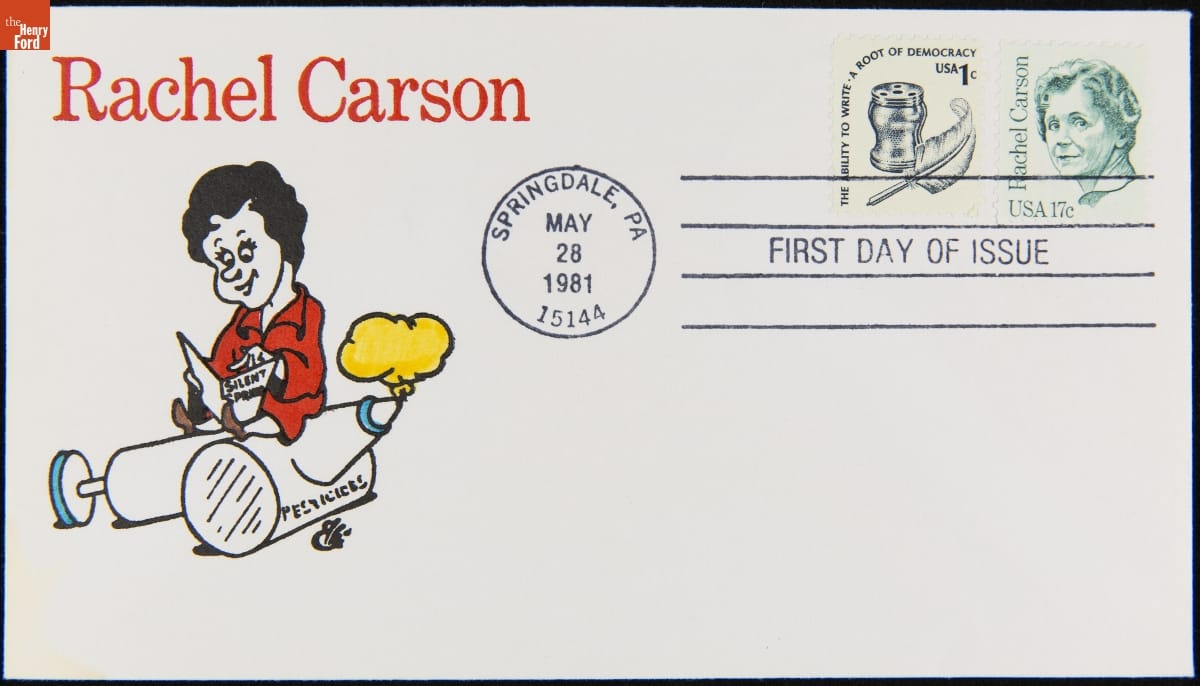
- First Day Cover Honoring Rachel Carson, May 28, 1981 - Marine biologist Rachel Carson helped spark the environmental movements of the 1960s with her book <EM>Silent Spring</EM>. It described how widespread pesticide use, in particular DDT, was harming and killing birds and other animals as well as threatening the health of humans. Her book helped the general population understand the interconnected nature of ecosystems and how localized polluting affects larger natural systems.
- May 28, 1981
- Collections - Artifact
First Day Cover Honoring Rachel Carson, May 28, 1981
Marine biologist Rachel Carson helped spark the environmental movements of the 1960s with her book Silent Spring. It described how widespread pesticide use, in particular DDT, was harming and killing birds and other animals as well as threatening the health of humans. Her book helped the general population understand the interconnected nature of ecosystems and how localized polluting affects larger natural systems.
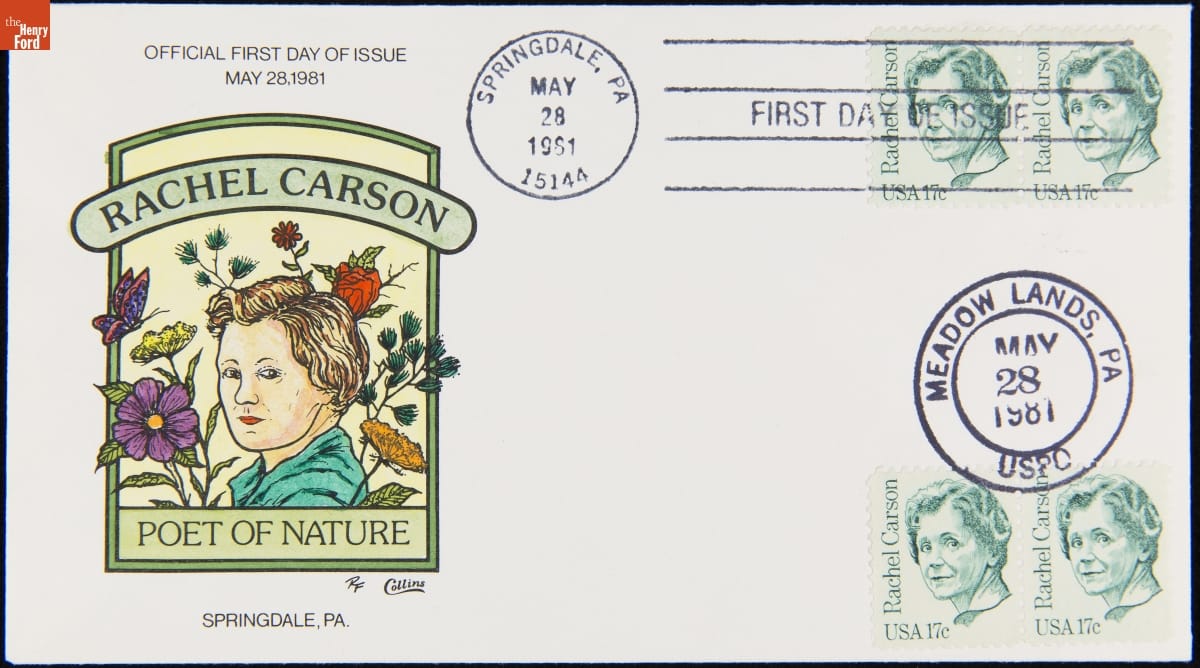
- First Day Cover, "Rachel Carson Poet of Nature," May 28, 1981 - Marine biologist Rachel Carson helped spark the environmental movements of the 1960s with her book <EM>Silent Spring</EM>. It described how widespread pesticide use, in particular DDT, was harming and killing birds and other animals as well as threatening the health of humans. Her book helped the general population understand the interconnected nature of ecosystems and how localized polluting affects larger natural systems.
- May 28, 1981
- Collections - Artifact
First Day Cover, "Rachel Carson Poet of Nature," May 28, 1981
Marine biologist Rachel Carson helped spark the environmental movements of the 1960s with her book Silent Spring. It described how widespread pesticide use, in particular DDT, was harming and killing birds and other animals as well as threatening the health of humans. Her book helped the general population understand the interconnected nature of ecosystems and how localized polluting affects larger natural systems.
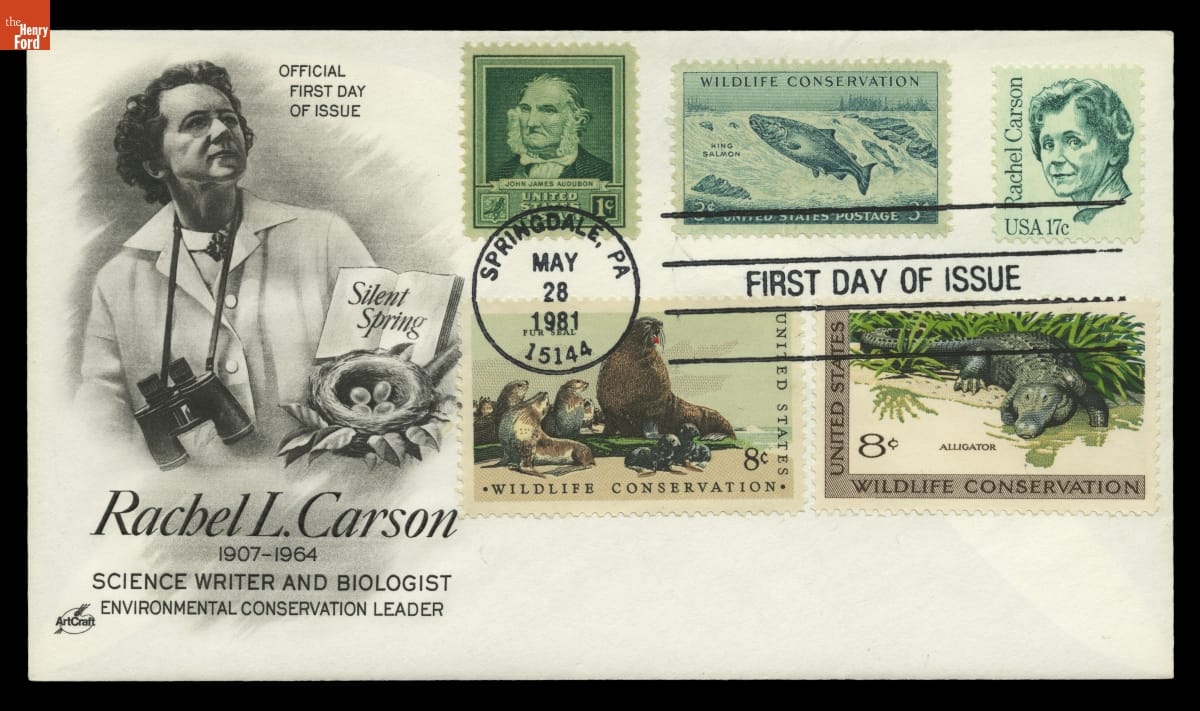
- Rachel L. Carson Postage Stamp First Day Cover, May 28, 1981 - Marine biologist Rachel Carson helped spark the environmental movements of the 1960s with her book <EM>Silent Spring</EM>. It described how widespread pesticide use, in particular DDT, was harming and killing birds and other animals as well as threatening the health of humans. Her book helped the general population understand the interconnected nature of ecosystems and how localized polluting affects larger natural systems.
- May 28, 1981
- Collections - Artifact
Rachel L. Carson Postage Stamp First Day Cover, May 28, 1981
Marine biologist Rachel Carson helped spark the environmental movements of the 1960s with her book Silent Spring. It described how widespread pesticide use, in particular DDT, was harming and killing birds and other animals as well as threatening the health of humans. Her book helped the general population understand the interconnected nature of ecosystems and how localized polluting affects larger natural systems.
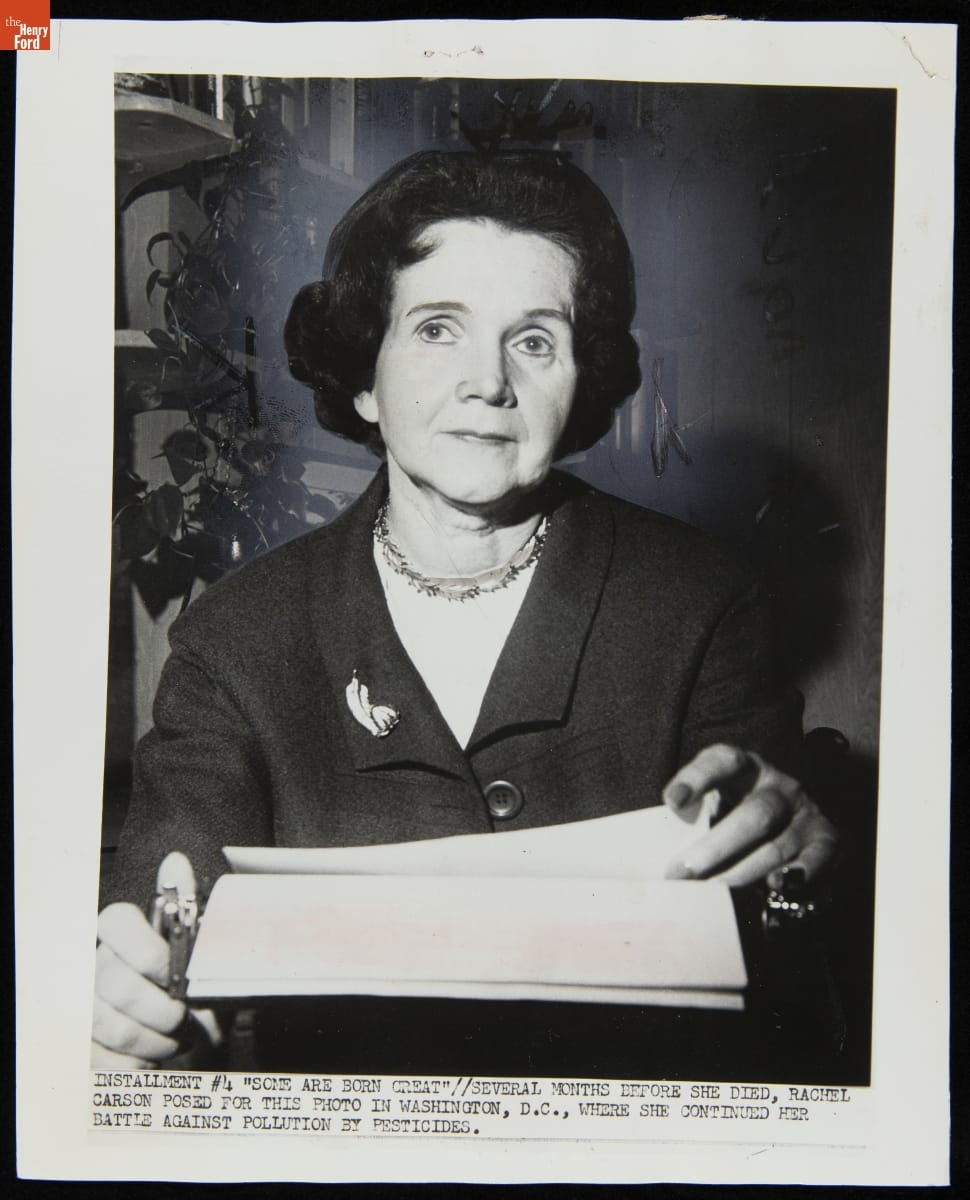
- Rachel Carson in Washington, D.C., Fighting against Pesticide Pollution, April 1964 - Marine biologist Rachel Carson's book, <em>Silent Spring</em>, helped spark the 1960s environmental movement. Carson stressed the detrimental effects of pesticide use, including DDT, on natural ecosystems and human health. Her testimony before the U.S. Congress and other evidence led to national legislation to mitigate environmental damage including the creation of the U.S. Environmental Protection Agency (1970) and banning DDT (1972).
- April 14, 1964
- Collections - Artifact
Rachel Carson in Washington, D.C., Fighting against Pesticide Pollution, April 1964
Marine biologist Rachel Carson's book, Silent Spring, helped spark the 1960s environmental movement. Carson stressed the detrimental effects of pesticide use, including DDT, on natural ecosystems and human health. Her testimony before the U.S. Congress and other evidence led to national legislation to mitigate environmental damage including the creation of the U.S. Environmental Protection Agency (1970) and banning DDT (1972).
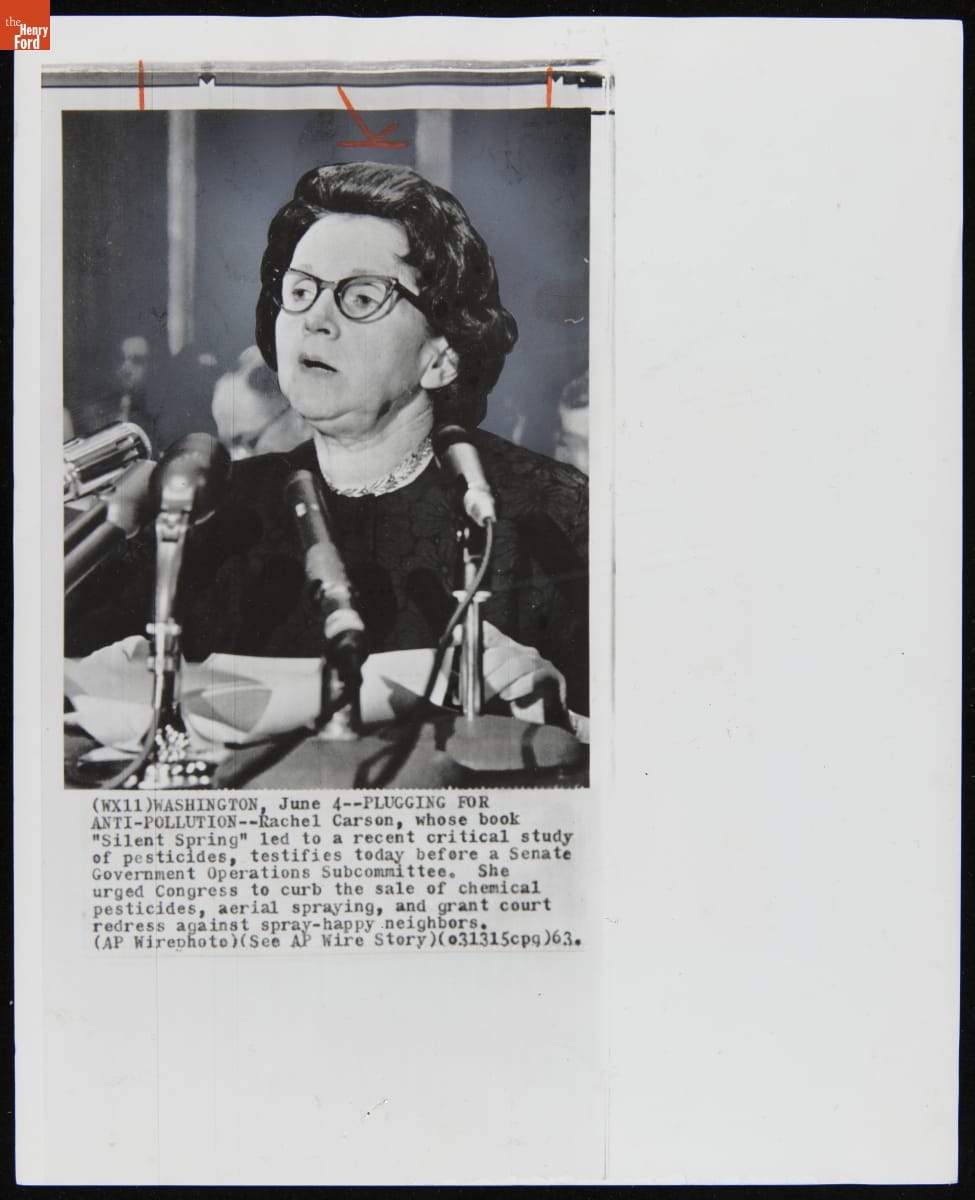
- Rachel Carson Testifying before a Senate Government Operations Subcommittee, June 1963 - Marine biologist Rachel Carson's book, <em>Silent Spring</em>, helped spark the 1960s environmental movement. Carson stressed the detrimental effects of pesticide use, including DDT, on natural ecosystems and human health. Her testimony before the U.S. Congress and other evidence led to national legislation to mitigate environmental damage including the creation of the U.S. Environmental Protection Agency (1970) and banning DDT (1972).
- June 04, 1963
- Collections - Artifact
Rachel Carson Testifying before a Senate Government Operations Subcommittee, June 1963
Marine biologist Rachel Carson's book, Silent Spring, helped spark the 1960s environmental movement. Carson stressed the detrimental effects of pesticide use, including DDT, on natural ecosystems and human health. Her testimony before the U.S. Congress and other evidence led to national legislation to mitigate environmental damage including the creation of the U.S. Environmental Protection Agency (1970) and banning DDT (1972).
- Rachel Carson: Environmental Advocate - Rachel Carson’s books helped build a new awareness about the environment. Learn more about her writing — and a related new digital experience in Henry Ford Museum — on our blog.

- May 27, 2020
- Collections - article
Rachel Carson: Environmental Advocate
Rachel Carson’s books helped build a new awareness about the environment. Learn more about her writing — and a related new digital experience in Henry Ford Museum — on our blog.
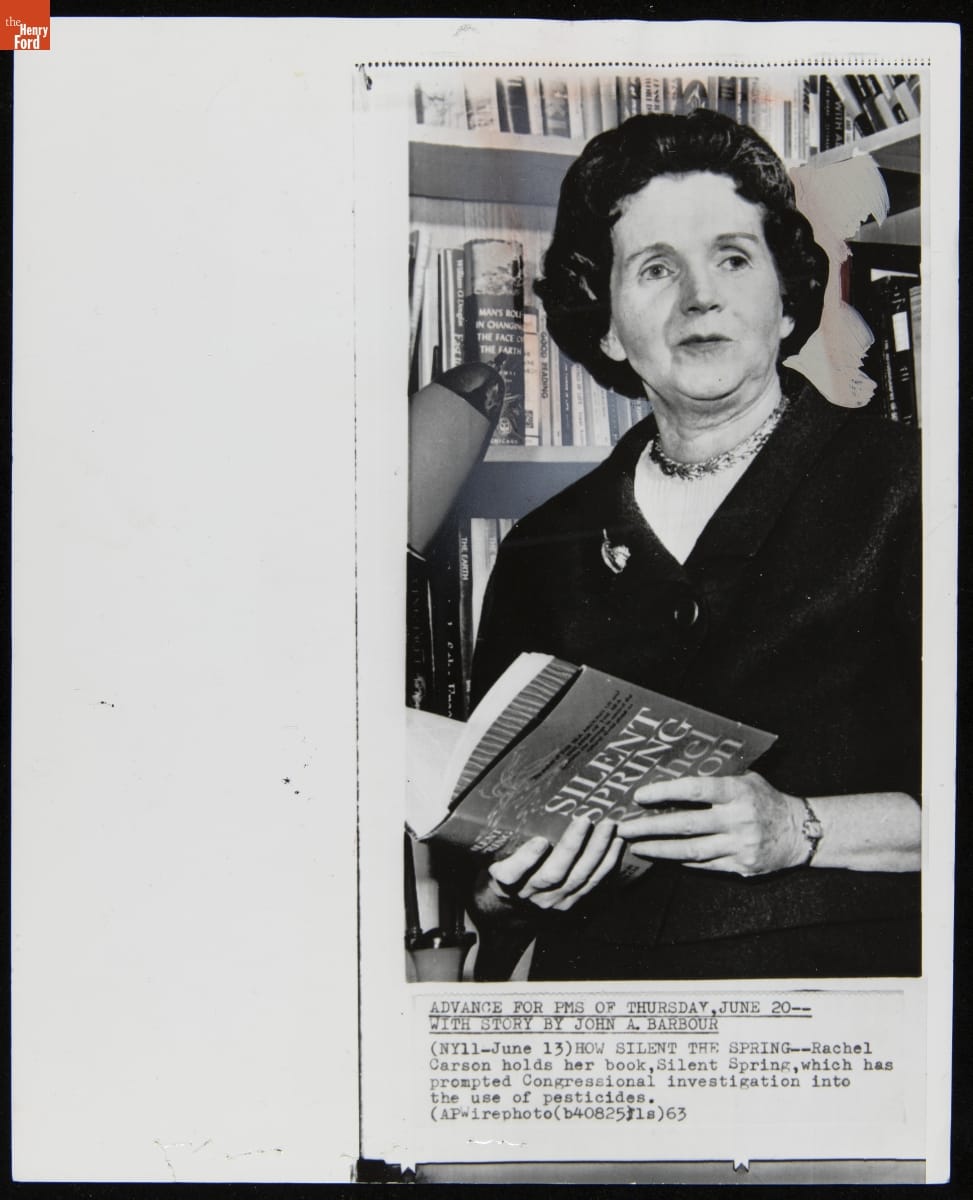
- Rachel Carson Holding a Copy of Her Book, "Silent Spring," June 1963 - Marine biologist Rachel Carson helped spark the environmental movements of the 1960s with her book <em>Silent Spring</em>. It described how widespread pesticide use, in particular DDT, was harming and killing birds and other animals as well as threatening the health of humans. Her book helped the general population understand the interconnected nature of ecosystems and how localized polluting affects larger natural systems.
- June 01, 1963
- Collections - Artifact
Rachel Carson Holding a Copy of Her Book, "Silent Spring," June 1963
Marine biologist Rachel Carson helped spark the environmental movements of the 1960s with her book Silent Spring. It described how widespread pesticide use, in particular DDT, was harming and killing birds and other animals as well as threatening the health of humans. Her book helped the general population understand the interconnected nature of ecosystems and how localized polluting affects larger natural systems.