
Search
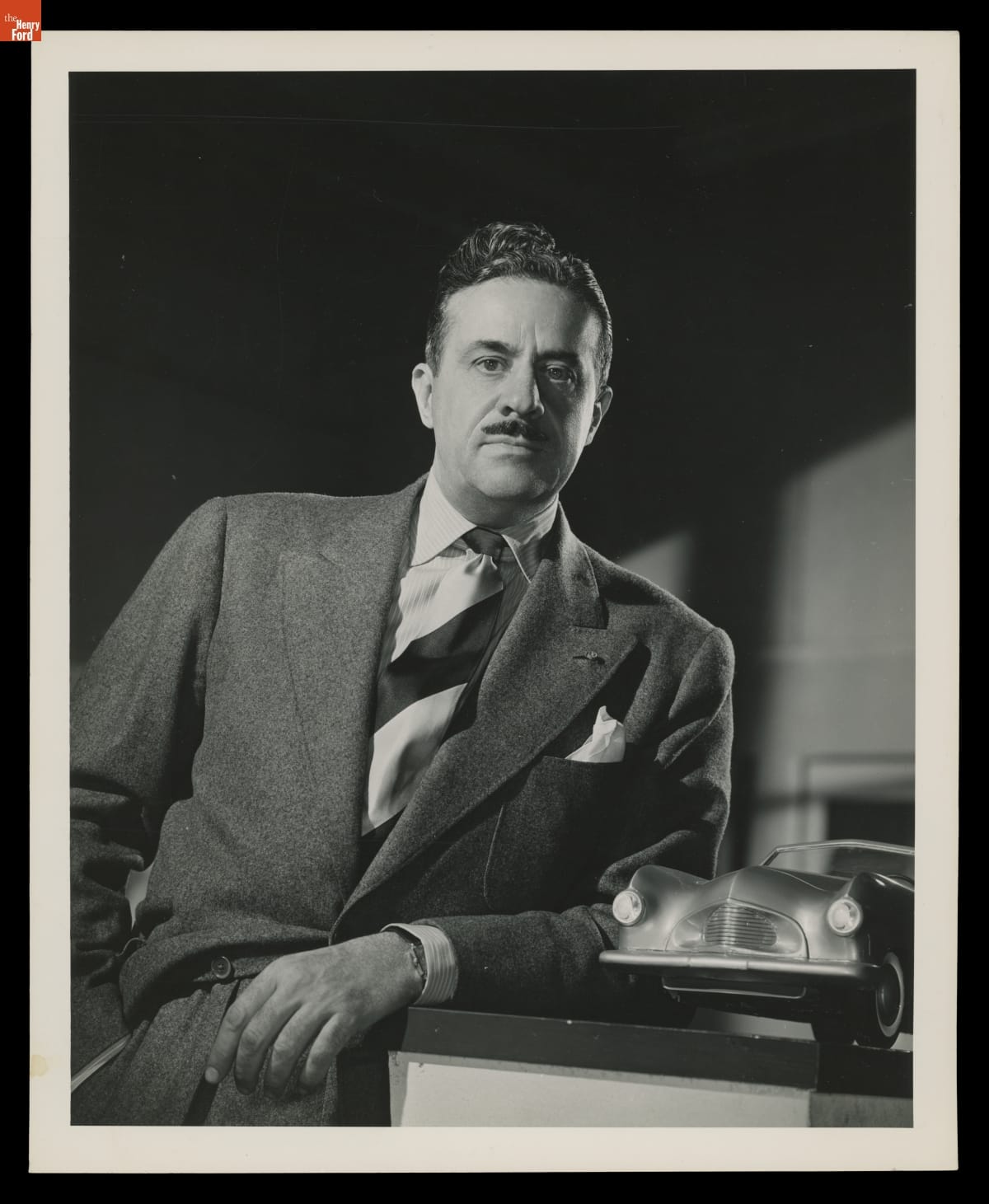
- Portrait of Raymond Loewy, 1938-1949 - Raymond Loewy was among the 20th century's most influential industrial designers. Born in Paris in 1893, he emigrated to the United States after World War I. Loewy's design firm worked with everyone from Coca-Cola to NASA, but Loewy is particularly remembered for his longtime associations with Studebaker and the Pennsylvania Railroad.
- 1938-1949
- Collections - Artifact
Portrait of Raymond Loewy, 1938-1949
Raymond Loewy was among the 20th century's most influential industrial designers. Born in Paris in 1893, he emigrated to the United States after World War I. Loewy's design firm worked with everyone from Coca-Cola to NASA, but Loewy is particularly remembered for his longtime associations with Studebaker and the Pennsylvania Railroad.
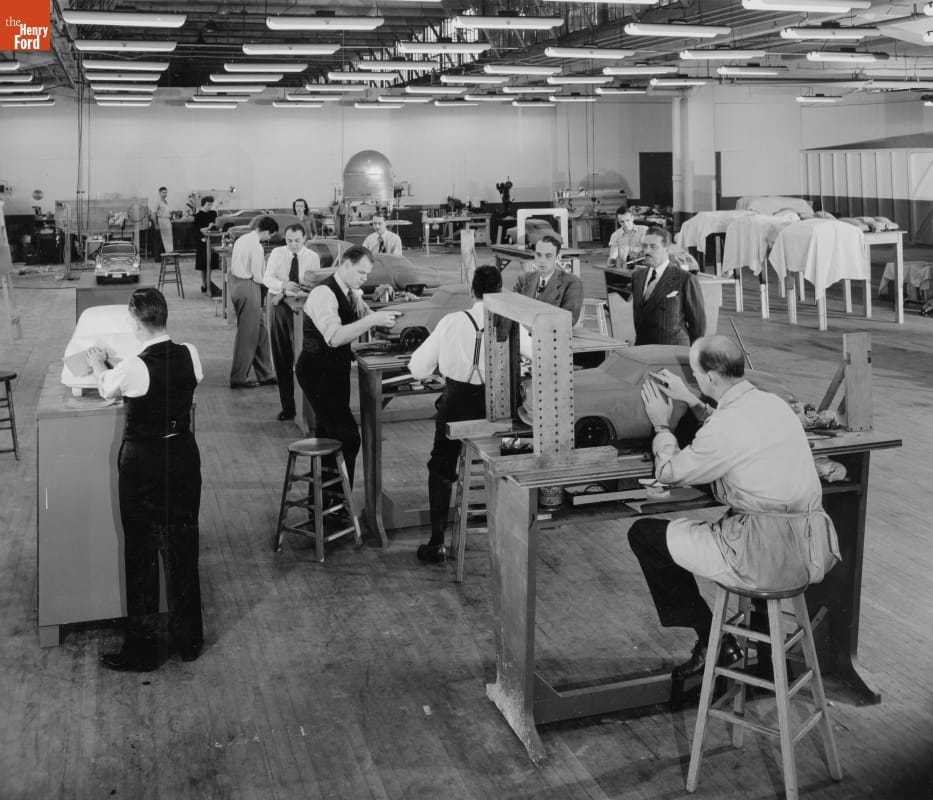
- Virgil M. Exner and Raymond Loewy with Clay Modelers at Work, Studebaker Corporation, 1946 - Virgil Exner, Studebaker's chief styling engineer, designed cars for postwar America. In this photograph taken just after World War II, Exner -- in a light-colored suit jacket -- stands with workers and clay models in the Studebaker styling studio. Exner would go on to create revolutionary designs for Chrysler as the company's first Vice President of Styling.
- 1946
- Collections - Artifact
Virgil M. Exner and Raymond Loewy with Clay Modelers at Work, Studebaker Corporation, 1946
Virgil Exner, Studebaker's chief styling engineer, designed cars for postwar America. In this photograph taken just after World War II, Exner -- in a light-colored suit jacket -- stands with workers and clay models in the Studebaker styling studio. Exner would go on to create revolutionary designs for Chrysler as the company's first Vice President of Styling.
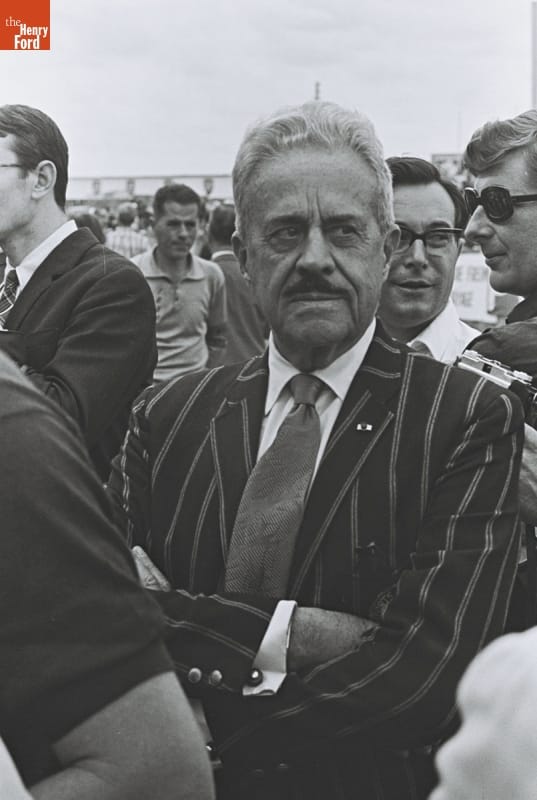
- 1966 24 Hours of Le Mans -- Item49 - France's 24 Hours of Le Mans endurance race is among the most prestigious events in motorsport. The 1966 race attracted notable spectators like industrial designer Raymond Loewy, seen here. Loewy's firm designed everything from Coca-Cola vending machines to Air Force One's livery, but Loewy is particularly remembered for his longtime associations with Studebaker and the Pennsylvania Railroad.
- June 01, 1966
- Collections - Artifact
1966 24 Hours of Le Mans -- Item49
France's 24 Hours of Le Mans endurance race is among the most prestigious events in motorsport. The 1966 race attracted notable spectators like industrial designer Raymond Loewy, seen here. Loewy's firm designed everything from Coca-Cola vending machines to Air Force One's livery, but Loewy is particularly remembered for his longtime associations with Studebaker and the Pennsylvania Railroad.
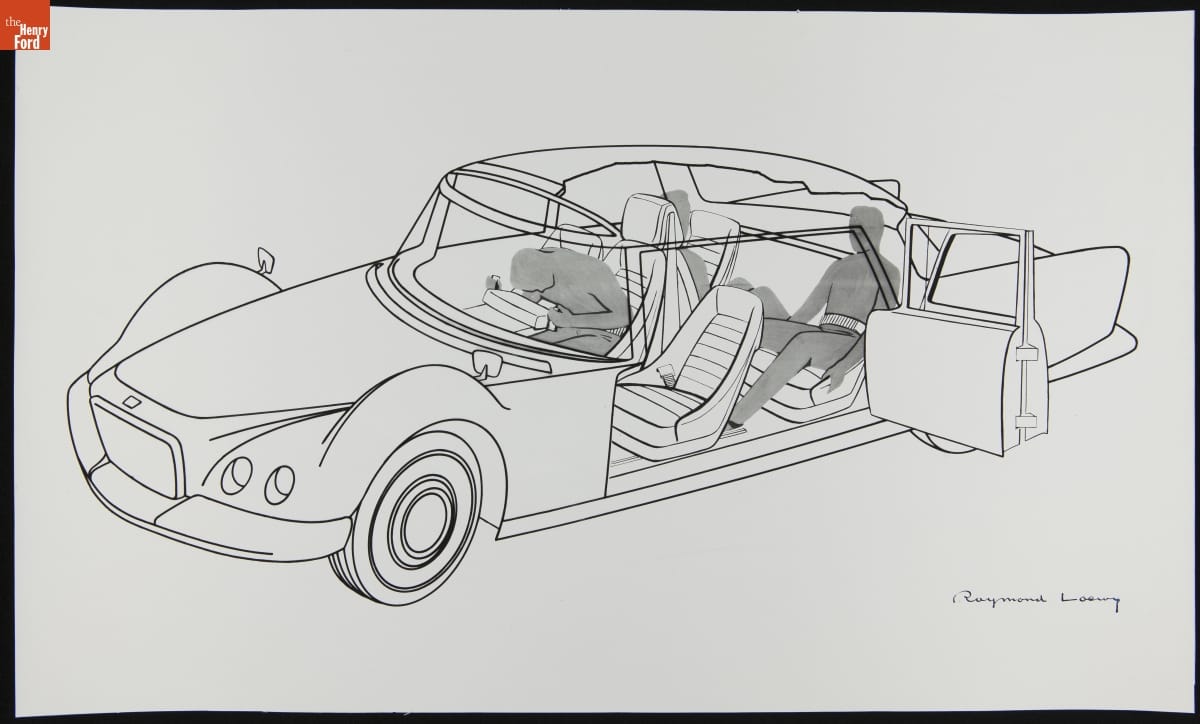
- Line Drawing for the Cornell-Liberty Safety Car, 1956 - Industrial designer Raymond Loewy produced a series of design drawings for the "Safety Car" built in 1957 by Cornell University and the Liberty Mutual Insurance Company. The finished concept car incorporated more than 60 safety improvements from seat belts, to padded interior surfaces, to accordion-style folding doors.
- 1957
- Collections - Artifact
Line Drawing for the Cornell-Liberty Safety Car, 1956
Industrial designer Raymond Loewy produced a series of design drawings for the "Safety Car" built in 1957 by Cornell University and the Liberty Mutual Insurance Company. The finished concept car incorporated more than 60 safety improvements from seat belts, to padded interior surfaces, to accordion-style folding doors.
- Sketch for the Cornell-Liberty Safety Car, 1956 - Industrial designer Raymond Loewy produced a series of design drawings for the "Safety Car" built in 1957 by Cornell University and the Liberty Mutual Insurance Company. The finished concept car incorporated more than 60 safety improvements from seat belts, to padded interior surfaces, to accordion-style folding doors.
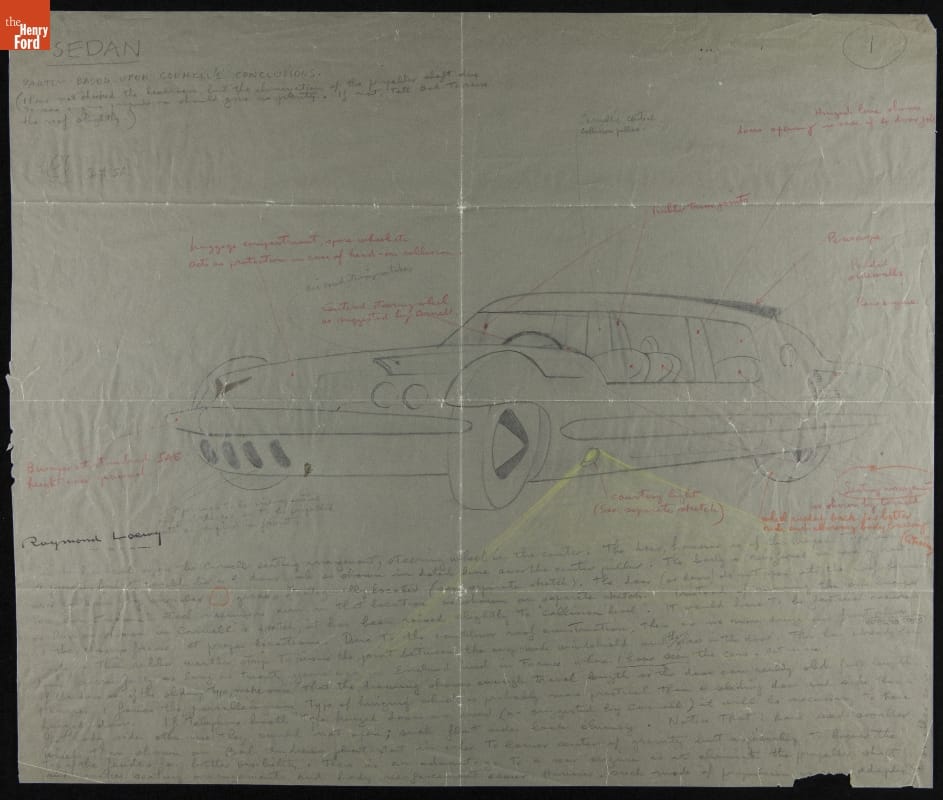
- 1956
- Collections - Artifact
Sketch for the Cornell-Liberty Safety Car, 1956
Industrial designer Raymond Loewy produced a series of design drawings for the "Safety Car" built in 1957 by Cornell University and the Liberty Mutual Insurance Company. The finished concept car incorporated more than 60 safety improvements from seat belts, to padded interior surfaces, to accordion-style folding doors.
- Sketch for the Cornell-Liberty Safety Car, 1956 - Industrial designer Raymond Loewy produced a series of design drawings for the "Safety Car" built in 1957 by Cornell University and the Liberty Mutual Insurance Company. The finished concept car incorporated more than 60 safety improvements from seat belts, to padded interior surfaces, to accordion-style folding doors.
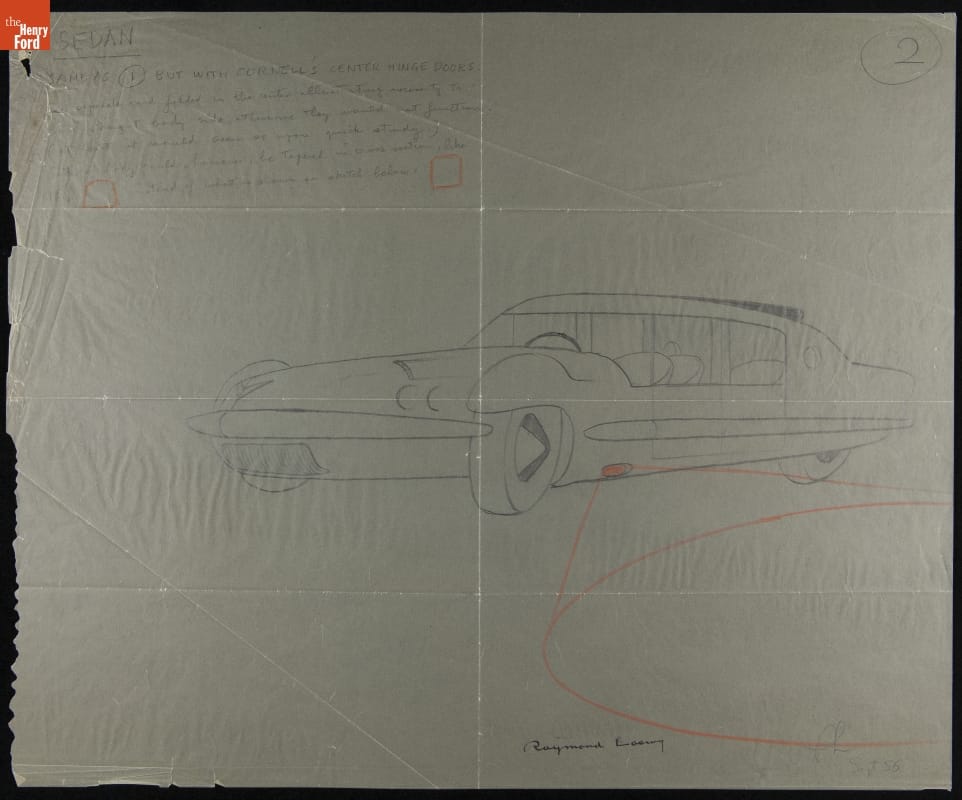
- September 01, 1956
- Collections - Artifact
Sketch for the Cornell-Liberty Safety Car, 1956
Industrial designer Raymond Loewy produced a series of design drawings for the "Safety Car" built in 1957 by Cornell University and the Liberty Mutual Insurance Company. The finished concept car incorporated more than 60 safety improvements from seat belts, to padded interior surfaces, to accordion-style folding doors.
- Cutaway Sketch of Seating Positions in the Cornell-Liberty Safety Car, 1956 - Industrial designer Raymond Loewy produced a series of design drawings for the "Safety Car" built in 1957 by Cornell University and the Liberty Mutual Insurance Company. The finished concept car incorporated more than 60 safety improvements from seat belts, to padded interior surfaces, to accordion-style folding doors.
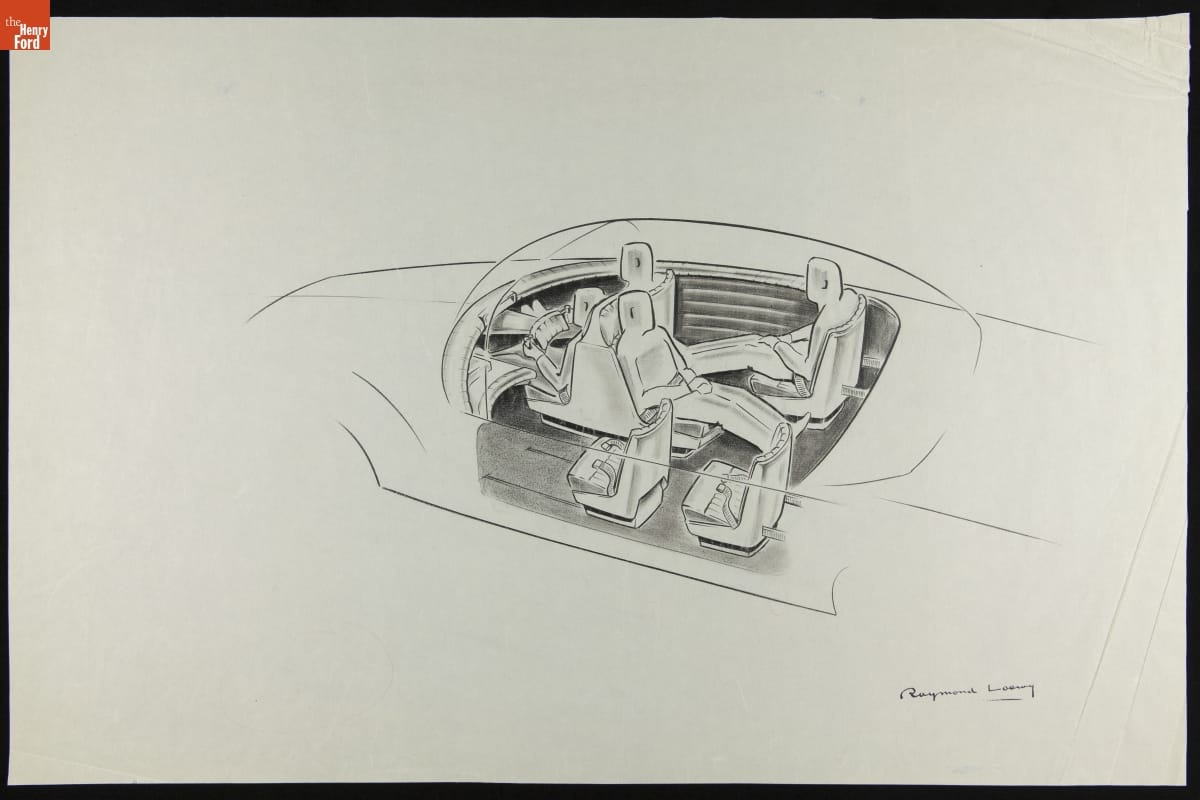
- circa 1956
- Collections - Artifact
Cutaway Sketch of Seating Positions in the Cornell-Liberty Safety Car, 1956
Industrial designer Raymond Loewy produced a series of design drawings for the "Safety Car" built in 1957 by Cornell University and the Liberty Mutual Insurance Company. The finished concept car incorporated more than 60 safety improvements from seat belts, to padded interior surfaces, to accordion-style folding doors.
- "Vision of Cornell Car by Raymond Lowey Associates," 1956 - Industrial designer Raymond Loewy produced a series of design drawings for the "Safety Car" built in 1957 by Cornell University and the Liberty Mutual Insurance Company. The finished concept car incorporated more than 60 safety improvements from seat belts, to padded interior surfaces, to accordion-style folding doors.
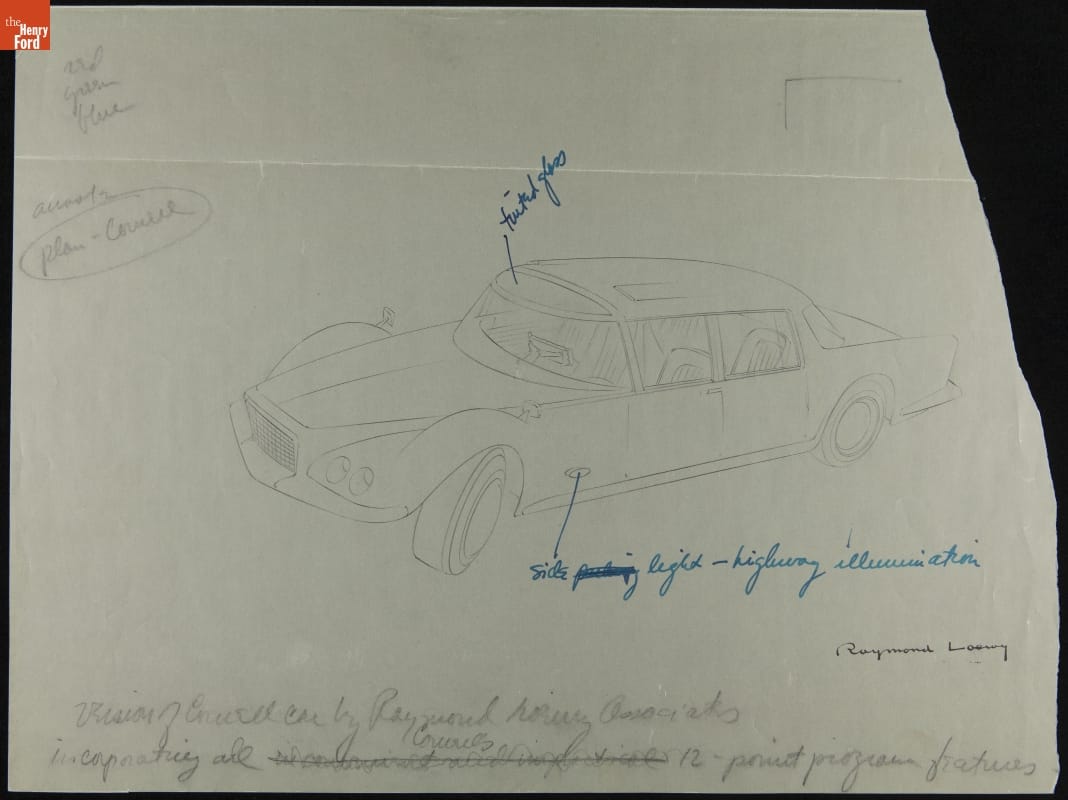
- 1956
- Collections - Artifact
"Vision of Cornell Car by Raymond Lowey Associates," 1956
Industrial designer Raymond Loewy produced a series of design drawings for the "Safety Car" built in 1957 by Cornell University and the Liberty Mutual Insurance Company. The finished concept car incorporated more than 60 safety improvements from seat belts, to padded interior surfaces, to accordion-style folding doors.
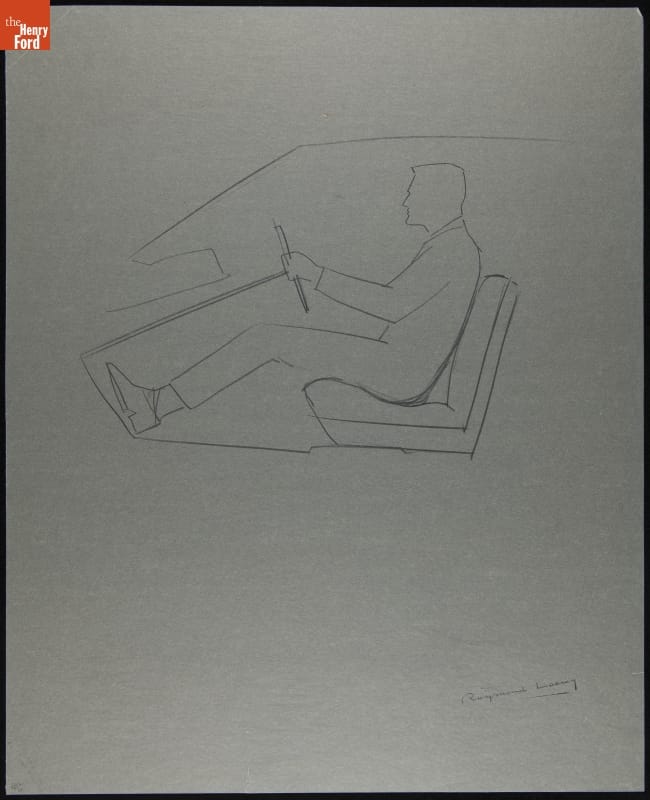
- Sketch of Ergonomic Seating for the Cornell-Liberty Safety Car, 1956 - Industrial designer Raymond Loewy produced a series of design drawings for the "Safety Car" built in 1957 by Cornell University and the Liberty Mutual Insurance Company. The finished concept car incorporated more than 60 safety improvements from seat belts, to padded interior surfaces, to accordion-style folding doors.
- circa 1956
- Collections - Artifact
Sketch of Ergonomic Seating for the Cornell-Liberty Safety Car, 1956
Industrial designer Raymond Loewy produced a series of design drawings for the "Safety Car" built in 1957 by Cornell University and the Liberty Mutual Insurance Company. The finished concept car incorporated more than 60 safety improvements from seat belts, to padded interior surfaces, to accordion-style folding doors.
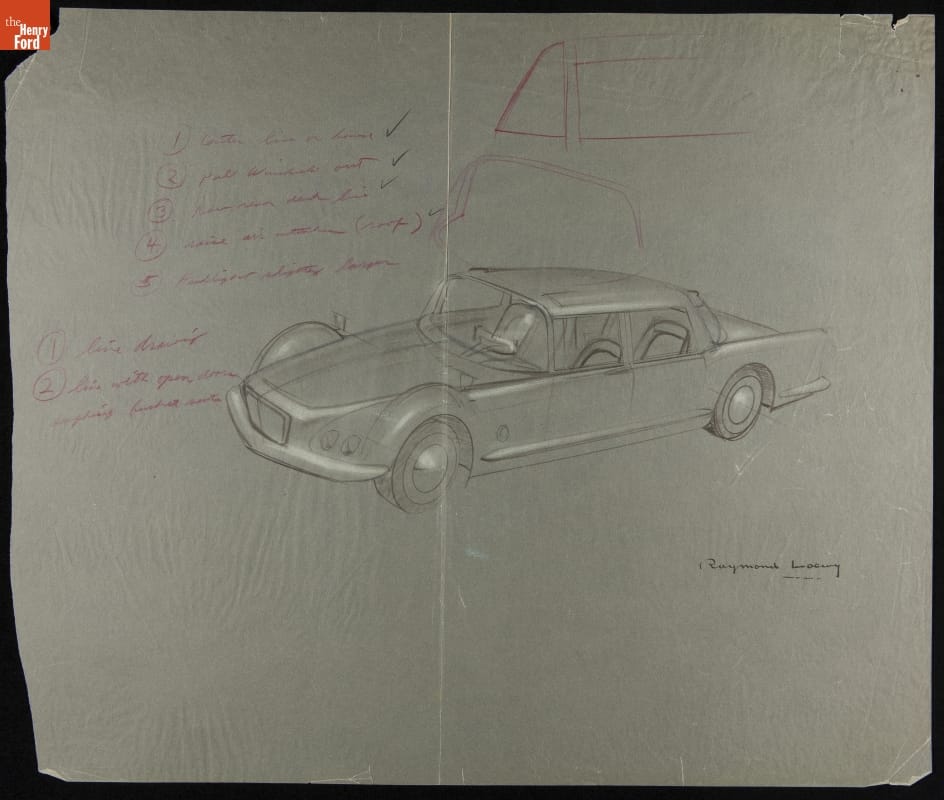
- Sketch for the Cornell-Liberty Safety Car, 1956 - Industrial designer Raymond Loewy produced a series of design drawings for the "Safety Car" built in 1957 by Cornell University and the Liberty Mutual Insurance Company. The finished concept car incorporated more than 60 safety improvements from seat belts, to padded interior surfaces, to accordion-style folding doors.
- circa 1956
- Collections - Artifact
Sketch for the Cornell-Liberty Safety Car, 1956
Industrial designer Raymond Loewy produced a series of design drawings for the "Safety Car" built in 1957 by Cornell University and the Liberty Mutual Insurance Company. The finished concept car incorporated more than 60 safety improvements from seat belts, to padded interior surfaces, to accordion-style folding doors.