
Search
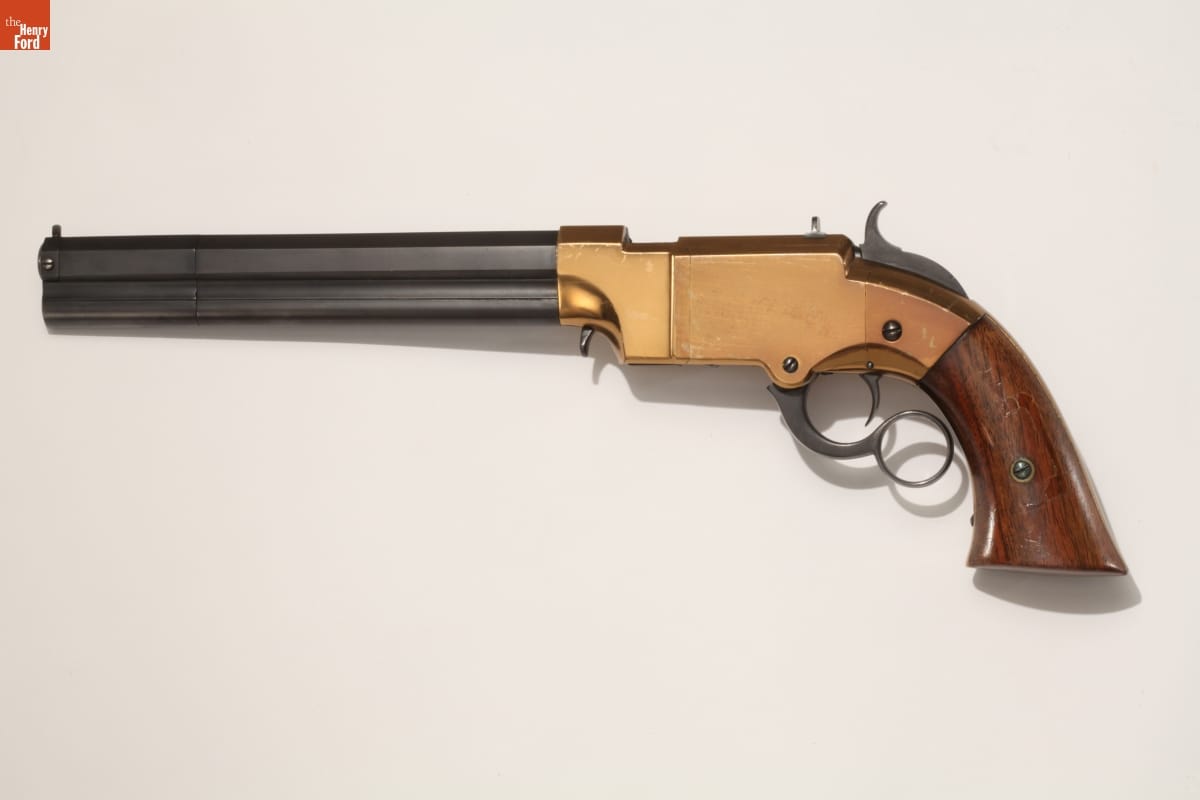
- Volcanic Repeating Arms Pistol, circa 1856 - The Volcanic Repeating Arms Company (1855-1857) made key early advancements in self-contained ammunition and repeating firearms. Using a "Rocketball" cartridge of a bullet with a hollow cavity in the rear for the charge, it allowed for the development of a repeater mechanism. Principals in the company included Oliver Winchester, Horace Smith and Daniel Wesson.
- circa 1856
- Collections - Artifact
Volcanic Repeating Arms Pistol, circa 1856
The Volcanic Repeating Arms Company (1855-1857) made key early advancements in self-contained ammunition and repeating firearms. Using a "Rocketball" cartridge of a bullet with a hollow cavity in the rear for the charge, it allowed for the development of a repeater mechanism. Principals in the company included Oliver Winchester, Horace Smith and Daniel Wesson.
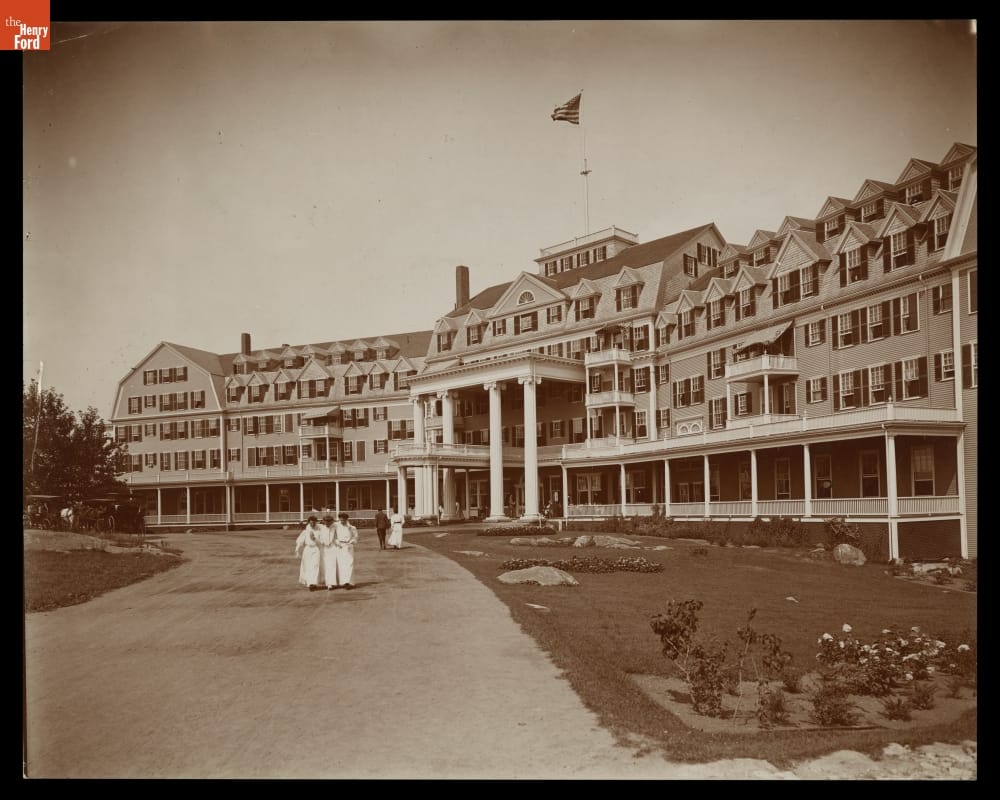
- Colonial Arms Hotel, Gloucester, Massachusetts, 1905 - From 1895 to 1924, the Detroit Publishing Company was one of the major image publishers in the world. The company's wide-ranging stock of original photographs documented life and landscapes from across the nation and around the globe. From the tens of thousands of negatives, the company created prints, postcards, lantern slides, panoramas, and other merchandise for sale to educators, businessmen, advertisers, homeowners and travelers.
- 1905
- Collections - Artifact
Colonial Arms Hotel, Gloucester, Massachusetts, 1905
From 1895 to 1924, the Detroit Publishing Company was one of the major image publishers in the world. The company's wide-ranging stock of original photographs documented life and landscapes from across the nation and around the globe. From the tens of thousands of negatives, the company created prints, postcards, lantern slides, panoramas, and other merchandise for sale to educators, businessmen, advertisers, homeowners and travelers.
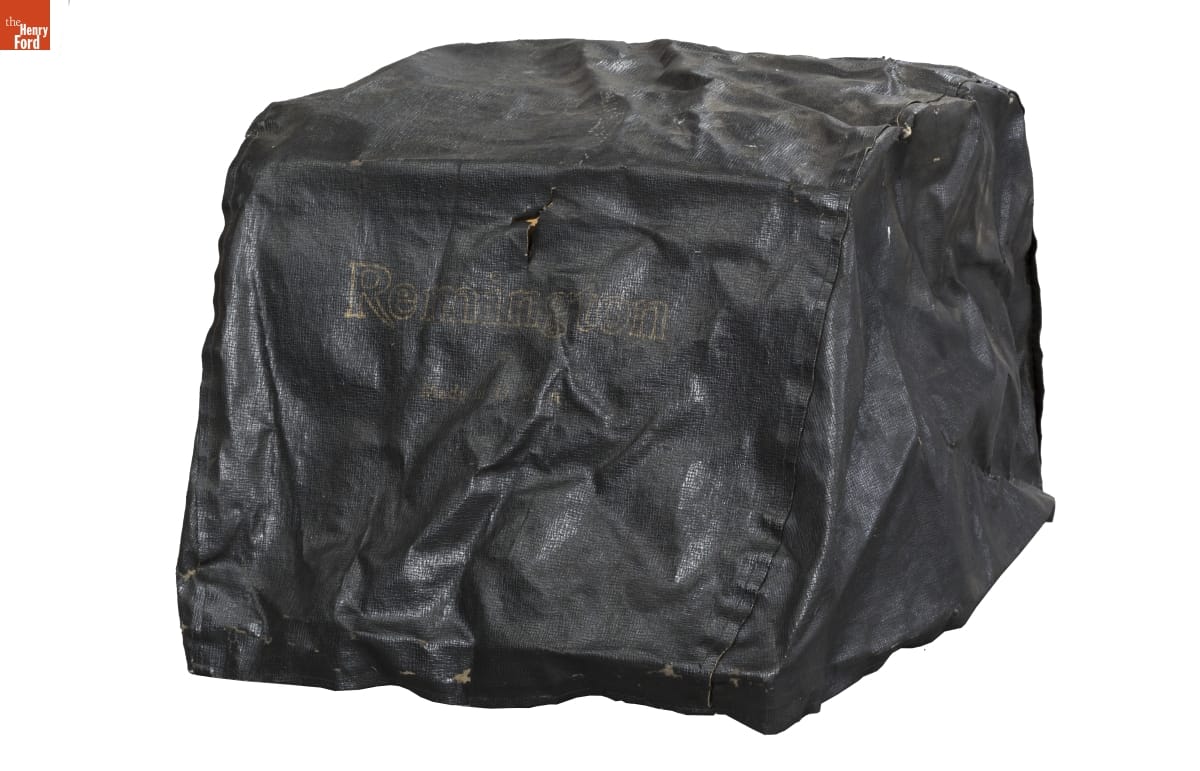
- Remington Typewriter Cover - Dirt and dust can muck up a typewriter's essential moving parts. A simple cover prevents grime from accumulating and helps keep the platen turning, carriage sliding, inked ribbon moving, and keys clacking away unhindered.
- Collections - Artifact
Remington Typewriter Cover
Dirt and dust can muck up a typewriter's essential moving parts. A simple cover prevents grime from accumulating and helps keep the platen turning, carriage sliding, inked ribbon moving, and keys clacking away unhindered.
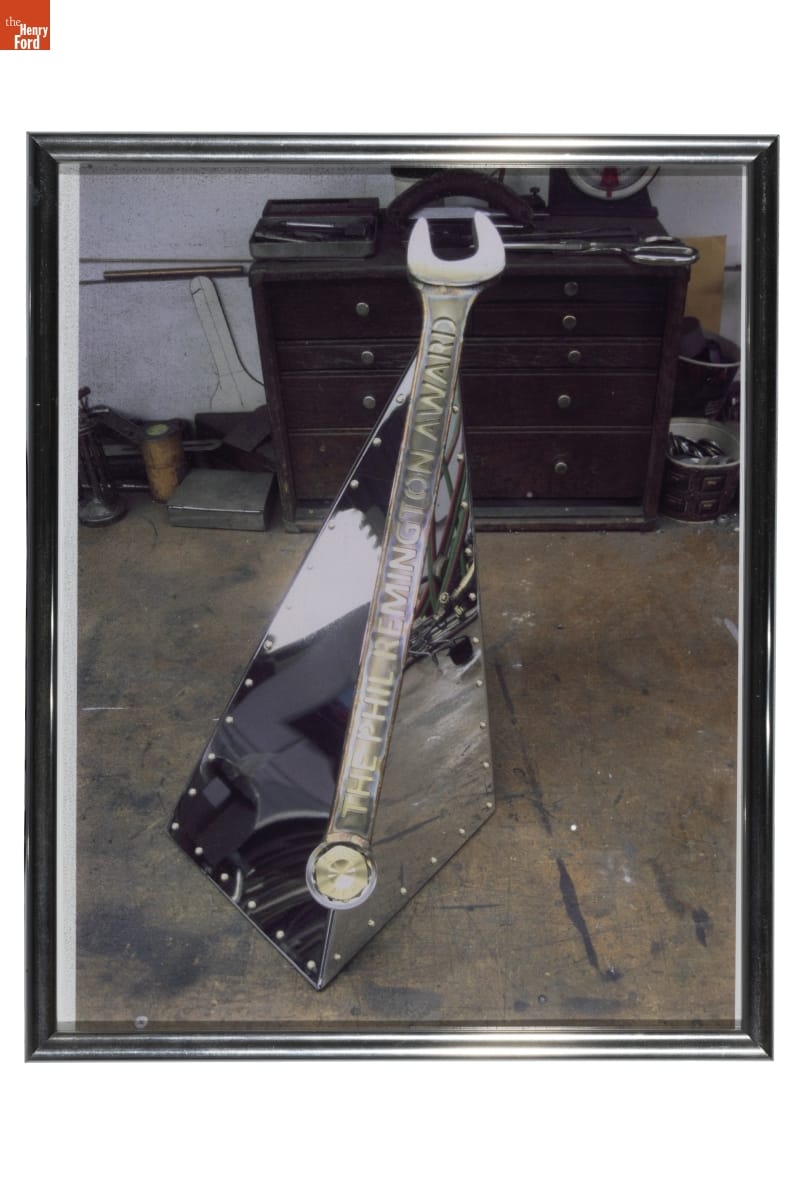
- "The Phil Remington Award" - Phil Remington was one of racing's greatest fabricators and metalworkers. He worked alongside innovators like Lance Reventlow, Carroll Shelby, and Dan Gurney throughout his 70-year career. "Rem" often made his own tools suited to the job at hand. This "Phil Remington Award" paid tribute to his ability and his ingenuity.
- Collections - Artifact
"The Phil Remington Award"
Phil Remington was one of racing's greatest fabricators and metalworkers. He worked alongside innovators like Lance Reventlow, Carroll Shelby, and Dan Gurney throughout his 70-year career. "Rem" often made his own tools suited to the job at hand. This "Phil Remington Award" paid tribute to his ability and his ingenuity.
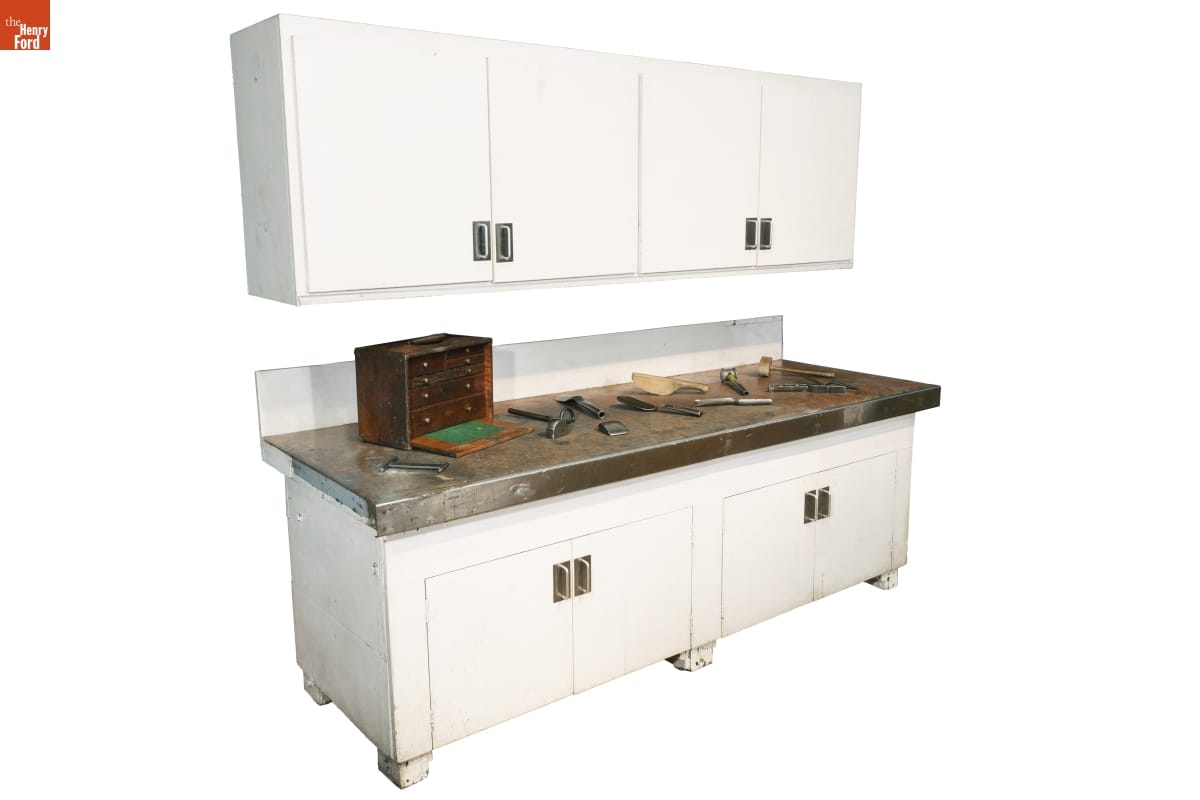
- Workbench, Used by Phil Remington - Phil Remington was one of racing's greatest fabricators and metalworkers. He was Carroll Shelby's chief engineer during Ford's Le Mans program in the 1960s. Remington joined Dan Gurney's All American Racers, where he used this workbench, in 1969. "Rem" spent the next 44 years with Gurney, developing race cars and motorcycles -- and putting in a full day's work into his 90s.
- 1969-2012
- Collections - Artifact
Workbench, Used by Phil Remington
Phil Remington was one of racing's greatest fabricators and metalworkers. He was Carroll Shelby's chief engineer during Ford's Le Mans program in the 1960s. Remington joined Dan Gurney's All American Racers, where he used this workbench, in 1969. "Rem" spent the next 44 years with Gurney, developing race cars and motorcycles -- and putting in a full day's work into his 90s.
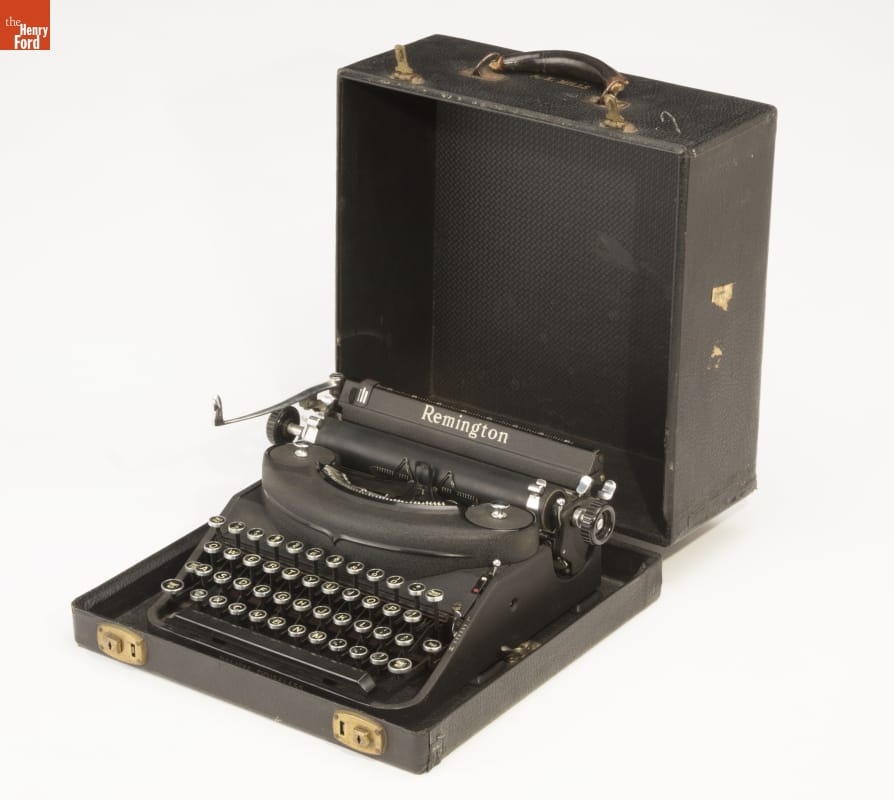
- Remington Deluxe Noiseless Typewriter, 1938 - Sholes & Glidden introduced the first practical typewriter in 1874. By the 1880s, there were several companies mass producing these machines, including rifle manufacturer Remington & Sons. Typewriters were part of the "information explosion" that included technologies like the phonograph and telephone. They modernized offices by helping workers--increasingly women--reproduce and organize information more neatly and quickly than handwriting.
- 1938
- Collections - Artifact
Remington Deluxe Noiseless Typewriter, 1938
Sholes & Glidden introduced the first practical typewriter in 1874. By the 1880s, there were several companies mass producing these machines, including rifle manufacturer Remington & Sons. Typewriters were part of the "information explosion" that included technologies like the phonograph and telephone. They modernized offices by helping workers--increasingly women--reproduce and organize information more neatly and quickly than handwriting.
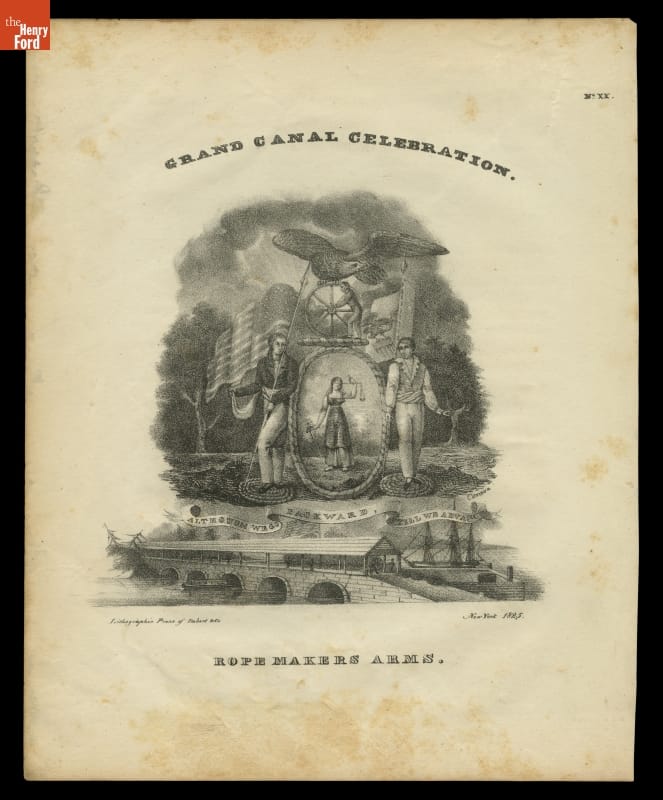
- Lithograph, "Grand Canal Celebration; Rope Makers Arms," 1825 - The first half of the 19th century was the heyday of canals in the United States. These artificial waterways opened new territories to settlement and commerce. The Erie Canal in New York connected Albany with Buffalo -- and the Hudson River with Lake Erie. This lithograph celebrates the canal's completion in 1825.
- 1825
- Collections - Artifact
Lithograph, "Grand Canal Celebration; Rope Makers Arms," 1825
The first half of the 19th century was the heyday of canals in the United States. These artificial waterways opened new territories to settlement and commerce. The Erie Canal in New York connected Albany with Buffalo -- and the Hudson River with Lake Erie. This lithograph celebrates the canal's completion in 1825.
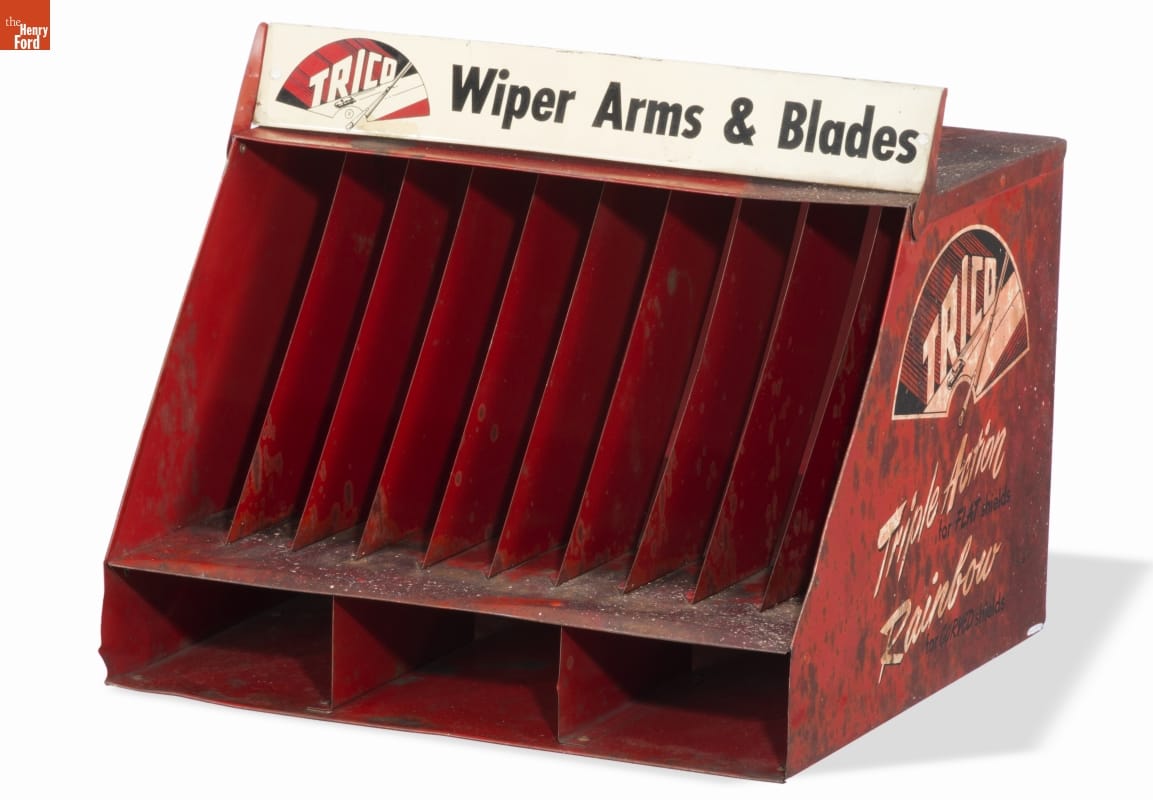
- Trico Wiper Arms & Blades Display, 1950-1960 - Windshields protect motorists from dirt, debris, wind, and weather -- but dirty or rain-soaked windshields make driving hazardous. Windshield wipers help clear away mud and moisture, so drivers can safely navigate roads and highways. Trico introduced its first wipers in 1917 and by the end of the century had become one of the leading manufacturers of windshield wiper systems.
- 1950-1960
- Collections - Artifact
Trico Wiper Arms & Blades Display, 1950-1960
Windshields protect motorists from dirt, debris, wind, and weather -- but dirty or rain-soaked windshields make driving hazardous. Windshield wipers help clear away mud and moisture, so drivers can safely navigate roads and highways. Trico introduced its first wipers in 1917 and by the end of the century had become one of the leading manufacturers of windshield wiper systems.
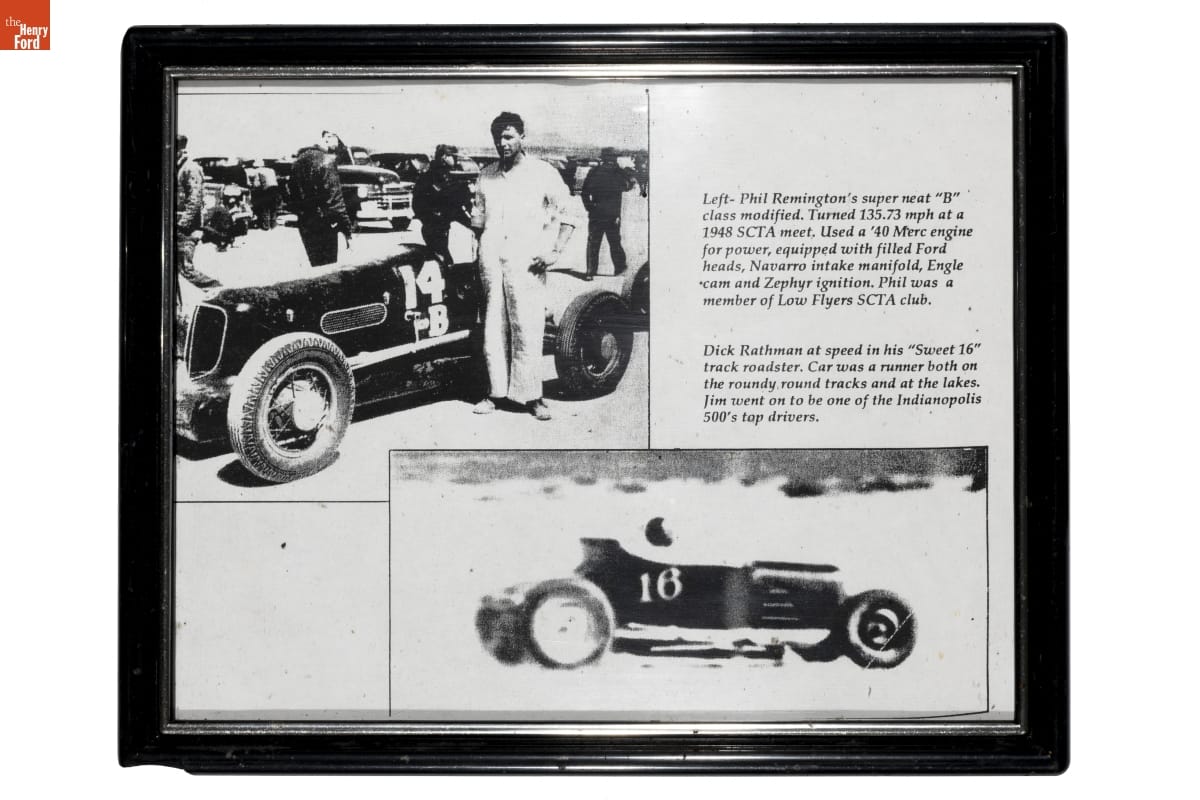
- "Phil Remington's Super Neat 'B' Class Modified," from "Hot Rod," January 1948 - Phil Remington was one of racing's greatest fabricators and metalworkers. Over his 70-year career, he worked alongside innovators like Lance Reventlow, Carroll Shelby, and Dan Gurney. This photo, published in the January 1948 issue of <em>Hot Rod</em> magazine, shows Remington as a young man racing cars on California's dry lakes.
- 1948
- Collections - Artifact
"Phil Remington's Super Neat 'B' Class Modified," from "Hot Rod," January 1948
Phil Remington was one of racing's greatest fabricators and metalworkers. Over his 70-year career, he worked alongside innovators like Lance Reventlow, Carroll Shelby, and Dan Gurney. This photo, published in the January 1948 issue of Hot Rod magazine, shows Remington as a young man racing cars on California's dry lakes.
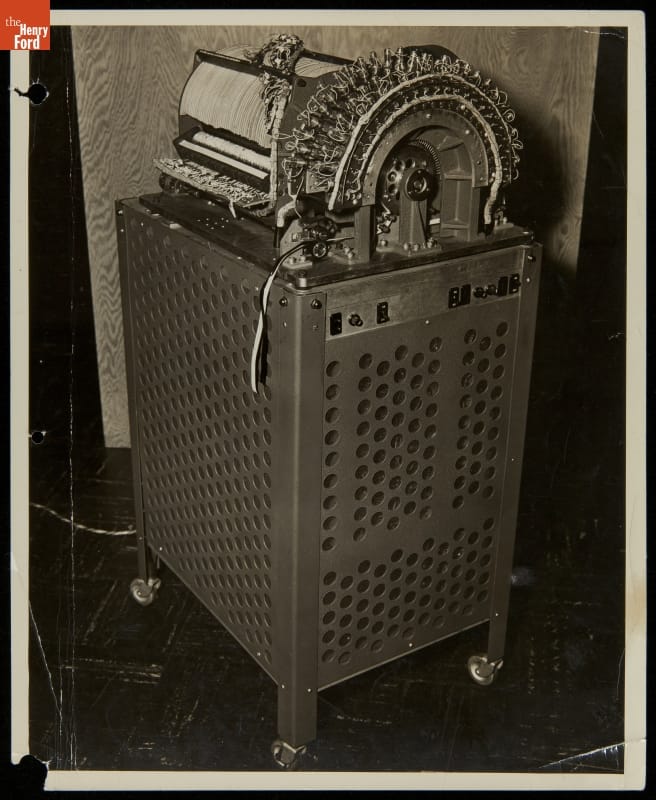
- Machinery, Remington Rand, Inc., 1953 - George Devol was a problem solver and prolific inventor -- particularly in the area of automation. After the Second World War, Devol patented a magnetic control system -- a memory system for machines. With this reprogrammable system, manufacturers could "teach" a machine to perform repetitive tasks. Devol's innovation led to his most notable invention -- the first industrial robot.
- January 08, 1953
- Collections - Artifact
Machinery, Remington Rand, Inc., 1953
George Devol was a problem solver and prolific inventor -- particularly in the area of automation. After the Second World War, Devol patented a magnetic control system -- a memory system for machines. With this reprogrammable system, manufacturers could "teach" a machine to perform repetitive tasks. Devol's innovation led to his most notable invention -- the first industrial robot.