
Search
- Wilkinson Sheep Shears, circa 1900 -
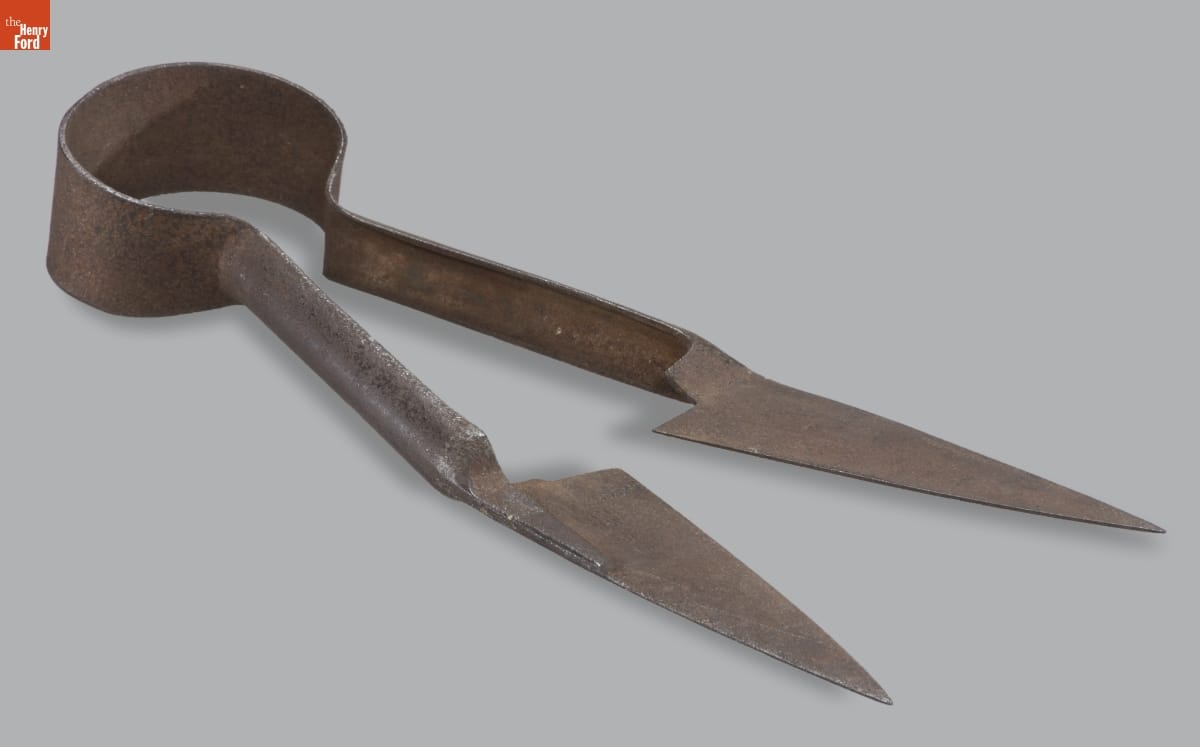
- circa 1900
- Collections - Artifact
Wilkinson Sheep Shears, circa 1900
- Sheep-Shearing Chair, 1875-1885 -
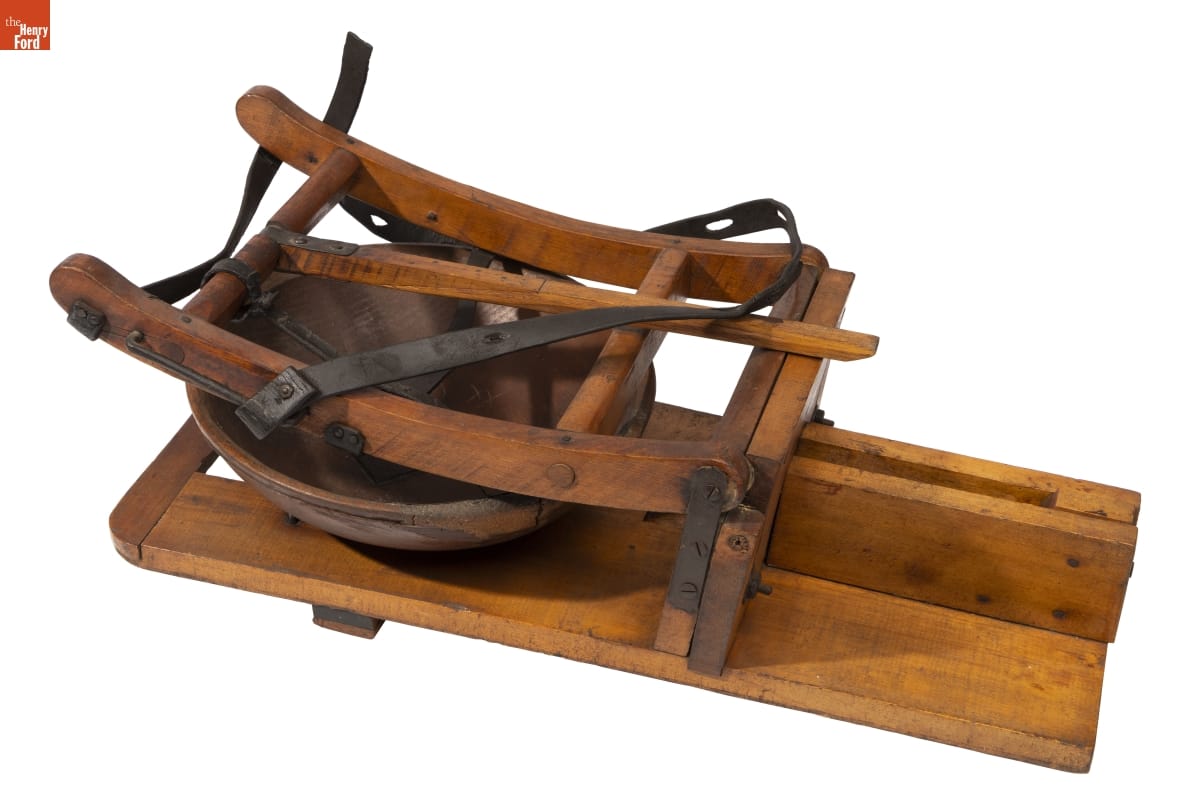
- 1875-1885
- Collections - Artifact
Sheep-Shearing Chair, 1875-1885
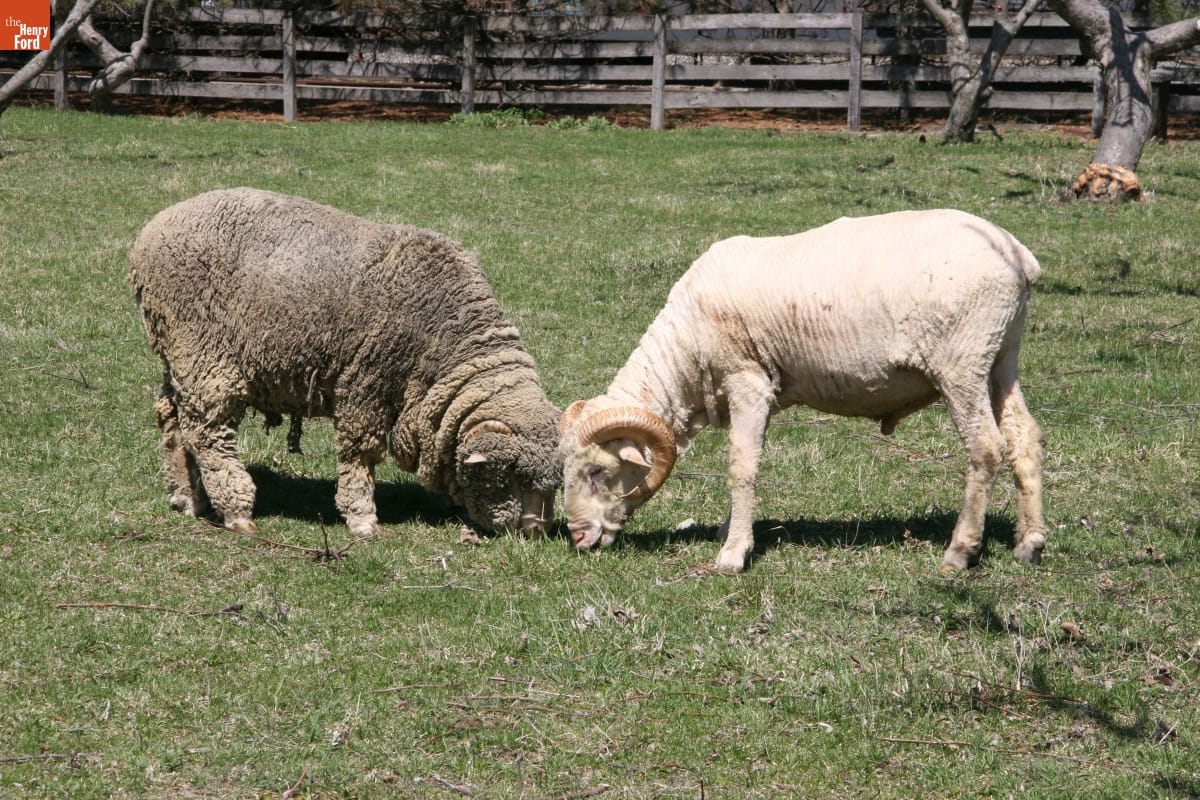
- Merino Sheep in Greenfield Village during Sheep-Shearing Season, April 2008 - Nineteenth-century wool producers preferred wrinkled Merino sheep. More skin yielded more wool, which shearers carefully cut away using blade shears. Ultimately, electrically powered mechanical shears became more practical. Shearers operating these much faster tools had difficulty navigating around wrinkles, and farmers began breeding out the now undesirable trait. The Merino sheep at Greenfield Village have been selectively bred back to resemble their wrinkly ancestors.
- April 15, 2008
- Collections - Artifact
Merino Sheep in Greenfield Village during Sheep-Shearing Season, April 2008
Nineteenth-century wool producers preferred wrinkled Merino sheep. More skin yielded more wool, which shearers carefully cut away using blade shears. Ultimately, electrically powered mechanical shears became more practical. Shearers operating these much faster tools had difficulty navigating around wrinkles, and farmers began breeding out the now undesirable trait. The Merino sheep at Greenfield Village have been selectively bred back to resemble their wrinkly ancestors.
- William Wilkinson & Sons Sheep Shears, 1849-1893 -
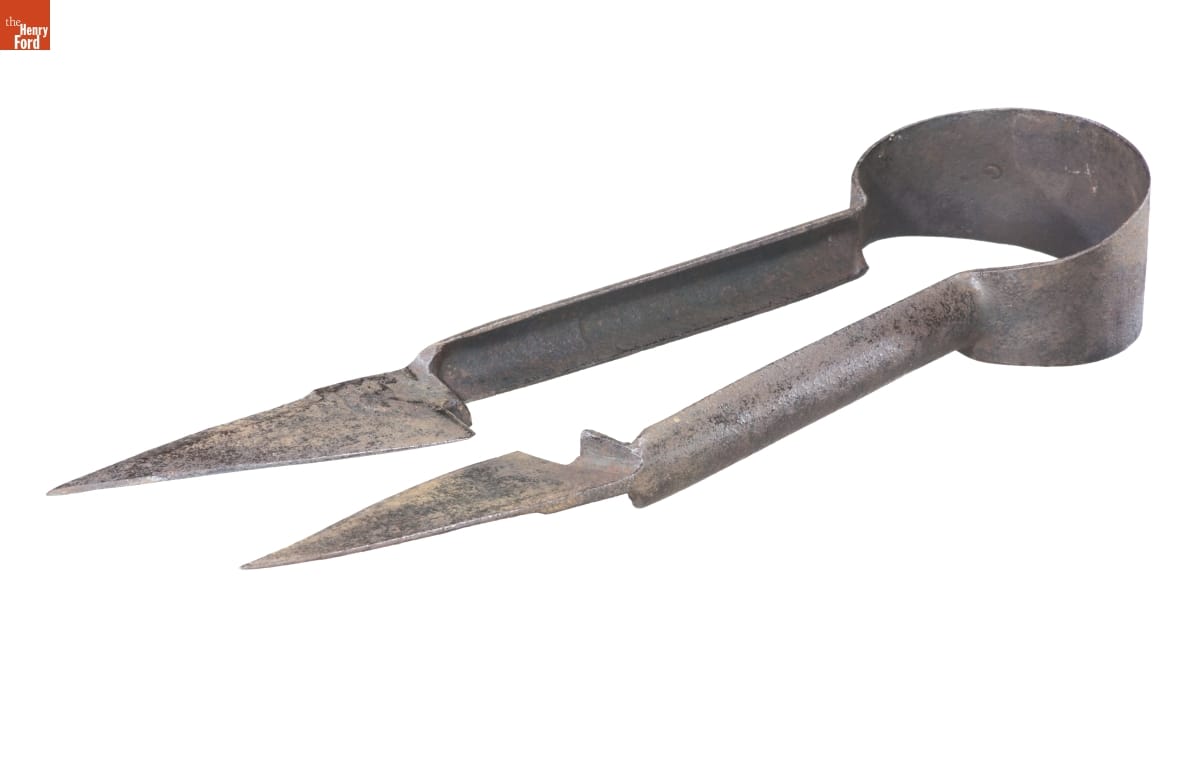
- 1849-1893
- Collections - Artifact
William Wilkinson & Sons Sheep Shears, 1849-1893
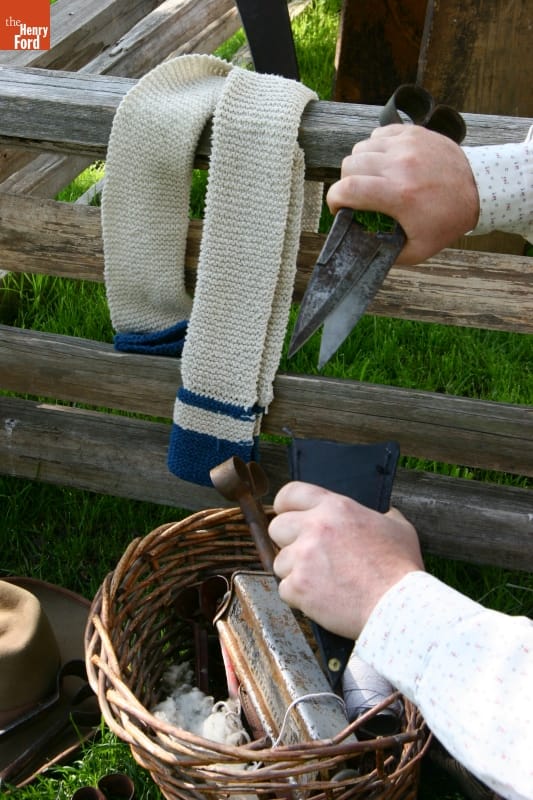
- Blade Shears and Other Equipment for Sheep-Shearing Demonstrations, Greenfield Village, April 2010 - Heavy coats of fine wool made Merino sheep a popular breed among nineteenth-century wool producers. Every spring, shearers carefully navigated blade shears to remove each sheep's thick fleece -- a process that could take several hours. More than a century later, presenters demonstrate this labor-intensive blade-shearing process at Firestone Farm in Greenfield Village.
- April 29, 2010
- Collections - Artifact
Blade Shears and Other Equipment for Sheep-Shearing Demonstrations, Greenfield Village, April 2010
Heavy coats of fine wool made Merino sheep a popular breed among nineteenth-century wool producers. Every spring, shearers carefully navigated blade shears to remove each sheep's thick fleece -- a process that could take several hours. More than a century later, presenters demonstrate this labor-intensive blade-shearing process at Firestone Farm in Greenfield Village.
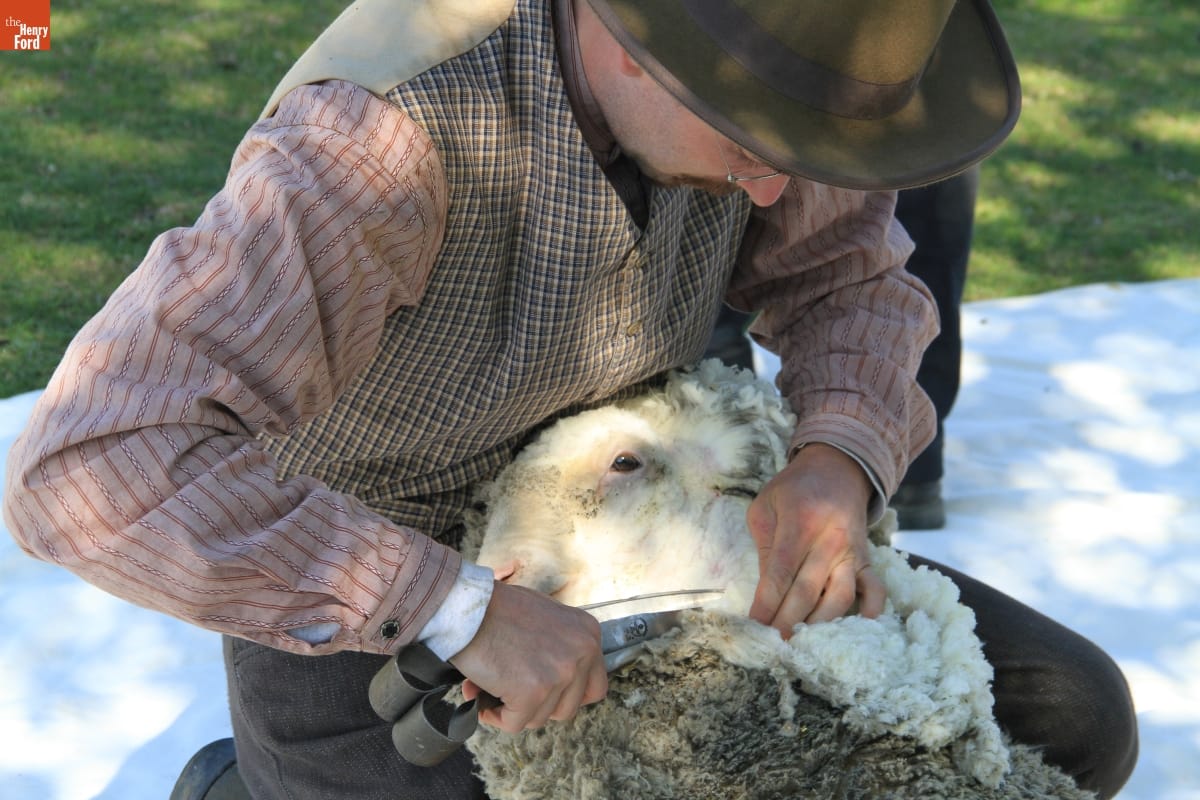
- Demonstrating Blade-Shearing of Merino Sheep in Greenfield Village, April 2012 - Heavy coats of fine wool made Merino sheep a popular breed among nineteenth-century wool producers. Every spring, shearers carefully navigated blade shears to remove each sheep's thick fleece -- a process that could take several hours. More than a century later, presenters demonstrate this labor-intensive blade-shearing process at Firestone Farm in Greenfield Village.
- April 26, 2012
- Collections - Artifact
Demonstrating Blade-Shearing of Merino Sheep in Greenfield Village, April 2012
Heavy coats of fine wool made Merino sheep a popular breed among nineteenth-century wool producers. Every spring, shearers carefully navigated blade shears to remove each sheep's thick fleece -- a process that could take several hours. More than a century later, presenters demonstrate this labor-intensive blade-shearing process at Firestone Farm in Greenfield Village.
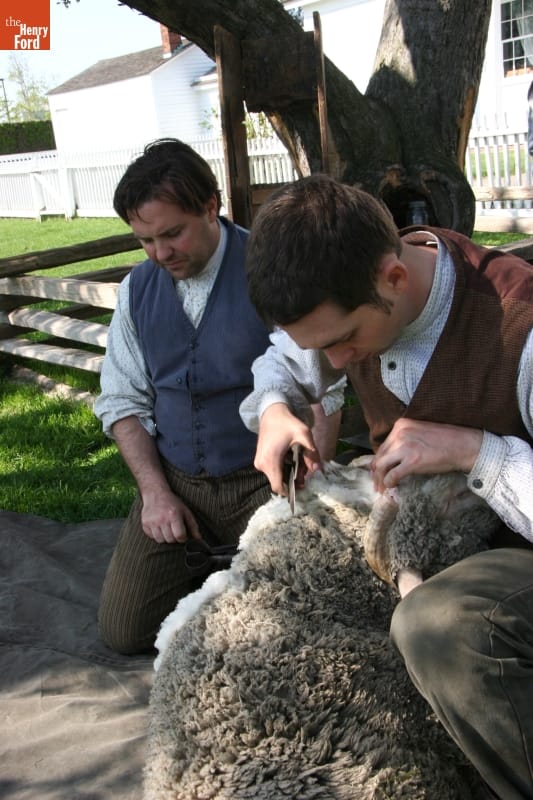
- Demonstrating Blade-Shearing of Merino Sheep in Greenfield Village, April 2010 - Heavy coats of fine wool made Merino sheep a popular breed among nineteenth-century wool producers. Every spring, shearers carefully navigated blade shears to remove each sheep's thick fleece -- a process that could take several hours. More than a century later, presenters demonstrate this labor-intensive blade-shearing process at Firestone Farm in Greenfield Village.
- April 29, 2010
- Collections - Artifact
Demonstrating Blade-Shearing of Merino Sheep in Greenfield Village, April 2010
Heavy coats of fine wool made Merino sheep a popular breed among nineteenth-century wool producers. Every spring, shearers carefully navigated blade shears to remove each sheep's thick fleece -- a process that could take several hours. More than a century later, presenters demonstrate this labor-intensive blade-shearing process at Firestone Farm in Greenfield Village.
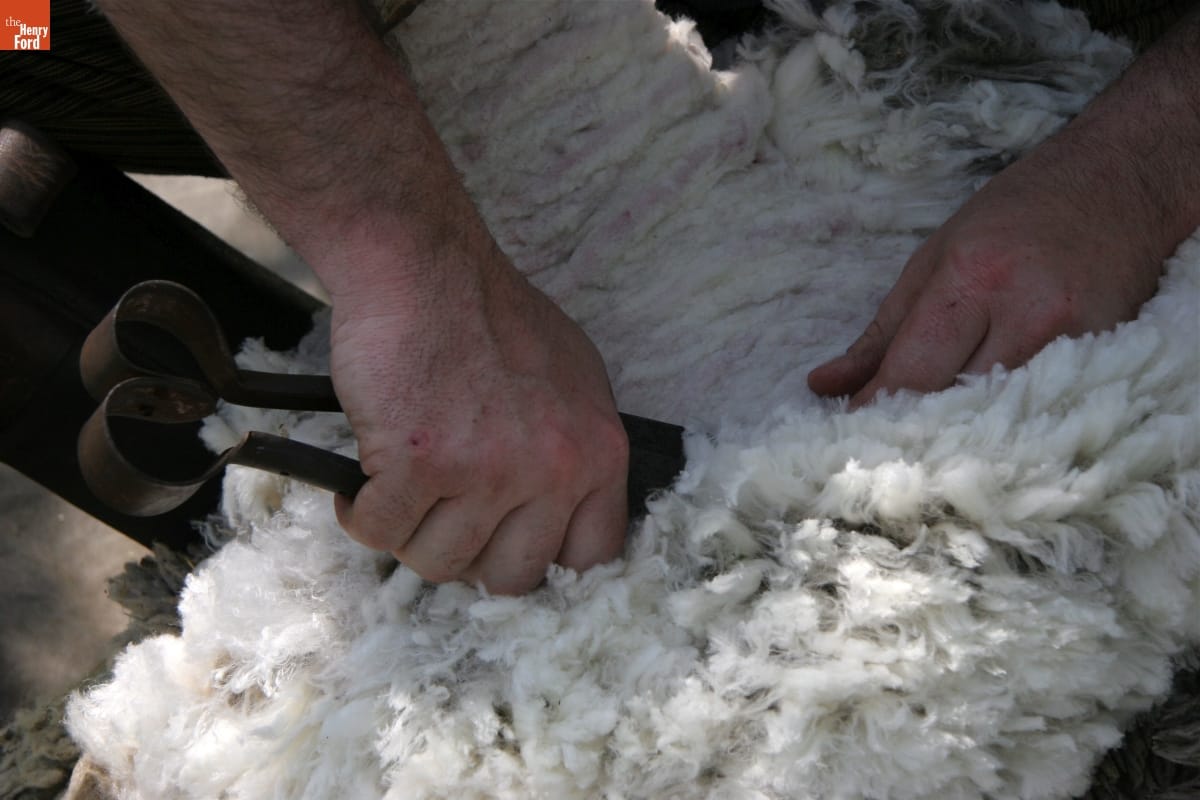
- Demonstrating Blade-Shearing of Merino Sheep in Greenfield Village, April 2010 - Heavy coats of fine wool made Merino sheep a popular breed among nineteenth-century wool producers. Every spring, shearers carefully navigated blade shears to remove each sheep's thick fleece -- a process that could take several hours. More than a century later, presenters demonstrate this labor-intensive blade-shearing process at Firestone Farm in Greenfield Village.
- April 29, 2010
- Collections - Artifact
Demonstrating Blade-Shearing of Merino Sheep in Greenfield Village, April 2010
Heavy coats of fine wool made Merino sheep a popular breed among nineteenth-century wool producers. Every spring, shearers carefully navigated blade shears to remove each sheep's thick fleece -- a process that could take several hours. More than a century later, presenters demonstrate this labor-intensive blade-shearing process at Firestone Farm in Greenfield Village.
- Demonstrating Blade-Shearing of Merino Sheep in Greenfield Village, April 2010 - Heavy coats of fine wool made Merino sheep a popular breed among nineteenth-century wool producers. Every spring, shearers carefully navigated blade shears to remove each sheep's thick fleece -- a process that could take several hours. More than a century later, presenters demonstrate this labor-intensive blade-shearing process at Firestone Farm in Greenfield Village.
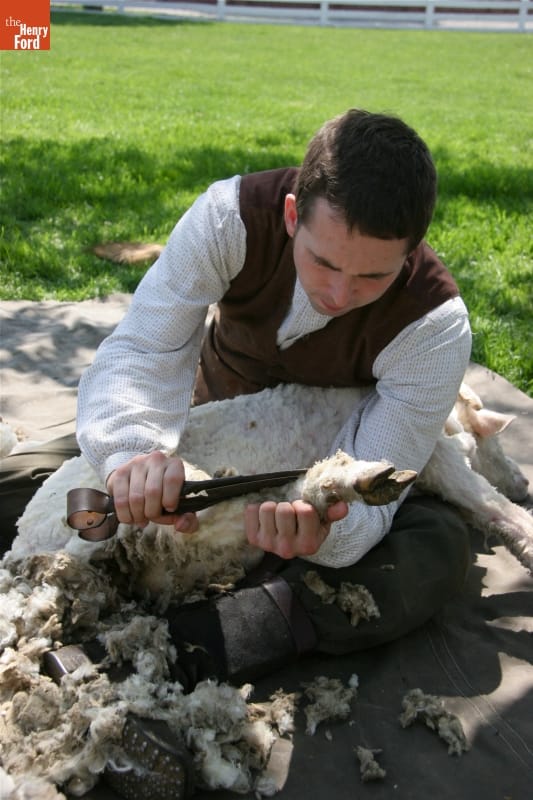
- April 30, 2010
- Collections - Artifact
Demonstrating Blade-Shearing of Merino Sheep in Greenfield Village, April 2010
Heavy coats of fine wool made Merino sheep a popular breed among nineteenth-century wool producers. Every spring, shearers carefully navigated blade shears to remove each sheep's thick fleece -- a process that could take several hours. More than a century later, presenters demonstrate this labor-intensive blade-shearing process at Firestone Farm in Greenfield Village.
- Melvin Parson Shearing a Sheep at Firestone Farm in Greenfield Village - Melvin Parson, Spring 2019 Entrepreneur-In-Residence at The Henry Ford, hand-sheared a Merino sheep with guidance from the Firestone Farm staff, thanks to the William Davidson Foundation's Initiative for Entrepreneurship. Parson, founder of We The People Growers Association, learned about sheep as wool producers during the 1880s on Harvey Firestone's family farm near Columbiana County, Ohio.
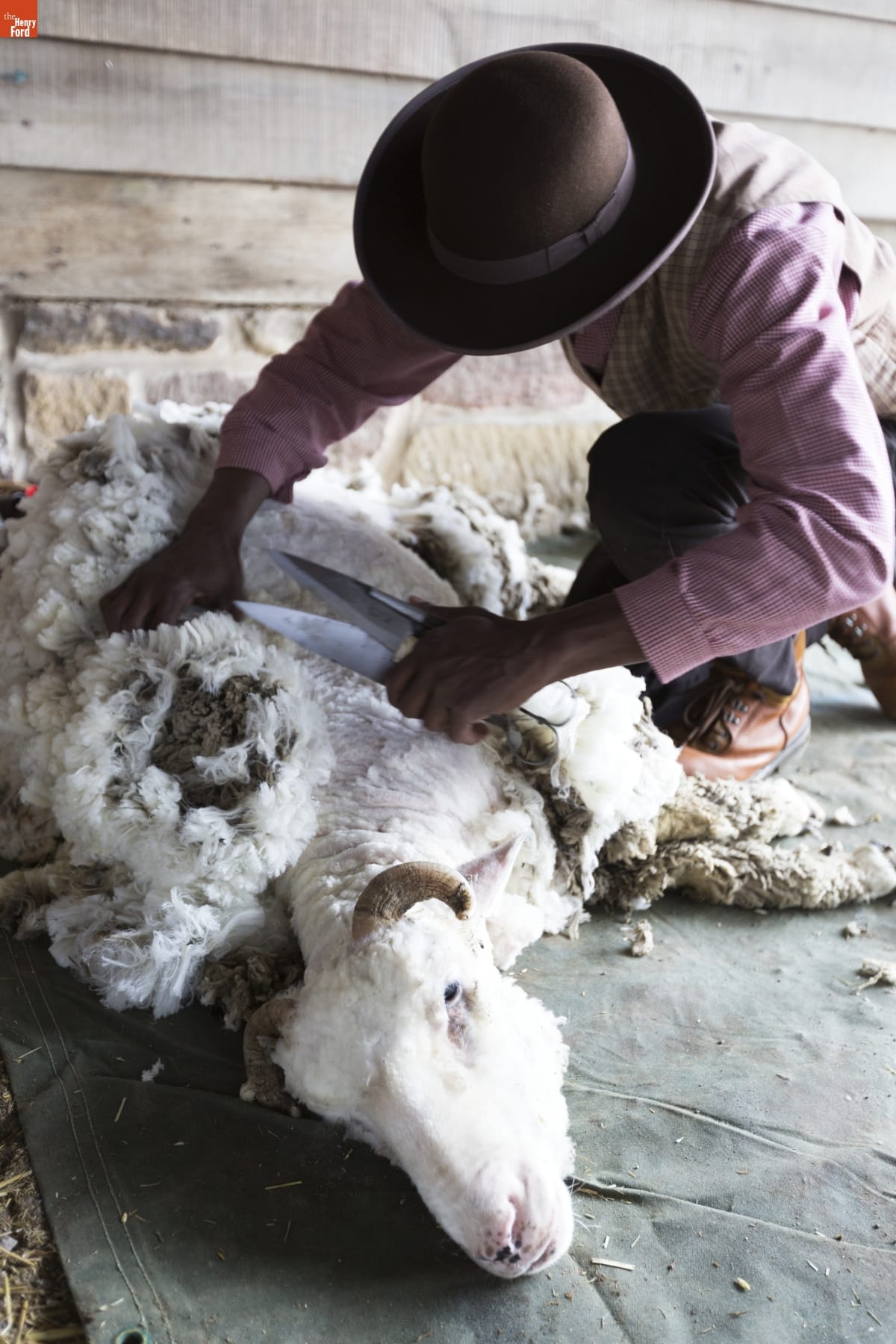
- May 03, 2019
- Collections - Artifact
Melvin Parson Shearing a Sheep at Firestone Farm in Greenfield Village
Melvin Parson, Spring 2019 Entrepreneur-In-Residence at The Henry Ford, hand-sheared a Merino sheep with guidance from the Firestone Farm staff, thanks to the William Davidson Foundation's Initiative for Entrepreneurship. Parson, founder of We The People Growers Association, learned about sheep as wool producers during the 1880s on Harvey Firestone's family farm near Columbiana County, Ohio.