
Search
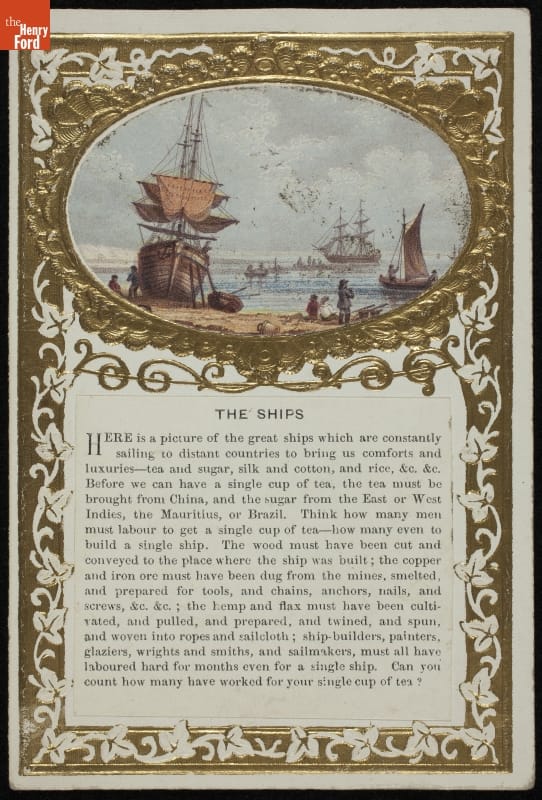
- Card, "The Ships," 1830-1870 -
- 1830-1870
- Collections - Artifact
Card, "The Ships," 1830-1870
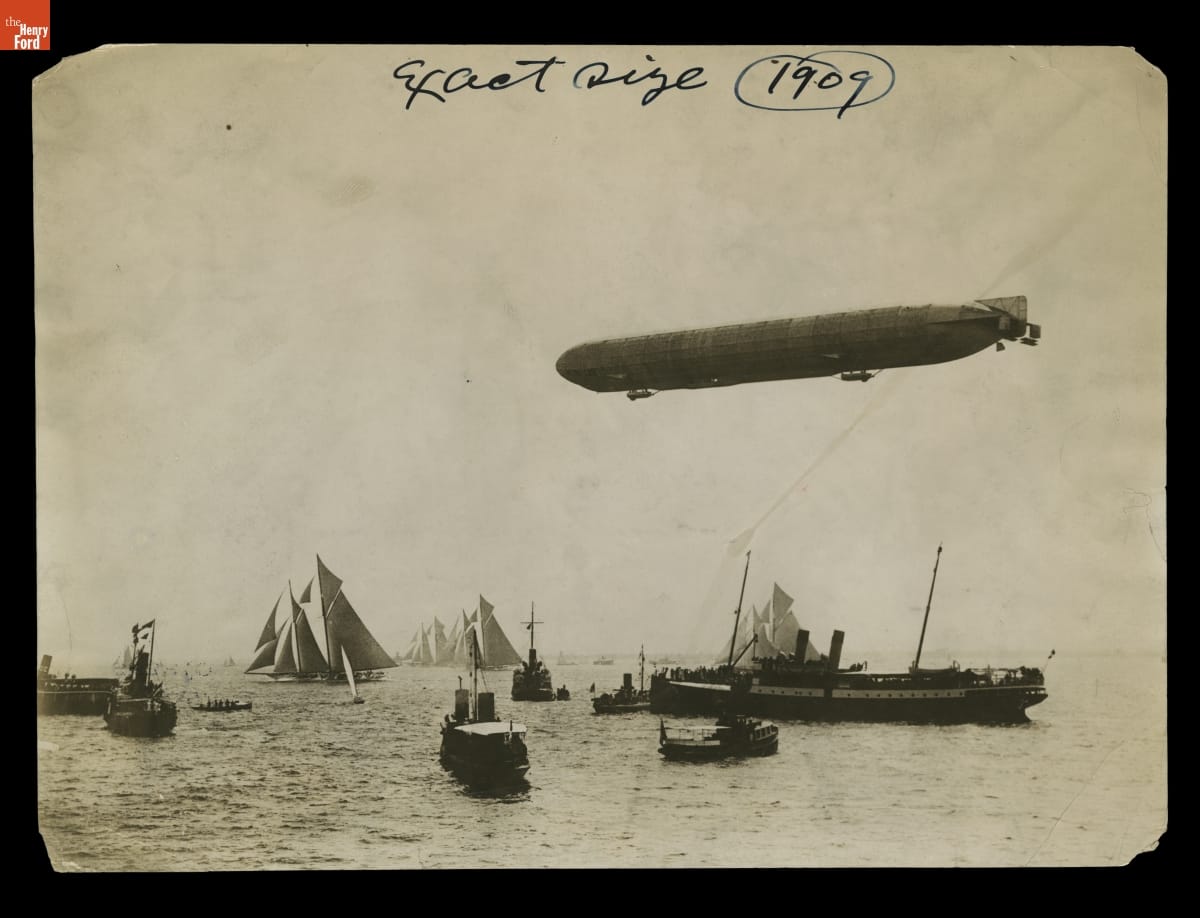
- Zeppelin Hovering over German Ships, 1909 - German inventor Ferdinand von Zeppelin began experimenting with airships in the late 19th century and launched his first successful craft in 1900. By the time of his death in 1917, Zeppelin's rigid airships were in regular service in both civil and military aviation. The loss of the passenger airship <em>Hindenburg</em> in 1937 effectively ended the airship era.
- 1909
- Collections - Artifact
Zeppelin Hovering over German Ships, 1909
German inventor Ferdinand von Zeppelin began experimenting with airships in the late 19th century and launched his first successful craft in 1900. By the time of his death in 1917, Zeppelin's rigid airships were in regular service in both civil and military aviation. The loss of the passenger airship Hindenburg in 1937 effectively ended the airship era.
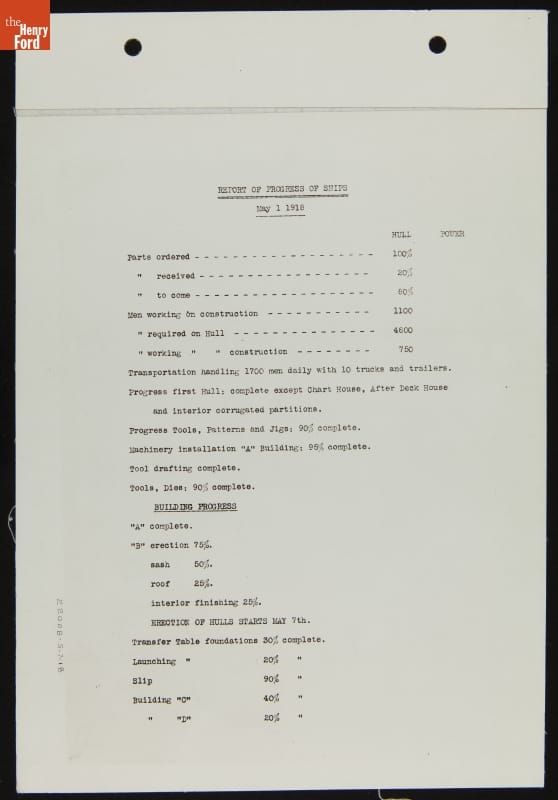
- "Report of Progress of Ships," May 1, 1918 - During World War I, Ford Motor Company built Eagle anti-submarine patrol boats for the U.S. Navy at its Rouge plant, using mass production techniques Ford developed for automobiles. The Navy's design changes, insufficient worker training, and Ford's inexperience with boats all hampered early production but, by spring 1919, the automaker could build a complete Eagle in just ten days.
- May 01, 1918
- Collections - Artifact
"Report of Progress of Ships," May 1, 1918
During World War I, Ford Motor Company built Eagle anti-submarine patrol boats for the U.S. Navy at its Rouge plant, using mass production techniques Ford developed for automobiles. The Navy's design changes, insufficient worker training, and Ford's inexperience with boats all hampered early production but, by spring 1919, the automaker could build a complete Eagle in just ten days.
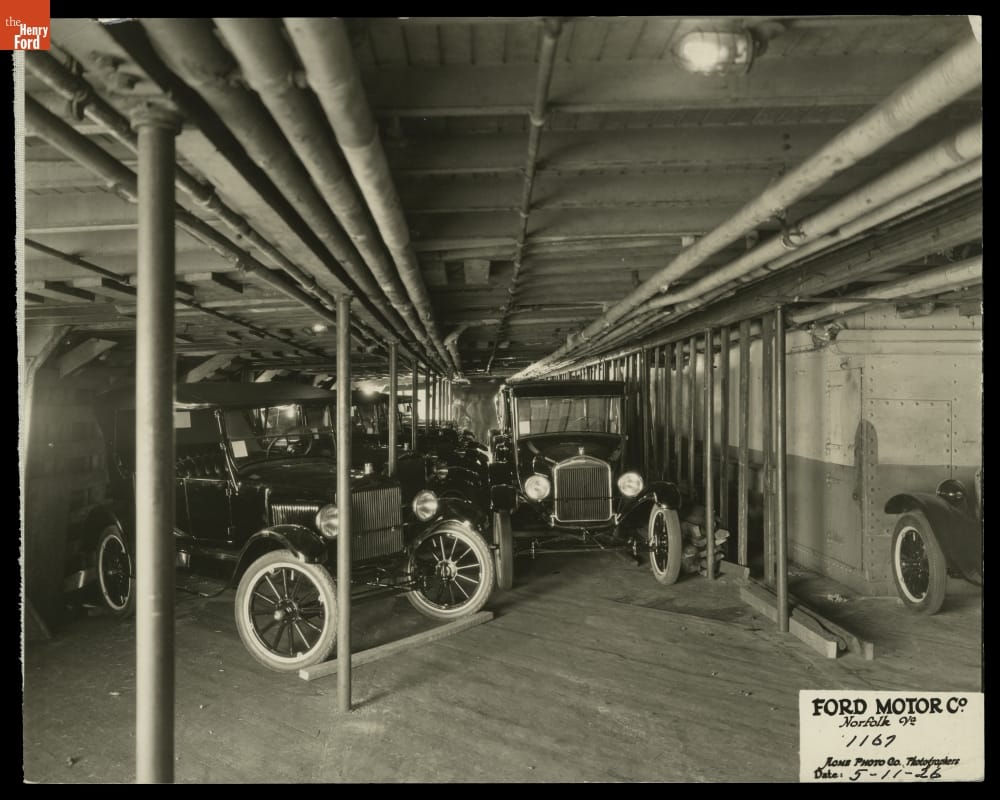
- Ford Model T Automobiles in Ship's Hold, 1926 - Ford Motor Company sent its Model T cars to destinations around the world. When moved by railroad, cars were partially disassembled to save space in boxcars. When going overseas, cars could either be partially disassembled and crated, or loaded into a ship's hold fully assembled. Gas, oil and water were usually drained from each vehicle to reduce weight.
- May 11, 1926
- Collections - Artifact
Ford Model T Automobiles in Ship's Hold, 1926
Ford Motor Company sent its Model T cars to destinations around the world. When moved by railroad, cars were partially disassembled to save space in boxcars. When going overseas, cars could either be partially disassembled and crated, or loaded into a ship's hold fully assembled. Gas, oil and water were usually drained from each vehicle to reduce weight.
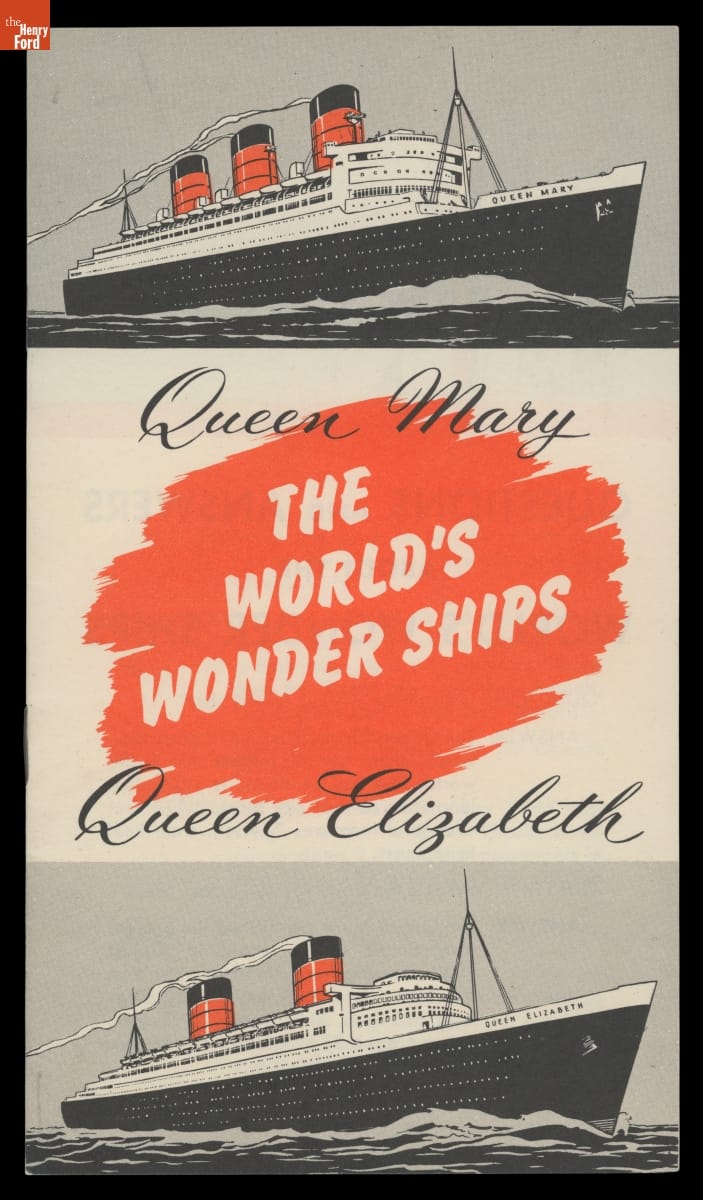
- The World's Wonder Ships, Queen Mary, Queen Elizabeth, 1949 - In this brochure, Cunard White Star Line emphasized the size, speed, and comfort of its ships <em>Queen Mary</em> and <em>Queen Elizabeth</em>. The ocean liners provided weekly express service between Great Britain, France and the United States. The arrival of transatlantic jet airliners in the late 1950s -- which cut travel time from days to hours -- ended the age of ocean liners.
- 1949
- Collections - Artifact
The World's Wonder Ships, Queen Mary, Queen Elizabeth, 1949
In this brochure, Cunard White Star Line emphasized the size, speed, and comfort of its ships Queen Mary and Queen Elizabeth. The ocean liners provided weekly express service between Great Britain, France and the United States. The arrival of transatlantic jet airliners in the late 1950s -- which cut travel time from days to hours -- ended the age of ocean liners.
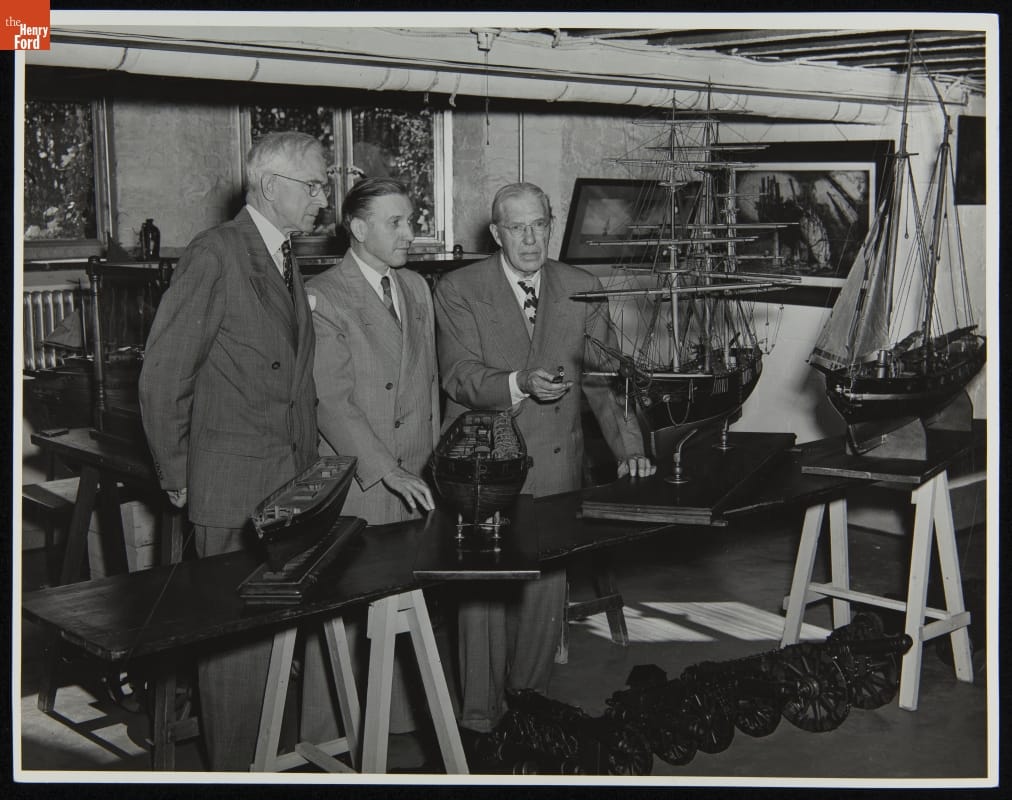
- Charles B. King Showing Model Ships, circa 1946 - Charles Brady King built and drove the first automobile in Detroit in March 1896, three months before Henry Ford finished his Quadricycle. King left the auto business in 1912 to pursue other endeavors. Over the years, he assembled a significant collection of model ships and steam engines. King later gifted some of his model engines to Ford's museum.
- circa 1946
- Collections - Artifact
Charles B. King Showing Model Ships, circa 1946
Charles Brady King built and drove the first automobile in Detroit in March 1896, three months before Henry Ford finished his Quadricycle. King left the auto business in 1912 to pursue other endeavors. Over the years, he assembled a significant collection of model ships and steam engines. King later gifted some of his model engines to Ford's museum.
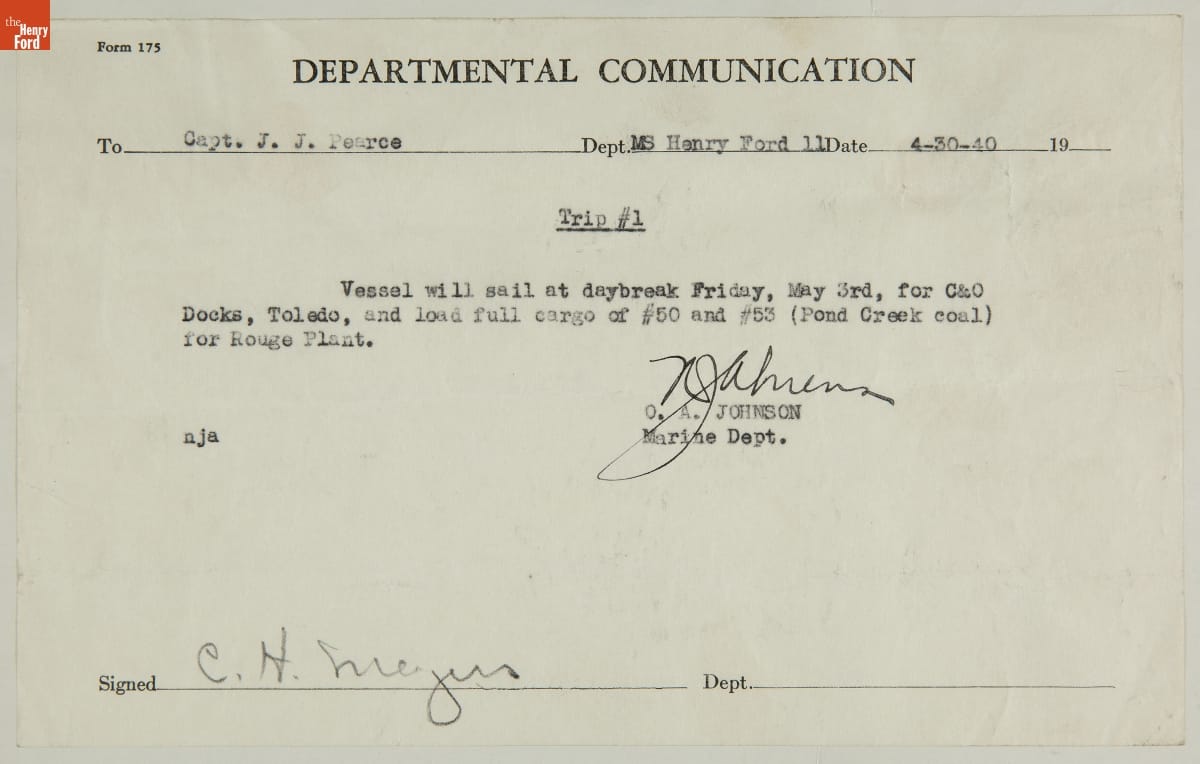
- Ship's Log for MS Henry Ford II, Trip 1, May 3-4, 1940 - Henry Ford had two ore freighters built in 1924 and named them after his grandsons, Henry Ford II and Benson Ford. The ships plied the Great Lakes, transporting raw materials to and from Ford's River Rouge manufacturing complex. A ship's log kept record of the cargo, loading and unloading ports, sailing dates, general weather conditions, and reasons for delay.
- 03 May 1940-04 May 1940
- Collections - Artifact
Ship's Log for MS Henry Ford II, Trip 1, May 3-4, 1940
Henry Ford had two ore freighters built in 1924 and named them after his grandsons, Henry Ford II and Benson Ford. The ships plied the Great Lakes, transporting raw materials to and from Ford's River Rouge manufacturing complex. A ship's log kept record of the cargo, loading and unloading ports, sailing dates, general weather conditions, and reasons for delay.
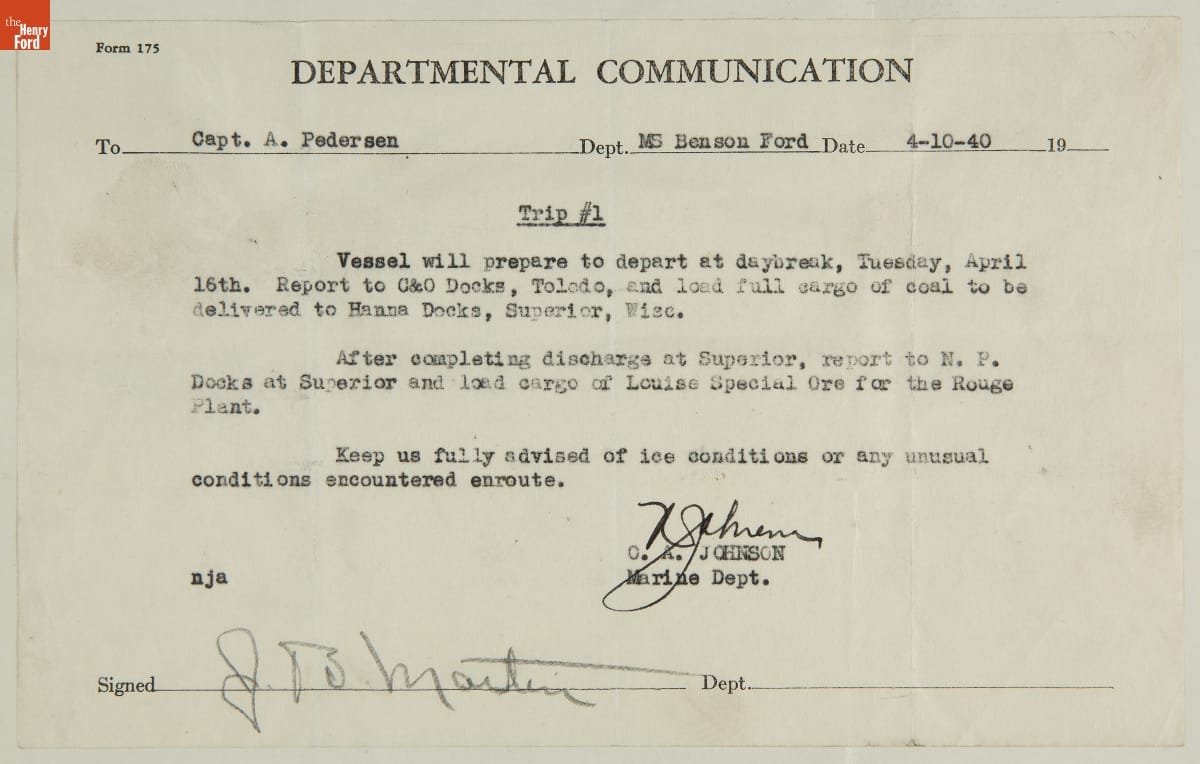
- Ship's Log for MS Benson Ford, Trip 1, April 16-24, 1940 - Henry Ford had two ore freighters built in 1924 and named them after his grandsons, Henry Ford II and Benson Ford. The ships plied the Great Lakes, transporting raw materials to and from Ford's River Rouge manufacturing complex. A ship's log kept record of the cargo, loading and unloading ports, sailing dates, general weather conditions, and reasons for delay.
- 16 April 1940-24 April 1940
- Collections - Artifact
Ship's Log for MS Benson Ford, Trip 1, April 16-24, 1940
Henry Ford had two ore freighters built in 1924 and named them after his grandsons, Henry Ford II and Benson Ford. The ships plied the Great Lakes, transporting raw materials to and from Ford's River Rouge manufacturing complex. A ship's log kept record of the cargo, loading and unloading ports, sailing dates, general weather conditions, and reasons for delay.
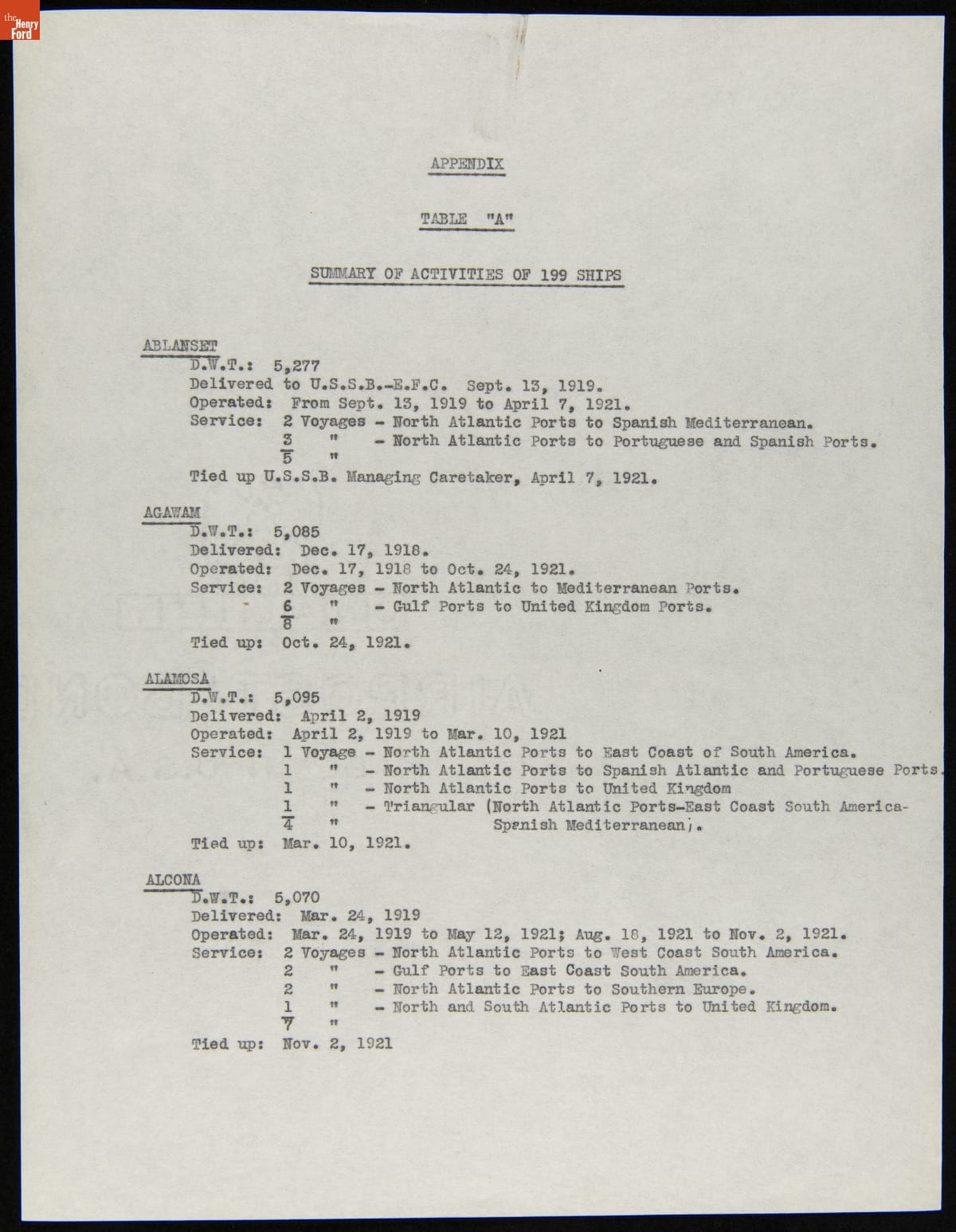
- Summary of Activity for 199 Ships Purchased for the Ford Ship Salvage Program, 1926 - Henry Ford purchased 199 surplus World War I merchant ships from the United States government in 1925. Many of these ships were towed to Ford's River Rouge Plant and dismantled -- their steel, metal, and salvageable parts were recycled. The other vessels were refurbished or converted to help transport raw materials and finished products as part of Ford's operations.
- circa 1926
- Collections - Artifact
Summary of Activity for 199 Ships Purchased for the Ford Ship Salvage Program, 1926
Henry Ford purchased 199 surplus World War I merchant ships from the United States government in 1925. Many of these ships were towed to Ford's River Rouge Plant and dismantled -- their steel, metal, and salvageable parts were recycled. The other vessels were refurbished or converted to help transport raw materials and finished products as part of Ford's operations.
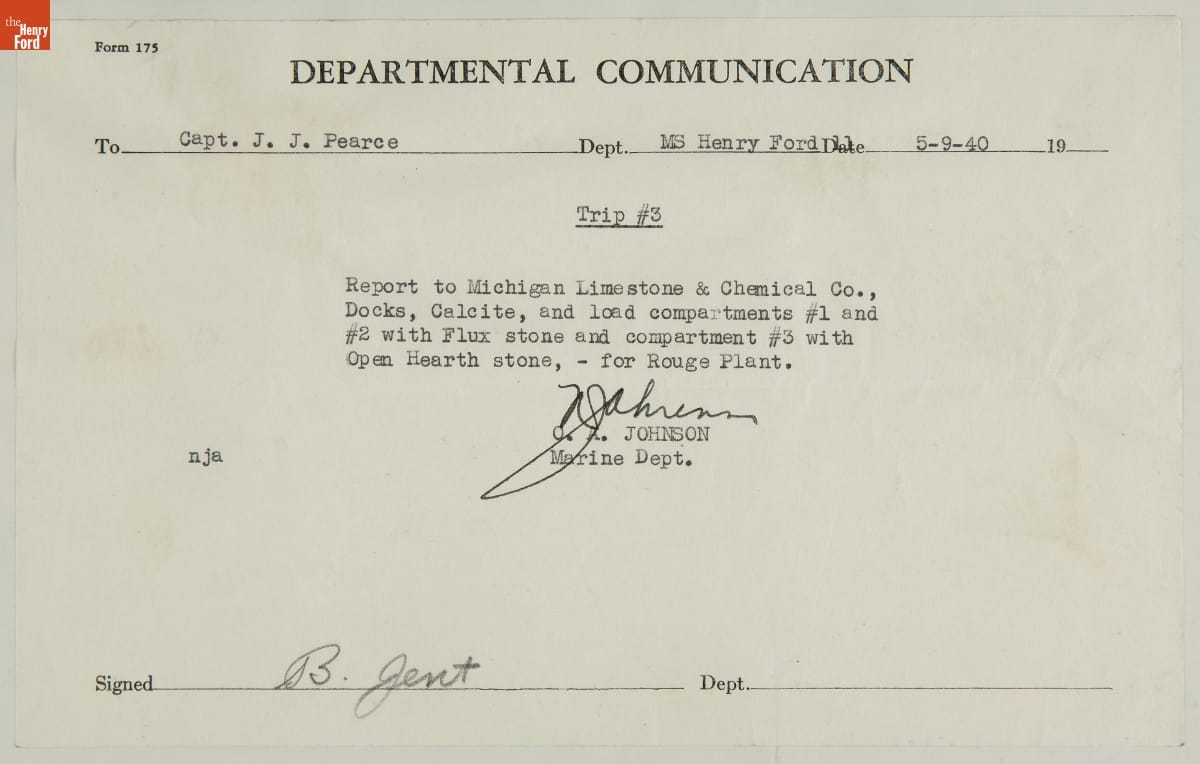
- Ship's Log for MS Henry Ford II, Trip 3, May 10-13, 1940 - Henry Ford had two ore freighters built in 1924 and named them after his grandsons, Henry Ford II and Benson Ford. The ships plied the Great Lakes, transporting raw materials to and from Ford's River Rouge manufacturing complex. A ship's log kept record of the cargo, loading and unloading ports, sailing dates, general weather conditions, and reasons for delay.
- 10 May 1940-13 May 1940
- Collections - Artifact
Ship's Log for MS Henry Ford II, Trip 3, May 10-13, 1940
Henry Ford had two ore freighters built in 1924 and named them after his grandsons, Henry Ford II and Benson Ford. The ships plied the Great Lakes, transporting raw materials to and from Ford's River Rouge manufacturing complex. A ship's log kept record of the cargo, loading and unloading ports, sailing dates, general weather conditions, and reasons for delay.