
Search
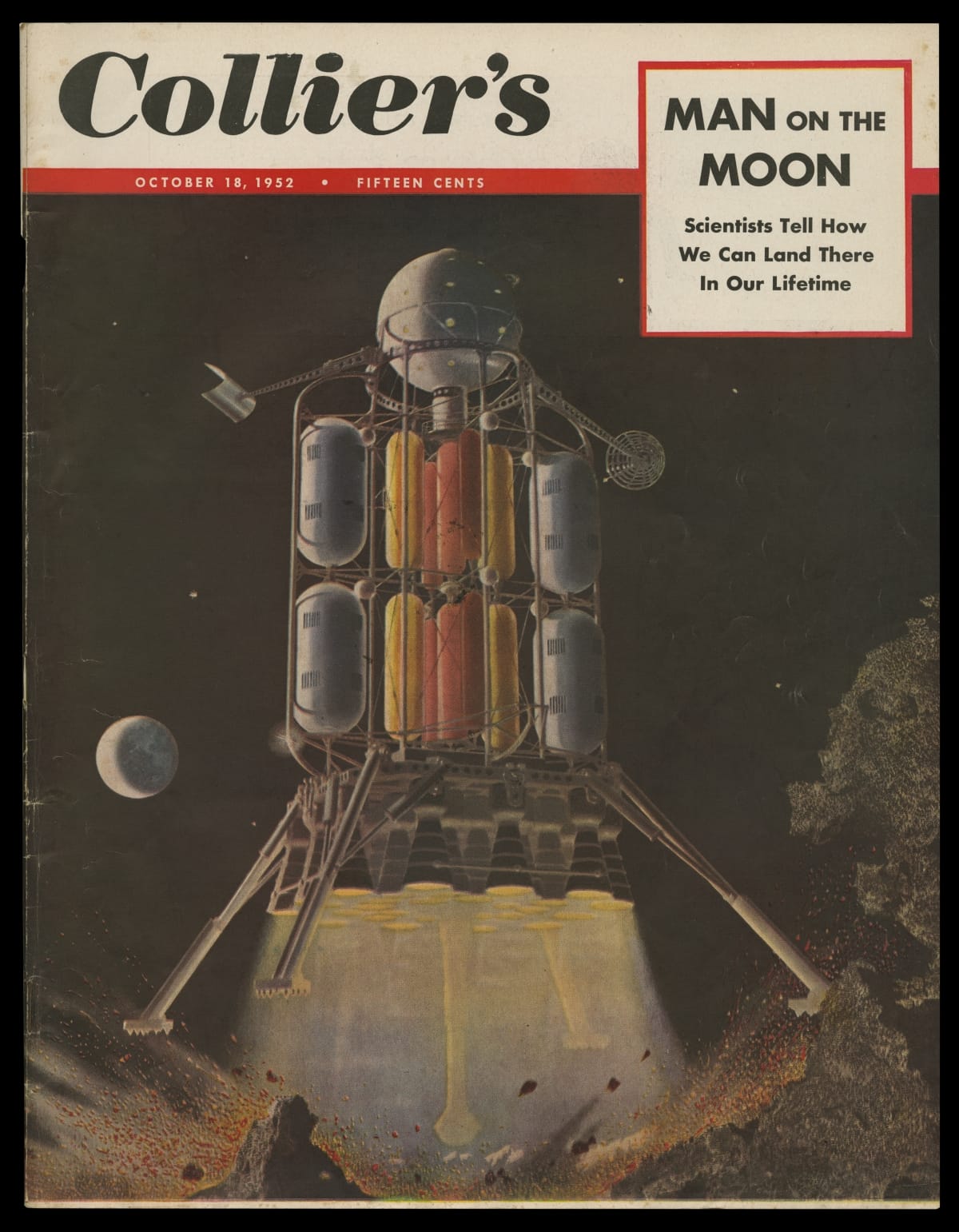
- Collier's Magazine, October 18, 1952, "Man on the Moon" - American painter, designer, and illustrator Chesley Bonestell created the cover artwork for this 1952 issue of <em>Collier's</em>. Bonestell imagined the future of space travel years before it was possible. His scientifically informed visions manifested in his illustrations popularized the idea of manned-space missions and inspired science-fiction writers, filmmakers, and the scientists and engineers who later worked in the U.S. space program.
- October 18, 1952
- Collections - Artifact
Collier's Magazine, October 18, 1952, "Man on the Moon"
American painter, designer, and illustrator Chesley Bonestell created the cover artwork for this 1952 issue of Collier's. Bonestell imagined the future of space travel years before it was possible. His scientifically informed visions manifested in his illustrations popularized the idea of manned-space missions and inspired science-fiction writers, filmmakers, and the scientists and engineers who later worked in the U.S. space program.
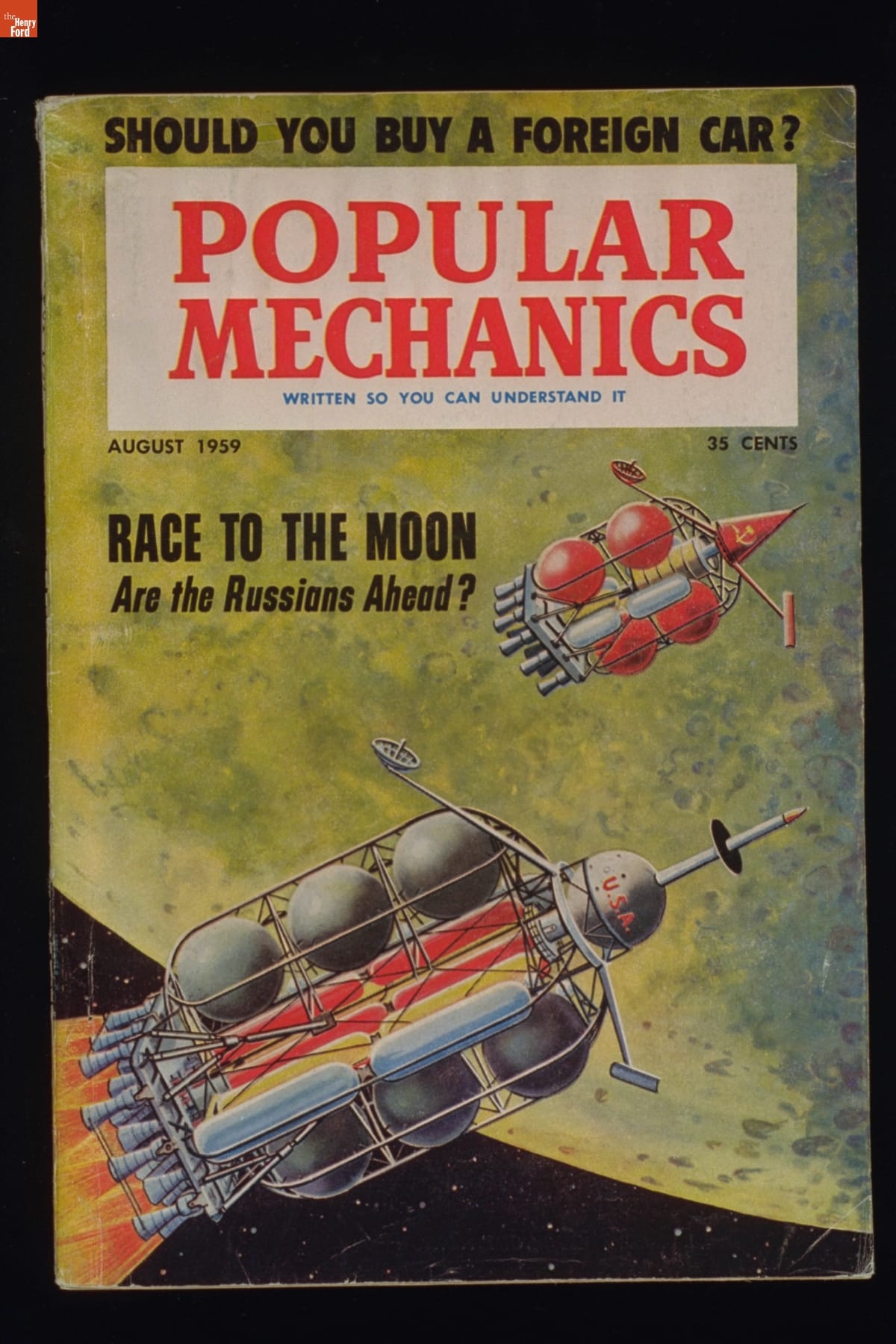
- Popular Mechanics Magazine, August 1959 - <em>Popular Mechanics</em>, first published in 1902, made information about technology and science understandable to the general public. In the late 1950s, following the launch of the Soviet Union's Sputnik I satellite, many Americans wondered about the U.S. space program. This August 1959 issue provided answers to questions about the race to the moon and "Are the Russians ahead?"
- August 01, 1959
- Collections - Artifact
Popular Mechanics Magazine, August 1959
Popular Mechanics, first published in 1902, made information about technology and science understandable to the general public. In the late 1950s, following the launch of the Soviet Union's Sputnik I satellite, many Americans wondered about the U.S. space program. This August 1959 issue provided answers to questions about the race to the moon and "Are the Russians ahead?"
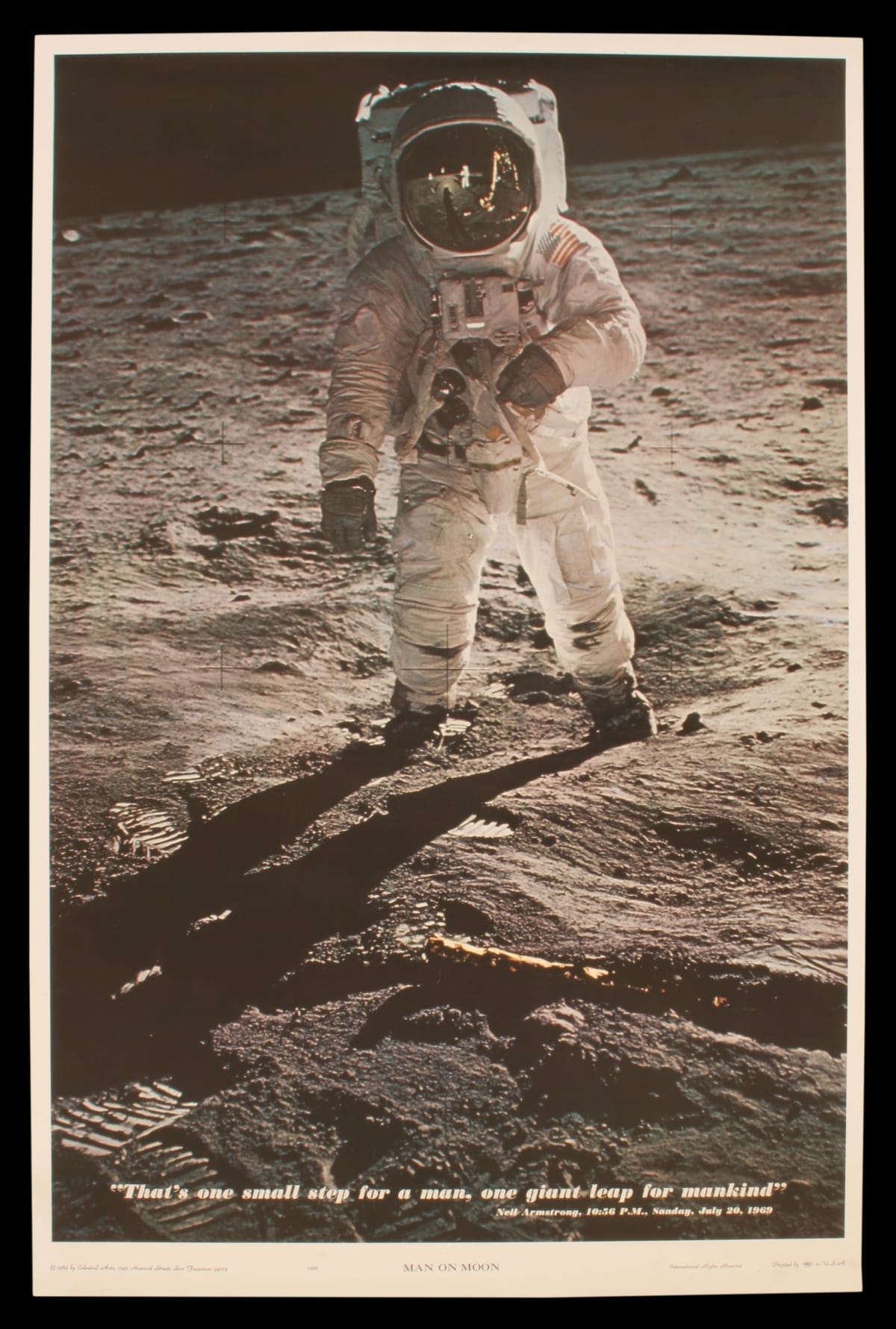
- Commemorative Poster, "That's One Small Step for a Man, One Giant Leap for Mankind," 1969 - This poster depicts Edwin A. "Buzz" Aldrin Jr. walking on the moon's surface, a photo taken by Neil Armstrong. The quote at the bottom contains the line that Armstrong had intended to say on July 20, 1969: "That's one small step for a man, one giant leap for mankind." Instead, his line came out "one small step for man."
- 1969
- Collections - Artifact
Commemorative Poster, "That's One Small Step for a Man, One Giant Leap for Mankind," 1969
This poster depicts Edwin A. "Buzz" Aldrin Jr. walking on the moon's surface, a photo taken by Neil Armstrong. The quote at the bottom contains the line that Armstrong had intended to say on July 20, 1969: "That's one small step for a man, one giant leap for mankind." Instead, his line came out "one small step for man."
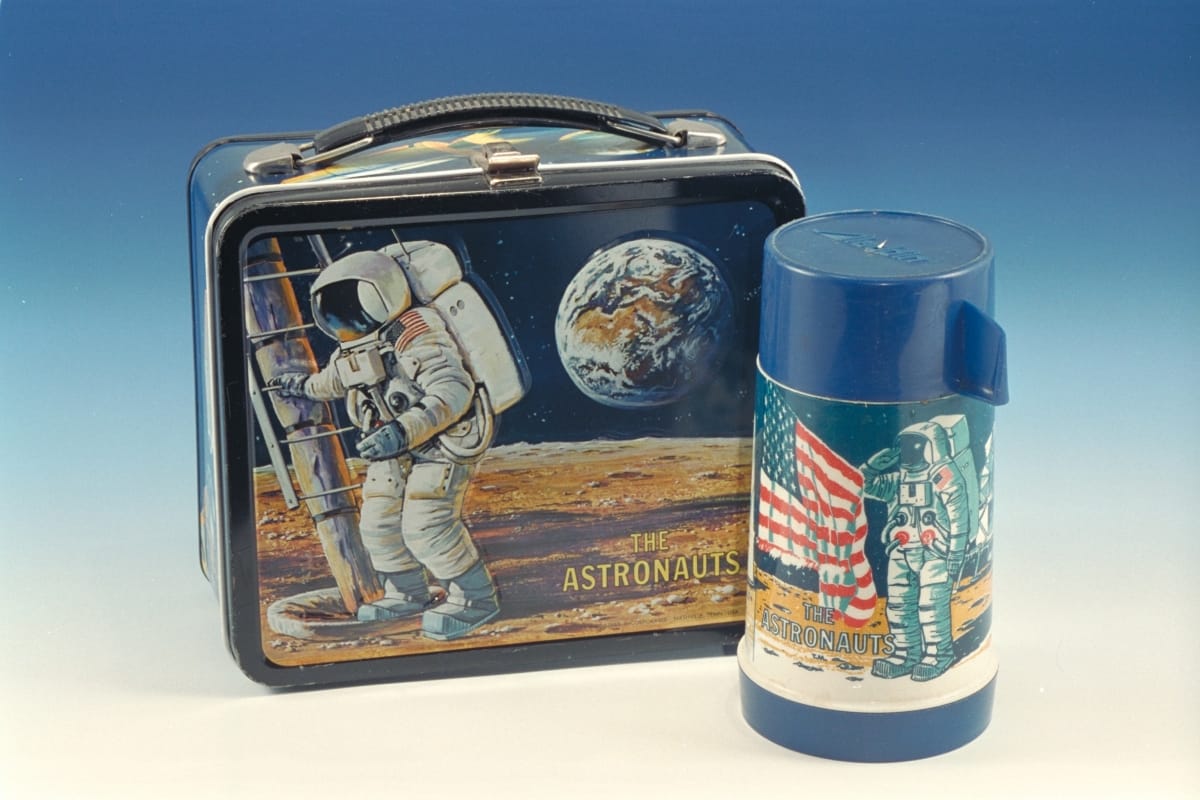
- Lunchbox & Thermos, The Astronauts, 1969 - The first pictorial lunchboxes, introduced in 1950, featured Hopalong Cassidy. Since then, generations of children have proudly sported pictorial images of their favorite interests on the sides of their school lunchboxes. The 1960s were an age of space exploration, beginning with the Soviet Union's launch of Sputnik in 1957 through the landing of Apollo 11 on the moon in 1969.
- 1969
- Collections - Artifact
Lunchbox & Thermos, The Astronauts, 1969
The first pictorial lunchboxes, introduced in 1950, featured Hopalong Cassidy. Since then, generations of children have proudly sported pictorial images of their favorite interests on the sides of their school lunchboxes. The 1960s were an age of space exploration, beginning with the Soviet Union's launch of Sputnik in 1957 through the landing of Apollo 11 on the moon in 1969.
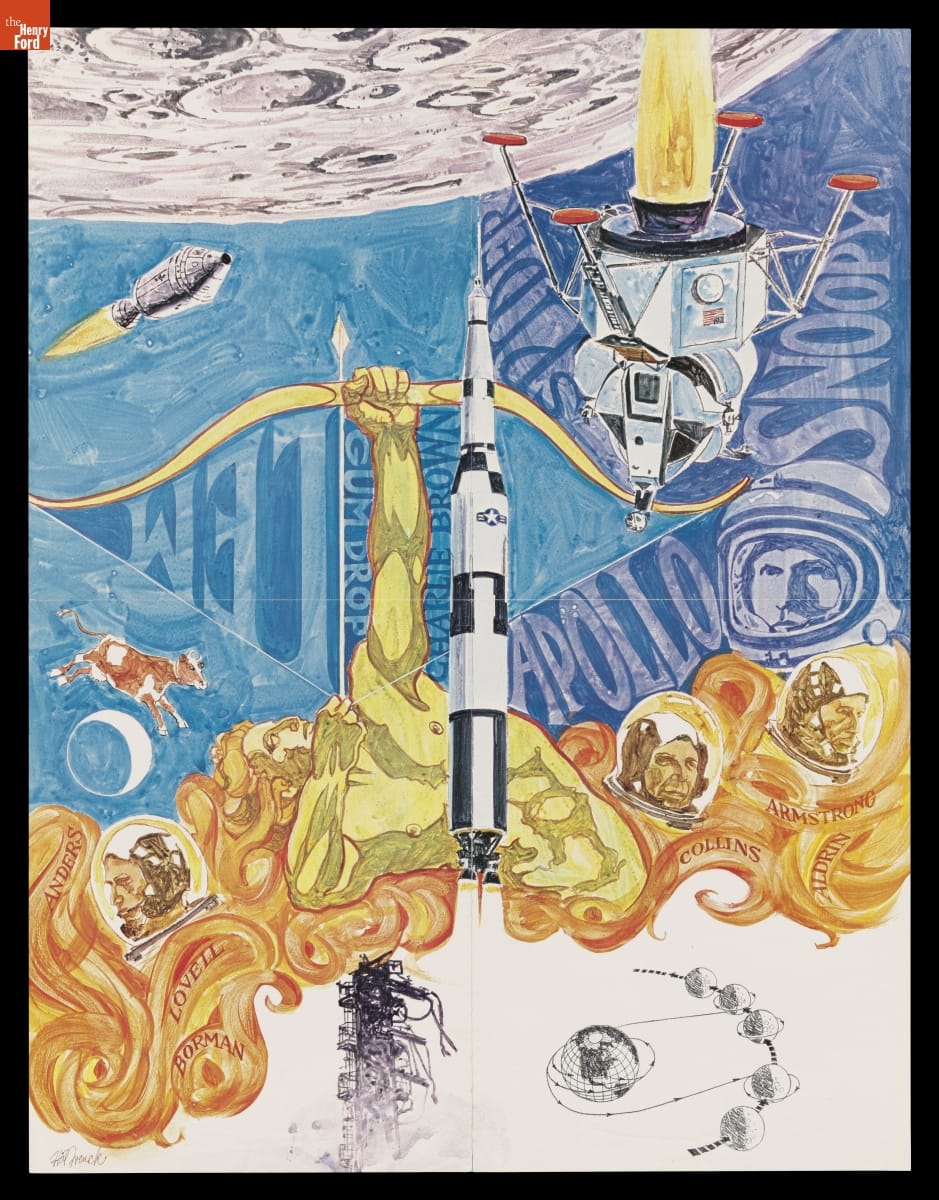
- Moon Landing Poster, 1969 - Scholastic Magazines, Inc., a well-respected educational publisher, produced this poster commemorating the Apollo Moon landing missions to accompany the documentary album "First Men on the Moon." Hal Frenck designed the poster with space imagery and the names of early Apollo astronauts and mission modules. On the back, young readers could find the album's text, which included excerpts from official NASA transcripts.
- 1969
- Collections - Artifact
Moon Landing Poster, 1969
Scholastic Magazines, Inc., a well-respected educational publisher, produced this poster commemorating the Apollo Moon landing missions to accompany the documentary album "First Men on the Moon." Hal Frenck designed the poster with space imagery and the names of early Apollo astronauts and mission modules. On the back, young readers could find the album's text, which included excerpts from official NASA transcripts.
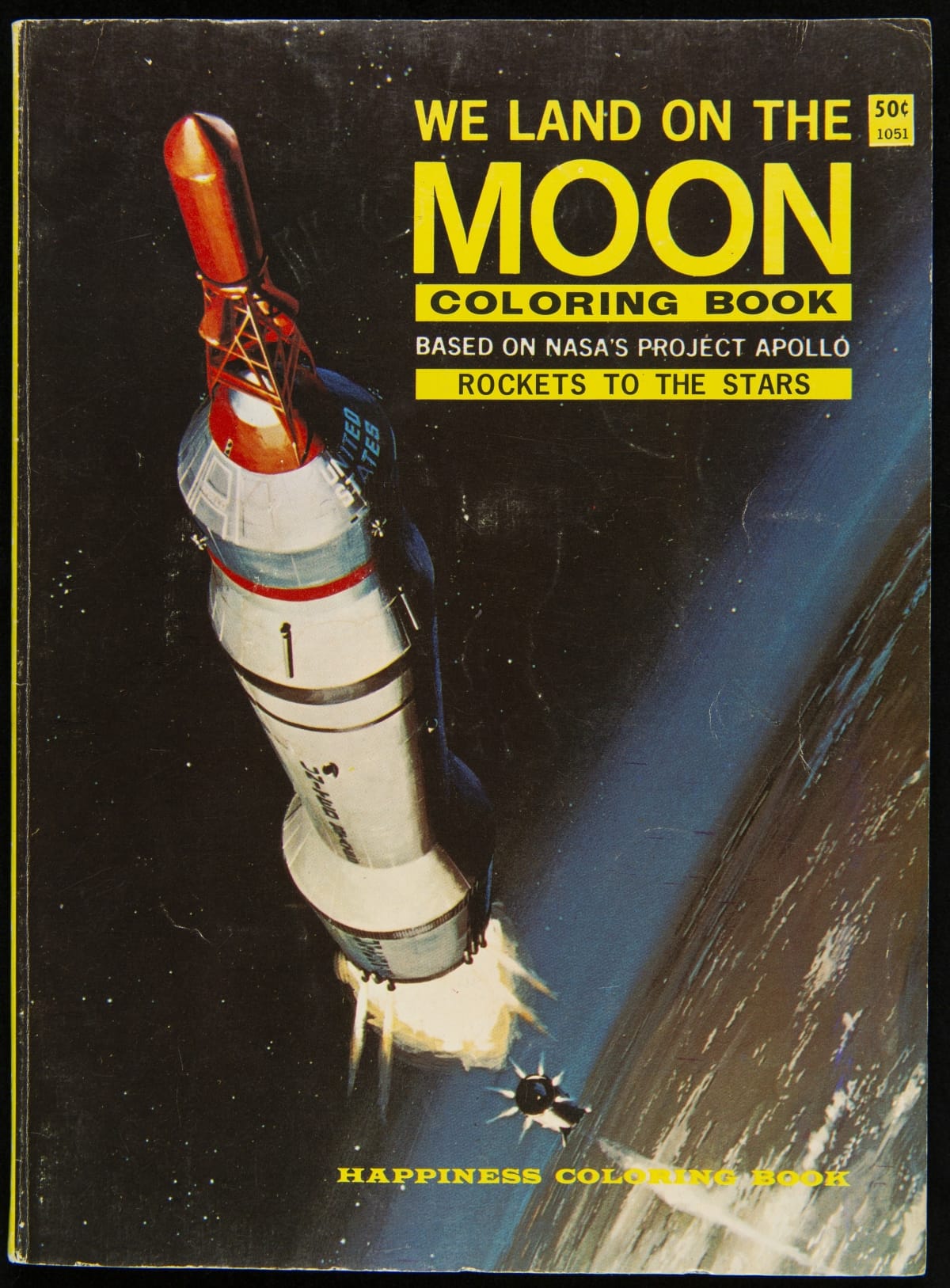
- We Land on the Moon Coloring Book Based on NASA's Project Apollo Rockets to the Stars, 1969 - This coloring book from 1969 was created to excite youngsters about the space program and especially about the moon landing of July 20. It covered the Mercury, Apollo, and Saturn vehicles and astronauts, as well as some history of the space program.
- 1969
- Collections - Artifact
We Land on the Moon Coloring Book Based on NASA's Project Apollo Rockets to the Stars, 1969
This coloring book from 1969 was created to excite youngsters about the space program and especially about the moon landing of July 20. It covered the Mercury, Apollo, and Saturn vehicles and astronauts, as well as some history of the space program.
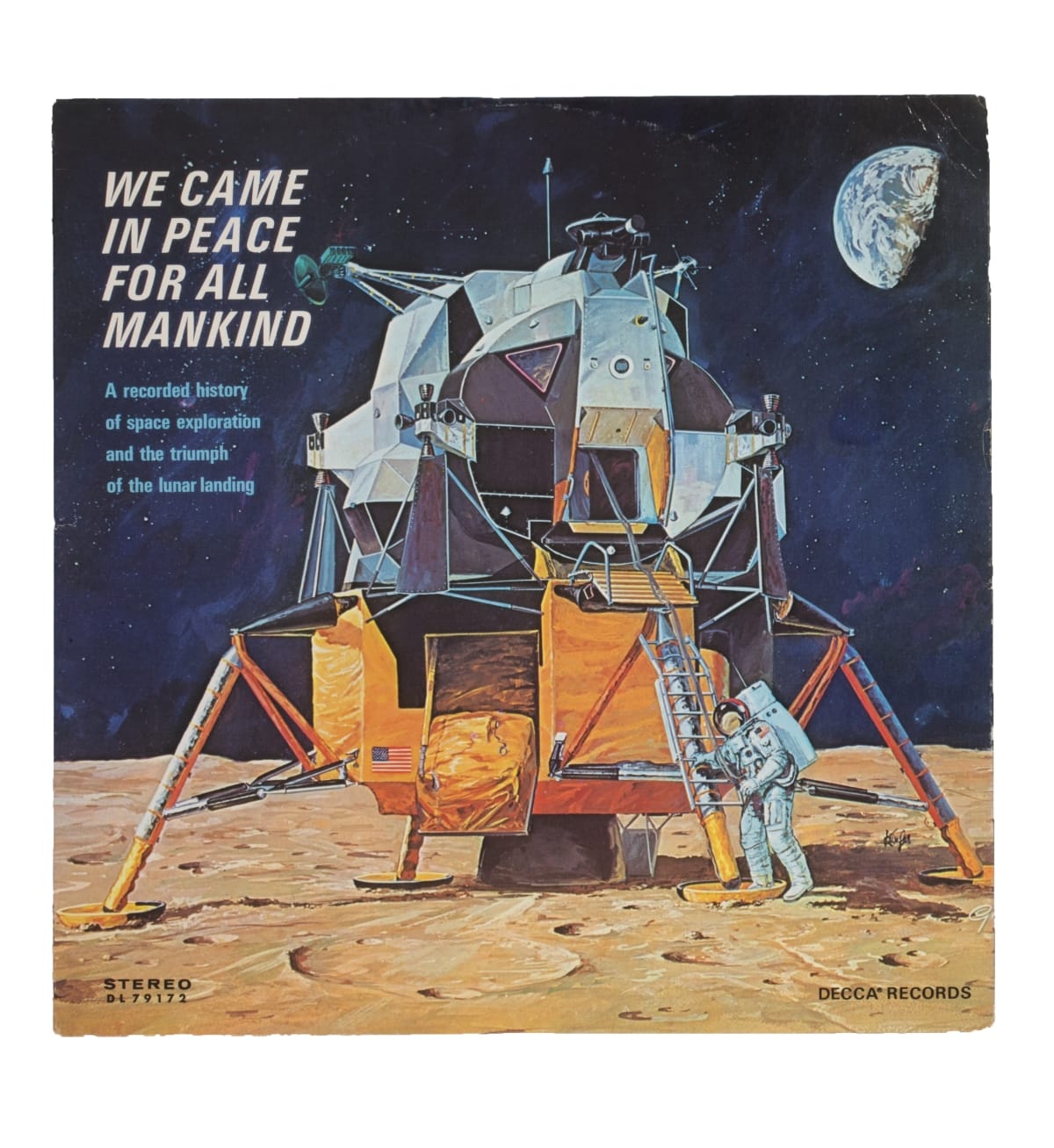
- Record Album, "We Came in Peace for All Mankind," 1969 - This milestone in space exploration began with President John F. Kennedy's request to increase funding for the U.S. space program on May 25, 1961, "Special Message to Congress on Urgent National Needs." He stated, "I believe this nation should commit itself to achieving the goal, before this decade is out, of landing a man on the moon and returning him safely to the earth."
- 1960-1969
- Collections - Artifact
Record Album, "We Came in Peace for All Mankind," 1969
This milestone in space exploration began with President John F. Kennedy's request to increase funding for the U.S. space program on May 25, 1961, "Special Message to Congress on Urgent National Needs." He stated, "I believe this nation should commit itself to achieving the goal, before this decade is out, of landing a man on the moon and returning him safely to the earth."
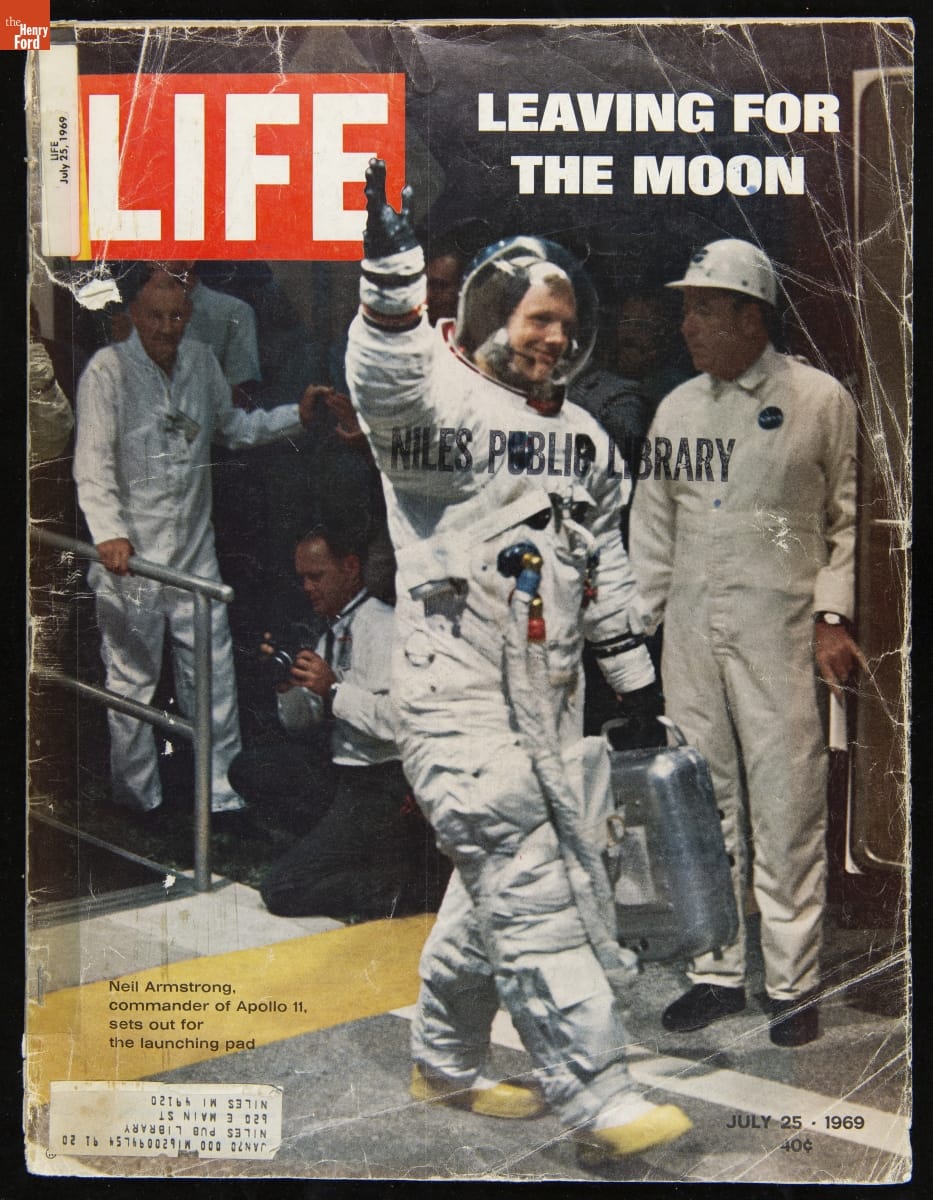
- Life Magazine, "Leaving for the Moon," July 25, 1969 - In July 1969, the ambitious plan to land a person on the Moon--laid out by President John F. Kennedy less than a decade earlier--neared reality. Americans eagerly anticipated the Apollo 11 mission, during which astronauts would walk on the Moon. <em>Life</em> magazine produced several issues before and after the event to keep the public informed on this historic undertaking.
- July 25, 1969
- Collections - Artifact
Life Magazine, "Leaving for the Moon," July 25, 1969
In July 1969, the ambitious plan to land a person on the Moon--laid out by President John F. Kennedy less than a decade earlier--neared reality. Americans eagerly anticipated the Apollo 11 mission, during which astronauts would walk on the Moon. Life magazine produced several issues before and after the event to keep the public informed on this historic undertaking.
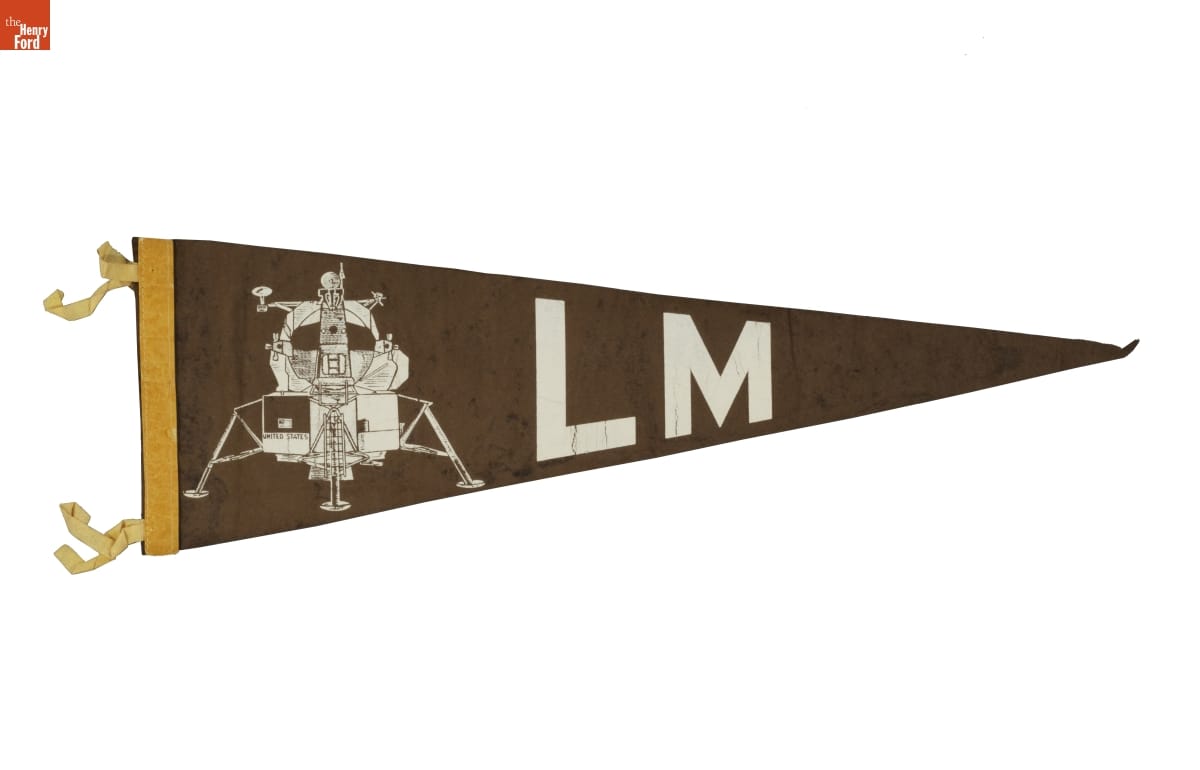
- Apollo Lunar Module "LM" Pennant, circa 1969 - The Lunar Module, or LM, depicted on this pennant allowed the Apollo astronauts to land on the Moon. The LM consisted of an ascent stage and a descent stage. Between 1969 and 1972, six Lunar Modules successfully landed and returned twelve astronauts from the lunar surface.
- circa 1969
- Collections - Artifact
Apollo Lunar Module "LM" Pennant, circa 1969
The Lunar Module, or LM, depicted on this pennant allowed the Apollo astronauts to land on the Moon. The LM consisted of an ascent stage and a descent stage. Between 1969 and 1972, six Lunar Modules successfully landed and returned twelve astronauts from the lunar surface.
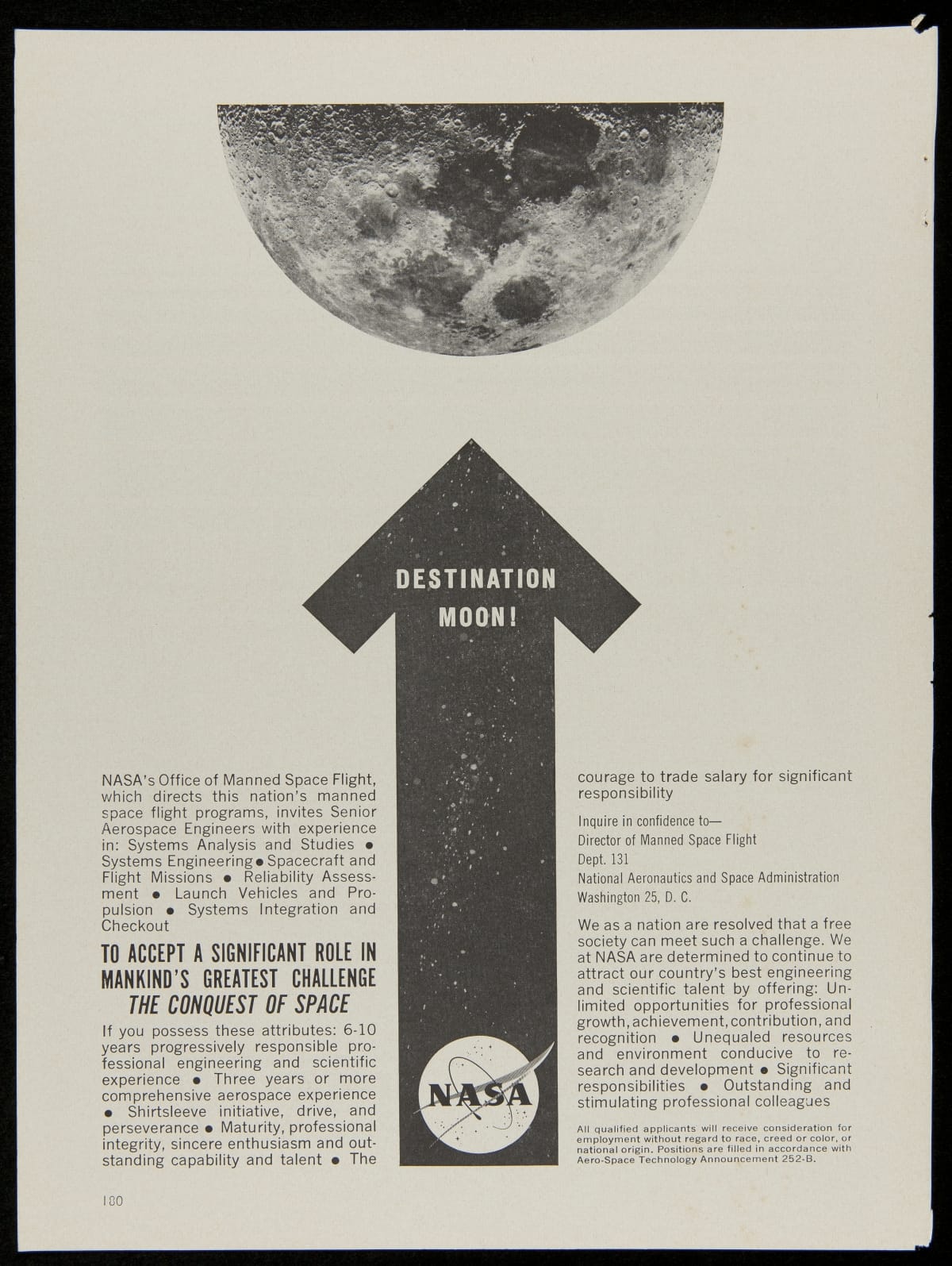
- Recruiting Advertisement for NASA, "Destination Moon!," July 1962 - President John F. Kennedy's vision to explore the "new frontier" of space ignited the public's imagination. It was also an overt Cold War strategy against the Soviet Union which launched the first man in space April 12, 1961. NASA published this ad series in 1962 to convince aerospace engineers and scientists to join them for the U.S. effort to conquer space.
- July 01, 1962
- Collections - Artifact
Recruiting Advertisement for NASA, "Destination Moon!," July 1962
President John F. Kennedy's vision to explore the "new frontier" of space ignited the public's imagination. It was also an overt Cold War strategy against the Soviet Union which launched the first man in space April 12, 1961. NASA published this ad series in 1962 to convince aerospace engineers and scientists to join them for the U.S. effort to conquer space.