
Search
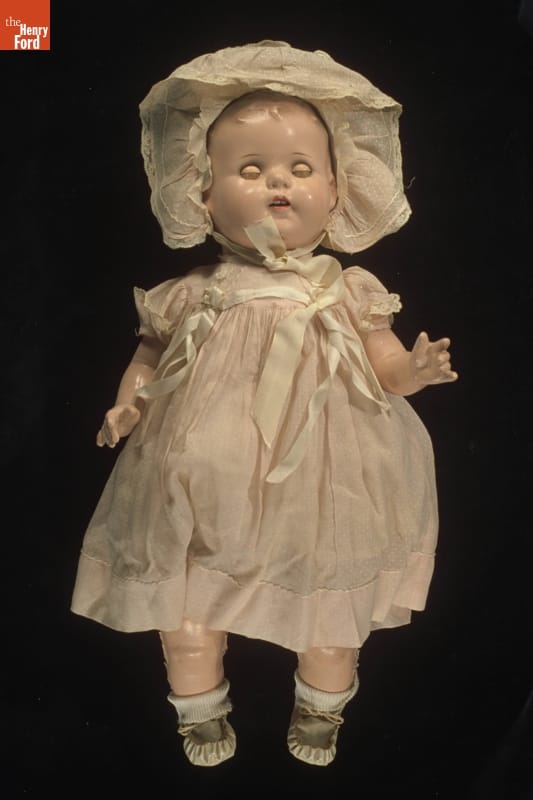
- Talking Baby Doll, 1910-1930 -
- 1910-1930
- Collections - Artifact
Talking Baby Doll, 1910-1930
- Edison Talking Doll, 1889-1890 - Thomas Edison's 1878 patent for a "phonographic" doll resulted in the production of about 100 "talking" dolls between 1889 and 1890. This doll "talked" by means of a scaled-down phonograph inside its body, which played nursery rhymes like "Mary Had a Little Lamb." Only made for a short time, the doll's mechanism was unreliable and the recorded voices scared children.

- 1889-1890
- Collections - Artifact
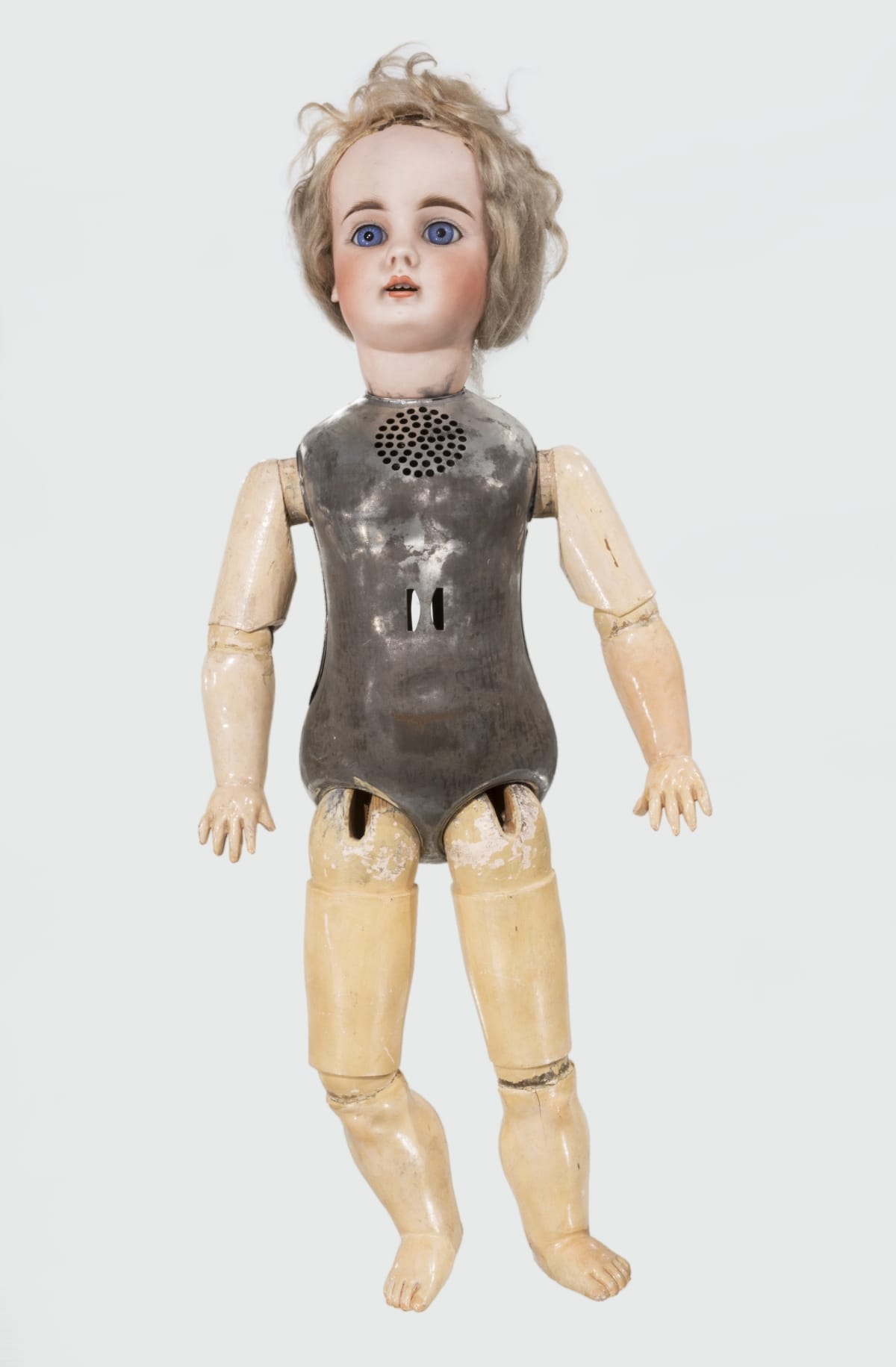
Edison Talking Doll, 1889-1890
Thomas Edison's 1878 patent for a "phonographic" doll resulted in the production of about 100 "talking" dolls between 1889 and 1890. This doll "talked" by means of a scaled-down phonograph inside its body, which played nursery rhymes like "Mary Had a Little Lamb." Only made for a short time, the doll's mechanism was unreliable and the recorded voices scared children.
- Edison Talking Doll, 1889-1890 - Thomas Edison's 1878 patent for a "phonographic" doll resulted in the production of about 100 "talking" dolls between 1889 and 1890. This doll "talked" by means of a scaled-down phonograph inside its body, which played nursery rhymes like "Mary Had a Little Lamb." Only made for a short time, the doll's mechanism was unreliable and the recorded voices scared children.
- 1889-1890
- Collections - Artifact
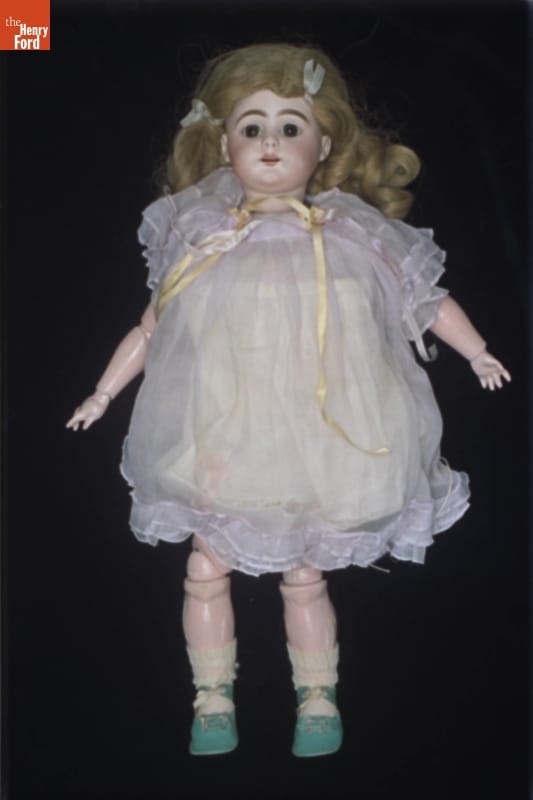
Edison Talking Doll, 1889-1890
Thomas Edison's 1878 patent for a "phonographic" doll resulted in the production of about 100 "talking" dolls between 1889 and 1890. This doll "talked" by means of a scaled-down phonograph inside its body, which played nursery rhymes like "Mary Had a Little Lamb." Only made for a short time, the doll's mechanism was unreliable and the recorded voices scared children.
- Edison Talking Doll, 1889-1890 - Thomas Edison's 1878 patent for a "phonographic" doll resulted in the production of about 100 "talking" dolls between 1889 and 1890. This doll "talked" by means of a scaled-down phonograph inside its body, which played nursery rhymes like "Mary Had a Little Lamb." Only made for a short time, the doll's mechanism was unreliable and the recorded voices scared children.
- 1889-1890
- Collections - Artifact
Edison Talking Doll, 1889-1890
Thomas Edison's 1878 patent for a "phonographic" doll resulted in the production of about 100 "talking" dolls between 1889 and 1890. This doll "talked" by means of a scaled-down phonograph inside its body, which played nursery rhymes like "Mary Had a Little Lamb." Only made for a short time, the doll's mechanism was unreliable and the recorded voices scared children.
- Edison Talking Doll Phonograph, 1888 - Thomas Edison's 1878 patent for a "phonographic" doll resulted in the production of about 100 "talking" dolls between 1889 and 1890. This doll "talked" by means of a scaled-down phonograph inside its body, which played nursery rhymes like "Mary Had a Little Lamb." Only made for a short time, the doll's mechanism was unreliable and the recorded voices scared children.
- 1888
- Collections - Artifact
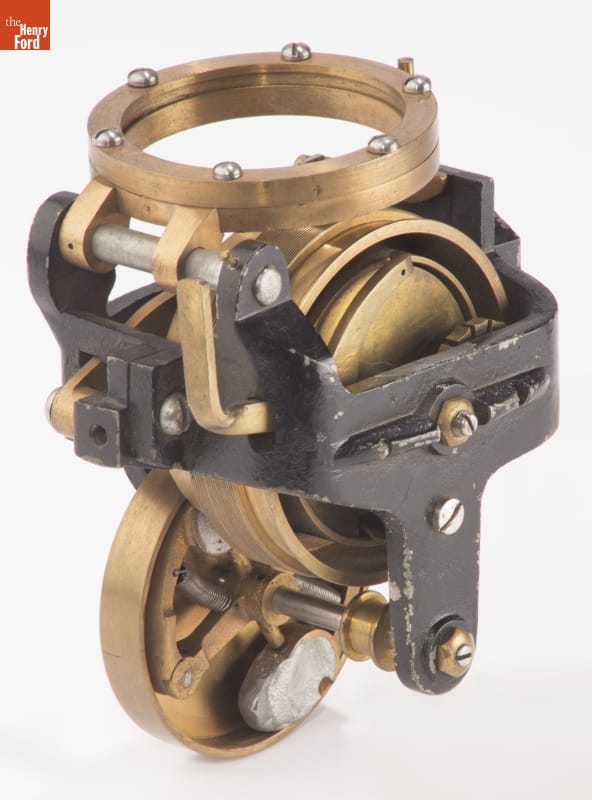
Edison Talking Doll Phonograph, 1888
Thomas Edison's 1878 patent for a "phonographic" doll resulted in the production of about 100 "talking" dolls between 1889 and 1890. This doll "talked" by means of a scaled-down phonograph inside its body, which played nursery rhymes like "Mary Had a Little Lamb." Only made for a short time, the doll's mechanism was unreliable and the recorded voices scared children.
- Edison Talking Doll Phonograph, 1889-1890 - Thomas Edison's 1878 patent for a "phonographic" doll resulted in the production of about 100 "talking" dolls between 1889 and 1890. This doll "talked" by means of a scaled-down phonograph inside its body, which played nursery rhymes like "Mary Had a Little Lamb." Only made for a short time, the doll's mechanism was unreliable and the recorded voices scared children.
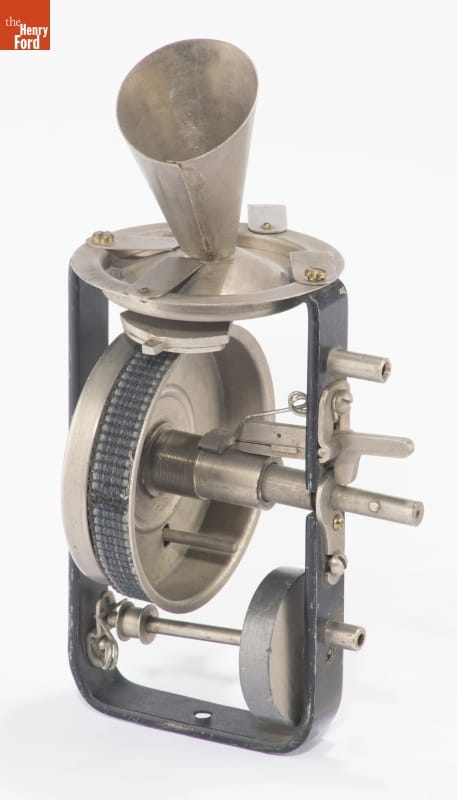
- 1889-1890
- Collections - Artifact
Edison Talking Doll Phonograph, 1889-1890
Thomas Edison's 1878 patent for a "phonographic" doll resulted in the production of about 100 "talking" dolls between 1889 and 1890. This doll "talked" by means of a scaled-down phonograph inside its body, which played nursery rhymes like "Mary Had a Little Lamb." Only made for a short time, the doll's mechanism was unreliable and the recorded voices scared children.
- Edison Talking Doll Phonograph, 1889-1890 - Thomas Edison's 1878 patent for a "phonographic" doll resulted in the production of about 100 "talking" dolls between 1889 and 1890. This doll "talked" by means of a scaled-down phonograph inside its body, which played nursery rhymes like "Mary Had a Little Lamb." Only made for a short time, the doll's mechanism was unreliable and the recorded voices scared children.
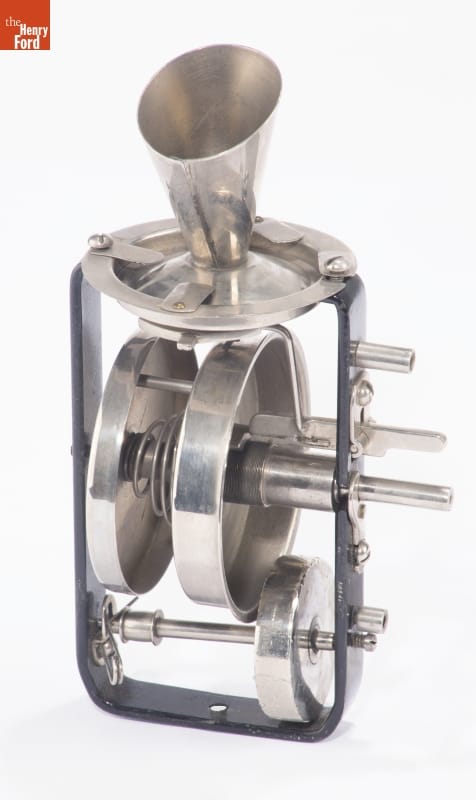
- 1889-1890
- Collections - Artifact
Edison Talking Doll Phonograph, 1889-1890
Thomas Edison's 1878 patent for a "phonographic" doll resulted in the production of about 100 "talking" dolls between 1889 and 1890. This doll "talked" by means of a scaled-down phonograph inside its body, which played nursery rhymes like "Mary Had a Little Lamb." Only made for a short time, the doll's mechanism was unreliable and the recorded voices scared children.
- Edison Talking Doll Phonograph, 1889-1890 - Thomas Edison's 1878 patent for a "phonographic" doll resulted in the production of about 100 "talking" dolls between 1889 and 1890. This doll "talked" by means of a scaled-down phonograph inside its body, which played nursery rhymes like "Mary Had a Little Lamb." Only made for a short time, the doll's mechanism was unreliable and the recorded voices scared children.
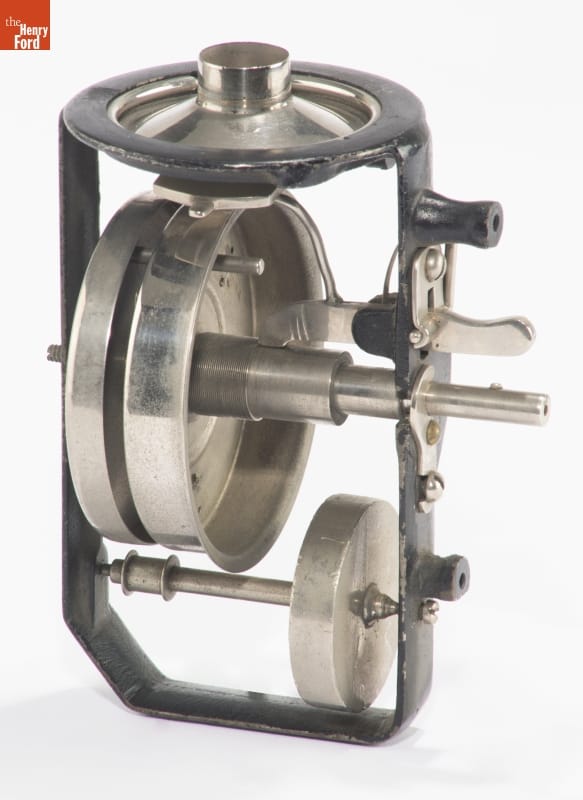
- 1889-1890
- Collections - Artifact
Edison Talking Doll Phonograph, 1889-1890
Thomas Edison's 1878 patent for a "phonographic" doll resulted in the production of about 100 "talking" dolls between 1889 and 1890. This doll "talked" by means of a scaled-down phonograph inside its body, which played nursery rhymes like "Mary Had a Little Lamb." Only made for a short time, the doll's mechanism was unreliable and the recorded voices scared children.
- "Chatty Cathy" Talking Doll, circa 1963 - The Mattel Toy Company, owned by Elliott and Ruth Handler, developed some of the biggest-selling toys in American history. Chatty Cathy, with its pull string mechanism connected to a simple phonograph record inside the doll, was the first successful talking doll. Introduced in 1960, the doll "spoke" eleven phrases. By 1963, eighteen phrases. Chatty Baby and Charmin' Chatty dolls followed, as well as pull-string talking puppets and soft toys.
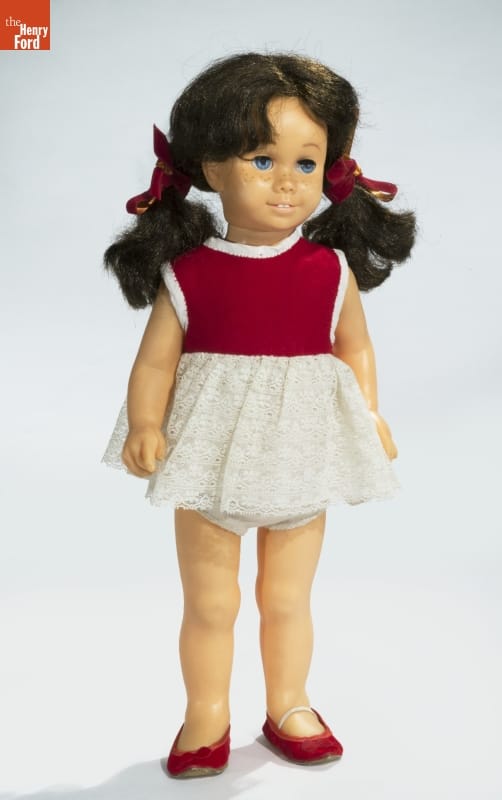
- circa 1963
- Collections - Artifact
"Chatty Cathy" Talking Doll, circa 1963
The Mattel Toy Company, owned by Elliott and Ruth Handler, developed some of the biggest-selling toys in American history. Chatty Cathy, with its pull string mechanism connected to a simple phonograph record inside the doll, was the first successful talking doll. Introduced in 1960, the doll "spoke" eleven phrases. By 1963, eighteen phrases. Chatty Baby and Charmin' Chatty dolls followed, as well as pull-string talking puppets and soft toys.
- Mandrel for Edison Talking Doll Phonograph, 1888-1890 - Thomas Edison's 1878 patent for a "phonographic" doll resulted in the production of about 100 "talking" dolls between 1889 and 1890. This doll "talked" by means of a scaled-down phonograph inside its body, which played nursery rhymes like "Mary Had a Little Lamb." Only made for a short time, the doll's mechanism was unreliable and the recorded voices scared children.
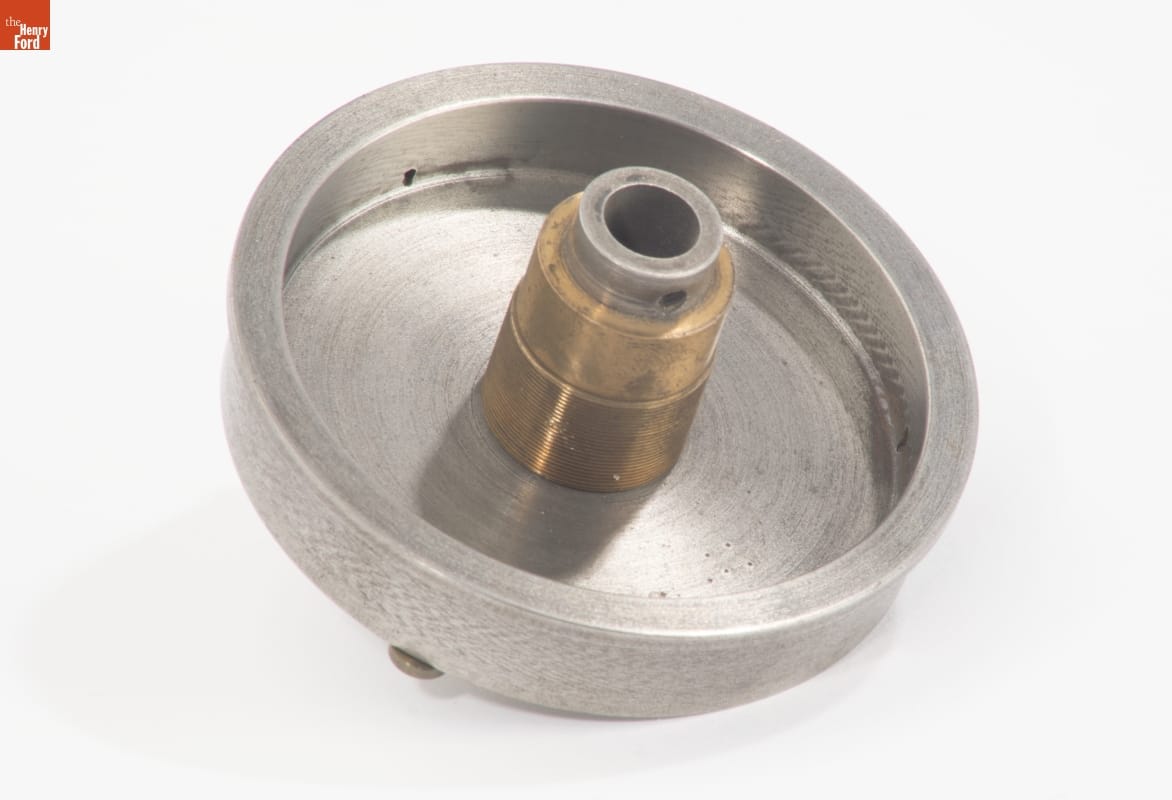
- 1888-1890
- Collections - Artifact
Mandrel for Edison Talking Doll Phonograph, 1888-1890
Thomas Edison's 1878 patent for a "phonographic" doll resulted in the production of about 100 "talking" dolls between 1889 and 1890. This doll "talked" by means of a scaled-down phonograph inside its body, which played nursery rhymes like "Mary Had a Little Lamb." Only made for a short time, the doll's mechanism was unreliable and the recorded voices scared children.