
Search
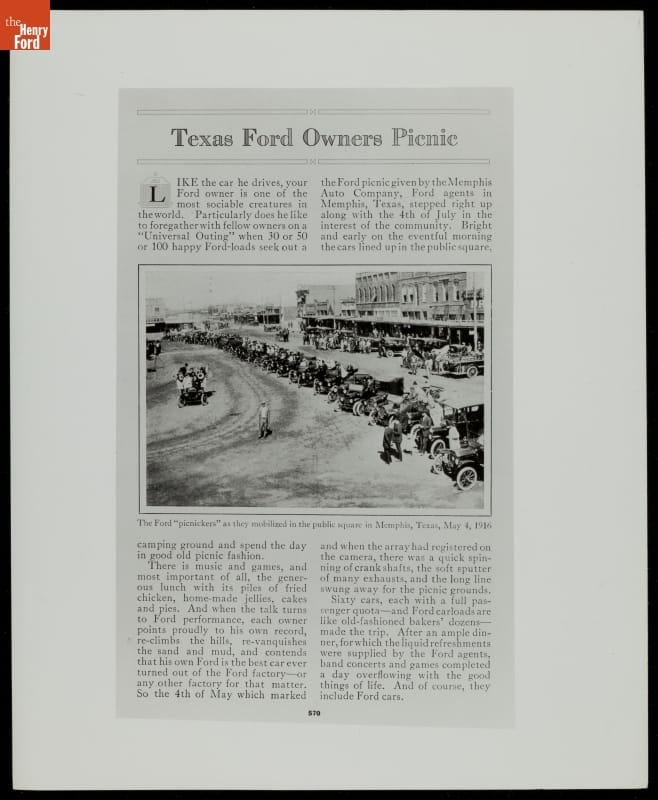
- "Texas Ford Owners Picnic," Memphis, Texas, May 4, 1916 - First printed in 1908, <em>Ford Times</em> was published by Ford Motor Company and distributed to readers free of charge. Early issues targeted Ford dealers, but editors later broadened the magazine's content to appeal to Ford owners and potential buyers. This article reported on a May 1916 picnic in Memphis, Texas. Sixty Model Ts, each loaded with passengers, participated in the event.
- May 04, 1916
- Collections - Artifact
"Texas Ford Owners Picnic," Memphis, Texas, May 4, 1916
First printed in 1908, Ford Times was published by Ford Motor Company and distributed to readers free of charge. Early issues targeted Ford dealers, but editors later broadened the magazine's content to appeal to Ford owners and potential buyers. This article reported on a May 1916 picnic in Memphis, Texas. Sixty Model Ts, each loaded with passengers, participated in the event.
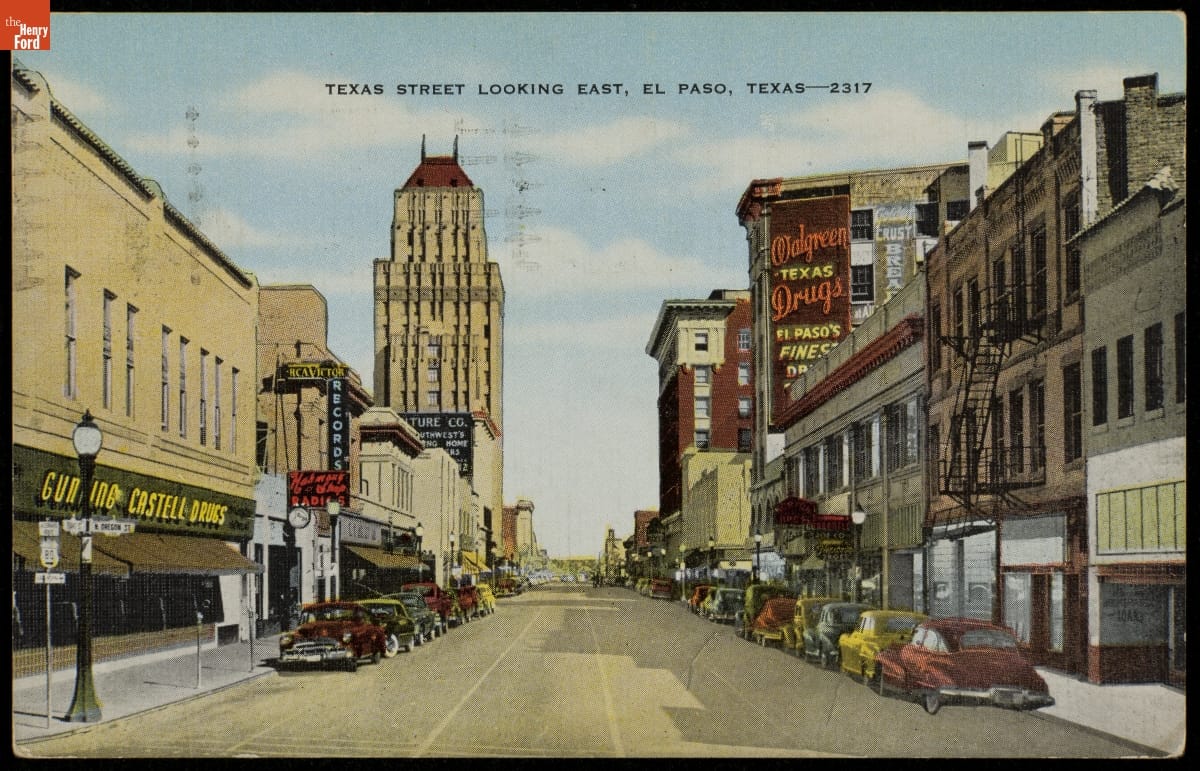
- Postcard, "Texas Street Looking East, El Paso, Texas," circa 1950 - El Paso, Texas, is part of an international metropolitan area along the Rio Grande, which divides Mexico and the United States. The senders of this colorful postcard from around 1950 also planned to visit Ciudad Juarez, just across the river in Mexico.
- December 21, 1951
- Collections - Artifact
Postcard, "Texas Street Looking East, El Paso, Texas," circa 1950
El Paso, Texas, is part of an international metropolitan area along the Rio Grande, which divides Mexico and the United States. The senders of this colorful postcard from around 1950 also planned to visit Ciudad Juarez, just across the river in Mexico.
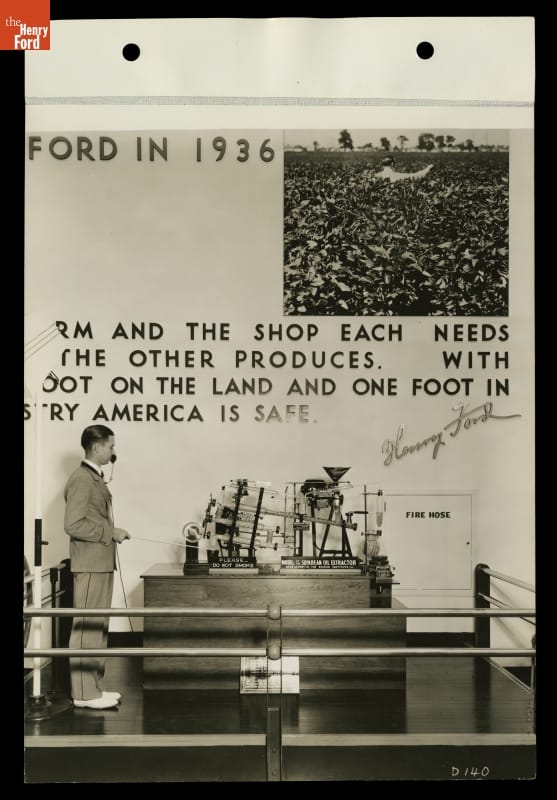
- Presenting the Soybean Extractor, Texas Centennial Central Exposition, Dallas, Texas, 1936 - Ford promoted soybeans at the World Fairs and Exposition of the 1930s. In this image, a presenter at the Texas Centennial Exposition demonstrates how the soybean extraction process works with a model of a soybean extractor.
- 1936
- Collections - Artifact
Presenting the Soybean Extractor, Texas Centennial Central Exposition, Dallas, Texas, 1936
Ford promoted soybeans at the World Fairs and Exposition of the 1930s. In this image, a presenter at the Texas Centennial Exposition demonstrates how the soybean extraction process works with a model of a soybean extractor.
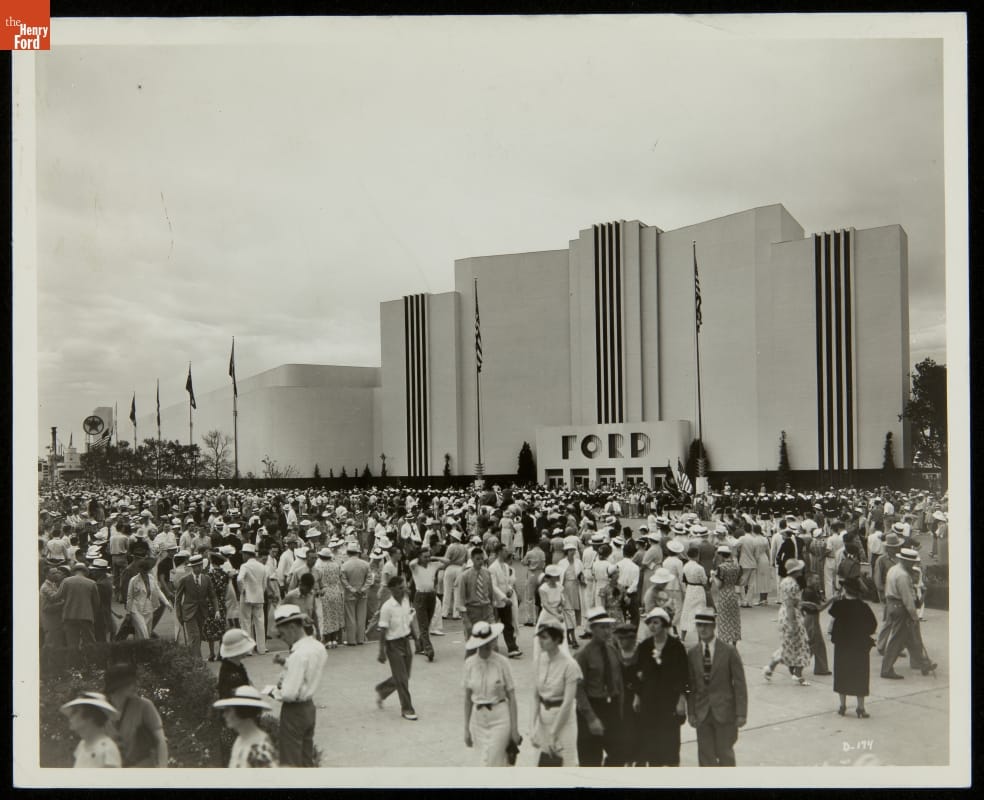
- Ford Exhibit Building, Texas Centennial Central Exposition, Dallas, Texas, 1936 - The Texas Centennial Exposition in Dallas celebrated the frontier past of Texas, especially its 1836 victory over Mexico. The Ford Motor Company Pavilion, among the largest of industrial firms' buildings at the fair, was designed by industrial designer Walter Dorwin Teague. Its interior displays focused on how agriculture and natural resources of the Southwest could be transformed into car parts.
- 1936
- Collections - Artifact
Ford Exhibit Building, Texas Centennial Central Exposition, Dallas, Texas, 1936
The Texas Centennial Exposition in Dallas celebrated the frontier past of Texas, especially its 1836 victory over Mexico. The Ford Motor Company Pavilion, among the largest of industrial firms' buildings at the fair, was designed by industrial designer Walter Dorwin Teague. Its interior displays focused on how agriculture and natural resources of the Southwest could be transformed into car parts.
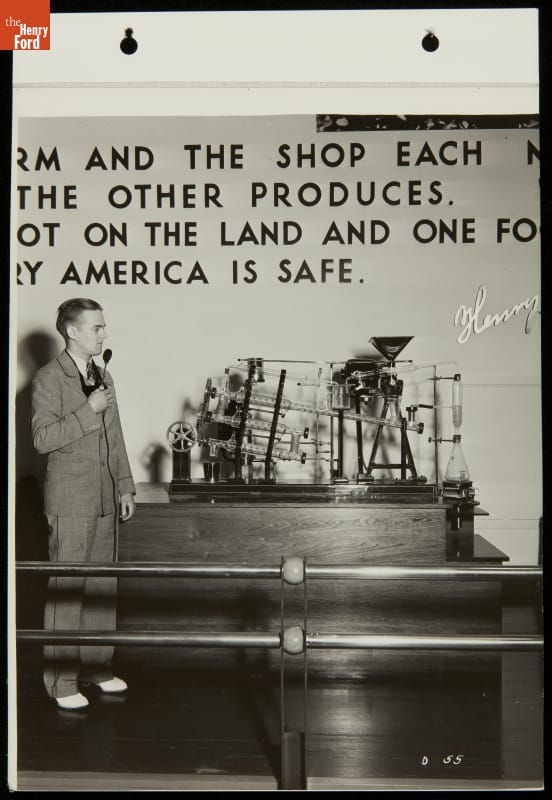
- Presenting the Soybean Extractor, Texas Centennial Central Exposition, Dallas, Texas, 1936 - Ford promoted soybeans at the World Fairs and Exposition of the 1930s. In this image, a presenter at the Texas Centennial Exposition demonstrates how the soybean extraction process works with a model of a soybean extractor.
- 1936
- Collections - Artifact
Presenting the Soybean Extractor, Texas Centennial Central Exposition, Dallas, Texas, 1936
Ford promoted soybeans at the World Fairs and Exposition of the 1930s. In this image, a presenter at the Texas Centennial Exposition demonstrates how the soybean extraction process works with a model of a soybean extractor.
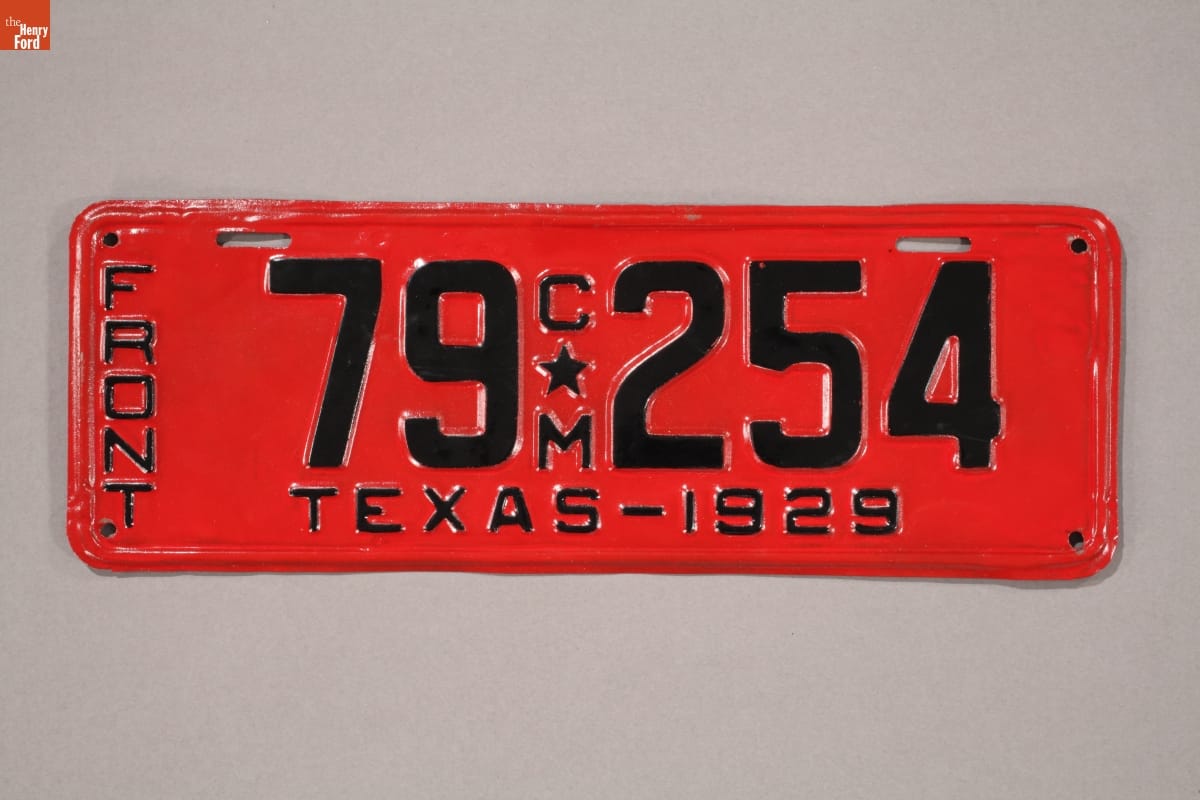
- Texas License Plate, 1929 - Early state-issued license plates were made of porcelain-coated iron. Later, states stamped tin, steel, or even copper to make plates. During the Second World War several states used fiberboard. Plate colors varied and some states added symbols, mottoes, or other design elements. Today, states use reflective sheeting to coat a standard-sized aluminum blank which is then stamped and decorated.
- 1929
- Collections - Artifact
Texas License Plate, 1929
Early state-issued license plates were made of porcelain-coated iron. Later, states stamped tin, steel, or even copper to make plates. During the Second World War several states used fiberboard. Plate colors varied and some states added symbols, mottoes, or other design elements. Today, states use reflective sheeting to coat a standard-sized aluminum blank which is then stamped and decorated.
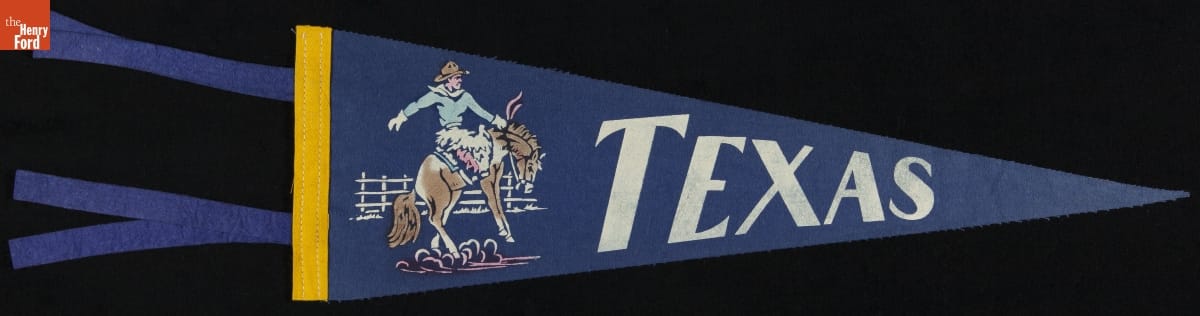
- Pennant, "Texas," 1940-1965 - Tourists purchase simple, inexpensive souvenirs as proof of their travels. These mementos transport vacationers back to the places they visited and the things they did. In the mid-20th century, felt pennants were trendy. Many pennants include a representative image that define a city, state or region. This pennant features an image of a cowboy on a bucking bronco to remind vacationers of Texas's western heritage.
- 1940-1965
- Collections - Artifact
Pennant, "Texas," 1940-1965
Tourists purchase simple, inexpensive souvenirs as proof of their travels. These mementos transport vacationers back to the places they visited and the things they did. In the mid-20th century, felt pennants were trendy. Many pennants include a representative image that define a city, state or region. This pennant features an image of a cowboy on a bucking bronco to remind vacationers of Texas's western heritage.
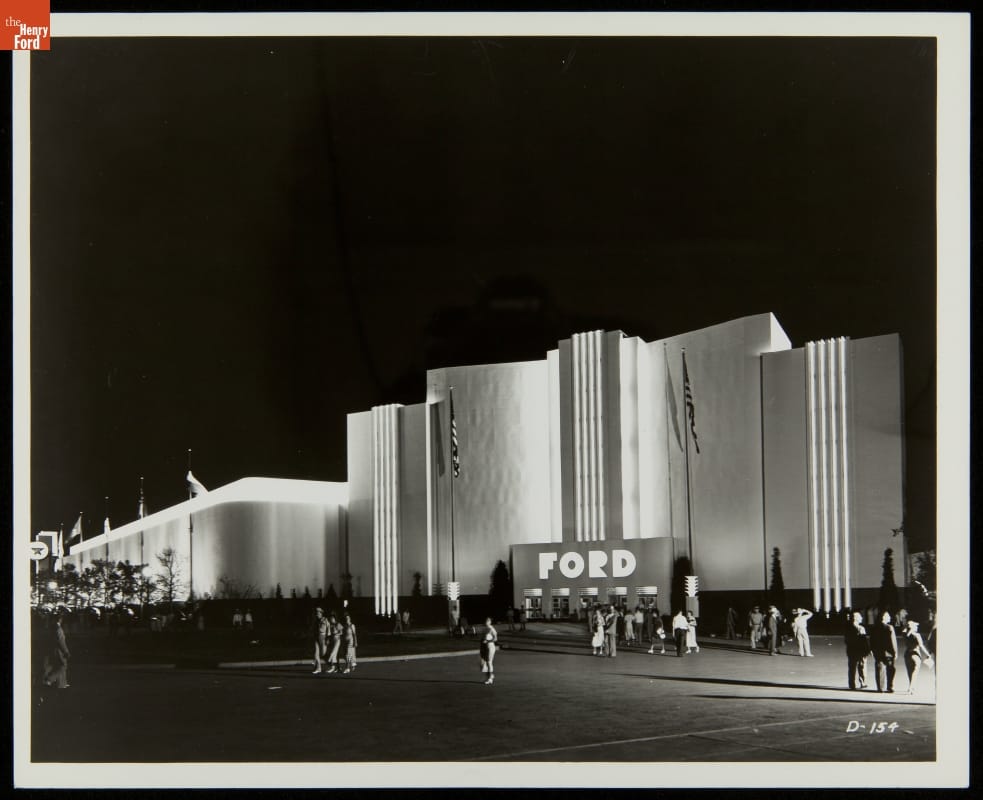
- Ford Exhibit Building at Night, Texas Centennial Central Exposition, Dallas, Texas, 1936 - The Texas Centennial Exposition in Dallas celebrated the frontier past of Texas, especially its 1836 victory over Mexico. The Ford Motor Company Pavilion, among the largest of industrial firms' buildings at the fair, was designed by industrial designer Walter Dorwin Teague. Its interior displays focused on how agriculture and natural resources of the Southwest could be transformed into car parts.
- 1936
- Collections - Artifact
Ford Exhibit Building at Night, Texas Centennial Central Exposition, Dallas, Texas, 1936
The Texas Centennial Exposition in Dallas celebrated the frontier past of Texas, especially its 1836 victory over Mexico. The Ford Motor Company Pavilion, among the largest of industrial firms' buildings at the fair, was designed by industrial designer Walter Dorwin Teague. Its interior displays focused on how agriculture and natural resources of the Southwest could be transformed into car parts.
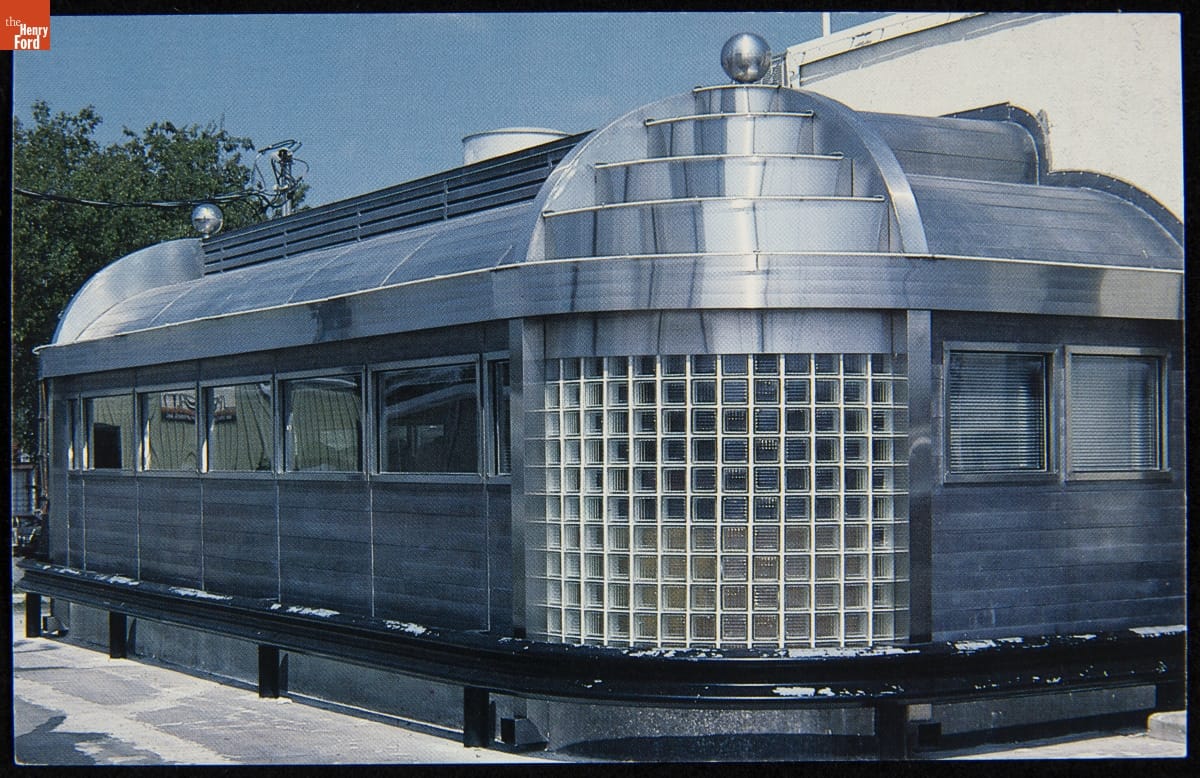
- Threadgill's Restaurant, Austin, Texas, 1982 -
- 1982
- Collections - Artifact
Threadgill's Restaurant, Austin, Texas, 1982
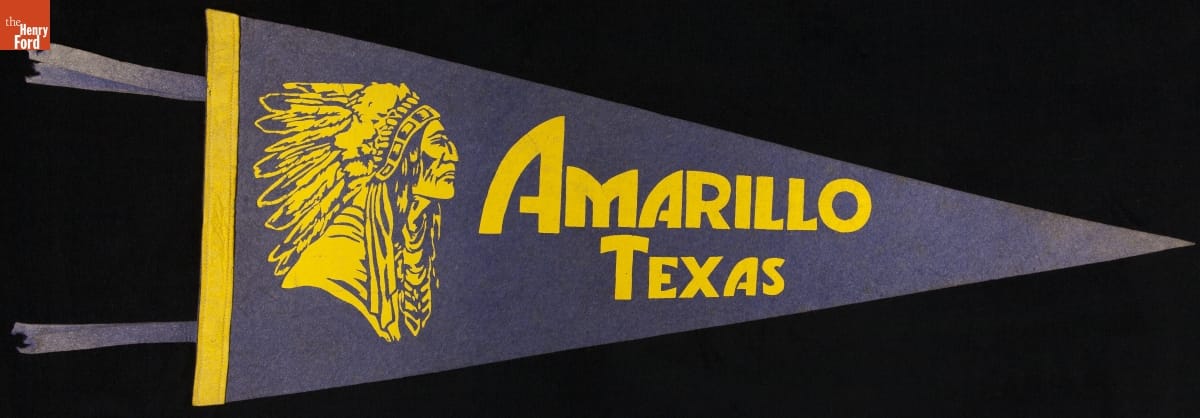
- Pennant, "Amarillo, Texas," 1940-1965 - Souvenirs provide tangible proof of a tourist's travels. They also expose the prejudices of the time. This mid-20th century pennant uses a stereotyped image of a Native American. In addition to being culturally incorrect -- feathered headdresses were used by only a small number of Plains tribes -- images like this simply reinforced the discriminatory biases held by many non-Native Americans, purchasers of these souvenirs.
- 1940-1965
- Collections - Artifact
Pennant, "Amarillo, Texas," 1940-1965
Souvenirs provide tangible proof of a tourist's travels. They also expose the prejudices of the time. This mid-20th century pennant uses a stereotyped image of a Native American. In addition to being culturally incorrect -- feathered headdresses were used by only a small number of Plains tribes -- images like this simply reinforced the discriminatory biases held by many non-Native Americans, purchasers of these souvenirs.