
Search
- Letter from Thayendanegea (Joseph Brant) to James Monroe, November 29, 1784 -
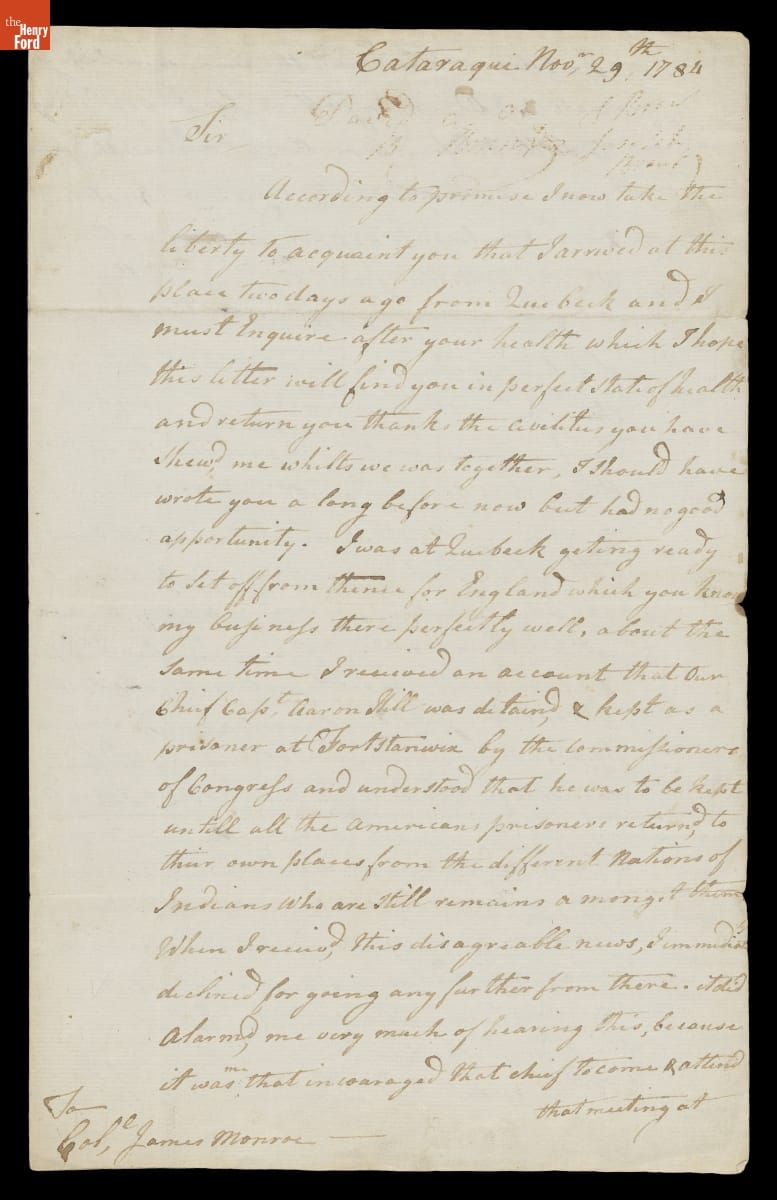
- November 29, 1784
- Collections - Artifact
Letter from Thayendanegea (Joseph Brant) to James Monroe, November 29, 1784
- Conflicting Connections: Native Nations and the Revolution - Two sides fought the Revolutionary War — the Patriots and the British. One was angry about not being represented in Parliament. The other became intent on keeping the colonies under British rule. Both demanded control of North American land. But another group is often left out of the historical conversation — the Indigenous nations who had called this land home for millennia. Seeking to protect their lands, Indigenous nations fought on either side.

- October 02, 2026
- Collections - Set
Conflicting Connections: Native Nations and the Revolution
Two sides fought the Revolutionary War — the Patriots and the British. One was angry about not being represented in Parliament. The other became intent on keeping the colonies under British rule. Both demanded control of North American land. But another group is often left out of the historical conversation — the Indigenous nations who had called this land home for millennia. Seeking to protect their lands, Indigenous nations fought on either side.
- Brant Decoy, 1883-1894 -
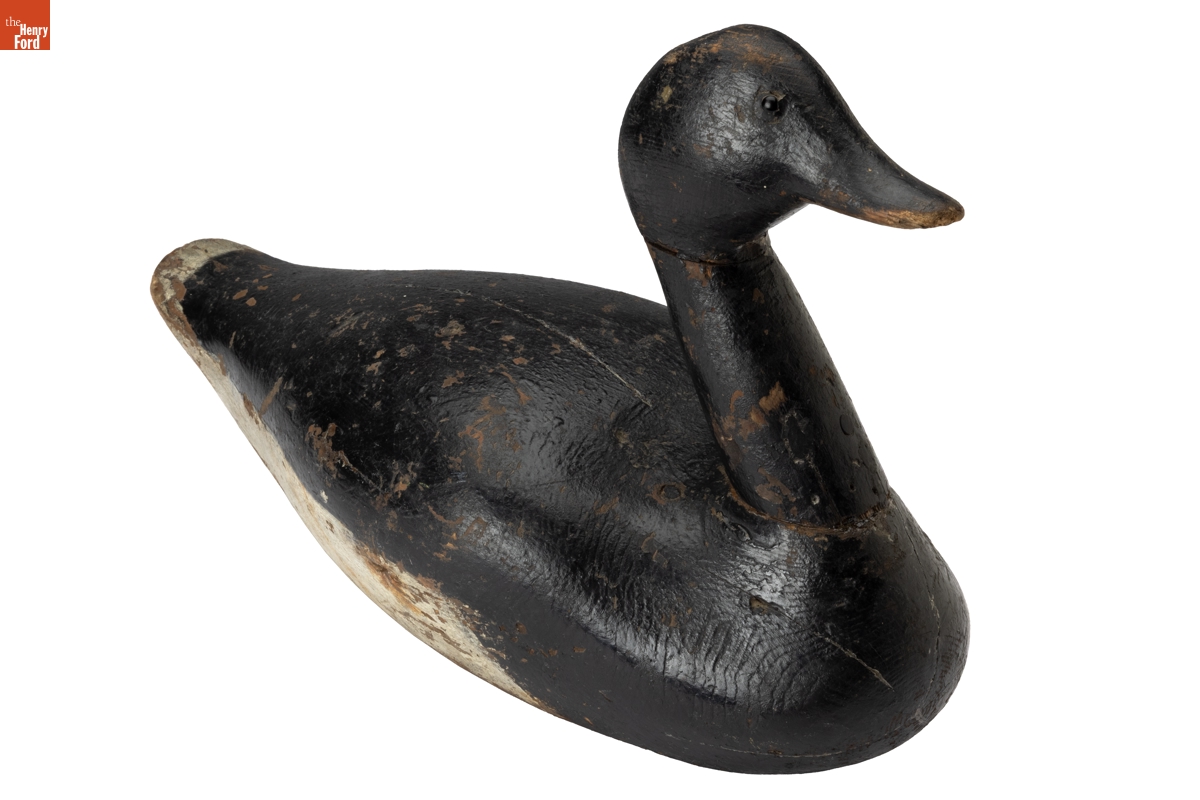
- 1883-1894
- Collections - Artifact
Brant Decoy, 1883-1894
- Brant Decoy, circa 1860 -
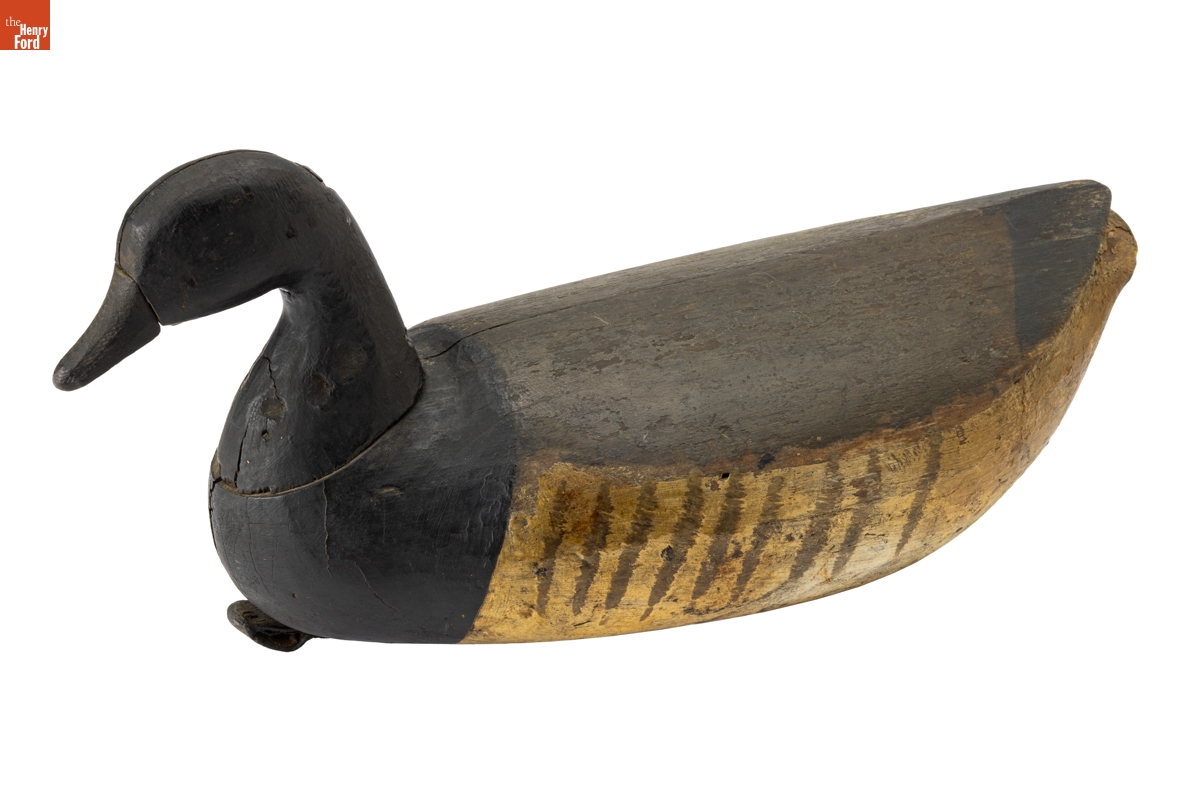
- circa 1860
- Collections - Artifact
Brant Decoy, circa 1860
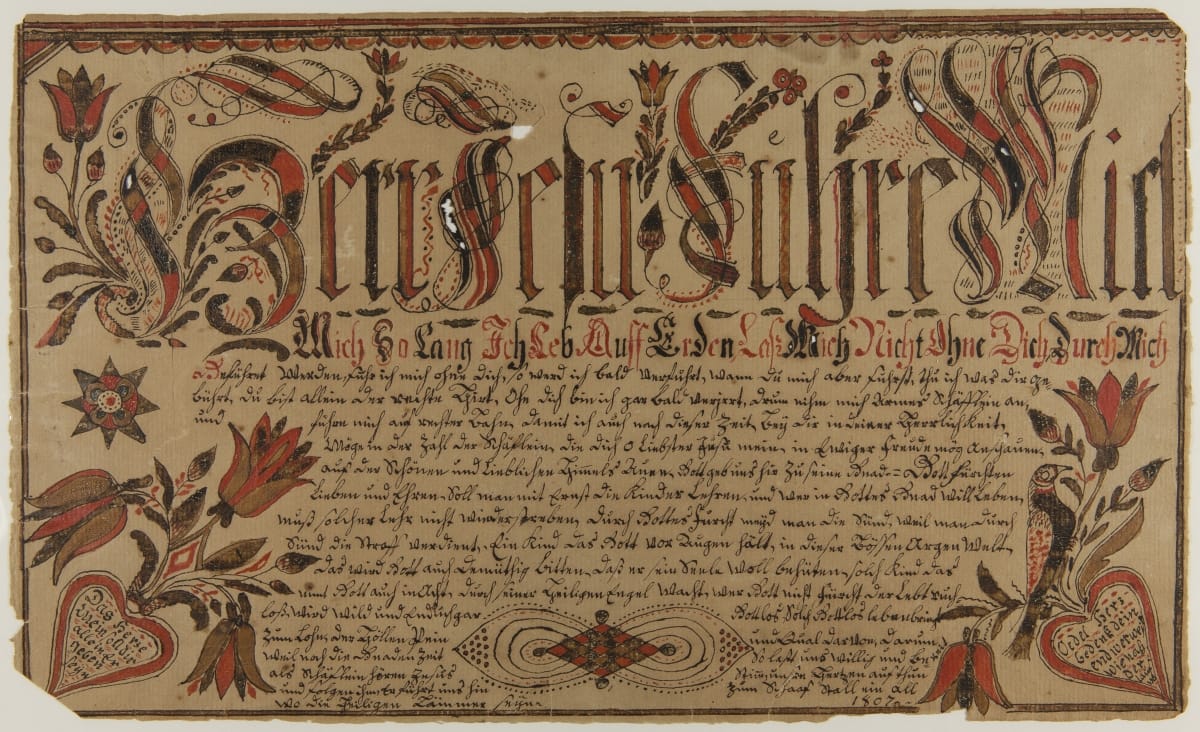
- Fraktur, 1807 - Early German immigrants created decorative documents, known as Fraktur, for a variety of reasons. Many commemorated a child's birth and baptism. Others were made as keepsakes, symbols of achievement or expressions of the immigrant's heritage or religion. These documents usually incorporated intricate lettering, elaborate borders and colorful drawings. In 1807, Susanna Hubner created this manuscript and embellished it with stylized flowers, hearts and a bird.
- August 29, 1807
- Collections - Artifact
Fraktur, 1807
Early German immigrants created decorative documents, known as Fraktur, for a variety of reasons. Many commemorated a child's birth and baptism. Others were made as keepsakes, symbols of achievement or expressions of the immigrant's heritage or religion. These documents usually incorporated intricate lettering, elaborate borders and colorful drawings. In 1807, Susanna Hubner created this manuscript and embellished it with stylized flowers, hearts and a bird.
- Joseph's Coat Quilt, circa 1890 -
- circa 1890
- Collections - Artifact
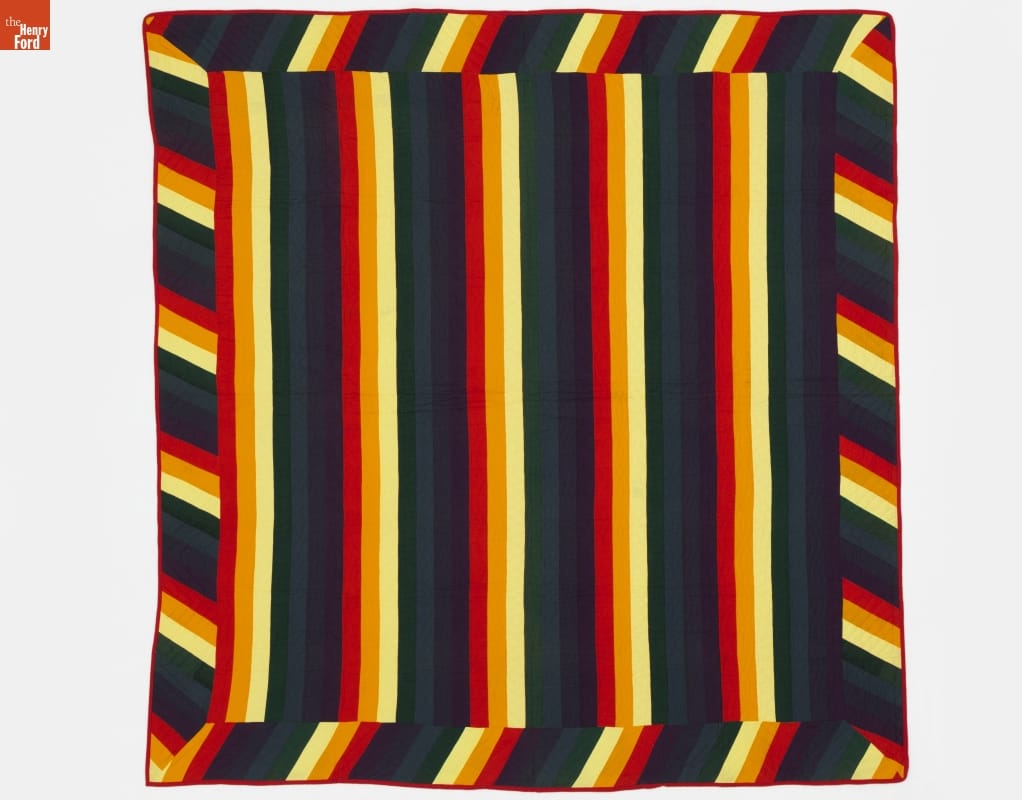
Joseph's Coat Quilt, circa 1890
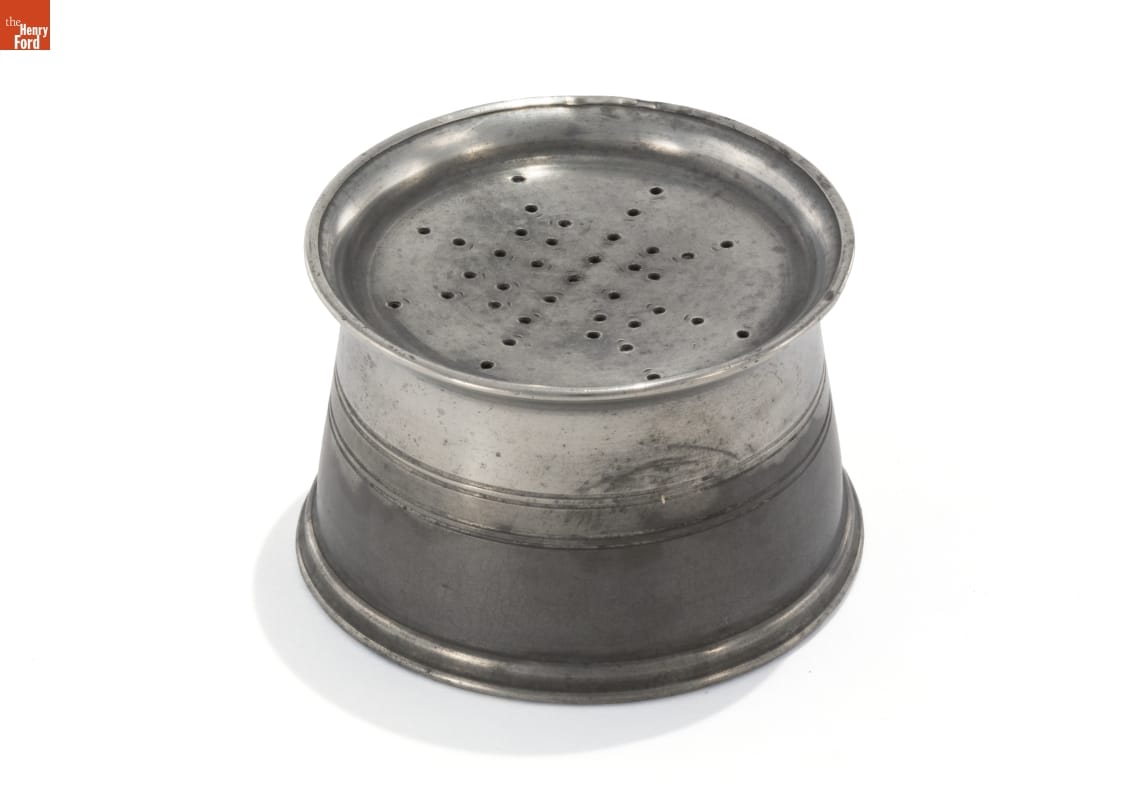
- Sander, 1807-1856 - Writing with a quill or metal nib pen can be messy. Ink could smear with the slightest touch. This sander held sand or powder that writers sprinkled onto the paper to absorb wet ink. Once the ink dried, users poured the powder back into the shaker-like container. By the late 1800s, inexpensive and easy-to-use ink blotters replaced the sander and its powder.
- 1807-1856
- Collections - Artifact
Sander, 1807-1856
Writing with a quill or metal nib pen can be messy. Ink could smear with the slightest touch. This sander held sand or powder that writers sprinkled onto the paper to absorb wet ink. Once the ink dried, users poured the powder back into the shaker-like container. By the late 1800s, inexpensive and easy-to-use ink blotters replaced the sander and its powder.
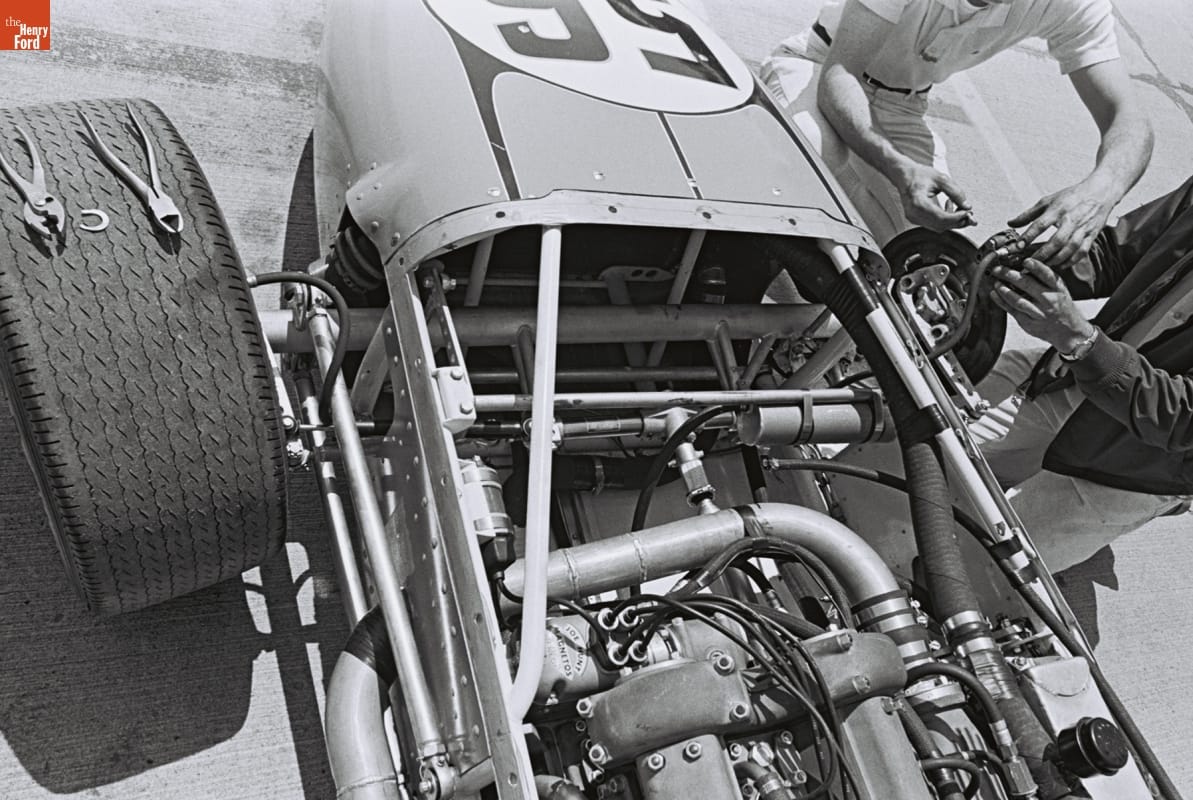
- 1967 Indianapolis 500 -- Item 1743 - Dave Friedman captured and preserved auto racing history through his photography. His work -- and his collection of works by other photographers -- documents key races, cars, and drivers. This shot shows events surrounding the 1967 Indianapolis 500. Parnelli Jones dominated with the turbine-powered #40 car, but a bearing failed him with four laps to go. A.J. Foyt won with the #14 Coyote-Ford.
- May 01, 1967
- Collections - Artifact
1967 Indianapolis 500 -- Item 1743
Dave Friedman captured and preserved auto racing history through his photography. His work -- and his collection of works by other photographers -- documents key races, cars, and drivers. This shot shows events surrounding the 1967 Indianapolis 500. Parnelli Jones dominated with the turbine-powered #40 car, but a bearing failed him with four laps to go. A.J. Foyt won with the #14 Coyote-Ford.
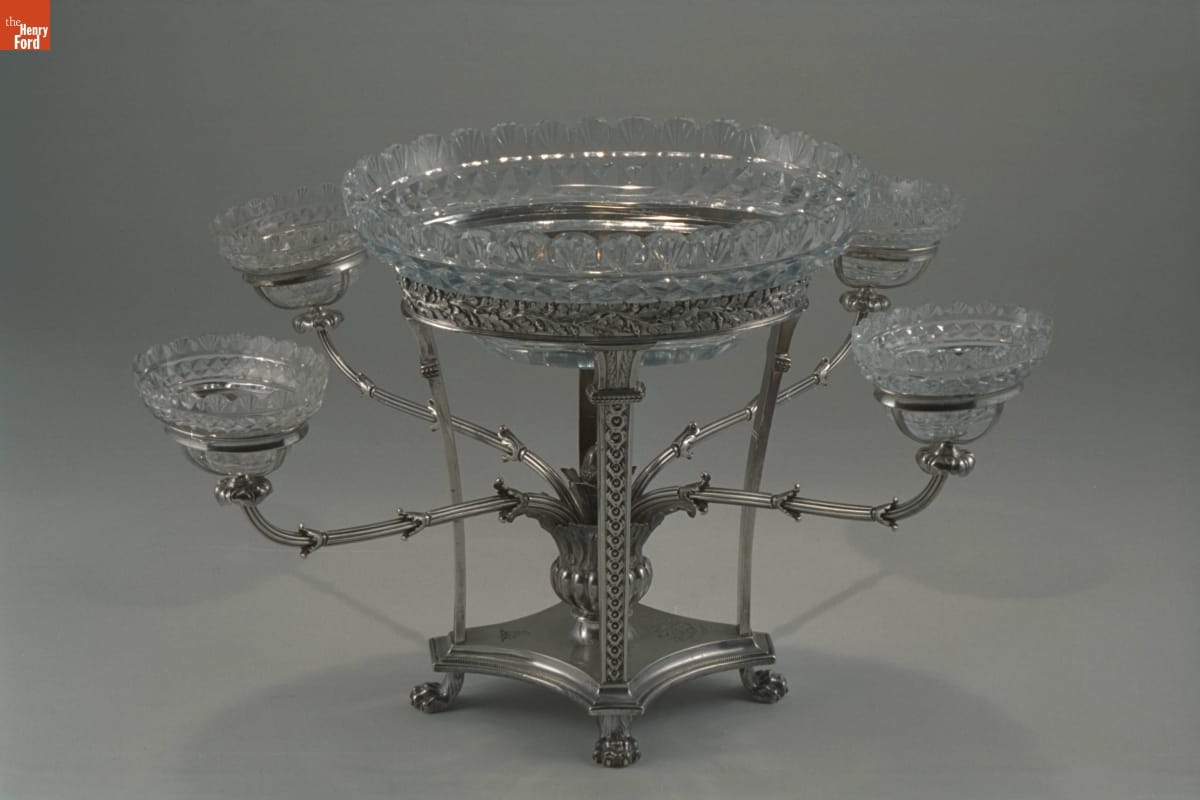
- Epergne, 1807-1808 - Epergnes were used as centerpieces on formal dining room tables. During a meal they could hold sweetmeats or fruit. At other times the epergne may be festooned with flowers as a decorative piece. This object descended through the Wichicote family of Britain, whose motto, "Juste et Droite" meaning just and correct, is engraved on the base.
- 1807-1808
- Collections - Artifact
Epergne, 1807-1808
Epergnes were used as centerpieces on formal dining room tables. During a meal they could hold sweetmeats or fruit. At other times the epergne may be festooned with flowers as a decorative piece. This object descended through the Wichicote family of Britain, whose motto, "Juste et Droite" meaning just and correct, is engraved on the base.
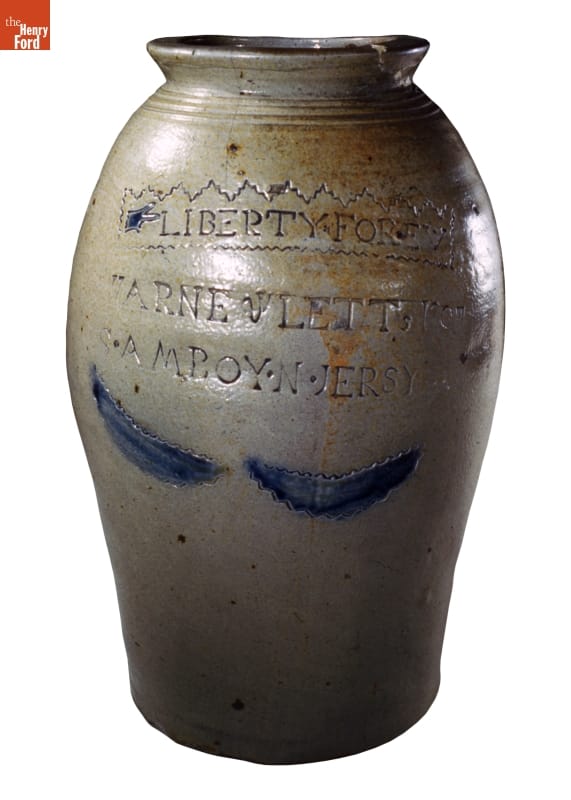
- Stoneware Jar, 1807 - This jar was made of a durable, leak-proof pottery called stoneware. The orange-peel-like outer glaze was created when the potter threw handfuls of common rock salt into a white-hot kiln during the piece's firing. Salt-glazed stoneware pieces were decorated with an array of designs, including the inscription, "LIBERTY FOREV" (probably implying "Liberty Forever"), on this piece.
- 1807
- Collections - Artifact
Stoneware Jar, 1807
This jar was made of a durable, leak-proof pottery called stoneware. The orange-peel-like outer glaze was created when the potter threw handfuls of common rock salt into a white-hot kiln during the piece's firing. Salt-glazed stoneware pieces were decorated with an array of designs, including the inscription, "LIBERTY FOREV" (probably implying "Liberty Forever"), on this piece.