
Search
- Henry Ford Museum Staff in Bicentennial Uniforms, 1975 -
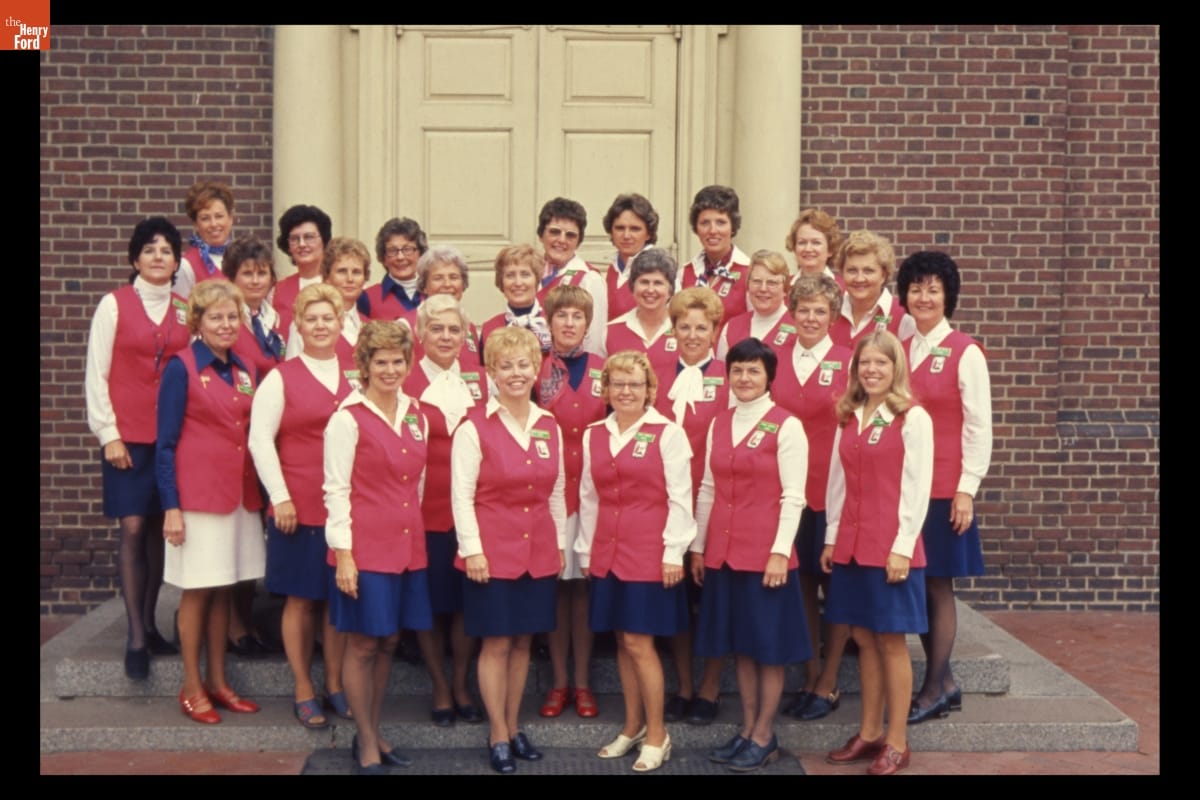
- September 16, 1975
- Collections - Artifact
Henry Ford Museum Staff in Bicentennial Uniforms, 1975
- Henry Ford Museum Staff Studying Early Music Manuscripts, 1951 -
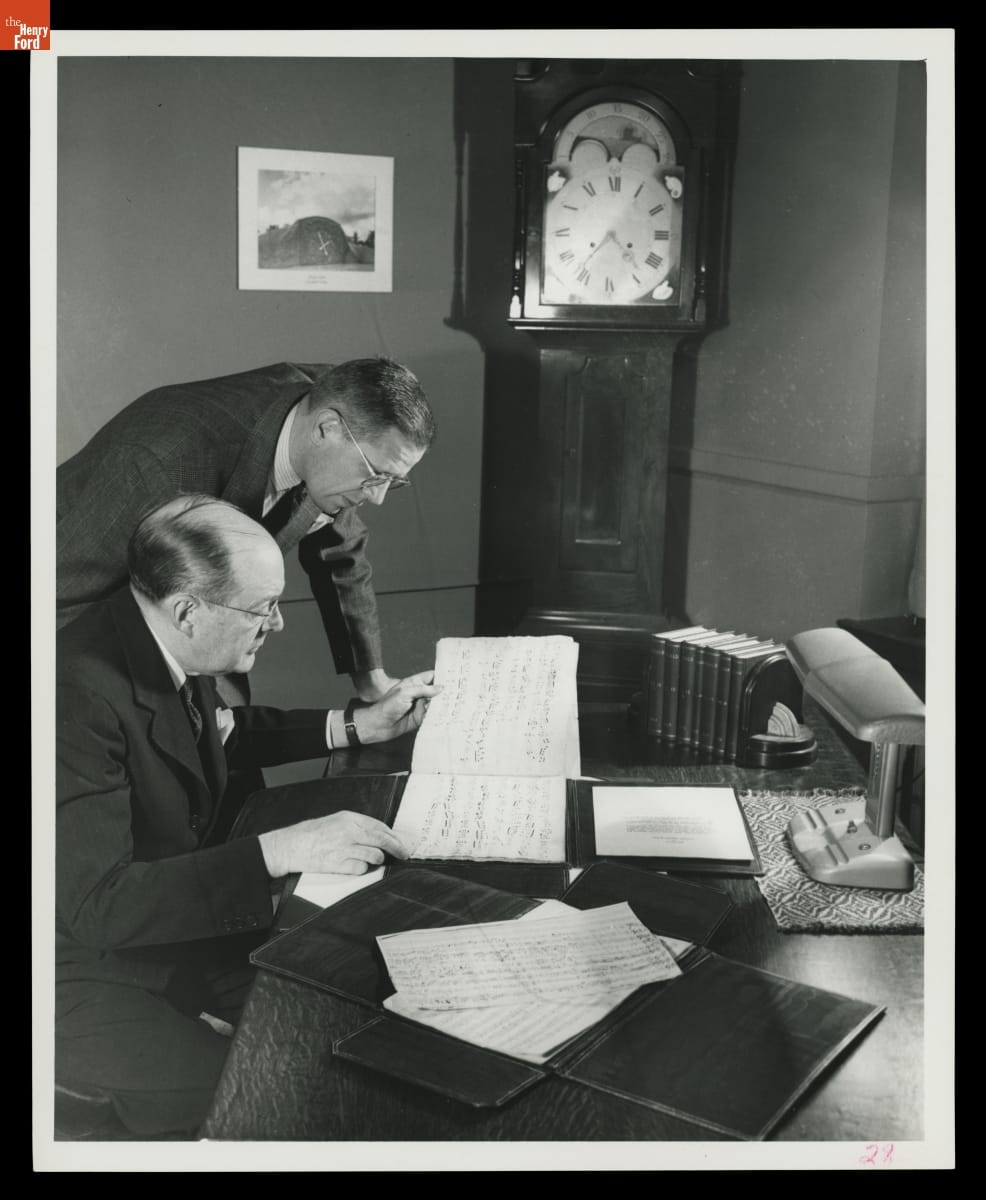
- 1951
- Collections - Artifact
Henry Ford Museum Staff Studying Early Music Manuscripts, 1951
- Staff at Opening of the Exhibit, "Henry Ford: A Personal History," in Henry Ford Museum, May 1953 - Henry Ford himself was the focus of <EM>Henry Ford: A Personal History</EM>. Opened in 1953 during Ford Motor Company's 50th anniversary, the exhibit included artifacts like Westinghouse steam engine No. 345, the fifteen millionth Model T, and a re-creation of Ford's Highland Park office using original furnishings. It was among the museum's first major additions after Ford's death in 1947.
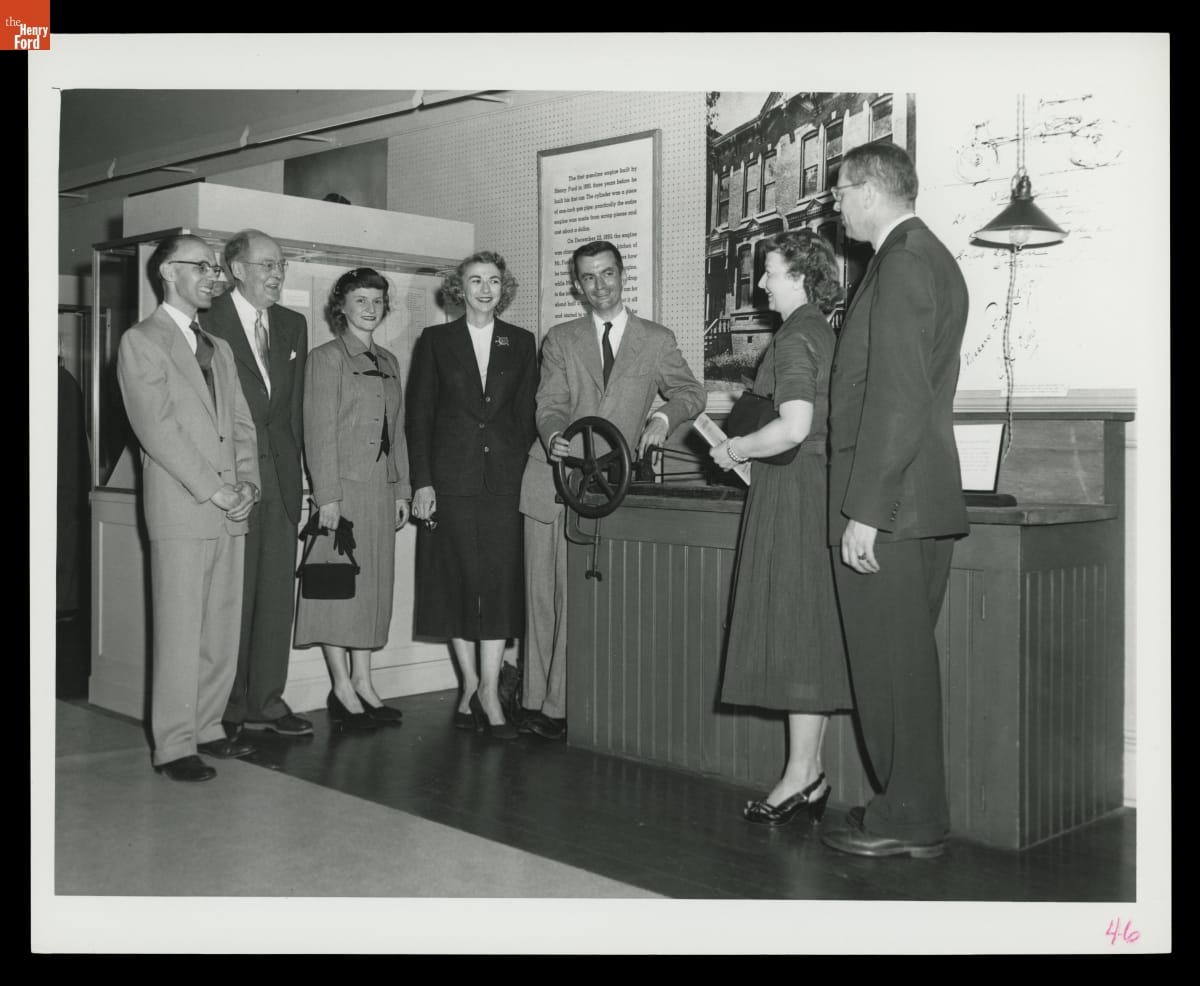
- May 07, 1953
- Collections - Artifact
Staff at Opening of the Exhibit, "Henry Ford: A Personal History," in Henry Ford Museum, May 1953
Henry Ford himself was the focus of Henry Ford: A Personal History. Opened in 1953 during Ford Motor Company's 50th anniversary, the exhibit included artifacts like Westinghouse steam engine No. 345, the fifteen millionth Model T, and a re-creation of Ford's Highland Park office using original furnishings. It was among the museum's first major additions after Ford's death in 1947.
- Henry Ford Museum Staff Members and Others Seated on the Ten Seat "Oriten" Bicycle, 1953 - In 1953, Henry Ford Museum staff members -- joined by an eager boy -- posed on the museum's "Oriten" bicycle. The unusual machine was built in 1896 by the Orient Bicycle Company of Waltham, Massachusetts. Described by Orient as a "decemtuple" bicycle, it toured the United States and Europe to promote the company's more conventional single- and double-seat bikes.
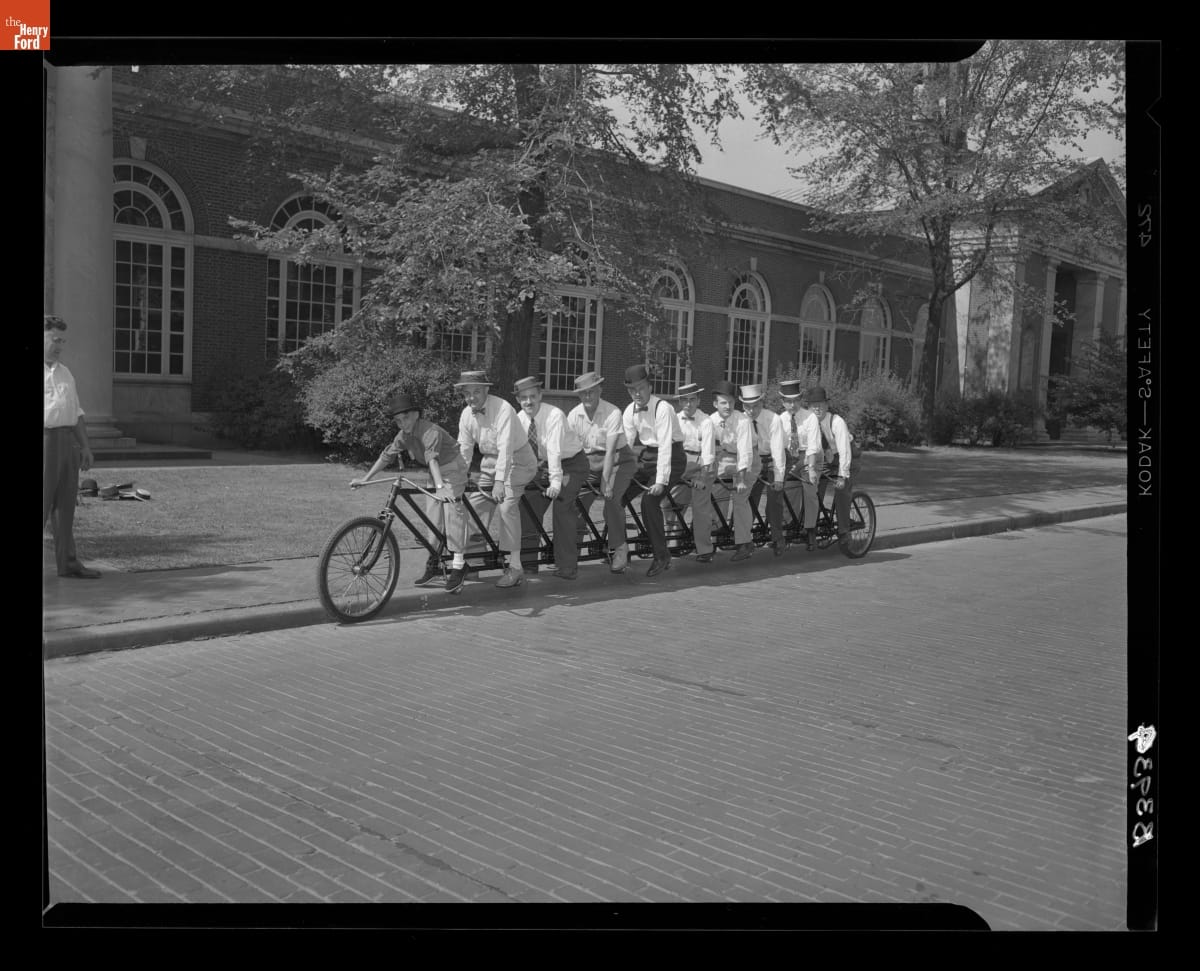
- 1953
- Collections - Artifact
Henry Ford Museum Staff Members and Others Seated on the Ten Seat "Oriten" Bicycle, 1953
In 1953, Henry Ford Museum staff members -- joined by an eager boy -- posed on the museum's "Oriten" bicycle. The unusual machine was built in 1896 by the Orient Bicycle Company of Waltham, Massachusetts. Described by Orient as a "decemtuple" bicycle, it toured the United States and Europe to promote the company's more conventional single- and double-seat bikes.
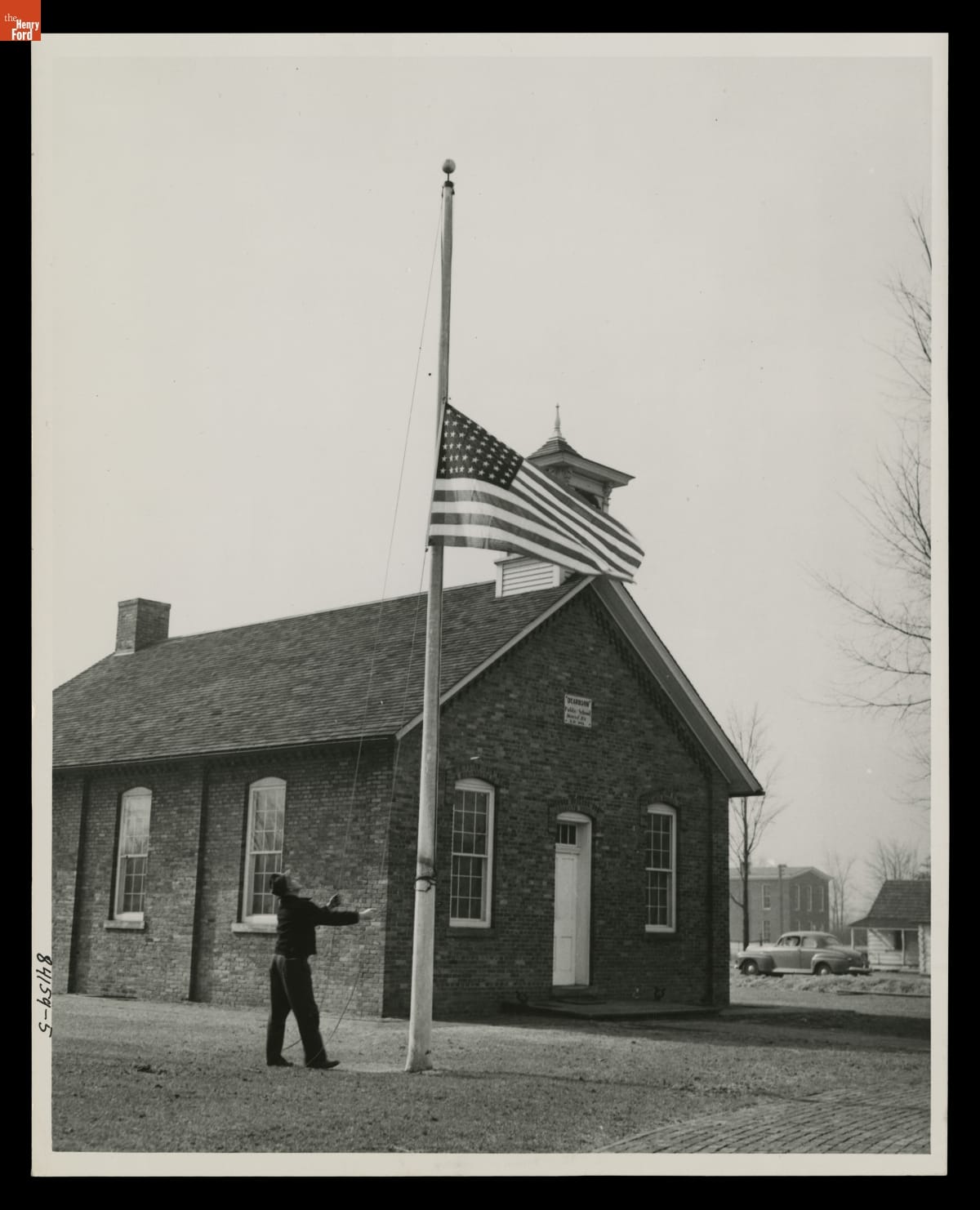
- Flag in Greenfield Village Lowered to Half-Staff after Henry Ford's Death, April 1947 - Henry Ford passed away at age 83 on April 7, 1947. This photo shows a student at the Edison Institute School lowering the flag in Ford's memory at Scotch Settlement School in Greenfield Village. When Ford's body lay in repose at nearby Lovett Hall, people waited in a mile-long line to pay their respects to the automotive pioneer.
- April 01, 1947
- Collections - Artifact
Flag in Greenfield Village Lowered to Half-Staff after Henry Ford's Death, April 1947
Henry Ford passed away at age 83 on April 7, 1947. This photo shows a student at the Edison Institute School lowering the flag in Ford's memory at Scotch Settlement School in Greenfield Village. When Ford's body lay in repose at nearby Lovett Hall, people waited in a mile-long line to pay their respects to the automotive pioneer.
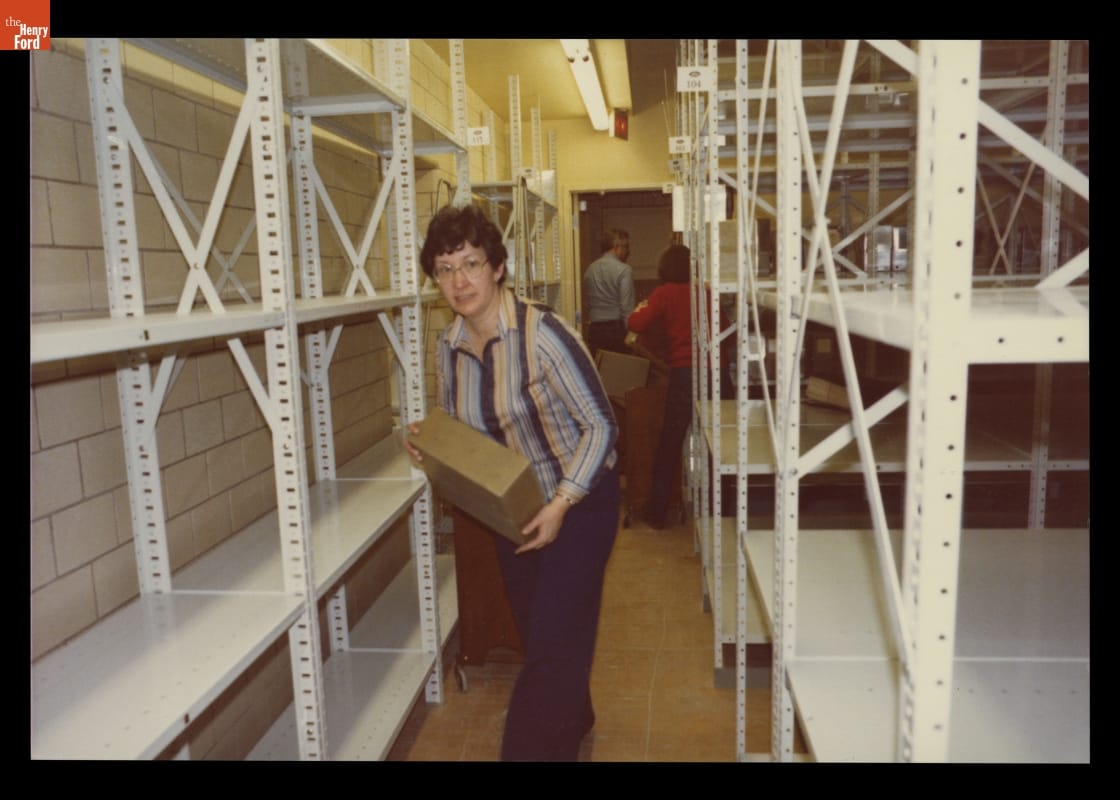
- Archives Staff Moving Collections from Henry Ford Museum to Lovett Hall, 1980 -
- 1980
- Collections - Artifact
Archives Staff Moving Collections from Henry Ford Museum to Lovett Hall, 1980
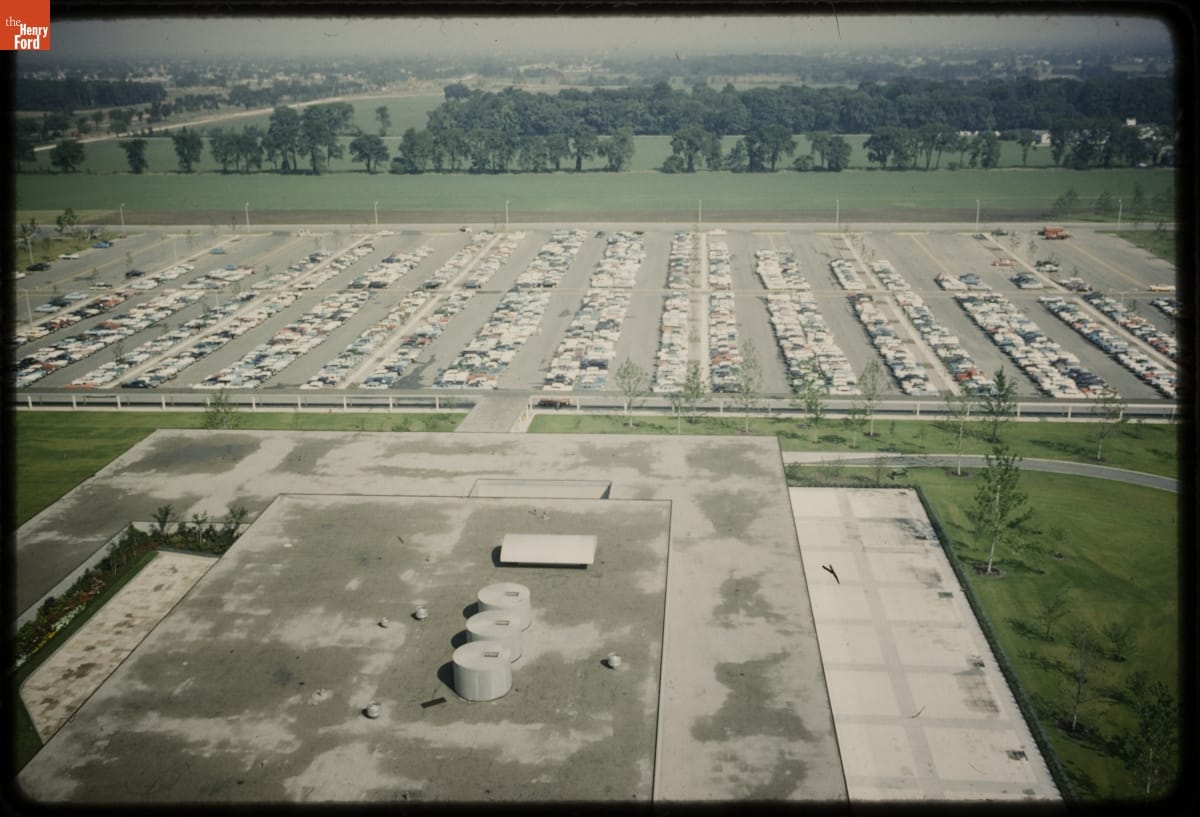
- Staff Parking Lot View from Roof, Henry Ford II World Center, circa 1955 - Ford Motor Company's world headquarters moved to a new 12-story office complex in Dearborn, Michigan, in 1956. Chicago architecture firm Skidmore, Owings & Merrill designed the building in the then-popular International Style. Initially called the Central Staff Office Building -- and nicknamed the "Glass House" -- Ford renamed the complex the Henry Ford II World Center in 1996.
- circa 1955
- Collections - Artifact
Staff Parking Lot View from Roof, Henry Ford II World Center, circa 1955
Ford Motor Company's world headquarters moved to a new 12-story office complex in Dearborn, Michigan, in 1956. Chicago architecture firm Skidmore, Owings & Merrill designed the building in the then-popular International Style. Initially called the Central Staff Office Building -- and nicknamed the "Glass House" -- Ford renamed the complex the Henry Ford II World Center in 1996.
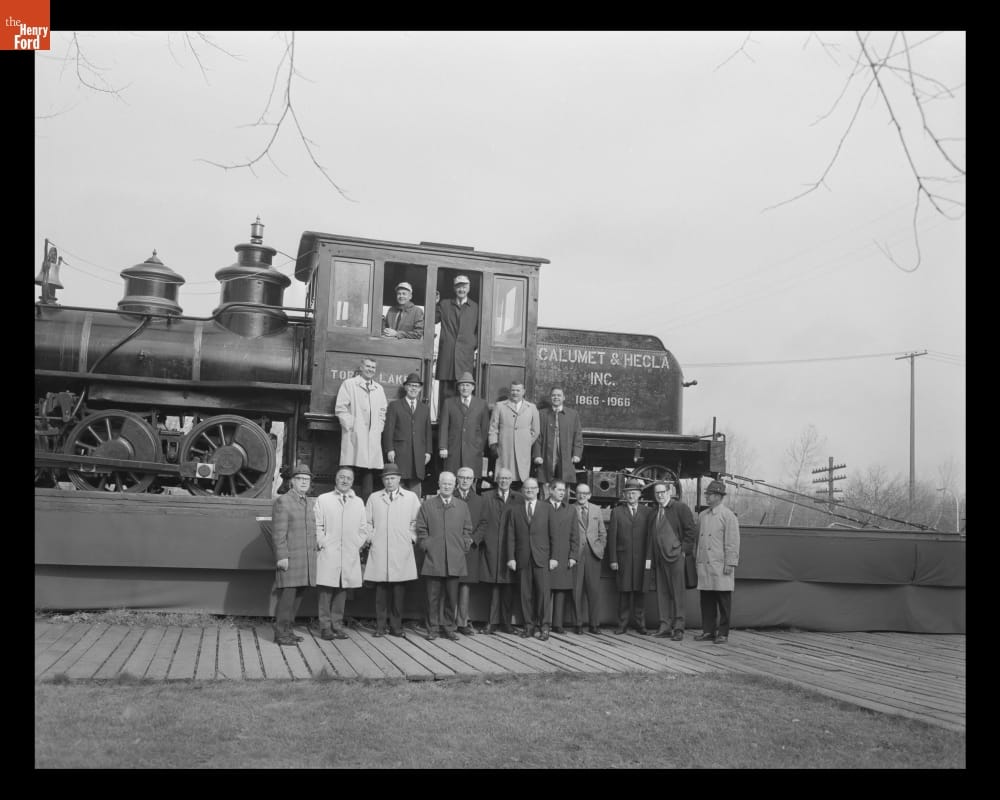
- Universal Oil Products Representatives and Henry Ford Museum Staff with the Torch Lake Locomotive, November 1969 - Built by Mason Machine Works in 1873, the steam locomotive <EM>Torch Lake</EM> was used in copper mining operations in Michigan's Upper Peninsula until 1933. The Henry Ford acquired the locomotive in 1969. After its arrival here, the engine was returned to operating condition and put into service on the Greenfield Village railroad.
- November 01, 1969
- Collections - Artifact
Universal Oil Products Representatives and Henry Ford Museum Staff with the Torch Lake Locomotive, November 1969
Built by Mason Machine Works in 1873, the steam locomotive Torch Lake was used in copper mining operations in Michigan's Upper Peninsula until 1933. The Henry Ford acquired the locomotive in 1969. After its arrival here, the engine was returned to operating condition and put into service on the Greenfield Village railroad.
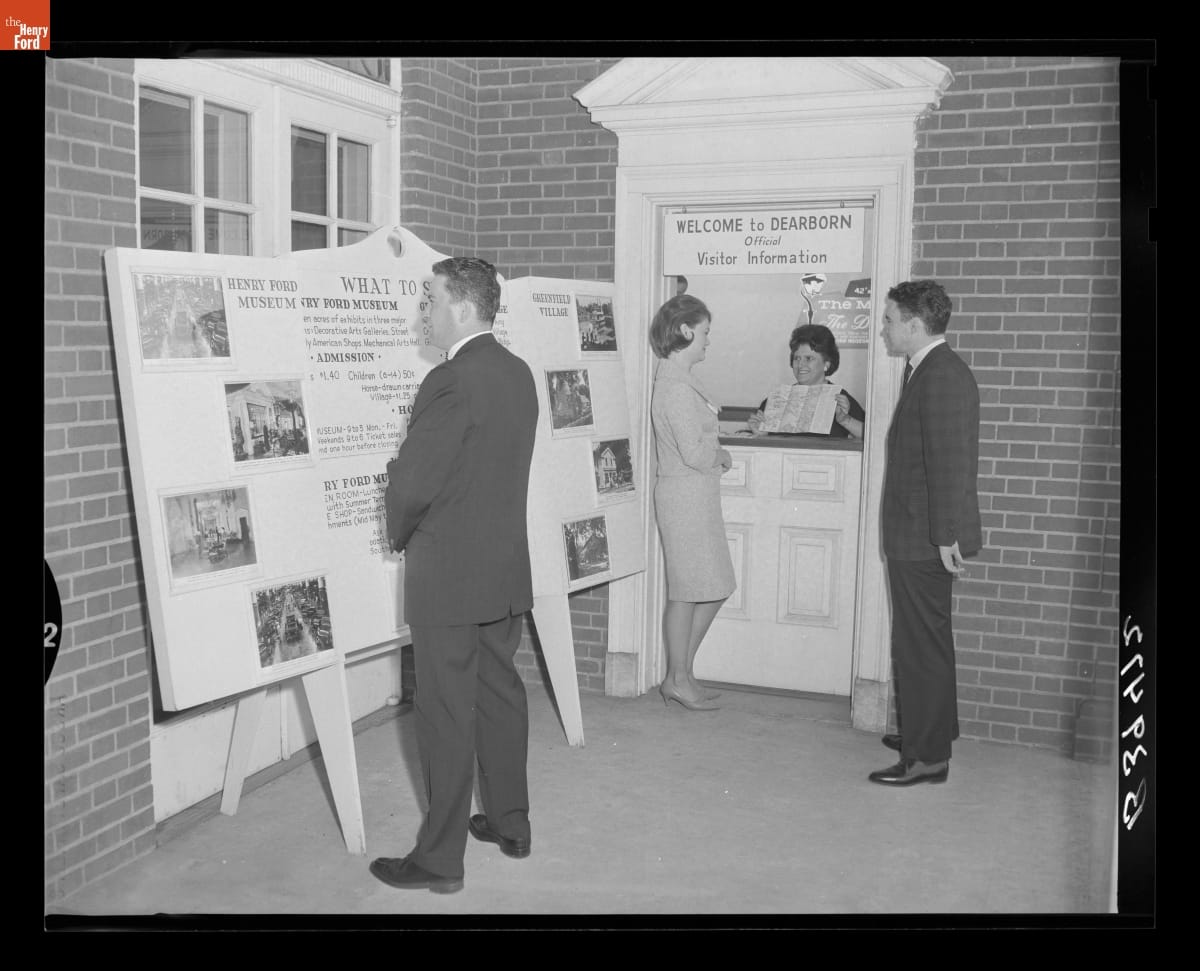
- Marie Hamilton and Other Staff at the Henry Ford Museum and Greenfield Village Visitor Information Booth, April 1965 - The parents of Marie Hamilton (1922-1991) fled Russia, moving to Bulgaria, where Maria was born. The following year, the family moved to the US and settled in Detroit. Marie became a part-time guide at the Henry Ford Museum and Greenfield Village in 1952. Twelve years later, she worked full-time, conducting VIP tours for foreign dignitaries (she spoke fluent Russian) and supervising other guides.
- April 01, 1965
- Collections - Artifact
Marie Hamilton and Other Staff at the Henry Ford Museum and Greenfield Village Visitor Information Booth, April 1965
The parents of Marie Hamilton (1922-1991) fled Russia, moving to Bulgaria, where Maria was born. The following year, the family moved to the US and settled in Detroit. Marie became a part-time guide at the Henry Ford Museum and Greenfield Village in 1952. Twelve years later, she worked full-time, conducting VIP tours for foreign dignitaries (she spoke fluent Russian) and supervising other guides.
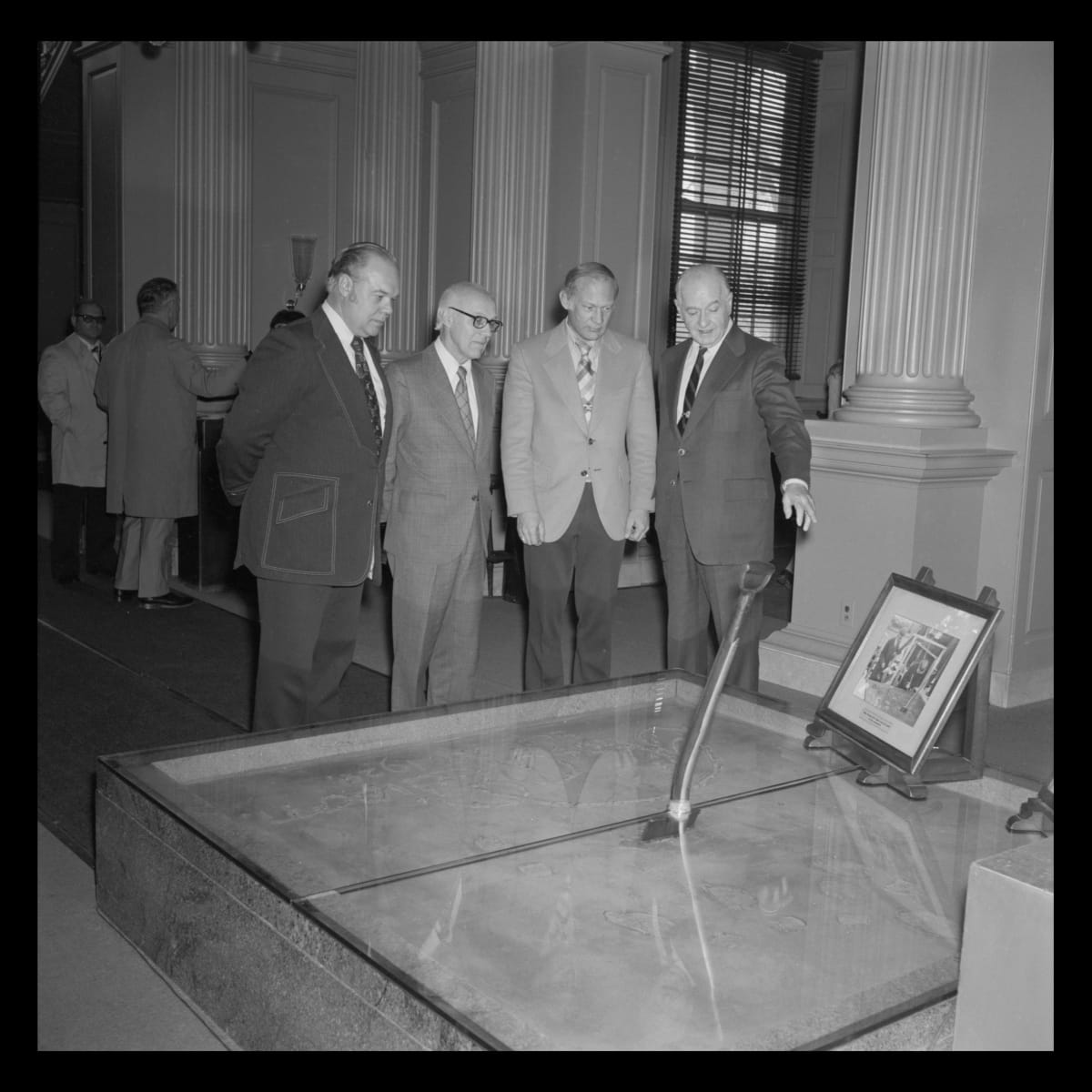
- Buzz Aldrin with Museum Staff during a Visit to Henry Ford Museum, March 19, 1976 - Many famous individuals have visited Greenfield Village and Henry Ford Museum. Actors, authors, and artists have passed through the entrance gates; business leaders, royalty, politicians, and a host of others have toured the exhibits. Photographs by the institution's photographer were taken if the celebrity allowed it. Astronaut Buzz Aldrin, the second man to walk on the moon, visited the museum in 1976.
- March 15, 1976
- Collections - Artifact
Buzz Aldrin with Museum Staff during a Visit to Henry Ford Museum, March 19, 1976
Many famous individuals have visited Greenfield Village and Henry Ford Museum. Actors, authors, and artists have passed through the entrance gates; business leaders, royalty, politicians, and a host of others have toured the exhibits. Photographs by the institution's photographer were taken if the celebrity allowed it. Astronaut Buzz Aldrin, the second man to walk on the moon, visited the museum in 1976.