
Search
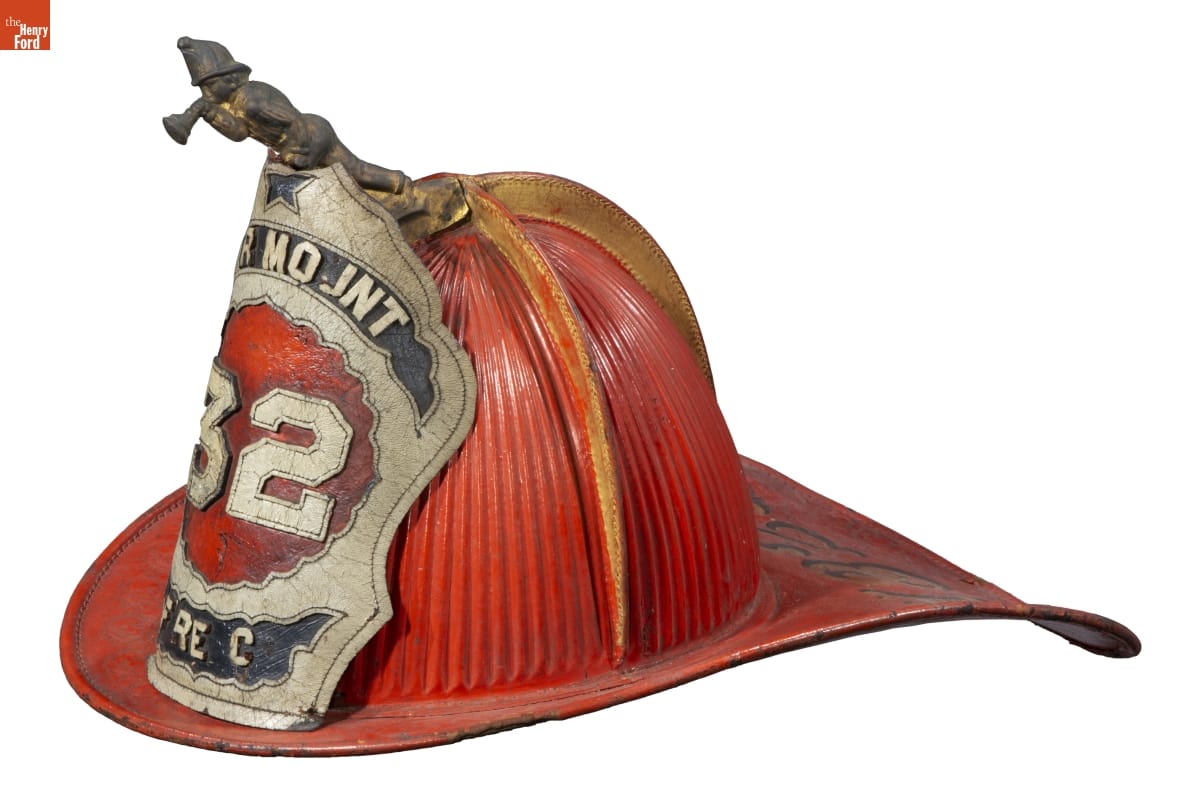
- Fire Hat, Fair Mount Fire Co., 1880-1900 - No piece of equipment symbolizes a firefighter's dangerous work like the fire helmet. Its hard shell protects from falling debris, and its oversized brim directs water away from the neck. Early helmets were made from leather, while later versions featured metal shells. Modern helmets use lightweight composite materials, but they retain the familiar shape.
- 1880-1900
- Collections - Artifact
Fire Hat, Fair Mount Fire Co., 1880-1900
No piece of equipment symbolizes a firefighter's dangerous work like the fire helmet. Its hard shell protects from falling debris, and its oversized brim directs water away from the neck. Early helmets were made from leather, while later versions featured metal shells. Modern helmets use lightweight composite materials, but they retain the familiar shape.
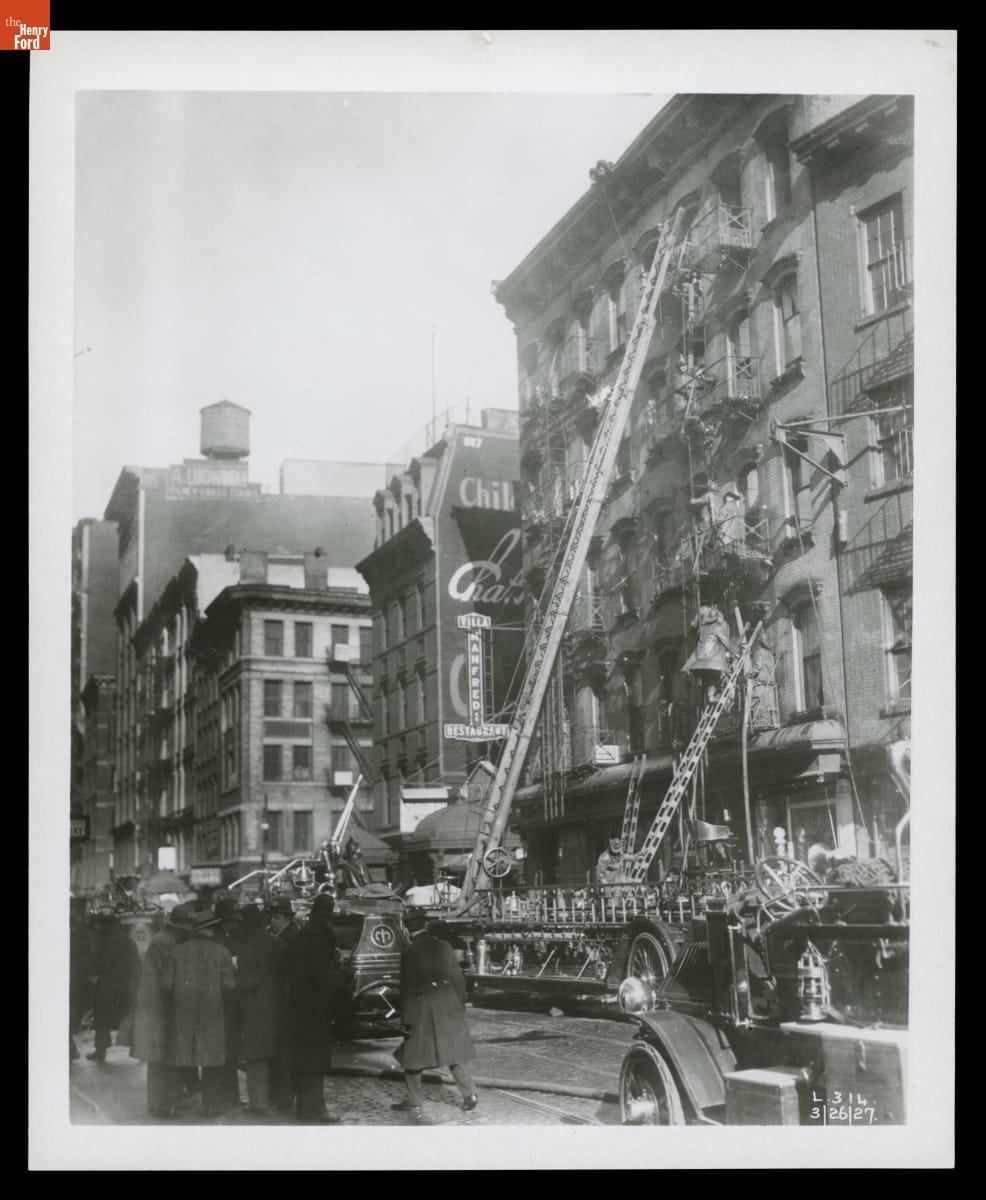
- Three Mack Model AC Fire Trucks at the Scene of a Fire, March 26, 1927 - Founded in Brooklyn, New York, in 1900, Mack Brothers Company relocated to Allentown, Pennsylvania, five years later. The company renamed itself Mack Trucks and chose a bulldog as its mascot in 1922. Mack built its first firefighting equipment around 1911. Mack itself stopped building complete fire trucks in 1990, but Mack's chassis continued to be used by other builders.
- March 26, 1927
- Collections - Artifact
Three Mack Model AC Fire Trucks at the Scene of a Fire, March 26, 1927
Founded in Brooklyn, New York, in 1900, Mack Brothers Company relocated to Allentown, Pennsylvania, five years later. The company renamed itself Mack Trucks and chose a bulldog as its mascot in 1922. Mack built its first firefighting equipment around 1911. Mack itself stopped building complete fire trucks in 1990, but Mack's chassis continued to be used by other builders.
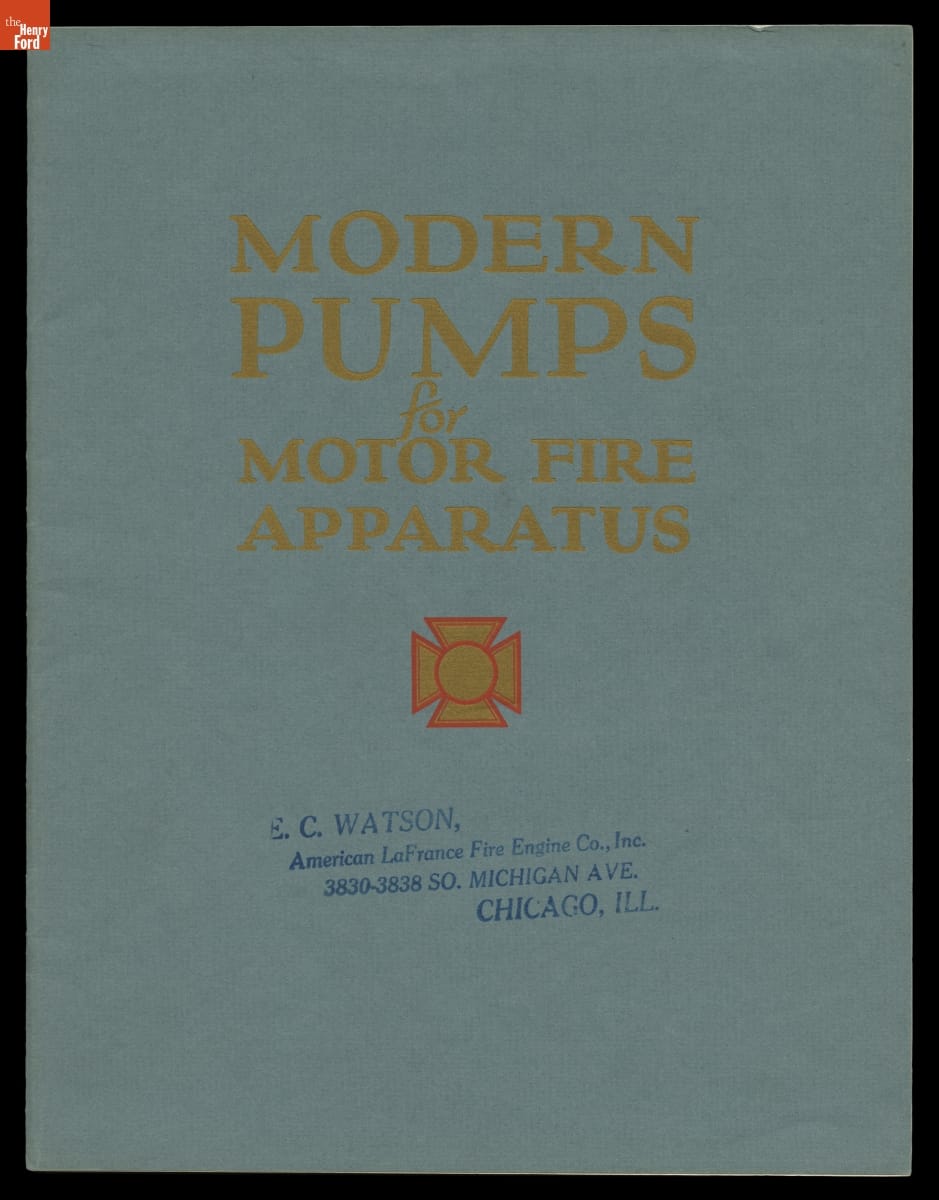
- American-LaFrance Fire Engine Company Catalog, "Modern Pumps for Motor Fire Apparatus Built in Three Styles," 1927 - American LaFrance was formed in 1873 to produce hand-powered firefighting equipment. The company built its first motorized fire apparatus in 1907. American LaFrance grew into one of the largest manufacturers of fire engines and emergency vehicles in the United States and -- under the Foamite name -- Canada. After several changes in ownership, American LaFrance ended operations in 2014.
- 1927
- Collections - Artifact
American-LaFrance Fire Engine Company Catalog, "Modern Pumps for Motor Fire Apparatus Built in Three Styles," 1927
American LaFrance was formed in 1873 to produce hand-powered firefighting equipment. The company built its first motorized fire apparatus in 1907. American LaFrance grew into one of the largest manufacturers of fire engines and emergency vehicles in the United States and -- under the Foamite name -- Canada. After several changes in ownership, American LaFrance ended operations in 2014.
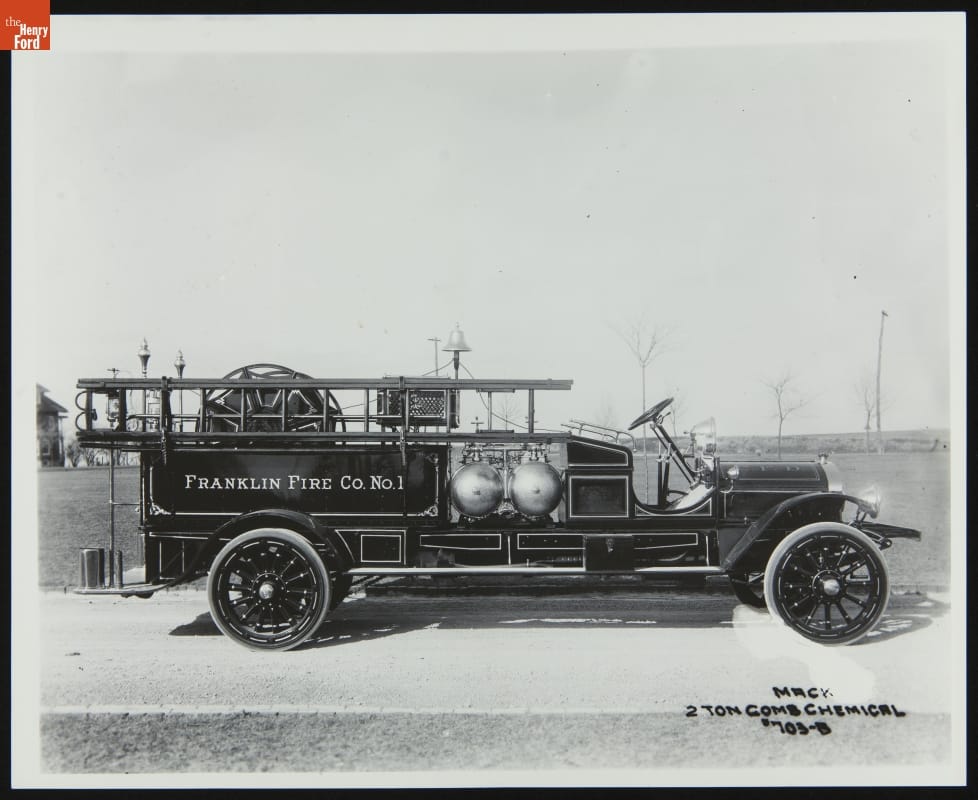
- Mack Junior, 2 Ton Fire Apparatus, "Franklin Fire Co. No. 1," circa 1917 - Founded in Brooklyn, New York, in 1900, Mack Brothers Company relocated to Allentown, Pennsylvania, five years later. The company renamed itself Mack Trucks and chose a bulldog as its mascot in 1922. Mack built its first firefighting equipment around 1911. Mack itself stopped building complete fire trucks in 1990, but Mack's chassis continued to be used by other builders.
- circa 1917
- Collections - Artifact
Mack Junior, 2 Ton Fire Apparatus, "Franklin Fire Co. No. 1," circa 1917
Founded in Brooklyn, New York, in 1900, Mack Brothers Company relocated to Allentown, Pennsylvania, five years later. The company renamed itself Mack Trucks and chose a bulldog as its mascot in 1922. Mack built its first firefighting equipment around 1911. Mack itself stopped building complete fire trucks in 1990, but Mack's chassis continued to be used by other builders.
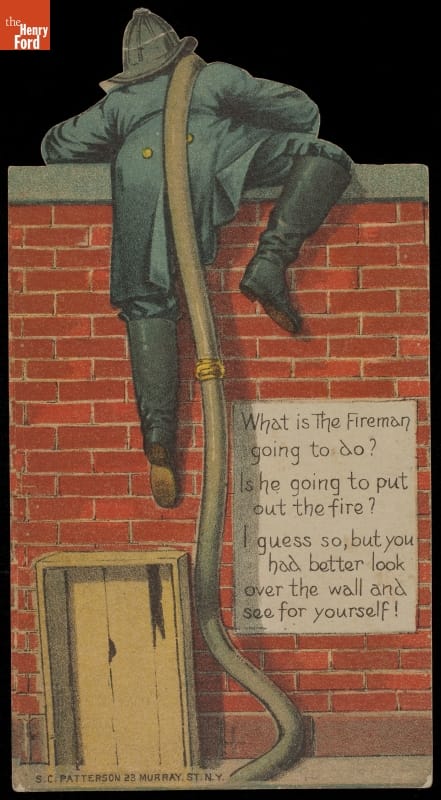
- Trade Card for Fire Insurance, Phenix Insurance Co., 1870-1900 - In the last third of the nineteenth century, an unprecedented variety of consumer goods and services flooded the American market. Advertisers, armed with new methods of color printing, bombarded potential customers with trade cards. Americans enjoyed and often saved the vibrant little advertisements found in product packages or distributed by local merchants. Many survive as historical records of commercialism in the United States.
- 1870-1900
- Collections - Artifact
Trade Card for Fire Insurance, Phenix Insurance Co., 1870-1900
In the last third of the nineteenth century, an unprecedented variety of consumer goods and services flooded the American market. Advertisers, armed with new methods of color printing, bombarded potential customers with trade cards. Americans enjoyed and often saved the vibrant little advertisements found in product packages or distributed by local merchants. Many survive as historical records of commercialism in the United States.
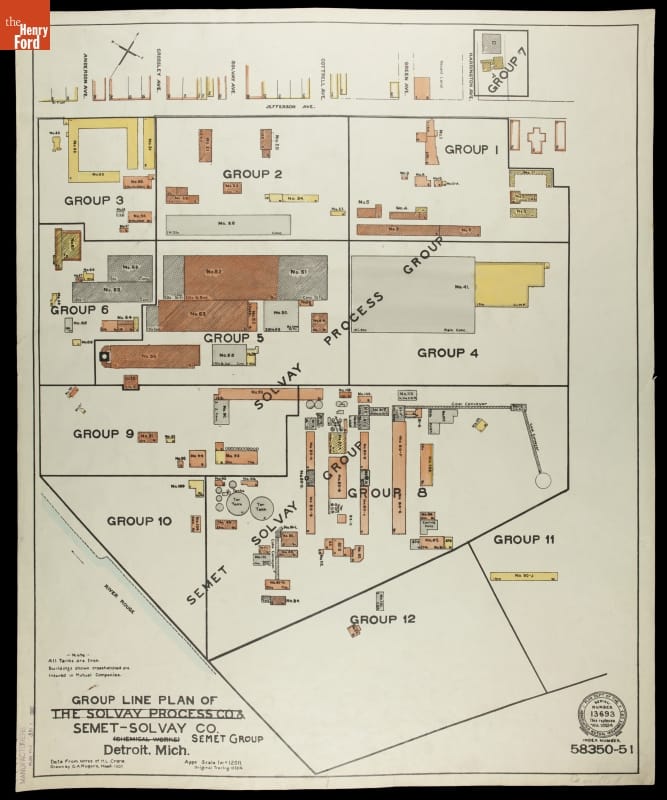
- Fire Insurance Map of the Solvay Process Co. & Semet-Solvay Co., Detroit, Michigan, March 1920 - Fire insurance maps provided information to insurance companies about potential risks to homes, businesses, and factories. These maps -- with their easily identifiable symbols and color-coding -- depicted structural features, types of construction, and locations of fire hazards. Armed with this information, insurance underwriters could propose reasonable rates and offer protection against possible catastrophic financial loss in the event of a fire.
- March 01, 1920
- Collections - Artifact
Fire Insurance Map of the Solvay Process Co. & Semet-Solvay Co., Detroit, Michigan, March 1920
Fire insurance maps provided information to insurance companies about potential risks to homes, businesses, and factories. These maps -- with their easily identifiable symbols and color-coding -- depicted structural features, types of construction, and locations of fire hazards. Armed with this information, insurance underwriters could propose reasonable rates and offer protection against possible catastrophic financial loss in the event of a fire.
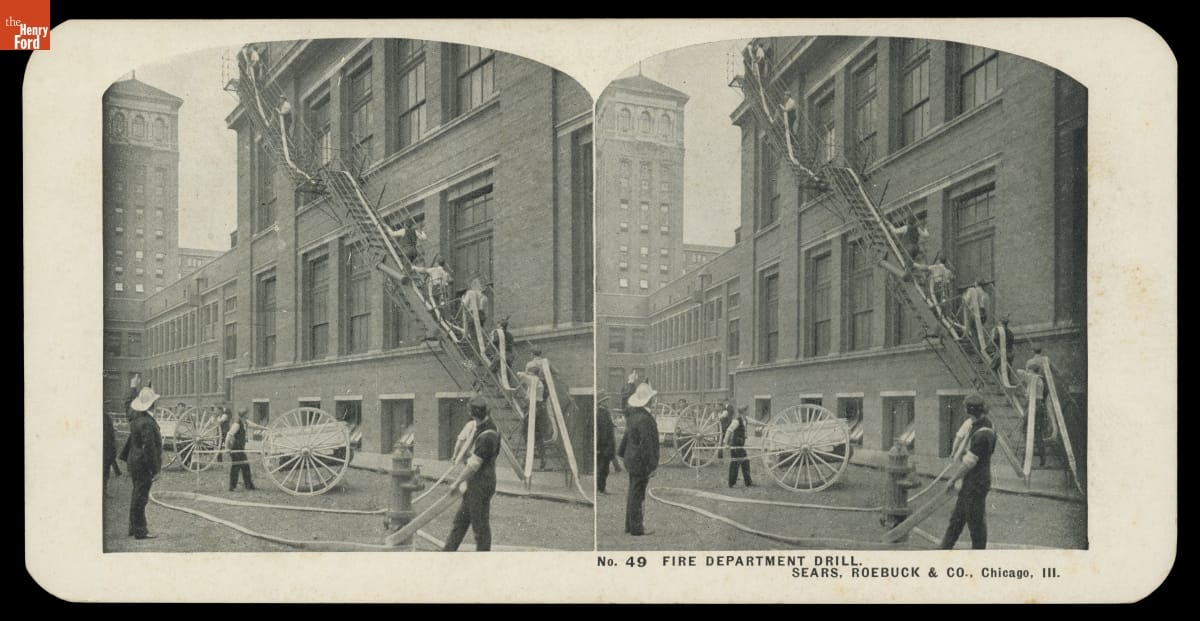
- "Fire Department Drill. Sears, Roebuck & Co., Chicago, Ill.," 1906-1908 - Mail-order firm Sears, Roebuck, & Co. had become one of America's largest corporations by the early 1900s. Sears was particularly popular among rural Americans, as it offered better options, lower costs, and more efficient delivery methods than traditional general stores. This stereograph, one of a set of 50 sold through the Sears catalog beginning in 1908, offered a behind-the-scenes look at the company's operation.
- 1906-1908
- Collections - Artifact
"Fire Department Drill. Sears, Roebuck & Co., Chicago, Ill.," 1906-1908
Mail-order firm Sears, Roebuck, & Co. had become one of America's largest corporations by the early 1900s. Sears was particularly popular among rural Americans, as it offered better options, lower costs, and more efficient delivery methods than traditional general stores. This stereograph, one of a set of 50 sold through the Sears catalog beginning in 1908, offered a behind-the-scenes look at the company's operation.
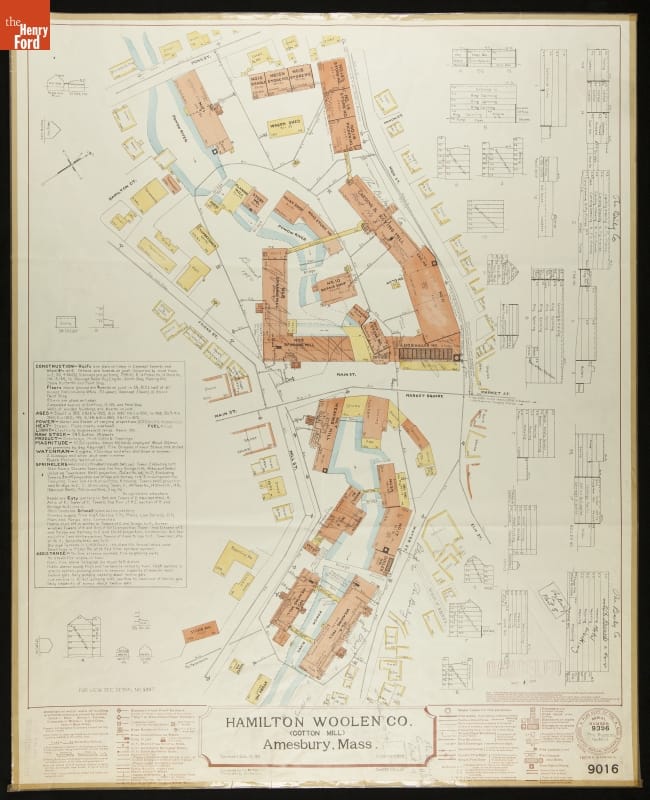
- Fire Insurance Map of Hamilton Woolen Co., Amesbury, Massachusetts, Surveyed December 15, 1910 - Fire insurance maps provided information to insurance companies about potential risks to homes, businesses, and factories. These maps -- with their easily identifiable symbols and color-coding -- depicted structural features, types of construction, and locations of fire hazards. Armed with this information, insurance underwriters could propose reasonable rates and offer protection against possible catastrophic financial loss in the event of a fire.
- December 15, 1910
- Collections - Artifact
Fire Insurance Map of Hamilton Woolen Co., Amesbury, Massachusetts, Surveyed December 15, 1910
Fire insurance maps provided information to insurance companies about potential risks to homes, businesses, and factories. These maps -- with their easily identifiable symbols and color-coding -- depicted structural features, types of construction, and locations of fire hazards. Armed with this information, insurance underwriters could propose reasonable rates and offer protection against possible catastrophic financial loss in the event of a fire.
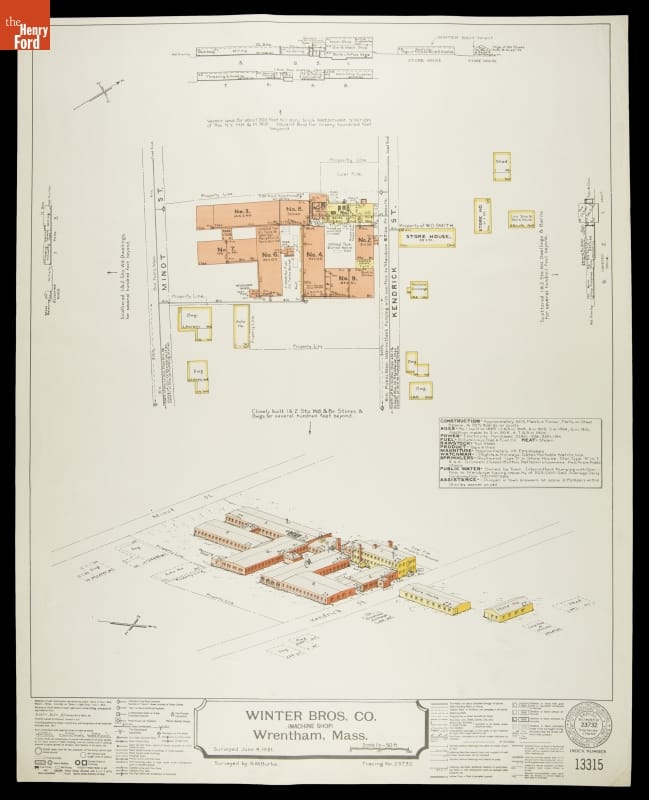
- Fire Insurance Map of Winter Bros. Co., Wrentham, Massachusetts, Surveyed June 4, 1931 - Fire insurance maps provided information to insurance companies about potential risks to homes, businesses, and factories. These maps -- with their easily identifiable symbols and color-coding -- depicted structural features, types of construction, and locations of fire hazards. Armed with this information, insurance underwriters could propose reasonable rates and offer protection against possible catastrophic financial loss in the event of a fire.
- June 04, 1931
- Collections - Artifact
Fire Insurance Map of Winter Bros. Co., Wrentham, Massachusetts, Surveyed June 4, 1931
Fire insurance maps provided information to insurance companies about potential risks to homes, businesses, and factories. These maps -- with their easily identifiable symbols and color-coding -- depicted structural features, types of construction, and locations of fire hazards. Armed with this information, insurance underwriters could propose reasonable rates and offer protection against possible catastrophic financial loss in the event of a fire.
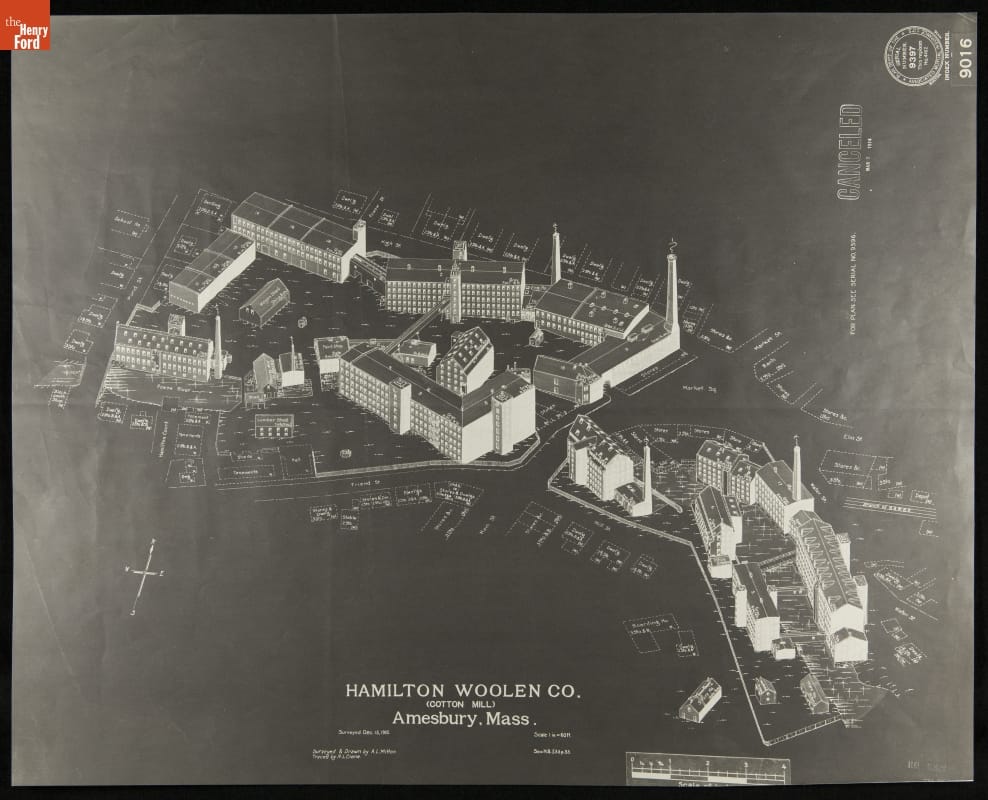
- Fire Insurance Map of Hamilton Woolen Co., Amesbury, Massachusetts, Surveyed December 15, 1910 - Fire insurance maps provided information to insurance companies about potential risks to homes, businesses, and factories. These maps -- with their easily identifiable symbols and color-coding -- depicted structural features, types of construction, and locations of fire hazards. Armed with this information, insurance underwriters could propose reasonable rates and offer protection against possible catastrophic financial loss in the event of a fire.
- December 15, 1910
- Collections - Artifact
Fire Insurance Map of Hamilton Woolen Co., Amesbury, Massachusetts, Surveyed December 15, 1910
Fire insurance maps provided information to insurance companies about potential risks to homes, businesses, and factories. These maps -- with their easily identifiable symbols and color-coding -- depicted structural features, types of construction, and locations of fire hazards. Armed with this information, insurance underwriters could propose reasonable rates and offer protection against possible catastrophic financial loss in the event of a fire.