
Search
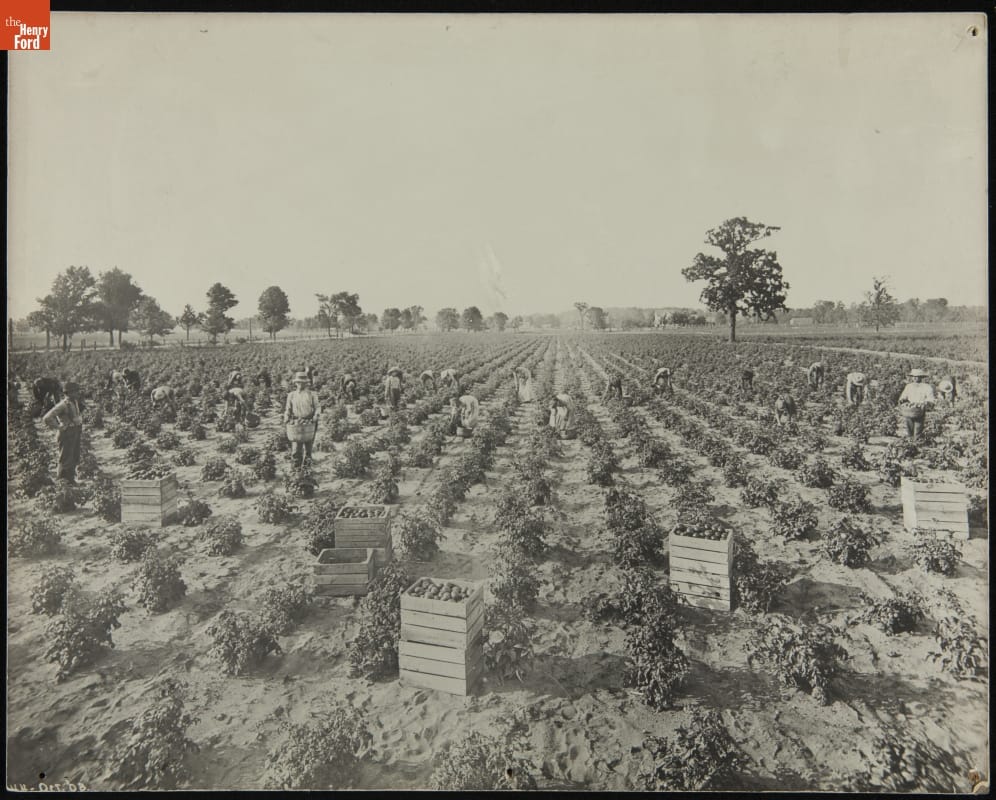
- Workers Harvesting Tomatoes at a Heinz Tomato Farm, 1908 - Entrepreneur H.J. Heinz recognized that producing the highest quality products began with where the ingredients were grown and how they were harvested. He took great care in managing every aspect of the process to ensure the best ingredients for his line of pickled foods, preserves, and condiments. This photograph shows one step in the tomato harvesting process.
- 1908
- Collections - Artifact
Workers Harvesting Tomatoes at a Heinz Tomato Farm, 1908
Entrepreneur H.J. Heinz recognized that producing the highest quality products began with where the ingredients were grown and how they were harvested. He took great care in managing every aspect of the process to ensure the best ingredients for his line of pickled foods, preserves, and condiments. This photograph shows one step in the tomato harvesting process.
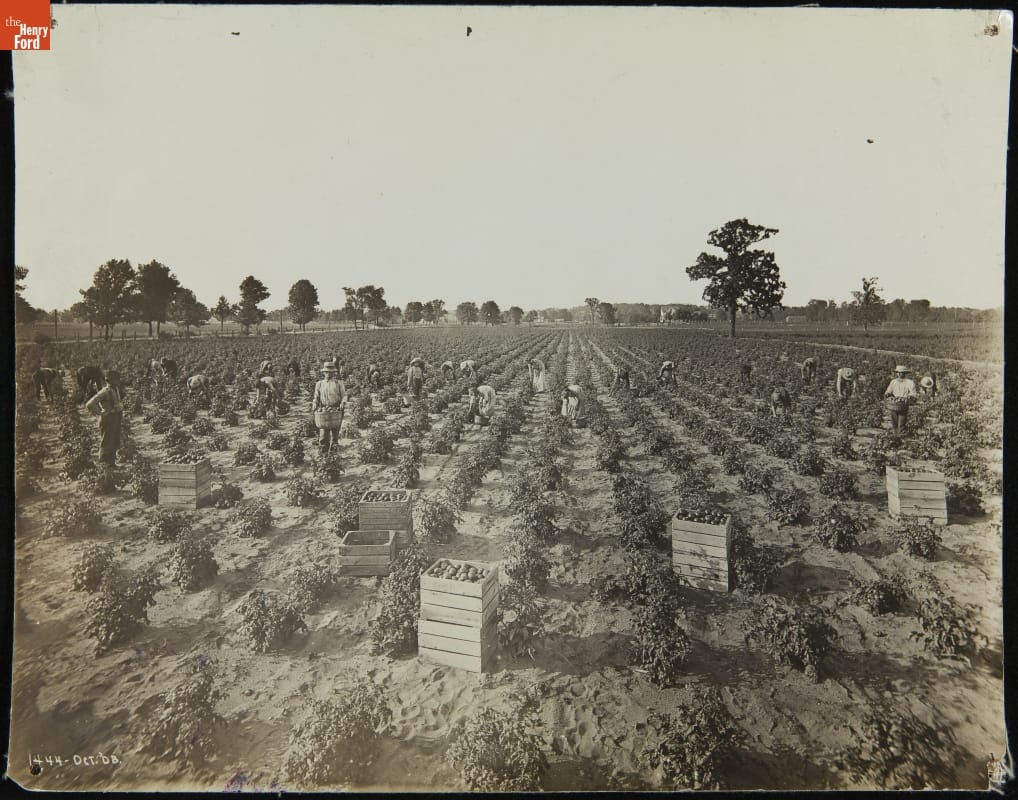
- Workers Harvesting Tomatoes at a Heinz Tomato Farm, 1908 - Entrepreneur H.J. Heinz recognized that producing the highest quality products began with where the ingredients were grown and how they were harvested. He took great care in managing every aspect of the process to ensure the best ingredients for his line of pickled foods, preserves, and condiments. This photograph shows one step in the tomato harvesting process.
- 1908
- Collections - Artifact
Workers Harvesting Tomatoes at a Heinz Tomato Farm, 1908
Entrepreneur H.J. Heinz recognized that producing the highest quality products began with where the ingredients were grown and how they were harvested. He took great care in managing every aspect of the process to ensure the best ingredients for his line of pickled foods, preserves, and condiments. This photograph shows one step in the tomato harvesting process.
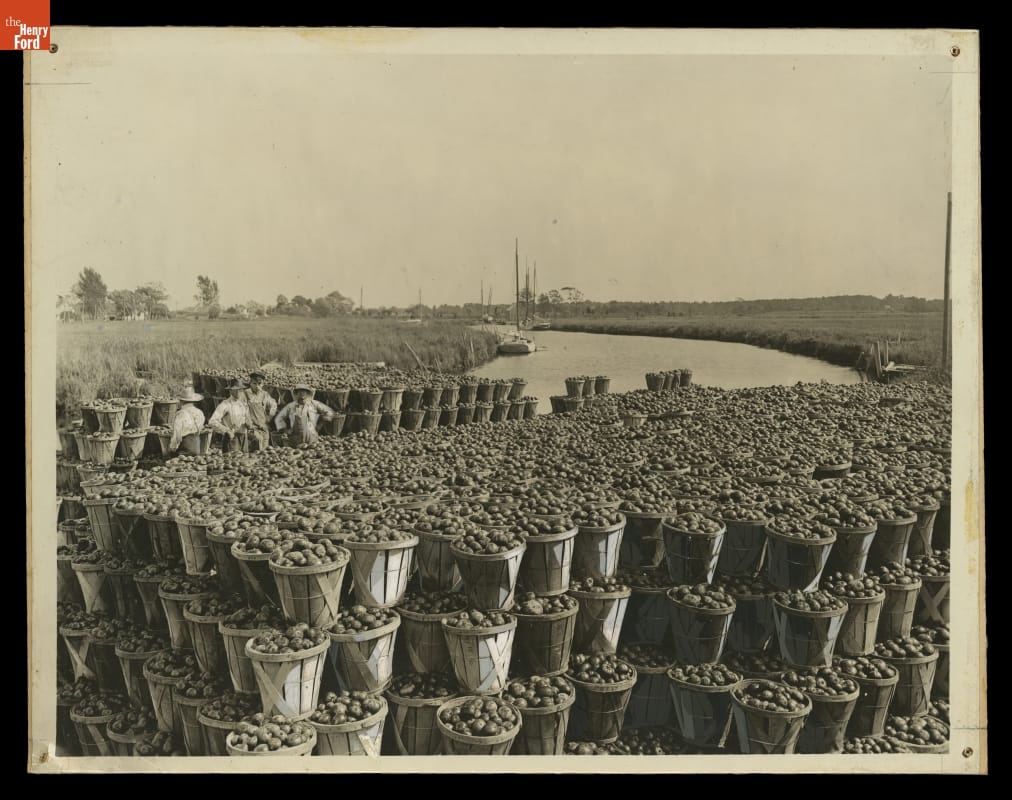
- Advertising Process Photograph Showing Heinz Tomato Harvest, 1910-1925 - Entrepreneur H.J. Heinz recognized that producing high-quality products began with growing the best ingredients. He managed every aspect of the process including transportation of fruit from farm field to factory. After tomatoes were harvested, they were packed into baskets specially designed to reduce stress on the ripe fruit during transit. This ensured the best ingredients for his line of pickled foods, preserves, and condiments.
- circa 1910-1925
- Collections - Artifact
Advertising Process Photograph Showing Heinz Tomato Harvest, 1910-1925
Entrepreneur H.J. Heinz recognized that producing high-quality products began with growing the best ingredients. He managed every aspect of the process including transportation of fruit from farm field to factory. After tomatoes were harvested, they were packed into baskets specially designed to reduce stress on the ripe fruit during transit. This ensured the best ingredients for his line of pickled foods, preserves, and condiments.
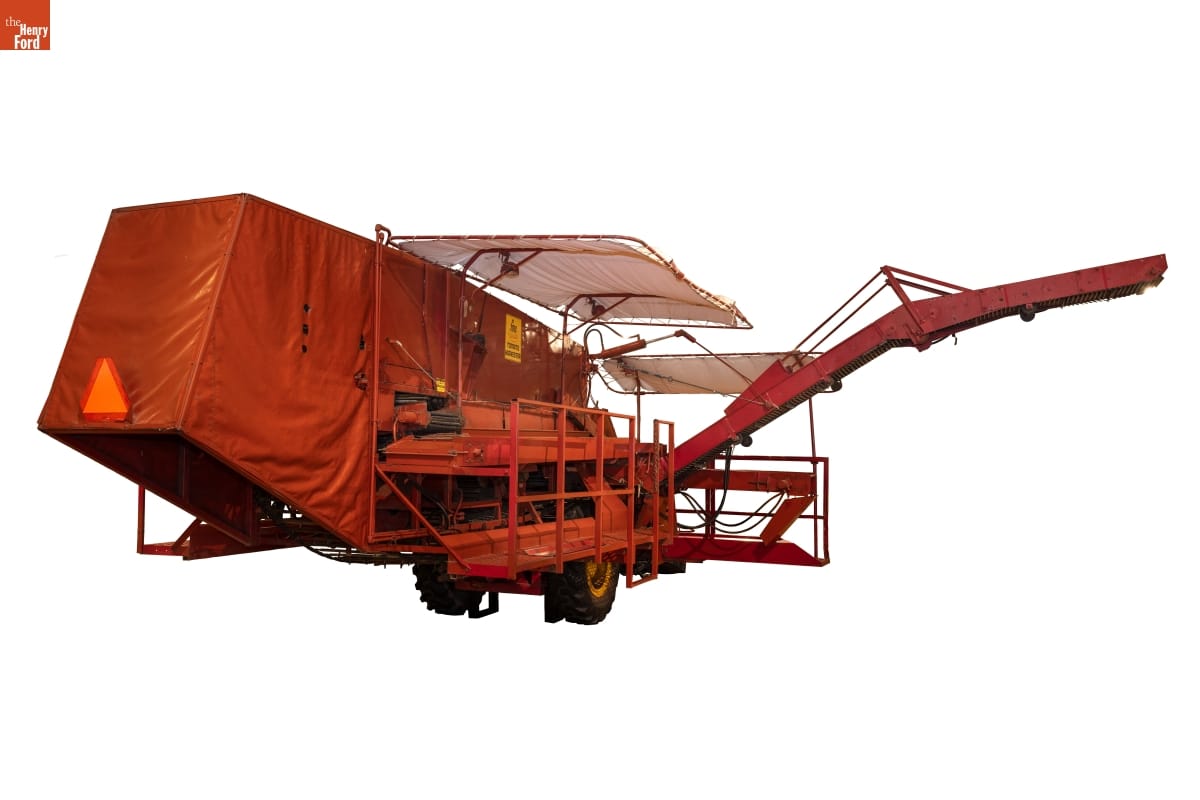
- FMC Tomato Harvester, 1969 - Tomatoes need careful handling. Growers who contract with processors used to rely on human laborers. The quest to plant and harvest more, faster, gave mechanical engineers and plant geneticists incentive to design a machine and a tomato it could harvest. The FMC Cascade Harvester carried 10-12 laborers who sorted debris out of the crop, fewer laborers than growers had needed for handpicking.
- 1969
- Collections - Artifact
FMC Tomato Harvester, 1969
Tomatoes need careful handling. Growers who contract with processors used to rely on human laborers. The quest to plant and harvest more, faster, gave mechanical engineers and plant geneticists incentive to design a machine and a tomato it could harvest. The FMC Cascade Harvester carried 10-12 laborers who sorted debris out of the crop, fewer laborers than growers had needed for handpicking.
- Workers Processing Harvested Tomatoes, circa 1910 - Entrepreneur H.J. Heinz recognized that producing the highest quality products began with where the ingredients were grown and how they were harvested. He took great care in managing every aspect of the process to ensure the best ingredients for his line of pickled foods, preserves, and condiments. This photograph shows one step in the tomato harvesting process.
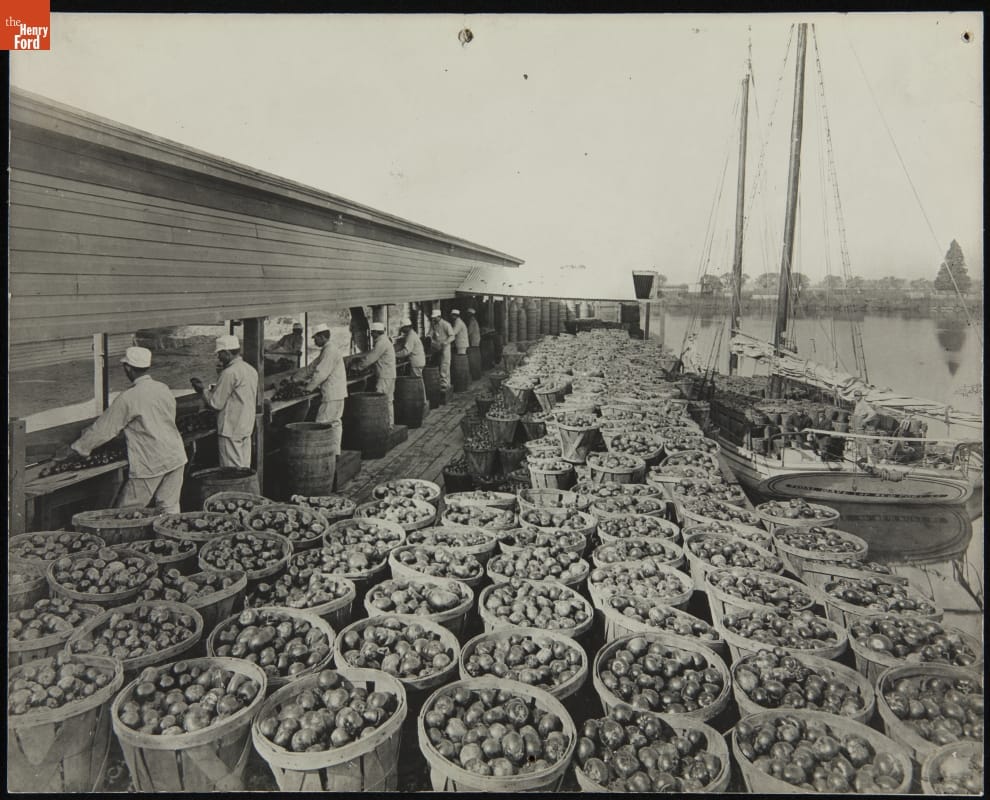
- circa 1910
- Collections - Artifact
Workers Processing Harvested Tomatoes, circa 1910
Entrepreneur H.J. Heinz recognized that producing the highest quality products began with where the ingredients were grown and how they were harvested. He took great care in managing every aspect of the process to ensure the best ingredients for his line of pickled foods, preserves, and condiments. This photograph shows one step in the tomato harvesting process.
- Tomatoes Growing in a Home Garden, circa 1915 -
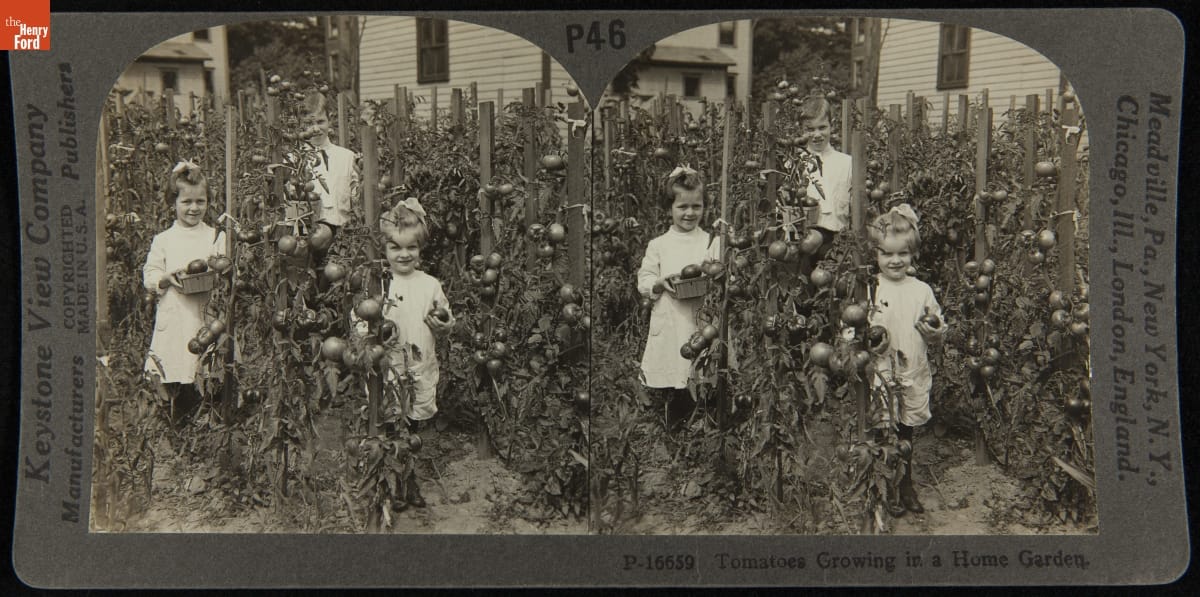
- circa 1915
- Collections - Artifact
Tomatoes Growing in a Home Garden, circa 1915
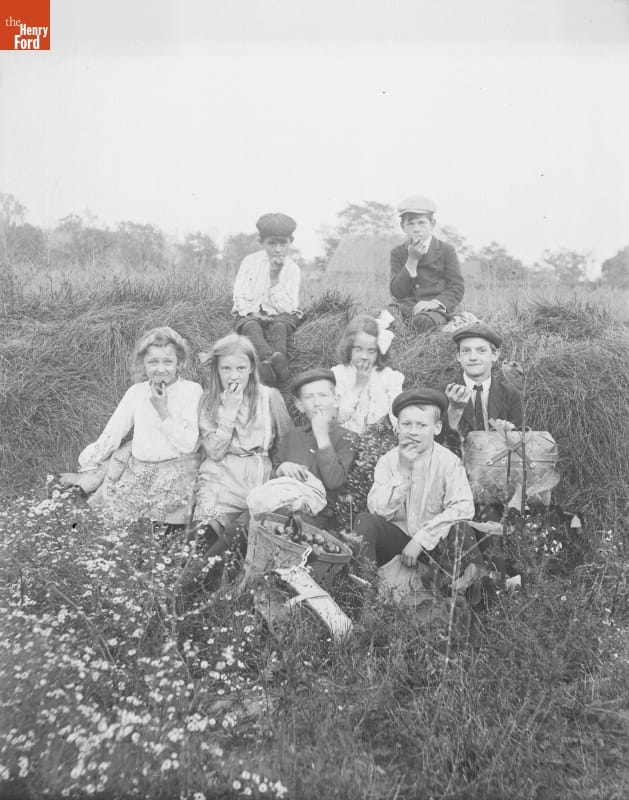
- Children, Tomato Gatherers, 1890-1915 - In 1890, Jenny Young Chandler, 25 years old and recently widowed, began working for the <EM>New York Herald</EM>. As a photojournalist and feature writer, Chandler captured life in Brooklyn, New York, and vicinity. By 1922, the time of her death, she had produced over 800 glass plate negatives. Her sensitive, insightful photographs depict people from all walks of life and the world in which they lived.
- 1890-1915
- Collections - Artifact
Children, Tomato Gatherers, 1890-1915
In 1890, Jenny Young Chandler, 25 years old and recently widowed, began working for the New York Herald. As a photojournalist and feature writer, Chandler captured life in Brooklyn, New York, and vicinity. By 1922, the time of her death, she had produced over 800 glass plate negatives. Her sensitive, insightful photographs depict people from all walks of life and the world in which they lived.
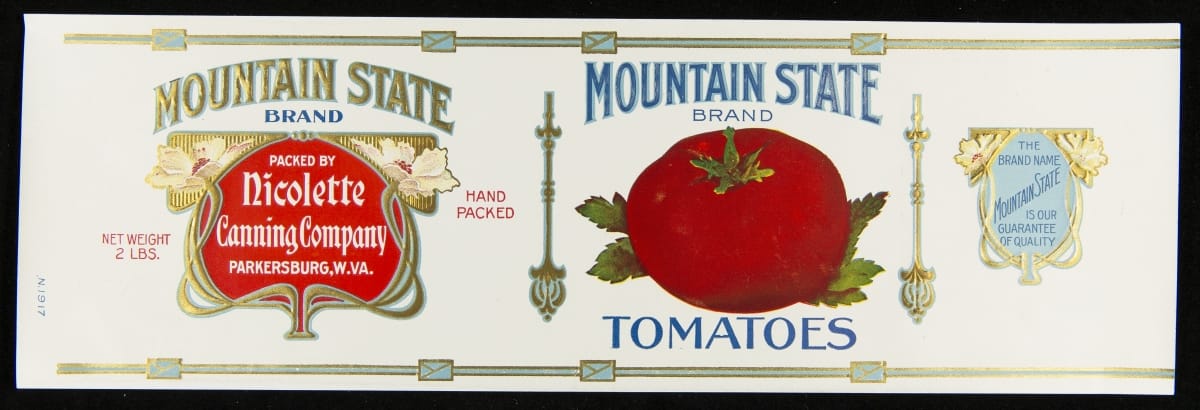
- Can Label, "Mountain State Brand Tomatoes," circa 1917 - Manufacturers of similar products sought ways to make their company's goods stand out on store shelves. Attractive labels, like this design for Mountain State Brand Tomatoes, helped catch the attention of potential customers -- hopefully encouraging them to purchase the company's product rather than that of a competitor.
- circa 1917
- Collections - Artifact
Can Label, "Mountain State Brand Tomatoes," circa 1917
Manufacturers of similar products sought ways to make their company's goods stand out on store shelves. Attractive labels, like this design for Mountain State Brand Tomatoes, helped catch the attention of potential customers -- hopefully encouraging them to purchase the company's product rather than that of a competitor.
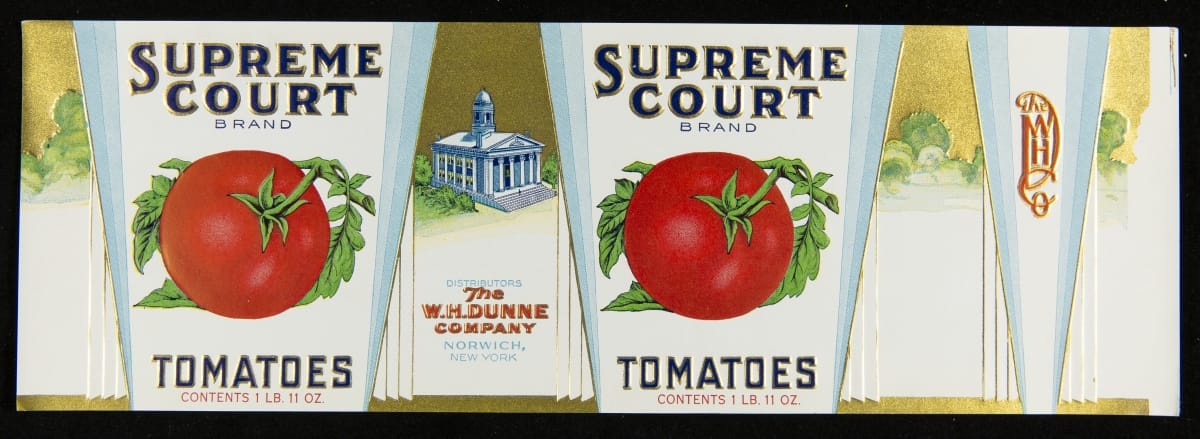
- Can Label, "Supreme Court Brand Tomatoes," 1910-1920 - Manufacturers of similar products sought ways to make their company's goods stand out on store shelves. Attractive labels, like this design for Supreme Court Brand Tomatoes, helped catch the attention of potential customers -- hopefully encouraging them to purchase the company's product rather than that of a competitor.
- 1910-1920
- Collections - Artifact
Can Label, "Supreme Court Brand Tomatoes," 1910-1920
Manufacturers of similar products sought ways to make their company's goods stand out on store shelves. Attractive labels, like this design for Supreme Court Brand Tomatoes, helped catch the attention of potential customers -- hopefully encouraging them to purchase the company's product rather than that of a competitor.
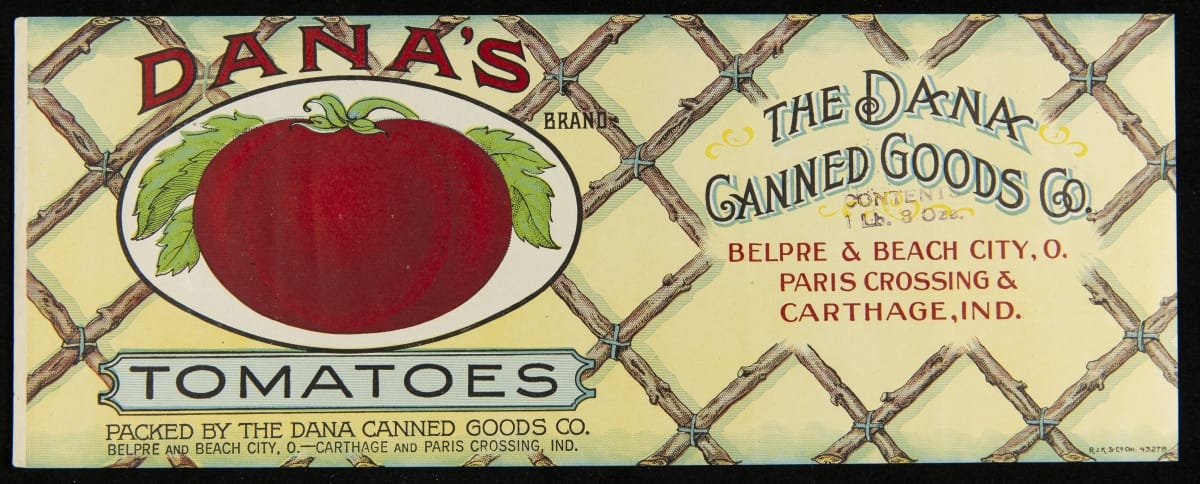
- Can Label, "Dana's Brand Tomatoes," 1912-1920 - Manufacturers of similar products sought ways to make their company's goods stand out on store shelves. Attractive labels, like this design for Dana's Brand Tomatoes, helped catch the attention of potential customers -- hopefully encouraging them to purchase the company's product rather than that of a competitor.
- 1912-1920
- Collections - Artifact
Can Label, "Dana's Brand Tomatoes," 1912-1920
Manufacturers of similar products sought ways to make their company's goods stand out on store shelves. Attractive labels, like this design for Dana's Brand Tomatoes, helped catch the attention of potential customers -- hopefully encouraging them to purchase the company's product rather than that of a competitor.