
Search
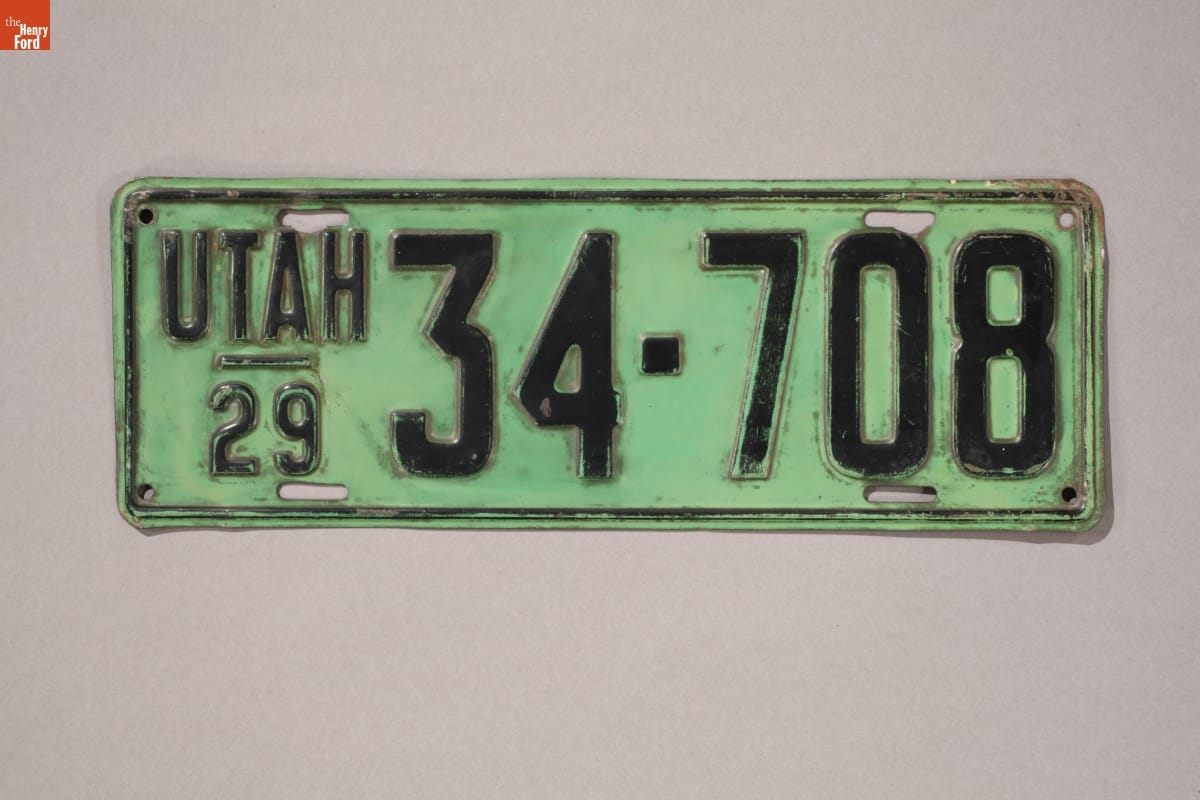
- Utah License Plate, 1929 - Early state-issued license plates were made of porcelain-coated iron. Later, states stamped tin, steel, or even copper to make plates. During the Second World War several states used fiberboard. Plate colors varied and some states added symbols, mottoes, or other design elements. Today, states use reflective sheeting to coat a standard-sized aluminum blank which is then stamped and decorated.
- 1929
- Collections - Artifact
Utah License Plate, 1929
Early state-issued license plates were made of porcelain-coated iron. Later, states stamped tin, steel, or even copper to make plates. During the Second World War several states used fiberboard. Plate colors varied and some states added symbols, mottoes, or other design elements. Today, states use reflective sheeting to coat a standard-sized aluminum blank which is then stamped and decorated.
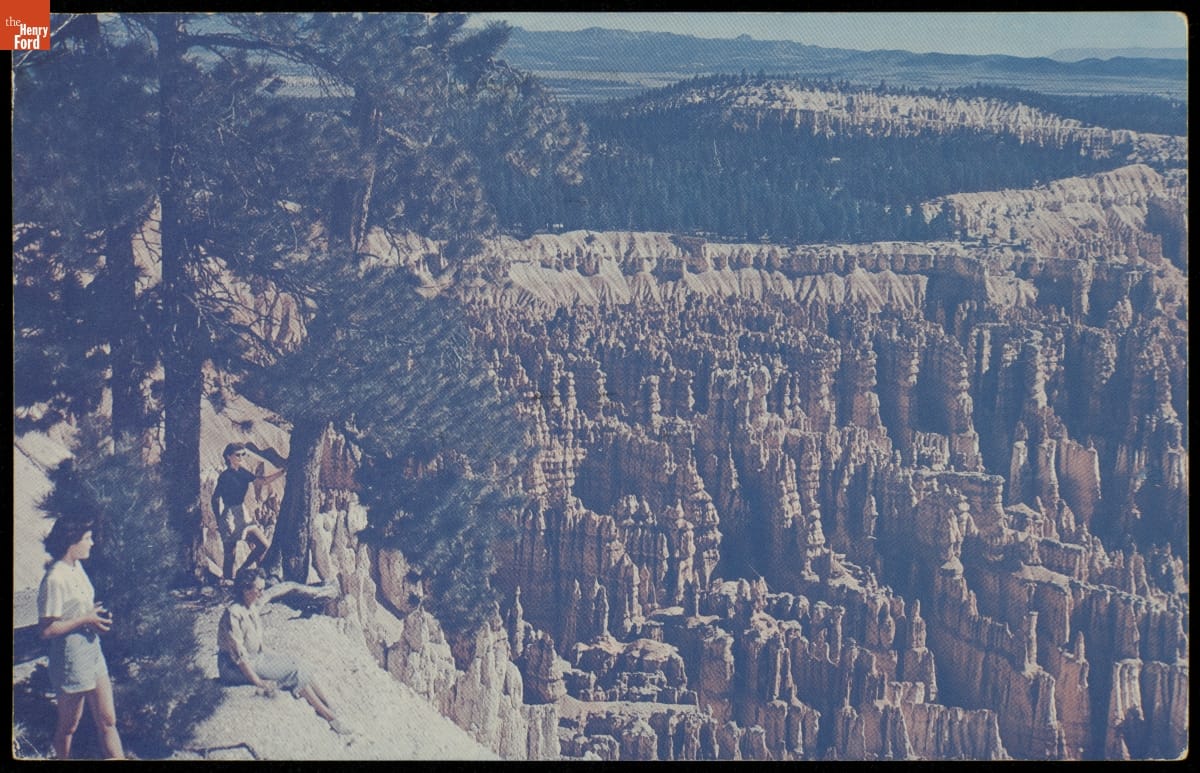
- Bryce Canyon National Park, Utah, 1961 -
- 1961
- Collections - Artifact
Bryce Canyon National Park, Utah, 1961
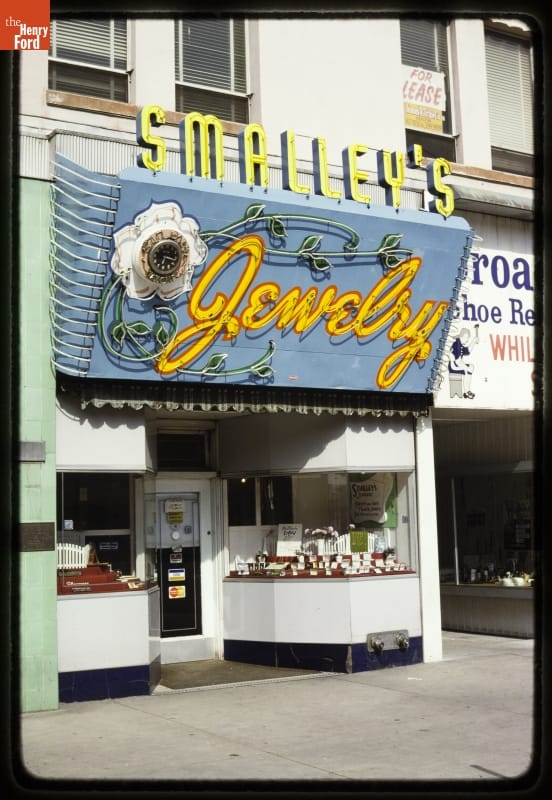
- Smalley's Jewelry Store, Ogden, Utah, 1980 - In the mid-1970s, John Margolies began to assemble a visual record of America's built roadside landscape. Over the following three decades, he traveled thousands of miles to photograph the overlooked and often quickly vanishing structures that had grown out of American automobile culture and main street commerce. His photographs of hotels, motels, diners, service stations, drive-ins and attractions celebrate and capture a unique chapter of American history.
- 1980
- Collections - Artifact
Smalley's Jewelry Store, Ogden, Utah, 1980
In the mid-1970s, John Margolies began to assemble a visual record of America's built roadside landscape. Over the following three decades, he traveled thousands of miles to photograph the overlooked and often quickly vanishing structures that had grown out of American automobile culture and main street commerce. His photographs of hotels, motels, diners, service stations, drive-ins and attractions celebrate and capture a unique chapter of American history.
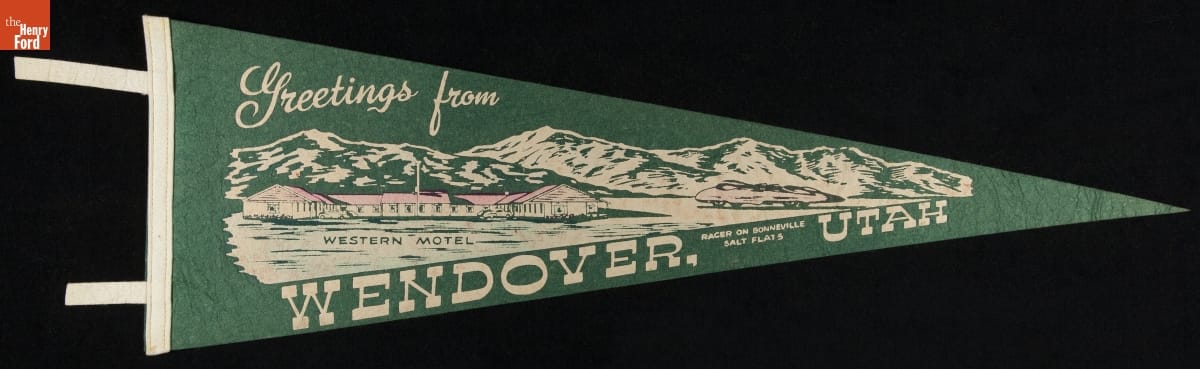
- Pennant, "Greetings from Wendover, Utah," 1940-1965 - Tourists purchase simple, inexpensive souvenirs as proof of their travels. These mementos transport vacationers back to the places they visited and the things they did. In the mid-20th century, felt pennants were trendy. This pennant depicts the Bonneville Salt Flats, where a number of land speed records were set, and the Western Motel in Wendover, Utah, where the race enthusiast could stay for the night.
- 1940-1965
- Collections - Artifact
Pennant, "Greetings from Wendover, Utah," 1940-1965
Tourists purchase simple, inexpensive souvenirs as proof of their travels. These mementos transport vacationers back to the places they visited and the things they did. In the mid-20th century, felt pennants were trendy. This pennant depicts the Bonneville Salt Flats, where a number of land speed records were set, and the Western Motel in Wendover, Utah, where the race enthusiast could stay for the night.
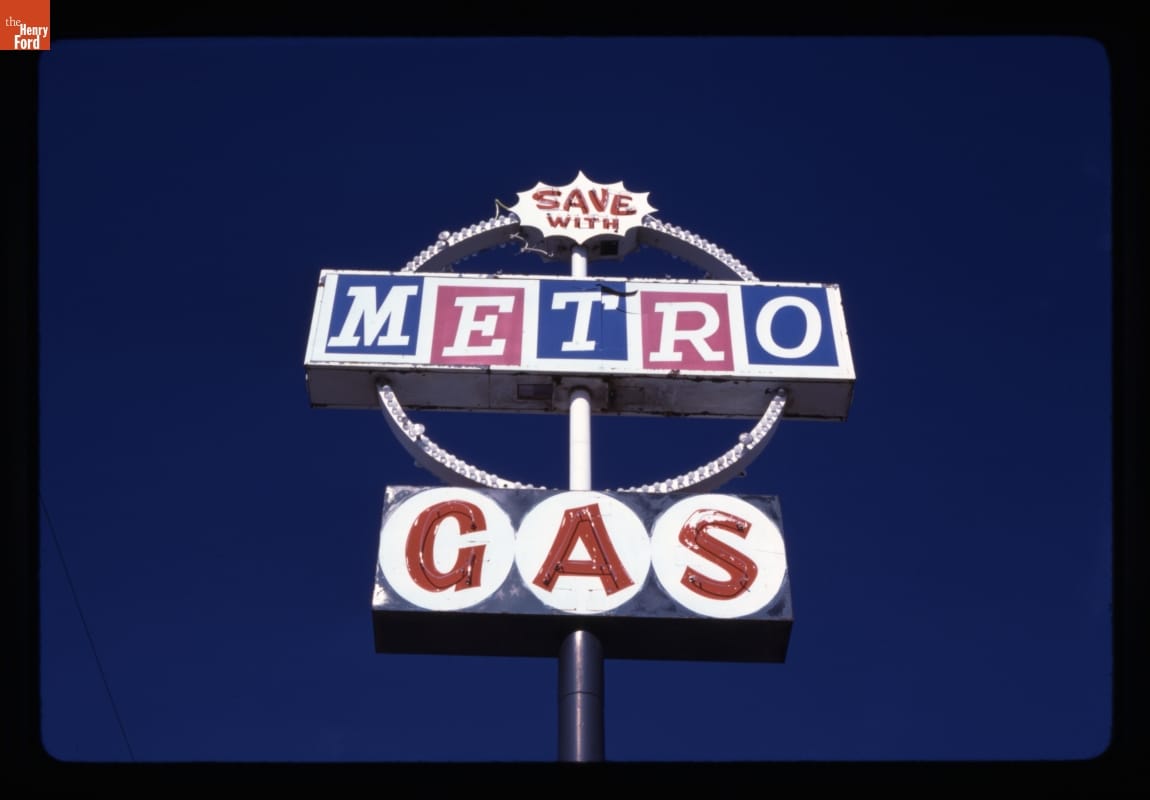
- Metro Gas Sign, Cedar City, Utah, 1987 - In the mid-1970s, John Margolies began to assemble a visual record of America's built roadside landscape. Over the following three decades, he traveled thousands of miles to photograph the overlooked and often quickly vanishing structures that had grown out of American automobile culture and main street commerce. His photographs of hotels, motels, diners, service stations, drive-ins and attractions celebrate and capture a unique chapter of American history.
- 1987
- Collections - Artifact
Metro Gas Sign, Cedar City, Utah, 1987
In the mid-1970s, John Margolies began to assemble a visual record of America's built roadside landscape. Over the following three decades, he traveled thousands of miles to photograph the overlooked and often quickly vanishing structures that had grown out of American automobile culture and main street commerce. His photographs of hotels, motels, diners, service stations, drive-ins and attractions celebrate and capture a unique chapter of American history.
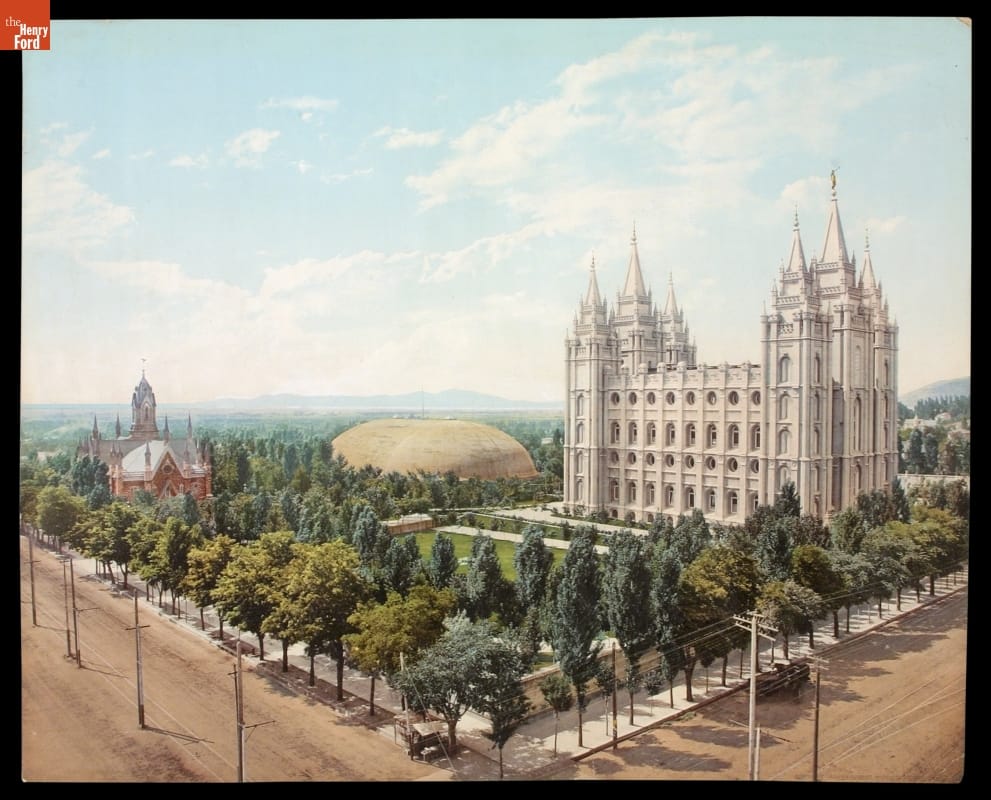
- Temple Square, Salt Lake City, Utah, 1899 - From 1895 to 1924, the Detroit Publishing Company was one of the major image publishers in the world. The company had a wide-ranging stock of original photographs, including many scenes from around the world. These colorful prints were reproduced for ads, purchased to decorate homes and offices, bought as souvenirs, and used as teaching tools in schools and libraries.
- 1899
- Collections - Artifact
Temple Square, Salt Lake City, Utah, 1899
From 1895 to 1924, the Detroit Publishing Company was one of the major image publishers in the world. The company had a wide-ranging stock of original photographs, including many scenes from around the world. These colorful prints were reproduced for ads, purchased to decorate homes and offices, bought as souvenirs, and used as teaching tools in schools and libraries.
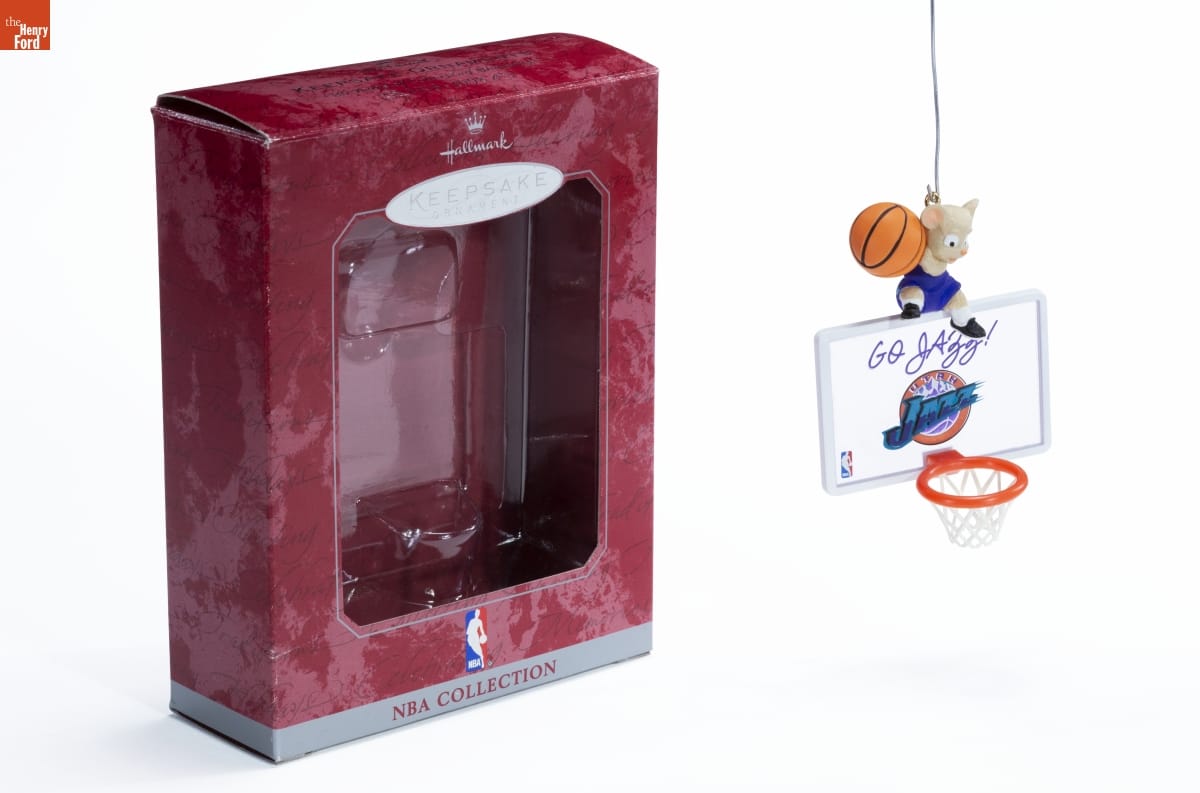
- Hallmark "NBA Collection: Utah Jazz" Christmas Ornament, 1998 - Already known for greeting cards, Hallmark introduced a line of Christmas ornaments in 1973. The company's annual release of an increasing array of ornaments revolutionized Christmas decorating, appealing to customers' interest in marking memories and milestones as well as expressing one's personality and unique tastes.
- 1998
- Collections - Artifact
Hallmark "NBA Collection: Utah Jazz" Christmas Ornament, 1998
Already known for greeting cards, Hallmark introduced a line of Christmas ornaments in 1973. The company's annual release of an increasing array of ornaments revolutionized Christmas decorating, appealing to customers' interest in marking memories and milestones as well as expressing one's personality and unique tastes.
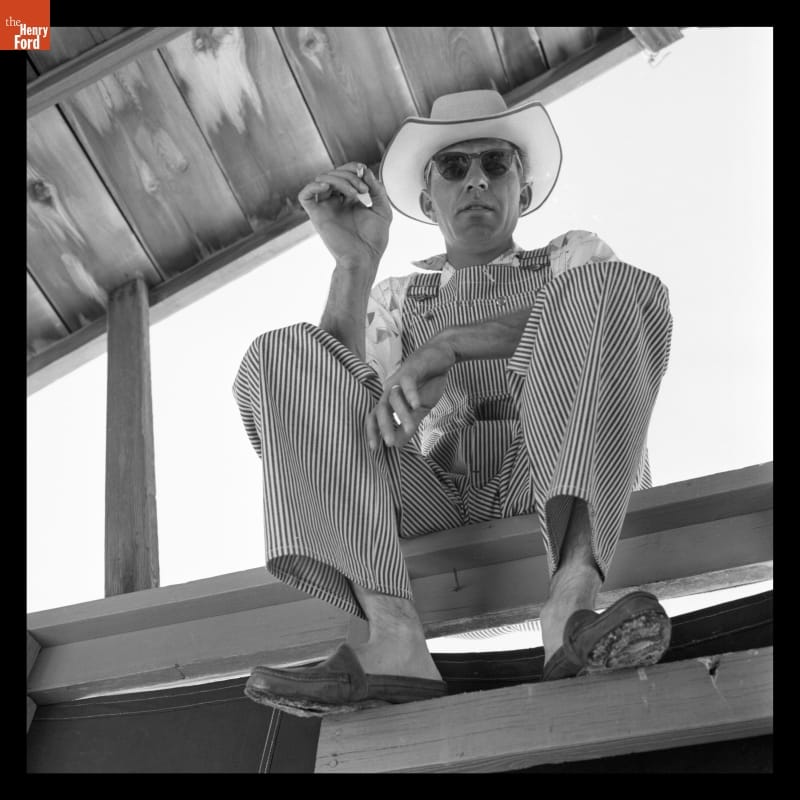
- Carroll Shelby at Bonneville Salt Flats, Utah, 1956 - Carroll Shelby, Donald Healey and Roy Jackson-Moore traveled to Utah's Bonneville Salt Flats in 1956 with a pair of heavily modified Austin-Healey streamliners. Healey's supercharged car averaged 201.10 miles per hour, fulfilling his personal ambition to break the 200-mph barrier. The naturally aspirated car driven by Shelby and Jackson-Moore set several speed and endurance records on a ten-mile circular course.
- 1956
- Collections - Artifact
Carroll Shelby at Bonneville Salt Flats, Utah, 1956
Carroll Shelby, Donald Healey and Roy Jackson-Moore traveled to Utah's Bonneville Salt Flats in 1956 with a pair of heavily modified Austin-Healey streamliners. Healey's supercharged car averaged 201.10 miles per hour, fulfilling his personal ambition to break the 200-mph barrier. The naturally aspirated car driven by Shelby and Jackson-Moore set several speed and endurance records on a ten-mile circular course.
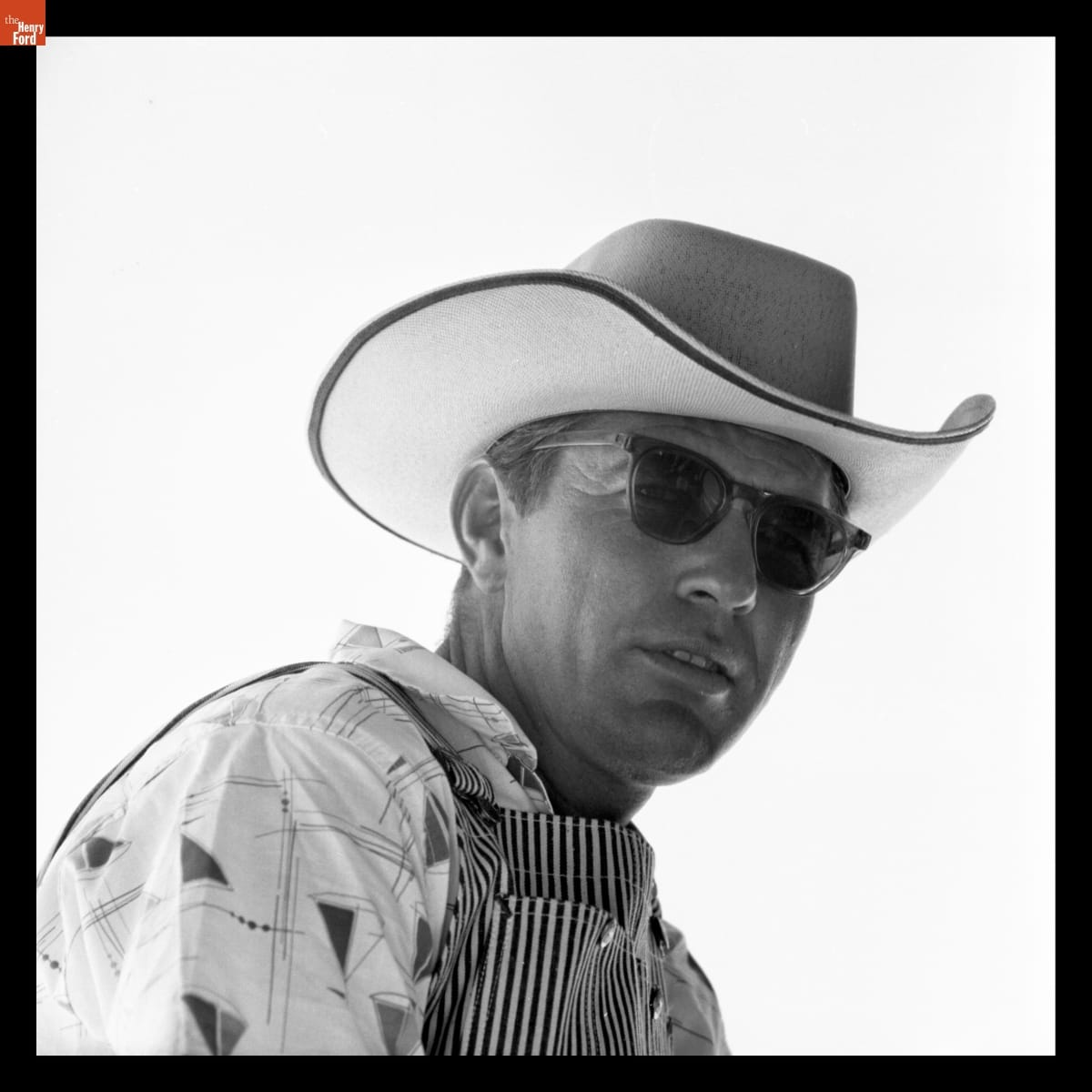
- Carroll Shelby at Bonneville Salt Flats, Utah, 1956 - Carroll Shelby, Donald Healey and Roy Jackson-Moore traveled to Utah's Bonneville Salt Flats in 1956 with a pair of heavily modified Austin-Healey streamliners. Healey's supercharged car averaged 201.10 miles per hour, fulfilling his personal ambition to break the 200-mph barrier. The naturally aspirated car driven by Shelby and Jackson-Moore set several speed and endurance records on a ten-mile circular course.
- 1956
- Collections - Artifact
Carroll Shelby at Bonneville Salt Flats, Utah, 1956
Carroll Shelby, Donald Healey and Roy Jackson-Moore traveled to Utah's Bonneville Salt Flats in 1956 with a pair of heavily modified Austin-Healey streamliners. Healey's supercharged car averaged 201.10 miles per hour, fulfilling his personal ambition to break the 200-mph barrier. The naturally aspirated car driven by Shelby and Jackson-Moore set several speed and endurance records on a ten-mile circular course.
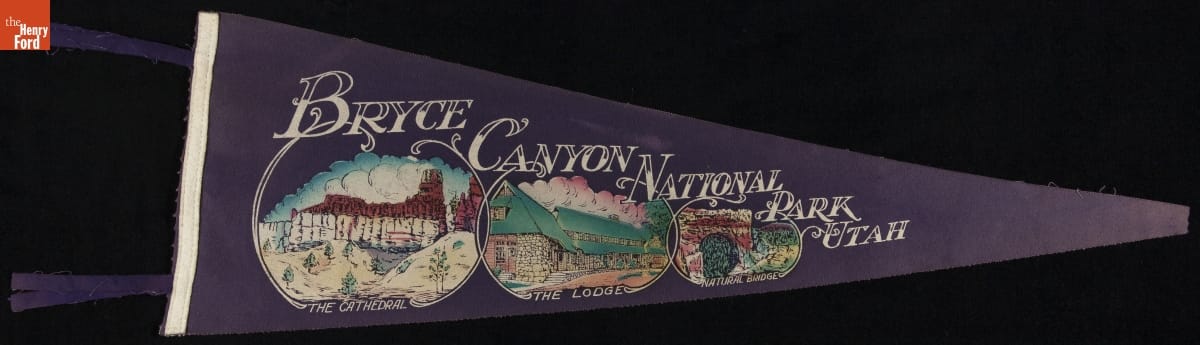
- Pennant, "Bryce Canyon National Park, Utah," 1940-1965 - Tourists purchase simple, inexpensive souvenirs as proof of their travels. These mementos transport vacationers back to the places they visited and the things they did. In the mid-20th century, felt pennants were trendy. Pennants from national parks usually depict an iconic geological feature or historic building. This one from Bryce Canyon National Park includes both -- scenic views of colorful rock formations and the park's lodge.
- 1940-1965
- Collections - Artifact
Pennant, "Bryce Canyon National Park, Utah," 1940-1965
Tourists purchase simple, inexpensive souvenirs as proof of their travels. These mementos transport vacationers back to the places they visited and the things they did. In the mid-20th century, felt pennants were trendy. Pennants from national parks usually depict an iconic geological feature or historic building. This one from Bryce Canyon National Park includes both -- scenic views of colorful rock formations and the park's lodge.