
Search
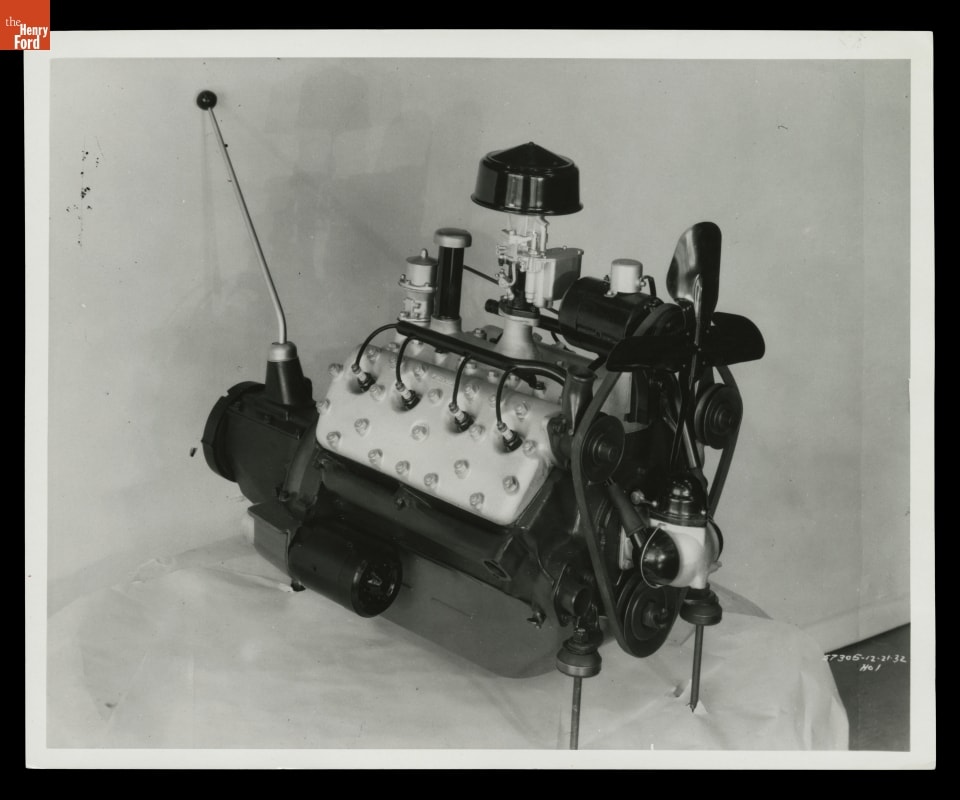
- 1932 Ford V-8 Engine - Henry Ford and Ford Motor Company revolutionized the automobile market again in 1932 with the introduction of the company's V-8 engine. By casting the engine's block as single piece, Ford kept manufacturing costs down and made the engine affordable to more motorists. The venerable engine remained in production until 1953.
- December 21, 1932
- Collections - Artifact
1932 Ford V-8 Engine
Henry Ford and Ford Motor Company revolutionized the automobile market again in 1932 with the introduction of the company's V-8 engine. By casting the engine's block as single piece, Ford kept manufacturing costs down and made the engine affordable to more motorists. The venerable engine remained in production until 1953.
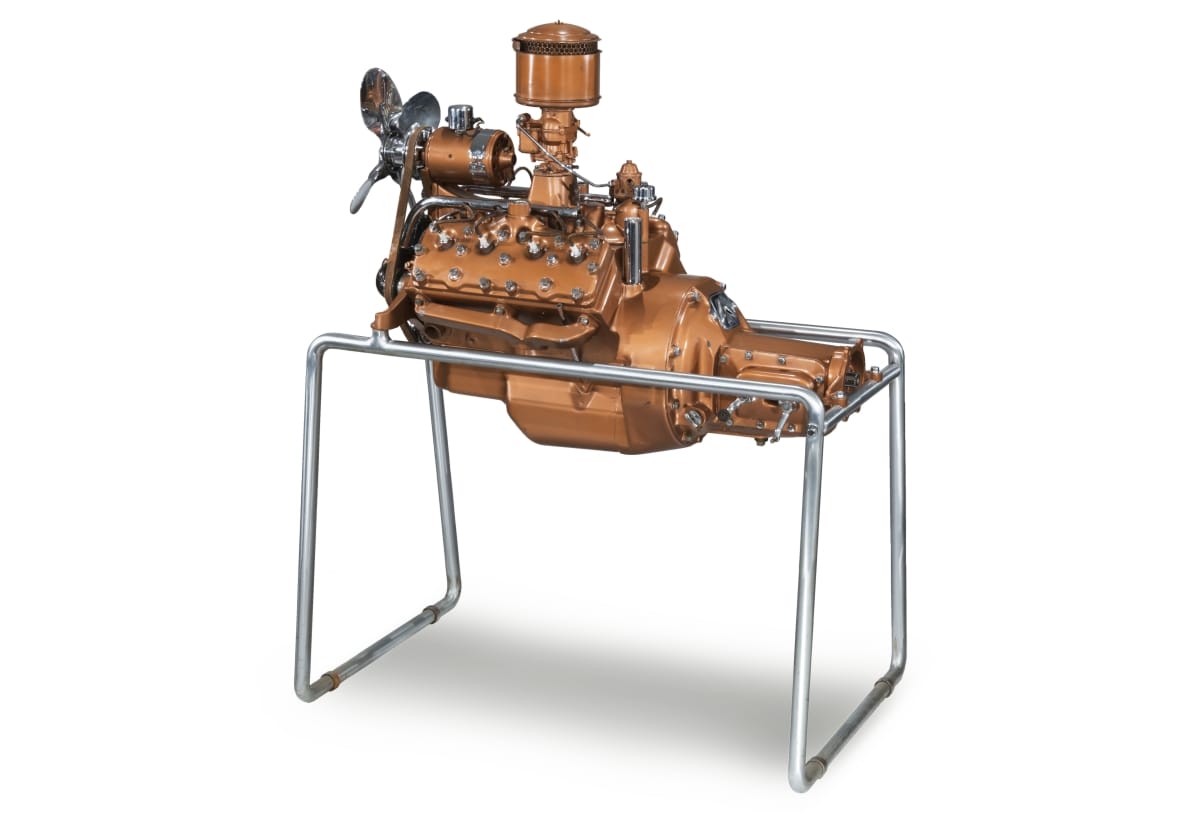
- Ford V-8 Automobile Engine, 1937 - Ford's affordable V-8 engine, introduced in 1932, proved so popular that the company stopped selling four-cylinder cars beginning with the 1935 model year. For 1937, Ford attracted economy-minded customers with a smaller 60-horsepower version of its V-8. The "60" engine had a displacement of 136 cubic inches compared with the larger 85-horsepower V-8's 221 cubic inches.
- 1937
- Collections - Artifact
Ford V-8 Automobile Engine, 1937
Ford's affordable V-8 engine, introduced in 1932, proved so popular that the company stopped selling four-cylinder cars beginning with the 1935 model year. For 1937, Ford attracted economy-minded customers with a smaller 60-horsepower version of its V-8. The "60" engine had a displacement of 136 cubic inches compared with the larger 85-horsepower V-8's 221 cubic inches.
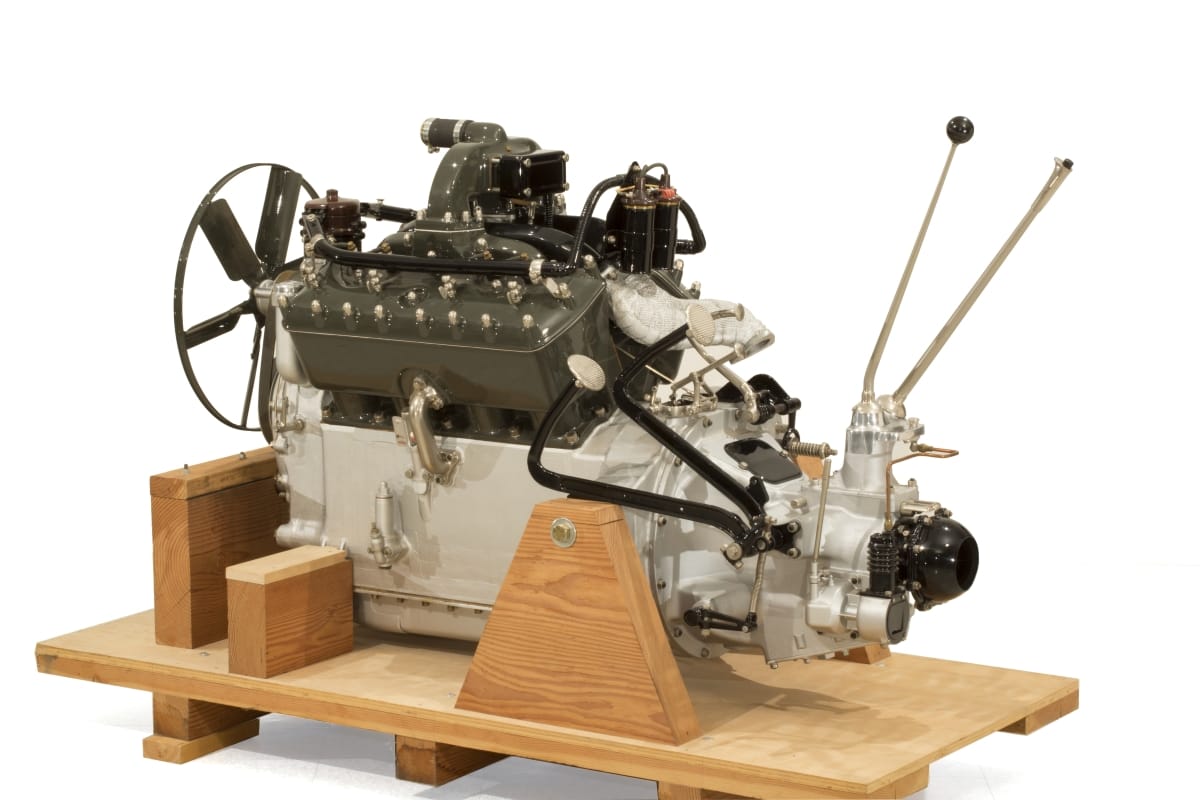
- Lincoln V-8 Automobile Engine, 1923 - Henry Leland's Lincoln automobile may have lacked style, but its engine was excellent. Ford Motor Company, which acquired Lincoln in 1922, initially made few modifications to the V-8. For 1923, its cylinder-head water capacity was increased to assist in cooling, and its iron pistons were replaced with aluminum units. The 90-horsepower engine had a displacement of 358 cubic inches.
- 1923
- Collections - Artifact
Lincoln V-8 Automobile Engine, 1923
Henry Leland's Lincoln automobile may have lacked style, but its engine was excellent. Ford Motor Company, which acquired Lincoln in 1922, initially made few modifications to the V-8. For 1923, its cylinder-head water capacity was increased to assist in cooling, and its iron pistons were replaced with aluminum units. The 90-horsepower engine had a displacement of 358 cubic inches.
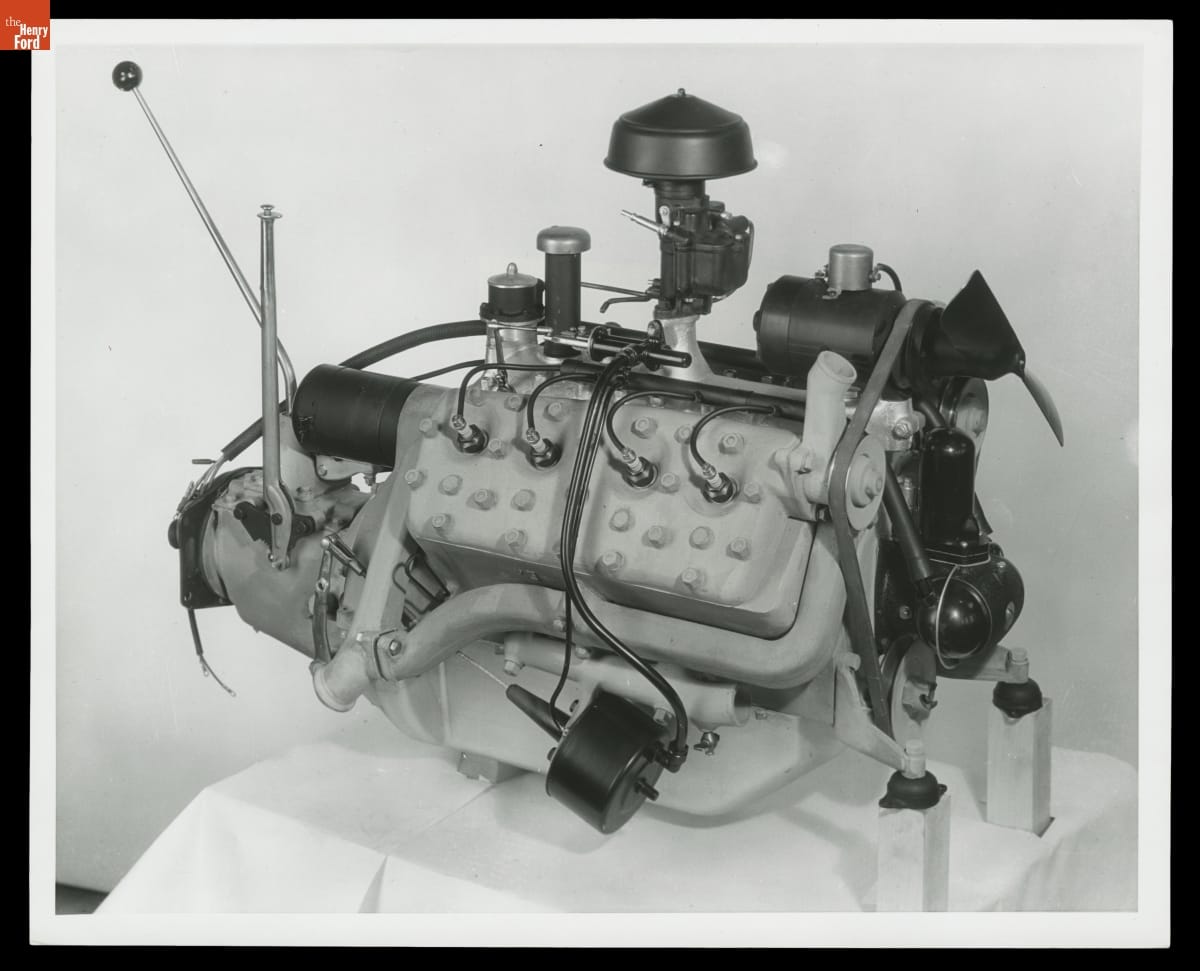
- Photograph, 1932 Ford V-8 Engine - Developing the famous Ford V-8 engine required a lot of experimentation over two years. The exhaust manifolds and cooling water inlets on this early version differ from those on the final design.
- March 02, 1932
- Collections - Artifact
Photograph, 1932 Ford V-8 Engine
Developing the famous Ford V-8 engine required a lot of experimentation over two years. The exhaust manifolds and cooling water inlets on this early version differ from those on the final design.
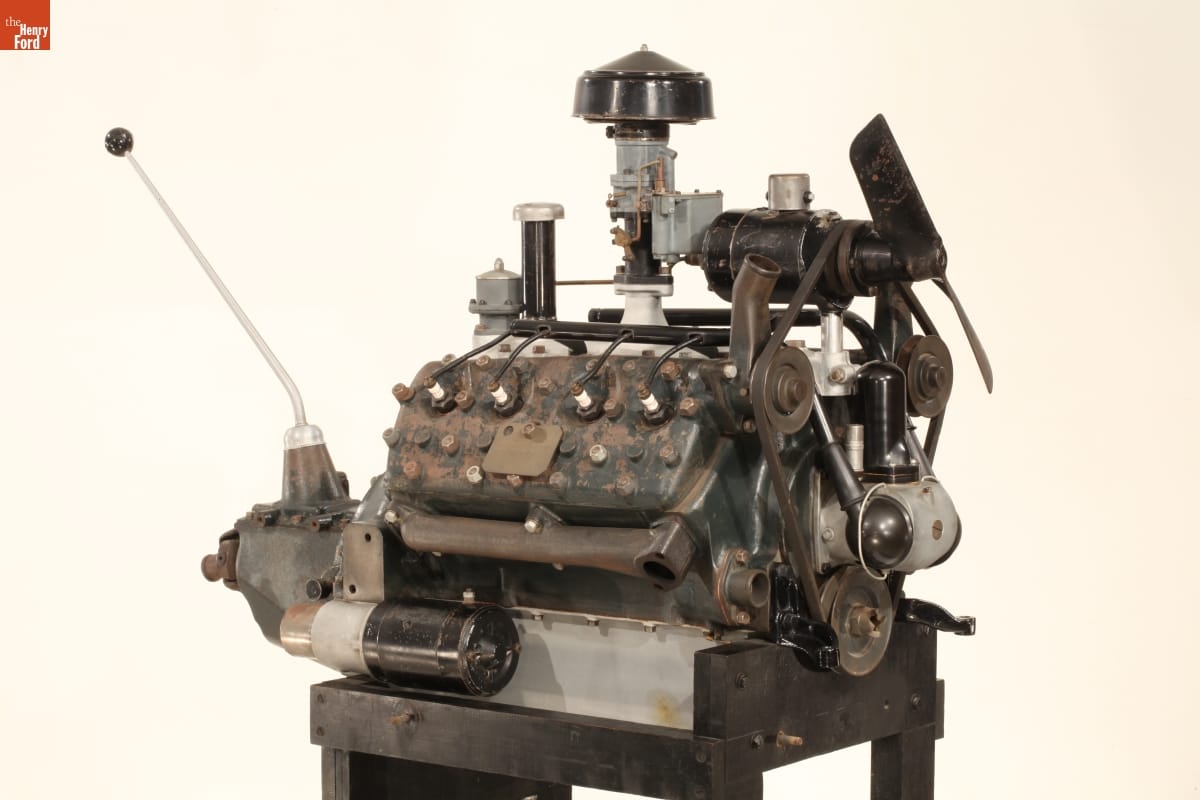
- 1932 Ford V-8 Engine, No. 1 - Henry Ford and Ford Motor Company revolutionized the auto industry once again in 1932 with the introduction of a low-priced V-8 engine. By casting the crankcase and cylinder banks as a single unit, Ford cut manufacturing costs and could offer its V-8 in a car starting under $500. Ford's original V-8 design remained in production, with modifications, until 1953.
- 1932
- Collections - Artifact
1932 Ford V-8 Engine, No. 1
Henry Ford and Ford Motor Company revolutionized the auto industry once again in 1932 with the introduction of a low-priced V-8 engine. By casting the crankcase and cylinder banks as a single unit, Ford cut manufacturing costs and could offer its V-8 in a car starting under $500. Ford's original V-8 design remained in production, with modifications, until 1953.
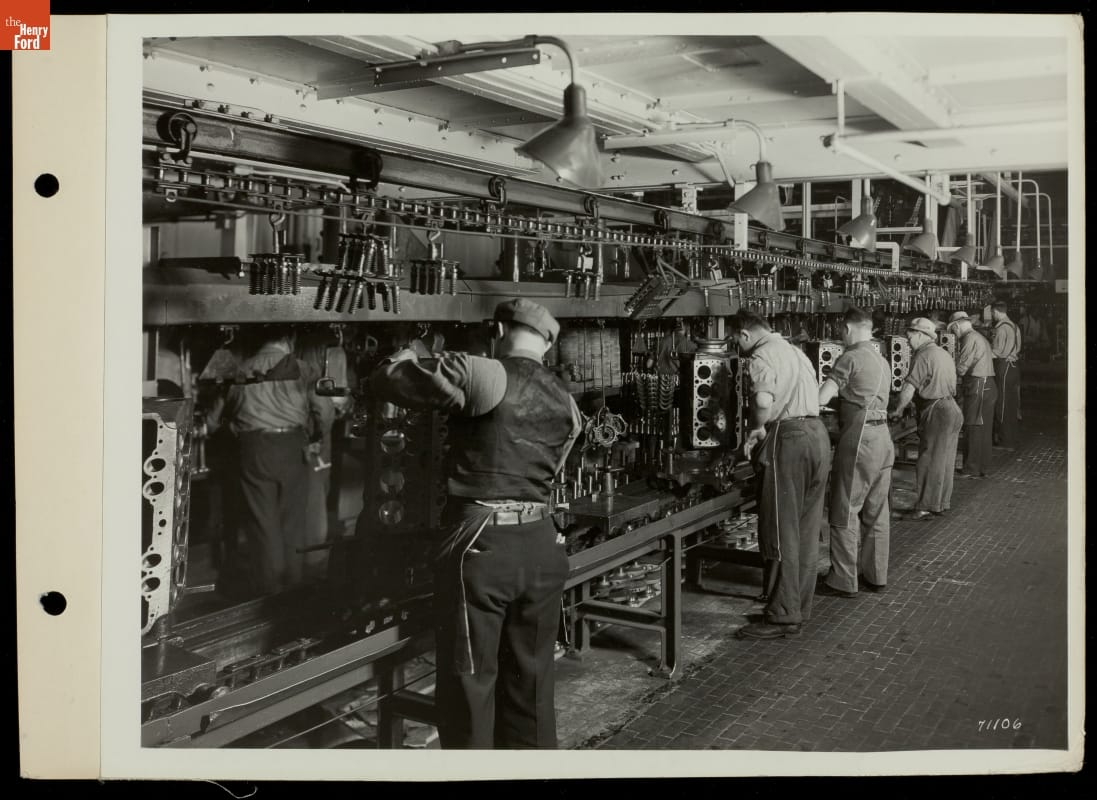
- Ford V-8 Engine Assembly Line, 1938 - Engineers at Ford's Highland Park plant had fine-tuned the moving assembly line. With this experience in hand, Ford created the "B" Building at its new River Rouge complex with extensive conveyer systems to accommodate the flow of parts and assembly processes. These line workers assemble Ford's radical V-8 engines, the first 8-cylinder engines available for inexpensive cars.
- November 25, 1938
- Collections - Artifact
Ford V-8 Engine Assembly Line, 1938
Engineers at Ford's Highland Park plant had fine-tuned the moving assembly line. With this experience in hand, Ford created the "B" Building at its new River Rouge complex with extensive conveyer systems to accommodate the flow of parts and assembly processes. These line workers assemble Ford's radical V-8 engines, the first 8-cylinder engines available for inexpensive cars.
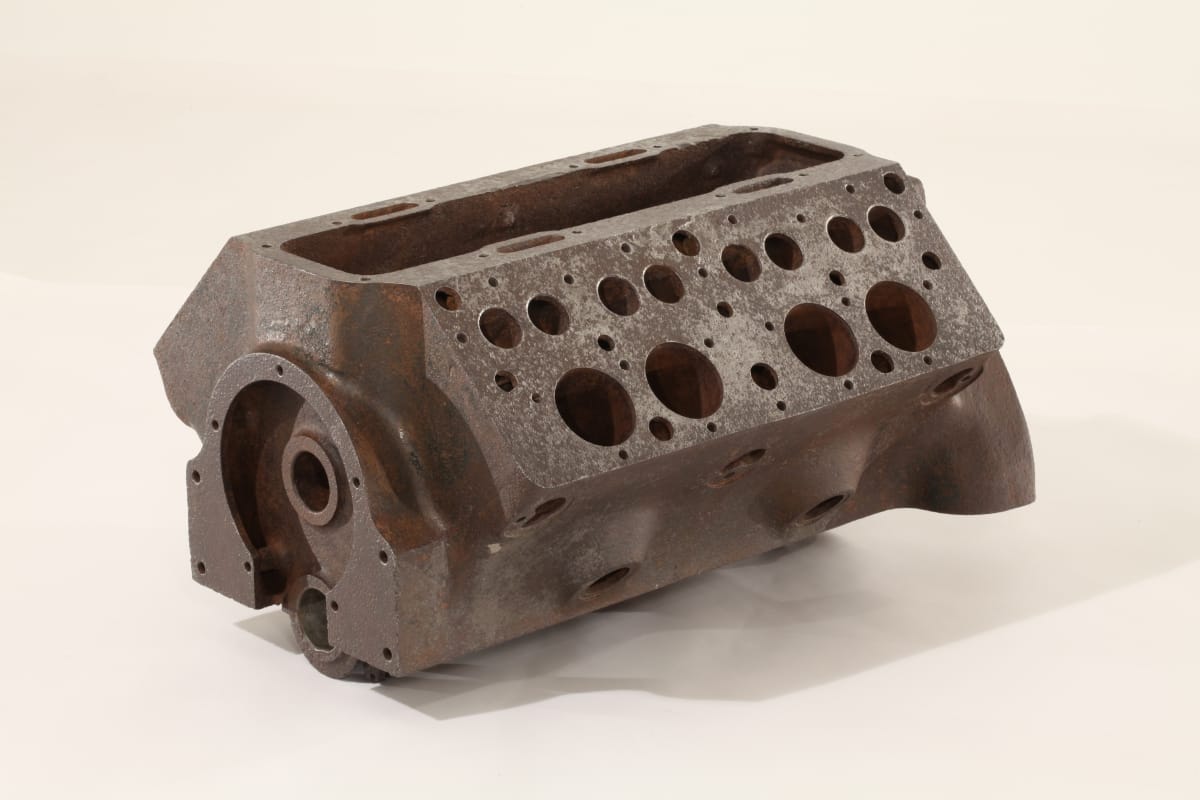
- Ford V-8 Engine Block, 1930-1931 - When Chevrolet introduced a six-cylinder engine in 1929, Ford's four-cylinder seemed outdated. So, Henry Ford decided to go Chevy two cylinders better and build a V-8. Ford engineers tried many different versions of the new engine. This experimental cylinder block was cast in 1930 or 1931.
- 1930-1931
- Collections - Artifact
Ford V-8 Engine Block, 1930-1931
When Chevrolet introduced a six-cylinder engine in 1929, Ford's four-cylinder seemed outdated. So, Henry Ford decided to go Chevy two cylinders better and build a V-8. Ford engineers tried many different versions of the new engine. This experimental cylinder block was cast in 1930 or 1931.
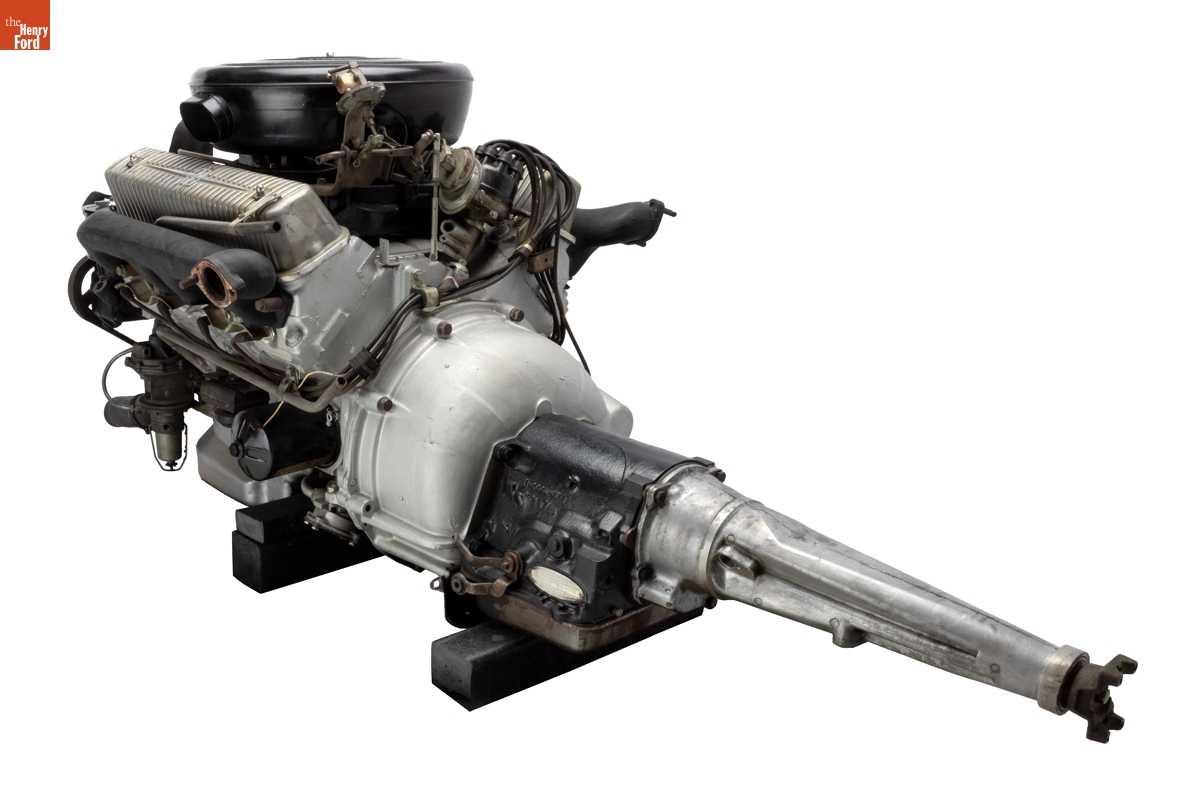
- Lincoln Y-Block V-8 Engine, 1956 - Lincoln Motor Company introduced the Y-block engine -- named for its deep-skirted block, resembling the stem in the letter "Y" -- for 1952. The engine, an overhead-valve V-8, came in response to popular overhead-valve engines from General Motors and Chrysler. Offered in multiple displacements, Lincoln's Y-block remained in production through 1957. This 368-cubic-inch version dates to 1956.
- 1956
- Collections - Artifact
Lincoln Y-Block V-8 Engine, 1956
Lincoln Motor Company introduced the Y-block engine -- named for its deep-skirted block, resembling the stem in the letter "Y" -- for 1952. The engine, an overhead-valve V-8, came in response to popular overhead-valve engines from General Motors and Chrysler. Offered in multiple displacements, Lincoln's Y-block remained in production through 1957. This 368-cubic-inch version dates to 1956.
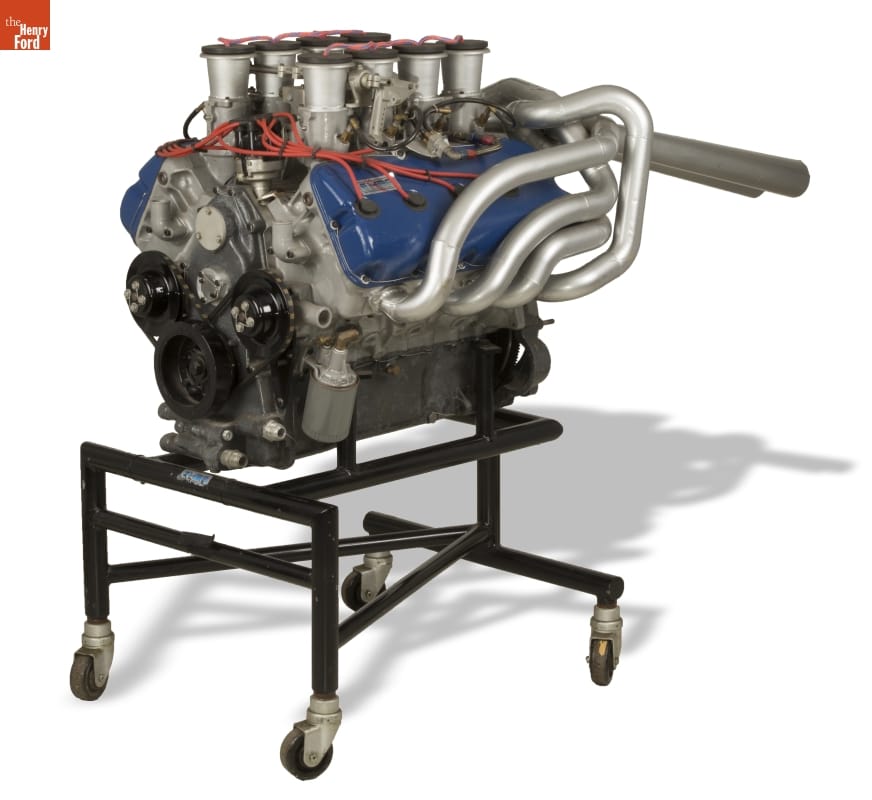
- Ford "Calliope" V-8 Automobile Engine, 1968 - Ford engineers developed the aluminum-block 427-cubic-inch "calliope" engine for the 1968 Le Mans 24-hour race. Three valves per cylinder were connected to pushrods driven by twin camshafts in the block. The distinctive fuel injector stacks above each cylinder, resembling whistles on a musical calliope, gave the engine its nickname. Rules changes at Le Mans prevented the engine from ever racing.
- 1968
- Collections - Artifact
Ford "Calliope" V-8 Automobile Engine, 1968
Ford engineers developed the aluminum-block 427-cubic-inch "calliope" engine for the 1968 Le Mans 24-hour race. Three valves per cylinder were connected to pushrods driven by twin camshafts in the block. The distinctive fuel injector stacks above each cylinder, resembling whistles on a musical calliope, gave the engine its nickname. Rules changes at Le Mans prevented the engine from ever racing.
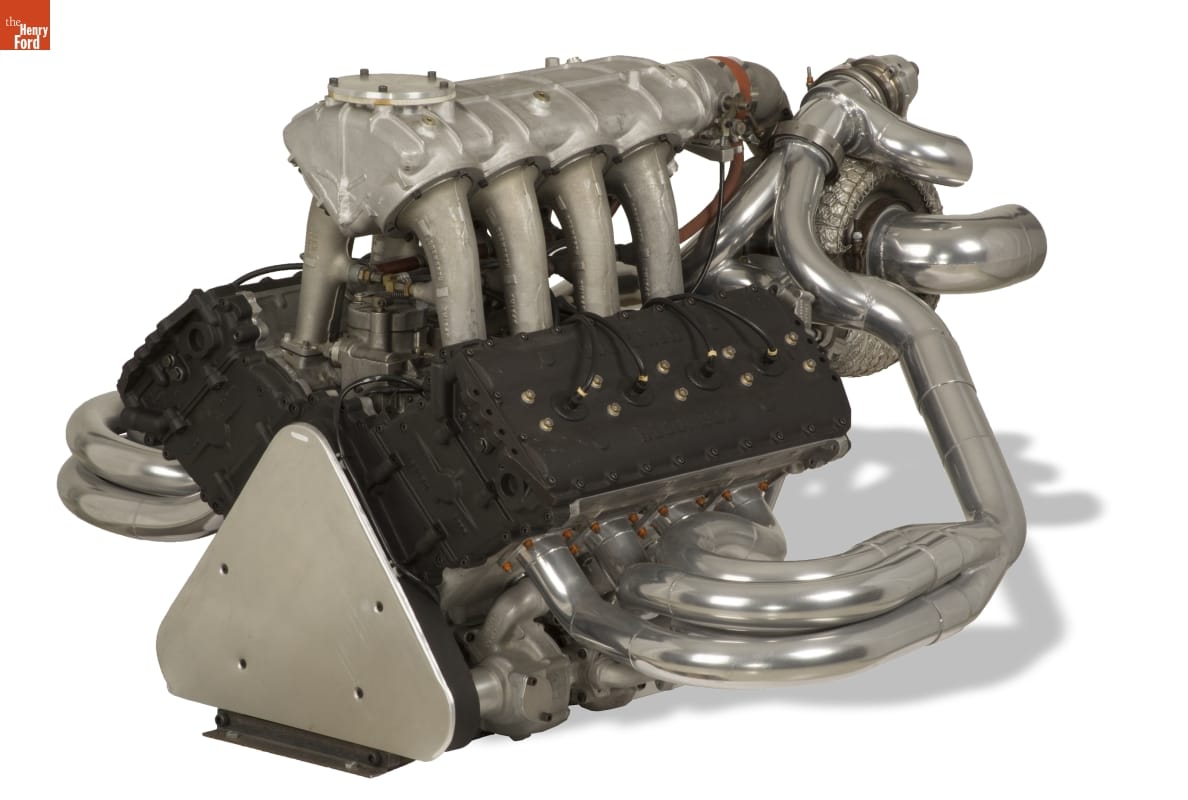
- Cosworth DFX V-8 Engine, 1975-1985 - The Cosworth DFX engine won its first race in 1976. The turbocharged V-8, based on an earlier Formula One engine designed by British firm Cosworth and funded by Ford Motor Company, dominated Indy car racing well into the 1980s. Cosworth DFX engines powered all ten Indianapolis 500 winners between 1978 and 1987.
- 1975-1985
- Collections - Artifact
Cosworth DFX V-8 Engine, 1975-1985
The Cosworth DFX engine won its first race in 1976. The turbocharged V-8, based on an earlier Formula One engine designed by British firm Cosworth and funded by Ford Motor Company, dominated Indy car racing well into the 1980s. Cosworth DFX engines powered all ten Indianapolis 500 winners between 1978 and 1987.