
Search
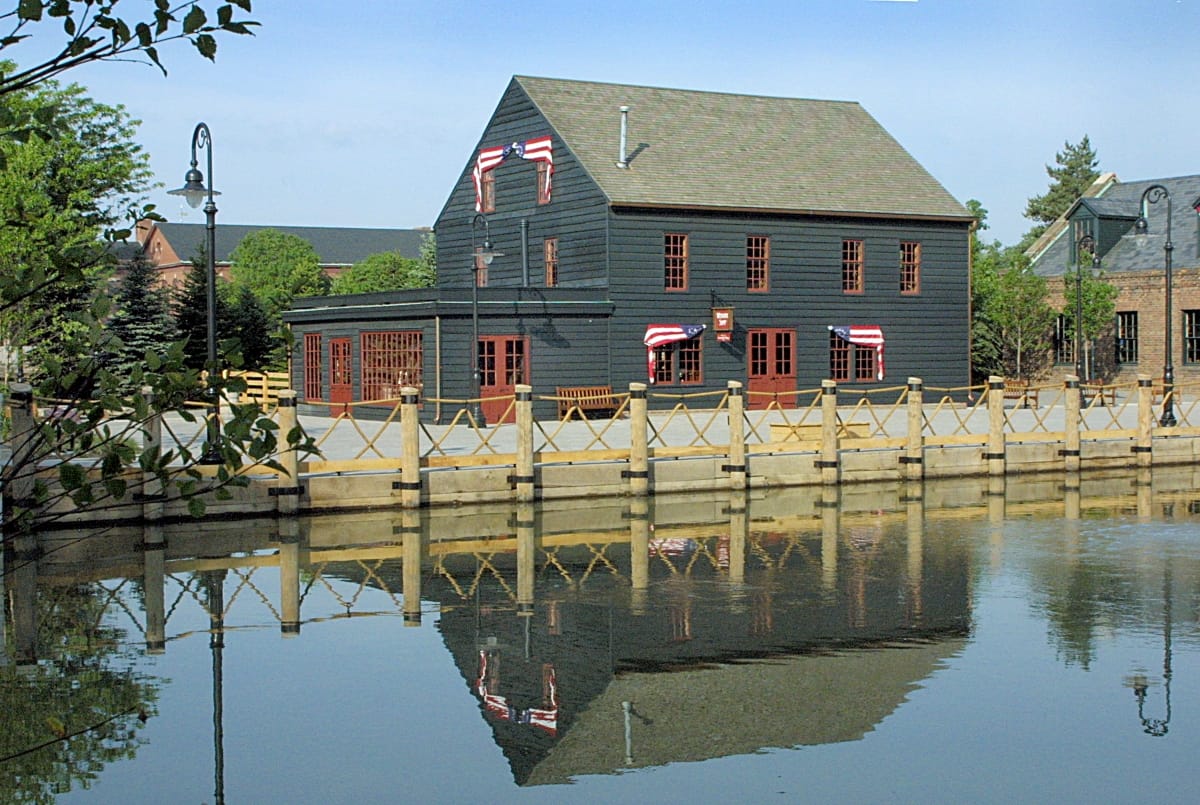
- Weaving Shop - The Greenfield Village Weaving Shop demonstrates the evolution of textile production from the colonial home and craft shop, through the Industrial Revolution to commercial factory. Housed in a converted 1840s Georgia cotton mill, the Weaving Shop contains a number of working looms, including one of the few operating mechanical Jacquard looms in North America.
- circa 1840
- Collections - Artifact
Weaving Shop
The Greenfield Village Weaving Shop demonstrates the evolution of textile production from the colonial home and craft shop, through the Industrial Revolution to commercial factory. Housed in a converted 1840s Georgia cotton mill, the Weaving Shop contains a number of working looms, including one of the few operating mechanical Jacquard looms in North America.
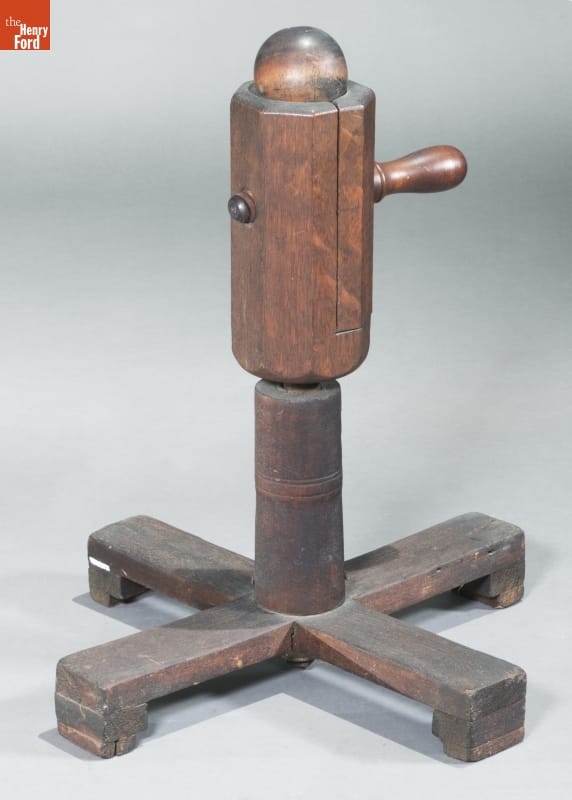
- Weaving Tool Part -
- Collections - Artifact
Weaving Tool Part
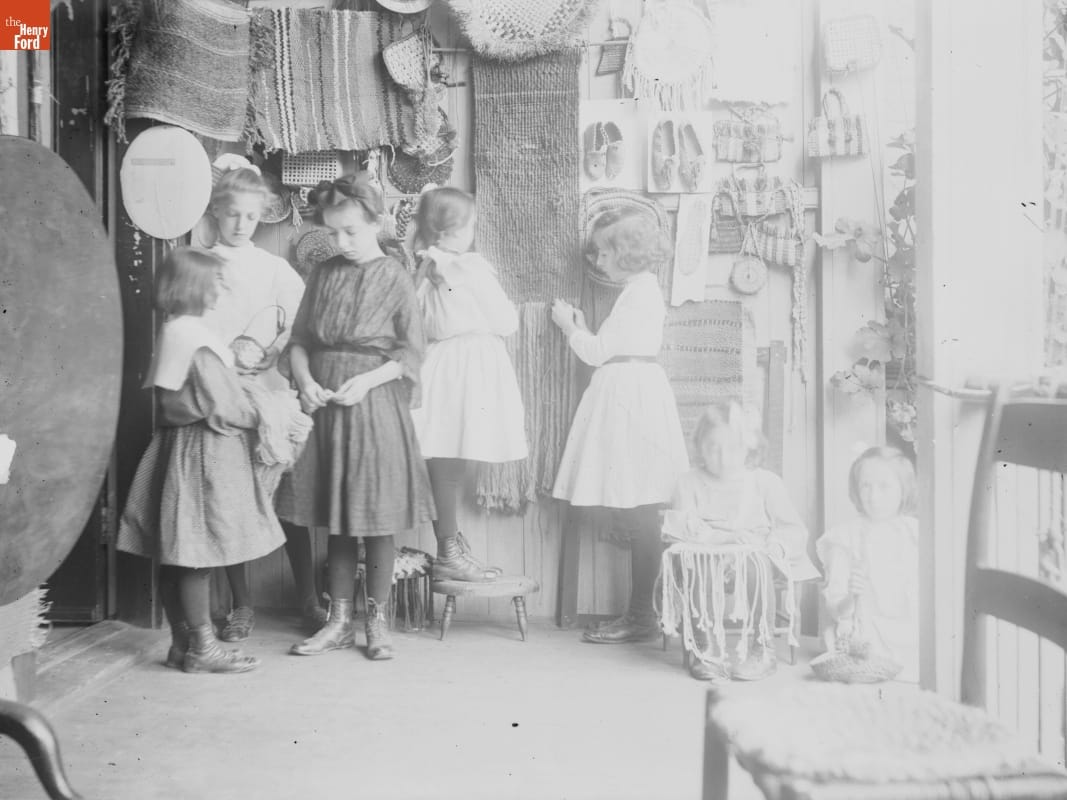
- Children Weaving, 1890-1915 - In 1890, Jenny Young Chandler, 25 years old and recently widowed, began working for the <EM>New York Herald</EM>. As a photojournalist and feature writer, Chandler captured life in Brooklyn, New York, and vicinity. By 1922, the time of her death, she had produced over 800 glass plate negatives. Her sensitive, insightful photographs depict people from all walks of life and the world in which they lived.
- 1890-1915
- Collections - Artifact
Children Weaving, 1890-1915
In 1890, Jenny Young Chandler, 25 years old and recently widowed, began working for the New York Herald. As a photojournalist and feature writer, Chandler captured life in Brooklyn, New York, and vicinity. By 1922, the time of her death, she had produced over 800 glass plate negatives. Her sensitive, insightful photographs depict people from all walks of life and the world in which they lived.
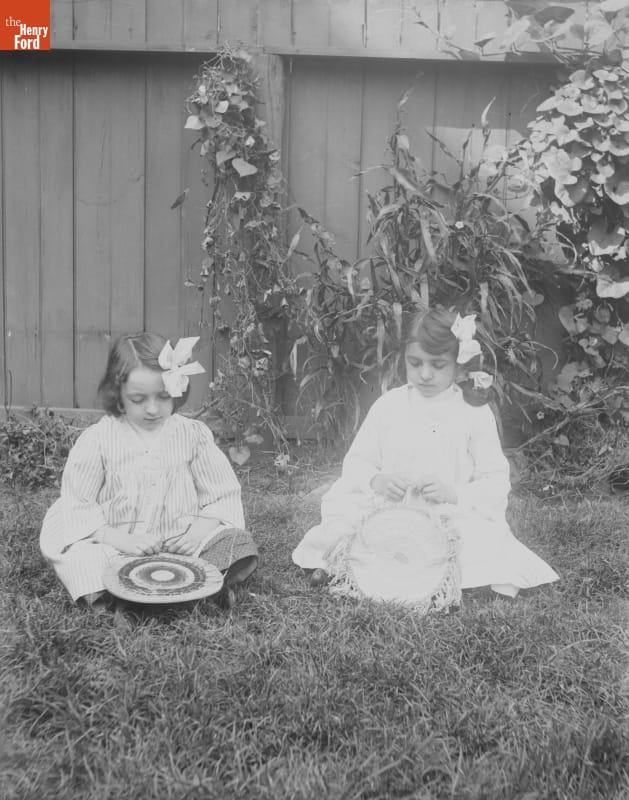
- Girls Weaving, 1890-1915 - In 1890, Jenny Young Chandler, 25 years old and recently widowed, began working for the <EM>New York Herald</EM>. As a photojournalist and feature writer, Chandler captured life in Brooklyn, New York, and vicinity. By 1922, the time of her death, she had produced over 800 glass plate negatives. Her sensitive, insightful photographs depict people from all walks of life and the world in which they lived.
- 1890-1915
- Collections - Artifact
Girls Weaving, 1890-1915
In 1890, Jenny Young Chandler, 25 years old and recently widowed, began working for the New York Herald. As a photojournalist and feature writer, Chandler captured life in Brooklyn, New York, and vicinity. By 1922, the time of her death, she had produced over 800 glass plate negatives. Her sensitive, insightful photographs depict people from all walks of life and the world in which they lived.
- Weaving You Can Wear, 1973 -

- 1973
- Collections - Artifact
Weaving You Can Wear, 1973
- Swedish Weaving, Draperies, 1890-1915 - In 1890, Jenny Young Chandler, 25 years old and recently widowed, began working for the <EM>New York Herald</EM>. As a photojournalist and feature writer, Chandler captured life in Brooklyn, New York, and vicinity. She also documented collections of private individuals and museums -- some of which were featured in magazine articles for collectors. By 1922, the time of her death, she had produced over 800 glass plate negatives.
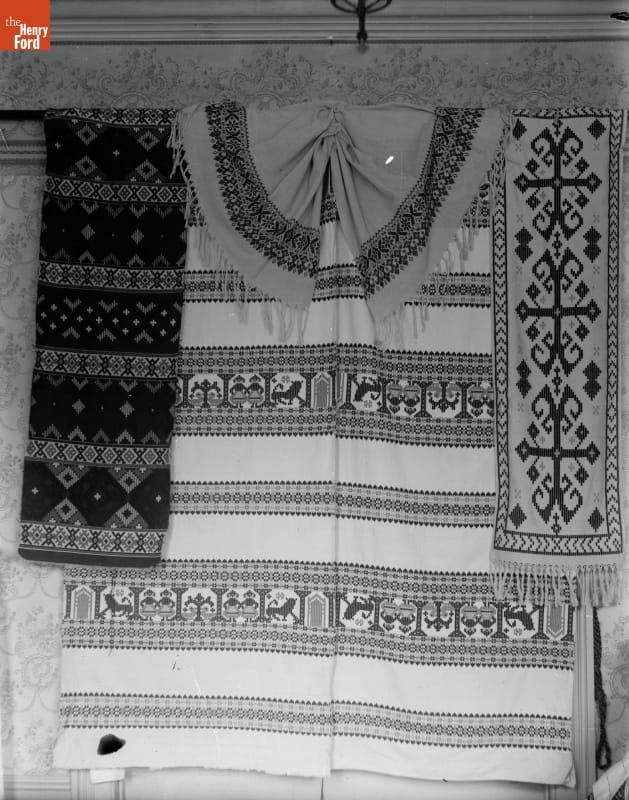
- 1890-1915
- Collections - Artifact
Swedish Weaving, Draperies, 1890-1915
In 1890, Jenny Young Chandler, 25 years old and recently widowed, began working for the New York Herald. As a photojournalist and feature writer, Chandler captured life in Brooklyn, New York, and vicinity. She also documented collections of private individuals and museums -- some of which were featured in magazine articles for collectors. By 1922, the time of her death, she had produced over 800 glass plate negatives.
- Women Basket Weaving, 1890-1915 - In 1890, Jenny Young Chandler, 25 years old and recently widowed, began working for the <EM>New York Herald</EM>. As a photojournalist and feature writer, Chandler captured life in Brooklyn, New York, and vicinity. By 1922, the time of her death, she had produced over 800 glass plate negatives. Her sensitive, insightful photographs depict people from all walks of life and the world in which they lived.
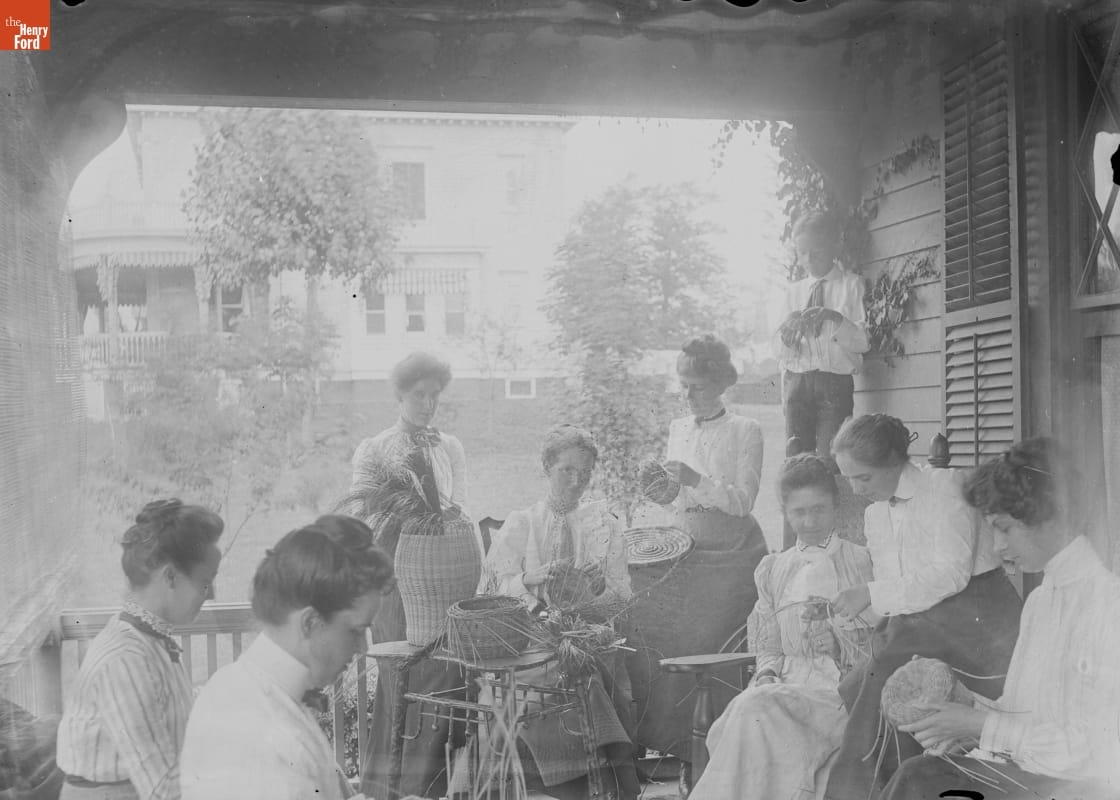
- 1890-1915
- Collections - Artifact
Women Basket Weaving, 1890-1915
In 1890, Jenny Young Chandler, 25 years old and recently widowed, began working for the New York Herald. As a photojournalist and feature writer, Chandler captured life in Brooklyn, New York, and vicinity. By 1922, the time of her death, she had produced over 800 glass plate negatives. Her sensitive, insightful photographs depict people from all walks of life and the world in which they lived.
- Swedish Weaving, Draperies, 1890-1915 - In 1890, Jenny Young Chandler, 25 years old and recently widowed, began working for the <EM>New York Herald</EM>. As a photojournalist and feature writer, Chandler captured life in Brooklyn, New York, and vicinity. She also documented collections of private individuals and museums -- some of which were featured in magazine articles for collectors. By 1922, the time of her death, she had produced over 800 glass plate negatives.
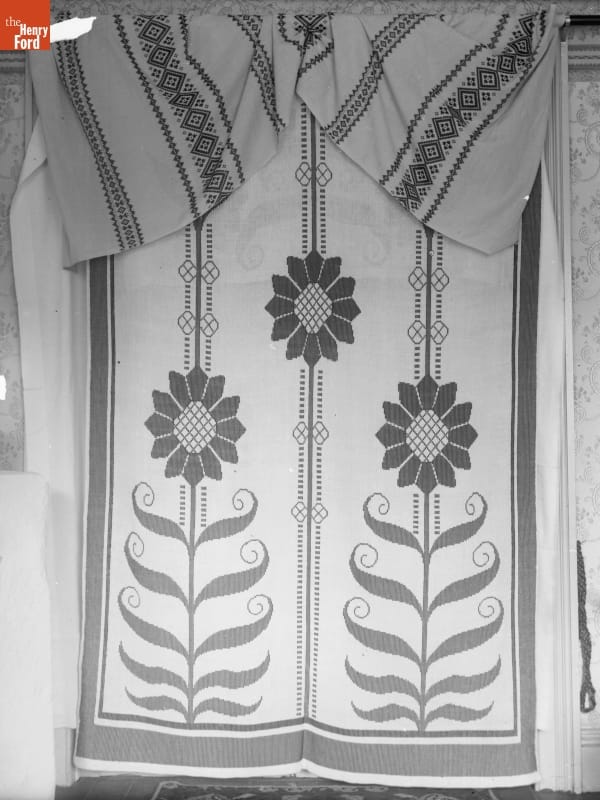
- 1890-1915
- Collections - Artifact
Swedish Weaving, Draperies, 1890-1915
In 1890, Jenny Young Chandler, 25 years old and recently widowed, began working for the New York Herald. As a photojournalist and feature writer, Chandler captured life in Brooklyn, New York, and vicinity. She also documented collections of private individuals and museums -- some of which were featured in magazine articles for collectors. By 1922, the time of her death, she had produced over 800 glass plate negatives.
- Swedish Weaving, Shirtwaist, 1890-1915 - In 1890, Jenny Young Chandler, 25 years old and recently widowed, began working for the <EM>New York Herald</EM>. As a photojournalist and feature writer, Chandler captured life in Brooklyn, New York, and vicinity. She also documented collections of private individuals and museums -- some of which were featured in magazine articles for collectors. By 1922, the time of her death, she had produced over 800 glass plate negatives.
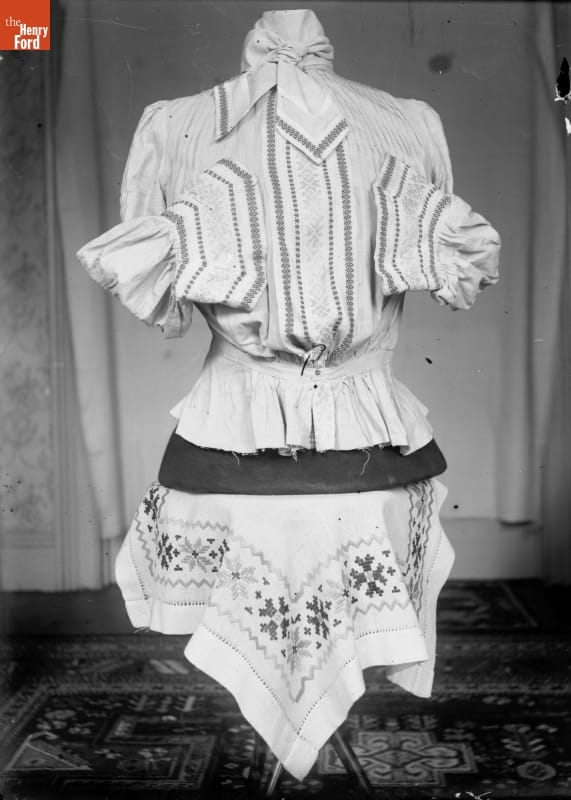
- 1890-1915
- Collections - Artifact
Swedish Weaving, Shirtwaist, 1890-1915
In 1890, Jenny Young Chandler, 25 years old and recently widowed, began working for the New York Herald. As a photojournalist and feature writer, Chandler captured life in Brooklyn, New York, and vicinity. She also documented collections of private individuals and museums -- some of which were featured in magazine articles for collectors. By 1922, the time of her death, she had produced over 800 glass plate negatives.
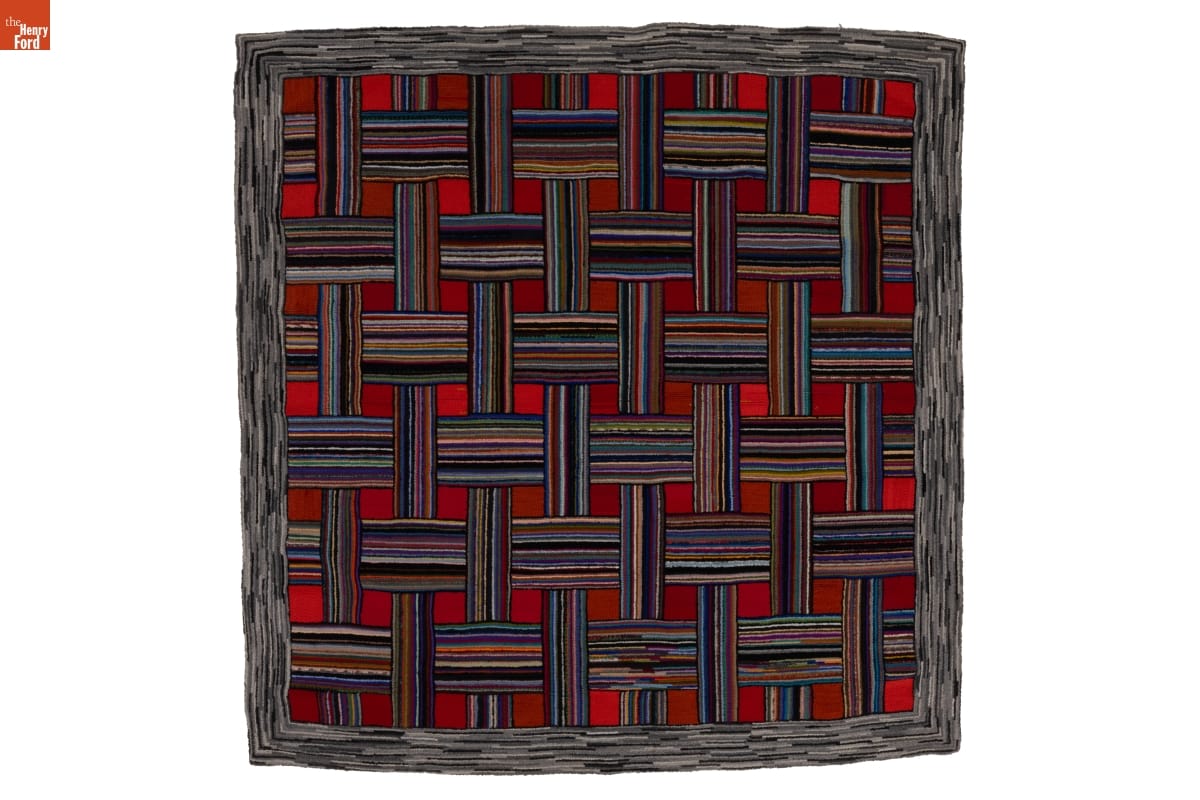
- "Geometric Weave" Hooked Rug, 1992 - Emeline Morrow Miner (1914-1997), a self-taught fiber artist originally from Cedar Rapids, Iowa, made this hooked rug. Miner was a self-taught artist originally from Cedar Rapids, Iowa; she created all of her patterns and even made her materials by thrifting and repurposing old clothes. In addition to rug hooking, Miner also did macrame, quilting, leatherwork, and watercolor.
- 1992
- Collections - Artifact
"Geometric Weave" Hooked Rug, 1992
Emeline Morrow Miner (1914-1997), a self-taught fiber artist originally from Cedar Rapids, Iowa, made this hooked rug. Miner was a self-taught artist originally from Cedar Rapids, Iowa; she created all of her patterns and even made her materials by thrifting and repurposing old clothes. In addition to rug hooking, Miner also did macrame, quilting, leatherwork, and watercolor.