
Search
- Railroad Crossing Signal, September 1924 - The first automated, flashing red light railroad crossing signal appeared around 1913. The flashing lights mimicked the motion of a lantern being swung back and forth -- long a signal for "stop" on American railroads. The X-shaped crossbuck sign, in wide use by 1900, was inspired by the skull and crossbones -- a universal symbol for danger.
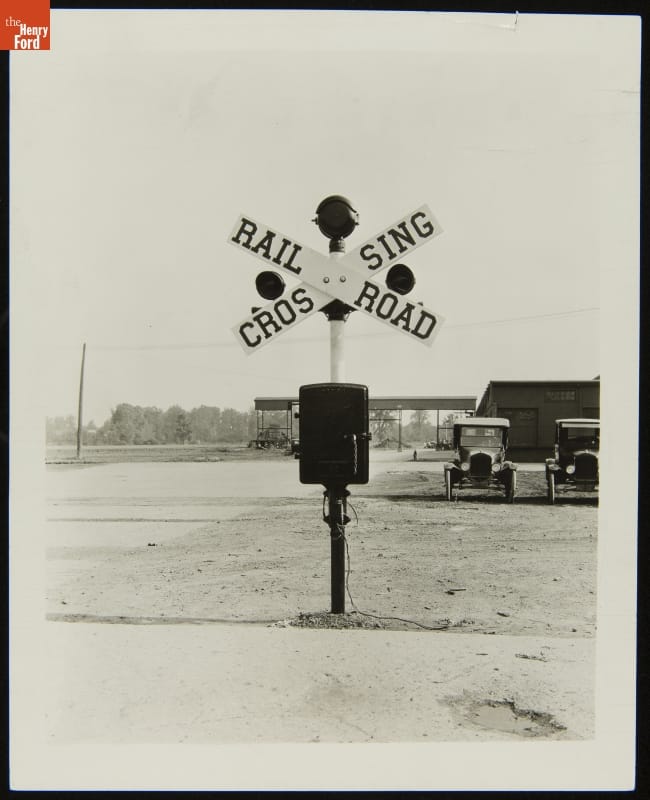
- September 06, 1924
- Collections - Artifact
Railroad Crossing Signal, September 1924
The first automated, flashing red light railroad crossing signal appeared around 1913. The flashing lights mimicked the motion of a lantern being swung back and forth -- long a signal for "stop" on American railroads. The X-shaped crossbuck sign, in wide use by 1900, was inspired by the skull and crossbones -- a universal symbol for danger.
- Railroad Crossing Signal, September 1924 - Wigwag railroad crossing signals, named for the way they swung back and forth when activated, first appeared around 1914. Their waving action simulated the motion of a lantern being swung back and forth -- long a signal for "stop" on American railroads. Typically, wigwags were driven by a pair of electromagnets that alternately pulled and released the pendulum.
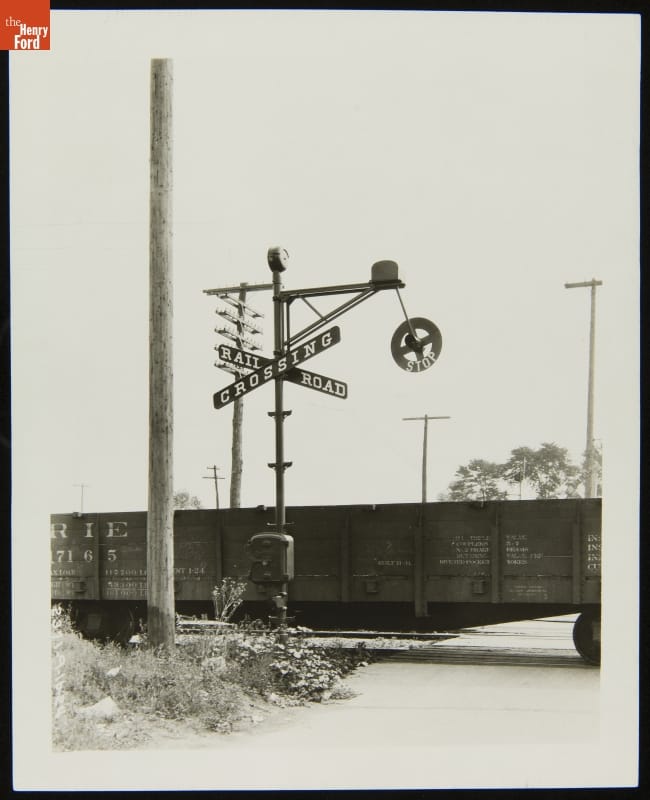
- September 16, 1924
- Collections - Artifact
Railroad Crossing Signal, September 1924
Wigwag railroad crossing signals, named for the way they swung back and forth when activated, first appeared around 1914. Their waving action simulated the motion of a lantern being swung back and forth -- long a signal for "stop" on American railroads. Typically, wigwags were driven by a pair of electromagnets that alternately pulled and released the pendulum.
- Railroad Crossing Warning Signal, September 1924 - Wigwag railroad crossing signals, named for the way they swung back and forth when activated, first appeared around 1914. Their waving action simulated the motion of a lantern being swung back and forth -- long a signal for "stop" on American railroads. Typically, wigwags were driven by a pair of electromagnets that alternately pulled and released the pendulum.
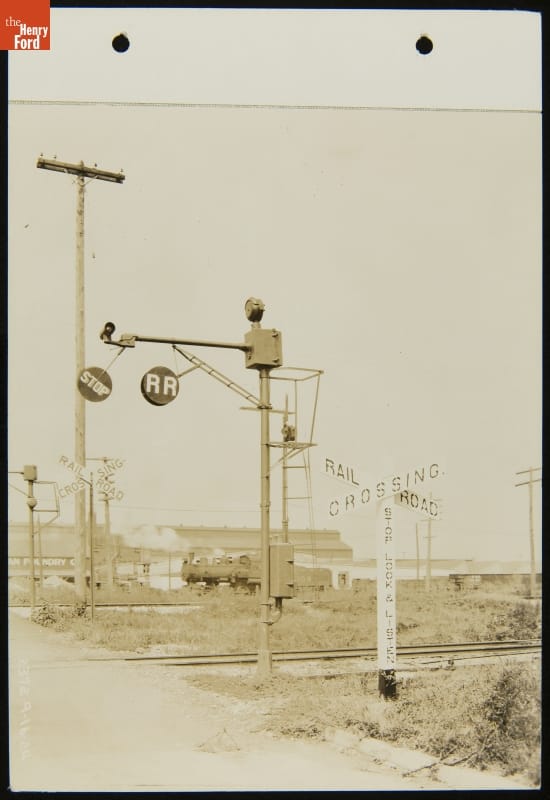
- September 16, 1924
- Collections - Artifact
Railroad Crossing Warning Signal, September 1924
Wigwag railroad crossing signals, named for the way they swung back and forth when activated, first appeared around 1914. Their waving action simulated the motion of a lantern being swung back and forth -- long a signal for "stop" on American railroads. Typically, wigwags were driven by a pair of electromagnets that alternately pulled and released the pendulum.
- Railroad Crossing Flash Signal, September 1924 - The first automated, flashing red light railroad crossing signal appeared around 1913. The flashing lights mimicked the motion of a lantern being swung back and forth -- long a signal for "stop" on American railroads. The X-shaped crossbuck sign, in wide use by 1900, was inspired by the skull and crossbones -- a universal symbol for danger.
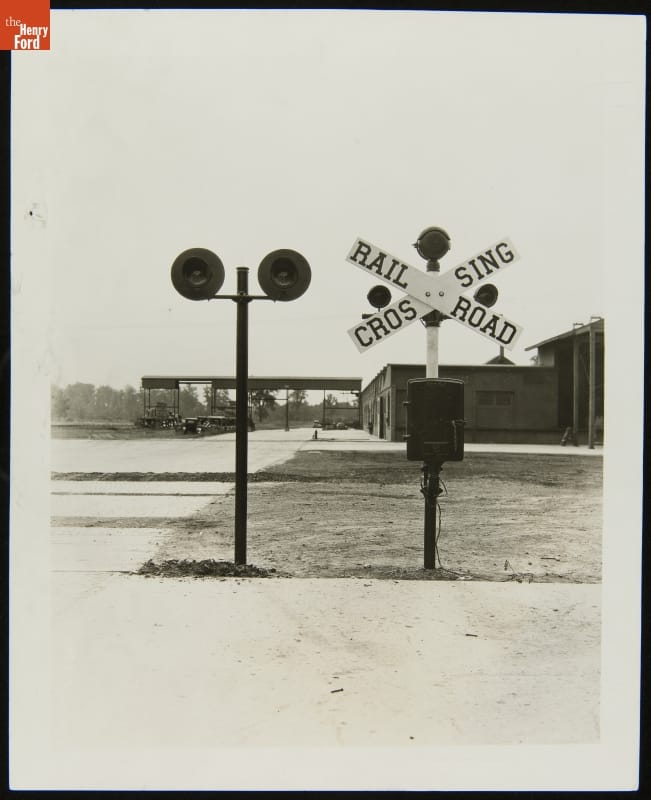
- September 18, 1924
- Collections - Artifact
Railroad Crossing Flash Signal, September 1924
The first automated, flashing red light railroad crossing signal appeared around 1913. The flashing lights mimicked the motion of a lantern being swung back and forth -- long a signal for "stop" on American railroads. The X-shaped crossbuck sign, in wide use by 1900, was inspired by the skull and crossbones -- a universal symbol for danger.
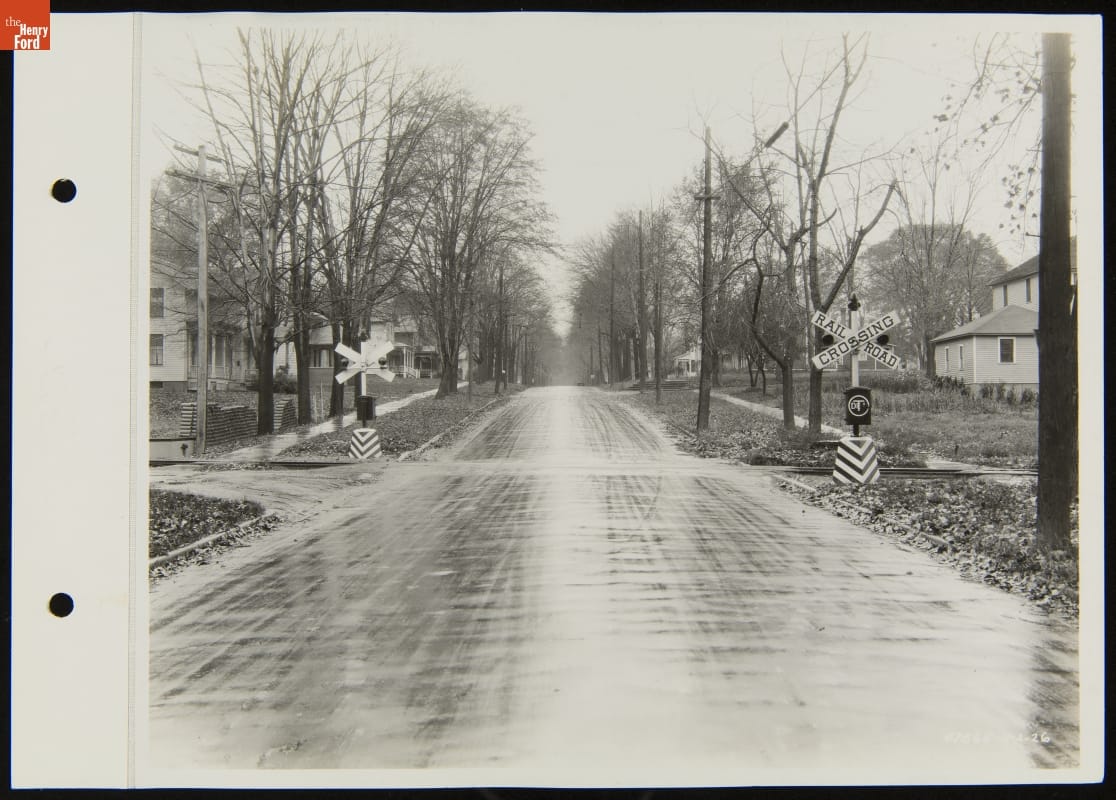
- Railroad Crossing Signal Lights, Detroit, Toledo & Ironton Railroad, November 1926 - The first automated, flashing red light railroad crossing signal appeared around 1913. The flashing lights mimicked the motion of a lantern being swung back and forth -- long a signal for "stop" on American railroads. The X-shaped crossbuck sign, in wide use by 1900, was inspired by the skull and crossbones -- a universal symbol for danger.
- November 02, 1926
- Collections - Artifact
Railroad Crossing Signal Lights, Detroit, Toledo & Ironton Railroad, November 1926
The first automated, flashing red light railroad crossing signal appeared around 1913. The flashing lights mimicked the motion of a lantern being swung back and forth -- long a signal for "stop" on American railroads. The X-shaped crossbuck sign, in wide use by 1900, was inspired by the skull and crossbones -- a universal symbol for danger.
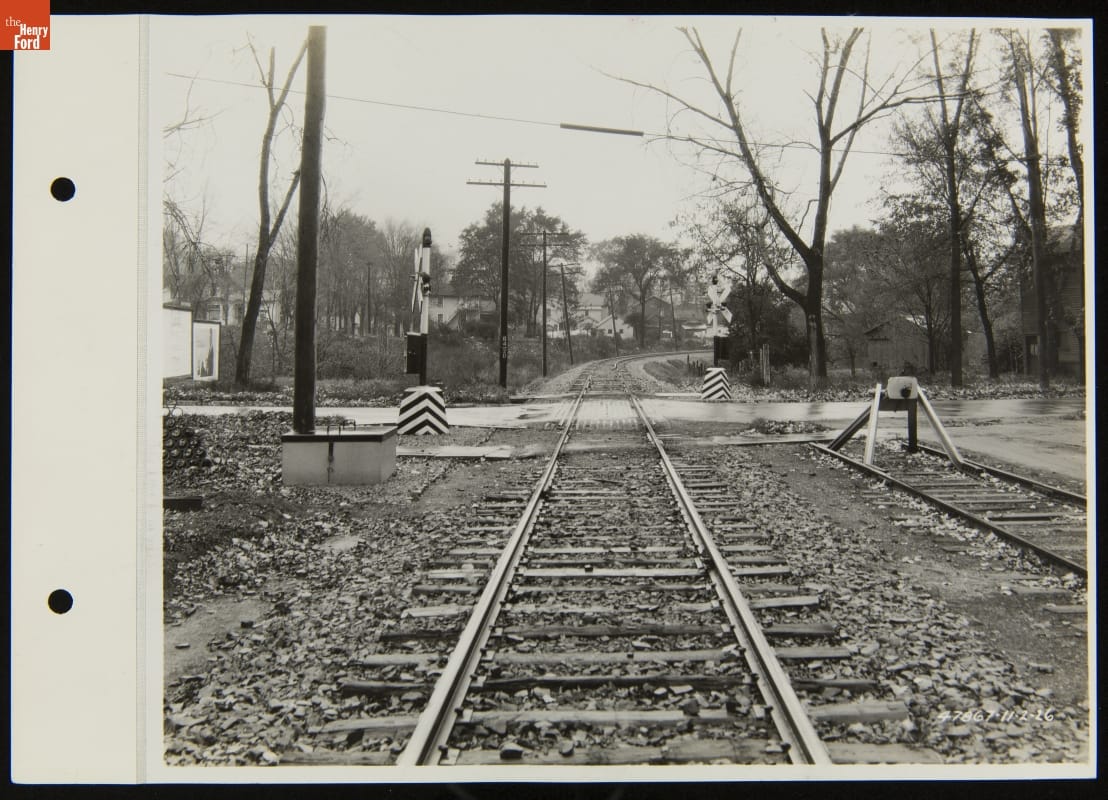
- Railroad Crossing Signal Lights, Detroit, Toledo & Ironton Railroad, November 1926 - Blind curves -- whether on the railroad, the road, or both -- added another element of danger to a railroad crossing. Crossings like this were some of the first to be protected with automated warning devices. The lights and bells on these signs were activated whenever an approaching train tripped an electrical relay wired to the track.
- November 02, 1926
- Collections - Artifact
Railroad Crossing Signal Lights, Detroit, Toledo & Ironton Railroad, November 1926
Blind curves -- whether on the railroad, the road, or both -- added another element of danger to a railroad crossing. Crossings like this were some of the first to be protected with automated warning devices. The lights and bells on these signs were activated whenever an approaching train tripped an electrical relay wired to the track.
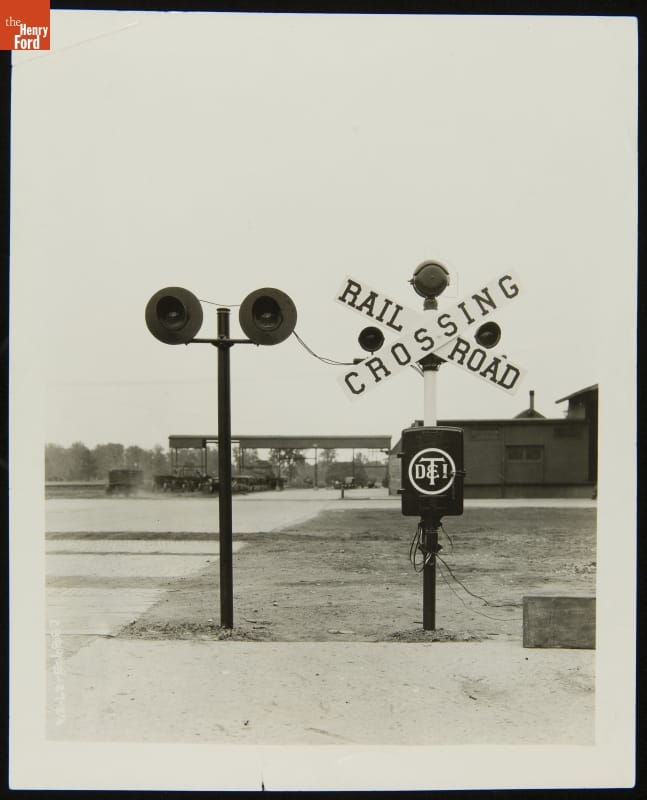
- Railroad Crossing Flash Signal, Detroit, Toledo & Ironton Railroad, September 1924 - The first automated, flashing red light railroad crossing signal appeared around 1913. The flashing lights mimicked the motion of a lantern being swung back and forth -- long a signal for "stop" on American railroads. The X-shaped crossbuck sign, in wide use by 1900, was inspired by the skull and crossbones -- a universal symbol for danger.
- September 27, 1924
- Collections - Artifact
Railroad Crossing Flash Signal, Detroit, Toledo & Ironton Railroad, September 1924
The first automated, flashing red light railroad crossing signal appeared around 1913. The flashing lights mimicked the motion of a lantern being swung back and forth -- long a signal for "stop" on American railroads. The X-shaped crossbuck sign, in wide use by 1900, was inspired by the skull and crossbones -- a universal symbol for danger.
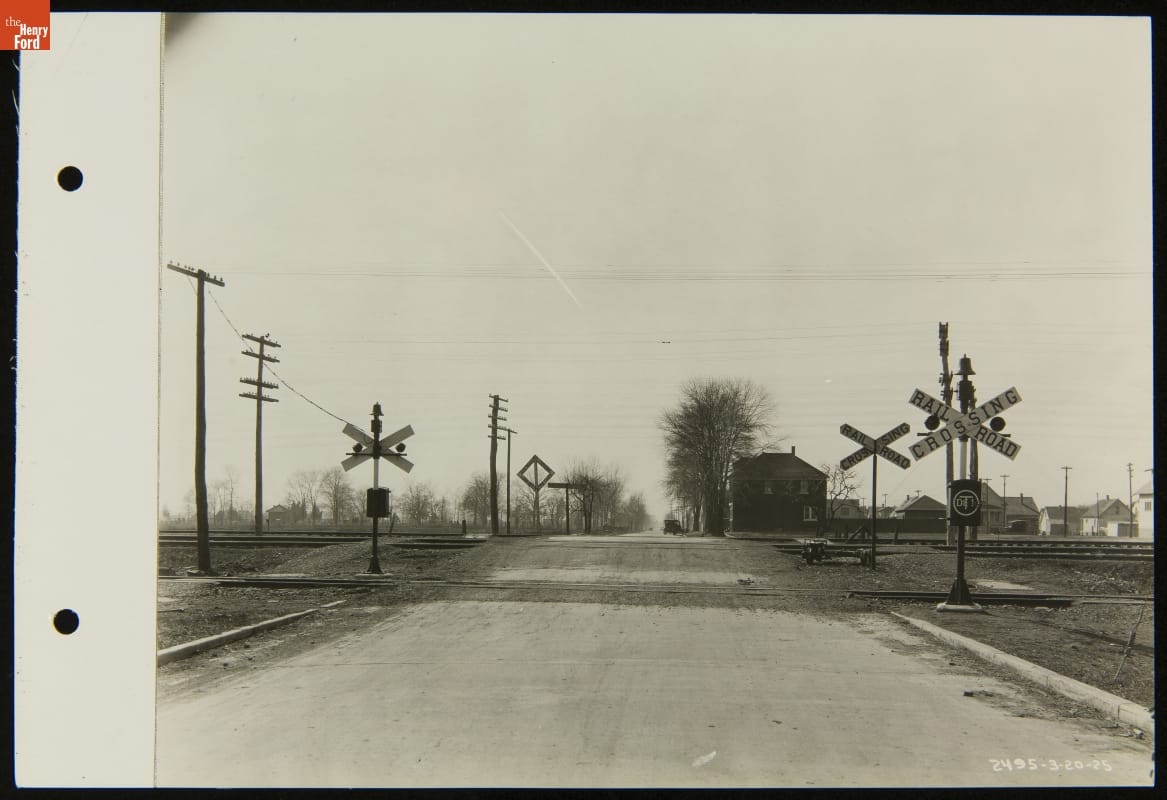
- Railroad Crossing Flash Signal, Detroit, Toledo & Ironton Railroad, March 1925 - Four different warning designs are in use here on the Detroit, Toledo & Ironton Railroad. The two signs closest to the camera feature automated lights and bells. Behind them is a crossbuck without lights or bell. Farther back is a diamond-shaped sign warning people to "Look Out for the Cars." Behind that is a simple horizontal plank marked "Railroad Crossing."
- March 20, 1925
- Collections - Artifact
Railroad Crossing Flash Signal, Detroit, Toledo & Ironton Railroad, March 1925
Four different warning designs are in use here on the Detroit, Toledo & Ironton Railroad. The two signs closest to the camera feature automated lights and bells. Behind them is a crossbuck without lights or bell. Farther back is a diamond-shaped sign warning people to "Look Out for the Cars." Behind that is a simple horizontal plank marked "Railroad Crossing."
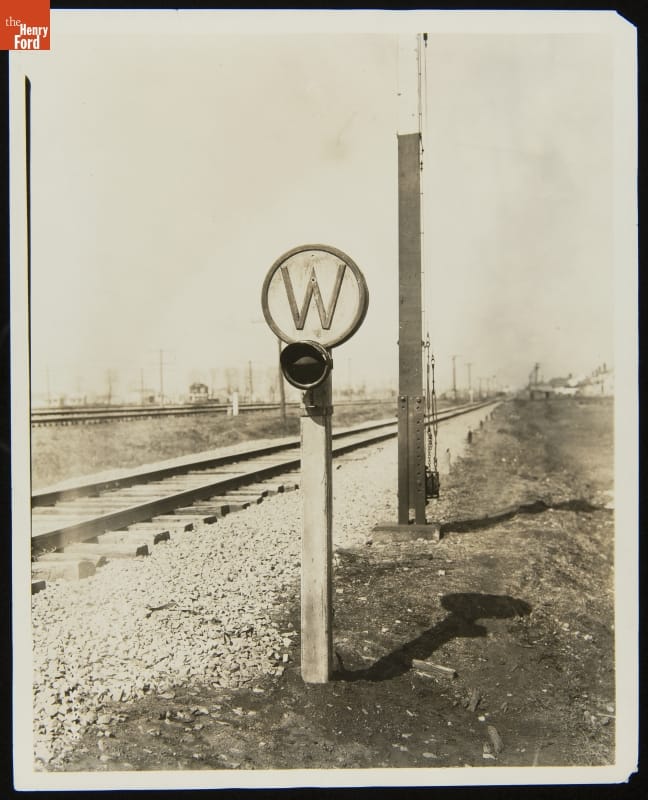
- Railroad Crossing Flash Signal, Detroit, Toledo & Ironton Railroad, March 1925 - In the United States, locomotive engineers must sound a specific sequence of horn or whistle blasts when approaching most road crossings: two long blasts, one short, and one more long. Railroads frequently placed a whistle post, like this one, along the track about one-quarter mile before a crossing to notify the engineer when to use the horn.
- March 20, 1925
- Collections - Artifact
Railroad Crossing Flash Signal, Detroit, Toledo & Ironton Railroad, March 1925
In the United States, locomotive engineers must sound a specific sequence of horn or whistle blasts when approaching most road crossings: two long blasts, one short, and one more long. Railroads frequently placed a whistle post, like this one, along the track about one-quarter mile before a crossing to notify the engineer when to use the horn.
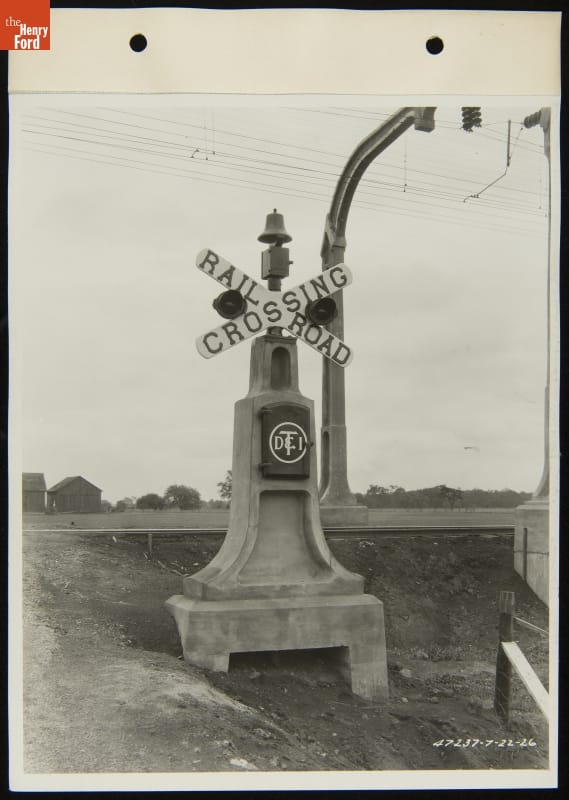
- Railroad Crossing Warning Signal, Detroit, Toledo & Ironton Railroad, July 1926 - The first automated, flashing red light railroad crossing signal appeared around 1913. The flashing lights mimicked the motion of a lantern being swung back and forth -- long a signal for "stop" on American railroads. The X-shaped crossbuck sign, in wide use by 1900, was inspired by the skull and crossbones -- a universal symbol for danger.
- July 22, 1926
- Collections - Artifact
Railroad Crossing Warning Signal, Detroit, Toledo & Ironton Railroad, July 1926
The first automated, flashing red light railroad crossing signal appeared around 1913. The flashing lights mimicked the motion of a lantern being swung back and forth -- long a signal for "stop" on American railroads. The X-shaped crossbuck sign, in wide use by 1900, was inspired by the skull and crossbones -- a universal symbol for danger.