
Search
- Willow Run Bomber Plant - <p>Every American automaker turned its workforce and facilities to military production during World War II. But no project captured the public's imagination like Willow Run, where Ford Motor Company built one B-24 Liberator airplane every 63 minutes. The plant was the embodiment of America's "Arsenal of Democracy" — the enormous manufacturing capacity so vital to the Allies' victory.</p>

- September 27, 2018
- Collections - Set
Willow Run Bomber Plant
Every American automaker turned its workforce and facilities to military production during World War II. But no project captured the public's imagination like Willow Run, where Ford Motor Company built one B-24 Liberator airplane every 63 minutes. The plant was the embodiment of America's "Arsenal of Democracy" — the enormous manufacturing capacity so vital to the Allies' victory.
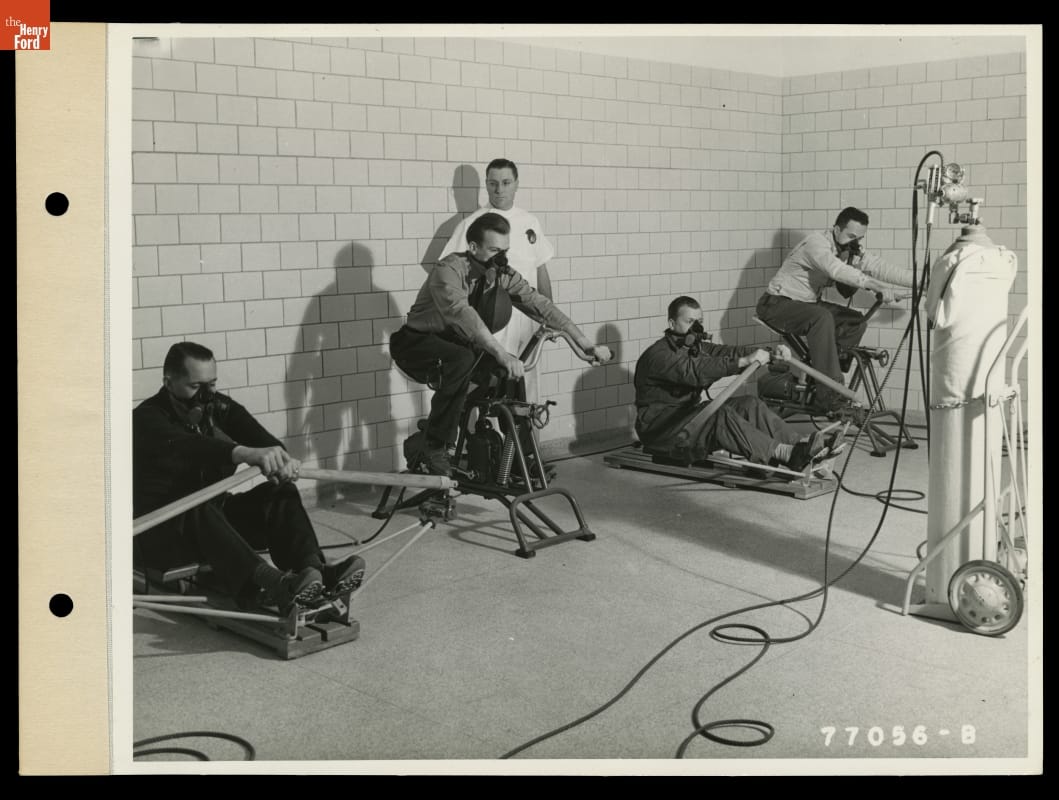
- Monitoring Exercise at Willow Run Hangar Hospital, Willow Run Bomber Plant, 1942 - At its peak, Ford Motor Company's Willow Run plant employed more than 42,000 people who produced one bomber airplane every 63 minutes. The plant's five million square feet of roofed workspace incorporated everything needed to train and care for its workforce, including classrooms, a hospital, a commercial kitchen, and a cafeteria.
- September 23, 1942
- Collections - Artifact
Monitoring Exercise at Willow Run Hangar Hospital, Willow Run Bomber Plant, 1942
At its peak, Ford Motor Company's Willow Run plant employed more than 42,000 people who produced one bomber airplane every 63 minutes. The plant's five million square feet of roofed workspace incorporated everything needed to train and care for its workforce, including classrooms, a hospital, a commercial kitchen, and a cafeteria.
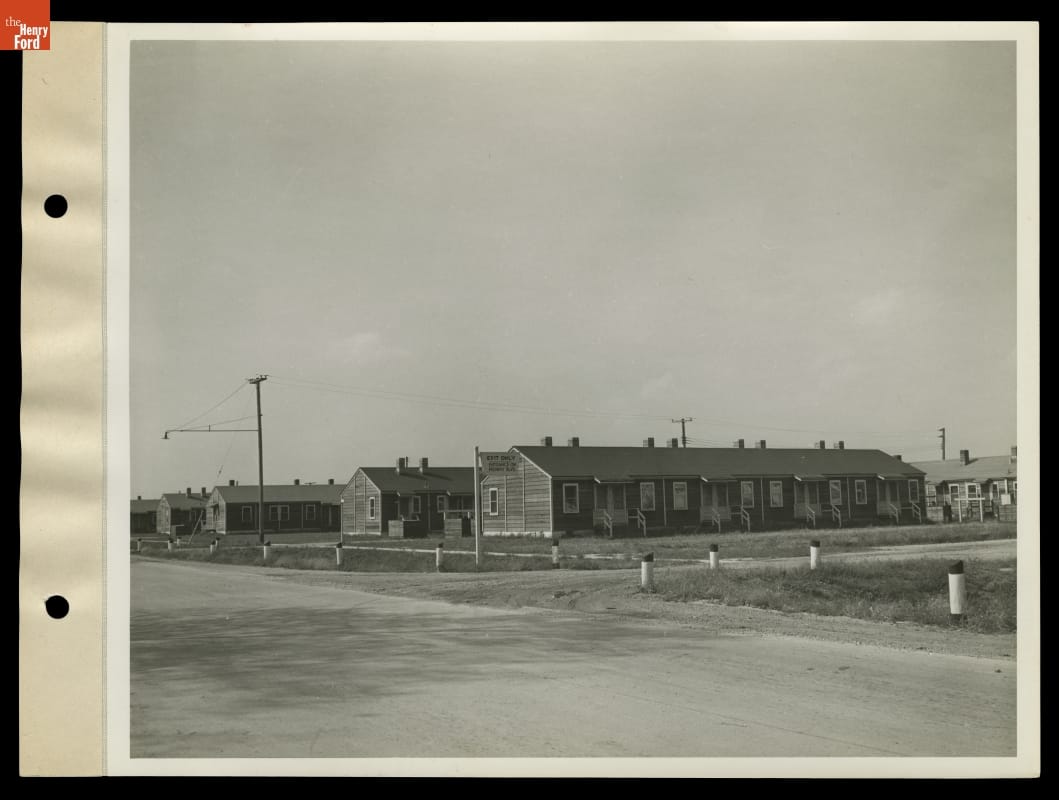
- Willow Run Lodge, Housing for Willow Run Bomber Plant Workers, 1945 - The Willow Run area wasn't prepared to house many of the 42,000 workers who arrived when Ford Motor Company established its bomber plant there during World War II. In response, the federal government built Willow Run Lodge, an on-site dormitory complex that could accommodate 3,000 single women and men; and Willow Run Village, with 2,500 family housing units.
- 1945
- Collections - Artifact
Willow Run Lodge, Housing for Willow Run Bomber Plant Workers, 1945
The Willow Run area wasn't prepared to house many of the 42,000 workers who arrived when Ford Motor Company established its bomber plant there during World War II. In response, the federal government built Willow Run Lodge, an on-site dormitory complex that could accommodate 3,000 single women and men; and Willow Run Village, with 2,500 family housing units.
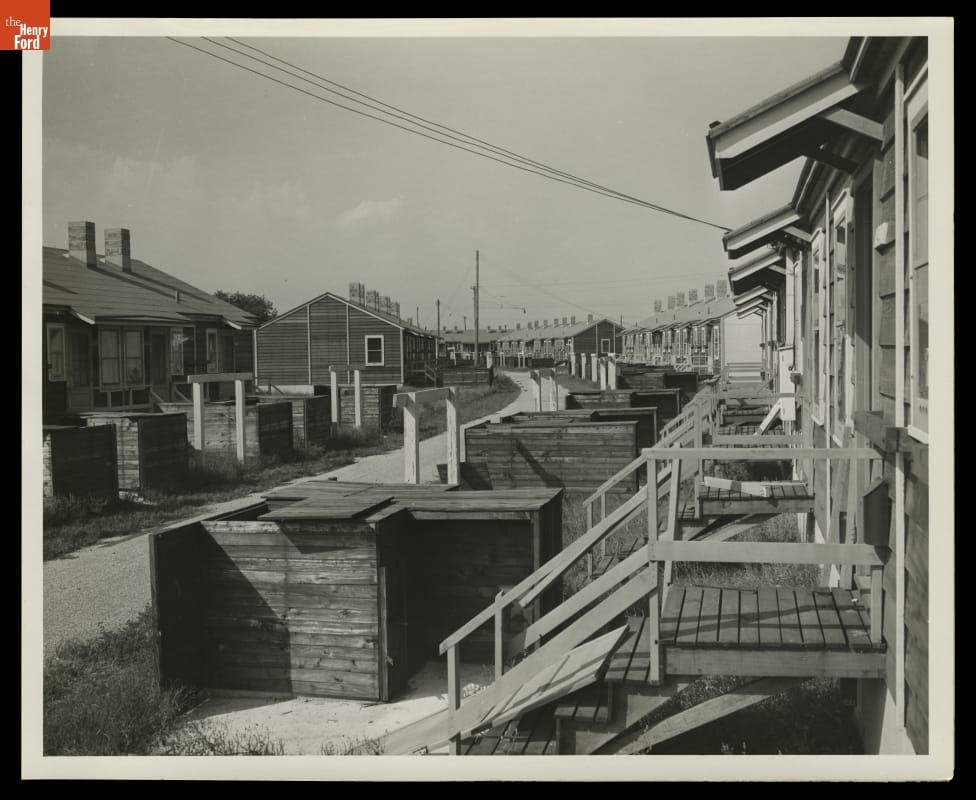
- Willow Run Lodge, Housing for Willow Run Bomber Plant Workers, 1945 - The Willow Run area wasn't prepared to house many of the 42,000 workers who arrived when Ford Motor Company established its bomber plant there during World War II. In response, the federal government built Willow Run Lodge, an on-site dormitory complex that could accommodate 3,000 single women and men; and Willow Run Village, with 2,500 family housing units.
- 1945
- Collections - Artifact
Willow Run Lodge, Housing for Willow Run Bomber Plant Workers, 1945
The Willow Run area wasn't prepared to house many of the 42,000 workers who arrived when Ford Motor Company established its bomber plant there during World War II. In response, the federal government built Willow Run Lodge, an on-site dormitory complex that could accommodate 3,000 single women and men; and Willow Run Village, with 2,500 family housing units.
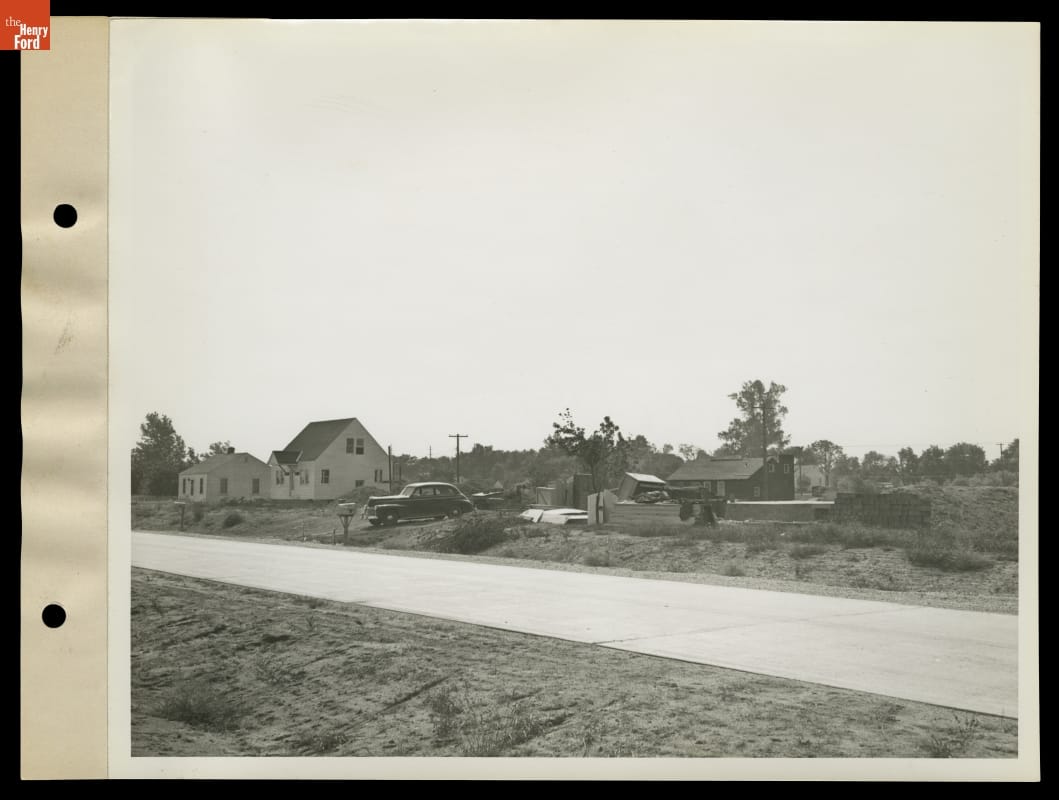
- Construction of Willow Run Lodge, Housing for Willow Run Bomber Plant Workers, 1945 - The Willow Run area wasn't prepared to house many of the 42,000 workers who arrived when Ford Motor Company established its bomber plant there during World War II. In response, the federal government built Willow Run Lodge, an on-site dormitory complex that could accommodate 3,000 single women and men; and Willow Run Village, with 2,500 family housing units.
- 1945
- Collections - Artifact
Construction of Willow Run Lodge, Housing for Willow Run Bomber Plant Workers, 1945
The Willow Run area wasn't prepared to house many of the 42,000 workers who arrived when Ford Motor Company established its bomber plant there during World War II. In response, the federal government built Willow Run Lodge, an on-site dormitory complex that could accommodate 3,000 single women and men; and Willow Run Village, with 2,500 family housing units.
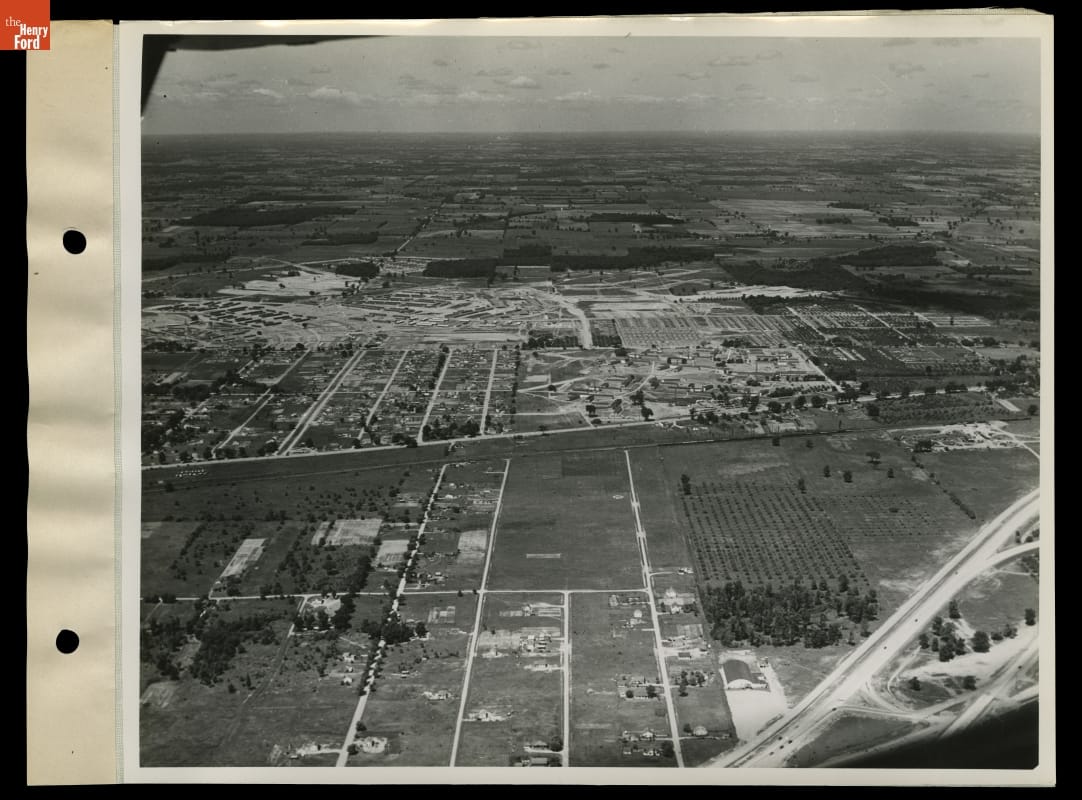
- Aerial View, Construction of Willow Run Lodge, Housing for Willow Run Bomber Plant Workers, 1945 - The Willow Run area wasn't prepared to house many of the 42,000 workers who arrived when Ford Motor Company established its bomber plant there during World War II. In response, the federal government built Willow Run Lodge, an on-site dormitory complex that could accommodate 3,000 single women and men; and Willow Run Village, with 2,500 family housing units.
- 1945
- Collections - Artifact
Aerial View, Construction of Willow Run Lodge, Housing for Willow Run Bomber Plant Workers, 1945
The Willow Run area wasn't prepared to house many of the 42,000 workers who arrived when Ford Motor Company established its bomber plant there during World War II. In response, the federal government built Willow Run Lodge, an on-site dormitory complex that could accommodate 3,000 single women and men; and Willow Run Village, with 2,500 family housing units.
- Hangar Hospital, Willow Run Bomber Plant, 1942 - At its peak, Ford Motor Company's Willow Run plant employed more than 42,000 people who produced one bomber airplane every 63 minutes. The plant's five million square feet of roofed workspace incorporated everything needed to train and care for its workforce, including classrooms, a hospital, a commercial kitchen, and a cafeteria.

- September 23, 1942
- Collections - Artifact
Hangar Hospital, Willow Run Bomber Plant, 1942
At its peak, Ford Motor Company's Willow Run plant employed more than 42,000 people who produced one bomber airplane every 63 minutes. The plant's five million square feet of roofed workspace incorporated everything needed to train and care for its workforce, including classrooms, a hospital, a commercial kitchen, and a cafeteria.
- Willow Run Bomber Plant Manual, 1943-1944 - Ford Motor Company built everything from jeeps to generators during World War II, but nothing captured the public's imagination like Ford's B-24 bomber plant at Willow Run, where one new airplane was completed every 63 minutes. This manual documents the carefully planned assembly process that allowed complex bombers to be built using the same mass production techniques Ford pioneered for its automobiles.
- 1943-1944
- Collections - Artifact
Willow Run Bomber Plant Manual, 1943-1944
Ford Motor Company built everything from jeeps to generators during World War II, but nothing captured the public's imagination like Ford's B-24 bomber plant at Willow Run, where one new airplane was completed every 63 minutes. This manual documents the carefully planned assembly process that allowed complex bombers to be built using the same mass production techniques Ford pioneered for its automobiles.
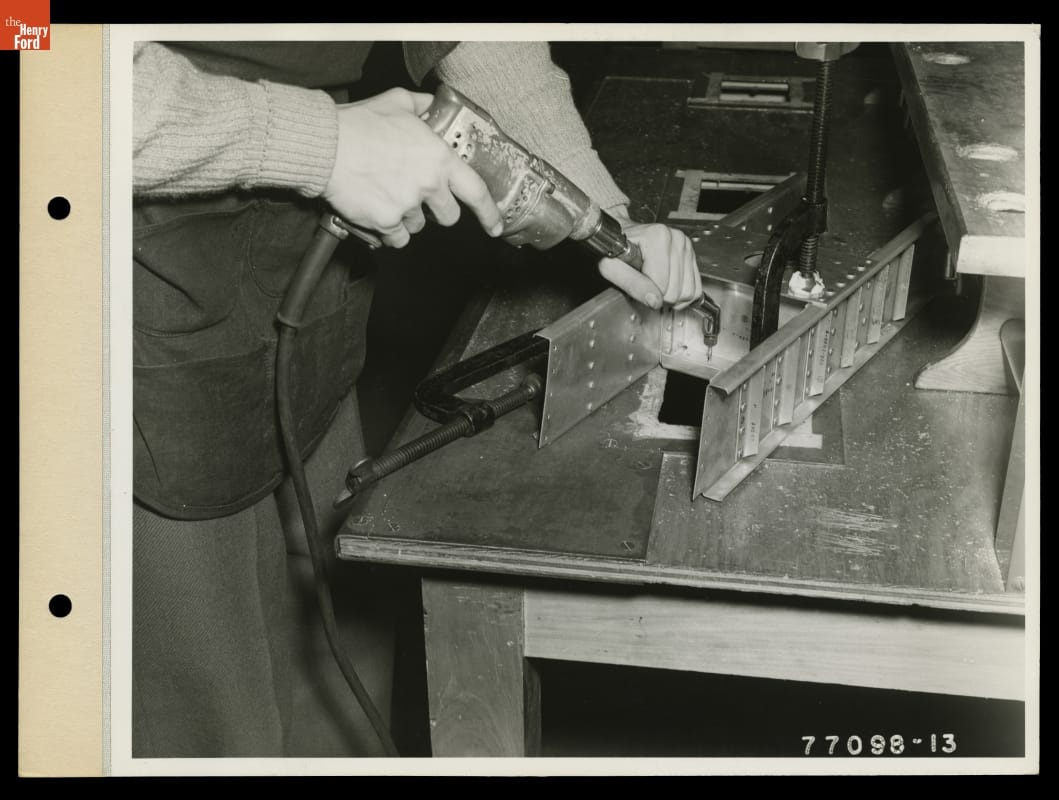
- Riveting Operations, Willow Run Bomber Plant, 1942 - At Willow Run, Ford Motor Company built B-24 bomber planes for World War II using automobile mass production techniques. Airplanes were much more complex than cars. They required constant design changes poorly suited to a standardized assembly line. Ford overcame these difficulties and, at the plant's peak, Willow Run crews produced an average of one bomber every 63 minutes.
- October 10, 1942
- Collections - Artifact
Riveting Operations, Willow Run Bomber Plant, 1942
At Willow Run, Ford Motor Company built B-24 bomber planes for World War II using automobile mass production techniques. Airplanes were much more complex than cars. They required constant design changes poorly suited to a standardized assembly line. Ford overcame these difficulties and, at the plant's peak, Willow Run crews produced an average of one bomber every 63 minutes.
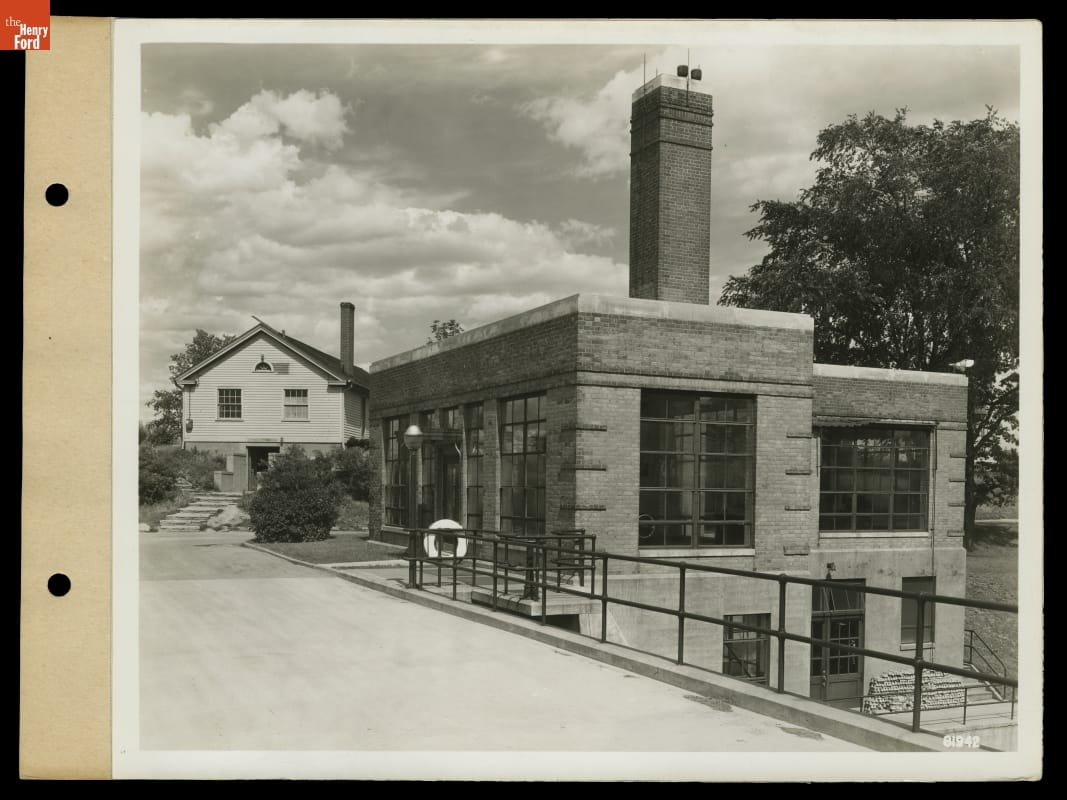
- Willow Run Ford Village Industry Plant, July 1945 - In the 1920s and '30s, Henry Ford located small hydroelectrically powered factories throughout rural southeast Michigan. Built in 1939, the Willow Run plant differed from other "Village Industries." Instead of local residents, boys from Ford's nearby Camp Willow Run -- which provided income and life-skills training for underprivileged teenagers -- worked here, supplying door and ignition locks and keys for Ford's passenger cars.
- July 12, 1945
- Collections - Artifact
Willow Run Ford Village Industry Plant, July 1945
In the 1920s and '30s, Henry Ford located small hydroelectrically powered factories throughout rural southeast Michigan. Built in 1939, the Willow Run plant differed from other "Village Industries." Instead of local residents, boys from Ford's nearby Camp Willow Run -- which provided income and life-skills training for underprivileged teenagers -- worked here, supplying door and ignition locks and keys for Ford's passenger cars.