
Search
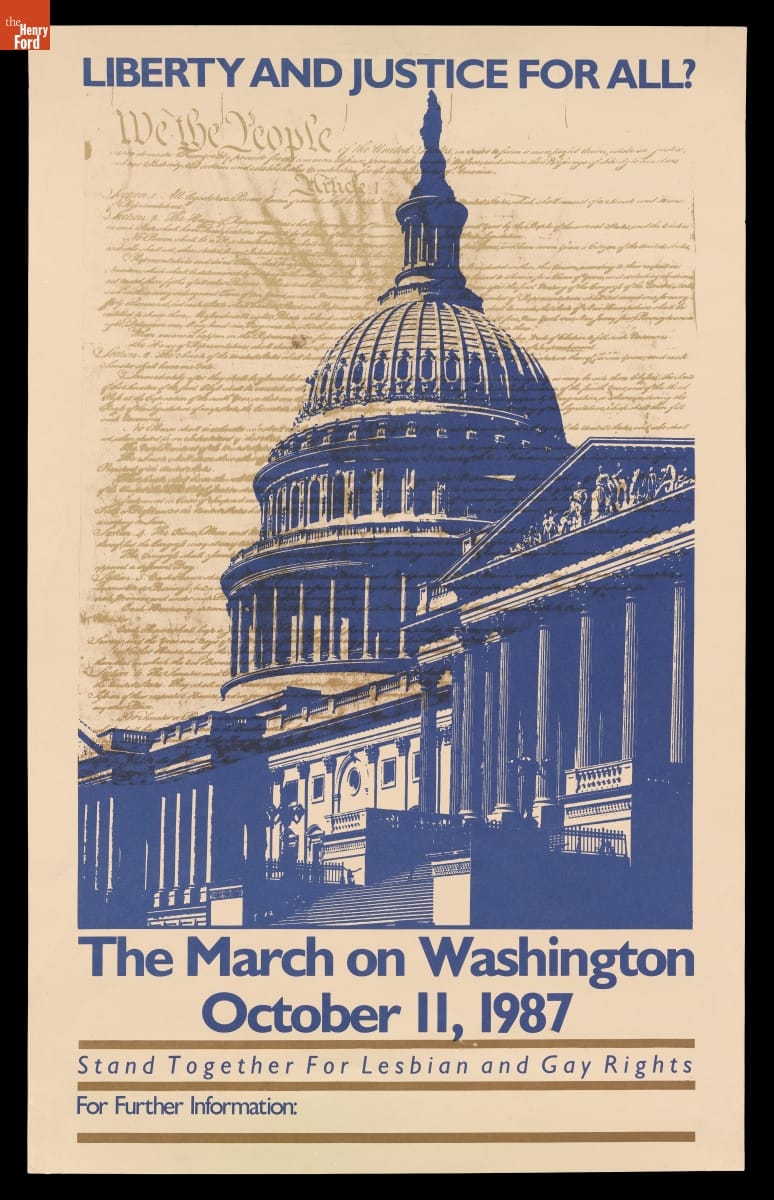
- "Liberty and Justice for All?," October 11, 1987 -
- October 11, 1987
- Collections - Artifact
"Liberty and Justice for All?," October 11, 1987
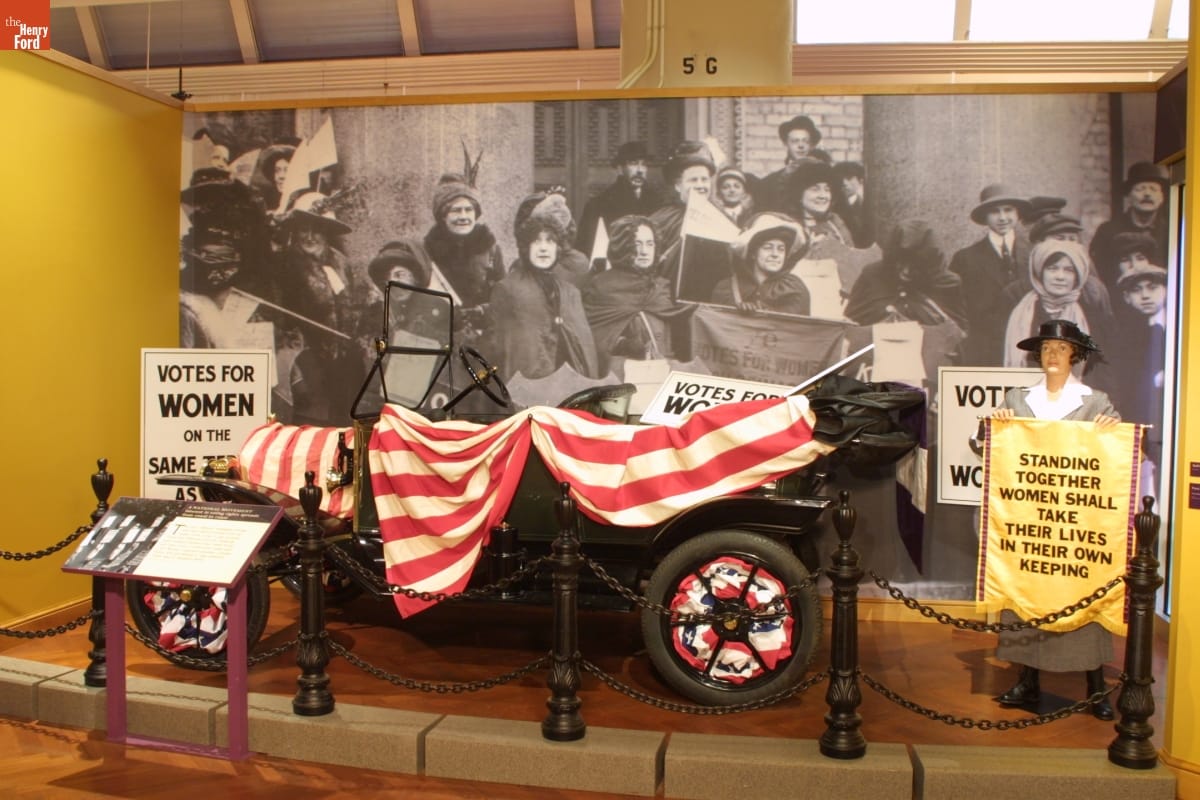
- "Votes for Women" Section of "With Liberty and Justice for All" Exhibit in Henry Ford Museum, January 2006 - <em>With Liberty and Justice for All</em> opened in Henry Ford Museum of American Innovation in 2006. The exhibit explored struggles that arose in the quest for freedom in America, and included sections devoted to Independence, Freedom and Union, Votes for Women, and the Civil Rights Movement. The Votes for Women area acknowledged the automobile's role in women's fight for suffrage.
- January 17, 2006
- Collections - Artifact
"Votes for Women" Section of "With Liberty and Justice for All" Exhibit in Henry Ford Museum, January 2006
With Liberty and Justice for All opened in Henry Ford Museum of American Innovation in 2006. The exhibit explored struggles that arose in the quest for freedom in America, and included sections devoted to Independence, Freedom and Union, Votes for Women, and the Civil Rights Movement. The Votes for Women area acknowledged the automobile's role in women's fight for suffrage.
- Behind the Scenes at With Liberty & Justice for All - From George Washington, to Abraham Lincoln, to Rosa Parks, notable Americans have redefined again and again what liberty means to us. Journey through our With Liberty & Justice for All exhibit and look back on the challenges and triumphs our nation has faced in the name of freedom.

- January 01, 2015
- Collections - article
Behind the Scenes at With Liberty & Justice for All
From George Washington, to Abraham Lincoln, to Rosa Parks, notable Americans have redefined again and again what liberty means to us. Journey through our With Liberty & Justice for All exhibit and look back on the challenges and triumphs our nation has faced in the name of freedom.
- Just Added to Our Digital Collections: With Liberty & Justice For All Artifacts - You can now browse all of the artifacts within our "With Liberty & Justice for All" exhibit within our Digital Collections.
- April 24, 2014
- Collections - article
Just Added to Our Digital Collections: With Liberty & Justice For All Artifacts
You can now browse all of the artifacts within our "With Liberty & Justice for All" exhibit within our Digital Collections.
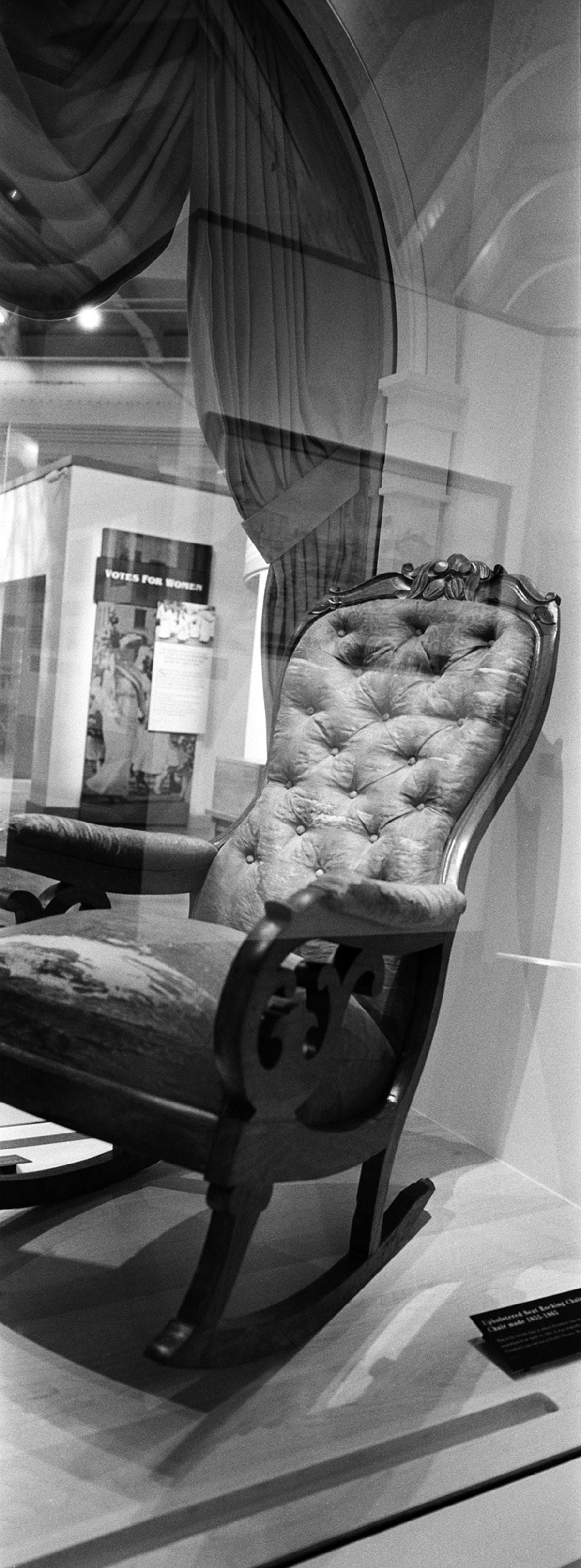
- The Chair in Which Abraham Lincoln Was Shot at Ford's Theatre, on Exhibit at Henry Ford Museum, June 2007 - President Abraham Lincoln was sitting in this rocking chair during a production of <EM>Our American Cousin</EM> at Ford's Theatre in Washington, D.C., when he was assassinated on April 14, 1865. Henry Ford purchased the chair in 1929 for the Museum, where it remains one of the most revered objects associated with the "man who saved the Union."
- June 01, 2007
- Collections - Artifact
The Chair in Which Abraham Lincoln Was Shot at Ford's Theatre, on Exhibit at Henry Ford Museum, June 2007
President Abraham Lincoln was sitting in this rocking chair during a production of Our American Cousin at Ford's Theatre in Washington, D.C., when he was assassinated on April 14, 1865. Henry Ford purchased the chair in 1929 for the Museum, where it remains one of the most revered objects associated with the "man who saved the Union."
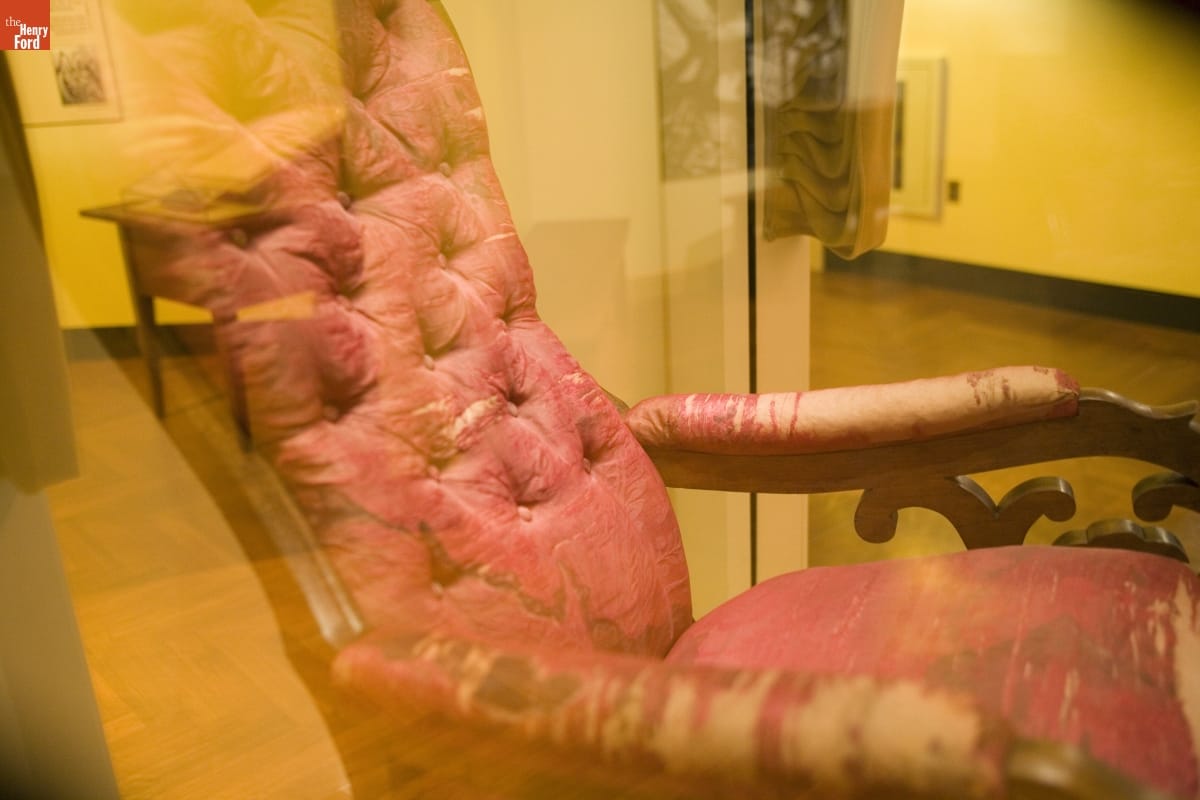
- The Chair in Which Abraham Lincoln Was Shot at Ford's Theatre, on Exhibit at Henry Ford Museum, June 2007 - President Abraham Lincoln was sitting in this rocking chair during a production of <EM>Our American Cousin</EM> at Ford's Theatre in Washington, D.C., when he was assassinated on April 14, 1865. Henry Ford purchased the chair in 1929 for the Museum, where it remains one of the most revered objects associated with the "man who saved the Union."
- June 01, 2007
- Collections - Artifact
The Chair in Which Abraham Lincoln Was Shot at Ford's Theatre, on Exhibit at Henry Ford Museum, June 2007
President Abraham Lincoln was sitting in this rocking chair during a production of Our American Cousin at Ford's Theatre in Washington, D.C., when he was assassinated on April 14, 1865. Henry Ford purchased the chair in 1929 for the Museum, where it remains one of the most revered objects associated with the "man who saved the Union."
- The Chair in Which Abraham Lincoln Was Shot at Ford's Theatre, on Exhibit at Henry Ford Museum, June 2007 - President Abraham Lincoln was sitting in this rocking chair during a production of <EM>Our American Cousin</EM> at Ford's Theatre in Washington, D.C., when he was assassinated on April 14, 1865. Henry Ford purchased the chair in 1929 for the Museum, where it remains one of the most revered objects associated with the "man who saved the Union."
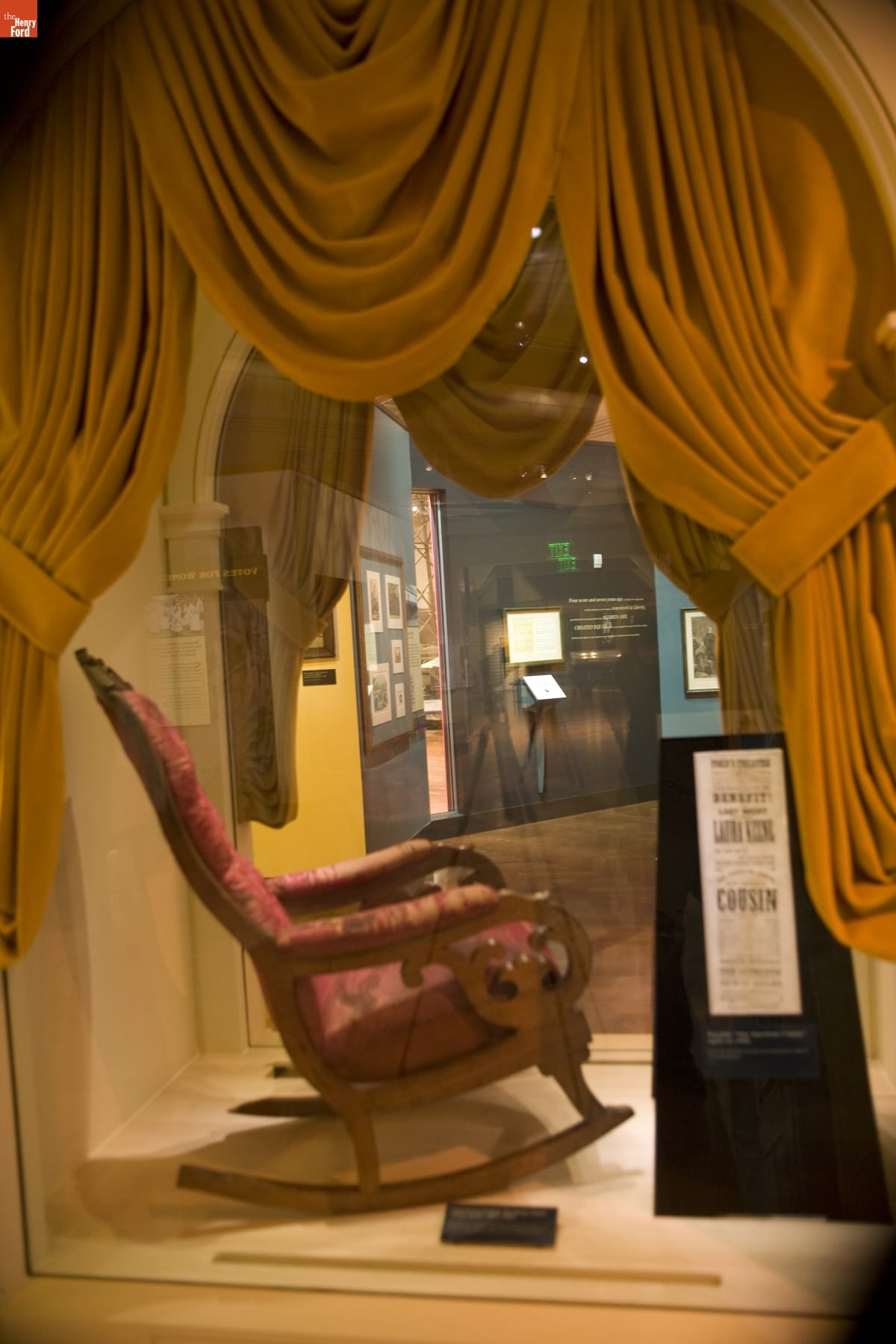
- June 01, 2007
- Collections - Artifact
The Chair in Which Abraham Lincoln Was Shot at Ford's Theatre, on Exhibit at Henry Ford Museum, June 2007
President Abraham Lincoln was sitting in this rocking chair during a production of Our American Cousin at Ford's Theatre in Washington, D.C., when he was assassinated on April 14, 1865. Henry Ford purchased the chair in 1929 for the Museum, where it remains one of the most revered objects associated with the "man who saved the Union."
- The Chair in Which Abraham Lincoln Was Shot at Ford's Theatre, on Exhibit at Henry Ford Museum, June 2007 - President Abraham Lincoln was sitting in this rocking chair during a production of <EM>Our American Cousin</EM> at Ford's Theatre in Washington, D.C., when he was assassinated on April 14, 1865. Henry Ford purchased the chair in 1929 for the Museum, where it remains one of the most revered objects associated with the "man who saved the Union."
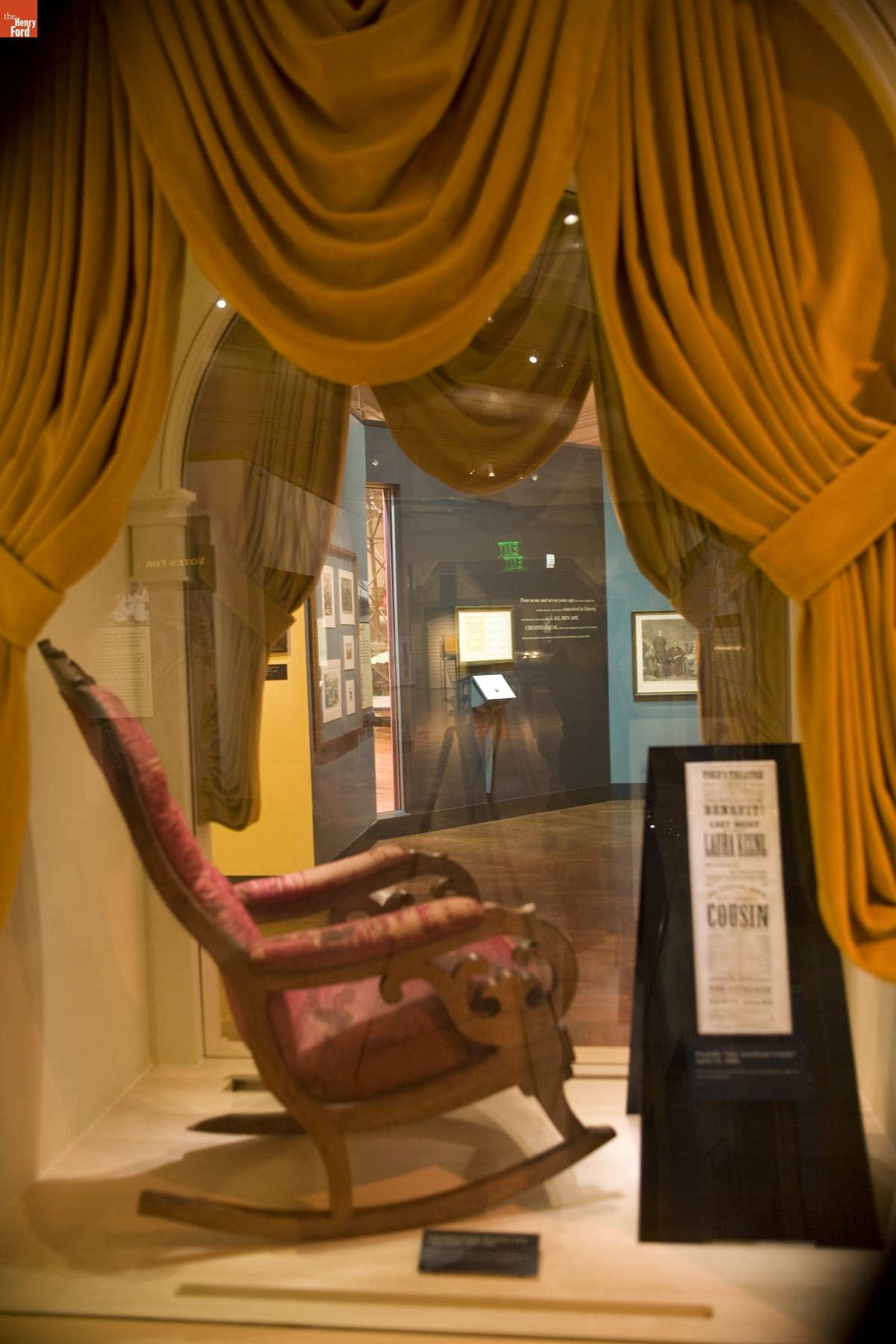
- June 01, 2007
- Collections - Artifact
The Chair in Which Abraham Lincoln Was Shot at Ford's Theatre, on Exhibit at Henry Ford Museum, June 2007
President Abraham Lincoln was sitting in this rocking chair during a production of Our American Cousin at Ford's Theatre in Washington, D.C., when he was assassinated on April 14, 1865. Henry Ford purchased the chair in 1929 for the Museum, where it remains one of the most revered objects associated with the "man who saved the Union."
- The Chair in Which Abraham Lincoln Was Shot at Ford's Theatre, on Exhibit at Henry Ford Museum, June 2007 - President Abraham Lincoln was sitting in this rocking chair during a production of <EM>Our American Cousin</EM> at Ford's Theatre in Washington, D.C., when he was assassinated on April 14, 1865. Henry Ford purchased the chair in 1929 for the Museum, where it remains one of the most revered objects associated with the "man who saved the Union."
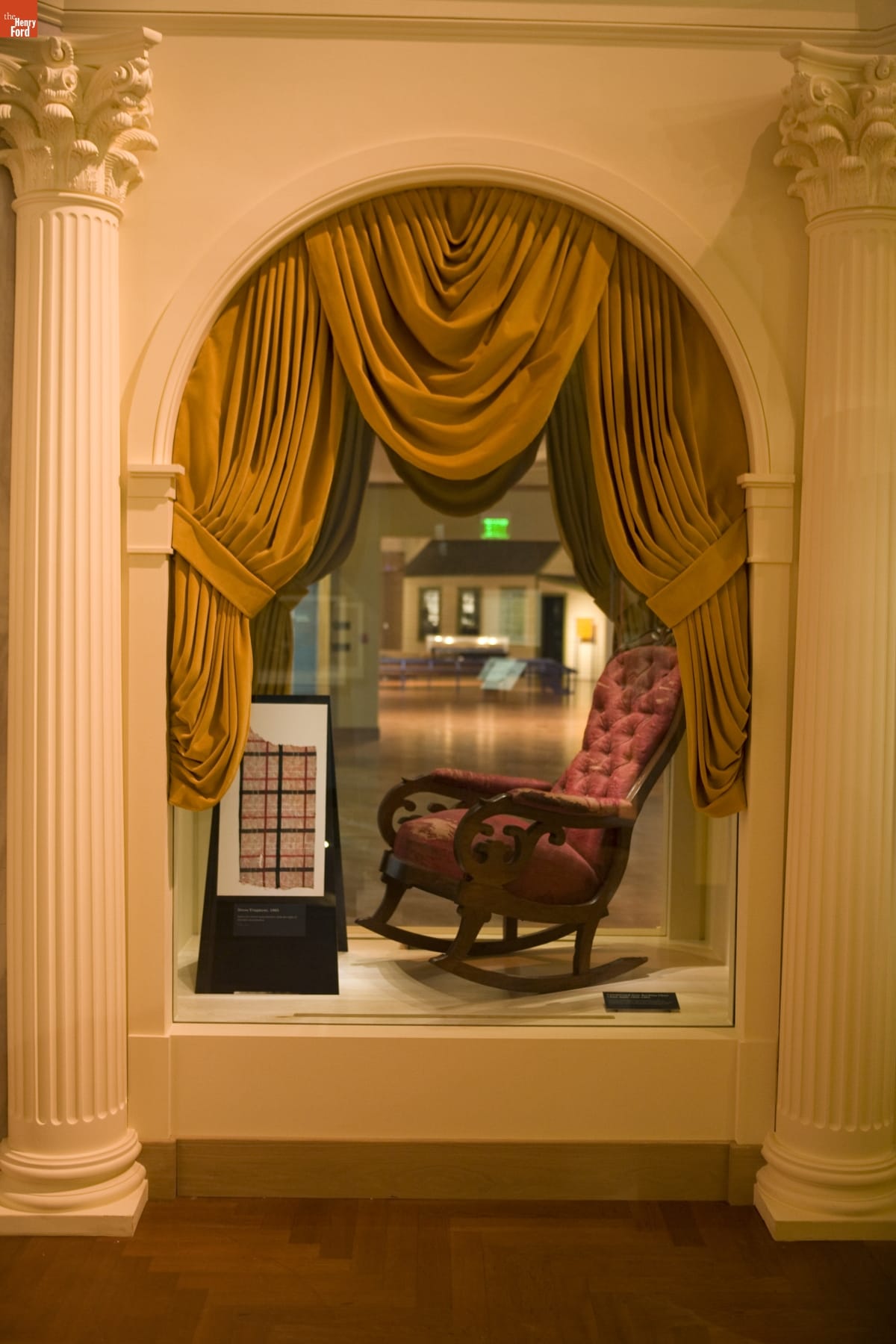
- June 01, 2007
- Collections - Artifact
The Chair in Which Abraham Lincoln Was Shot at Ford's Theatre, on Exhibit at Henry Ford Museum, June 2007
President Abraham Lincoln was sitting in this rocking chair during a production of Our American Cousin at Ford's Theatre in Washington, D.C., when he was assassinated on April 14, 1865. Henry Ford purchased the chair in 1929 for the Museum, where it remains one of the most revered objects associated with the "man who saved the Union."
- The Chair in Which Abraham Lincoln Was Shot at Ford's Theatre, on Exhibit at Henry Ford Museum, June 2007 - President Abraham Lincoln was sitting in this rocking chair during a production of <EM>Our American Cousin</EM> at Ford's Theatre in Washington, D.C., when he was assassinated on April 14, 1865. Henry Ford purchased the chair in 1929 for the Museum, where it remains one of the most revered objects associated with the "man who saved the Union."
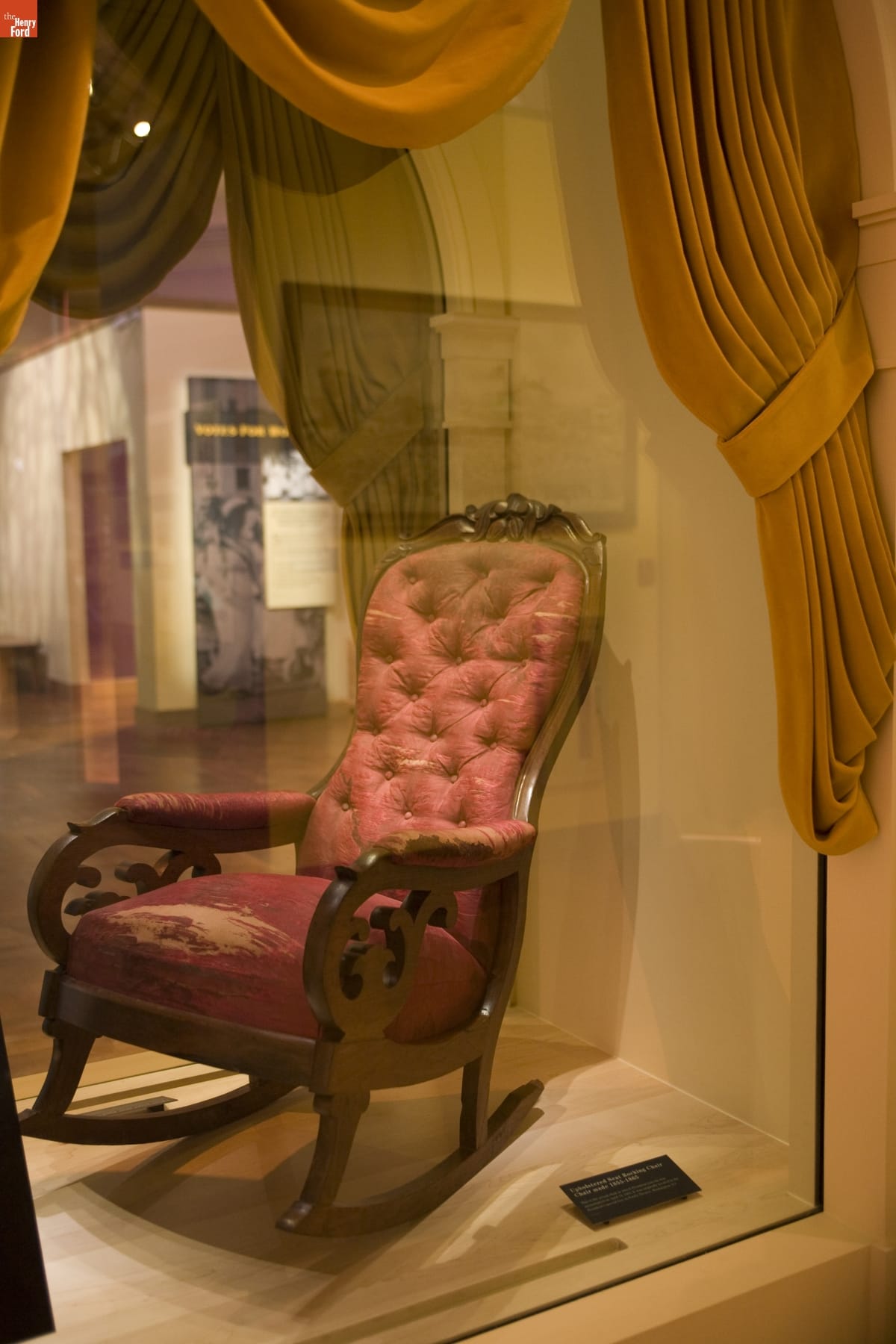
- June 01, 2007
- Collections - Artifact
The Chair in Which Abraham Lincoln Was Shot at Ford's Theatre, on Exhibit at Henry Ford Museum, June 2007
President Abraham Lincoln was sitting in this rocking chair during a production of Our American Cousin at Ford's Theatre in Washington, D.C., when he was assassinated on April 14, 1865. Henry Ford purchased the chair in 1929 for the Museum, where it remains one of the most revered objects associated with the "man who saved the Union."