
Search
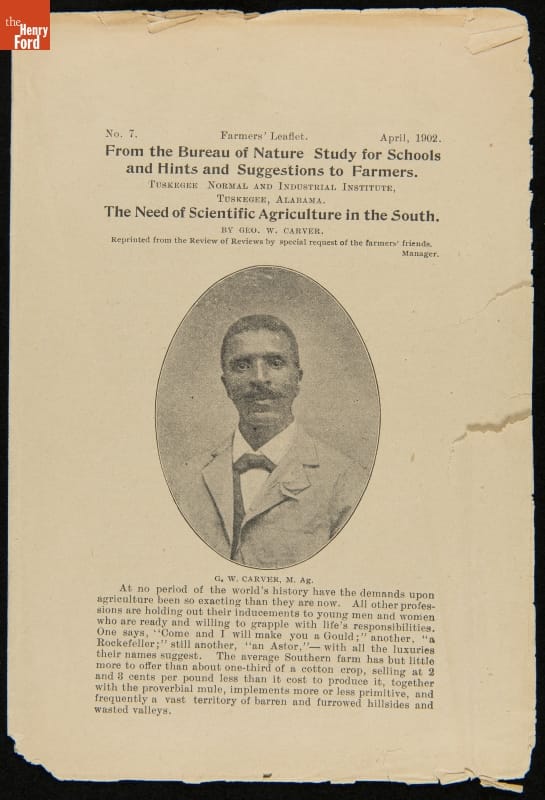
- The Need of Scientific Agriculture in the South, 1902 -
- 1902
- Collections - Artifact
The Need of Scientific Agriculture in the South, 1902
- Women in Agriculture: Laurie Isley | Celebrate Women's History - As we continue our celebration of Women’s History Month, join us as we spotlight Women in Agriculture. Debra Reid — Curator of Agriculture and the Environment at The Henry Ford will interview Laurie Isley — fifth generation farmer, owner of Sunrise Farms, Inc., educator, author, and President of the Michigan Soybean Committee. Laurie will share her experiences and insight as we reflect on the past and collaborate to inspire and empower the next generation of girls and women in agriculture.

- March 23, 2022
- Collections - Video
Women in Agriculture: Laurie Isley | Celebrate Women's History
As we continue our celebration of Women’s History Month, join us as we spotlight Women in Agriculture. Debra Reid — Curator of Agriculture and the Environment at The Henry Ford will interview Laurie Isley — fifth generation farmer, owner of Sunrise Farms, Inc., educator, author, and President of the Michigan Soybean Committee. Laurie will share her experiences and insight as we reflect on the past and collaborate to inspire and empower the next generation of girls and women in agriculture.
- Women's March in Chicago, Illinois, January 21, 2017 -

- January 21, 2017
- Collections - Artifact
Women's March in Chicago, Illinois, January 21, 2017
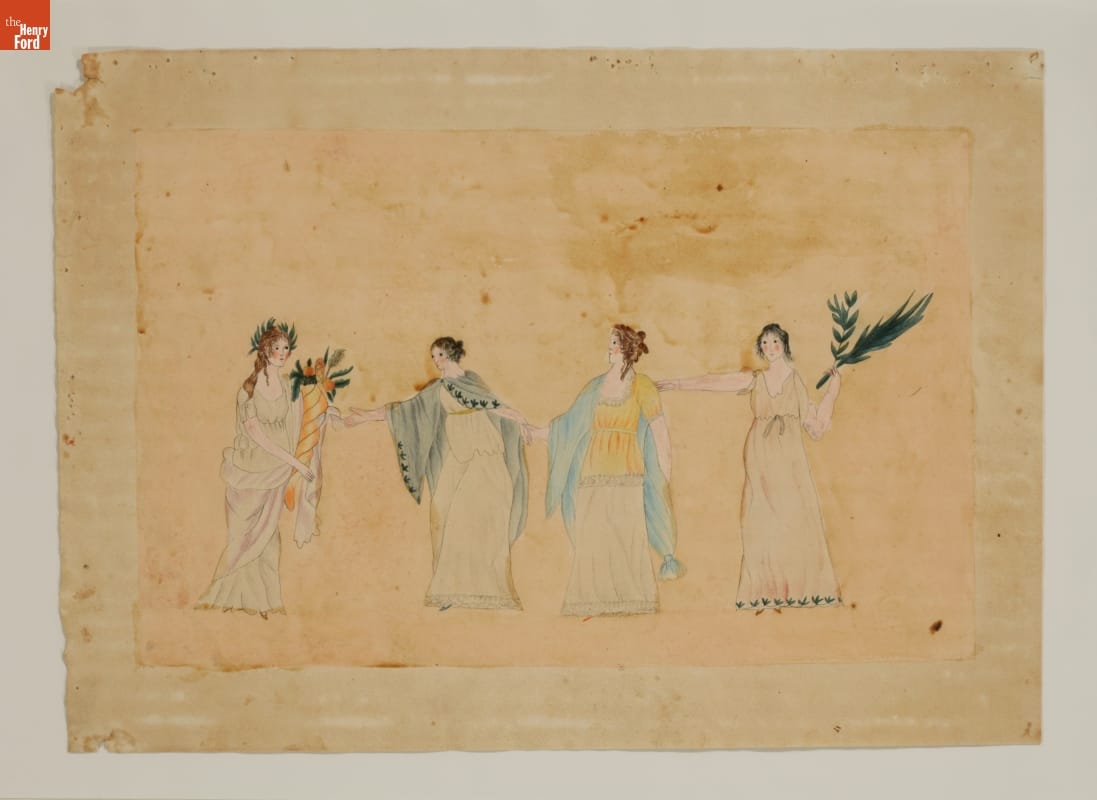
- Women in Classical Dress, 1790-1810 - Mehetabel Wingate (1772 - 1846) likely painted these fanciful images as a school girl, before her marriage in 1792. They represent an idealized vision of classical antiquity that was the height of taste in the years following the Revolution, when Americans viewed themselves as the inheritors of the ideals of the ancient world--democracy from Greece and representative government from Rome.
- 1790-1810
- Collections - Artifact
Women in Classical Dress, 1790-1810
Mehetabel Wingate (1772 - 1846) likely painted these fanciful images as a school girl, before her marriage in 1792. They represent an idealized vision of classical antiquity that was the height of taste in the years following the Revolution, when Americans viewed themselves as the inheritors of the ideals of the ancient world--democracy from Greece and representative government from Rome.
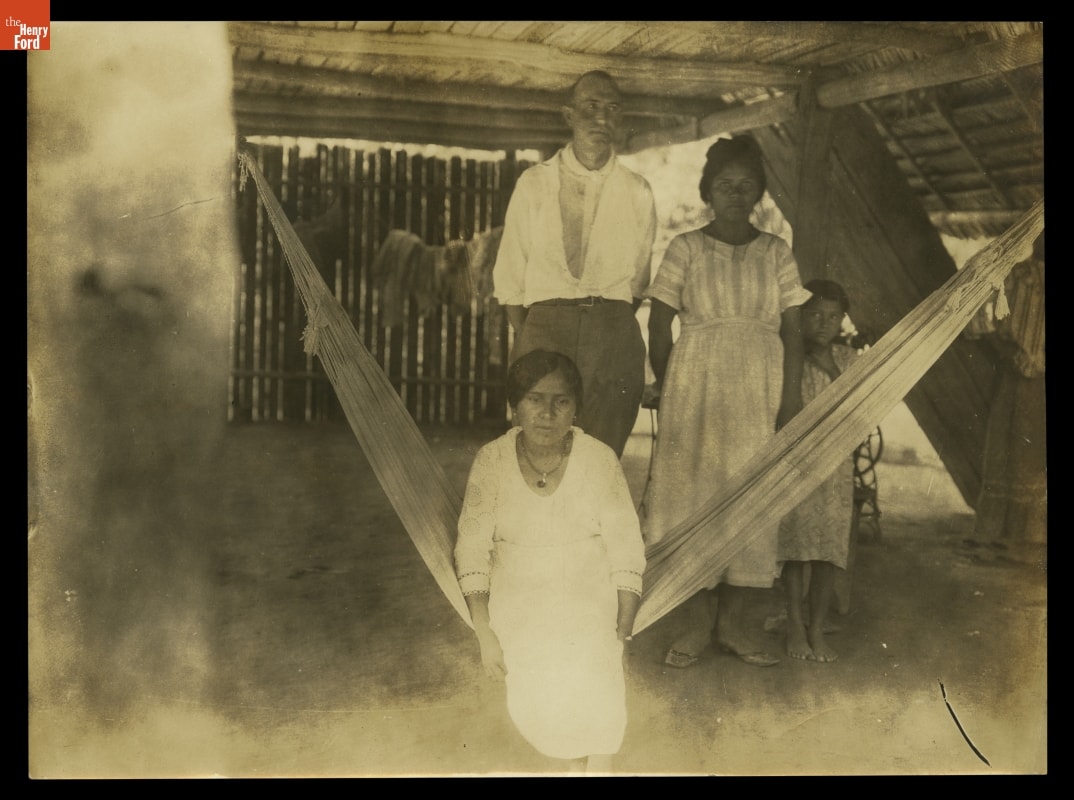
- James Weir in Brazil on an Expedition for the U.S. Department of Agriculture, 1923 - In 1923, threatened by a rising English rubber monopoly, President Herbert Hoover ordered an expedition to study the possibility of growing rubber in the Amazon. As a member of the original trip, plant pathologist James Weir became one of few Americans with experience studying South American rubber trees. Edsel Ford would hire Weir in 1933 to help with Ford's Brazilian rubber tree plantations.
- September 02, 1923
- Collections - Artifact
James Weir in Brazil on an Expedition for the U.S. Department of Agriculture, 1923
In 1923, threatened by a rising English rubber monopoly, President Herbert Hoover ordered an expedition to study the possibility of growing rubber in the Amazon. As a member of the original trip, plant pathologist James Weir became one of few Americans with experience studying South American rubber trees. Edsel Ford would hire Weir in 1933 to help with Ford's Brazilian rubber tree plantations.
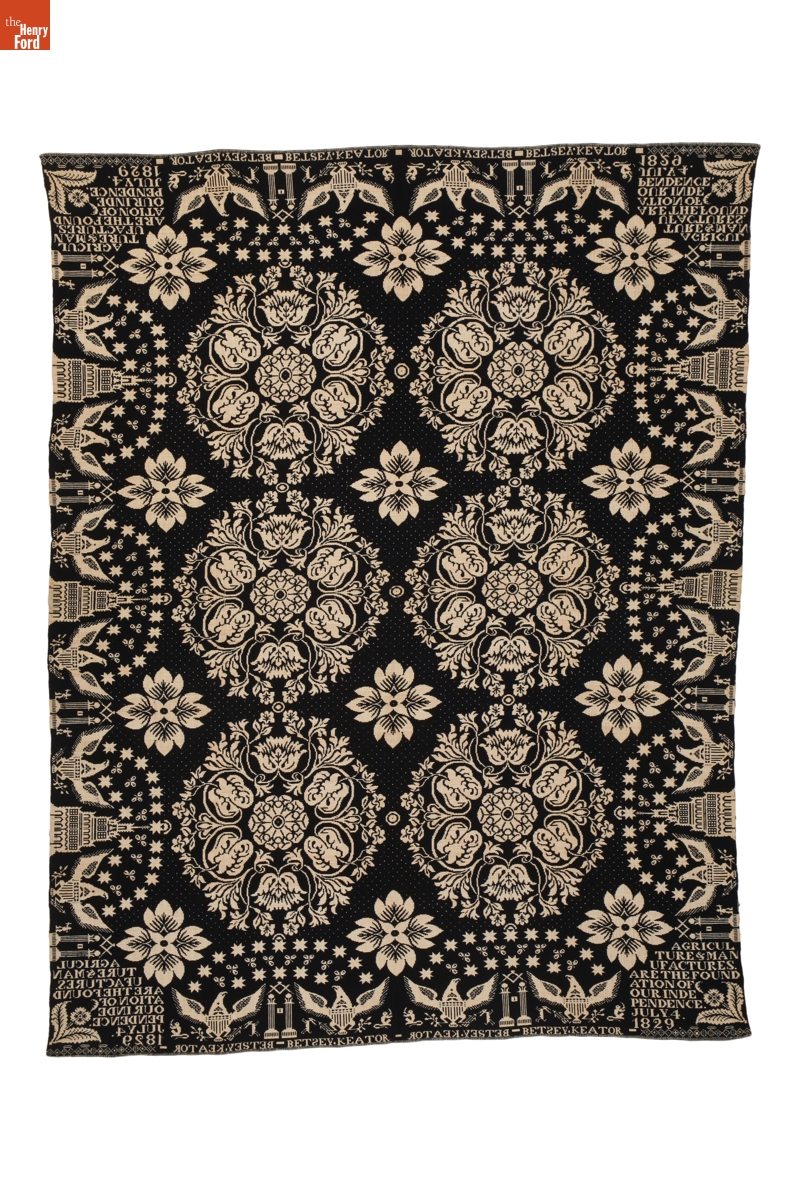
- "Agriculture & Manufactures" Coverlet Woven for Betsey Keator, 1829 -
- July 04, 1829
- Collections - Artifact
"Agriculture & Manufactures" Coverlet Woven for Betsey Keator, 1829
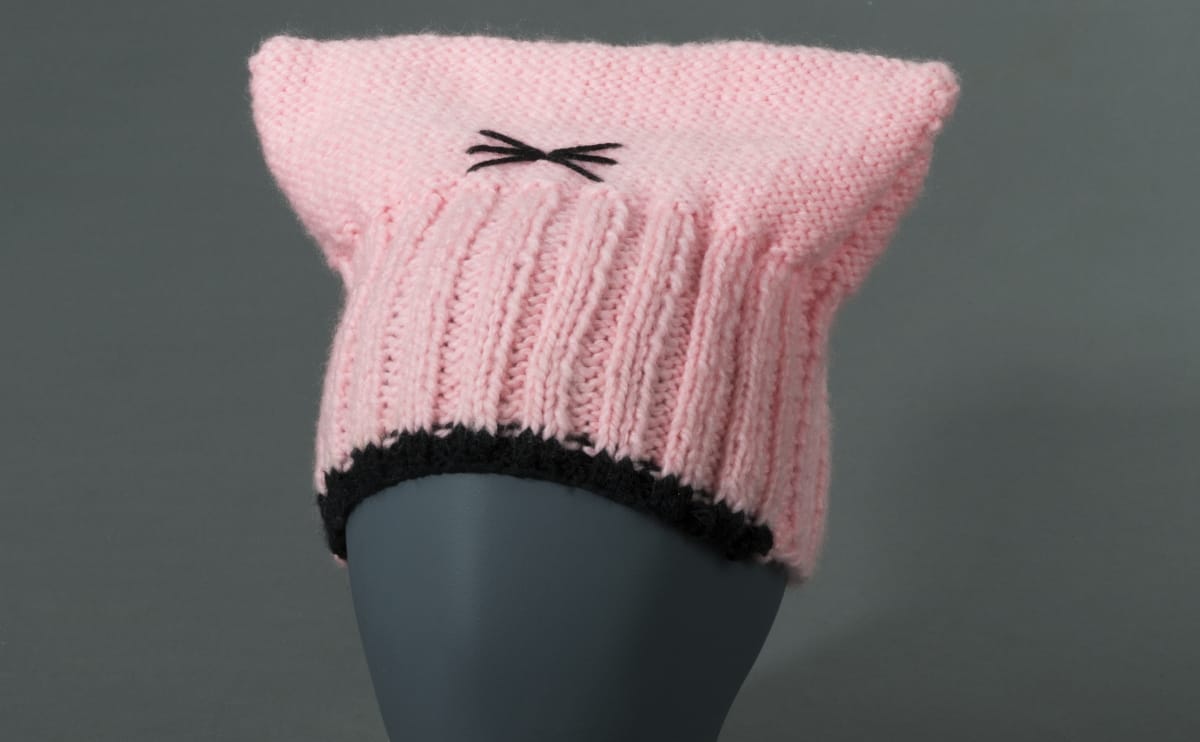
- "Pussyhat," Worn during the Women's March in Lansing, Michigan, January 2017 - In January 2017, millions of women--some donning pink knitted hats--gathered across America in a show of solidarity for women's rights and to protest the demeaning rhetoric made during the 2016 Presidential elections. (This hat's name refers to a derogatory comment made by Donald Trump in 2005.) This call to action brought a greater awareness of women's issues and an increased participation in electoral decision making in the following years.
- January 21, 2017
- Collections - Artifact
"Pussyhat," Worn during the Women's March in Lansing, Michigan, January 2017
In January 2017, millions of women--some donning pink knitted hats--gathered across America in a show of solidarity for women's rights and to protest the demeaning rhetoric made during the 2016 Presidential elections. (This hat's name refers to a derogatory comment made by Donald Trump in 2005.) This call to action brought a greater awareness of women's issues and an increased participation in electoral decision making in the following years.
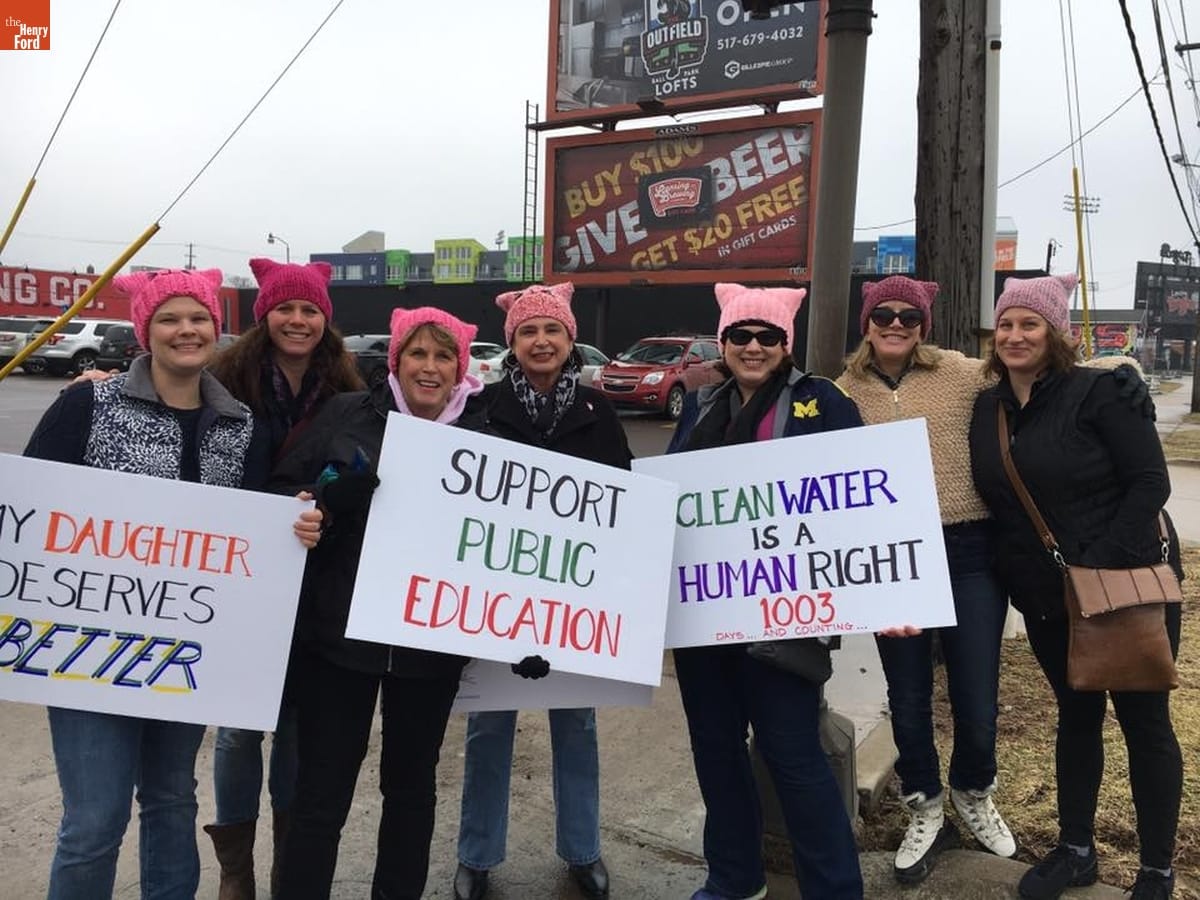
- "Gathering" at the Women's March in Lansing, Michigan, January 21, 2017 -
- January 21, 2017
- Collections - Artifact
"Gathering" at the Women's March in Lansing, Michigan, January 21, 2017
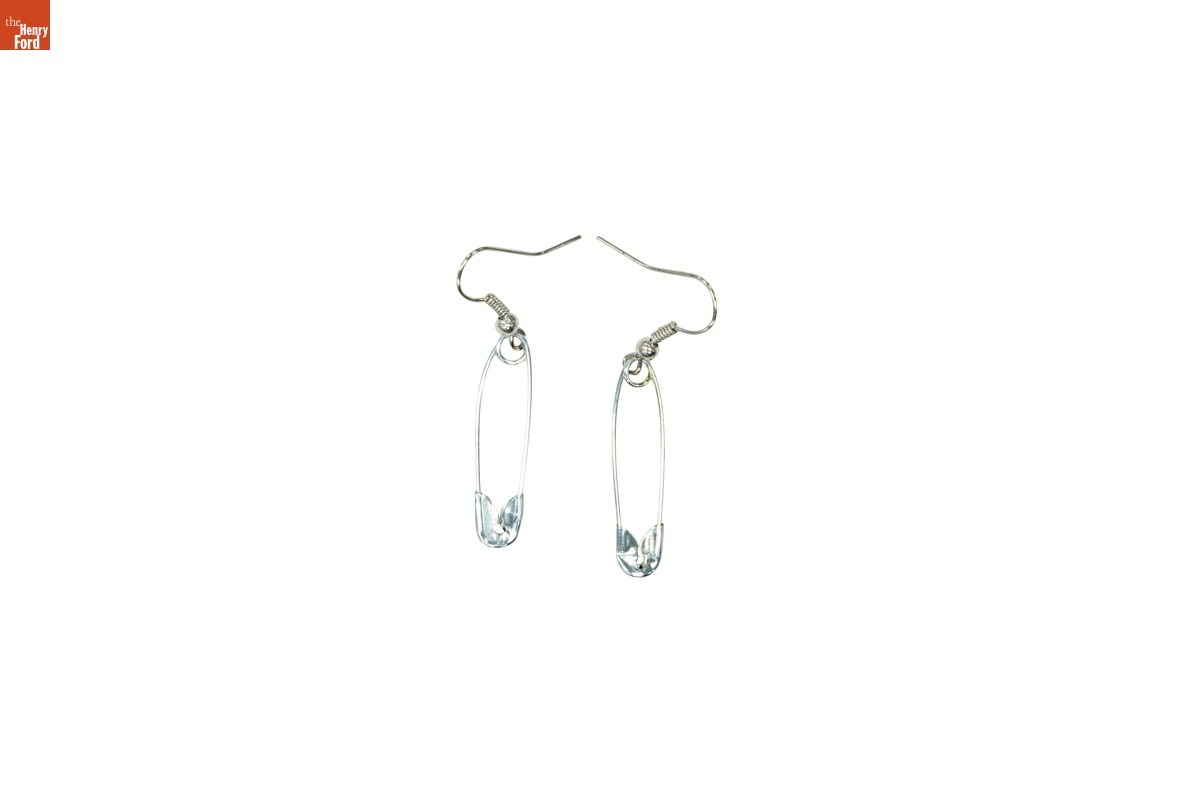
- Safety Pin Earrings, Made for the 2017 Women's March in Washington, D.C. -
- January 21, 2017
- Collections - Artifact
Safety Pin Earrings, Made for the 2017 Women's March in Washington, D.C.
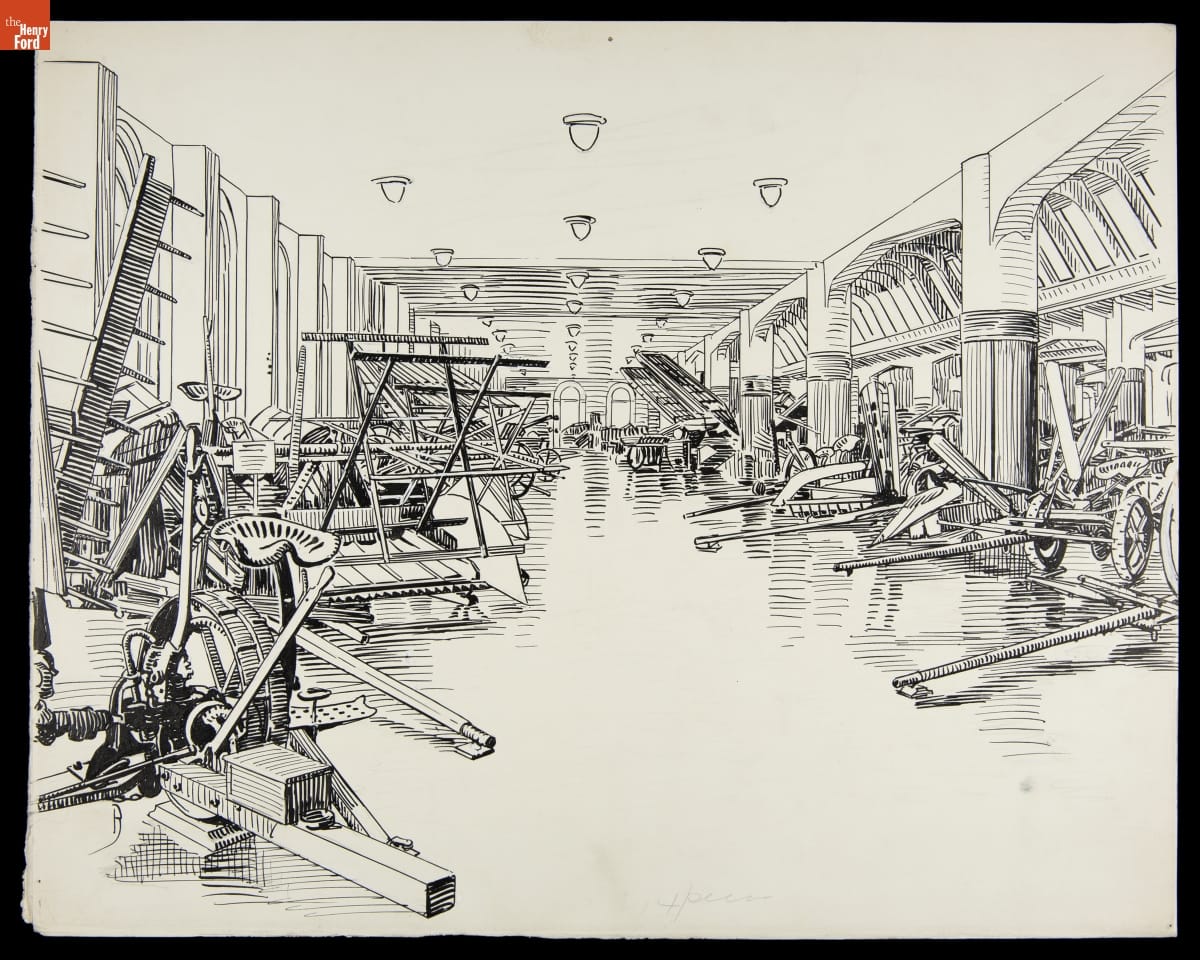
- Agricultural Equipment in Henry Ford Museum, circa 1941 - Henry Ford encouraged and appreciated the work of artist and illustrator Irving Bacon. In 1915, Bacon joined the Photographic Department of Ford Motor Company after he returned from studying art in Europe. Over the next thirty years, Bacon painted scenes depicting Ford's life, created portraiture, and illustrated articles for company publications. This drawing depicts the agriculture equipment exhibit in the Henry Ford Museum.
- circa 1941
- Collections - Artifact
Agricultural Equipment in Henry Ford Museum, circa 1941
Henry Ford encouraged and appreciated the work of artist and illustrator Irving Bacon. In 1915, Bacon joined the Photographic Department of Ford Motor Company after he returned from studying art in Europe. Over the next thirty years, Bacon painted scenes depicting Ford's life, created portraiture, and illustrated articles for company publications. This drawing depicts the agriculture equipment exhibit in the Henry Ford Museum.