
Search
- Black Soldiers during World War I - Andrew Purnell Jr. (1898-1975) was born in Selma, Alabama. He joined the all-Black 303rd Stevedore Regiment (with later unit designations) in December 1917. Private Purnell was stationed in Bordeaux, France. He returned to the U.S. in 1919, married, and worked as a railroad freight handler. Like many service members, Purnell kept cards, letters, photographs, and souvenirs from his time in the military.
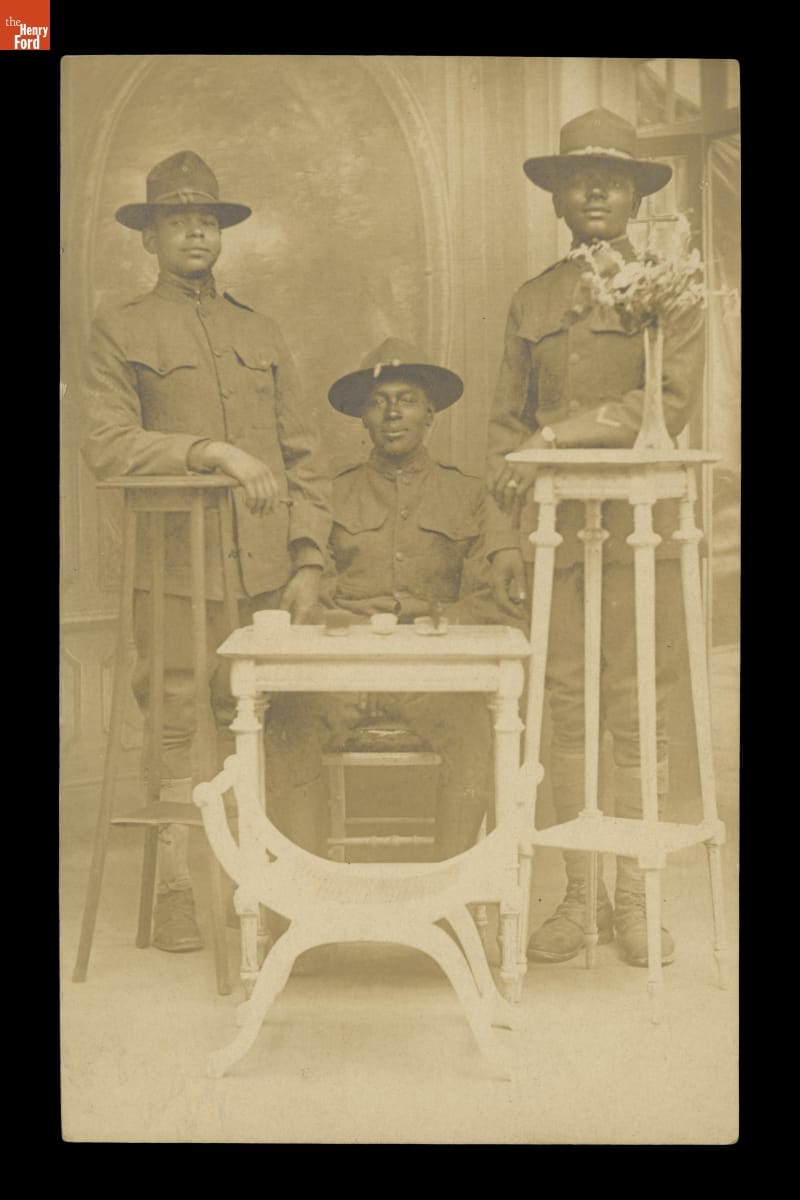
- 1917-1918
- Collections - Artifact
Black Soldiers during World War I
Andrew Purnell Jr. (1898-1975) was born in Selma, Alabama. He joined the all-Black 303rd Stevedore Regiment (with later unit designations) in December 1917. Private Purnell was stationed in Bordeaux, France. He returned to the U.S. in 1919, married, and worked as a railroad freight handler. Like many service members, Purnell kept cards, letters, photographs, and souvenirs from his time in the military.
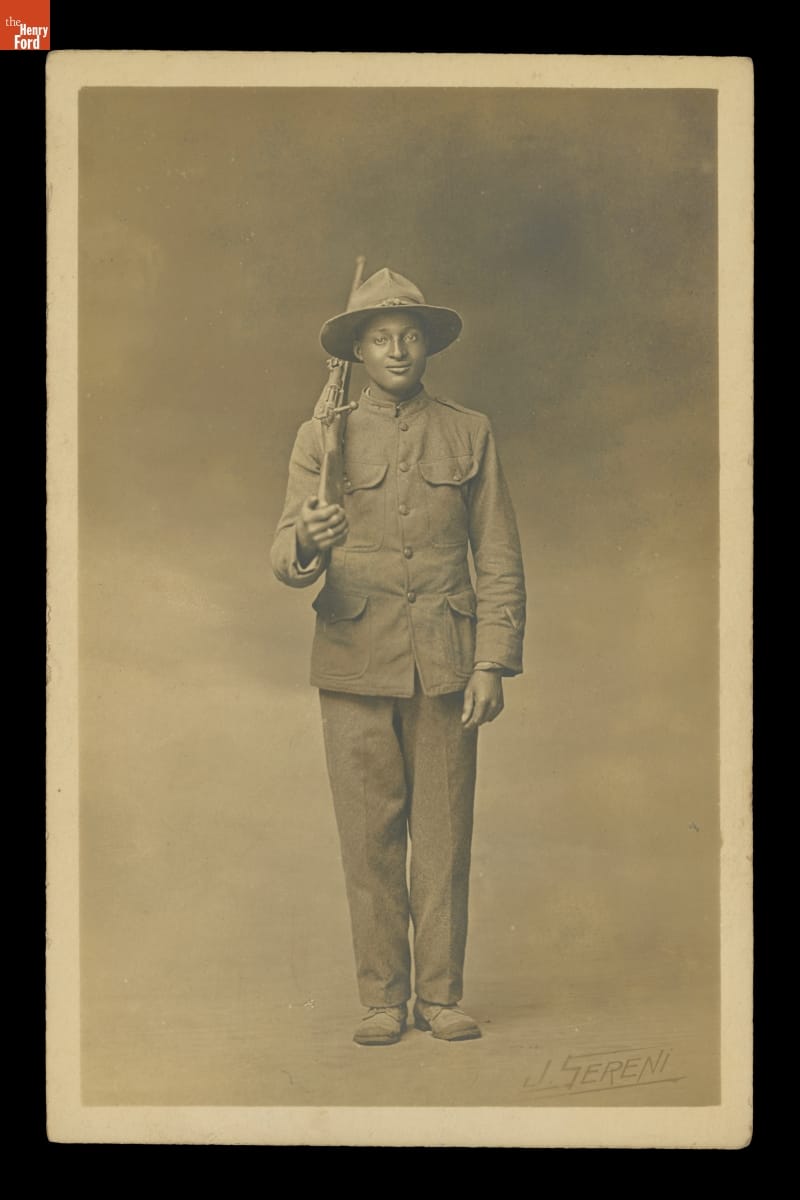
- Black Soldier during World War I - Andrew Purnell Jr. (1898-1975) was born in Selma, Alabama. He joined the all-Black 303rd Stevedore Regiment (with later unit designations) in December 1917. Private Purnell was stationed in Bordeaux, France. He returned to the U.S. in 1919, married, and worked as a railroad freight handler. Like many service members, Purnell kept cards, letters, photographs, and souvenirs from his time in the military.
- Collections - Artifact
Black Soldier during World War I
Andrew Purnell Jr. (1898-1975) was born in Selma, Alabama. He joined the all-Black 303rd Stevedore Regiment (with later unit designations) in December 1917. Private Purnell was stationed in Bordeaux, France. He returned to the U.S. in 1919, married, and worked as a railroad freight handler. Like many service members, Purnell kept cards, letters, photographs, and souvenirs from his time in the military.
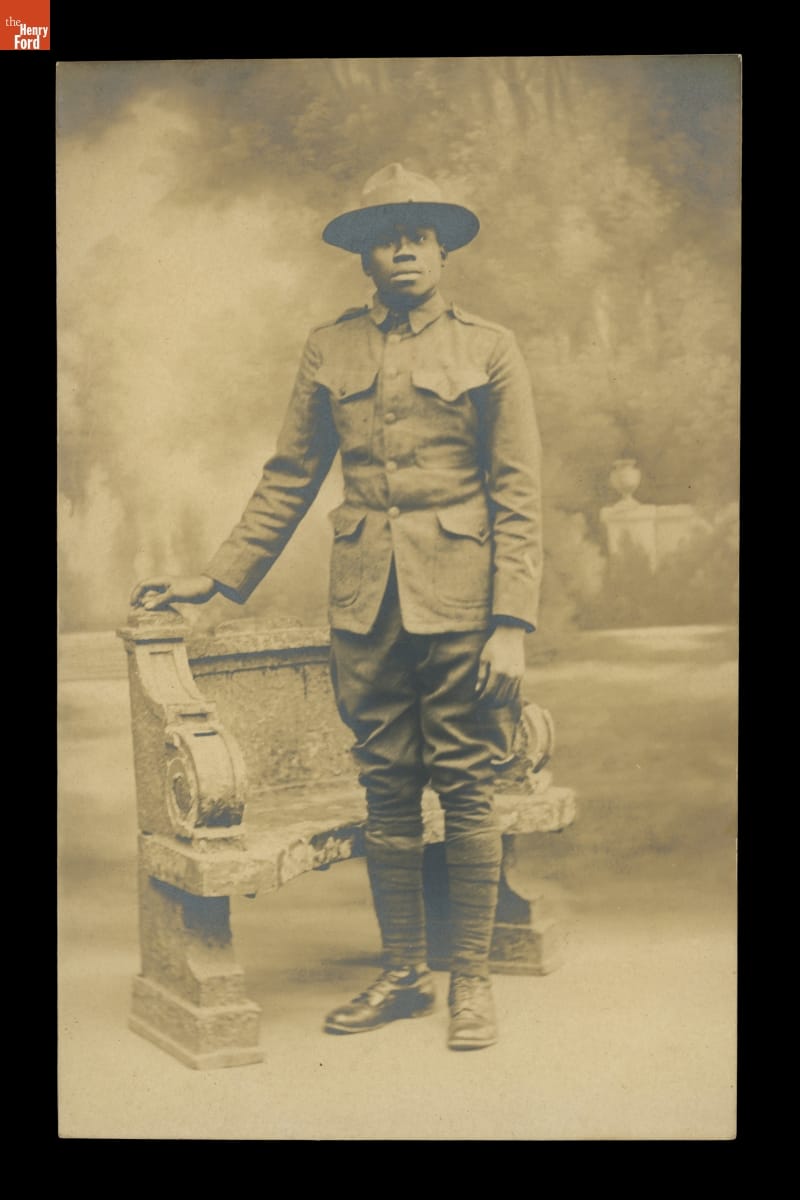
- Black Soldier during World War I - Andrew Purnell Jr. (1898-1975) was born in Selma, Alabama. He joined the all-Black 303rd Stevedore Regiment (with later unit designations) in December 1917. Private Purnell was stationed in Bordeaux, France. He returned to the U.S. in 1919, married, and worked as a railroad freight handler. Like many service members, Purnell kept cards, letters, photographs, and souvenirs from his time in the military.
- Collections - Artifact
Black Soldier during World War I
Andrew Purnell Jr. (1898-1975) was born in Selma, Alabama. He joined the all-Black 303rd Stevedore Regiment (with later unit designations) in December 1917. Private Purnell was stationed in Bordeaux, France. He returned to the U.S. in 1919, married, and worked as a railroad freight handler. Like many service members, Purnell kept cards, letters, photographs, and souvenirs from his time in the military.
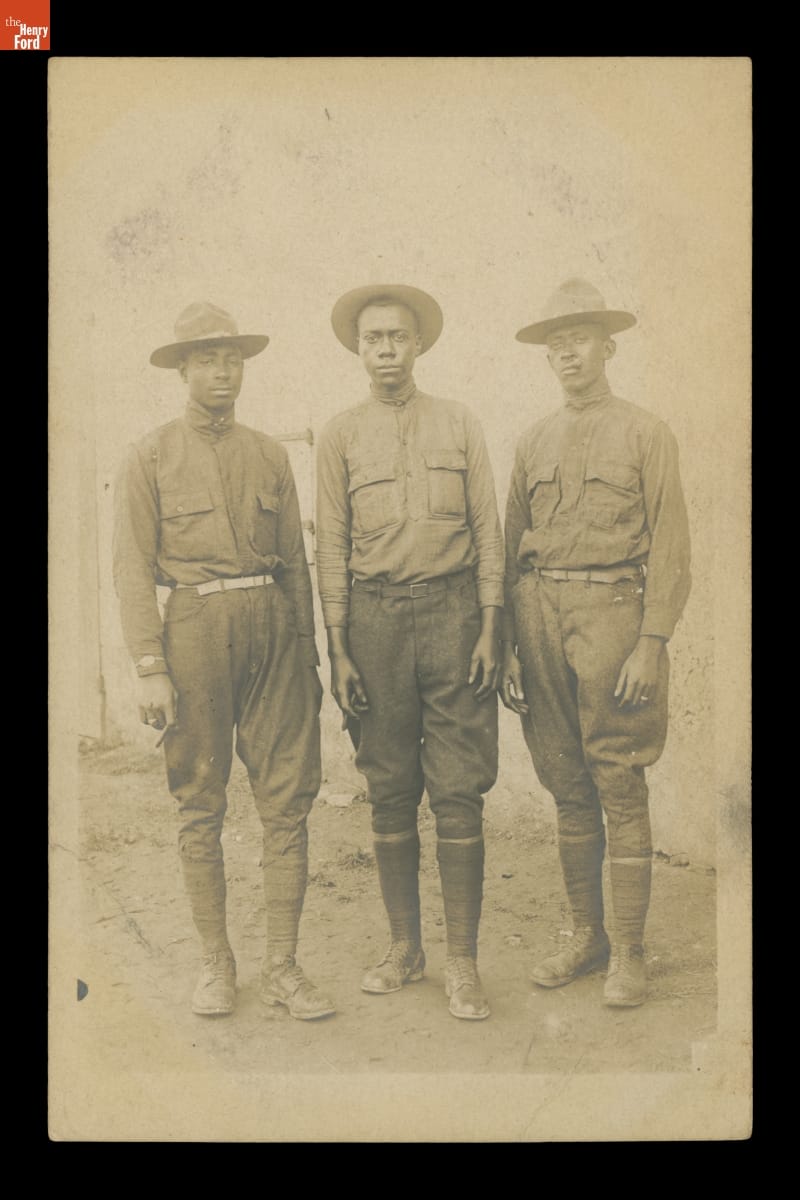
- Black Soldiers during World War I - Andrew Purnell Jr. (1898-1975) was born in Selma, Alabama. He joined the all-Black 303rd Stevedore Regiment (with later unit designations) in December 1917. Private Purnell was stationed in Bordeaux, France. He returned to the U.S. in 1919, married, and worked as a railroad freight handler. Like many service members, Purnell kept cards, letters, photographs, and souvenirs from his time in the military.
- Collections - Artifact
Black Soldiers during World War I
Andrew Purnell Jr. (1898-1975) was born in Selma, Alabama. He joined the all-Black 303rd Stevedore Regiment (with later unit designations) in December 1917. Private Purnell was stationed in Bordeaux, France. He returned to the U.S. in 1919, married, and worked as a railroad freight handler. Like many service members, Purnell kept cards, letters, photographs, and souvenirs from his time in the military.
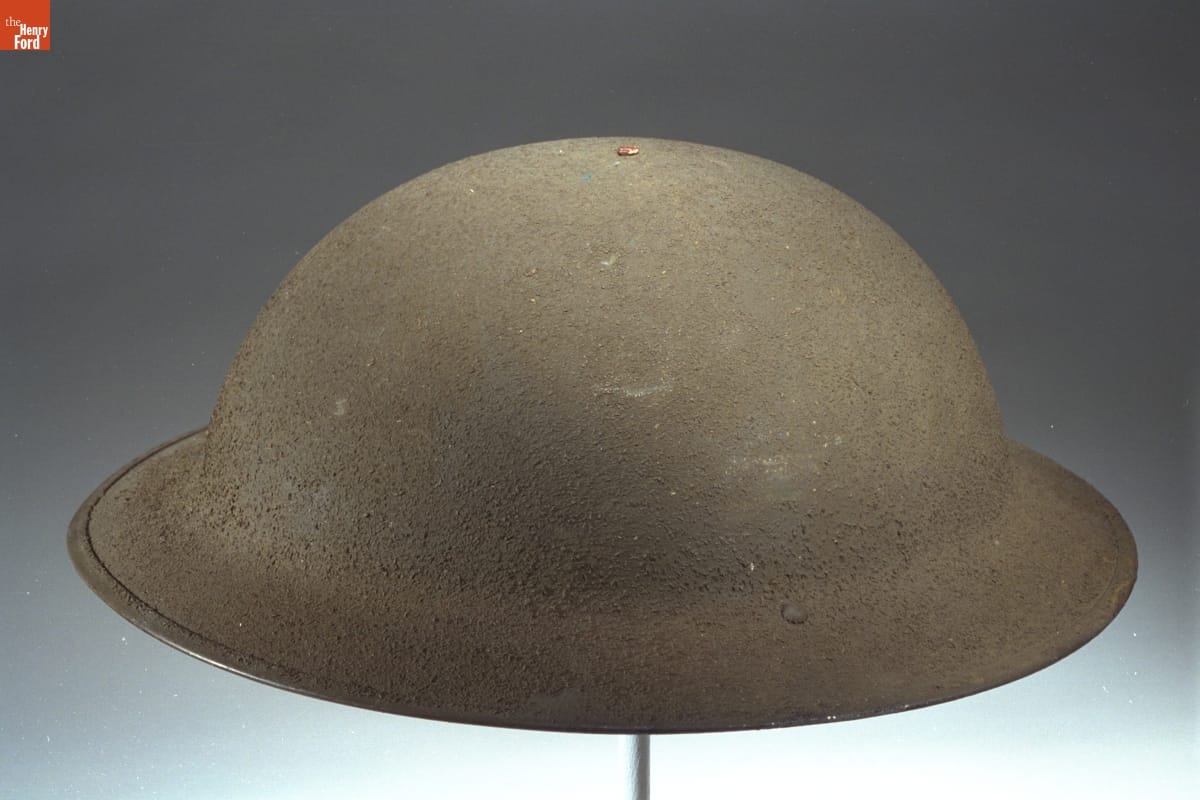
- World War I Helmet, 1915-1920 - Dr. Frank Sladen served in the U.S. Army Medical Corps at Camp Sherman, Ohio, during the First World War. Prior to his military service, Sladen was physician-in-chief at the Henry Ford Hospital in Detroit, Michigan. He returned to the hospital after the war and remained in practice until 1971. Helmets, like this one, became standard military issue during the war.
- 1915-1920
- Collections - Artifact
World War I Helmet, 1915-1920
Dr. Frank Sladen served in the U.S. Army Medical Corps at Camp Sherman, Ohio, during the First World War. Prior to his military service, Sladen was physician-in-chief at the Henry Ford Hospital in Detroit, Michigan. He returned to the hospital after the war and remained in practice until 1971. Helmets, like this one, became standard military issue during the war.
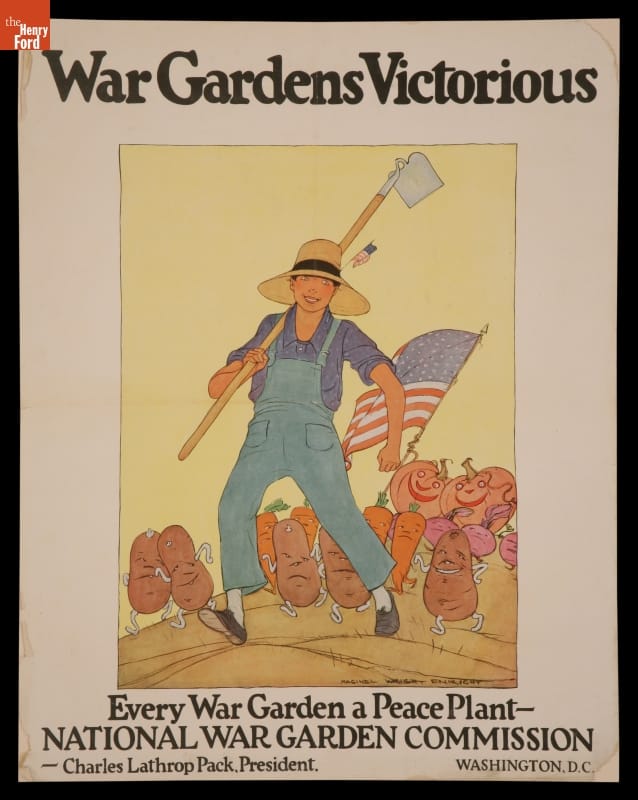
- World War I Poster, "War Gardens Victorious," circa 1919 - During the First World War, governments of all the warring nations used poster campaigns to encourage civilian and military support of the war effort. Artists widely used an innovative advertising technique for these posters that moved away from a factual depiction of a product's material or event's subject to an emphasis on appealing to the viewer's emotions.
- circa 1919
- Collections - Artifact
World War I Poster, "War Gardens Victorious," circa 1919
During the First World War, governments of all the warring nations used poster campaigns to encourage civilian and military support of the war effort. Artists widely used an innovative advertising technique for these posters that moved away from a factual depiction of a product's material or event's subject to an emphasis on appealing to the viewer's emotions.
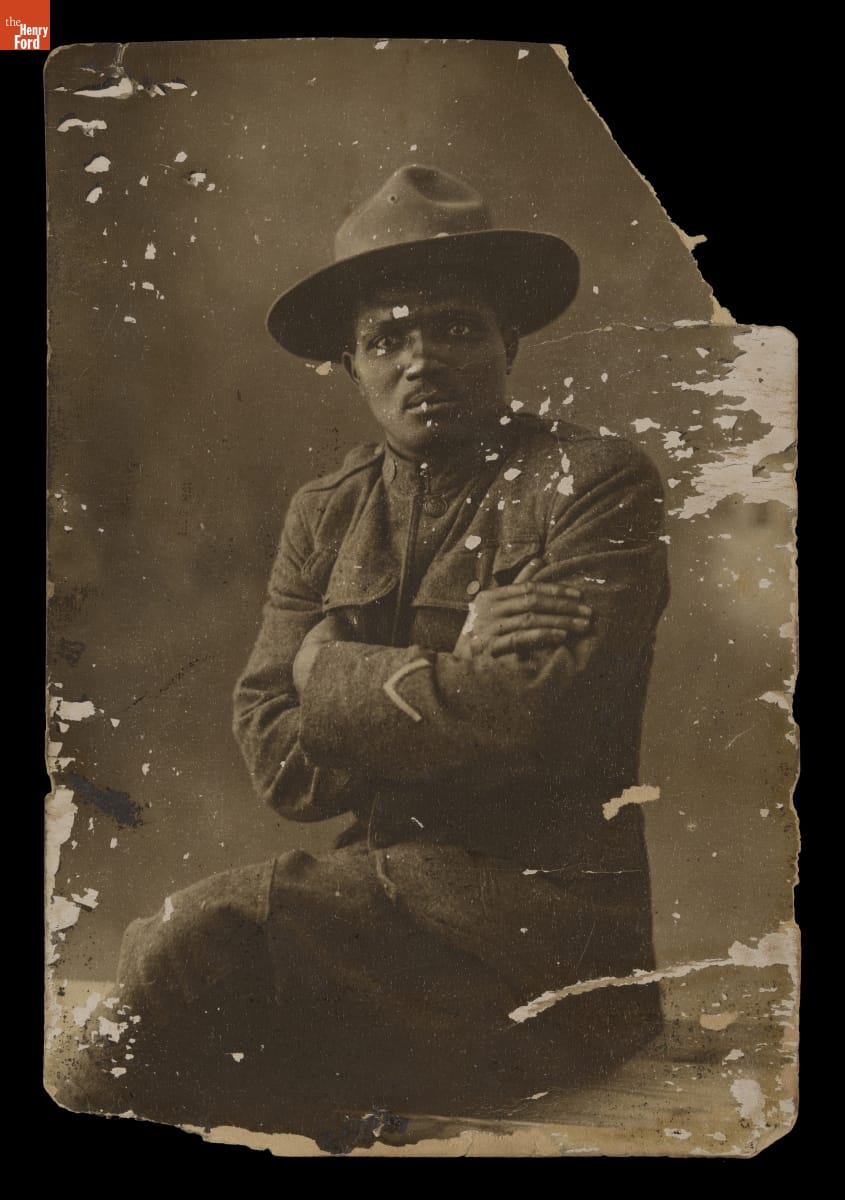
- Black Soldier in World War I - Andrew Purnell Jr. (1898-1975) was born in Selma, Alabama. He joined the all-Black 303rd Stevedore Regiment (with later unit designations) in December 1917. Private Purnell was stationed in Bordeaux, France. He returned to the U.S. in 1919, married, and worked as a railroad freight handler. Like many service members, Purnell kept cards, letters, photographs, and souvenirs from his time in the military.
- 1917-1918
- Collections - Artifact
Black Soldier in World War I
Andrew Purnell Jr. (1898-1975) was born in Selma, Alabama. He joined the all-Black 303rd Stevedore Regiment (with later unit designations) in December 1917. Private Purnell was stationed in Bordeaux, France. He returned to the U.S. in 1919, married, and worked as a railroad freight handler. Like many service members, Purnell kept cards, letters, photographs, and souvenirs from his time in the military.
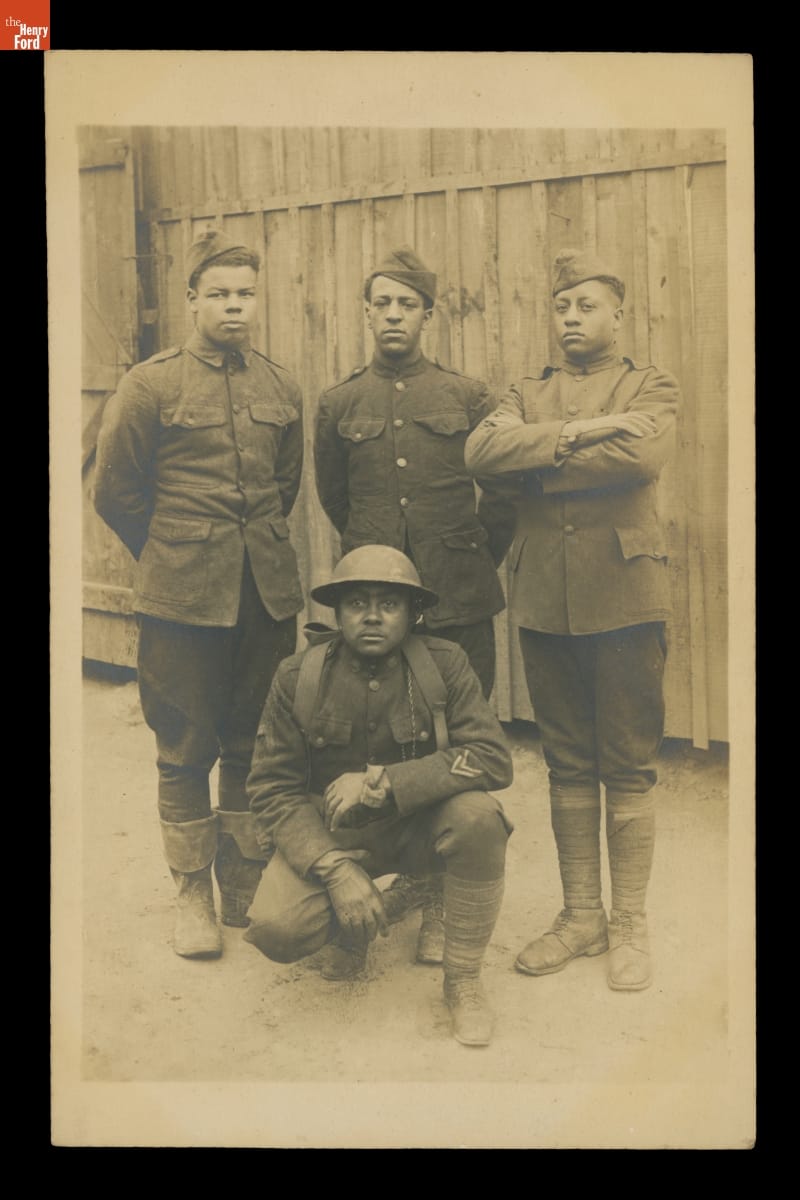
- Black Soldiers during World War I - Andrew Purnell Jr. (1898-1975) was born in Selma, Alabama. He joined the all-Black 303rd Stevedore Regiment (with later unit designations) in December 1917. Private Purnell was stationed in Bordeaux, France. He returned to the U.S. in 1919, married, and worked as a railroad freight handler. Like many service members, Purnell kept cards, letters, photographs, and souvenirs from his time in the military.
- Collections - Artifact
Black Soldiers during World War I
Andrew Purnell Jr. (1898-1975) was born in Selma, Alabama. He joined the all-Black 303rd Stevedore Regiment (with later unit designations) in December 1917. Private Purnell was stationed in Bordeaux, France. He returned to the U.S. in 1919, married, and worked as a railroad freight handler. Like many service members, Purnell kept cards, letters, photographs, and souvenirs from his time in the military.
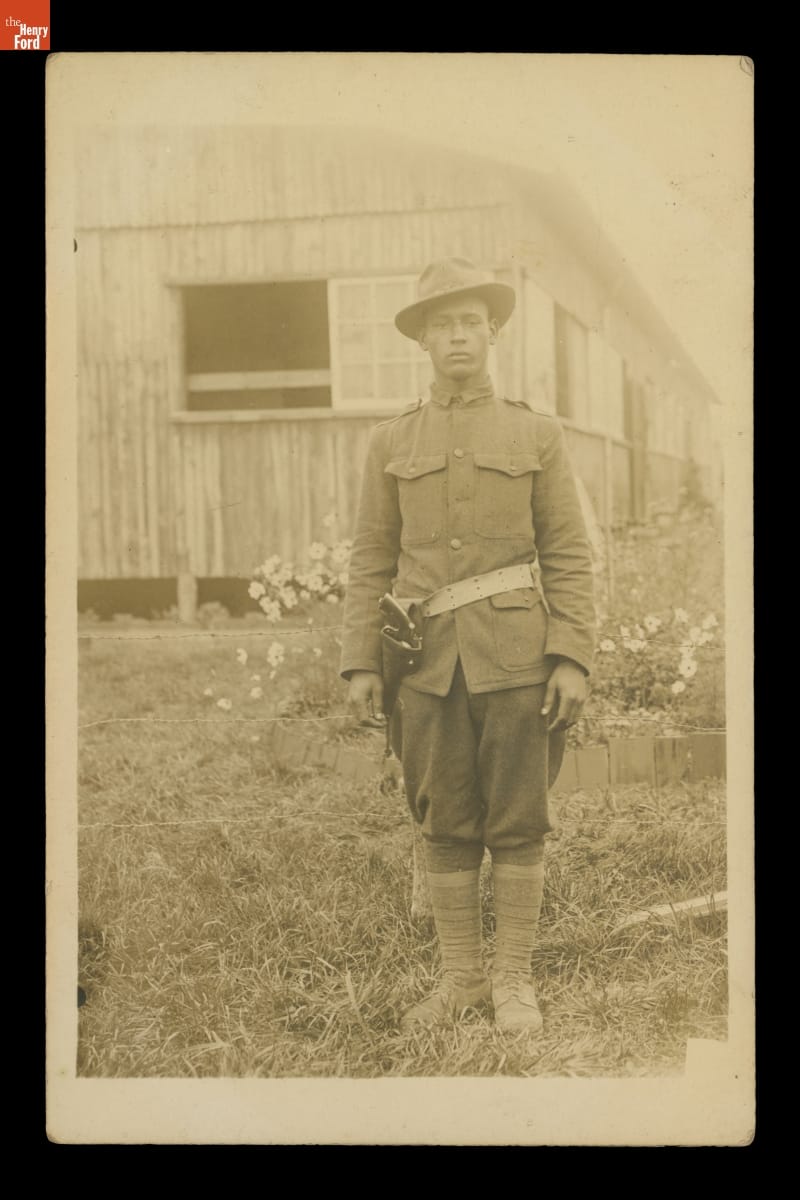
- Black Soldier during World War I - Andrew Purnell Jr. (1898-1975) was born in Selma, Alabama. He joined the all-Black 303rd Stevedore Regiment (with later unit designations) in December 1917. Private Purnell was stationed in Bordeaux, France. He returned to the U.S. in 1919, married, and worked as a railroad freight handler. Like many service members, Purnell kept cards, letters, photographs, and souvenirs from his time in the military.
- Collections - Artifact
Black Soldier during World War I
Andrew Purnell Jr. (1898-1975) was born in Selma, Alabama. He joined the all-Black 303rd Stevedore Regiment (with later unit designations) in December 1917. Private Purnell was stationed in Bordeaux, France. He returned to the U.S. in 1919, married, and worked as a railroad freight handler. Like many service members, Purnell kept cards, letters, photographs, and souvenirs from his time in the military.
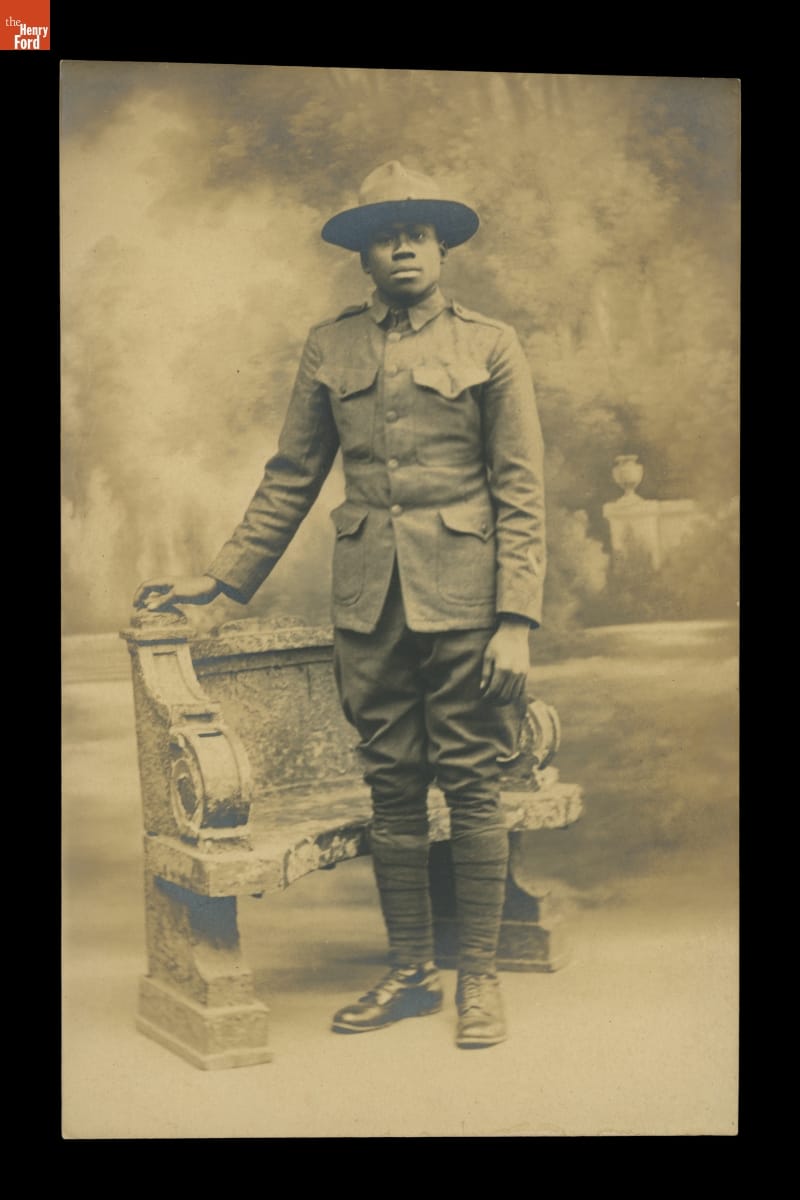
- Black Soldier during World War I - Andrew Purnell Jr. (1898-1975) was born in Selma, Alabama. He joined the all-Black 303rd Stevedore Regiment (with later unit designations) in December 1917. Private Purnell was stationed in Bordeaux, France. He returned to the U.S. in 1919, married, and worked as a railroad freight handler. Like many service members, Purnell kept cards, letters, photographs, and souvenirs from his time in the military.
- Collections - Artifact
Black Soldier during World War I
Andrew Purnell Jr. (1898-1975) was born in Selma, Alabama. He joined the all-Black 303rd Stevedore Regiment (with later unit designations) in December 1917. Private Purnell was stationed in Bordeaux, France. He returned to the U.S. in 1919, married, and worked as a railroad freight handler. Like many service members, Purnell kept cards, letters, photographs, and souvenirs from his time in the military.