
Search
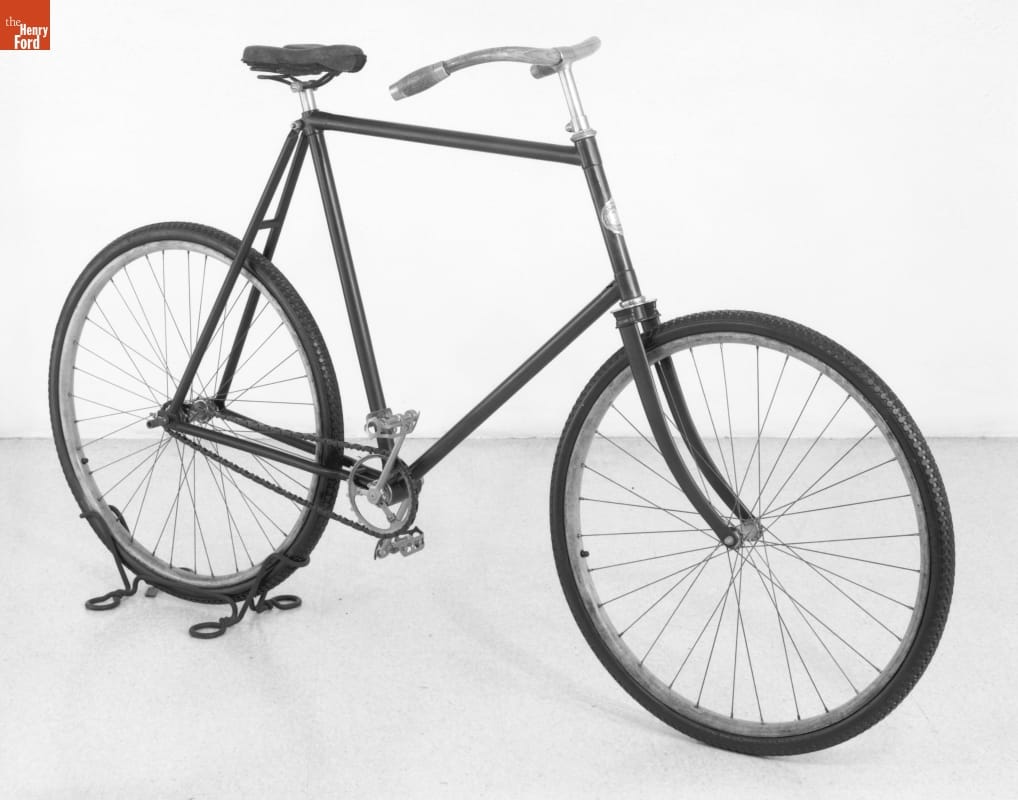
- Van Cleve Bicycle, Made by the Wright Brothers circa 1896 - Wilbur and Orville Wright established their first bicycle shop in 1892. They started building their own bikes in 1896. Van Cleve bicycles -- named for Wright family ancestors -- used high-grade materials, and they featured special oil-retaining wheel hubs and coaster brakes of the brothers' own design. The Wrights built each bike to order, hand-making parts with basic tools.
- circa 1896
- Collections - Artifact
Van Cleve Bicycle, Made by the Wright Brothers circa 1896
Wilbur and Orville Wright established their first bicycle shop in 1892. They started building their own bikes in 1896. Van Cleve bicycles -- named for Wright family ancestors -- used high-grade materials, and they featured special oil-retaining wheel hubs and coaster brakes of the brothers' own design. The Wrights built each bike to order, hand-making parts with basic tools.
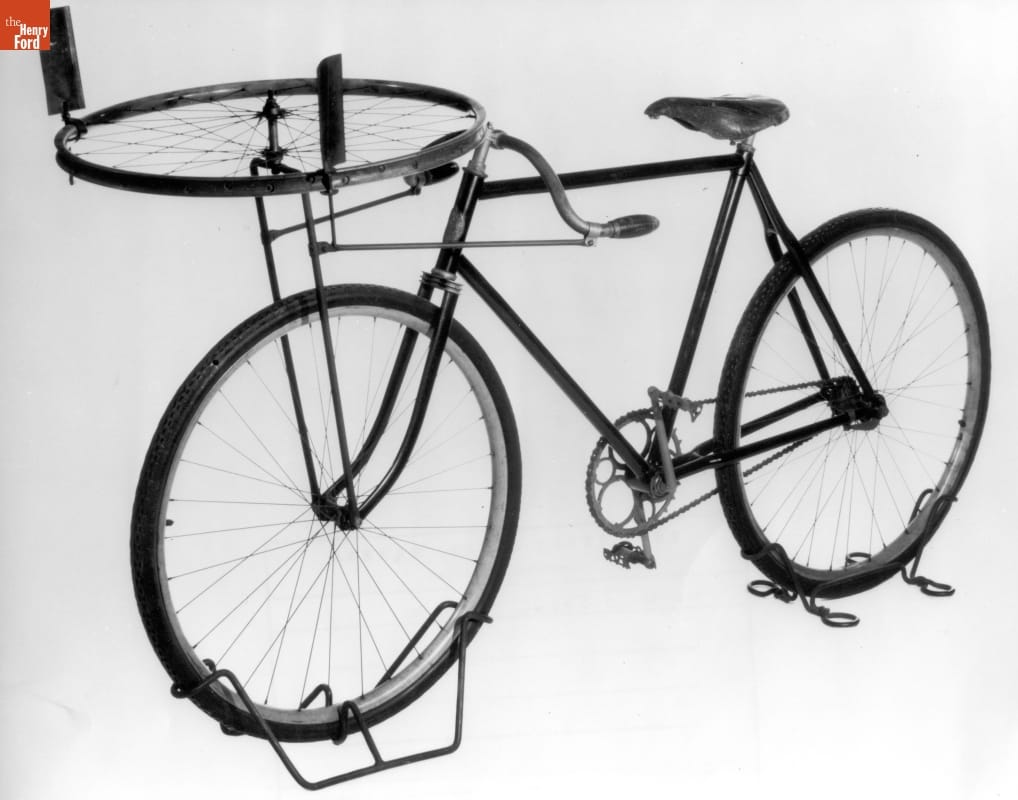
- St. Clair Bicycle Made by the Wright Brothers, 1897-1901 - After their 1901 glider didn't perform as expected, Wilbur and Orville Wright modified a bicycle to test the data used to shape their wings. Riding the bike generated a breeze that simulated the air pressure against a wing in flight. Although this St. Clair bicycle was built by the Wrights, it is not the actual bike used in their experiments.
- 1897-1901
- Collections - Artifact
St. Clair Bicycle Made by the Wright Brothers, 1897-1901
After their 1901 glider didn't perform as expected, Wilbur and Orville Wright modified a bicycle to test the data used to shape their wings. Riding the bike generated a breeze that simulated the air pressure against a wing in flight. Although this St. Clair bicycle was built by the Wrights, it is not the actual bike used in their experiments.
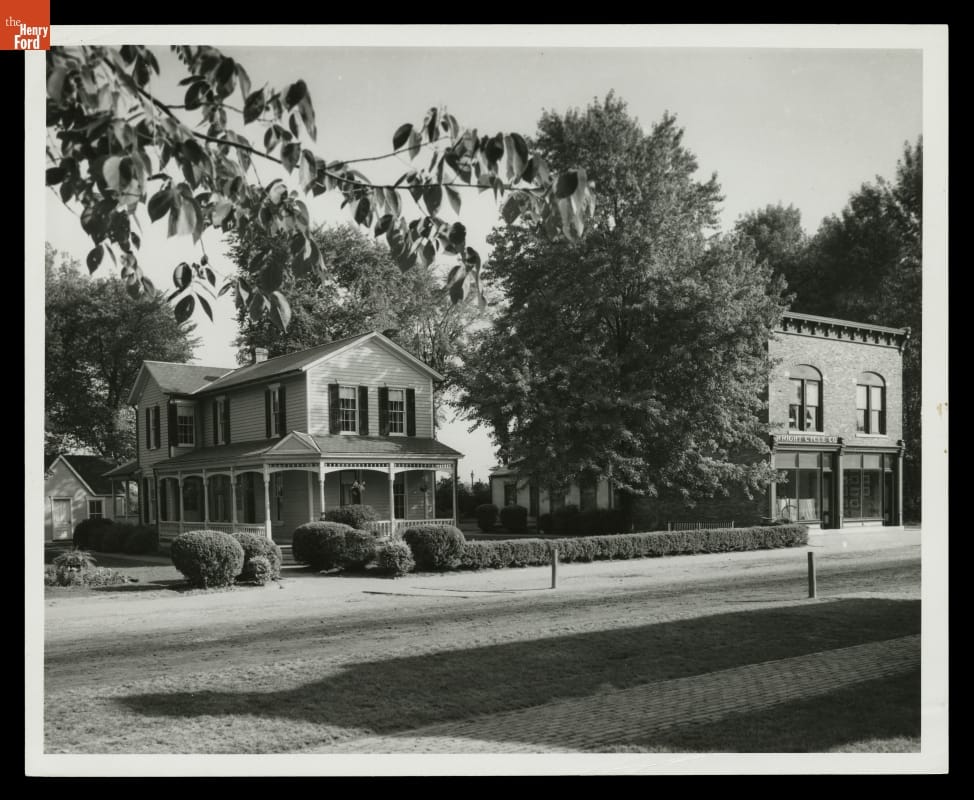
- Wright Brothers Home and Cycle Shop, Greenfield Village, 1971 - Henry Ford acquired the Wright brothers' home and cycle shop in 1936. He then relocated the buildings from Dayton, Ohio, to his Dearborn, Michigan, museum complex. Ford placed the structures right next to each other in Greenfield Village. In Dayton, the buildings had been located a few blocks apart.
- August 01, 1971
- Collections - Artifact
Wright Brothers Home and Cycle Shop, Greenfield Village, 1971
Henry Ford acquired the Wright brothers' home and cycle shop in 1936. He then relocated the buildings from Dayton, Ohio, to his Dearborn, Michigan, museum complex. Ford placed the structures right next to each other in Greenfield Village. In Dayton, the buildings had been located a few blocks apart.
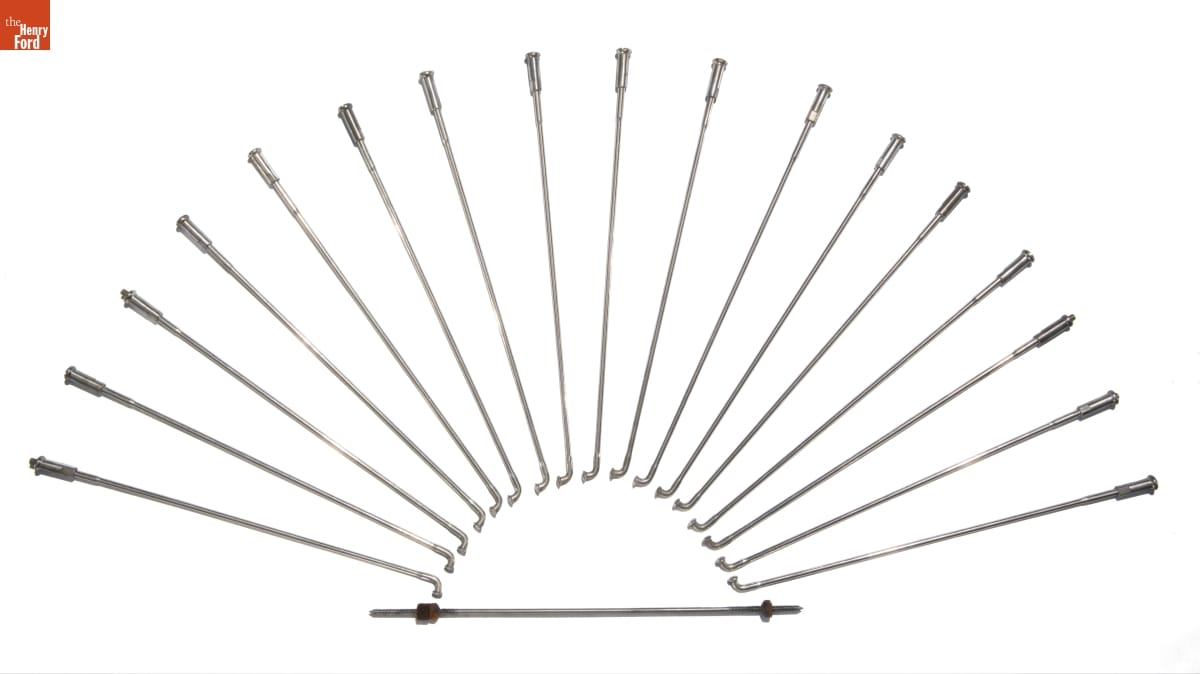
- Bicycle Spokes, Used by the Wright Brothers, Dayton, Ohio, circa 1900 - Wilbur and Orville Wright ran their bicycle business from 1892-1908. Wright Cycle Company operated at five different Dayton, Ohio, locations before settling at 1127 West Third Street in 1897. The Wrights sold and repaired bikes, and they carried a full line of cycling accessories and supplies. For a few years, the brothers even built bicycles under their own brands.
- circa 1900
- Collections - Artifact
Bicycle Spokes, Used by the Wright Brothers, Dayton, Ohio, circa 1900
Wilbur and Orville Wright ran their bicycle business from 1892-1908. Wright Cycle Company operated at five different Dayton, Ohio, locations before settling at 1127 West Third Street in 1897. The Wrights sold and repaired bikes, and they carried a full line of cycling accessories and supplies. For a few years, the brothers even built bicycles under their own brands.
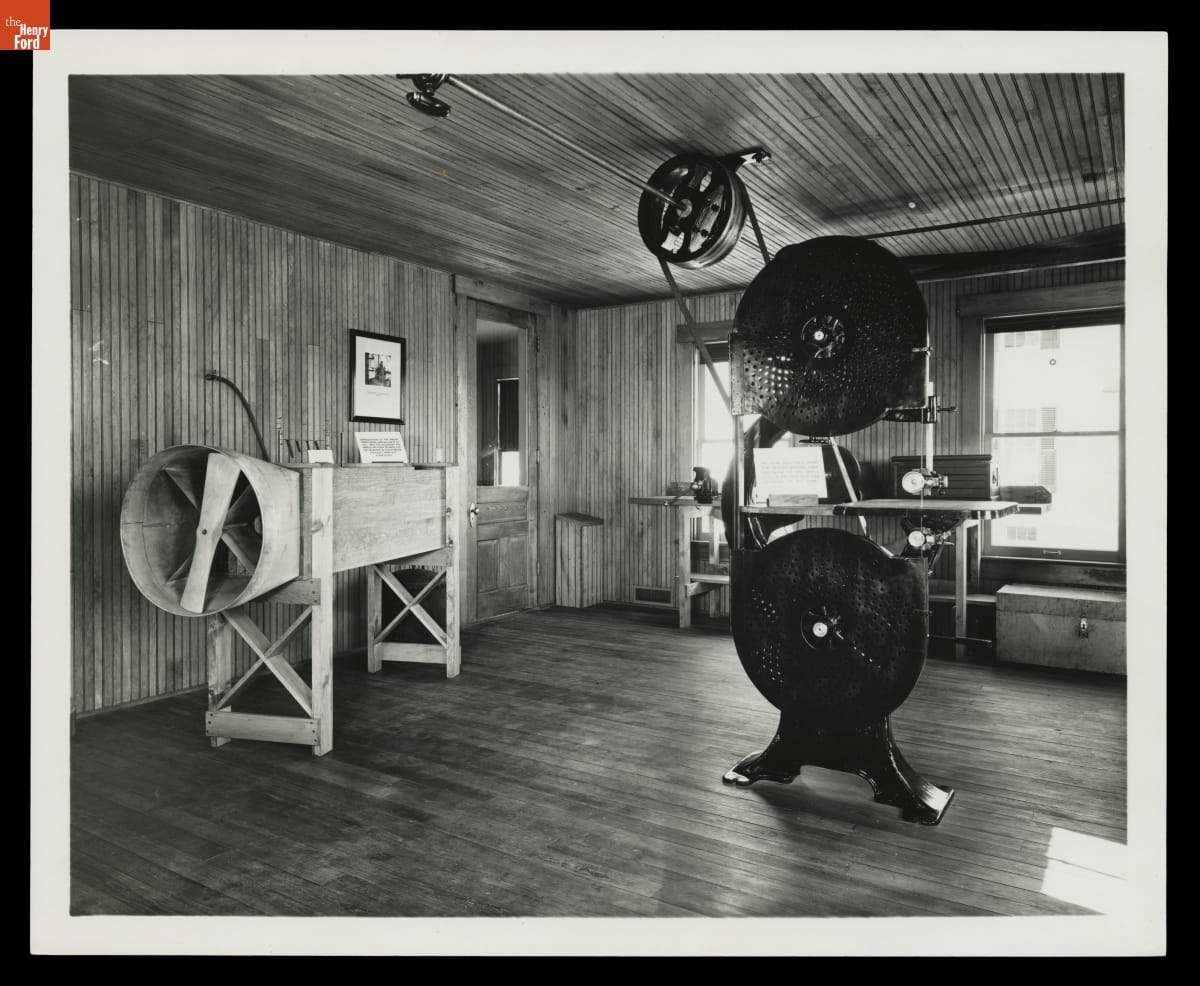
- Reproduction of Wright Brothers' Wind Tunnel inside Wright Cycle Shop, Greenfield Village, 1938 - When their glider did not perform as expected in 1901, Wilbur and Orville Wright determined that the standard lift tables -- used to predict the lift generated by aircraft wings -- were incorrect. The Wrights built a wind tunnel in their Dayton bicycle shop and calculated their own tables. This new data led directly to their success with the 1903 Wright Flyer.
- 1938
- Collections - Artifact
Reproduction of Wright Brothers' Wind Tunnel inside Wright Cycle Shop, Greenfield Village, 1938
When their glider did not perform as expected in 1901, Wilbur and Orville Wright determined that the standard lift tables -- used to predict the lift generated by aircraft wings -- were incorrect. The Wrights built a wind tunnel in their Dayton bicycle shop and calculated their own tables. This new data led directly to their success with the 1903 Wright Flyer.
- The Wright Brothers and the Bicycle Business - Orville Wright (right) was photographed alongside friend and former schoolmate Edwin H. Sines in the Wright brothers' Dayton, Ohio, bicycle shop. The Wrights' experiences building printing presses and bicycles sharpened their skills in precision machining. These talents were invaluable in their later efforts to build the first successful heavier-than-air, powered aircraft in 1903.

- October 16, 2015
- Collections - Set
The Wright Brothers and the Bicycle Business
Orville Wright (right) was photographed alongside friend and former schoolmate Edwin H. Sines in the Wright brothers' Dayton, Ohio, bicycle shop. The Wrights' experiences building printing presses and bicycles sharpened their skills in precision machining. These talents were invaluable in their later efforts to build the first successful heavier-than-air, powered aircraft in 1903.
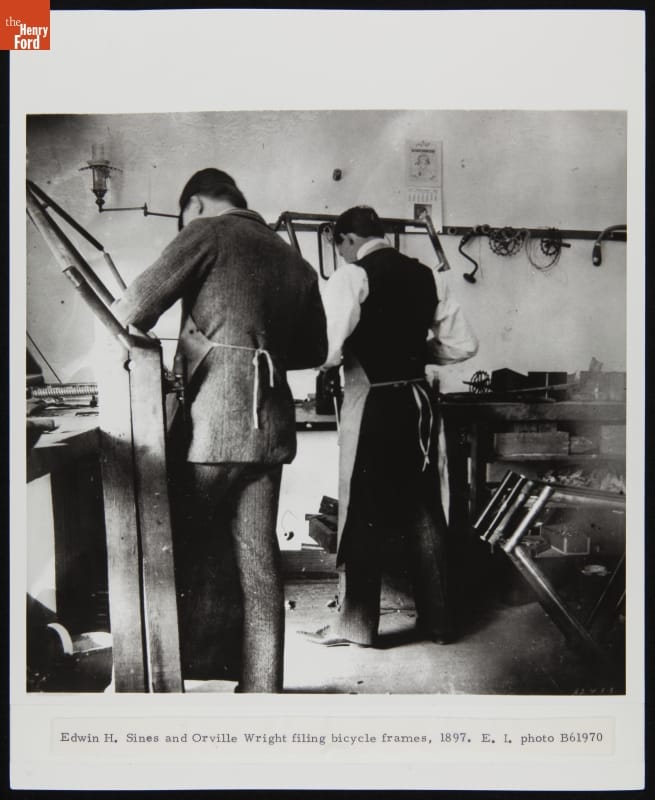
- Edwin H. Sines and Orville Wright Filing Bicycle Frames at Wright Cycle Shop, Dayton, Ohio, 1897 - Orville Wright (right) was photographed alongside friend and former schoolmate Edwin H. Sines in the Wright brothers' Dayton, Ohio, bicycle shop. The Wrights' experiences building printing presses and bicycles sharpened their skills in precision machining. These talents were invaluable in their later efforts to build the first successful heavier-than-air, powered aircraft in 1903.
- 1897
- Collections - Artifact
Edwin H. Sines and Orville Wright Filing Bicycle Frames at Wright Cycle Shop, Dayton, Ohio, 1897
Orville Wright (right) was photographed alongside friend and former schoolmate Edwin H. Sines in the Wright brothers' Dayton, Ohio, bicycle shop. The Wrights' experiences building printing presses and bicycles sharpened their skills in precision machining. These talents were invaluable in their later efforts to build the first successful heavier-than-air, powered aircraft in 1903.
- Wright Brothers - On December 14, 1903, Wilbur won a coin toss and made the first attempt to fly their latest machine. He stalled it on take-off, causing some minor damage. The plane was repaired, and Orville made the next attempt on December 17. At 10:35 a.m., he made the first heavier-than-air, machine powered flight in the world. In a flight lasting only 12 seconds and covering just 120 feet, Orville did what men and women had only dreamed of doing for centuries, he flew.

- August 26, 2011
- Collections - Video
Wright Brothers
On December 14, 1903, Wilbur won a coin toss and made the first attempt to fly their latest machine. He stalled it on take-off, causing some minor damage. The plane was repaired, and Orville made the next attempt on December 17. At 10:35 a.m., he made the first heavier-than-air, machine powered flight in the world. In a flight lasting only 12 seconds and covering just 120 feet, Orville did what men and women had only dreamed of doing for centuries, he flew.
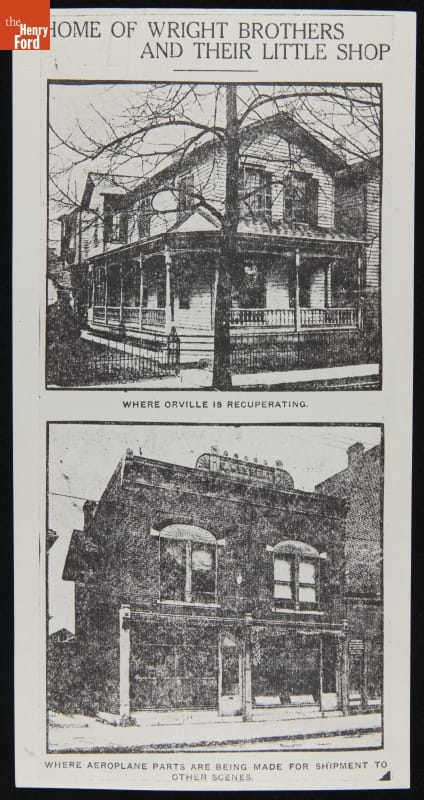
- Newspaper Clipping Showing Wright Home and Wright Cycle Shop in Dayton, Ohio, 1908 - Before moving the Wright Home from Dayton, Ohio, to Greenfield Village in November 1936, Henry Ford's agents found and took detailed photographs of the building's exterior. These photos helped the team reassemble the structure in Dearborn, Michigan. Orville Wright also assisted to ensure the reconstruction's accuracy.
- 1908
- Collections - Artifact
Newspaper Clipping Showing Wright Home and Wright Cycle Shop in Dayton, Ohio, 1908
Before moving the Wright Home from Dayton, Ohio, to Greenfield Village in November 1936, Henry Ford's agents found and took detailed photographs of the building's exterior. These photos helped the team reassemble the structure in Dearborn, Michigan. Orville Wright also assisted to ensure the reconstruction's accuracy.
- Museum Icons: Wright Cycle Shop - In a simple bicycle shop now located in Greenfield Village, two brothers from Dayton, Ohio, turned the fantasy of heavier-than-air flight into reality. Learn about the Wright Cycle Shop and the Wright Brothers on our blog.

- October 04, 2014
- Collections - article
Museum Icons: Wright Cycle Shop
In a simple bicycle shop now located in Greenfield Village, two brothers from Dayton, Ohio, turned the fantasy of heavier-than-air flight into reality. Learn about the Wright Cycle Shop and the Wright Brothers on our blog.