
Search
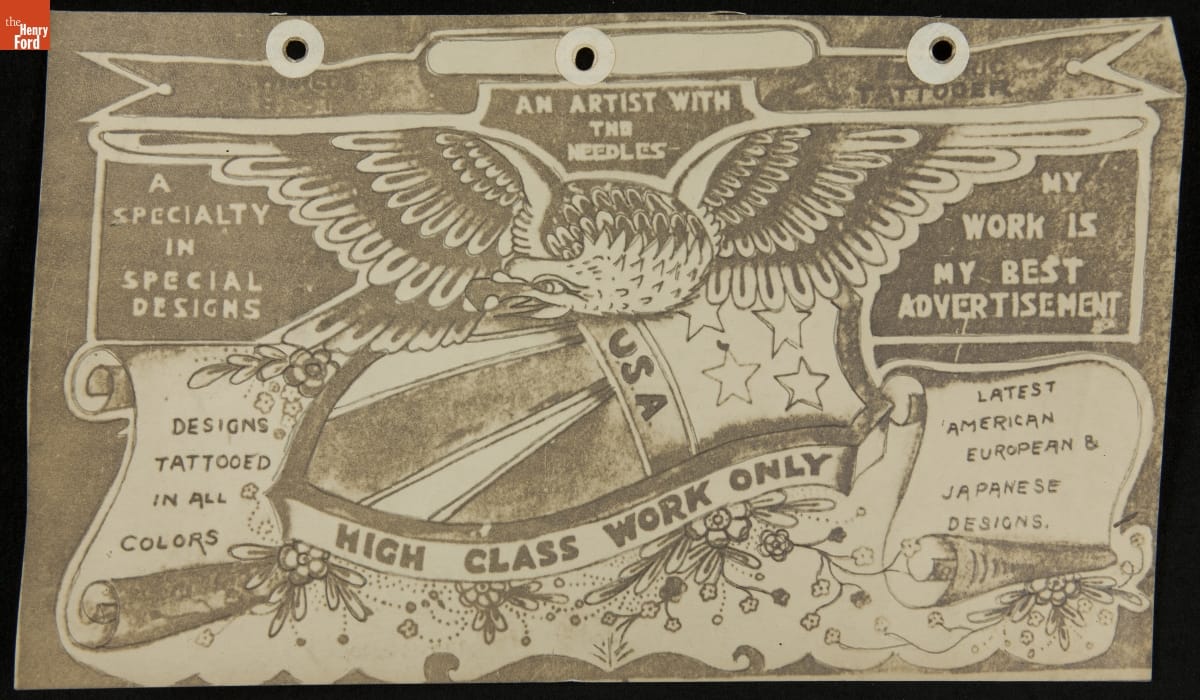
- Tattoo Artist's Advertisement, circa 1925 - Tattoos communicate stories. Their content ranges from deeply personal and traditional--to regrettable and frivolous. In the early 1900s, "Professor" Waters apprenticed as a tattoo artist in carnivals and New York's Bowery District. He ran a successful supply shop in Detroit (1918-1939), patenting the standard "two-coil" tattoo machine in 1929. Designs from his flash sheets continue to inspire tattooists today.
- circa 1925
- Collections - Artifact
Tattoo Artist's Advertisement, circa 1925
Tattoos communicate stories. Their content ranges from deeply personal and traditional--to regrettable and frivolous. In the early 1900s, "Professor" Waters apprenticed as a tattoo artist in carnivals and New York's Bowery District. He ran a successful supply shop in Detroit (1918-1939), patenting the standard "two-coil" tattoo machine in 1929. Designs from his flash sheets continue to inspire tattooists today.
- Artist's Smock, 1910-1925 -
- 1910-1925
- Collections - Artifact
Artist's Smock, 1910-1925
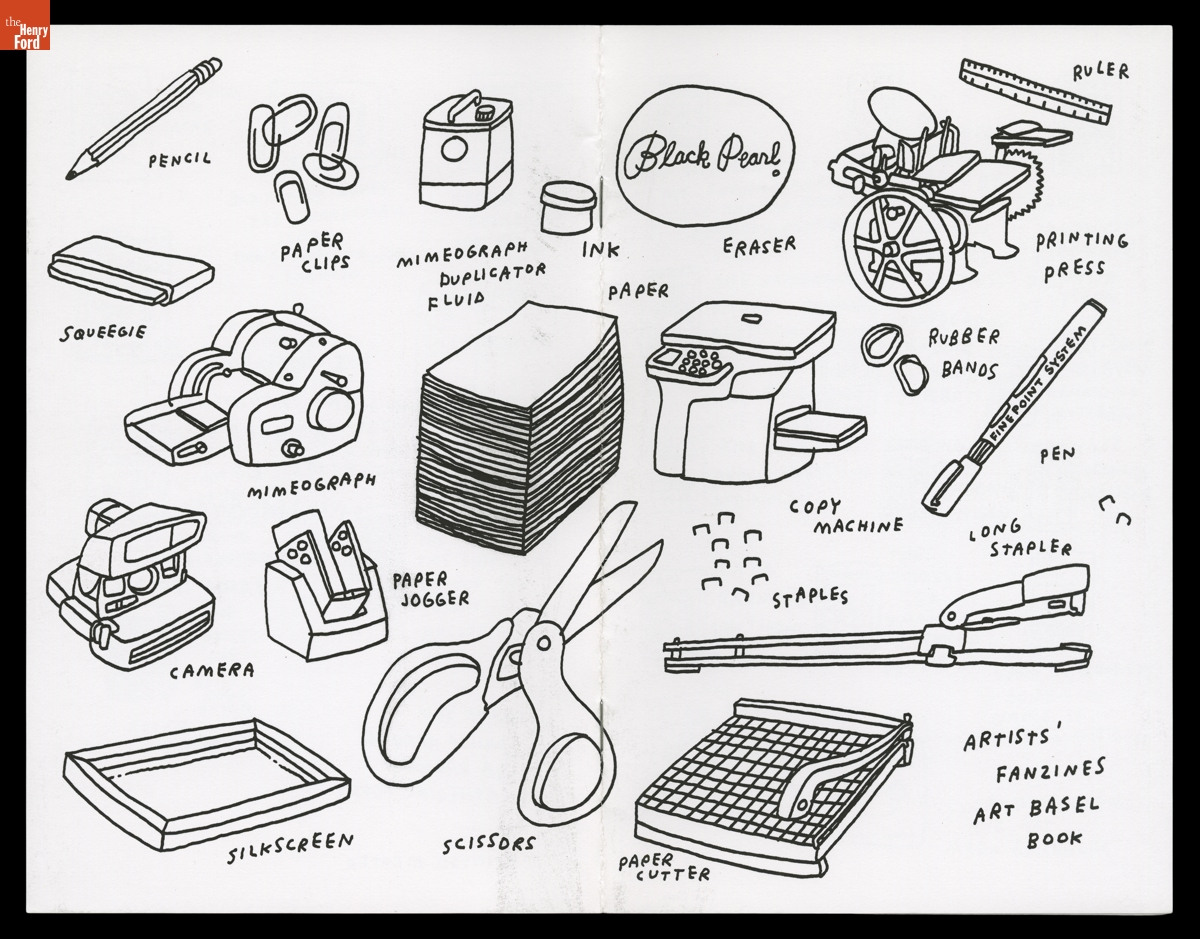
- "Artist's Fanzines Art Basel Book," 2006 - Jason Polan was a Michigan-born, New York-based illustrator whose visual storytelling sought to elevate the everyday—with humor and care. This collection documents Polan's life and prolific art practice, spanning childhood to adulthood; he was also a convener of creative communities. Inspiration, ideation, and completed projects are represented in preparatory material, printed matter, publications, product design, artwork, and personal collecting.
- 2010
- Collections - Artifact
"Artist's Fanzines Art Basel Book," 2006
Jason Polan was a Michigan-born, New York-based illustrator whose visual storytelling sought to elevate the everyday—with humor and care. This collection documents Polan's life and prolific art practice, spanning childhood to adulthood; he was also a convener of creative communities. Inspiration, ideation, and completed projects are represented in preparatory material, printed matter, publications, product design, artwork, and personal collecting.
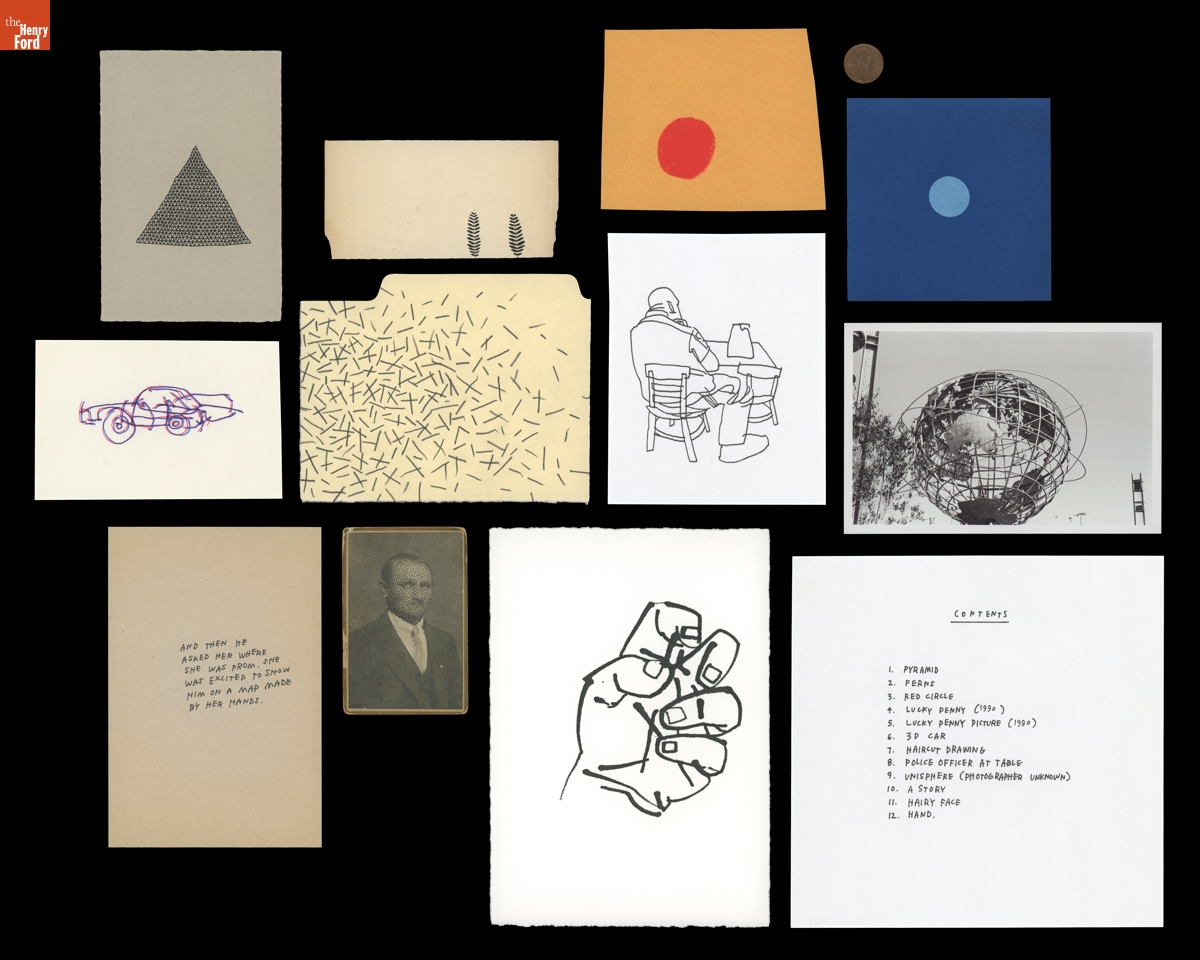
- Artist's Portfolio by Jason Polan, circa 2010 - Jason Polan was a Michigan-born, New York-based illustrator whose visual storytelling sought to elevate the everyday—with humor and care. This collection documents Polan's life and prolific art practice, spanning childhood to adulthood; he was also a convener of creative communities. Inspiration, ideation, and completed projects are represented in preparatory material, printed matter, publications, product design, artwork, and personal collecting.
- circa 2010
- Collections - Artifact
Artist's Portfolio by Jason Polan, circa 2010
Jason Polan was a Michigan-born, New York-based illustrator whose visual storytelling sought to elevate the everyday—with humor and care. This collection documents Polan's life and prolific art practice, spanning childhood to adulthood; he was also a convener of creative communities. Inspiration, ideation, and completed projects are represented in preparatory material, printed matter, publications, product design, artwork, and personal collecting.
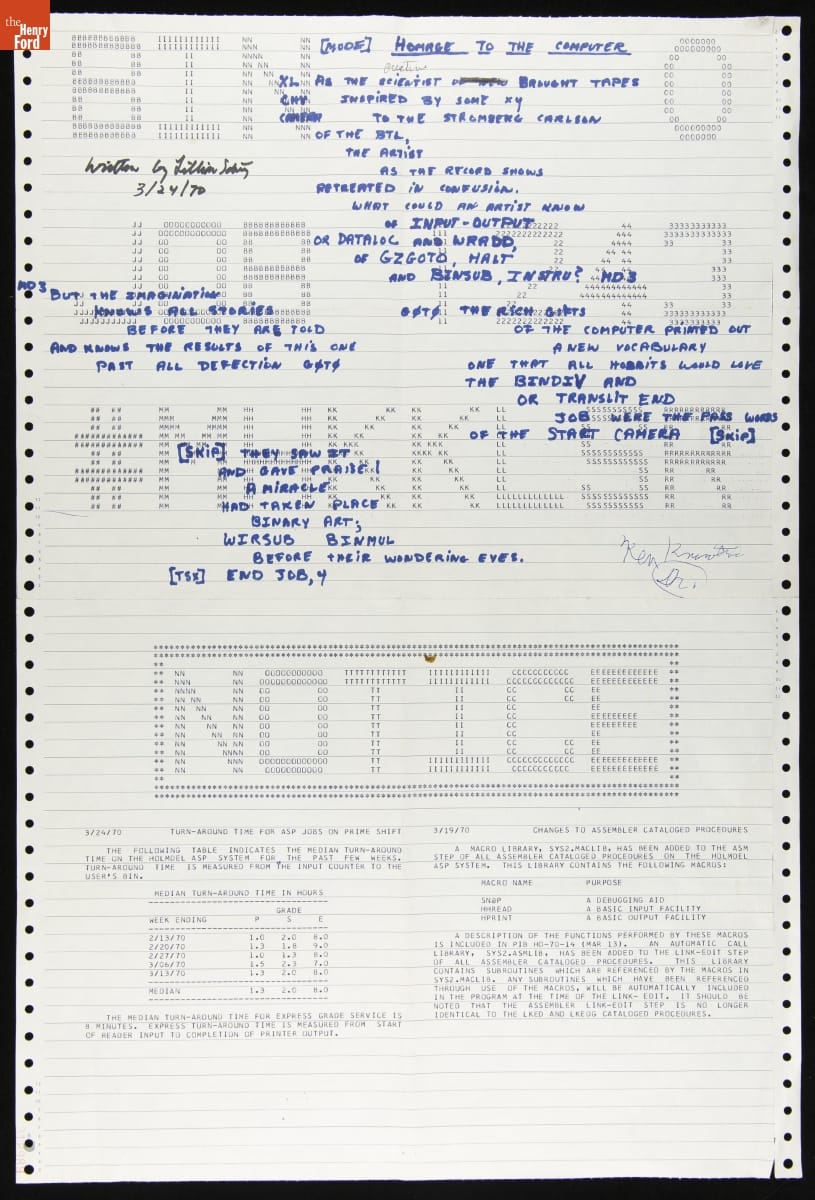
- Original Sheets for the Computer Artist's Handbook, 1970 - Lillian Schwartz is a pioneer of computer-generated art. From 1969-2002, she was a "resident visitor" at Bell Laboratories, producing groundbreaking films, videos, and multimedia works. The Schwartz Collection spans Lillian's childhood into her late career, documenting an expansive mindset, mastery over traditional and experimental mediums alike--and above all--an ability to create inspirational connections between science, art, and technology.
- 1970
- Collections - Artifact
Original Sheets for the Computer Artist's Handbook, 1970
Lillian Schwartz is a pioneer of computer-generated art. From 1969-2002, she was a "resident visitor" at Bell Laboratories, producing groundbreaking films, videos, and multimedia works. The Schwartz Collection spans Lillian's childhood into her late career, documenting an expansive mindset, mastery over traditional and experimental mediums alike--and above all--an ability to create inspirational connections between science, art, and technology.
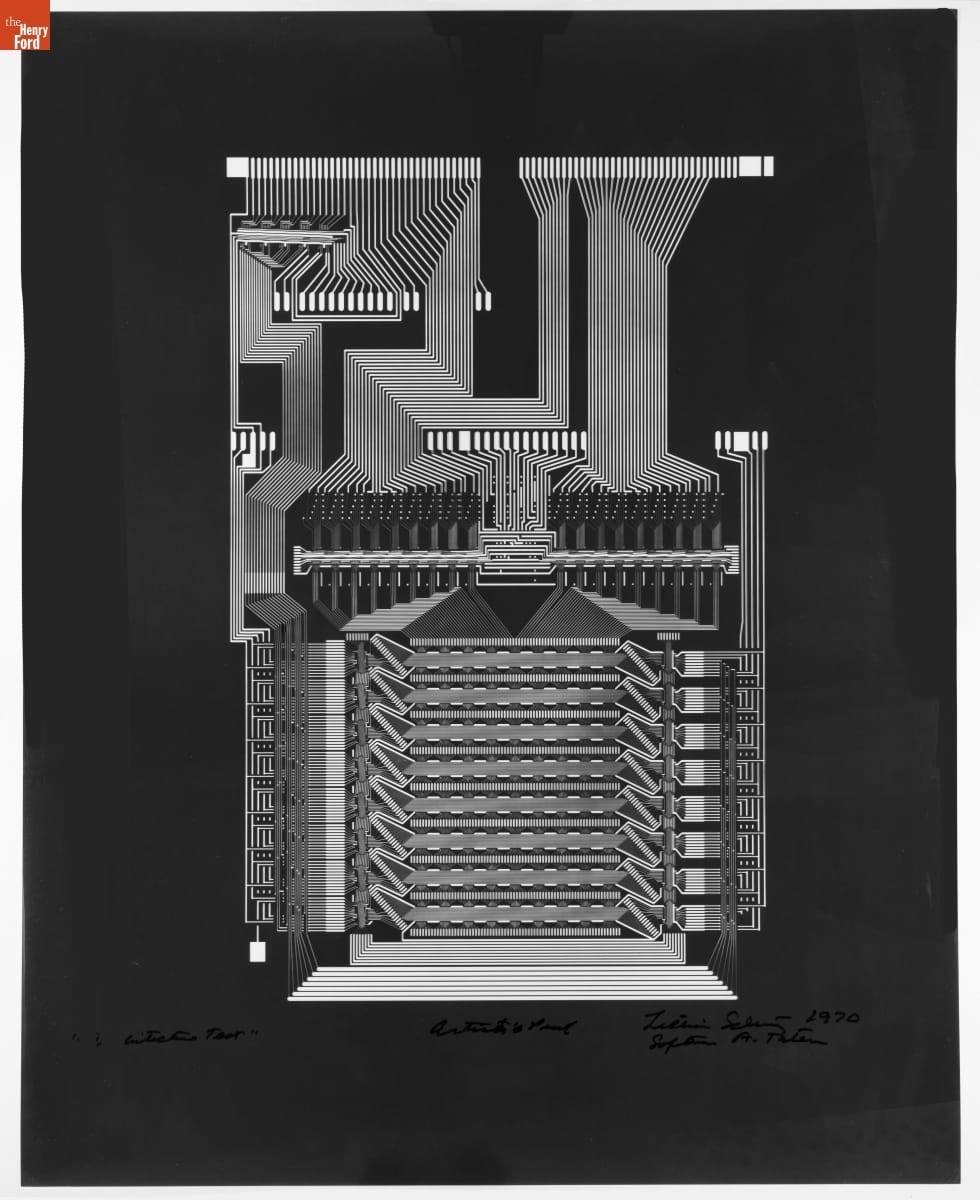
- Artist's Proof, "Architecture Test" by Lillian F. Schwartz, 1970 - Lillian Schwartz is a pioneer of computer-generated art. From 1969-2002, she was a "resident visitor" at Bell Laboratories, producing groundbreaking films, videos, and multimedia works. The Schwartz Collection spans Lillian's childhood into her late career, documenting an expansive mindset, mastery over traditional and experimental mediums alike--and above all--an ability to create inspirational connections between science, art, and technology.
- 1970
- Collections - Artifact
Artist's Proof, "Architecture Test" by Lillian F. Schwartz, 1970
Lillian Schwartz is a pioneer of computer-generated art. From 1969-2002, she was a "resident visitor" at Bell Laboratories, producing groundbreaking films, videos, and multimedia works. The Schwartz Collection spans Lillian's childhood into her late career, documenting an expansive mindset, mastery over traditional and experimental mediums alike--and above all--an ability to create inspirational connections between science, art, and technology.
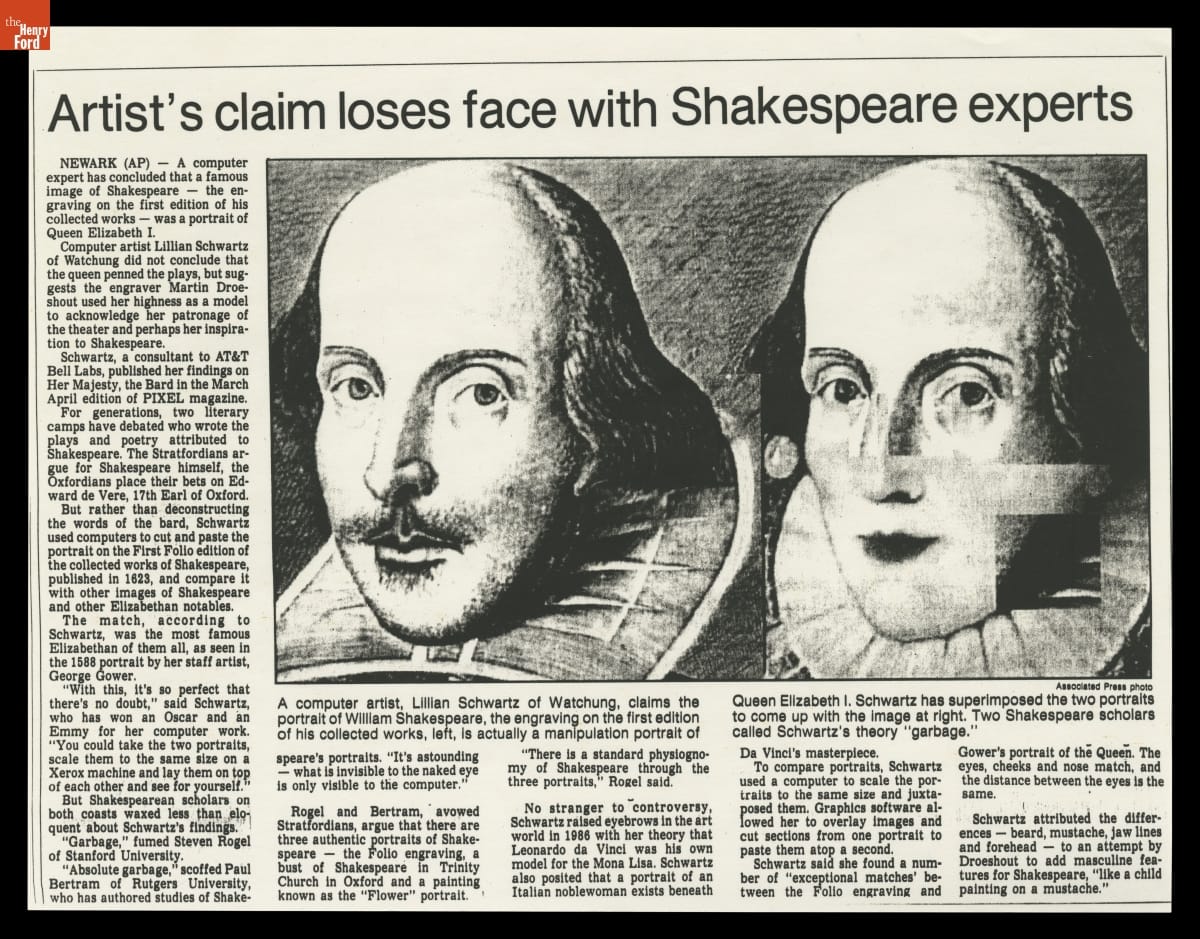
- "Artist's Claim Loses Face with Shakespeare Experts," Newspaper Article, circa 1992 - Lillian Schwartz is a pioneer of computer-generated art. From 1969-2002, she was a "resident visitor" at Bell Laboratories, producing groundbreaking films, videos, and multimedia works. The Schwartz Collection spans Lillian's childhood into her late career, documenting an expansive mindset, mastery over traditional and experimental mediums alike--and above all--an ability to create inspirational connections between science, art, and technology.
- circa 1992
- Collections - Artifact
"Artist's Claim Loses Face with Shakespeare Experts," Newspaper Article, circa 1992
Lillian Schwartz is a pioneer of computer-generated art. From 1969-2002, she was a "resident visitor" at Bell Laboratories, producing groundbreaking films, videos, and multimedia works. The Schwartz Collection spans Lillian's childhood into her late career, documenting an expansive mindset, mastery over traditional and experimental mediums alike--and above all--an ability to create inspirational connections between science, art, and technology.
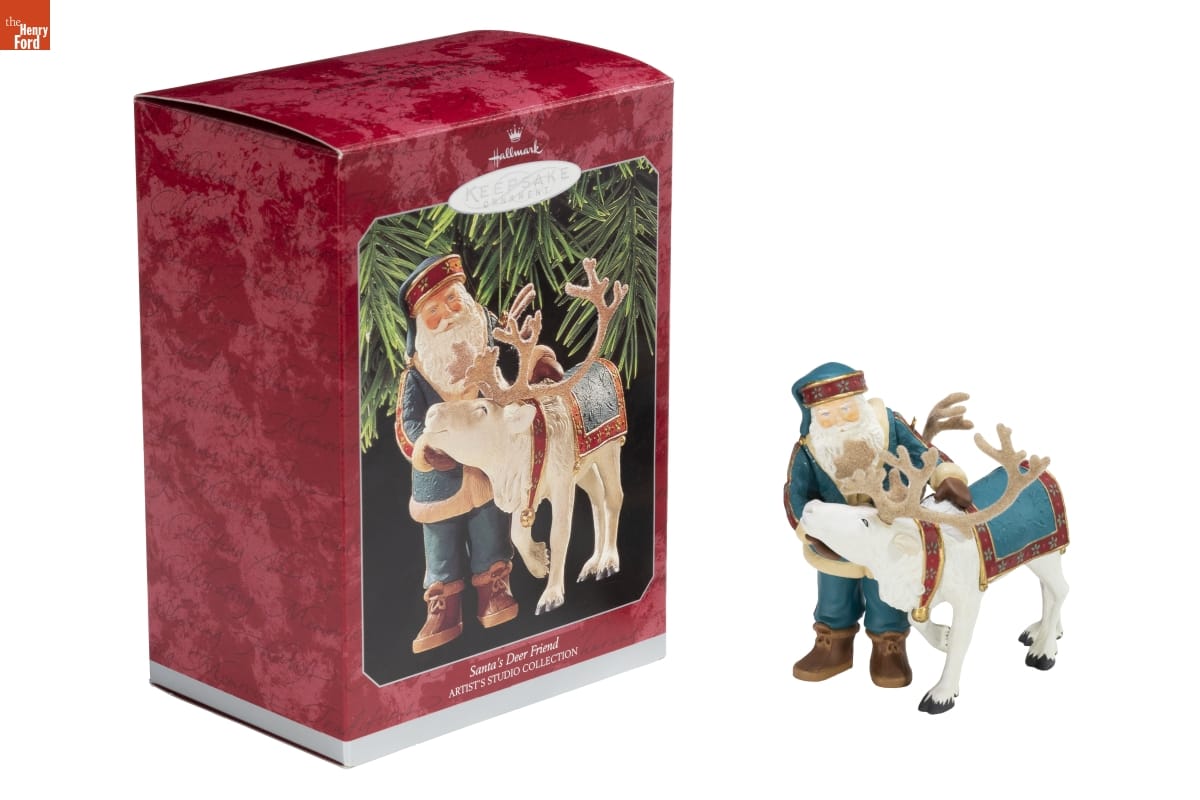
- Hallmark "Artist's Studio Collection: Santa's Deer Friend" Christmas Ornament, 1998 - Already known for greeting cards, Hallmark introduced a line of Christmas ornaments in 1973. The company's annual release of an increasing array of ornaments revolutionized Christmas decorating, appealing to customers' interest in marking memories and milestones as well as expressing one's personality and unique tastes.
- 1998
- Collections - Artifact
Hallmark "Artist's Studio Collection: Santa's Deer Friend" Christmas Ornament, 1998
Already known for greeting cards, Hallmark introduced a line of Christmas ornaments in 1973. The company's annual release of an increasing array of ornaments revolutionized Christmas decorating, appealing to customers' interest in marking memories and milestones as well as expressing one's personality and unique tastes.
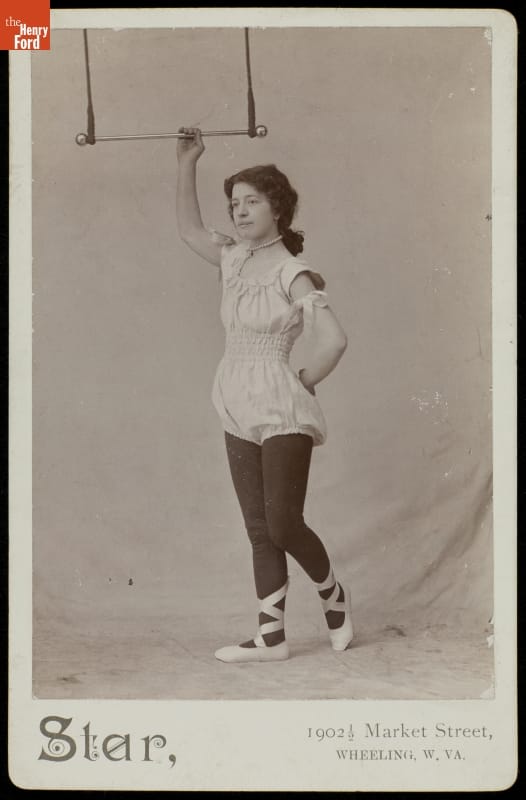
- Circus Trapeze Artist, circa 1890 - Professional photographers began producing cabinet cards in 1867. Consumers quickly preferred them over earlier cartes-de-visite, which were mounted on smaller cardboard stock. Through the early 1900s, Americans commonly exchanged and collected cabinet photographs of family, friends and celebrities. This example, made in Wheeling, West Virginia, around 1890, depicts a circus trapeze artist.
- circa 1890
- Collections - Artifact
Circus Trapeze Artist, circa 1890
Professional photographers began producing cabinet cards in 1867. Consumers quickly preferred them over earlier cartes-de-visite, which were mounted on smaller cardboard stock. Through the early 1900s, Americans commonly exchanged and collected cabinet photographs of family, friends and celebrities. This example, made in Wheeling, West Virginia, around 1890, depicts a circus trapeze artist.
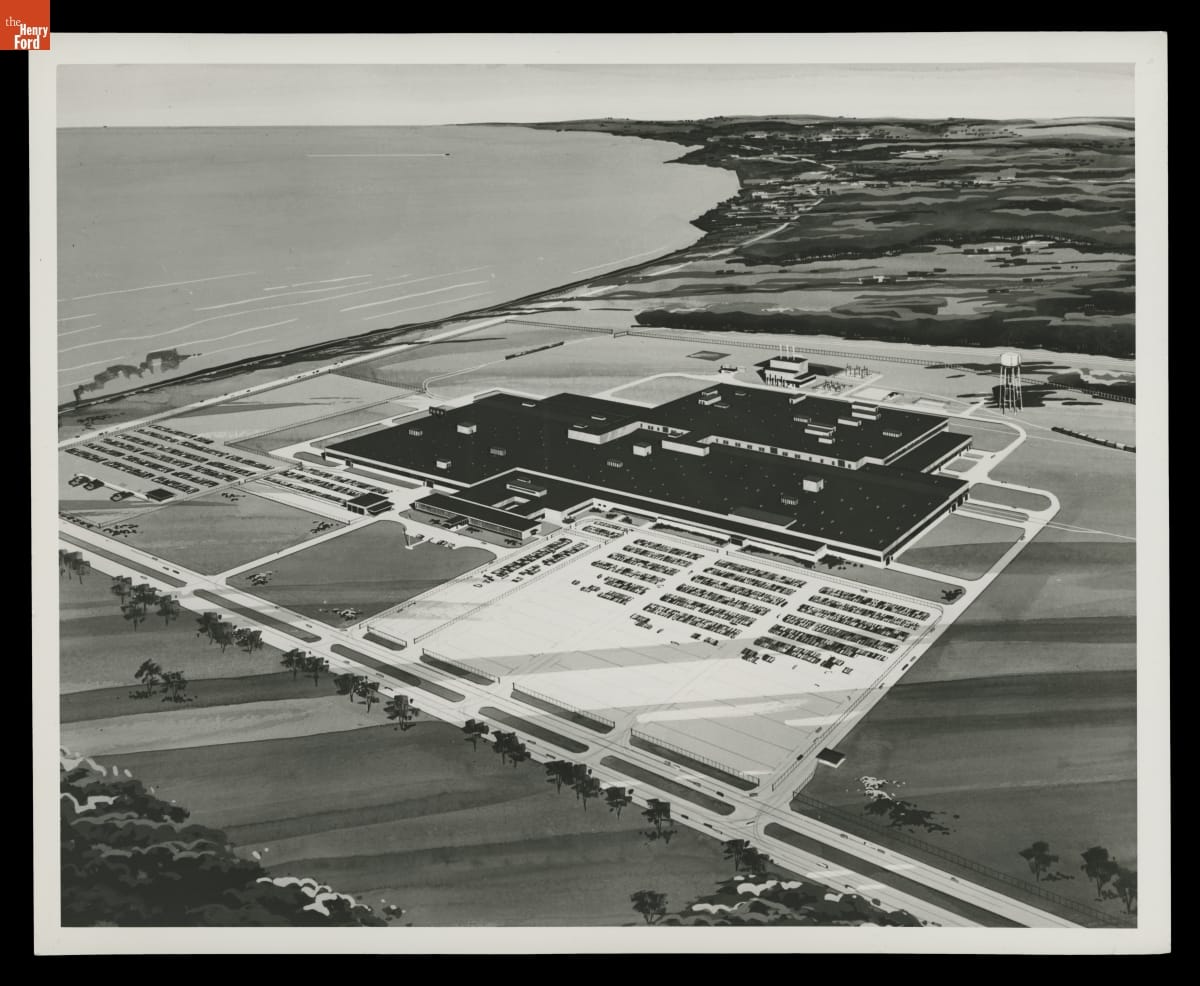
- Artist's Rendering of Ford Motor Company Lorain, Ohio Assembly Plant, circa 1957 - Ford Motor Company opened an assembly plant in Lorain, Ohio, in 1958. Over the years, employees at the factory built various Ford models including the Galaxie, Falcon, Econoline, Fairlane, Torino, and Thunderbird; and Mercury models like the Comet, Cyclone, and Cougar. By the time the plant closed in 2005, workers had built close to eight million vehicles there.
- February 27, 1957
- Collections - Artifact
Artist's Rendering of Ford Motor Company Lorain, Ohio Assembly Plant, circa 1957
Ford Motor Company opened an assembly plant in Lorain, Ohio, in 1958. Over the years, employees at the factory built various Ford models including the Galaxie, Falcon, Econoline, Fairlane, Torino, and Thunderbird; and Mercury models like the Comet, Cyclone, and Cougar. By the time the plant closed in 2005, workers had built close to eight million vehicles there.