
Search
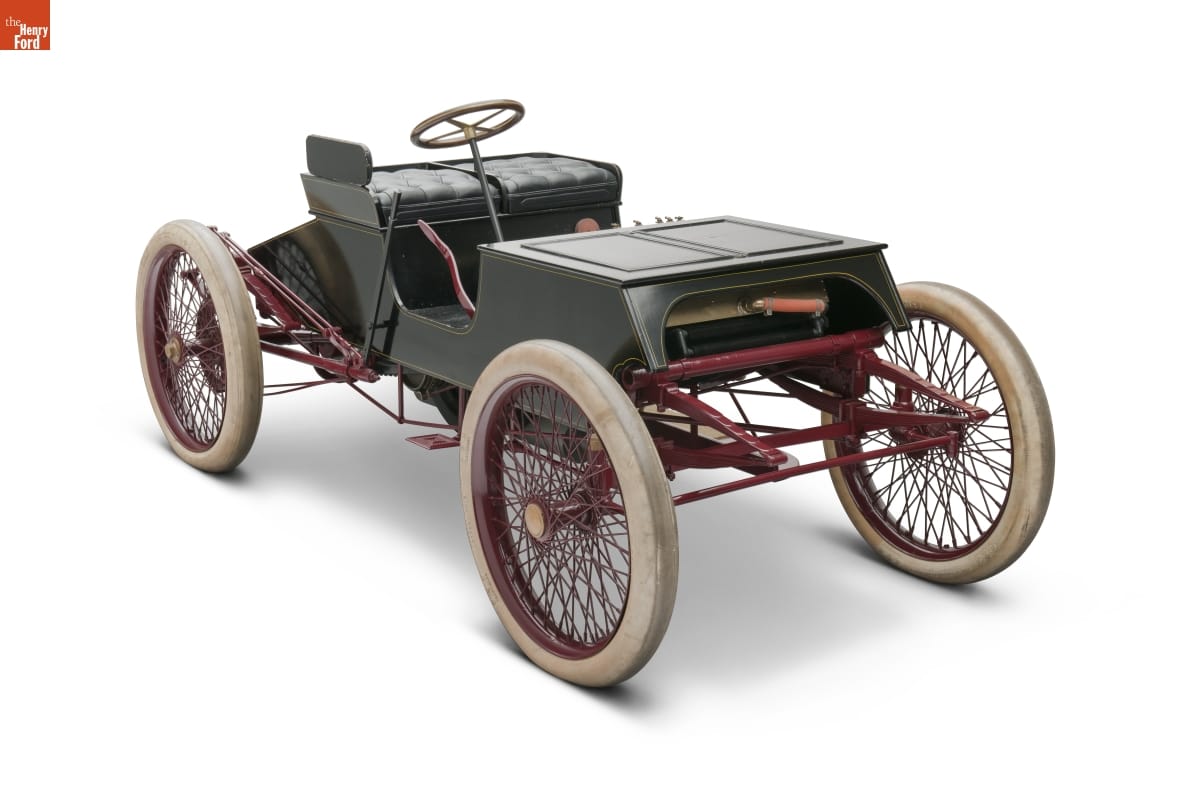
- Online Auto Racing Collection - This is Henry Ford's first race car. After his first auto company failed, Ford turned to racing to restore his reputation. He raced "Sweepstakes" against Alexander Winton on October 10, 1901, and, to everyone's surprise, the novice Ford beat the established Winton. The victory and resulting publicity encouraged financiers to back Ford's second firm.
- July 05, 2010
- Collections - Set
Online Auto Racing Collection
This is Henry Ford's first race car. After his first auto company failed, Ford turned to racing to restore his reputation. He raced "Sweepstakes" against Alexander Winton on October 10, 1901, and, to everyone's surprise, the novice Ford beat the established Winton. The victory and resulting publicity encouraged financiers to back Ford's second firm.
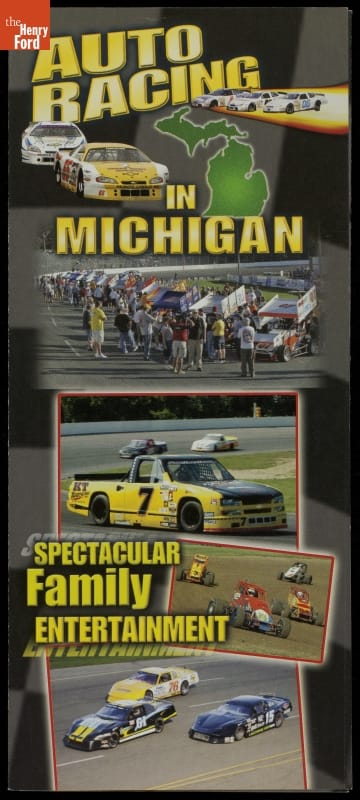
- "Auto Racing in Michigan, Spectacular Family Entertainment," 2010 - Families looking for some racing fun could choose from 23 tracks throughout Michigan in 2010. This brochure, produced by the Michigan Speedway Promoters Association, showed enthusiasts were to find the closest race track.
- 2010
- Collections - Artifact
"Auto Racing in Michigan, Spectacular Family Entertainment," 2010
Families looking for some racing fun could choose from 23 tracks throughout Michigan in 2010. This brochure, produced by the Michigan Speedway Promoters Association, showed enthusiasts were to find the closest race track.
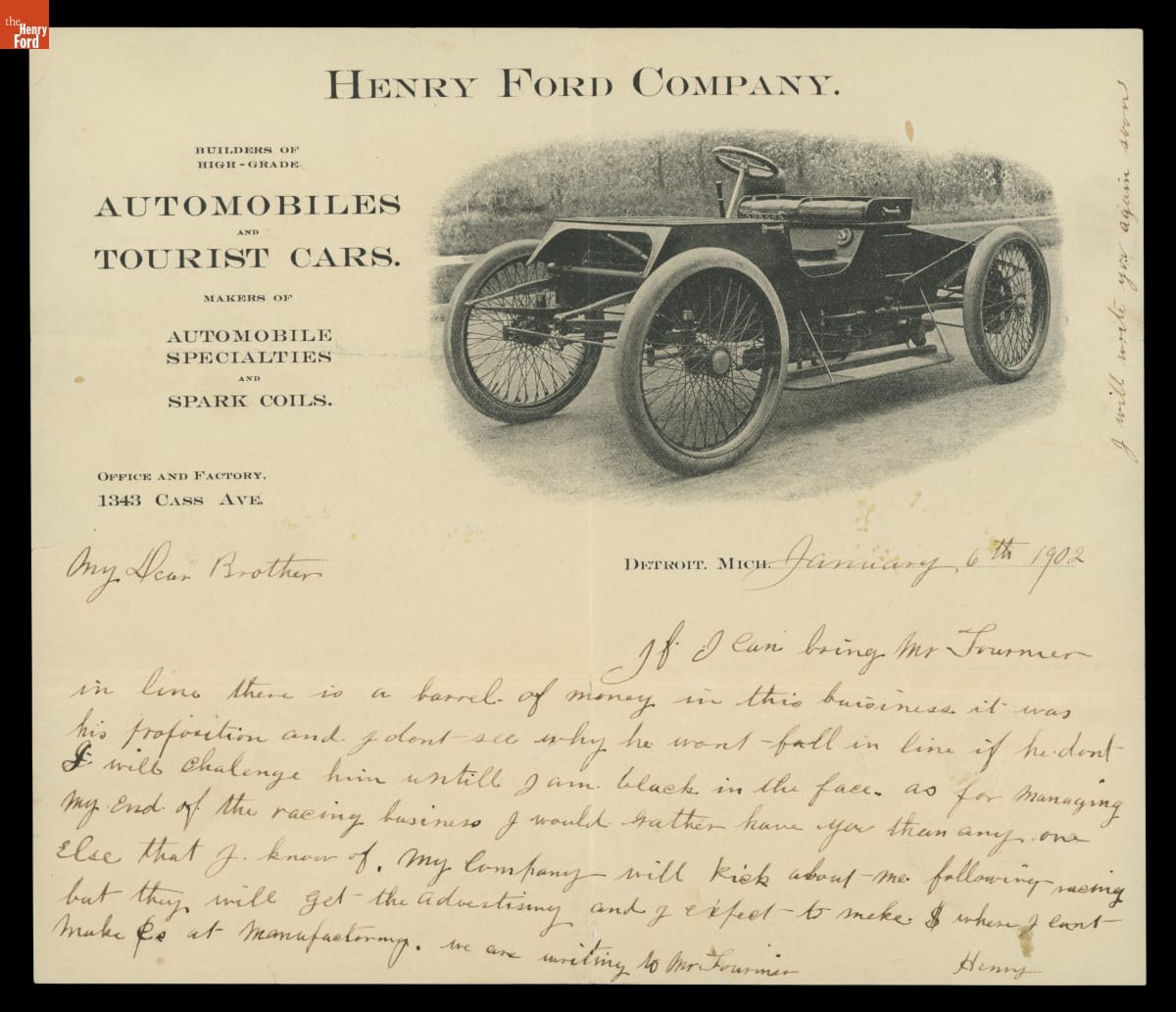
- Letter from Henry Ford to Milton Bryant Concerning Auto Racing, 1902 - Less than three months after defeating Alexander Winton, Henry Ford was anxious to stay in the forefront of American racing. In this letter, he explains to his brother-in-law, Milton Bryant, the potential for big money and advertising in match races and his desire to run a race against Henri Fournier, one of the world's fastest drivers at the time. Ford's interest in racing, however, soon put him at odds with the investors of the Henry Ford Company, Ford's second automobile company. Before the end of 1902, Henry was bought out of the company (which changed its name to Cadillac under the guidance of Henry Leland) and on his way to forming Ford Motor Company in June 1903.
- January 06, 1902
- Collections - Artifact
Letter from Henry Ford to Milton Bryant Concerning Auto Racing, 1902
Less than three months after defeating Alexander Winton, Henry Ford was anxious to stay in the forefront of American racing. In this letter, he explains to his brother-in-law, Milton Bryant, the potential for big money and advertising in match races and his desire to run a race against Henri Fournier, one of the world's fastest drivers at the time. Ford's interest in racing, however, soon put him at odds with the investors of the Henry Ford Company, Ford's second automobile company. Before the end of 1902, Henry was bought out of the company (which changed its name to Cadillac under the guidance of Henry Leland) and on his way to forming Ford Motor Company in June 1903.
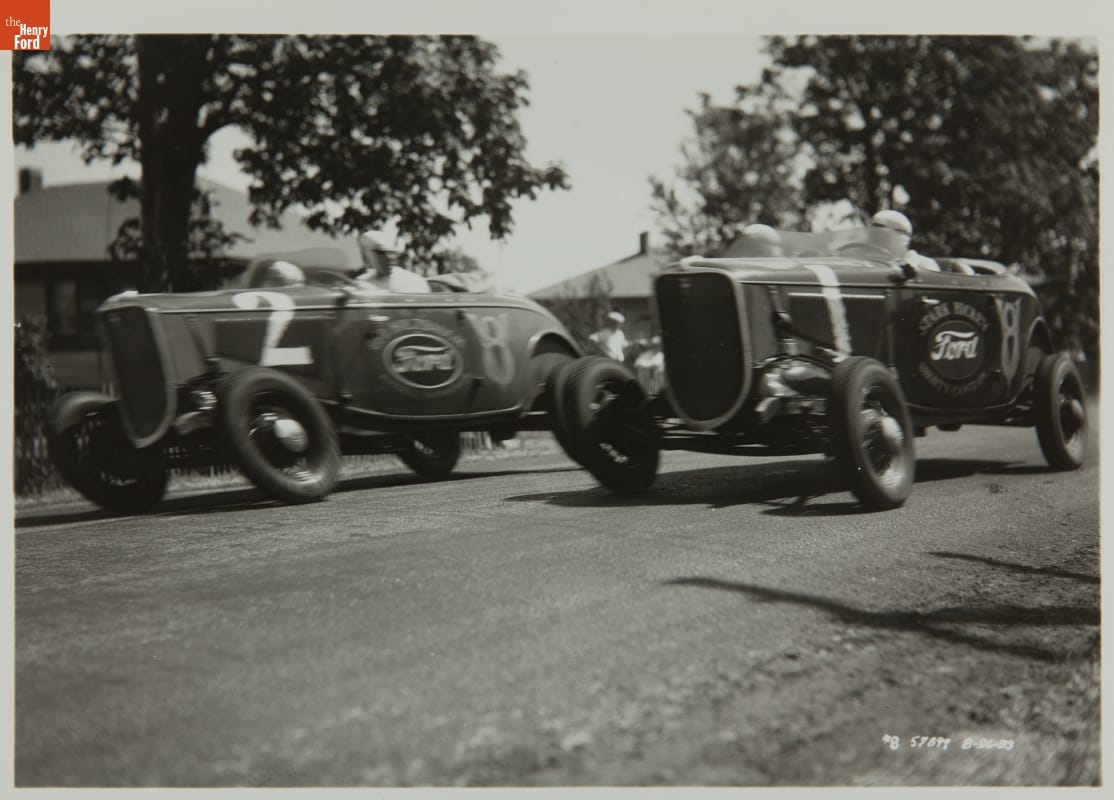
- Elgin National Auto Race Stock Cars, August 1933 -
- August 26, 1933
- Collections - Artifact
Elgin National Auto Race Stock Cars, August 1933
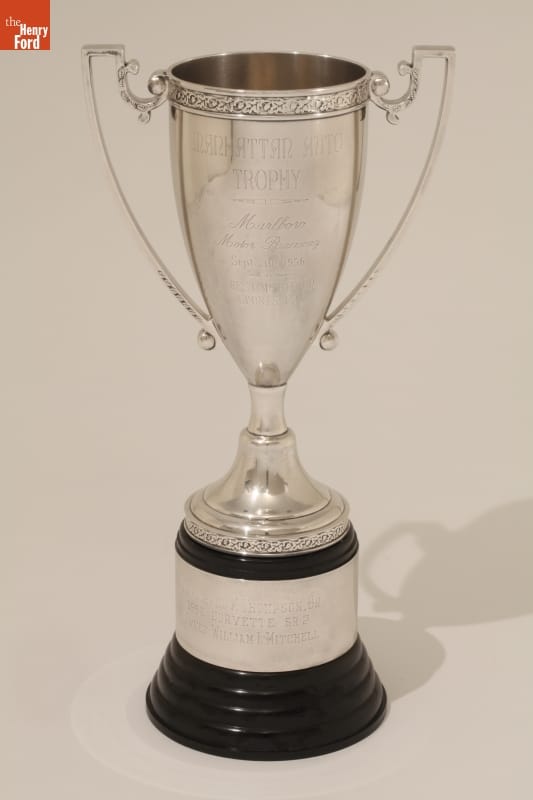
- Manhattan Auto Racing Trophy Awarded to William Mitchell's Corvette SR-2, 1956 - The Corvette SR-2 was designed and built in 1956 for racing driver Jerome Earl, son of General Motors design head Harley Earl. The SR-2 featured high-performance brakes and a heavy-duty suspension with rotary dampers. Two of its features, fuel injection and a four-speed gearbox, made their way into production Corvettes. GM designer Bill Mitchell had a similar SR-2 built for himself.
- September 30, 1956
- Collections - Artifact
Manhattan Auto Racing Trophy Awarded to William Mitchell's Corvette SR-2, 1956
The Corvette SR-2 was designed and built in 1956 for racing driver Jerome Earl, son of General Motors design head Harley Earl. The SR-2 featured high-performance brakes and a heavy-duty suspension with rotary dampers. Two of its features, fuel injection and a four-speed gearbox, made their way into production Corvettes. GM designer Bill Mitchell had a similar SR-2 built for himself.
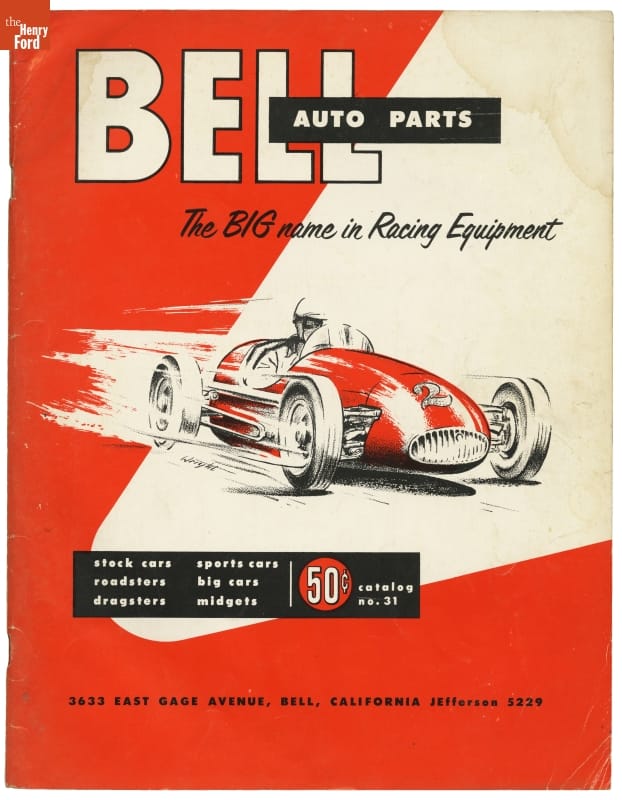
- Bell Auto Parts Sales Catalog, "The BIG Name in Racing Equipment," 1953 - As amateur and professional racing evolved and grew in popularity, suppliers like Bell Auto Parts thrived. The California company's 1952 catalog offered items for all kinds of race cars.
- 1953
- Collections - Artifact
Bell Auto Parts Sales Catalog, "The BIG Name in Racing Equipment," 1953
As amateur and professional racing evolved and grew in popularity, suppliers like Bell Auto Parts thrived. The California company's 1952 catalog offered items for all kinds of race cars.
- A Selection of Hallmark Ornaments: Auto Racing - <p>Hallmark's ornaments — with their original designs, increasing variety, and appeal to diverse customers — have revolutionized Christmas decorating and led to the popularity of ornament collecting. Auto racing, particularly NASCAR stock car racing, has inspired several Hallmark ornaments over the years. This set features a selection of those winning designs.</p>

- January 23, 2023
- Collections - Set
A Selection of Hallmark Ornaments: Auto Racing
Hallmark's ornaments — with their original designs, increasing variety, and appeal to diverse customers — have revolutionized Christmas decorating and led to the popularity of ornament collecting. Auto racing, particularly NASCAR stock car racing, has inspired several Hallmark ornaments over the years. This set features a selection of those winning designs.
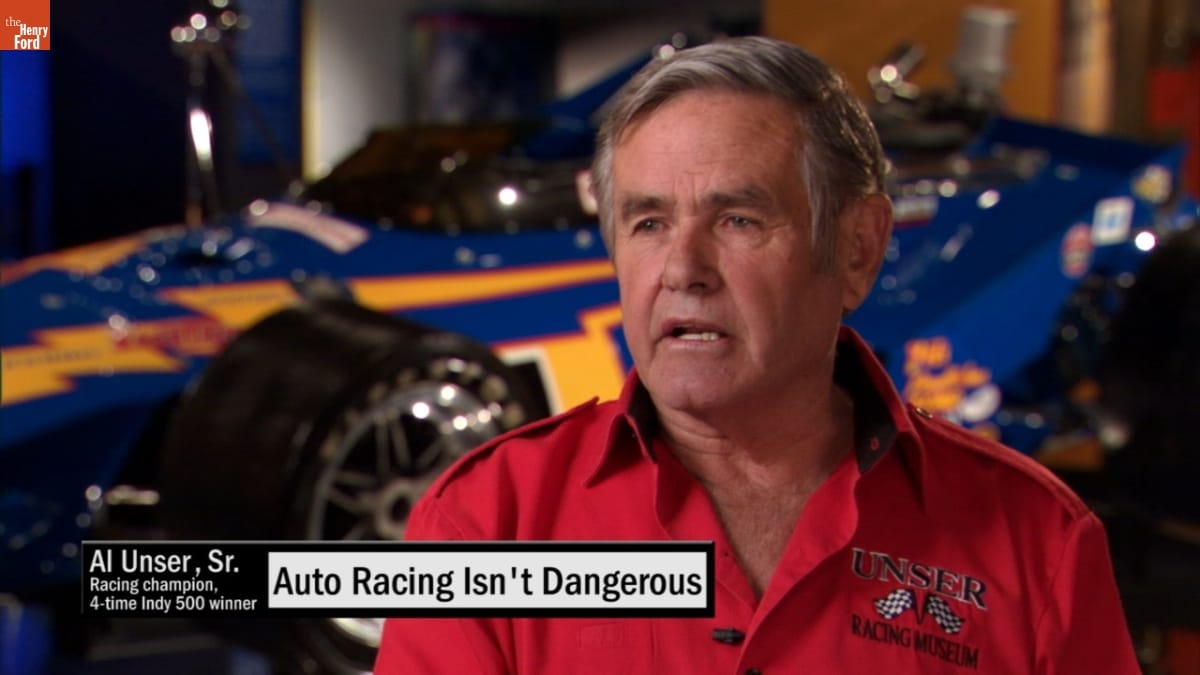
- "Auto Racing Isn't Dangerous" Clip from Interview with Al Unser, Sr., 2009 - Even in a family of racing legends, Al Unser, Sr., stood out. He earned 39 wins in national championship races and three national titles. He earned two overall victories at Pikes Peak and an IROC championship. But his defining achievements were his four wins at the Indianapolis 500. The Henry Ford interviewed Unser at the Unser Racing Museum in 2009.
- January 06, 2009
- Collections - Artifact
"Auto Racing Isn't Dangerous" Clip from Interview with Al Unser, Sr., 2009
Even in a family of racing legends, Al Unser, Sr., stood out. He earned 39 wins in national championship races and three national titles. He earned two overall victories at Pikes Peak and an IROC championship. But his defining achievements were his four wins at the Indianapolis 500. The Henry Ford interviewed Unser at the Unser Racing Museum in 2009.
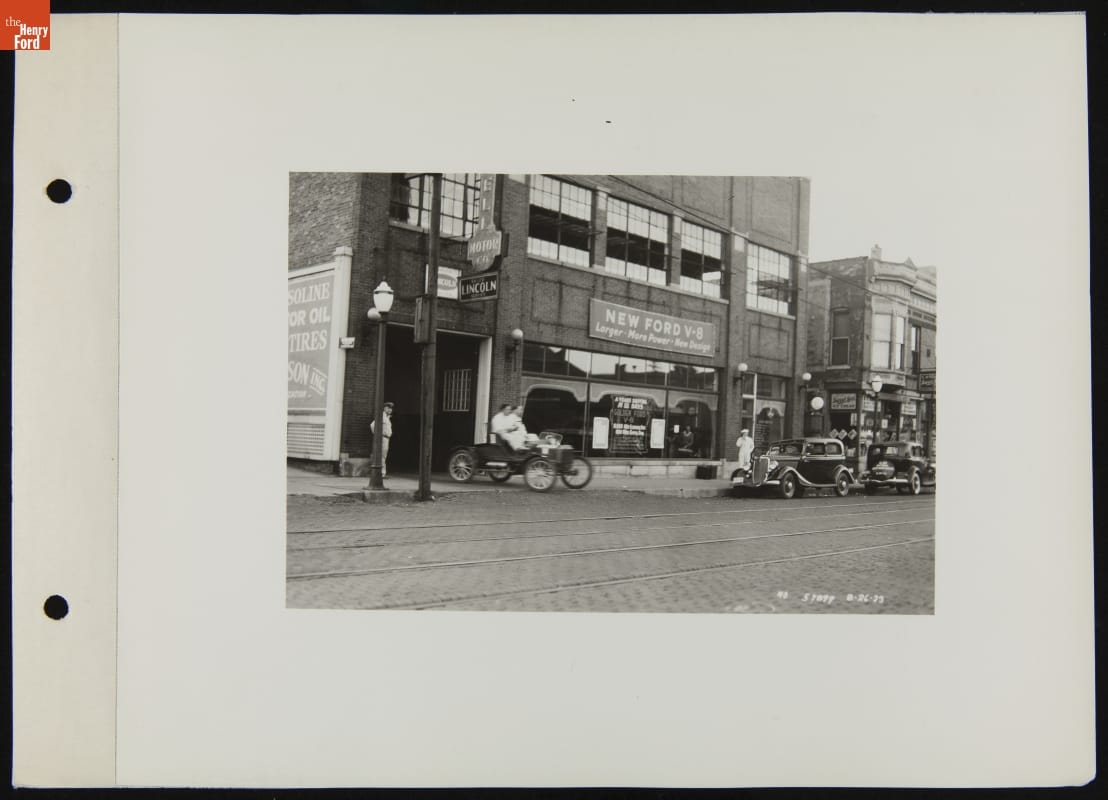
- Elgin National Auto Race Stock Cars, August 26, 1933 -
- August 26, 1933
- Collections - Artifact
Elgin National Auto Race Stock Cars, August 26, 1933
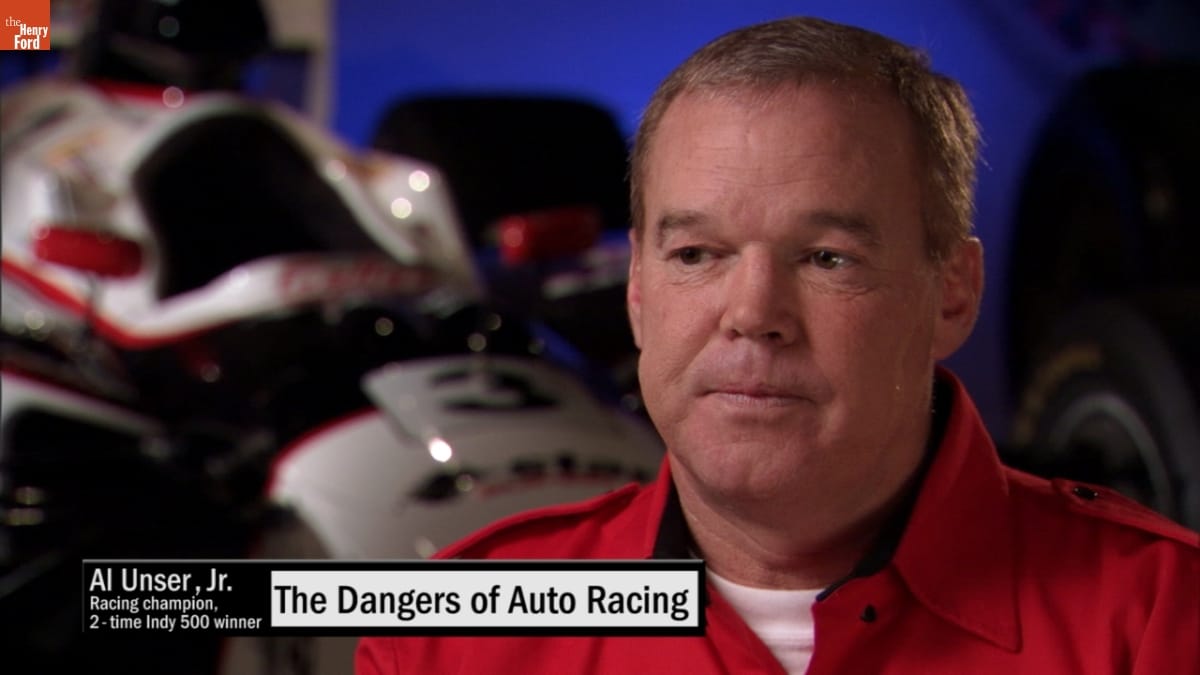
- "The Dangers of Auto Racing" Clip from Interview with Al Unser, Jr., 2009 - Al Unser, Jr., followed his father, Al, and uncle, Bobby, to Victory Lane at the Indianapolis 500 with wins in 1992 and 1994. Unser also competed in the 1993 Daytona 500. In 2009, staff from The Henry Ford interviewed Al Unser, Jr., at the Unser Racing Museum in Albuquerque, New Mexico, as part of the Collecting Innovation Today Oral History Project.
- January 06, 2009
- Collections - Artifact
"The Dangers of Auto Racing" Clip from Interview with Al Unser, Jr., 2009
Al Unser, Jr., followed his father, Al, and uncle, Bobby, to Victory Lane at the Indianapolis 500 with wins in 1992 and 1994. Unser also competed in the 1993 Daytona 500. In 2009, staff from The Henry Ford interviewed Al Unser, Jr., at the Unser Racing Museum in Albuquerque, New Mexico, as part of the Collecting Innovation Today Oral History Project.