
Search
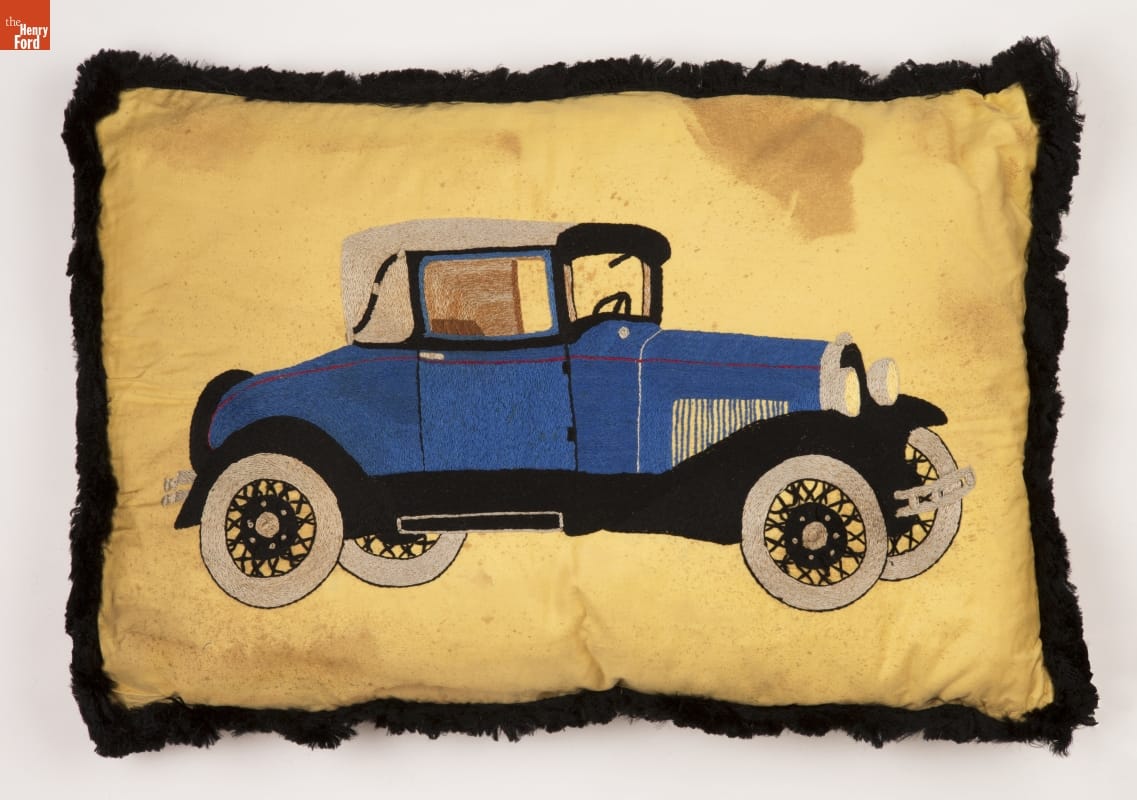
- Praising the Ford Automobile - For many women in the early 20th century, Henry Ford's affordable automobile represented freedom and financial security, especially if they were fortunate to be part of the Ford Motor Company family. Their expressions of thanks were often homemade, proud examples of their needle working skills. The embroidered motifs often represented Ford products.
- January 28, 2015
- Collections - Set
Praising the Ford Automobile
For many women in the early 20th century, Henry Ford's affordable automobile represented freedom and financial security, especially if they were fortunate to be part of the Ford Motor Company family. Their expressions of thanks were often homemade, proud examples of their needle working skills. The embroidered motifs often represented Ford products.
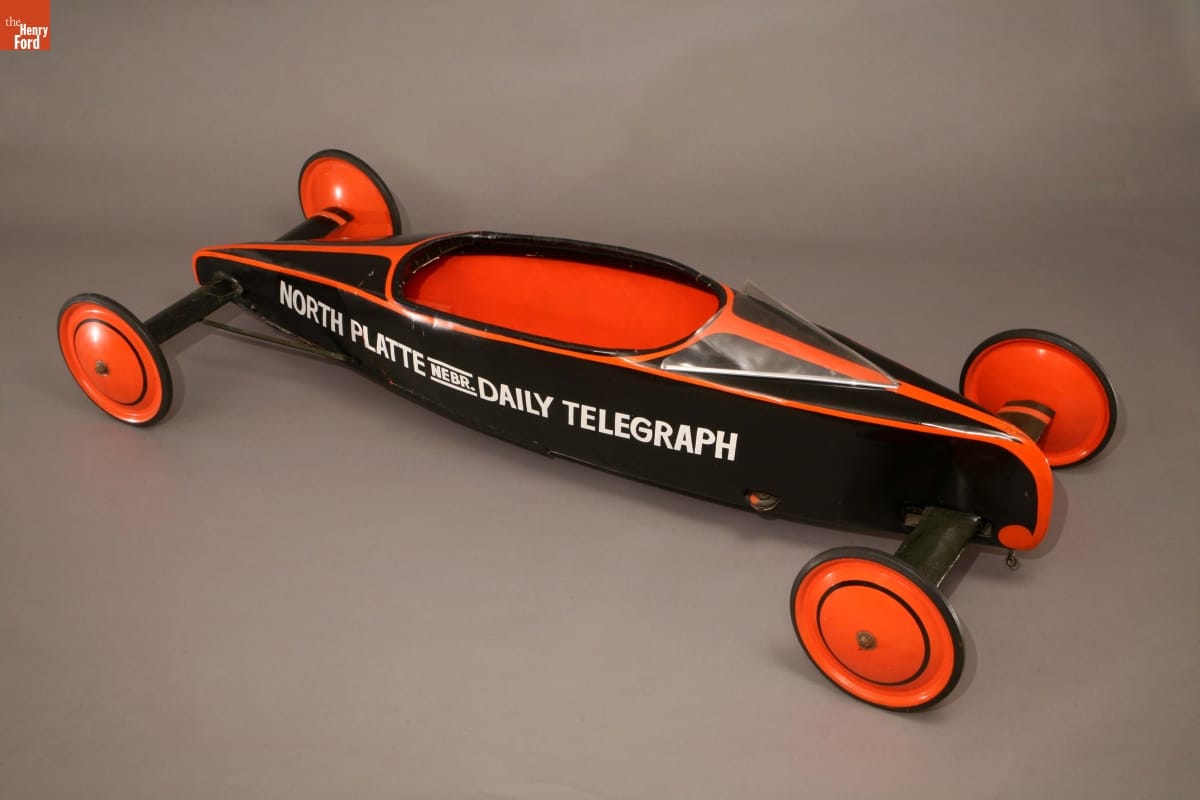
- Lesson: Forces in Automobile Racing - Mason Colbert placed third with this car in the 1939 All-American Soap Box Derby national championship in Akron, Ohio. The first official derby was held in 1934. Young contestants built their cars from soap boxes, orange crates, and baby carriage wheels. Over the years, designs became more elaborate and materials more sophisticated. But the "fuel" remained the same -- gravity.
- March 12, 2010
- Collections - Set
Lesson: Forces in Automobile Racing
Mason Colbert placed third with this car in the 1939 All-American Soap Box Derby national championship in Akron, Ohio. The first official derby was held in 1934. Young contestants built their cars from soap boxes, orange crates, and baby carriage wheels. Over the years, designs became more elaborate and materials more sophisticated. But the "fuel" remained the same -- gravity.
- The Automobile and Women’s Suffrage - Learn how the women's suffrage movement turned to cars as a strategy for garnering broader support for their cause. Before long, the automobile had become both a symbol of freedom for American women and an important tool in the fight for suffrage.

- August 25, 2020
- Collections - article
The Automobile and Women’s Suffrage
Learn how the women's suffrage movement turned to cars as a strategy for garnering broader support for their cause. Before long, the automobile had become both a symbol of freedom for American women and an important tool in the fight for suffrage.
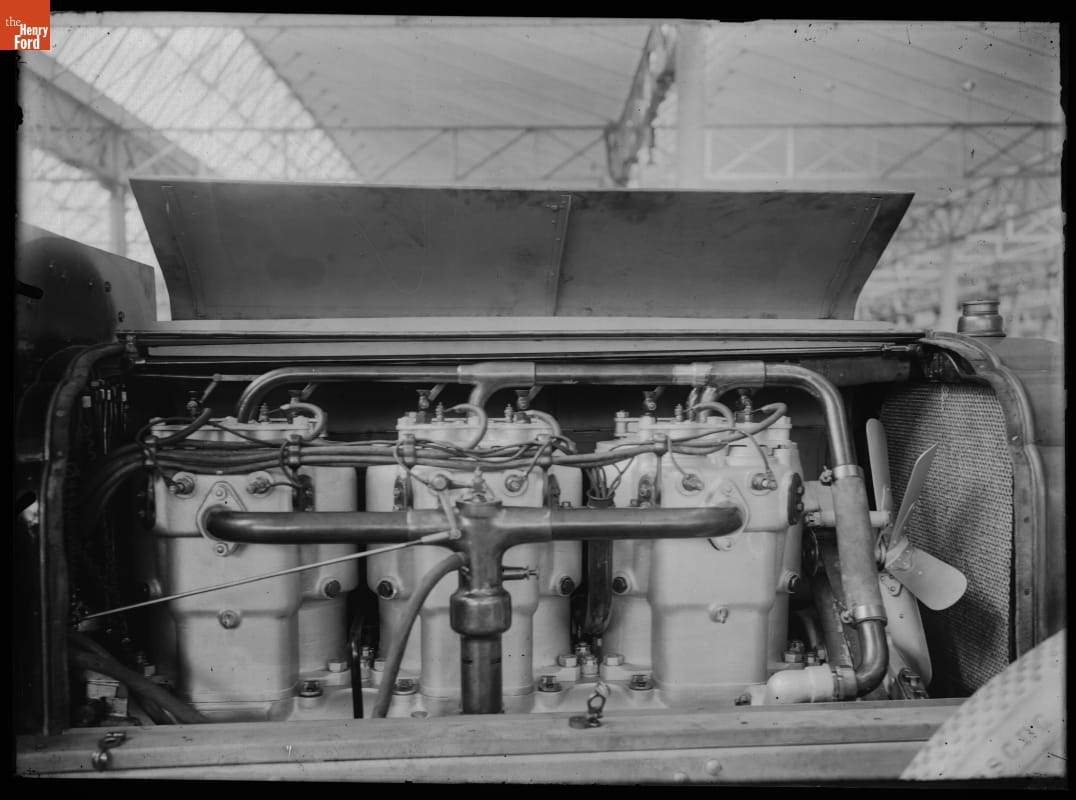
- Automobile's Engine, 1900-1910 - Leon Bollee Automobiles was established in Le Mans, France, in 1895 and produced vehicles until 1931. The company's founder and namesake, Leon Bollee, made another significant contribution to transportation history. He befriended Wilbur Wright during Wright's successful demonstration flights near Le Mans in 1908. Bollee offered Wright the use of his factory and mechanics for the duration of the flights.
- circa 1900-circa 1910
- Collections - Artifact
Automobile's Engine, 1900-1910
Leon Bollee Automobiles was established in Le Mans, France, in 1895 and produced vehicles until 1931. The company's founder and namesake, Leon Bollee, made another significant contribution to transportation history. He befriended Wilbur Wright during Wright's successful demonstration flights near Le Mans in 1908. Bollee offered Wright the use of his factory and mechanics for the duration of the flights.
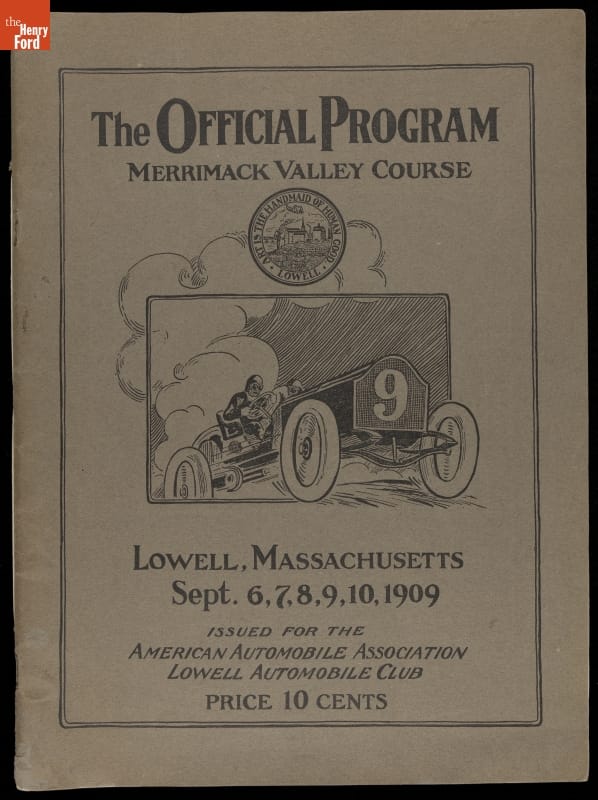
- Racing Program, "Merrimack Valley Course," Lowell, Massachusetts, 1909 - Lowell, Massachusetts, hosted automobile races in 1908 and 1909 on a 10.6-mile circuit laid out on city streets. The four-mile straightaway along Pawtucket Boulevard had originally been built for harness racing. <em>Motor Age</em> described a 1909 race on the Merrimack Valley Course as "one of the greatest of its kind," but the competitions were not successful financially.
- 1909
- Collections - Artifact
Racing Program, "Merrimack Valley Course," Lowell, Massachusetts, 1909
Lowell, Massachusetts, hosted automobile races in 1908 and 1909 on a 10.6-mile circuit laid out on city streets. The four-mile straightaway along Pawtucket Boulevard had originally been built for harness racing. Motor Age described a 1909 race on the Merrimack Valley Course as "one of the greatest of its kind," but the competitions were not successful financially.
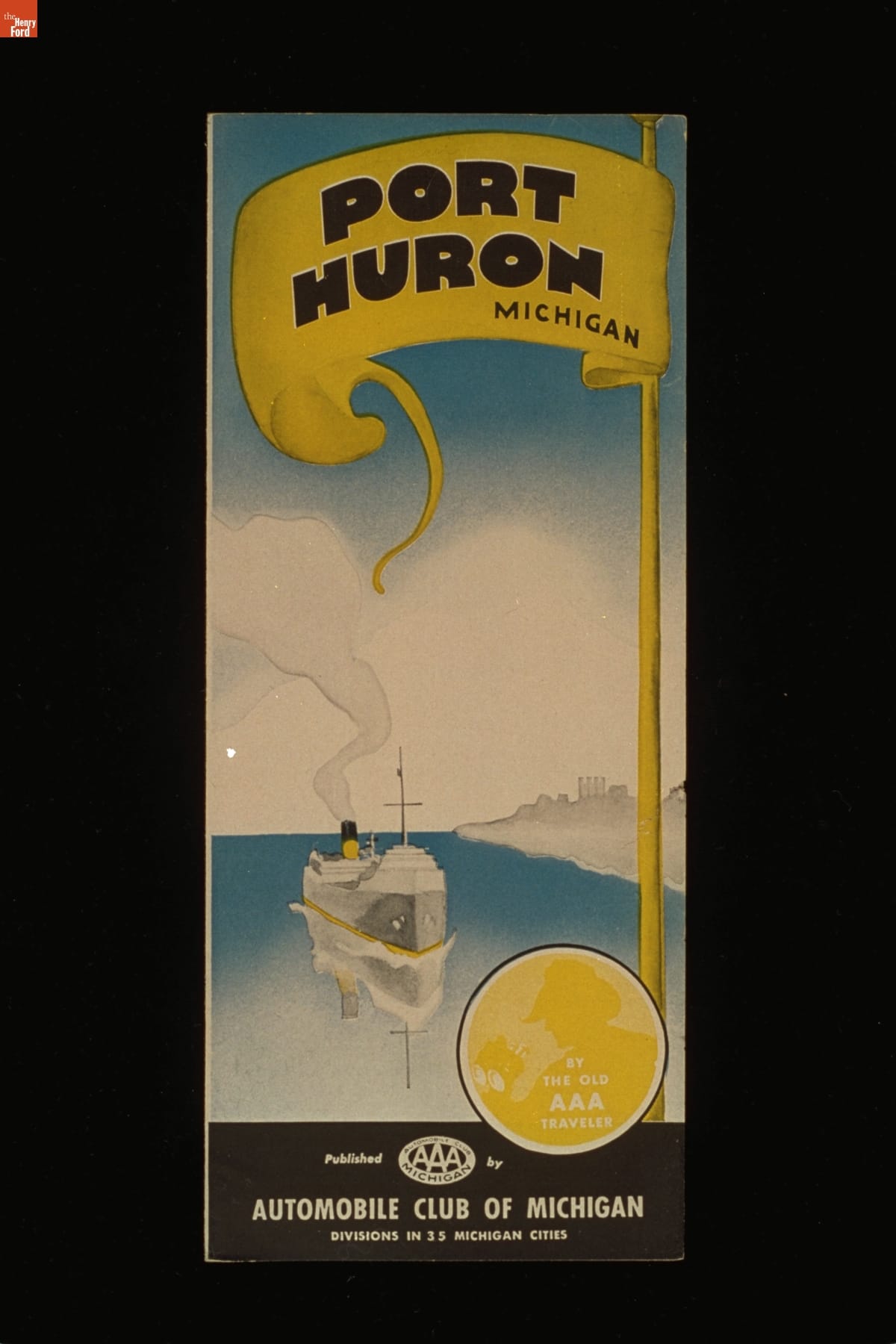
- Travel Brochure for Port Huron, Michigan, circa 1945 - The first automobile clubs were established to organize motoring tours and lobby for better roads. In time, their missions expanded to include other services. The Automobile Club of Michigan, founded in 1916, promoted tourism in the Great Lakes State by distributing maps, and by publishing guides to many of the state's restaurants, hotels, and tourist attractions.
- circa 1945
- Collections - Artifact
Travel Brochure for Port Huron, Michigan, circa 1945
The first automobile clubs were established to organize motoring tours and lobby for better roads. In time, their missions expanded to include other services. The Automobile Club of Michigan, founded in 1916, promoted tourism in the Great Lakes State by distributing maps, and by publishing guides to many of the state's restaurants, hotels, and tourist attractions.
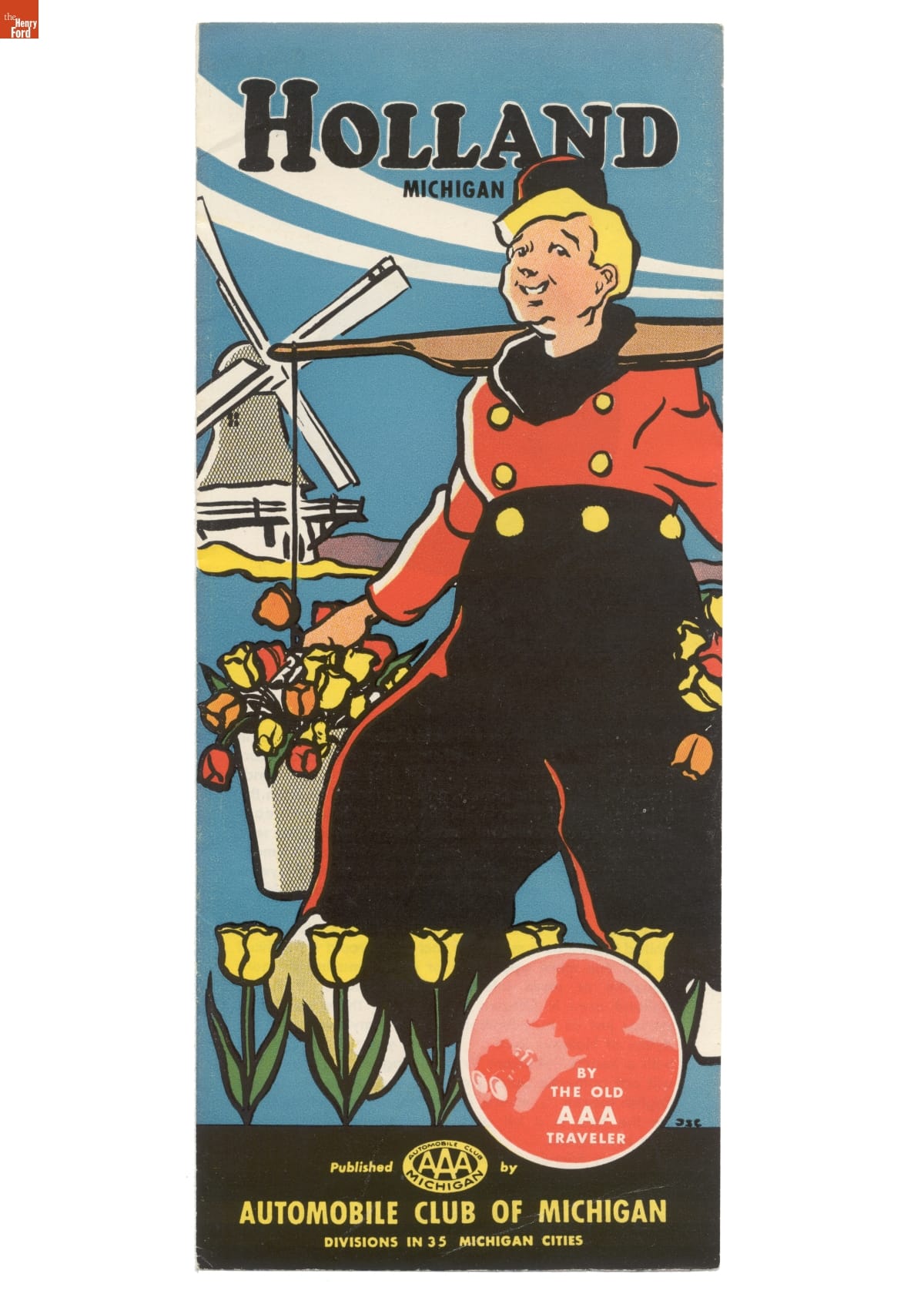
- Travel Brochure for Holland Michigan, circa 1940 - The first automobile clubs were established to organize motoring tours and lobby for better roads. In time, their missions expanded to include other services. The Automobile Club of Michigan, founded in 1916, promoted tourism in the Great Lakes State by distributing maps, and by publishing guides to many of the state's restaurants, hotels, and tourist attractions.
- circa 1940
- Collections - Artifact
Travel Brochure for Holland Michigan, circa 1940
The first automobile clubs were established to organize motoring tours and lobby for better roads. In time, their missions expanded to include other services. The Automobile Club of Michigan, founded in 1916, promoted tourism in the Great Lakes State by distributing maps, and by publishing guides to many of the state's restaurants, hotels, and tourist attractions.
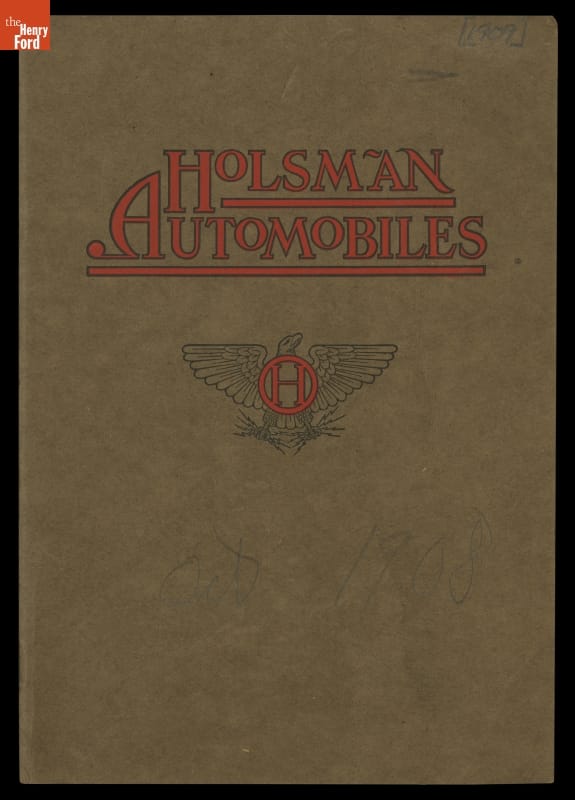
- 1909 Holsman Automobile Company Catalog, "Holsman Automobiles" - Architect Henry K. Holsman formed the Holsman Automobile Company in Chicago in 1901. The company built basic but serviceable high-wheel cars whose height easily cleared bumps and ruts on the poor roads of the time. Prices started around $650, but sales slackened after 1908. Holsman ended production in 1910 having built about 2,460 total vehicles.
- 1909
- Collections - Artifact
1909 Holsman Automobile Company Catalog, "Holsman Automobiles"
Architect Henry K. Holsman formed the Holsman Automobile Company in Chicago in 1901. The company built basic but serviceable high-wheel cars whose height easily cleared bumps and ruts on the poor roads of the time. Prices started around $650, but sales slackened after 1908. Holsman ended production in 1910 having built about 2,460 total vehicles.
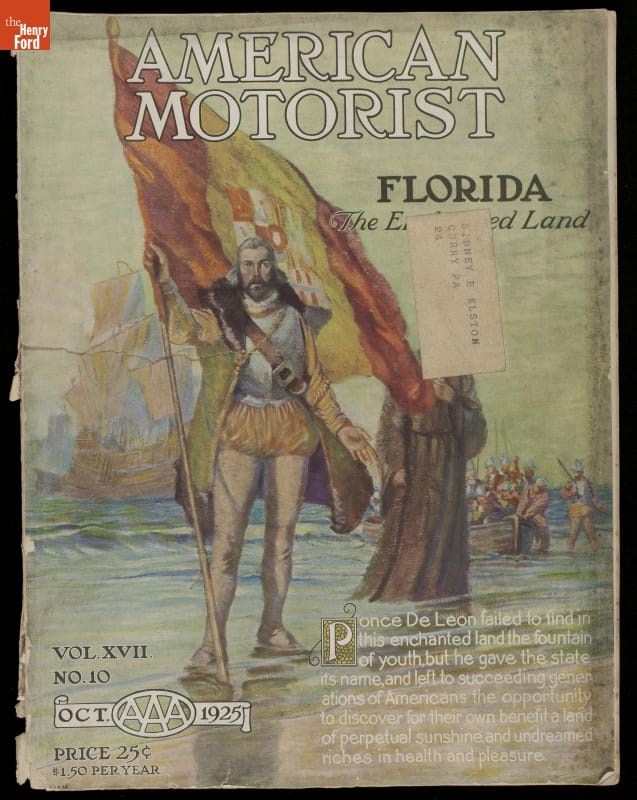
- "American Motorist," October 1925 - The <EM>American Motorist</EM>, an early 20th century publication, featured articles, ads, news, reviews, and other items of interest to car owners. This October 1925 issue contains a series of articles about traveling to Florida. For those not interested in a vacation getaway, the magazine had articles on stopping car thieves, improving gas mileage, and making automobiles quieter.
- October 01, 1925
- Collections - Artifact
"American Motorist," October 1925
The American Motorist, an early 20th century publication, featured articles, ads, news, reviews, and other items of interest to car owners. This October 1925 issue contains a series of articles about traveling to Florida. For those not interested in a vacation getaway, the magazine had articles on stopping car thieves, improving gas mileage, and making automobiles quieter.
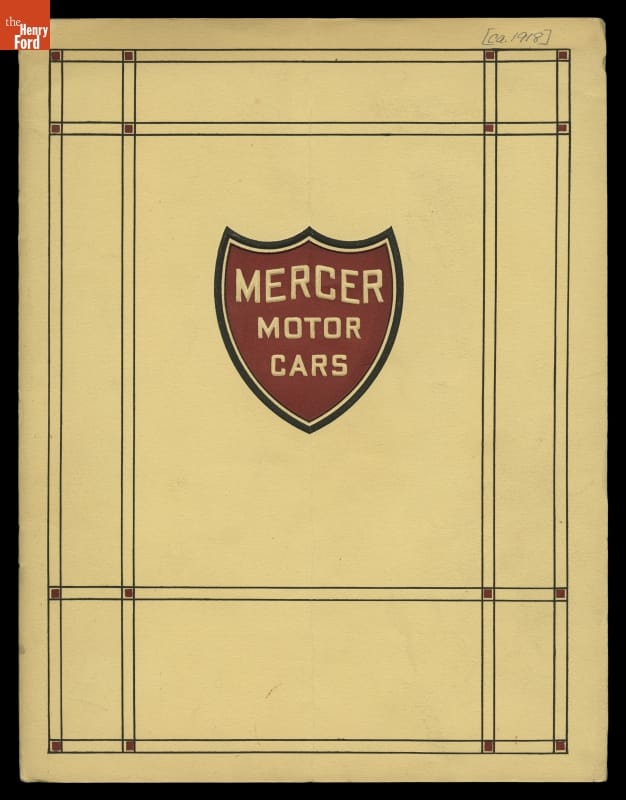
- Mercer Motor Cars Brochure, circa 1918 - The Mercer Automobile Company of Trenton, New Jersey, was founded in 1909 and quickly made its reputation in performance cars. Its early Raceabout models boasted a top speed over 70 miles per hour, and they were popular on the road and on the track. Unfortunately, problems with management and money combined to close Mercer in 1925.
- circa 1918
- Collections - Artifact
Mercer Motor Cars Brochure, circa 1918
The Mercer Automobile Company of Trenton, New Jersey, was founded in 1909 and quickly made its reputation in performance cars. Its early Raceabout models boasted a top speed over 70 miles per hour, and they were popular on the road and on the track. Unfortunately, problems with management and money combined to close Mercer in 1925.