
Search
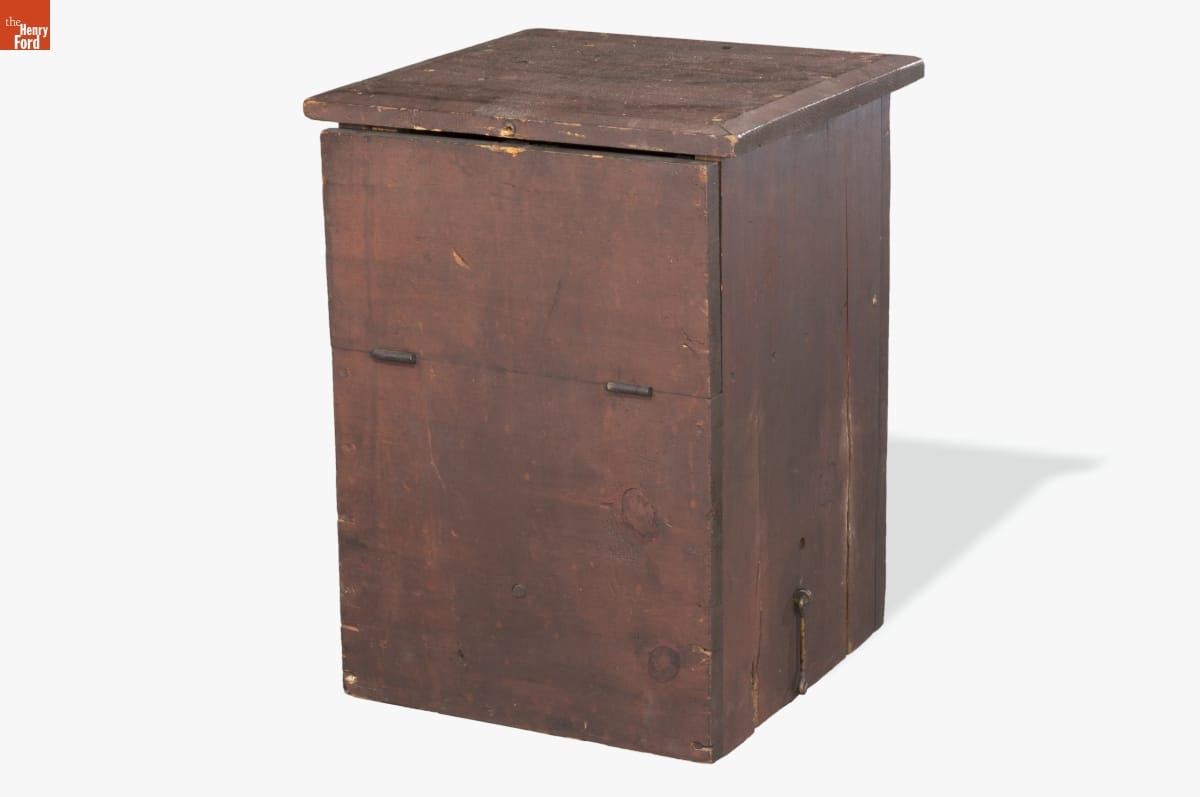
- Observation Beehive, 1910-1915 - Beehives entered classrooms during the early 1900s. <em>The Handbook of Nature Study</em> (1911) instructed teachers to set the hive in a window. Bees entered through the small holes in the lower back and moved between levels through small holes. The front of the hive was sealed, but teachers could fold down the upper door so students could watch bees at work on the honeycomb, visible through glass panels.
- 1910-1915
- Collections - Artifact
Observation Beehive, 1910-1915
Beehives entered classrooms during the early 1900s. The Handbook of Nature Study (1911) instructed teachers to set the hive in a window. Bees entered through the small holes in the lower back and moved between levels through small holes. The front of the hive was sealed, but teachers could fold down the upper door so students could watch bees at work on the honeycomb, visible through glass panels.
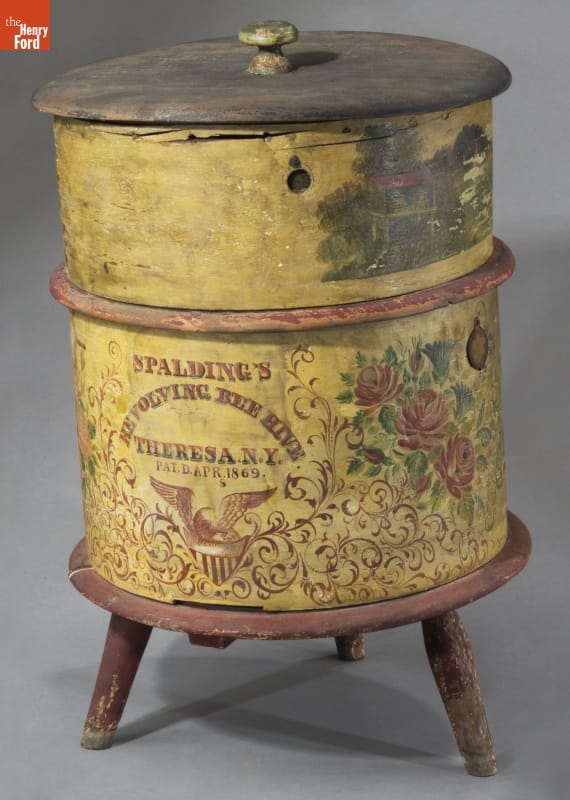
- Revolving Beehive, 1869-1877 - Charles Eldad Spaulding's work as a cheese-box maker in Theresa, New York, influenced his design for a circular revolving beehive. His invention, patented in 1869, was not successful -- though this one is visually appealing with its hand-painted scrollwork and colorful scenes. Instead, rectangular beehives with removable frames in a bee-friendly space were becoming the standard for the growing commercial beekeeping industry.
- 1869-1877
- Collections - Artifact
Revolving Beehive, 1869-1877
Charles Eldad Spaulding's work as a cheese-box maker in Theresa, New York, influenced his design for a circular revolving beehive. His invention, patented in 1869, was not successful -- though this one is visually appealing with its hand-painted scrollwork and colorful scenes. Instead, rectangular beehives with removable frames in a bee-friendly space were becoming the standard for the growing commercial beekeeping industry.
- Beehive Created from a Hollow Log -
- Collections - Artifact
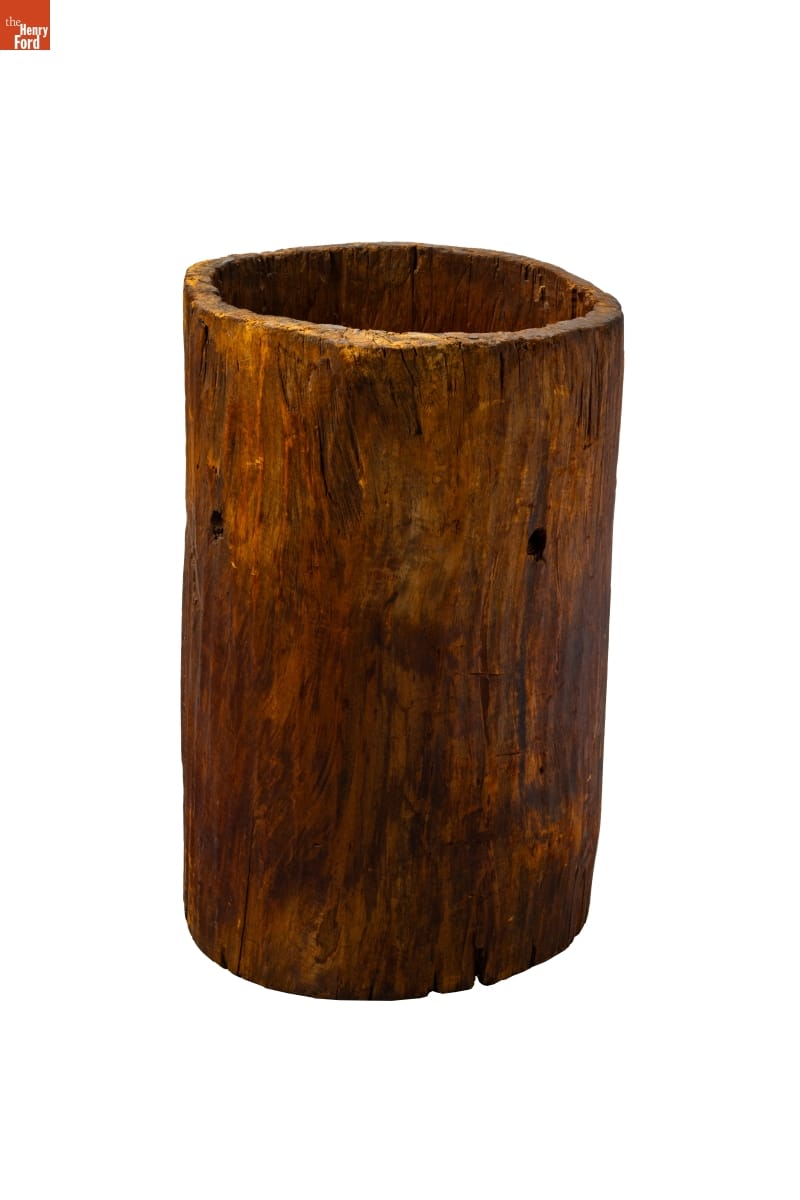
Beehive Created from a Hollow Log
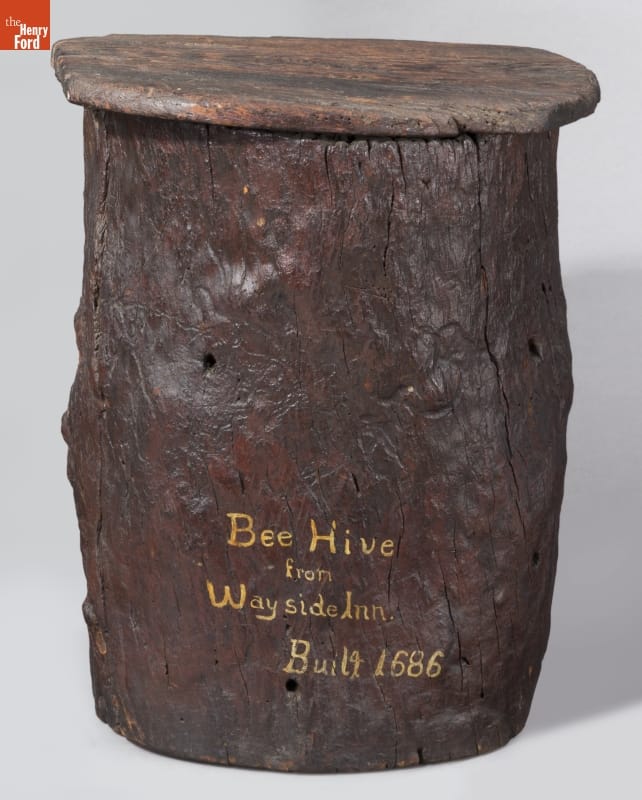
- Beehive From the Wayside Inn - Colonists who relocated from European countries and settled in North America imported <em>Apis mellifera</em> to ensure access to honey and to sustain crops that they moved with their bees. When honeybees swarmed into hollow trees, colonists sometimes cut out the tree and moved it closer to their gardens, orchards, and clover fields to keep honey close to the kitchen table.
- Collections - Artifact
Beehive From the Wayside Inn
Colonists who relocated from European countries and settled in North America imported Apis mellifera to ensure access to honey and to sustain crops that they moved with their bees. When honeybees swarmed into hollow trees, colonists sometimes cut out the tree and moved it closer to their gardens, orchards, and clover fields to keep honey close to the kitchen table.
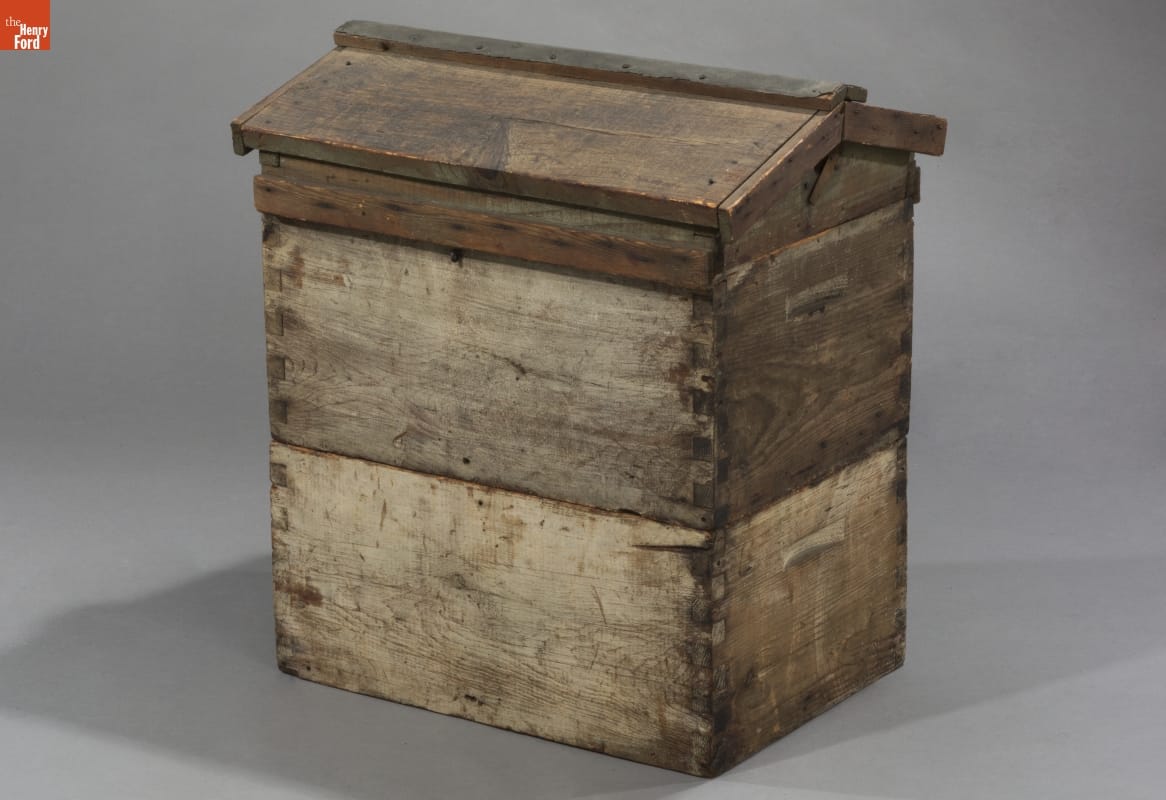
- Langstroth-Style Beehive, 1870-1920 - Lorenzo L. Langstroth devised the most enduring beehive innovation with his 1852 patent for an "Improved Mode of Constructing Beehives." Careful observation of bee behavior proved to him that frames had to be separated by 3/8th of an inch within the hive and between the frames and hive walls to allow space for bees to function. His discovery revolutionized beekeeping.
- 1870-1920
- Collections - Artifact
Langstroth-Style Beehive, 1870-1920
Lorenzo L. Langstroth devised the most enduring beehive innovation with his 1852 patent for an "Improved Mode of Constructing Beehives." Careful observation of bee behavior proved to him that frames had to be separated by 3/8th of an inch within the hive and between the frames and hive walls to allow space for bees to function. His discovery revolutionized beekeeping.
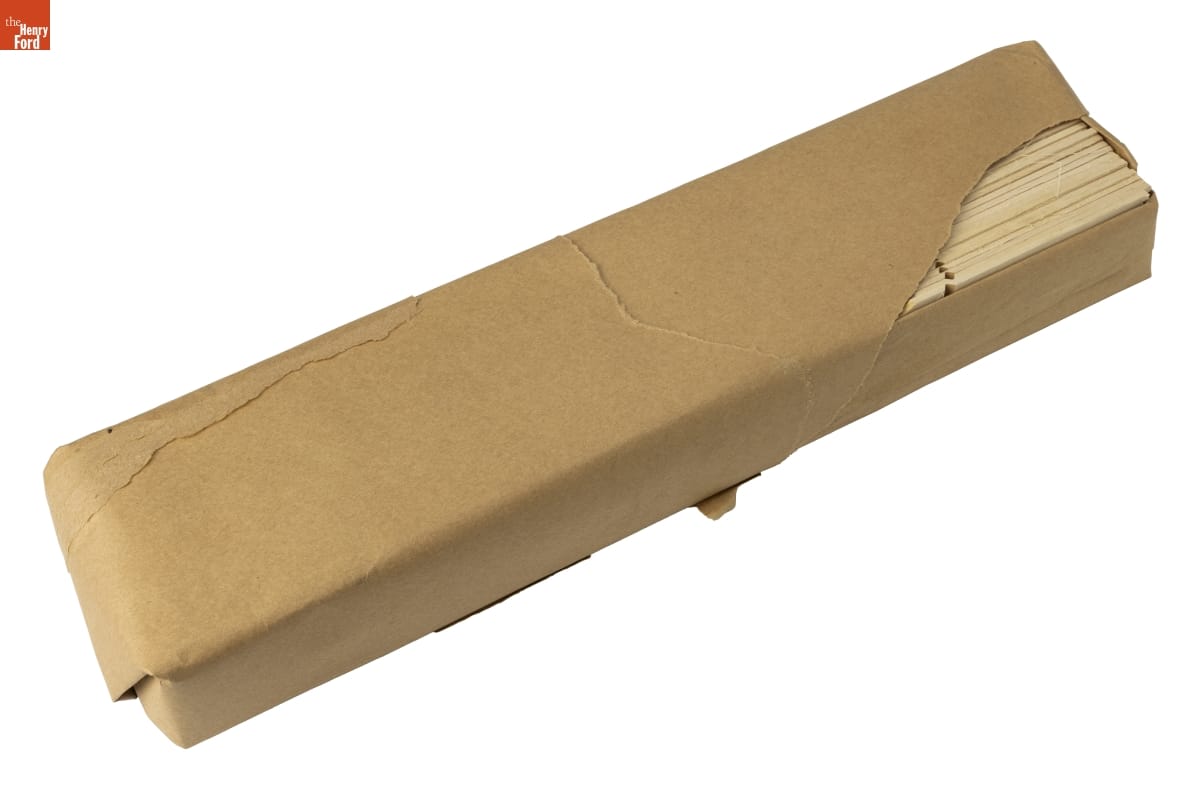
- Package of Beehive Wedges, circa 1961 -
- circa 1961
- Collections - Artifact
Package of Beehive Wedges, circa 1961
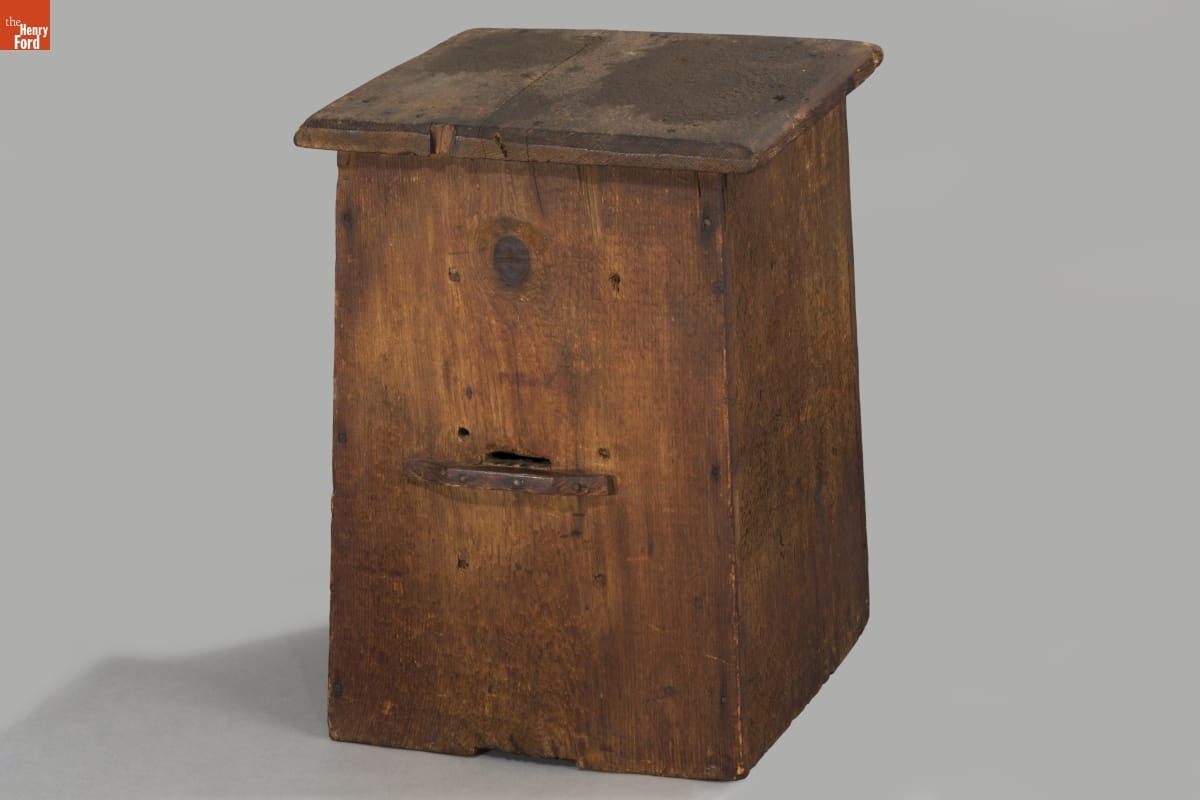
- Box Beehive, 1820-1880 -
- 1820-1880
- Collections - Artifact
Box Beehive, 1820-1880
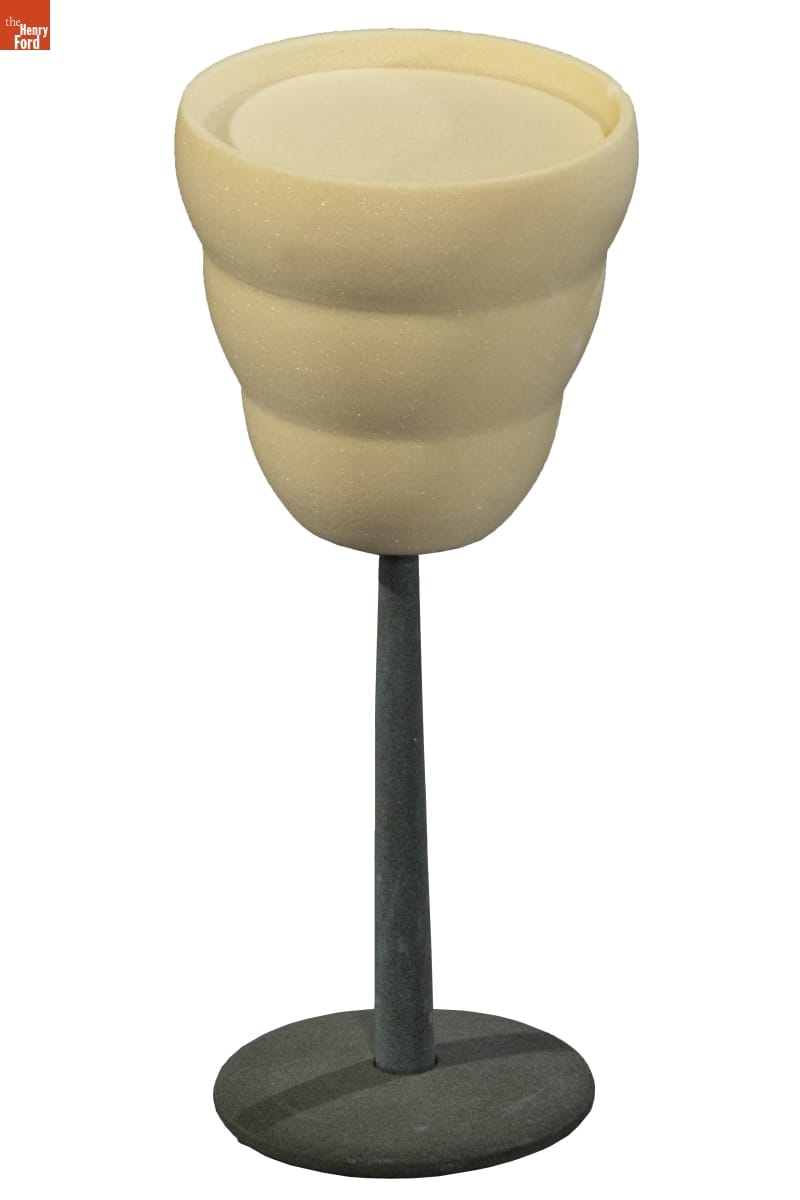
- Beehive Wine Glass Model, 2004 - Starting in the early 1980s--and already established as an internationally recognized architect--Michael Graves began to pursue a parallel career as a product designer. Over the following three and a half decades he and his collaborators designed everything from humble household goods to limited edition luxury items for clients as diverse as Steuben, Alessi, Target, J. C. Penney, and Disney.
- 2004
- Collections - Artifact
Beehive Wine Glass Model, 2004
Starting in the early 1980s--and already established as an internationally recognized architect--Michael Graves began to pursue a parallel career as a product designer. Over the following three and a half decades he and his collaborators designed everything from humble household goods to limited edition luxury items for clients as diverse as Steuben, Alessi, Target, J. C. Penney, and Disney.
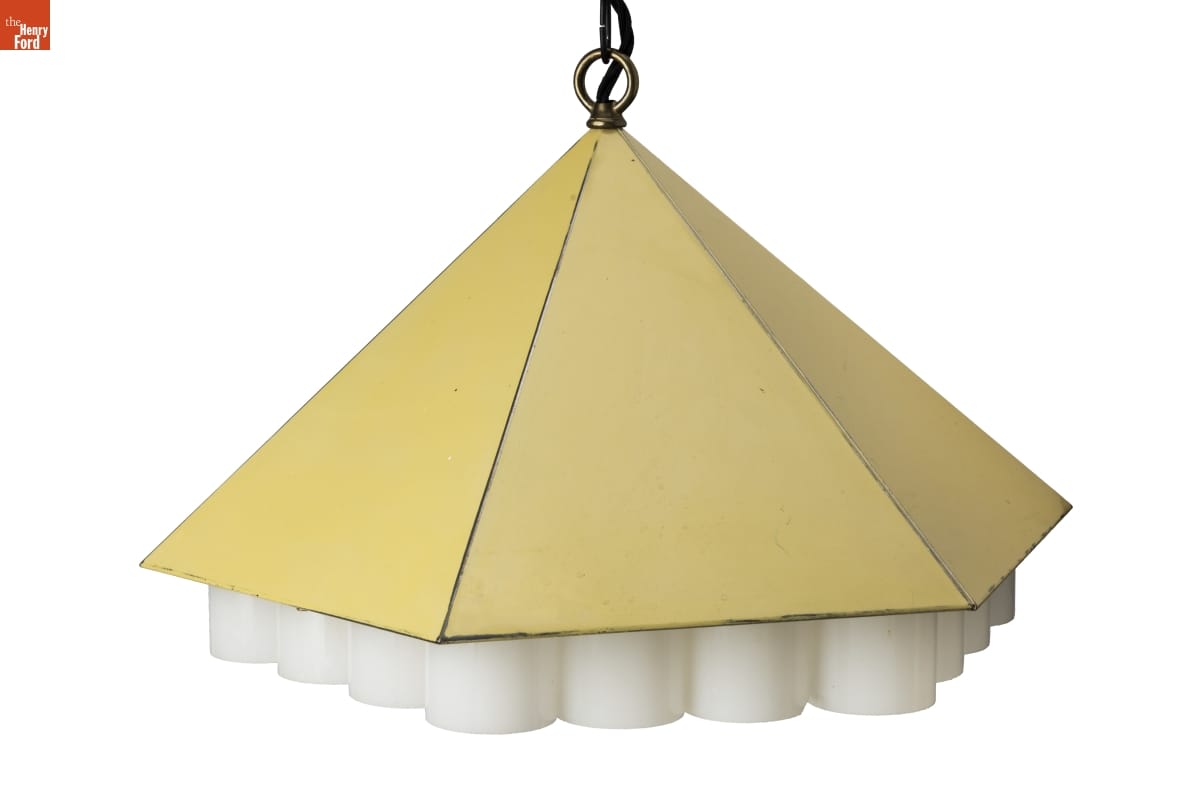
- Prototype Beehive Hanging Lamp, 1960 -
- 1960
- Collections - Artifact
Prototype Beehive Hanging Lamp, 1960
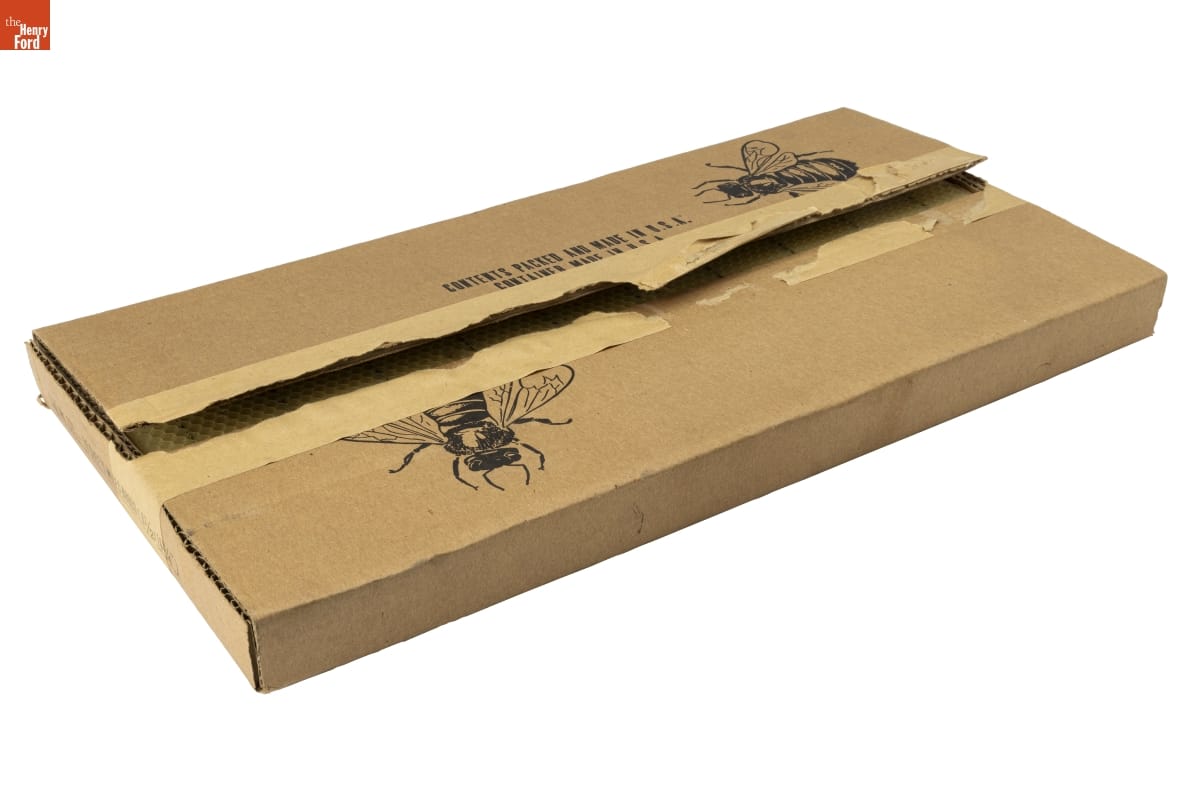
- Wired Brood Sheets for Beehive in Packaging, circa 1961 -
- circa 1961
- Collections - Artifact
Wired Brood Sheets for Beehive in Packaging, circa 1961