
Search
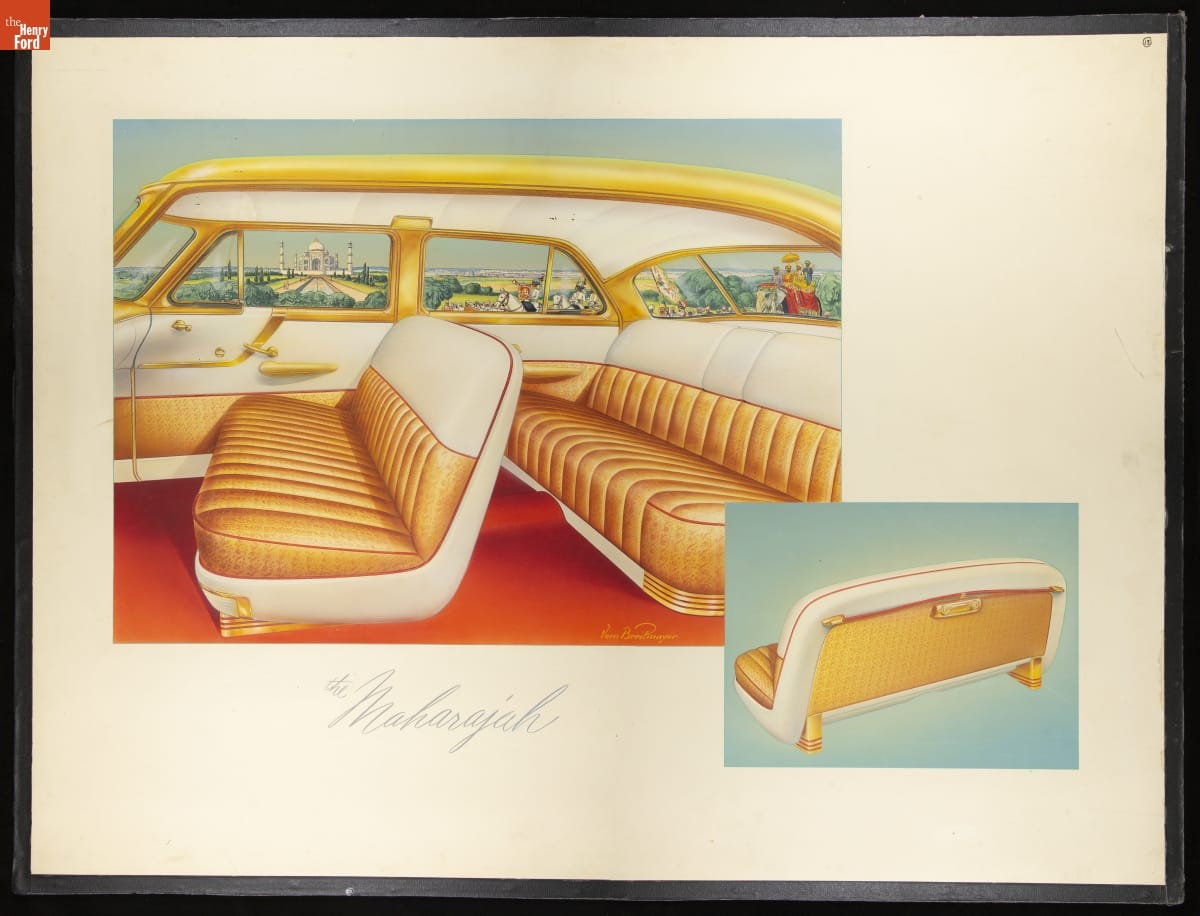
- Rendering, 1952 Lincoln Maharajah Show Car Interior - The Lincoln Maharajah was one of four show cars exhibited by the automaker at the 1953 Chicago Auto Show. It was based on a 1953 Lincoln Capri sedan. The Maharajah featured pearlescent gold paint on its exterior, and it was capped with a white roof. Gold and white upholstery and gold-toned metal trim were used throughout the Maharajah's luxurious interior.
- 1952
- Collections - Artifact
Rendering, 1952 Lincoln Maharajah Show Car Interior
The Lincoln Maharajah was one of four show cars exhibited by the automaker at the 1953 Chicago Auto Show. It was based on a 1953 Lincoln Capri sedan. The Maharajah featured pearlescent gold paint on its exterior, and it was capped with a white roof. Gold and white upholstery and gold-toned metal trim were used throughout the Maharajah's luxurious interior.
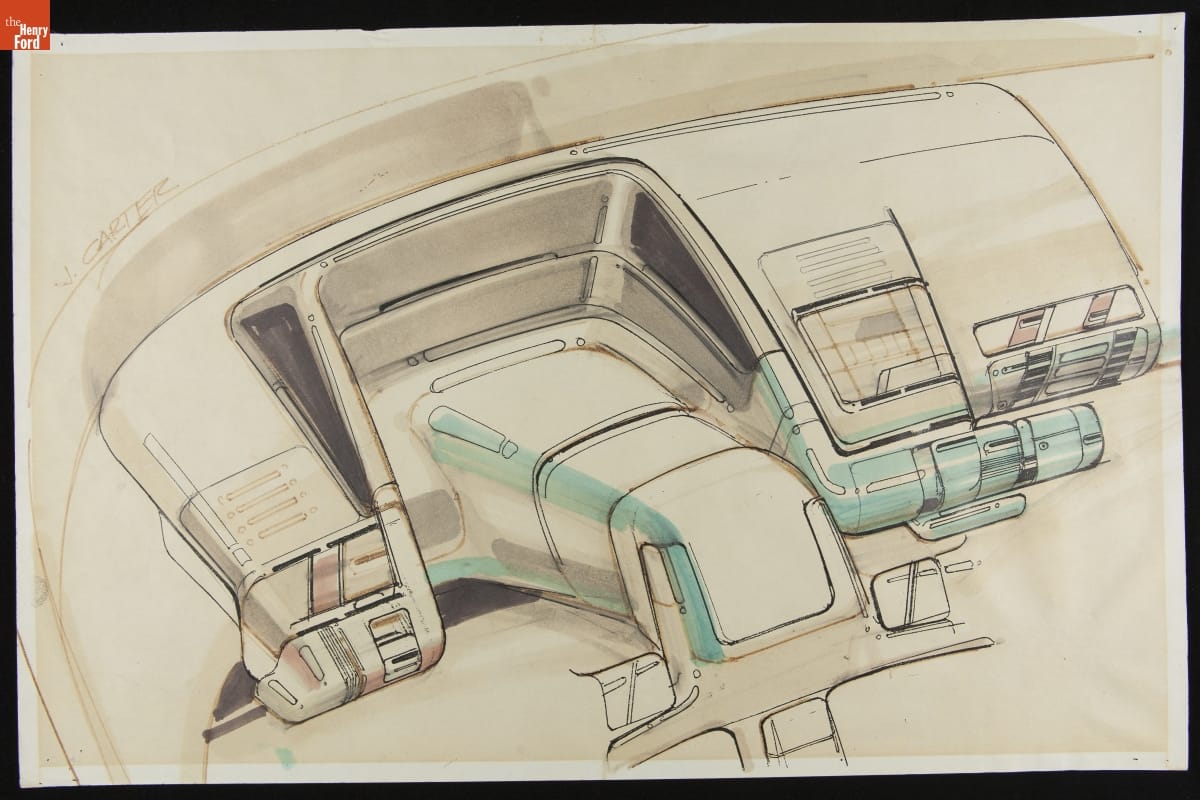
- Interior Concept for Indy Corvette Show Car, circa 1985 - Chevrolet wowed crowds at the 1986 Detroit Auto Show with its stunning Corvette Indy concept car. The non-operating display vehicle featured a mid-mounted V-8 engine, all-wheel drive and steering, a carbon fiber body, an on-board satellite navigation system, and screen-based instruments and controls. While the Corvette Indy never made it into production, several of its features eventually became commonplace.
- circa 1985
- Collections - Artifact
Interior Concept for Indy Corvette Show Car, circa 1985
Chevrolet wowed crowds at the 1986 Detroit Auto Show with its stunning Corvette Indy concept car. The non-operating display vehicle featured a mid-mounted V-8 engine, all-wheel drive and steering, a carbon fiber body, an on-board satellite navigation system, and screen-based instruments and controls. While the Corvette Indy never made it into production, several of its features eventually became commonplace.
- Auto Shows - A big city auto show is a magical place—part trade show and part show business. Learn more through artifacts from our collections—programs and posters drawn from the past century.

- June 15, 2018
- Collections - article
Auto Shows
A big city auto show is a magical place—part trade show and part show business. Learn more through artifacts from our collections—programs and posters drawn from the past century.
- Auto Shows - <p>Auto shows serve many purposes. They provide automakers with a place to share their latest models with the press and the public. They allow aftermarket vendors to promote goods and services. And they give visitors a chance to research — or maybe just dream about — their next new car. Part trade show, part show business, the auto show is an institution nearly as old as the automobile itself.</p>

- May 29, 2018
- Collections - Set
Auto Shows
Auto shows serve many purposes. They provide automakers with a place to share their latest models with the press and the public. They allow aftermarket vendors to promote goods and services. And they give visitors a chance to research — or maybe just dream about — their next new car. Part trade show, part show business, the auto show is an institution nearly as old as the automobile itself.
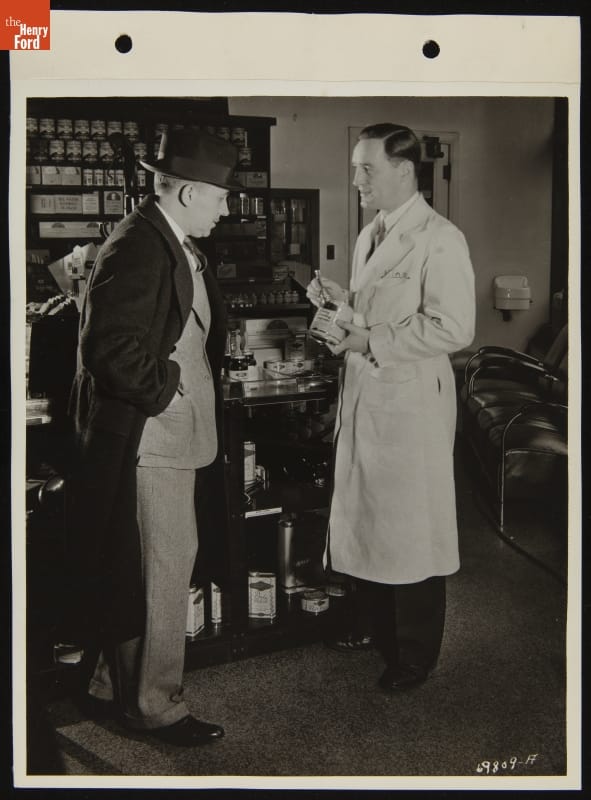
- Service Attendant Shows Customer Ford Accessories, February 1938 - Ford Motor Company inaugurated a system of competing dealership franchises in 1914. Dealers sold Ford vehicles, offered repair services, and stocked spare parts and automobile accessories. Dealership parts and service departments lured customers with displays and advertisements. The department also served as a reminder to potential car buyers that the dealership provided extra services after the sale.
- February 02, 1938
- Collections - Artifact
Service Attendant Shows Customer Ford Accessories, February 1938
Ford Motor Company inaugurated a system of competing dealership franchises in 1914. Dealers sold Ford vehicles, offered repair services, and stocked spare parts and automobile accessories. Dealership parts and service departments lured customers with displays and advertisements. The department also served as a reminder to potential car buyers that the dealership provided extra services after the sale.
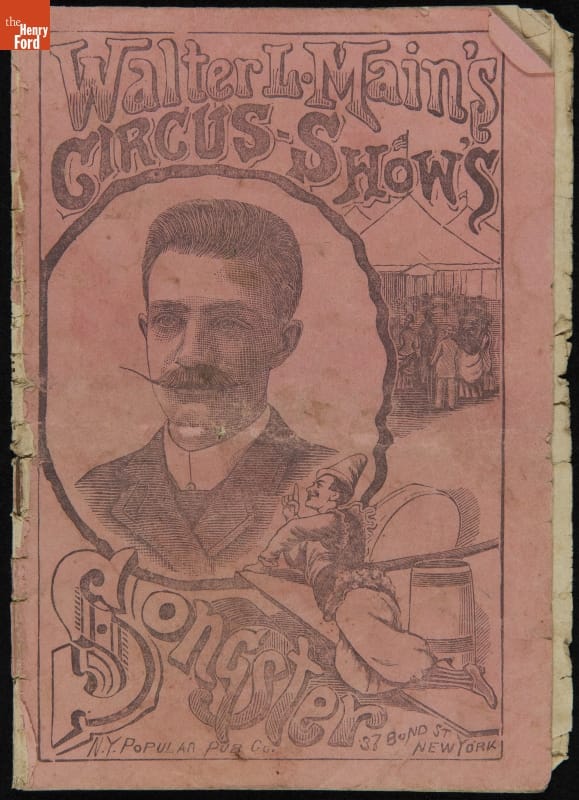
- "Walter L. Main's Circus-Shows Songster," circa 1900 - Many late 19th and early 20th century circuses scheduled additional entertainment after the main show ended. This after-show concert usually had singing, dancing, musical acts or a Wild West exhibition. The concert provided extra revenue for the show's management. Concertgoers had to buy an additional ticket and for a nominal price they could buy a "Songster" filled with texts and lyrics from the performance.
- circa 1900
- Collections - Artifact
"Walter L. Main's Circus-Shows Songster," circa 1900
Many late 19th and early 20th century circuses scheduled additional entertainment after the main show ended. This after-show concert usually had singing, dancing, musical acts or a Wild West exhibition. The concert provided extra revenue for the show's management. Concertgoers had to buy an additional ticket and for a nominal price they could buy a "Songster" filled with texts and lyrics from the performance.
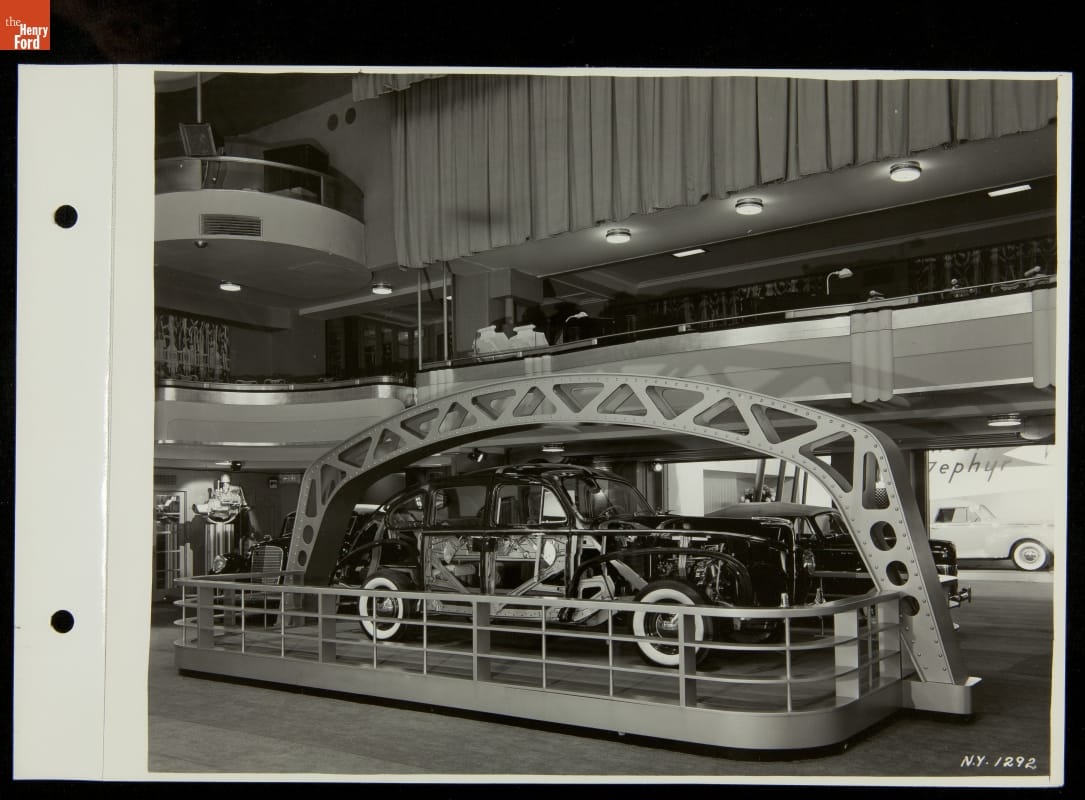
- Car Cutaway at Ford 1940 Style Show, Hotel Astor, 1939 - Ford Motor Company vigorously promoted its lineup for 1940, orchestrating publicity tours and appearances at world's fairs and mounting a style show in conjunction with the 1939 New York Auto Show. In October 1939, the carmaker introduced its latest Fords, Mercurys, and Lincoln-Zephyrs at Manhattan's luxurious Hotel Astor. Accompanying displays and demonstrations rounded out the Ford Style Show experience.
- October 15, 1939
- Collections - Artifact
Car Cutaway at Ford 1940 Style Show, Hotel Astor, 1939
Ford Motor Company vigorously promoted its lineup for 1940, orchestrating publicity tours and appearances at world's fairs and mounting a style show in conjunction with the 1939 New York Auto Show. In October 1939, the carmaker introduced its latest Fords, Mercurys, and Lincoln-Zephyrs at Manhattan's luxurious Hotel Astor. Accompanying displays and demonstrations rounded out the Ford Style Show experience.
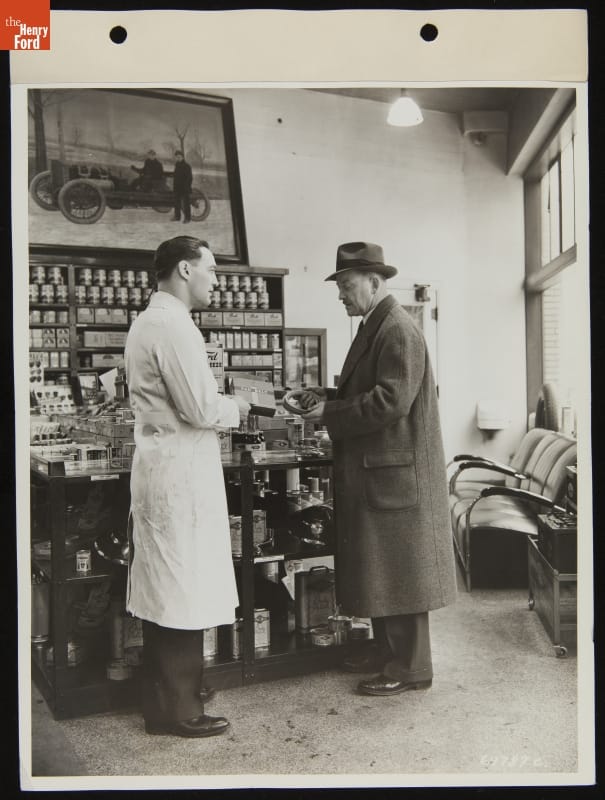
- Service Attendant Shows Customer Ford Accessories, January 1938 - Ford Motor Company inaugurated a system of competing dealership franchises in 1914. Dealers sold Ford vehicles, offered repair services, and stocked spare parts and automobile accessories. Dealership parts and service departments lured customers with displays and advertisements. The department also served as a reminder to potential car buyers that the dealership provided extra services after the sale.
- January 27, 1938
- Collections - Artifact
Service Attendant Shows Customer Ford Accessories, January 1938
Ford Motor Company inaugurated a system of competing dealership franchises in 1914. Dealers sold Ford vehicles, offered repair services, and stocked spare parts and automobile accessories. Dealership parts and service departments lured customers with displays and advertisements. The department also served as a reminder to potential car buyers that the dealership provided extra services after the sale.
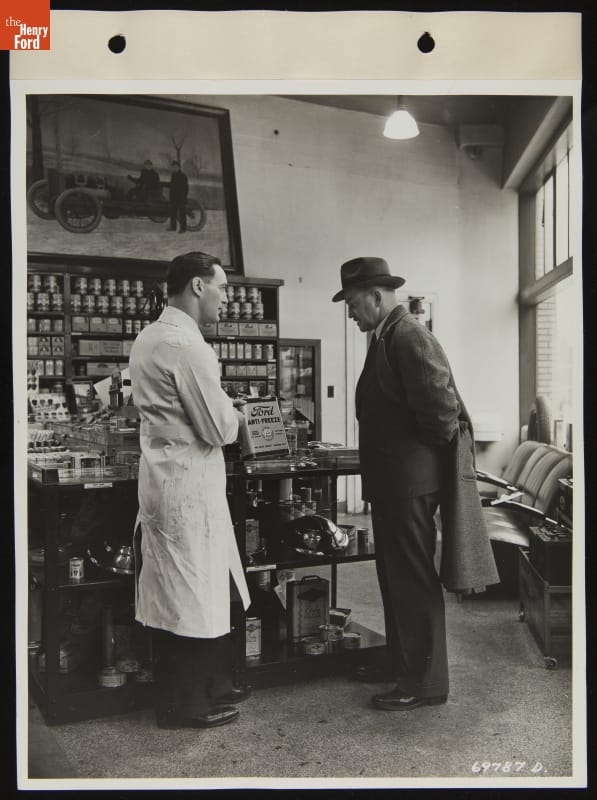
- Service Attendant Shows Customer Ford Accessories, January 1938 - Ford Motor Company inaugurated a system of competing dealership franchises in 1914. Dealers sold Ford vehicles, offered repair services, and stocked spare parts and automobile accessories. Dealership parts and service departments lured customers with displays and advertisements. The department also served as a reminder to potential car buyers that the dealership provided extra services after the sale.
- January 27, 1938
- Collections - Artifact
Service Attendant Shows Customer Ford Accessories, January 1938
Ford Motor Company inaugurated a system of competing dealership franchises in 1914. Dealers sold Ford vehicles, offered repair services, and stocked spare parts and automobile accessories. Dealership parts and service departments lured customers with displays and advertisements. The department also served as a reminder to potential car buyers that the dealership provided extra services after the sale.
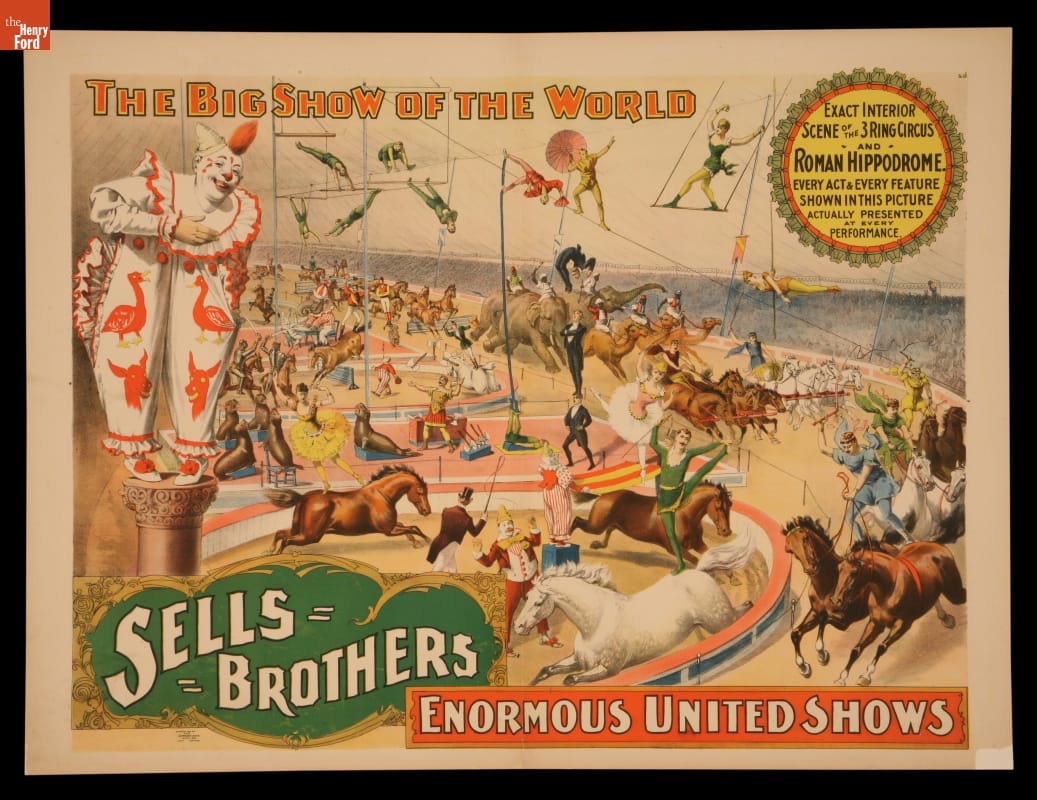
- Circus Poster, "Sells Brothers Enormous United Shows," 1893 - In the late nineteenth century, printers developed a lithograph method that produced brightly colored posters. In advance of a circus coming to town, general agents glued these eye-catching generic posters to building walls, fences, and in window displays. To announce when and where the performances would happen, local printers sometimes provided letterpress paper date strips to paste onto the posters' lower margin.
- 1893
- Collections - Artifact
Circus Poster, "Sells Brothers Enormous United Shows," 1893
In the late nineteenth century, printers developed a lithograph method that produced brightly colored posters. In advance of a circus coming to town, general agents glued these eye-catching generic posters to building walls, fences, and in window displays. To announce when and where the performances would happen, local printers sometimes provided letterpress paper date strips to paste onto the posters' lower margin.