
Search
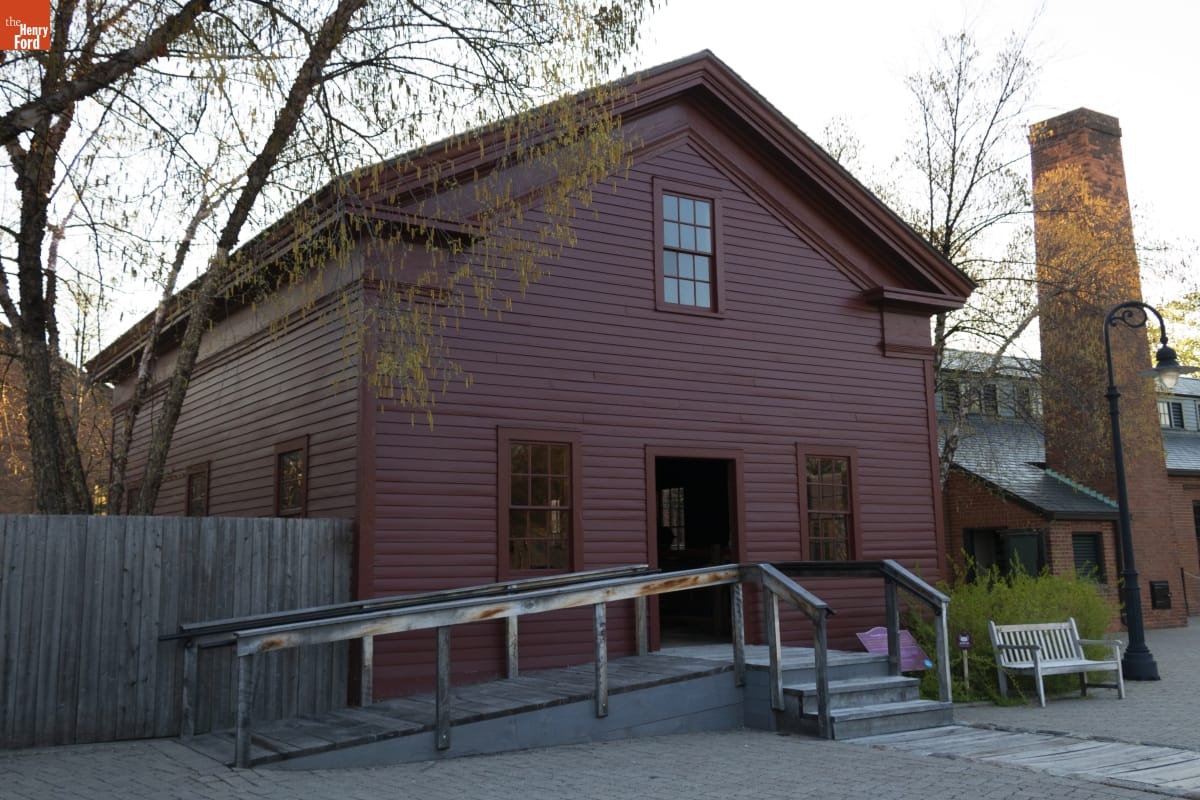
- Gunsolly Carding Mill - John Gunsolly operated this water-powered carding mill as well as a saw and cider mill on the Middle Rouge River near Plymouth, Michigan, beginning in the 1850s. Area farmers brought their wool to this mill to have it carded (combed) so it could be spun into thread.
- circa 1850
- Collections - Artifact
Gunsolly Carding Mill
John Gunsolly operated this water-powered carding mill as well as a saw and cider mill on the Middle Rouge River near Plymouth, Michigan, beginning in the 1850s. Area farmers brought their wool to this mill to have it carded (combed) so it could be spun into thread.
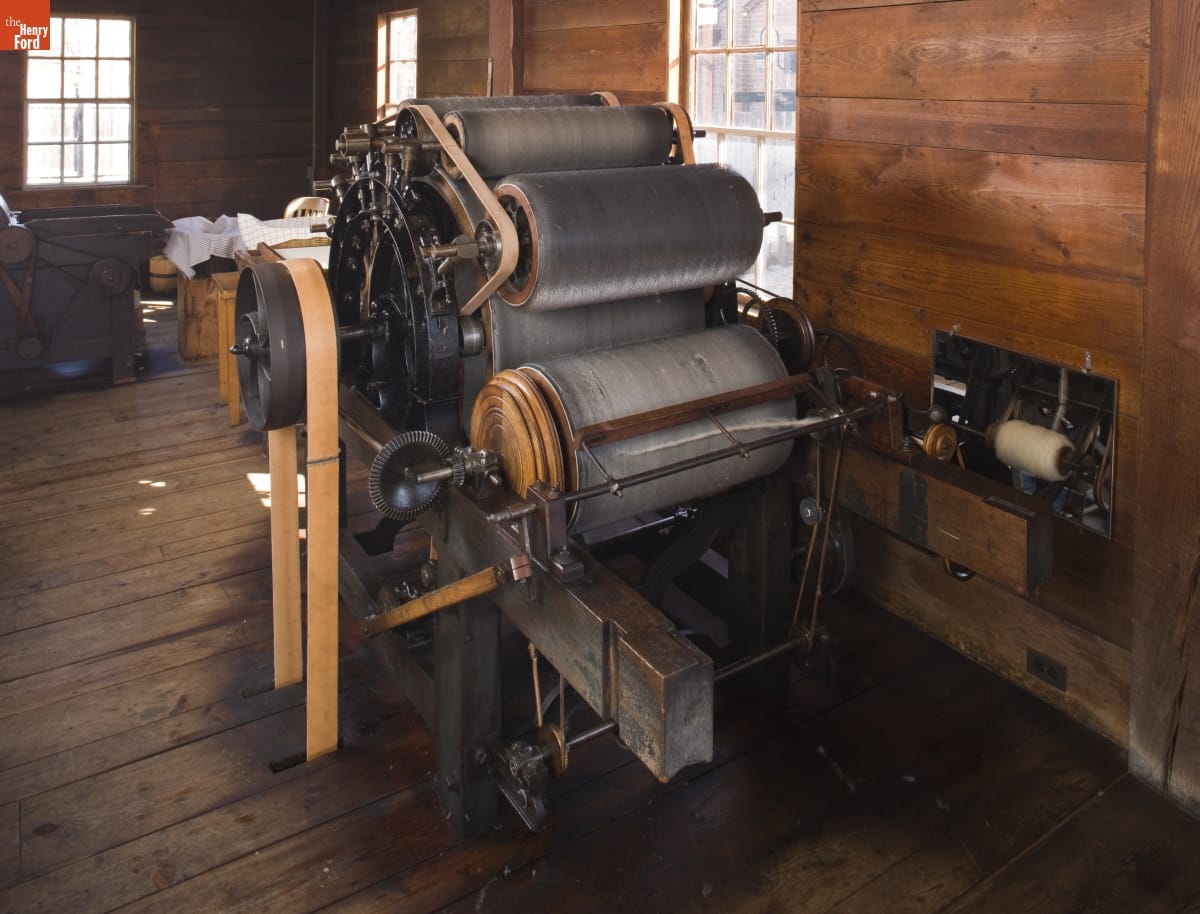
- Carding Machine, 1850-1880 - For much of the nineteenth century, the American textile industry was at the forefront of processing and precision machine technology. Carding is a crucial step in the processing of raw cotton or wool; machines like this were used singly in tiny rural mills or in multiple in the largest textile factories.
- 1850-1880
- Collections - Artifact
Carding Machine, 1850-1880
For much of the nineteenth century, the American textile industry was at the forefront of processing and precision machine technology. Carding is a crucial step in the processing of raw cotton or wool; machines like this were used singly in tiny rural mills or in multiple in the largest textile factories.
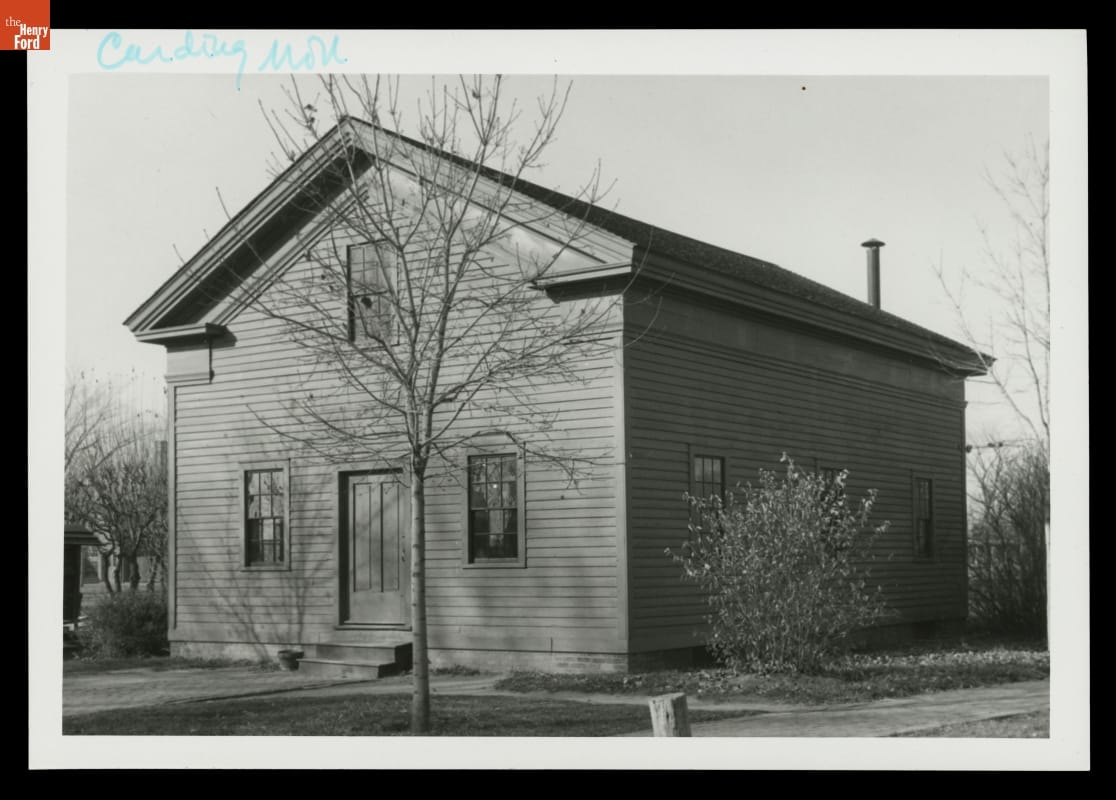
- Plymouth Carding Mill (now Gunsolly Carding Mill) in Greenfield Village, 1976 -
- 1976
- Collections - Artifact
Plymouth Carding Mill (now Gunsolly Carding Mill) in Greenfield Village, 1976
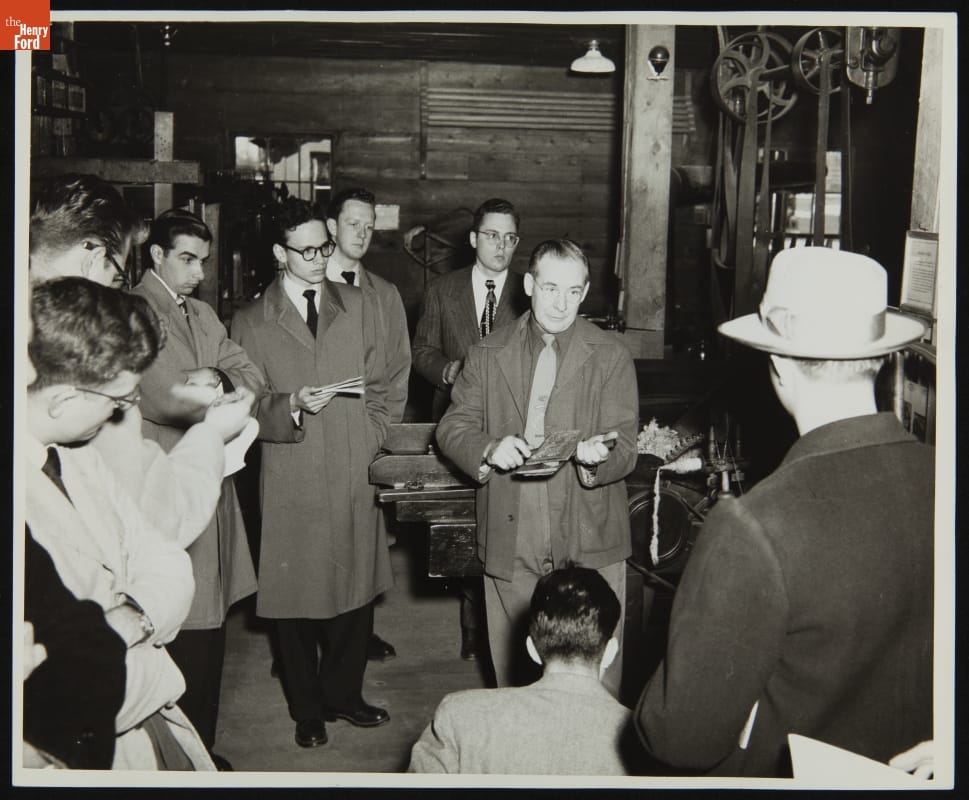
- Sidney Holloway Demonstrating Hand Carding in Plymouth Carding Mill (now Gunsolly Carding Mill), Greenfield Village, circa 1949 - Sidney Holloway (1901-1960) was instrumental in establishing the weaving program at Greenfield Village. Holloway, once employed in the Ford Motor Company's Textile Department, began working with Henry Ford's textile-making collections in 1930. Through hands-on experience and self-study, he mastered the weaving craft. Holloway would engage Greenfield Village visitors for thirty years and pass on his skills to the next generation of artisans.
- circa 1949
- Collections - Artifact
Sidney Holloway Demonstrating Hand Carding in Plymouth Carding Mill (now Gunsolly Carding Mill), Greenfield Village, circa 1949
Sidney Holloway (1901-1960) was instrumental in establishing the weaving program at Greenfield Village. Holloway, once employed in the Ford Motor Company's Textile Department, began working with Henry Ford's textile-making collections in 1930. Through hands-on experience and self-study, he mastered the weaving craft. Holloway would engage Greenfield Village visitors for thirty years and pass on his skills to the next generation of artisans.
- Student Weavers in Plymouth Carding Mill (now Gunsolly Carding Mill), Greenfield Village, 1930 - Henry Ford believed in "learning by doing." Students enrolled in the Edison Institute Schools located on the grounds of Ford's Greenfield Village had ample opportunities for practical, hands-on training. Students, if they desired, could learn to weave. Beginners used small tabletop looms. As they progressed students created woven materials using larger looms located in Greenfield Village's Plymouth Carding Mill and Weaving Shed.
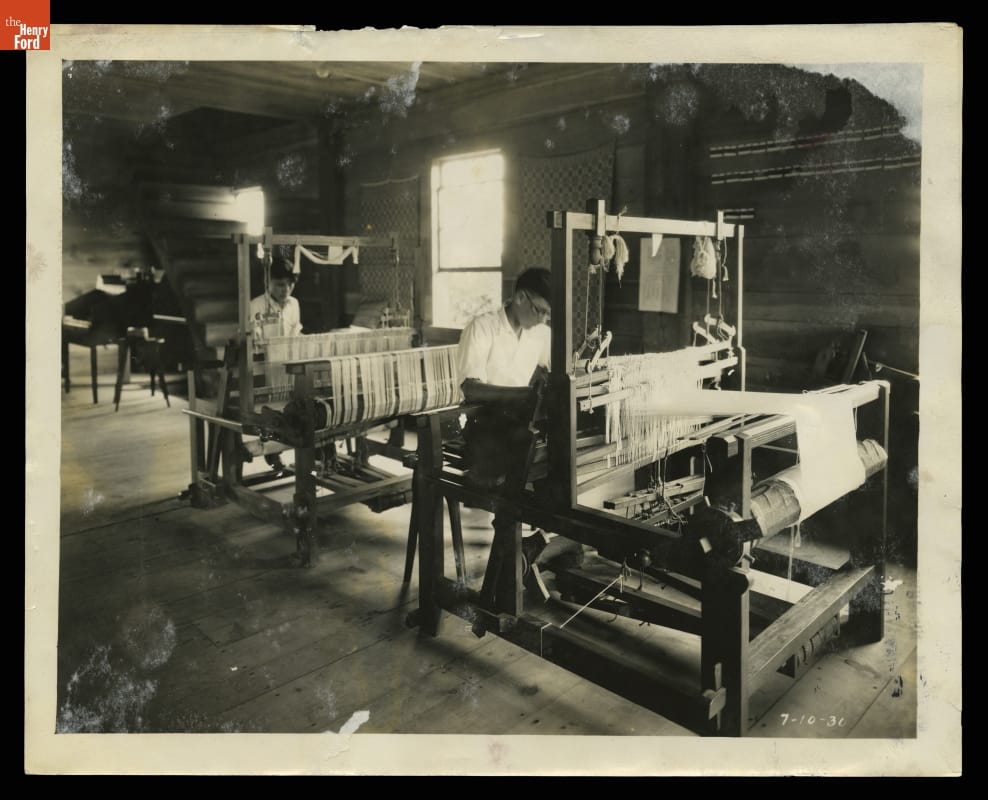
- July 10, 1930
- Collections - Artifact
Student Weavers in Plymouth Carding Mill (now Gunsolly Carding Mill), Greenfield Village, 1930
Henry Ford believed in "learning by doing." Students enrolled in the Edison Institute Schools located on the grounds of Ford's Greenfield Village had ample opportunities for practical, hands-on training. Students, if they desired, could learn to weave. Beginners used small tabletop looms. As they progressed students created woven materials using larger looms located in Greenfield Village's Plymouth Carding Mill and Weaving Shed.
- Carding Machine, circa 1860 - Davis & Furber, the successor to a long line of manufacturing companies in North Andover, Massachusetts, was formed in 1851. The company produced carding machines, spinning jacks, and other machinery used to process wool. By the early 1860s, the expanding company built a foundry to cast metal machine parts. This engraving depicts a carding machine manufactured by the company around 1860.

- circa 1860
- Collections - Artifact
Carding Machine, circa 1860
Davis & Furber, the successor to a long line of manufacturing companies in North Andover, Massachusetts, was formed in 1851. The company produced carding machines, spinning jacks, and other machinery used to process wool. By the early 1860s, the expanding company built a foundry to cast metal machine parts. This engraving depicts a carding machine manufactured by the company around 1860.
- Carding Machine, circa 1840 -
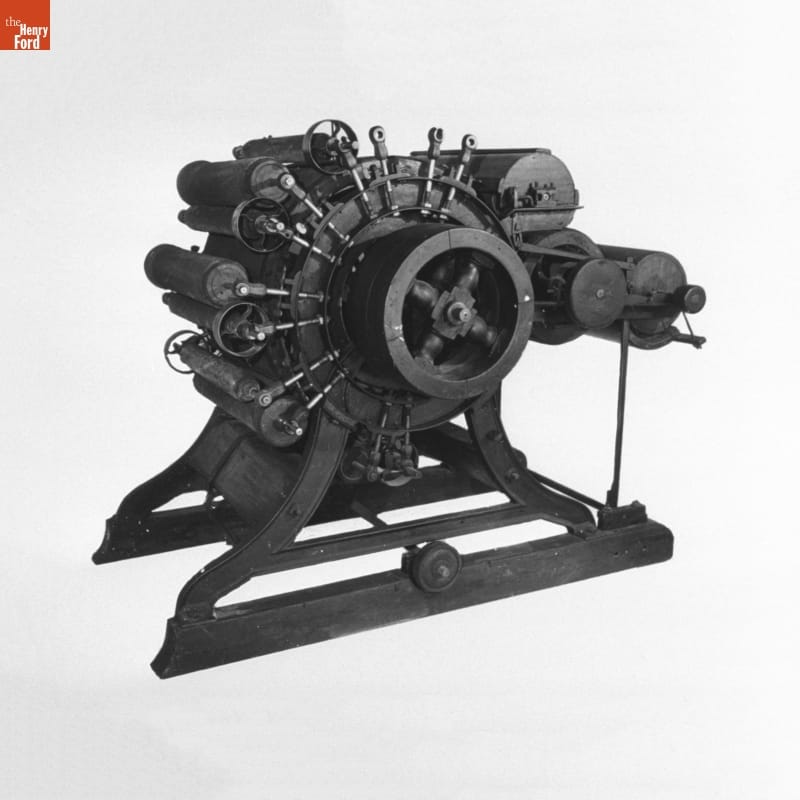
- circa 1840
- Collections - Artifact
Carding Machine, circa 1840
- Sidney Holloway in Plymouth Carding Mill (now Gunsolly Carding Mill), Greenfield Village, circa 1949 - Sidney Holloway (1901-1960) was instrumental in establishing the weaving program at Greenfield Village. Holloway, once employed in the Ford Motor Company's Textile Department, began working with Henry Ford's textile-making collections in 1930. Through hands-on experience and self-study, he mastered the weaving craft. Holloway would engage Greenfield Village visitors for thirty years and pass on his skills to the next generation of artisans.
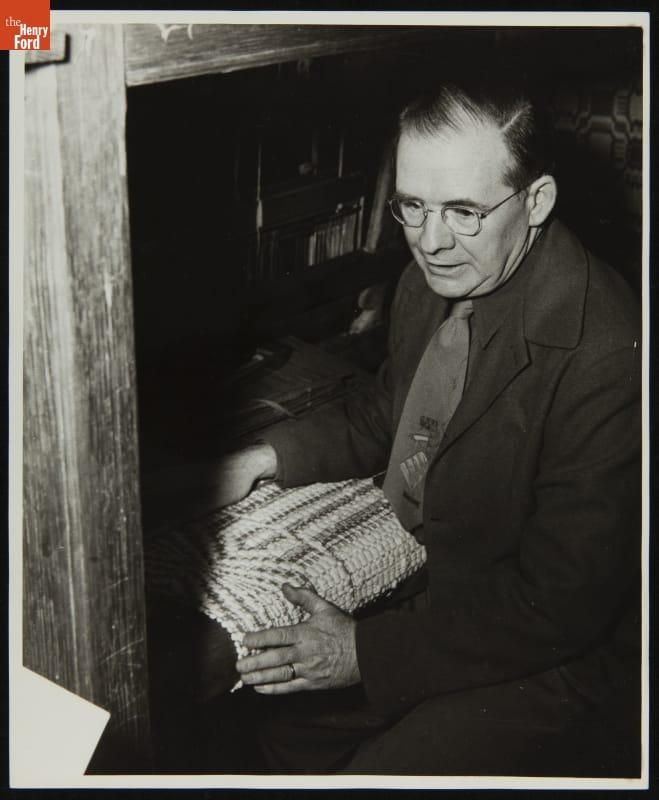
- circa 1949
- Collections - Artifact
Sidney Holloway in Plymouth Carding Mill (now Gunsolly Carding Mill), Greenfield Village, circa 1949
Sidney Holloway (1901-1960) was instrumental in establishing the weaving program at Greenfield Village. Holloway, once employed in the Ford Motor Company's Textile Department, began working with Henry Ford's textile-making collections in 1930. Through hands-on experience and self-study, he mastered the weaving craft. Holloway would engage Greenfield Village visitors for thirty years and pass on his skills to the next generation of artisans.
- Knitting Machines in Plymouth Carding Mill (now Gunsolly Carding Mill), Greenfield Village, 1940 -
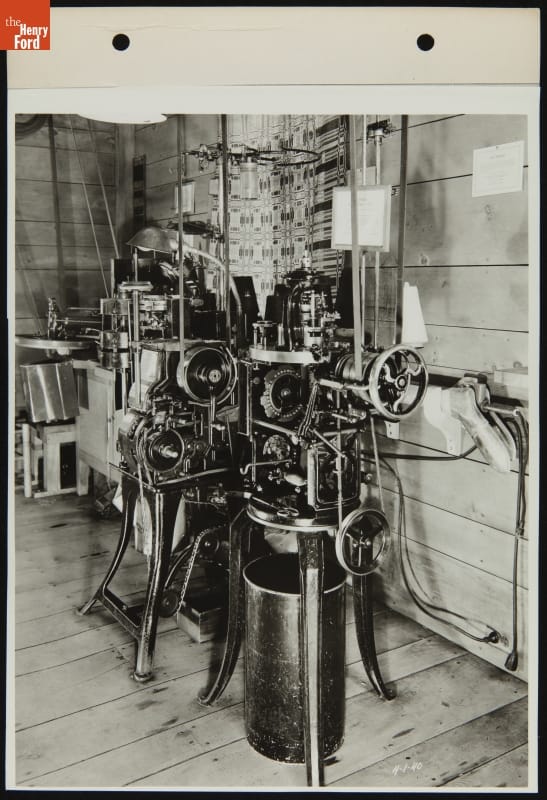
- April 01, 1940
- Collections - Artifact
Knitting Machines in Plymouth Carding Mill (now Gunsolly Carding Mill), Greenfield Village, 1940
- The Wool Carding Machine - Learn how wool carding machines transformed wool processing. Explore their impact on yarn preparation. Read more from The Henry Ford!

- February 09, 2021
- Collections - article
The Wool Carding Machine
Learn how wool carding machines transformed wool processing. Explore their impact on yarn preparation. Read more from The Henry Ford!