
Search
- Chandelier, 1840-1850 -
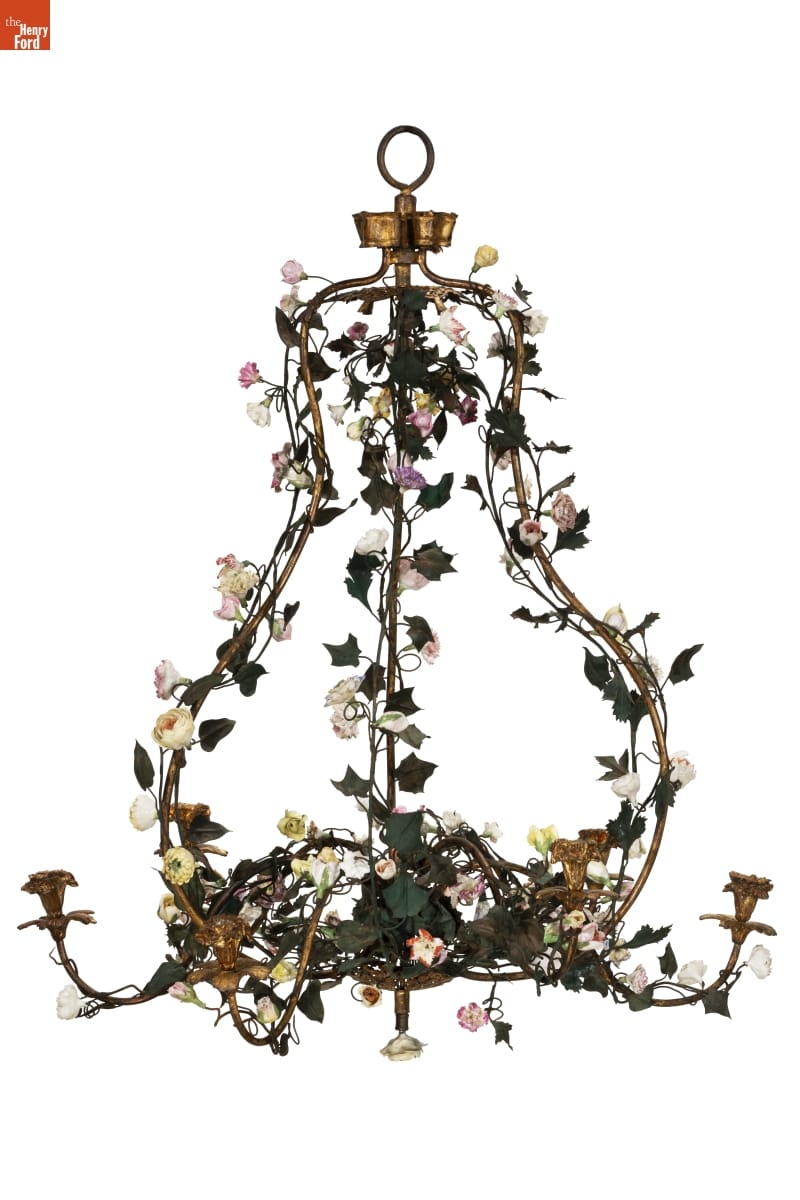
- 1840-1850
- Collections - Artifact
Chandelier, 1840-1850
- Electric Chandelier, 1870 -
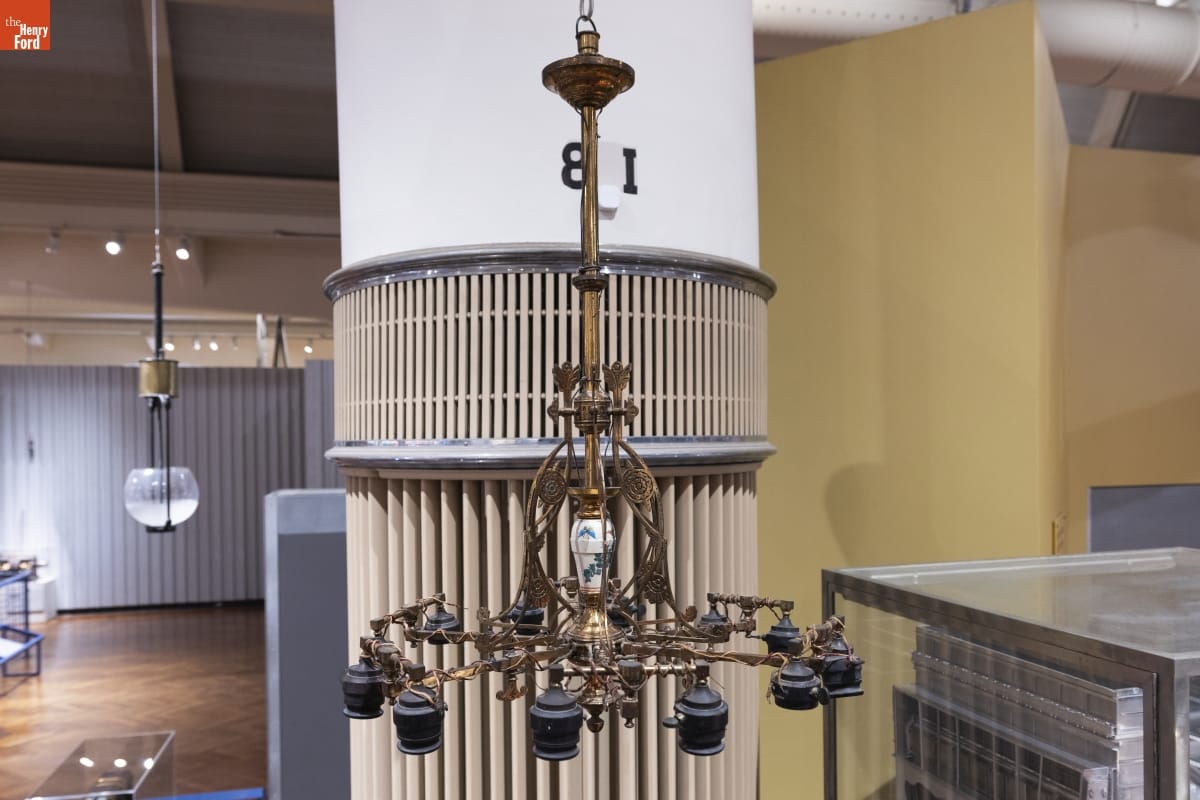
- 1870
- Collections - Artifact
Electric Chandelier, 1870
- Electric Chandelier, 1906 - This chandelier came from a house at 67 East Kirby Street, Detroit, now the Hellenic Museum of Michigan. The Flemish Renaissance house was designed by architect John Scott and commissioned by Emory Leyden Ford. Unrelated to the Dearborn Fords, Emory Ford made his fortune in the chemical and cement business. Married in 1905, he built this house in 1906. By 1912 he relocated to Grosse Pointe.
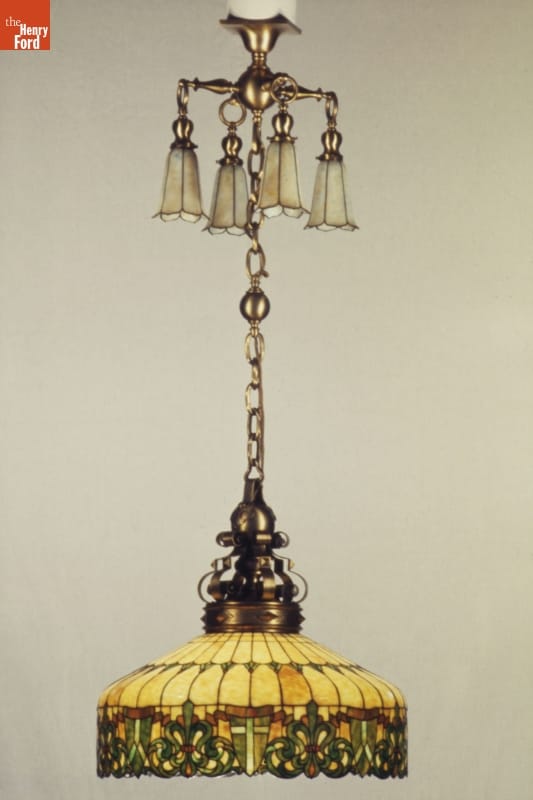
- 1906
- Collections - Artifact
Electric Chandelier, 1906
This chandelier came from a house at 67 East Kirby Street, Detroit, now the Hellenic Museum of Michigan. The Flemish Renaissance house was designed by architect John Scott and commissioned by Emory Leyden Ford. Unrelated to the Dearborn Fords, Emory Ford made his fortune in the chemical and cement business. Married in 1905, he built this house in 1906. By 1912 he relocated to Grosse Pointe.
- Gas Chandelier, circa 1880 -
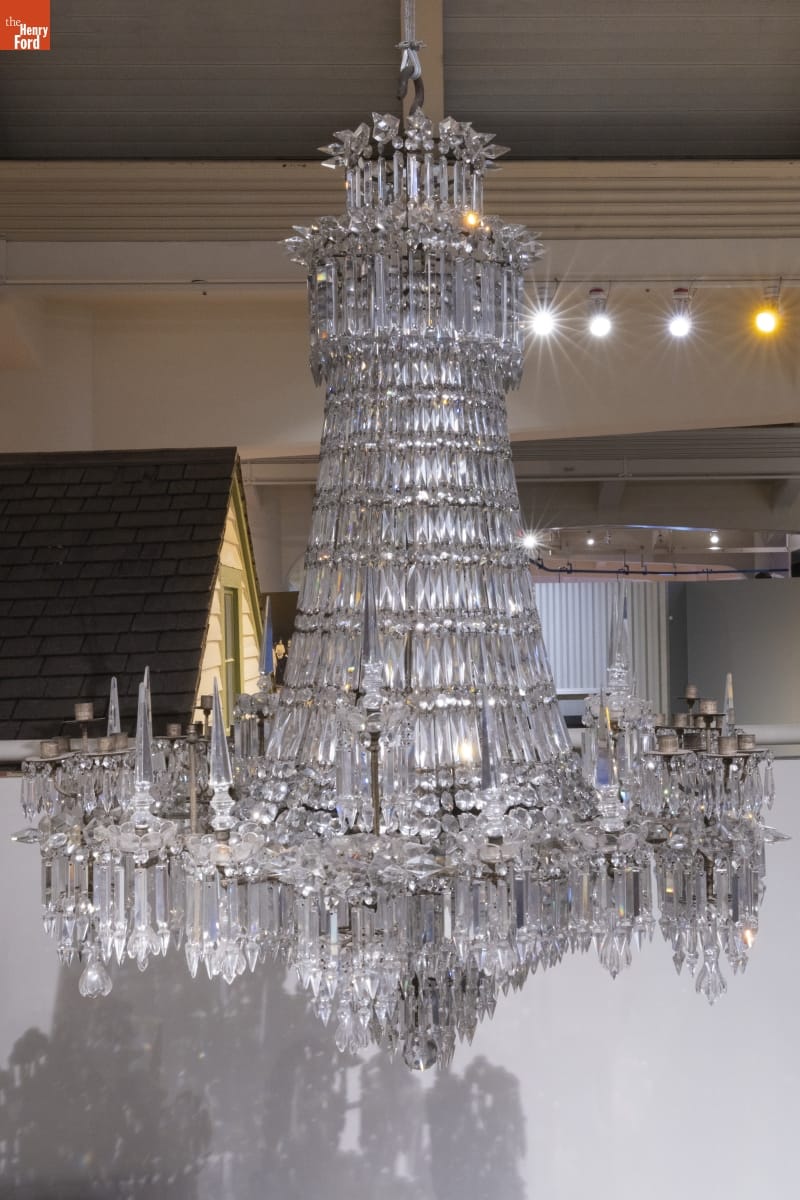
- circa 1880
- Collections - Artifact
Gas Chandelier, circa 1880
- Kerosene Chandelier, 1885-1900 -
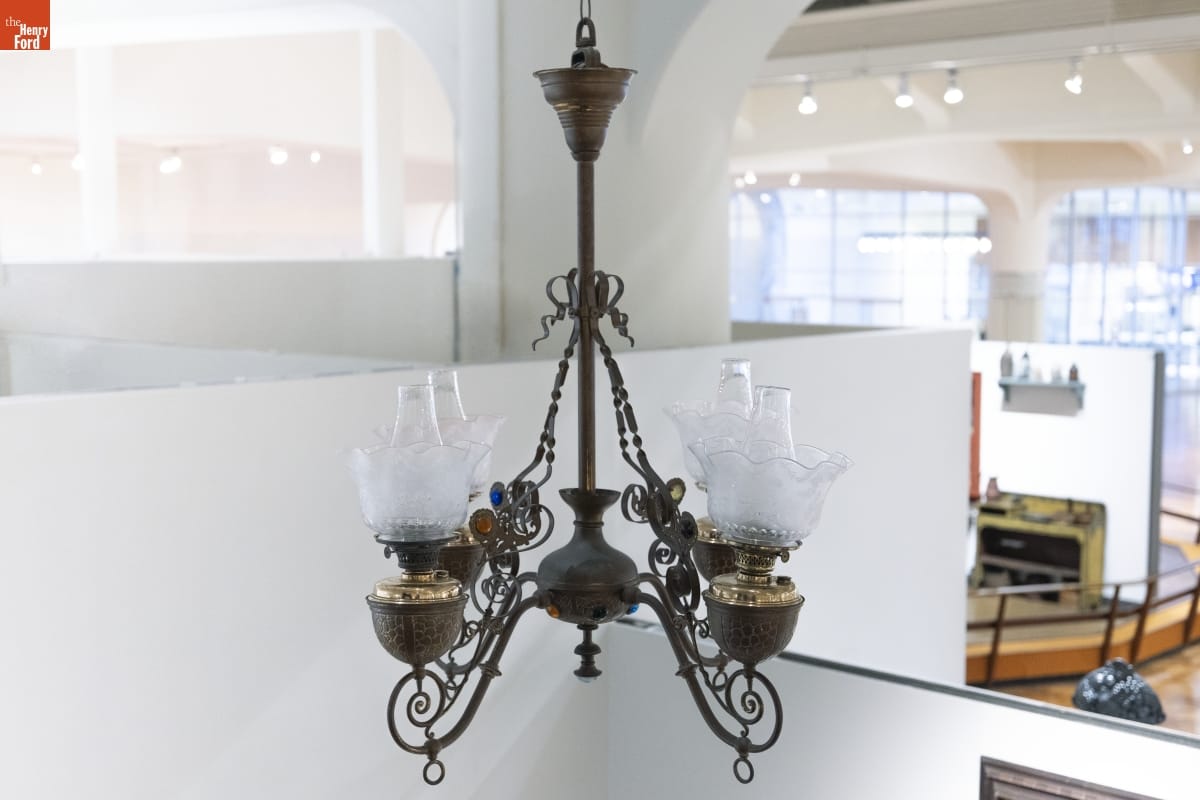
- 1885-1900
- Collections - Artifact
Kerosene Chandelier, 1885-1900
- Candle Chandelier, circa 1795 - This late 18th century chandelier likely illuminated a grand parlor or dining room in the house of a wealthy individual in one of America's large coastal cities. Imported from England or Ireland, it was intended to impress visitors with the good taste of its owner. The glass column, arms, and crystal pendants would have reflected and refracted candlelight into dark corners.
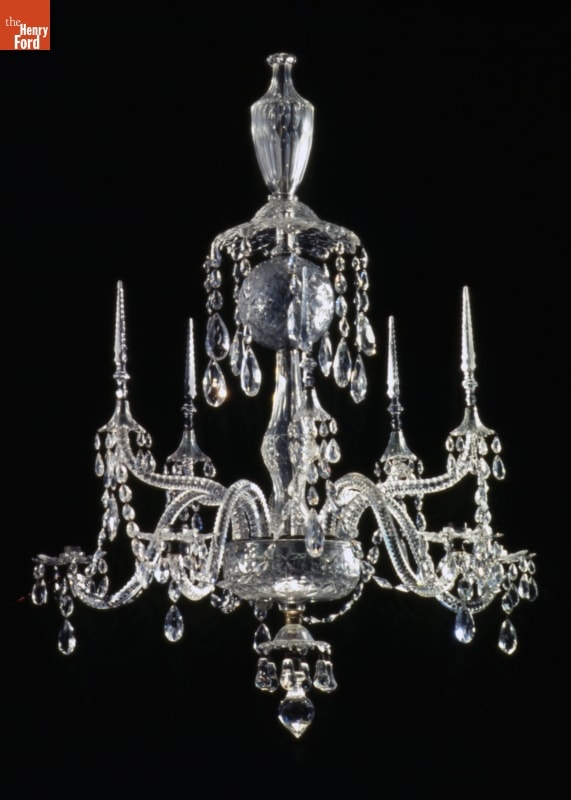
- circa 1795
- Collections - Artifact
Candle Chandelier, circa 1795
This late 18th century chandelier likely illuminated a grand parlor or dining room in the house of a wealthy individual in one of America's large coastal cities. Imported from England or Ireland, it was intended to impress visitors with the good taste of its owner. The glass column, arms, and crystal pendants would have reflected and refracted candlelight into dark corners.
- Candle Chandelier, 1800-1850 -
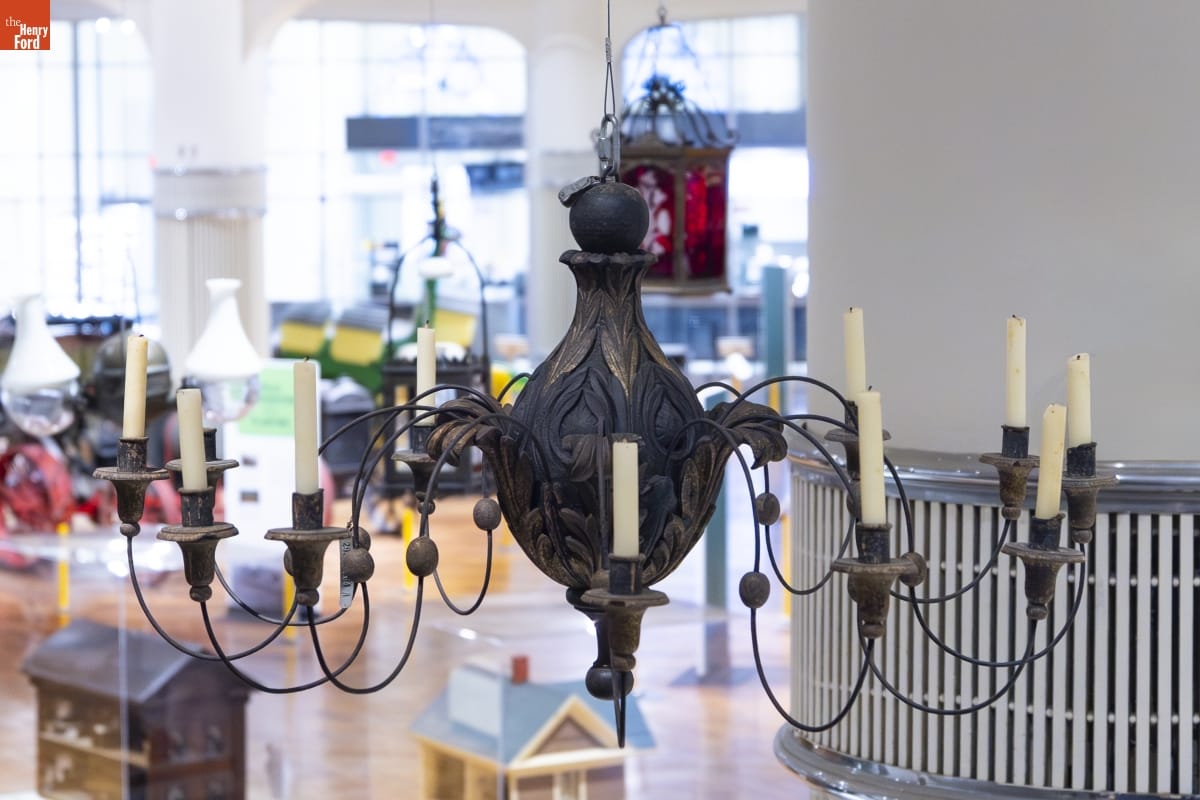
- 1800-1850
- Collections - Artifact
Candle Chandelier, 1800-1850
- Kerosene Chandelier, 1885-1900 -
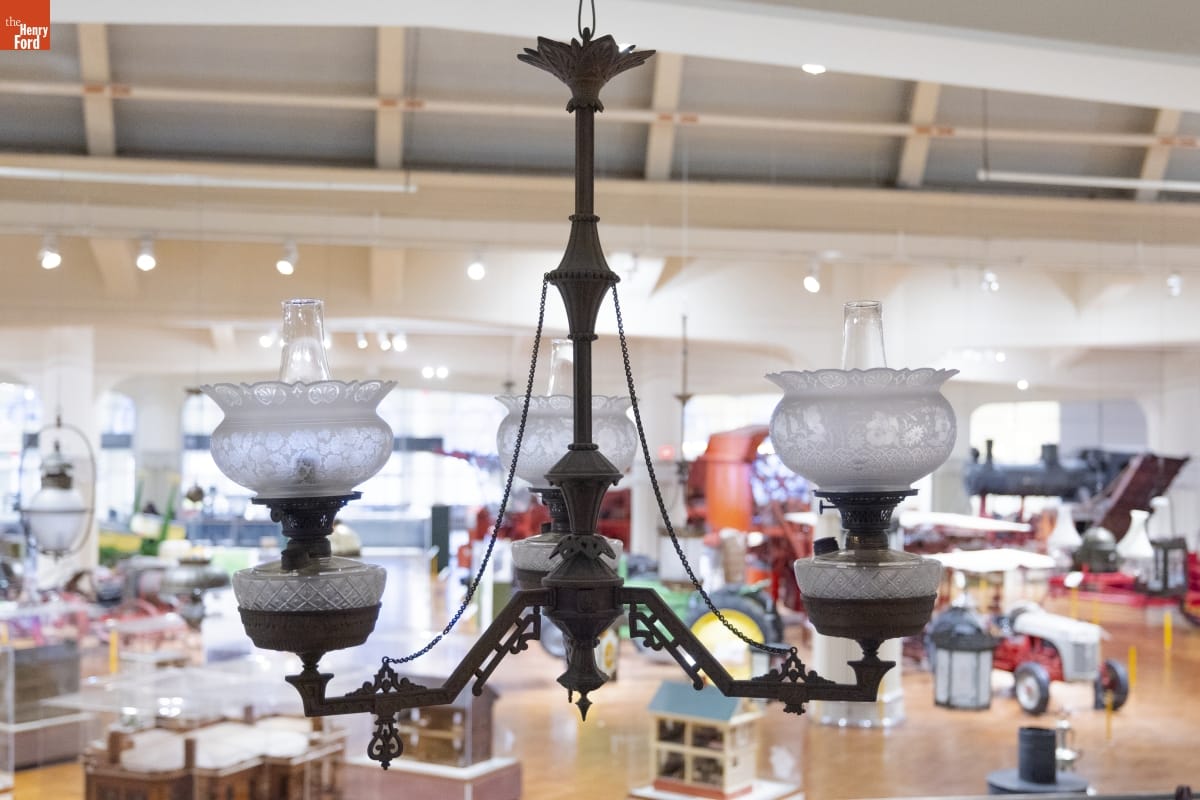
- 1885-1900
- Collections - Artifact
Kerosene Chandelier, 1885-1900
- Candle Chandelier, 1800-1825 -
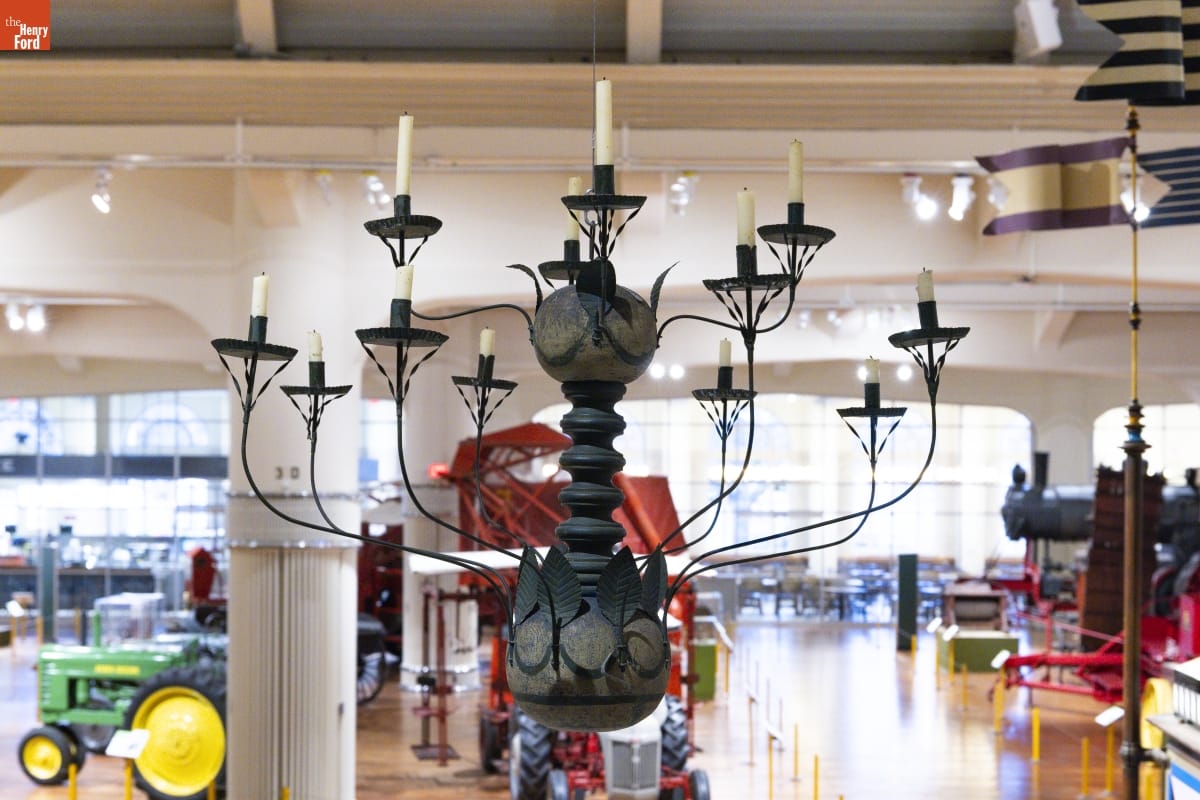
- 1800-1825
- Collections - Artifact
Candle Chandelier, 1800-1825
- Candle Chandelier, 1800-1850 -
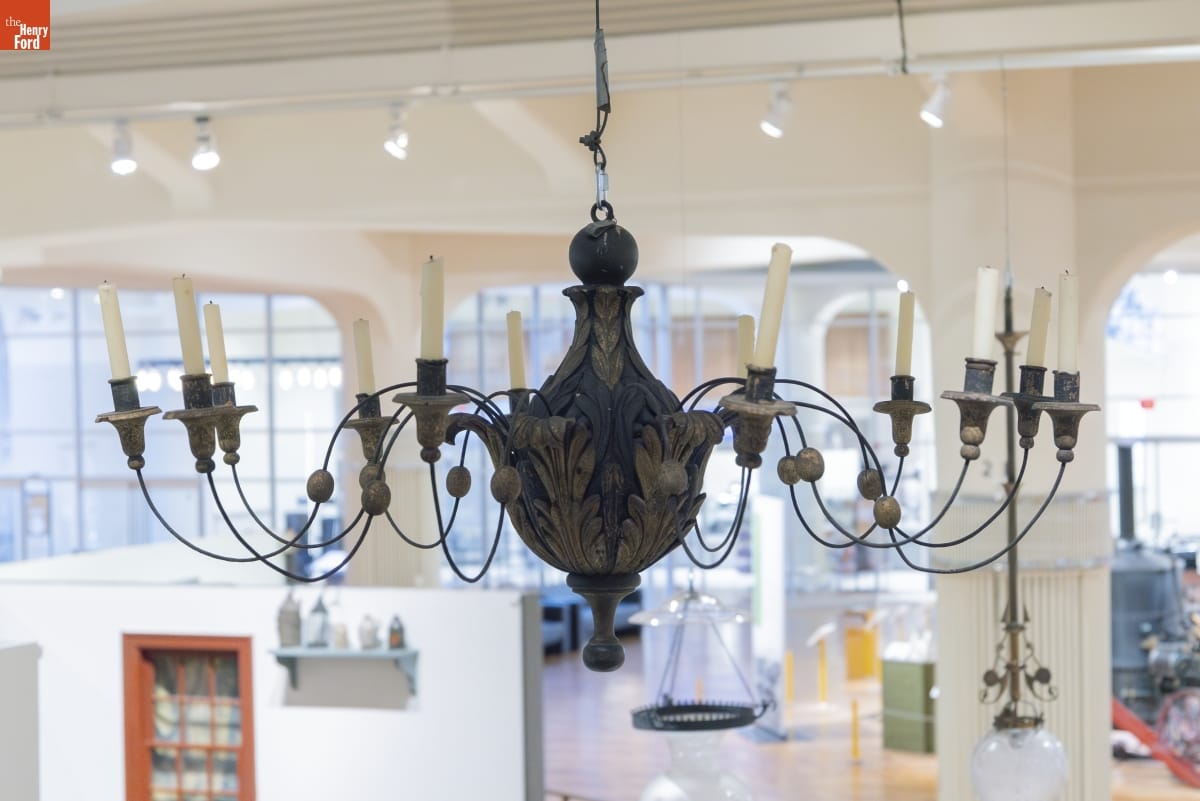
- 1800-1850
- Collections - Artifact
Candle Chandelier, 1800-1850