
Search
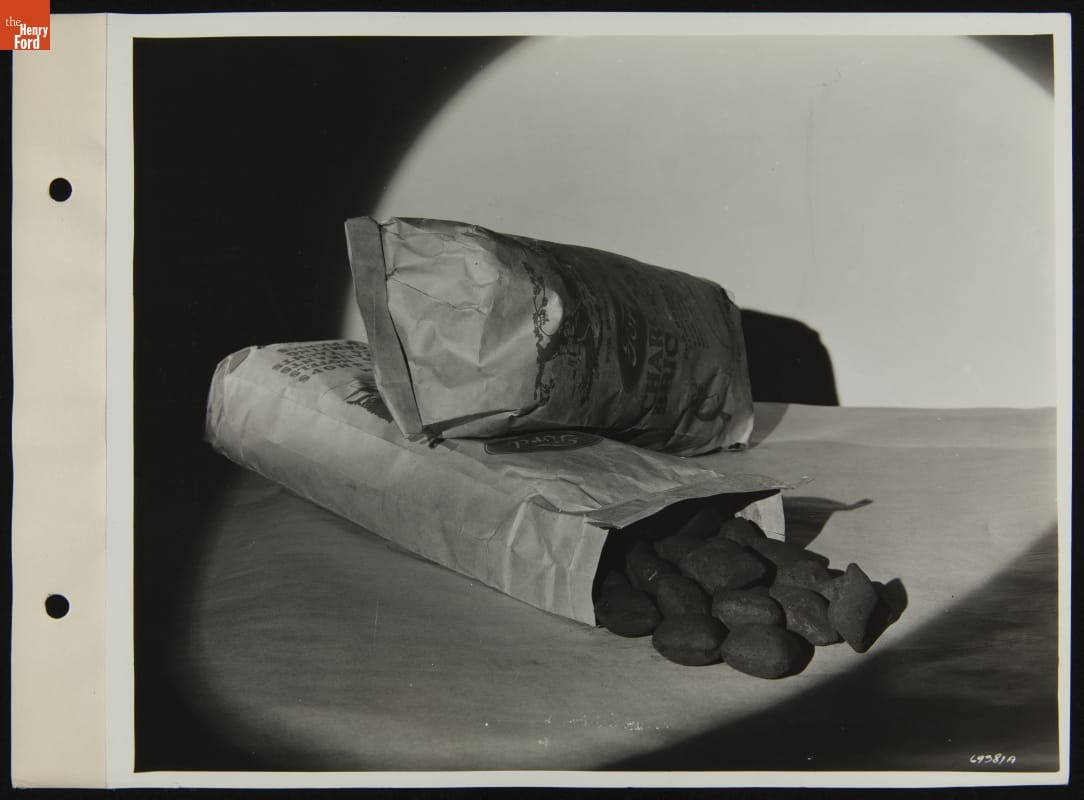
- Ford Charcoal Briquets, 1937 - Ford Motor Company sawmills created heaps of wood wastes. Some was used to produce steam for factory operations. The rest was carbonized and compressed into charcoal. Workers mixed charred hardwood chips with starch, forming nearly 100 tons of charcoal briquettes each day. Dealers sold branded bags of the popular briquettes in Ford dealerships across the country.
- November 18, 1937
- Collections - Artifact
Ford Charcoal Briquets, 1937
Ford Motor Company sawmills created heaps of wood wastes. Some was used to produce steam for factory operations. The rest was carbonized and compressed into charcoal. Workers mixed charred hardwood chips with starch, forming nearly 100 tons of charcoal briquettes each day. Dealers sold branded bags of the popular briquettes in Ford dealerships across the country.
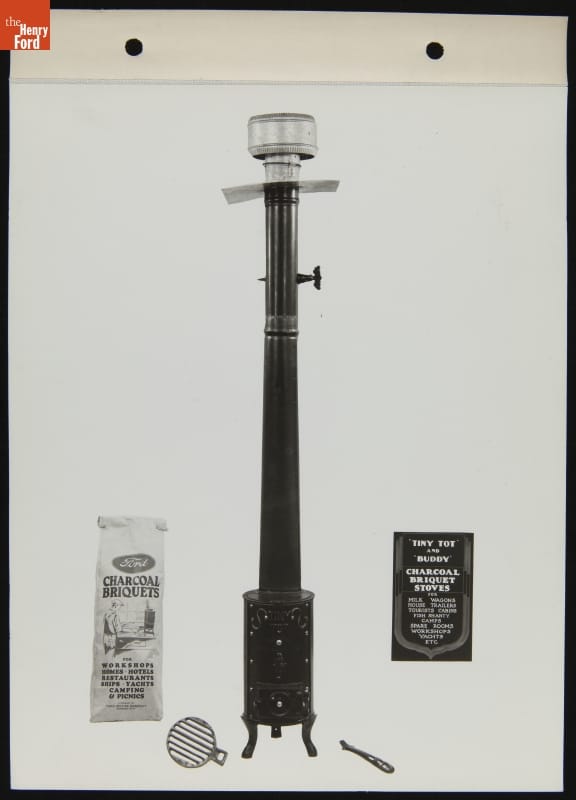
- "Tiny Tot and Buddy" Charcoal Briquet Stove and Ford Charcoal Briquets, 1936 - Ford Motor Company's charcoal briquettes were good for more than just backyard cookouts. The company noted that charcoal's steady, even warmth was ideal for small heat stoves like the one shown in this photograph. Because charcoal briquettes produced no sparks, they were safe to use in confined spaces like milk wagons, travel trailers and yachts.
- February 20, 1936
- Collections - Artifact
"Tiny Tot and Buddy" Charcoal Briquet Stove and Ford Charcoal Briquets, 1936
Ford Motor Company's charcoal briquettes were good for more than just backyard cookouts. The company noted that charcoal's steady, even warmth was ideal for small heat stoves like the one shown in this photograph. Because charcoal briquettes produced no sparks, they were safe to use in confined spaces like milk wagons, travel trailers and yachts.
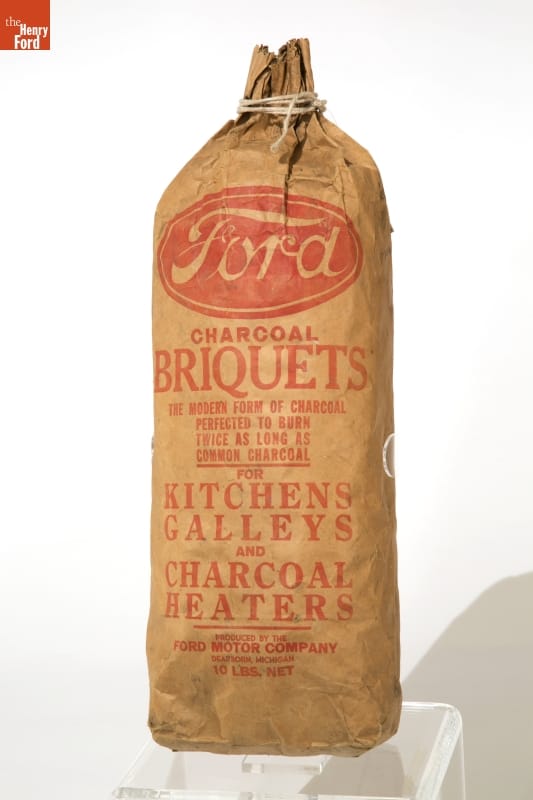
- Ford Charcoal Briquets Bag, 1929-1947 - Ford Motor Company sawmills created heaps of wood wastes. Some was used to produce steam for factory operations. The rest was carbonized and compressed into charcoal. Workers mixed charred hardwood chips with starch, forming nearly 100 tons of charcoal briquettes each day. Dealers sold branded bags of the popular briquettes in Ford dealerships across the country.
- 1929-1947
- Collections - Artifact
Ford Charcoal Briquets Bag, 1929-1947
Ford Motor Company sawmills created heaps of wood wastes. Some was used to produce steam for factory operations. The rest was carbonized and compressed into charcoal. Workers mixed charred hardwood chips with starch, forming nearly 100 tons of charcoal briquettes each day. Dealers sold branded bags of the popular briquettes in Ford dealerships across the country.
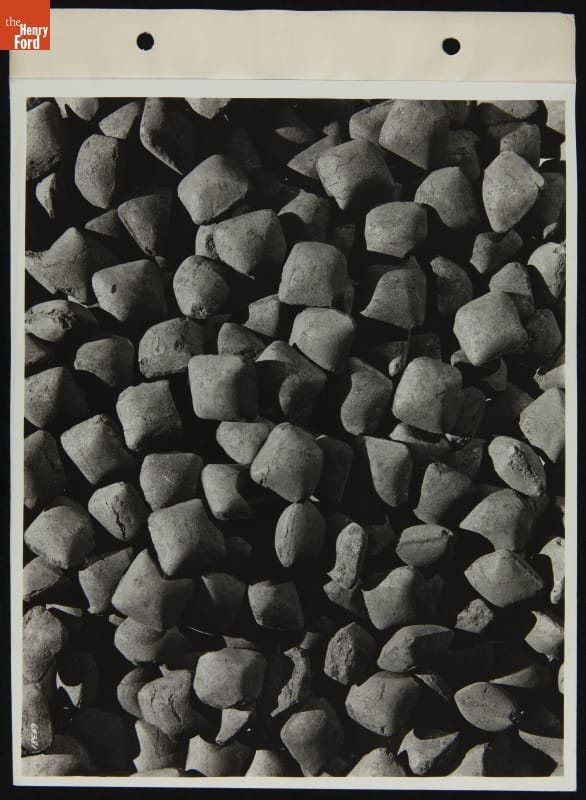
- Ford Charcoal Briquets, 1937 - Ford Motor Company sawmills created heaps of wood wastes. Some was used to produce steam for factory operations. The rest was carbonized and compressed into charcoal. Workers mixed charred hardwood chips with starch, forming nearly 100 tons of charcoal briquettes each day. Dealers sold branded bags of the popular briquettes in Ford dealerships across the country.
- November 18, 1937
- Collections - Artifact
Ford Charcoal Briquets, 1937
Ford Motor Company sawmills created heaps of wood wastes. Some was used to produce steam for factory operations. The rest was carbonized and compressed into charcoal. Workers mixed charred hardwood chips with starch, forming nearly 100 tons of charcoal briquettes each day. Dealers sold branded bags of the popular briquettes in Ford dealerships across the country.
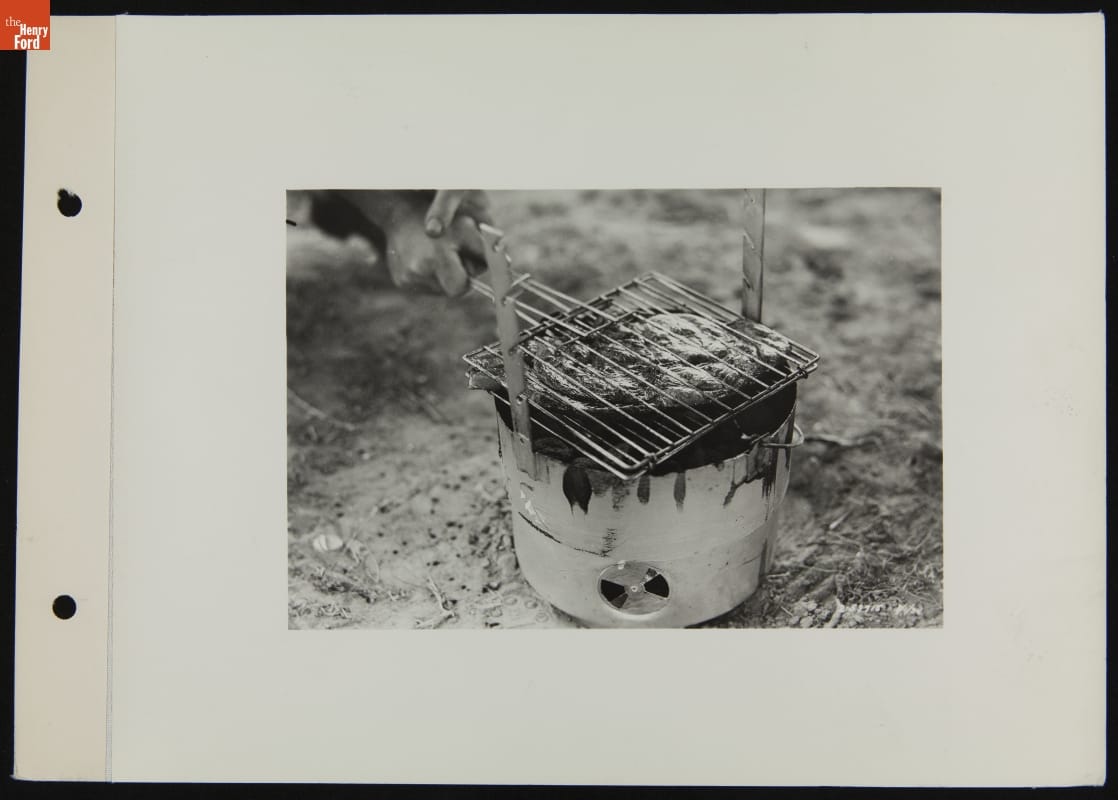
- Grilling Meat using Ford Charcoal Briquets, 1934 - Ford Motor Company sawmills created heaps of wood wastes. Some was used to produce steam for factory operations. The rest was carbonized and compressed into charcoal. Workers mixed charred hardwood chips with starch, forming nearly 100 tons of charcoal briquettes each day. Dealers sold branded bags of the popular briquettes in Ford dealerships across the country.
- July 01, 1934
- Collections - Artifact
Grilling Meat using Ford Charcoal Briquets, 1934
Ford Motor Company sawmills created heaps of wood wastes. Some was used to produce steam for factory operations. The rest was carbonized and compressed into charcoal. Workers mixed charred hardwood chips with starch, forming nearly 100 tons of charcoal briquettes each day. Dealers sold branded bags of the popular briquettes in Ford dealerships across the country.
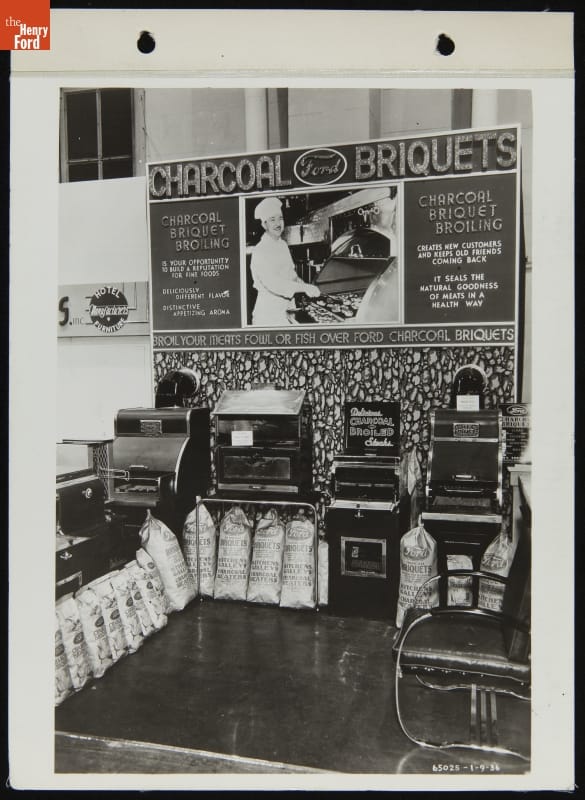
- Ford Charcoal Briquets Display Booth, 1936 - Ford Motor Company targeted commercial restaurateurs, not backyard barbeque chefs, with this booth promoting the company's charcoal briquettes. The briquettes were made from wood scraps produced by Ford's sawmill in Kingsford, Michigan. The side business in charcoal was far removed from the automotive industry, but it was perfectly in keeping with Henry Ford's desire to reduce and reuse waste.
- January 19, 1936
- Collections - Artifact
Ford Charcoal Briquets Display Booth, 1936
Ford Motor Company targeted commercial restaurateurs, not backyard barbeque chefs, with this booth promoting the company's charcoal briquettes. The briquettes were made from wood scraps produced by Ford's sawmill in Kingsford, Michigan. The side business in charcoal was far removed from the automotive industry, but it was perfectly in keeping with Henry Ford's desire to reduce and reuse waste.
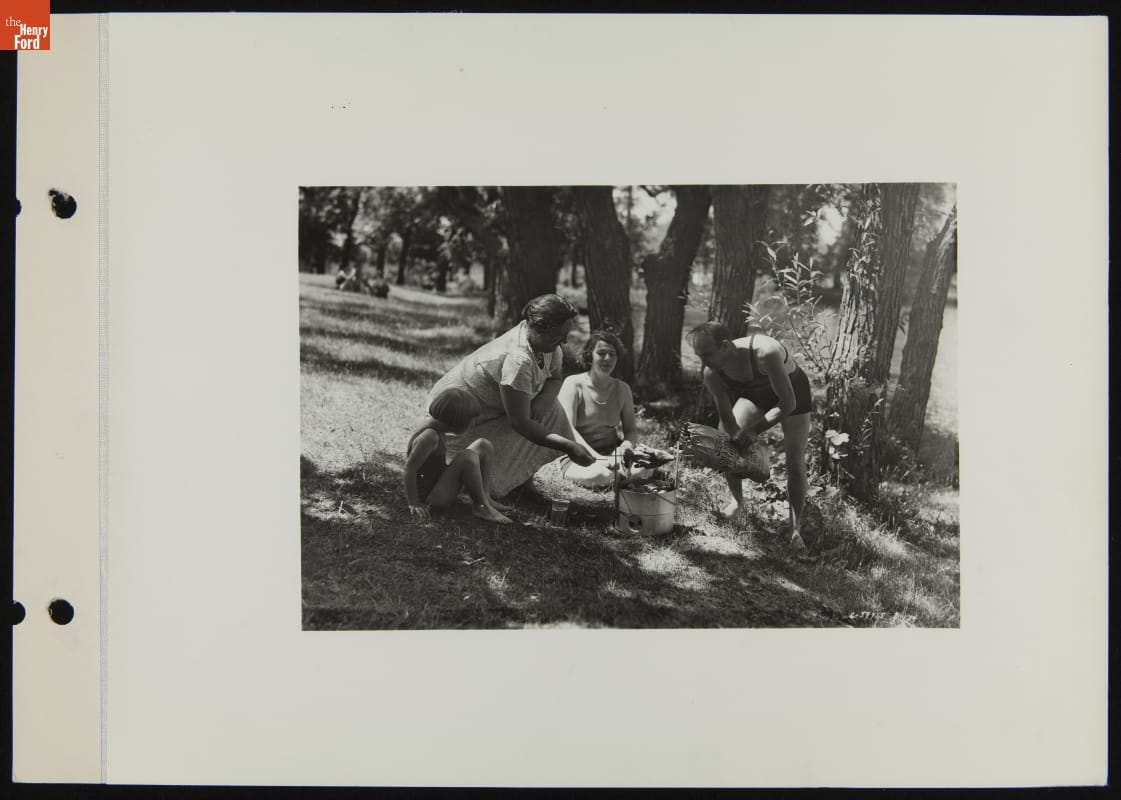
- Roasting Chicken over Ford Charcoal Briquets, 1934 - Cars and cookouts were a natural fit in the 1920s and 1930s. As roads improved, Americans were eager to go exploring, whether on short day trips or longer journeys. A roadside picnic saved money for budget-conscious travelers, or it provided a destination in itself for a family on a Sunday drive. Ford used these themes to market its charcoal briquettes.
- July 01, 1934
- Collections - Artifact
Roasting Chicken over Ford Charcoal Briquets, 1934
Cars and cookouts were a natural fit in the 1920s and 1930s. As roads improved, Americans were eager to go exploring, whether on short day trips or longer journeys. A roadside picnic saved money for budget-conscious travelers, or it provided a destination in itself for a family on a Sunday drive. Ford used these themes to market its charcoal briquettes.
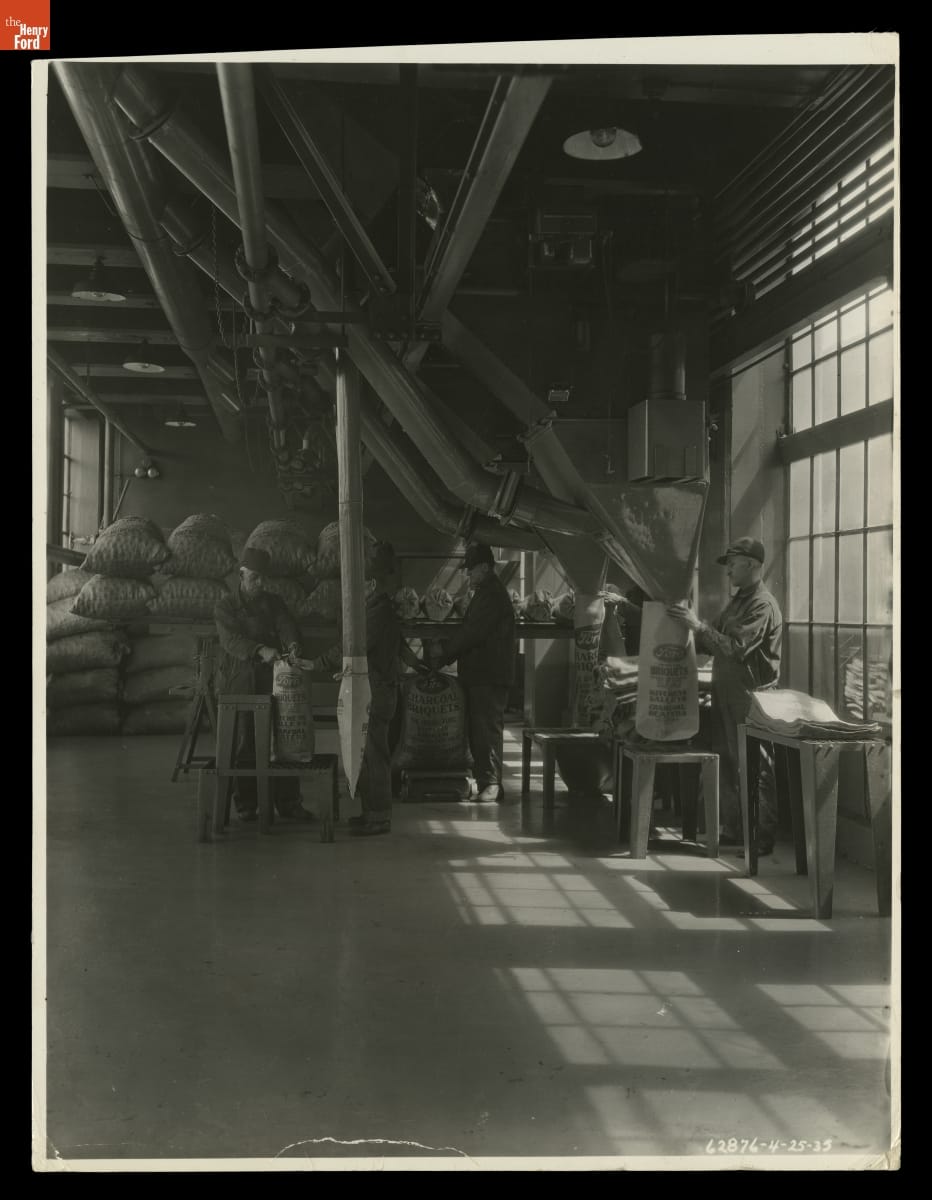
- Ford Charcoal Briquets - Ford Motor Company sawmills created heaps of wood wastes. Some was used to produce steam for factory operations. The rest was carbonized and compressed into charcoal. Workers mixed charred hardwood chips with starch, forming nearly 100 tons of charcoal briquettes each day. Dealers sold branded barbecue accessories and packages of the popular briquettes in Ford dealerships across the country.
- May 04, 2017
- Collections - Set
Ford Charcoal Briquets
Ford Motor Company sawmills created heaps of wood wastes. Some was used to produce steam for factory operations. The rest was carbonized and compressed into charcoal. Workers mixed charred hardwood chips with starch, forming nearly 100 tons of charcoal briquettes each day. Dealers sold branded barbecue accessories and packages of the popular briquettes in Ford dealerships across the country.
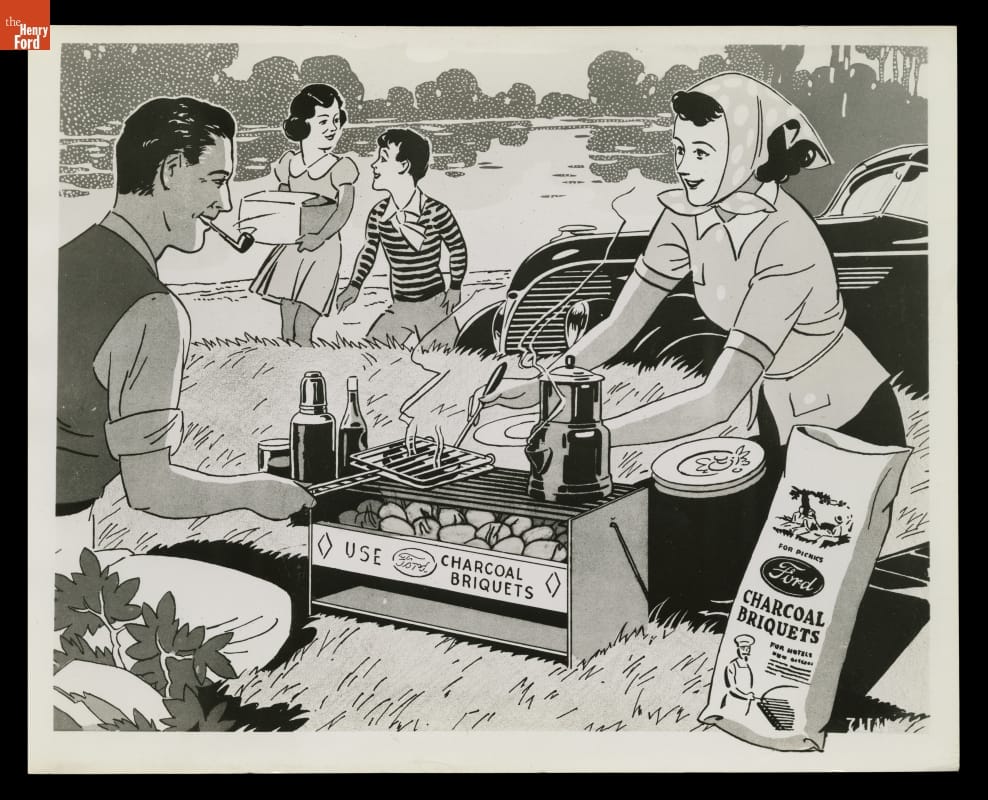
- Advertising Poster, "Use Ford Charcoal Briquets," 1938 - Ford Motor Company sawmills created heaps of wood wastes. Some was used to produce steam for factory operations. The rest was carbonized and compressed into charcoal. Workers mixed charred hardwood chips with starch, forming nearly 100 tons of charcoal briquettes each day. Dealers sold branded bags of the popular briquettes in Ford dealerships across the country.
- November 28, 1938
- Collections - Artifact
Advertising Poster, "Use Ford Charcoal Briquets," 1938
Ford Motor Company sawmills created heaps of wood wastes. Some was used to produce steam for factory operations. The rest was carbonized and compressed into charcoal. Workers mixed charred hardwood chips with starch, forming nearly 100 tons of charcoal briquettes each day. Dealers sold branded bags of the popular briquettes in Ford dealerships across the country.
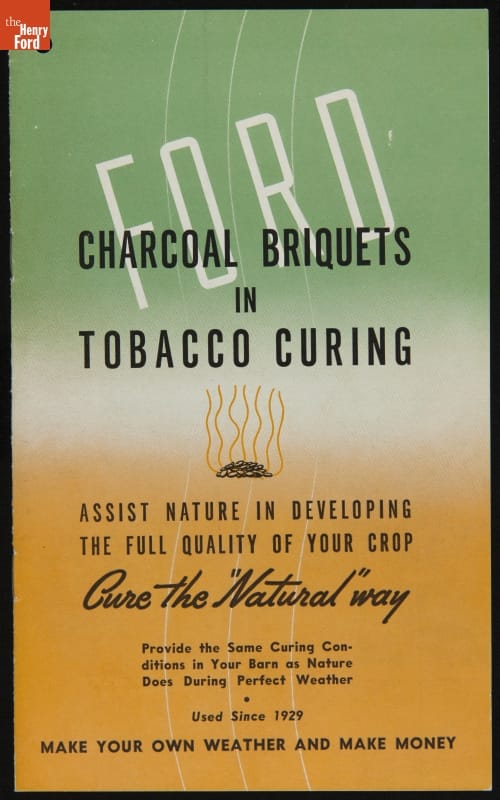
- "Ford Charcoal Briquets in Tobacco Curing," 1939 - Ford Motor Company's charcoal briquettes were good for more than just backyard cookouts. This brochure promoted their use to aid in the proper curing of tobacco. The briquettes, according to the text, produced a dry, even heat that removed moisture from tobacco leaves slowly and steadily. With Ford briquettes, farmers could "make their own weather" and ensure a perfect crop.
- 1939
- Collections - Artifact
"Ford Charcoal Briquets in Tobacco Curing," 1939
Ford Motor Company's charcoal briquettes were good for more than just backyard cookouts. This brochure promoted their use to aid in the proper curing of tobacco. The briquettes, according to the text, produced a dry, even heat that removed moisture from tobacco leaves slowly and steadily. With Ford briquettes, farmers could "make their own weather" and ensure a perfect crop.