
Search
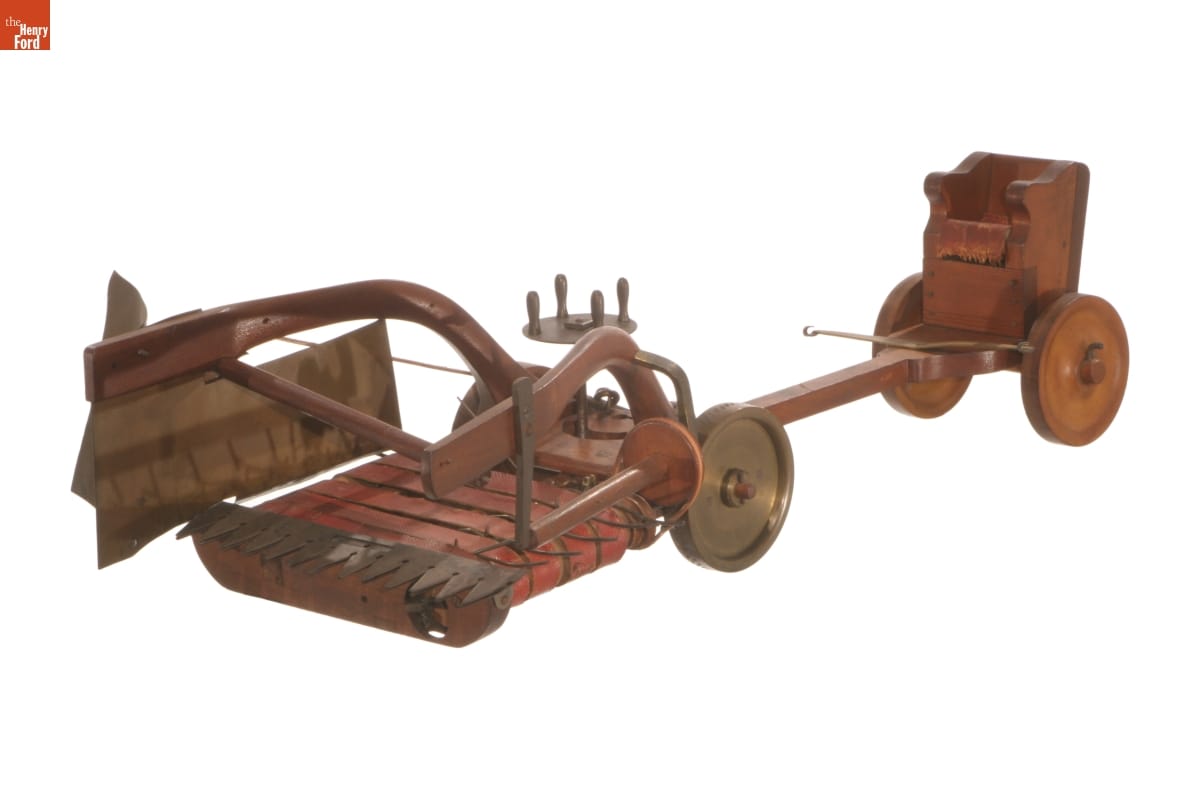
- Model of Combine - It took hundreds of years to perfect machinery that could combine the three major steps of harvesting grain: reaping, or cutting the crop; threshing to loosen the grain from the chaff; and disposing of the straw while retaining the grain. This model, possibly made as part of a patent application, illustrates one attempt to create an improved "combine."
- Collections - Artifact
Model of Combine
It took hundreds of years to perfect machinery that could combine the three major steps of harvesting grain: reaping, or cutting the crop; threshing to loosen the grain from the chaff; and disposing of the straw while retaining the grain. This model, possibly made as part of a patent application, illustrates one attempt to create an improved "combine."
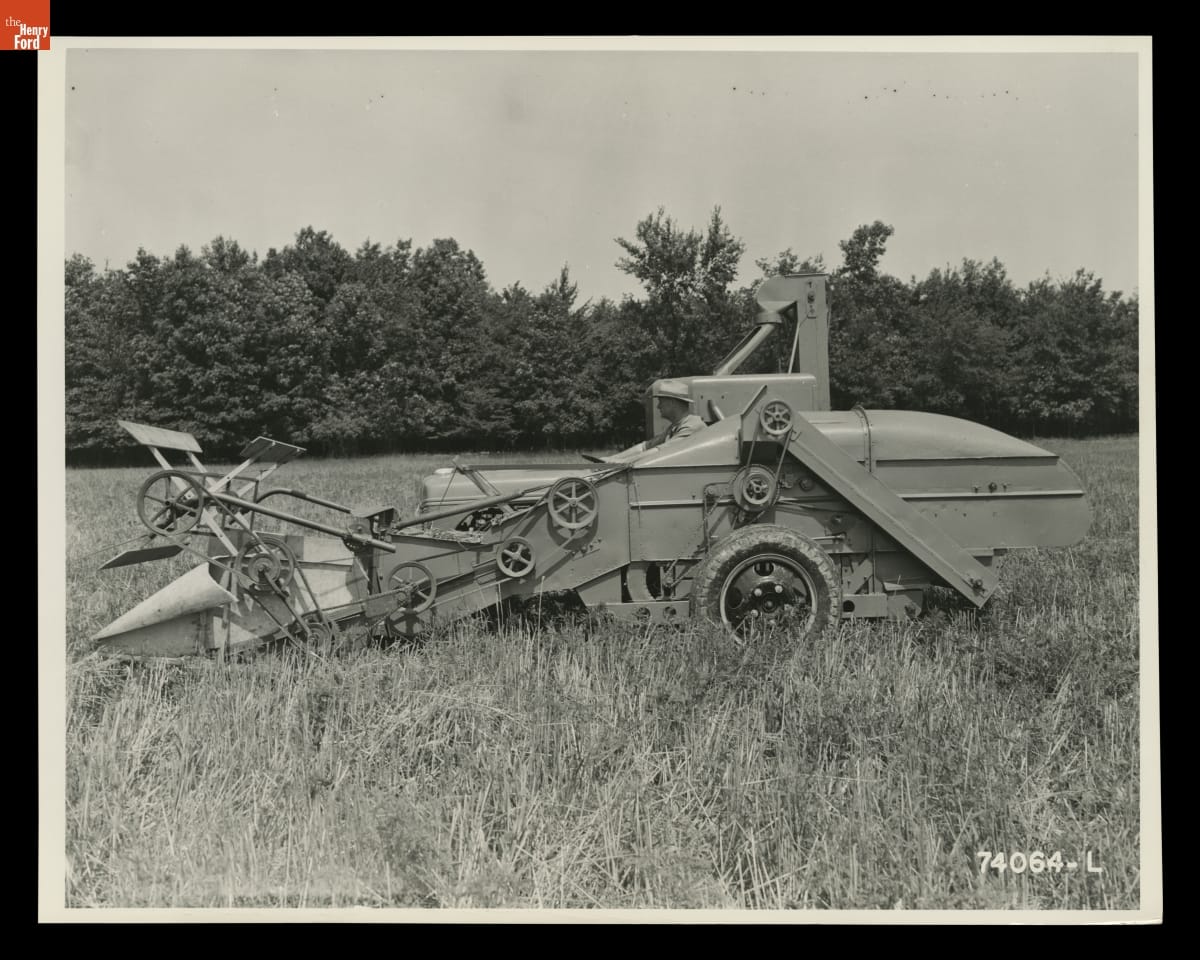
- Ferguson Combine, August 1940 - It took hundreds of years to perfect machinery that could combine the three major steps of harvesting grain: reaping, or cutting the crop; threshing to loosen the grain from the chaff; and disposing of the straw while retaining the grain. Unwieldy "combines" drawn by draft animals or tractors eventually gave way to more compact, self-propelled harvesters, like this one, beginning in the 1930s.
- August 05, 1940
- Collections - Artifact
Ferguson Combine, August 1940
It took hundreds of years to perfect machinery that could combine the three major steps of harvesting grain: reaping, or cutting the crop; threshing to loosen the grain from the chaff; and disposing of the straw while retaining the grain. Unwieldy "combines" drawn by draft animals or tractors eventually gave way to more compact, self-propelled harvesters, like this one, beginning in the 1930s.
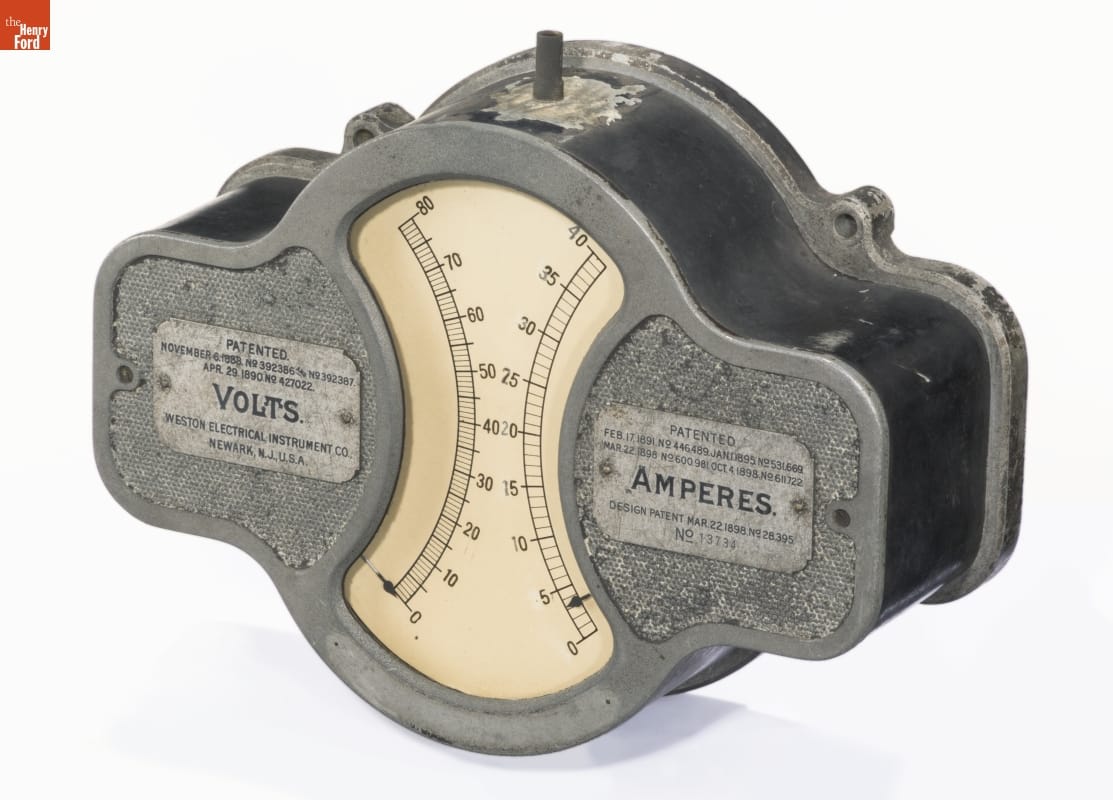
- Weston Combination Voltmeter-Ammeter -
- Collections - Artifact
Weston Combination Voltmeter-Ammeter
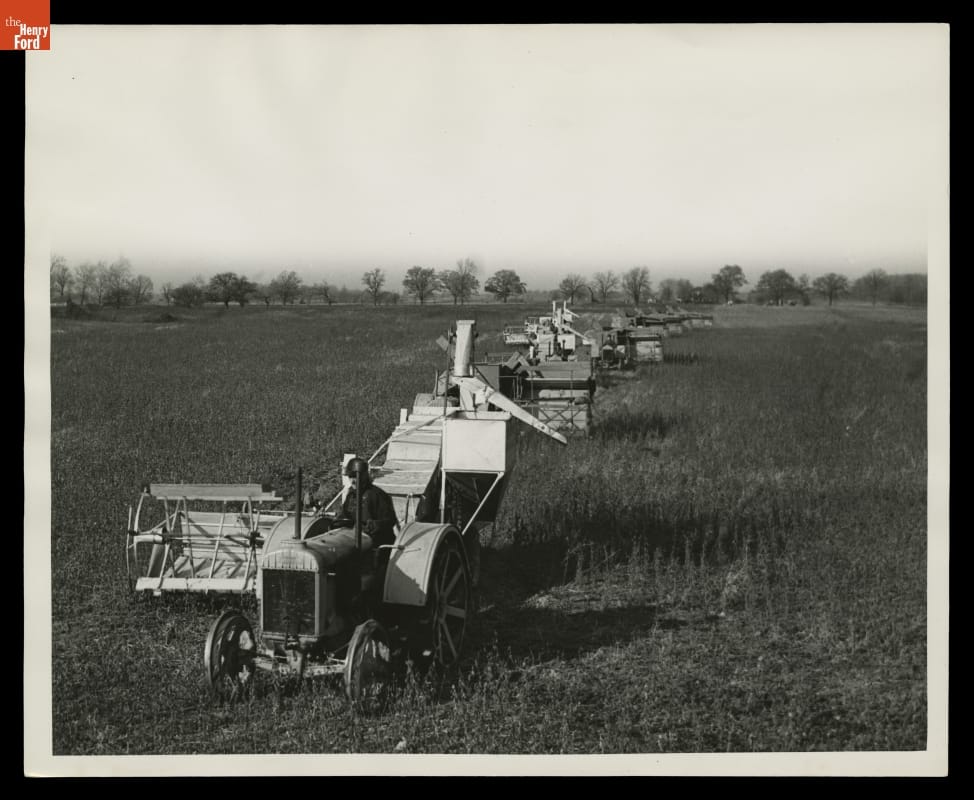
- Combines Harvesting Soybeans on Ford Farm, Macon, Michigan, November 1936 - Henry Ford acquired many thousands of acres of farmland in southeast Michigan, collectively known as the Ford Farms. As Ford's interest in soybeans expanded, much of the Farms' acreage was dedicated to soybeans. This 1936 image shows a team of combines, pulled by Fordson tractors, harvesting soybeans in Macon, Michigan.
- November 12, 1936
- Collections - Artifact
Combines Harvesting Soybeans on Ford Farm, Macon, Michigan, November 1936
Henry Ford acquired many thousands of acres of farmland in southeast Michigan, collectively known as the Ford Farms. As Ford's interest in soybeans expanded, much of the Farms' acreage was dedicated to soybeans. This 1936 image shows a team of combines, pulled by Fordson tractors, harvesting soybeans in Macon, Michigan.
- Westinghouse Combined Thresher-Separator, circa 1905 -
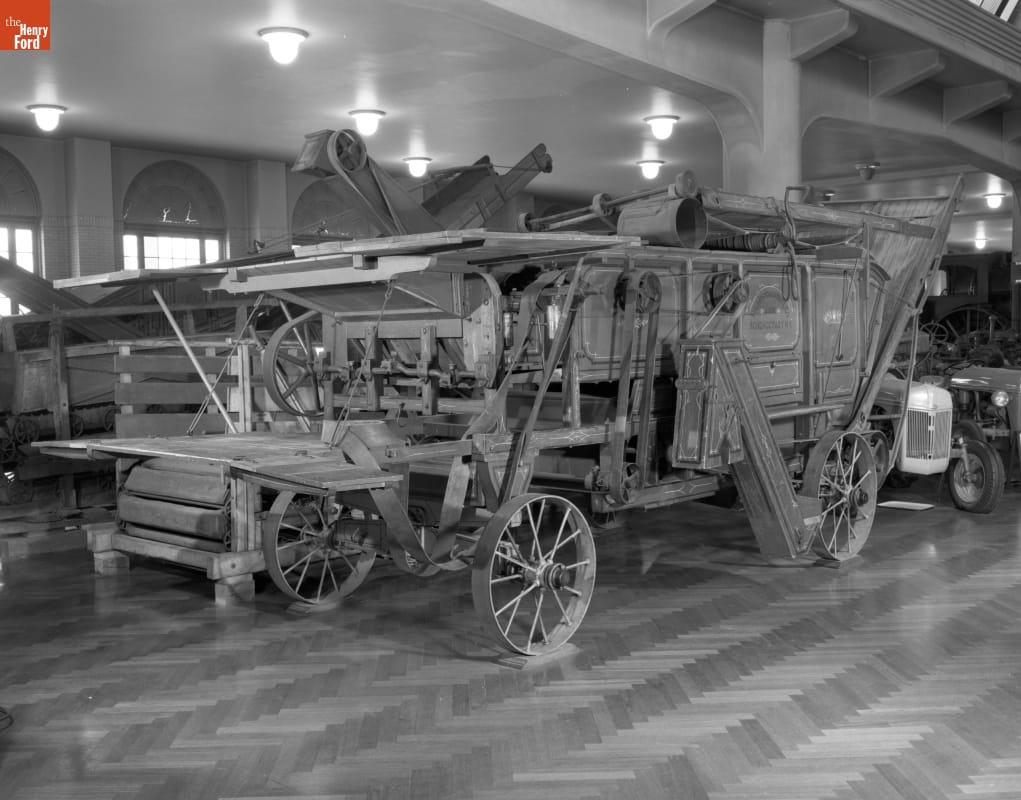
- circa 1905
- Collections - Artifact
Westinghouse Combined Thresher-Separator, circa 1905
- Combination Pleating Machine, 1950-1959 -
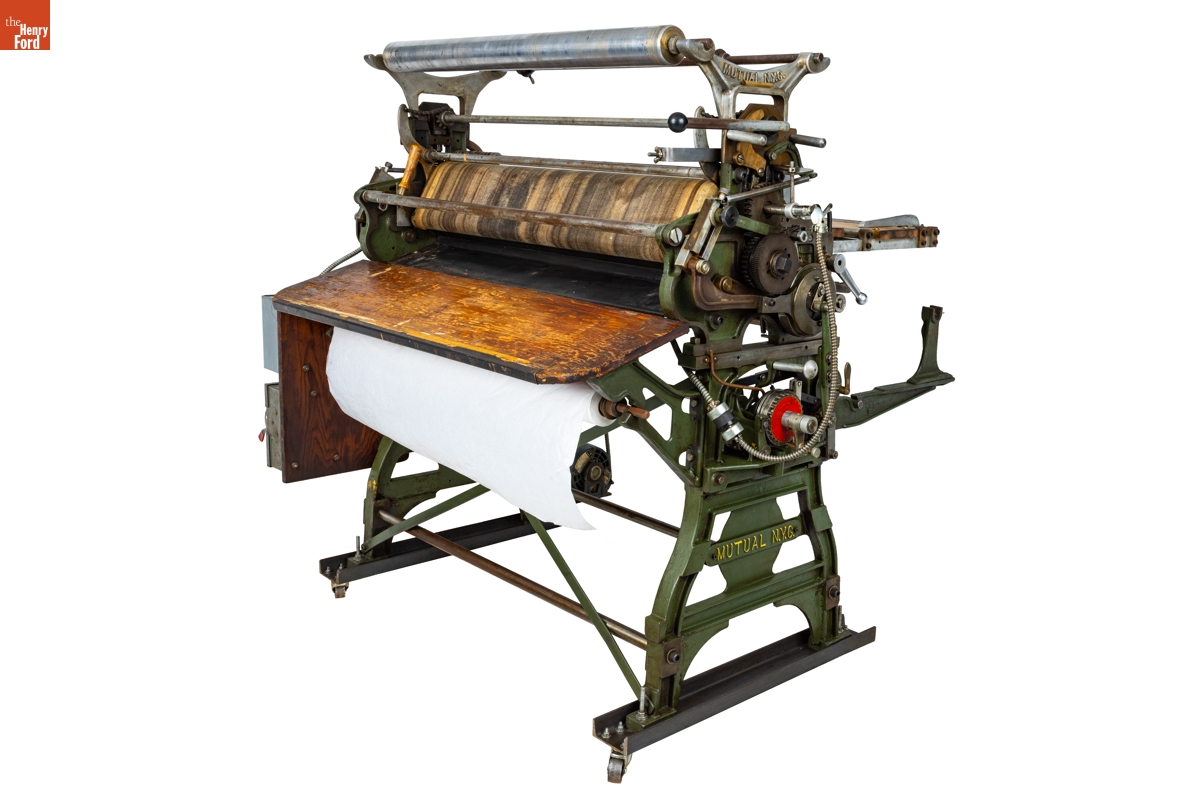
- 1950-1959
- Collections - Artifact
Combination Pleating Machine, 1950-1959
- Portable Combined Thresher-Separator, circa 1870 - Thresher-separators threshed the harvested grain, removing the grain and chaff (waste) from the straw, and then winnowed the chaff from the grain, all in a continuous flow. These implements greatly reduced the time required for harvest, increasing yields, while reducing the labor costs. This machine incorporates several Westinghouse-patented improvements to the separator.
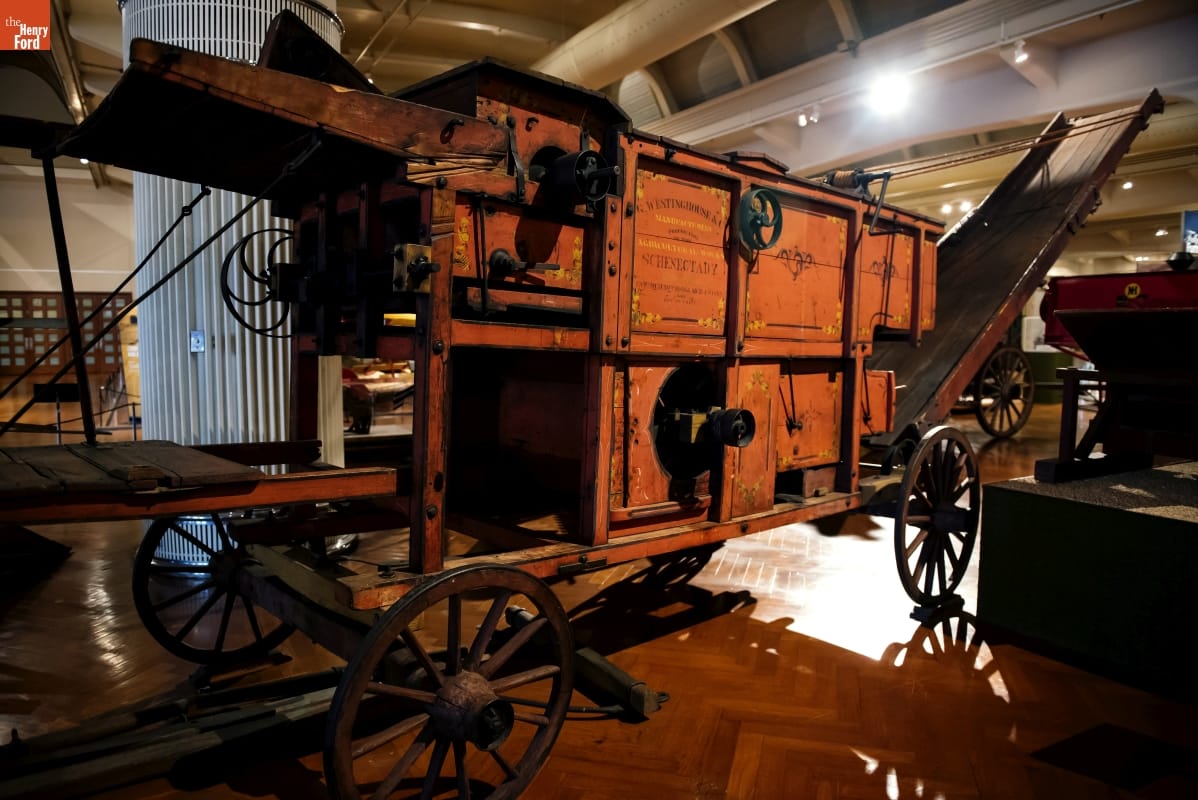
- circa 1870
- Collections - Artifact
Portable Combined Thresher-Separator, circa 1870
Thresher-separators threshed the harvested grain, removing the grain and chaff (waste) from the straw, and then winnowed the chaff from the grain, all in a continuous flow. These implements greatly reduced the time required for harvest, increasing yields, while reducing the labor costs. This machine incorporates several Westinghouse-patented improvements to the separator.
- Stationary Combined Thresher-Separator, circa 1858 -
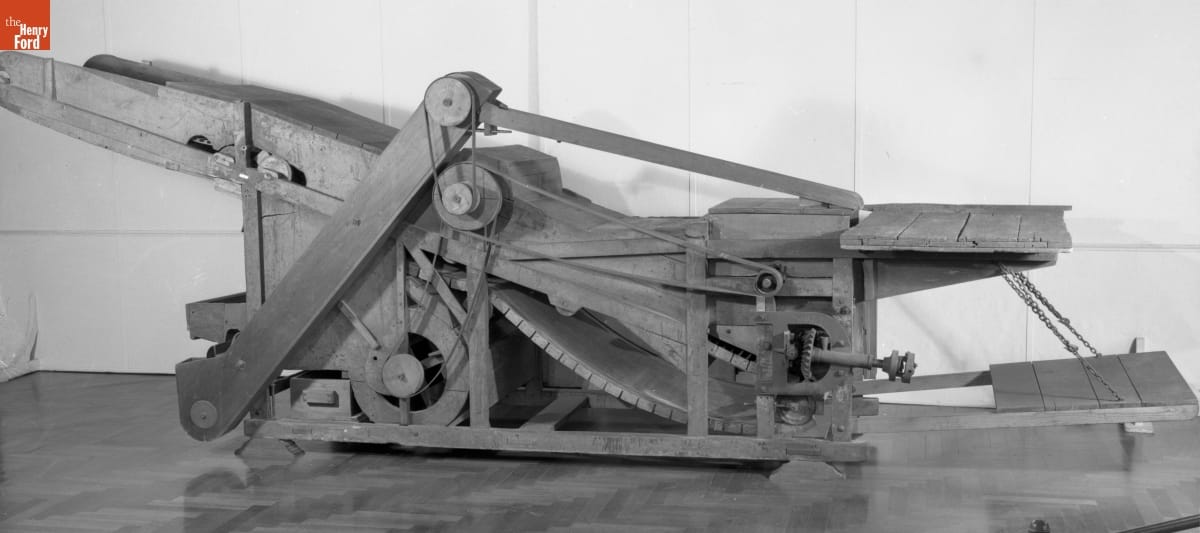
- circa 1858
- Collections - Artifact
Stationary Combined Thresher-Separator, circa 1858
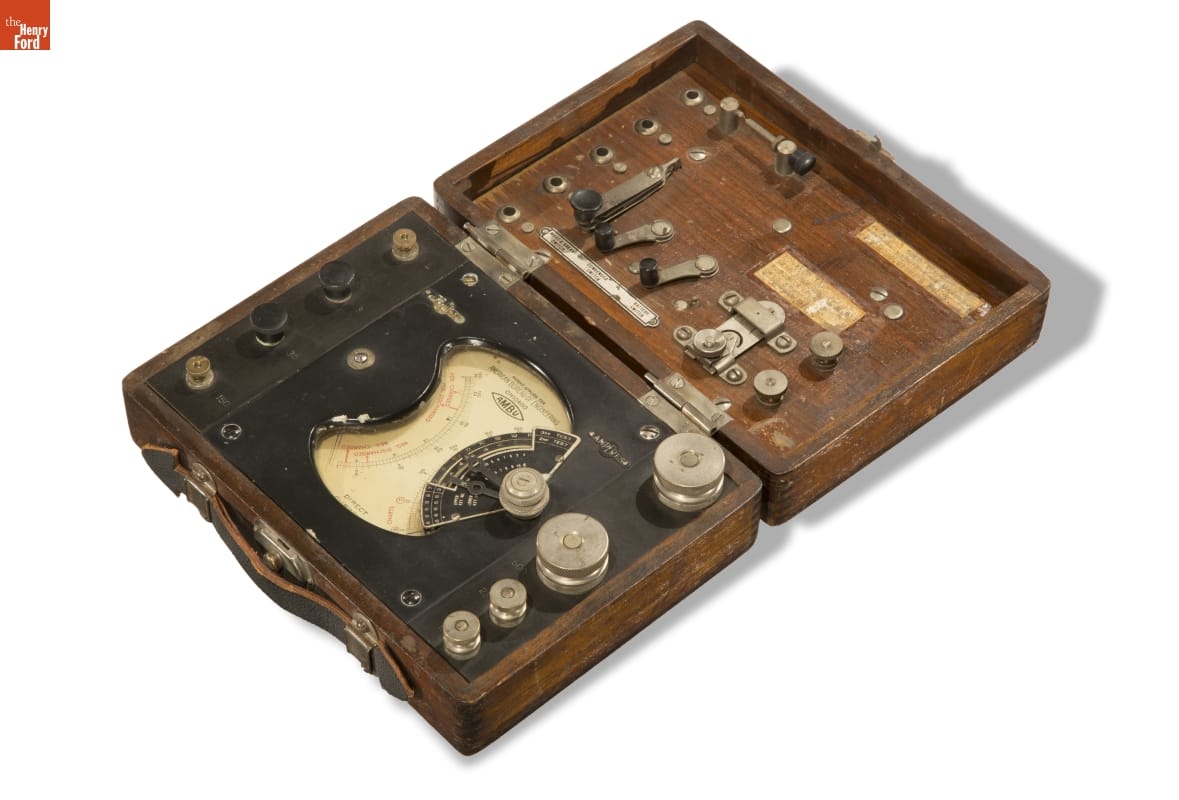
- "Troubleshooter" Combination Ammeter / Voltmeter, circa 1919 - This combined voltmeter and ammeter was used for testing automotive electrical systems, batteries, and ignitions. It was sold alongside an extensive collection of instructional material to educate automotive repairmen in electrical systems.
- circa 1919
- Collections - Artifact
"Troubleshooter" Combination Ammeter / Voltmeter, circa 1919
This combined voltmeter and ammeter was used for testing automotive electrical systems, batteries, and ignitions. It was sold alongside an extensive collection of instructional material to educate automotive repairmen in electrical systems.
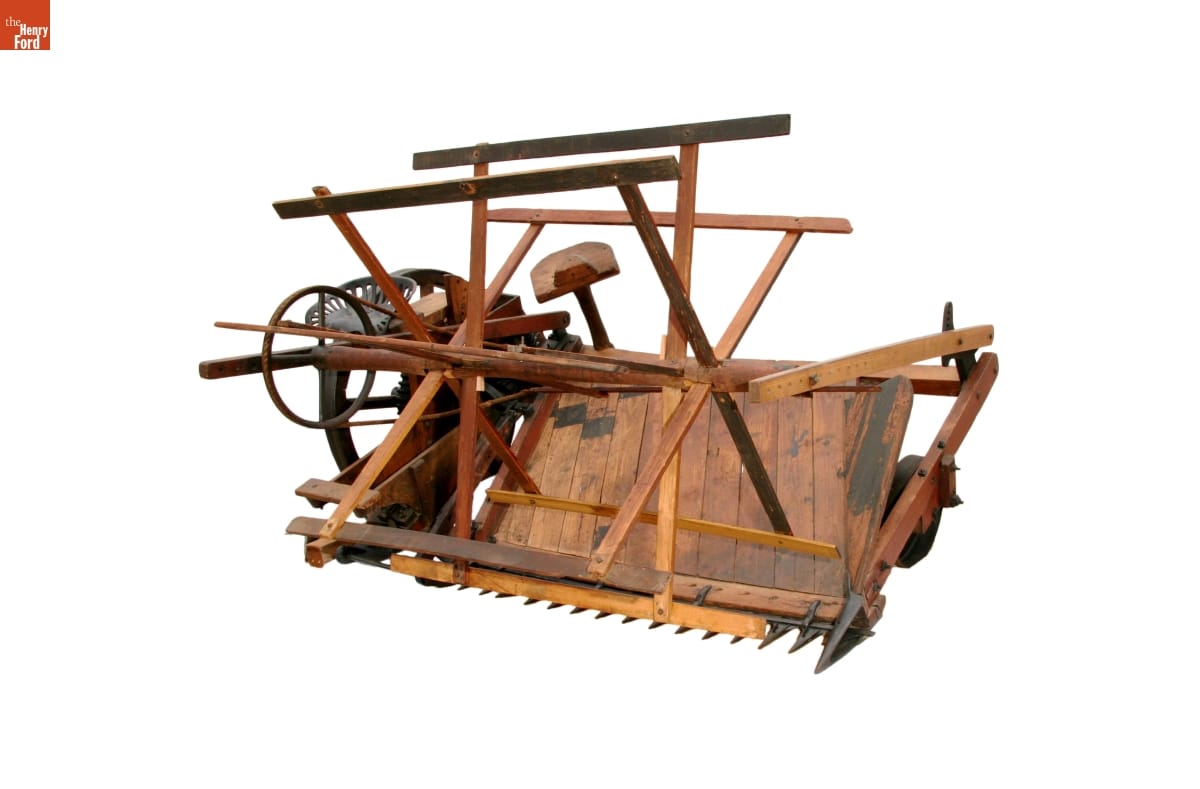
- Manny's Combined Reaper and Mower, circa 1854 - John Manny developed this reaper in 1853 in Rockford, Illinois. It was the first to successfully challenge the Cyrus McCormick Company's dominance in reaper manufacture. Sued for patent infringement by McCormick in 1854, Manny won, paving the way for other manufacturers, and a broad expansion of the industry. Included in Manny's legal team was a young Illinois lawyer, Abraham Lincoln.
- circa 1854
- Collections - Artifact
Manny's Combined Reaper and Mower, circa 1854
John Manny developed this reaper in 1853 in Rockford, Illinois. It was the first to successfully challenge the Cyrus McCormick Company's dominance in reaper manufacture. Sued for patent infringement by McCormick in 1854, Manny won, paving the way for other manufacturers, and a broad expansion of the industry. Included in Manny's legal team was a young Illinois lawyer, Abraham Lincoln.