
Search
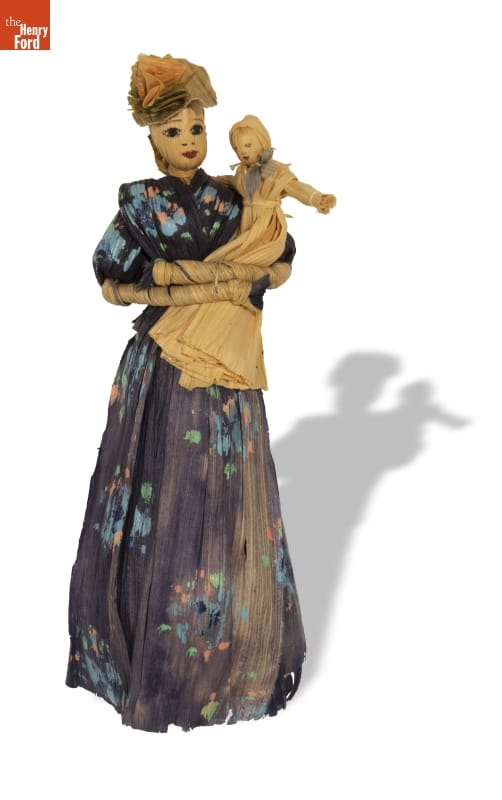
- Cornhusk Doll, 1955 - During the mid-20th century, people began to appreciate traditional crafts made by hand. Cornhusk dolls -- homemade, everyday playthings in rural America into the late 1800s -- enjoyed renewed popularity. This doll wears a fashionable 1890s dress dyed blue with painted flowers. She was made by a schoolgirl, probably during the 1950s.
- 1955
- Collections - Artifact
Cornhusk Doll, 1955
During the mid-20th century, people began to appreciate traditional crafts made by hand. Cornhusk dolls -- homemade, everyday playthings in rural America into the late 1800s -- enjoyed renewed popularity. This doll wears a fashionable 1890s dress dyed blue with painted flowers. She was made by a schoolgirl, probably during the 1950s.
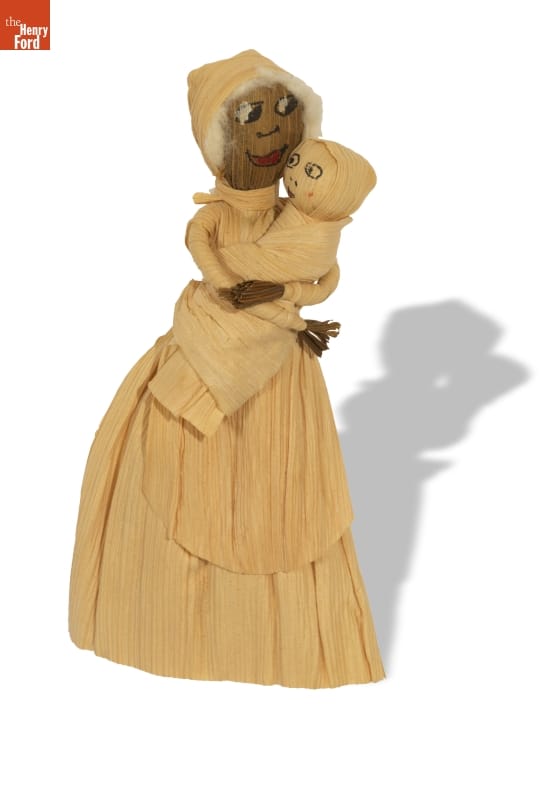
- Cornhusk Doll, 1920-1940 - By 1920, more Americans lived in cities than on farms, and most things were made in factories by machines. People began to appreciate traditional crafts made by hand. During this Craft Revival of the 1920s and 1930s, cornhusk dolls enjoyed renewed popularity. This cornhusk doll has cotton hair.
- 1920-1940
- Collections - Artifact
Cornhusk Doll, 1920-1940
By 1920, more Americans lived in cities than on farms, and most things were made in factories by machines. People began to appreciate traditional crafts made by hand. During this Craft Revival of the 1920s and 1930s, cornhusk dolls enjoyed renewed popularity. This cornhusk doll has cotton hair.
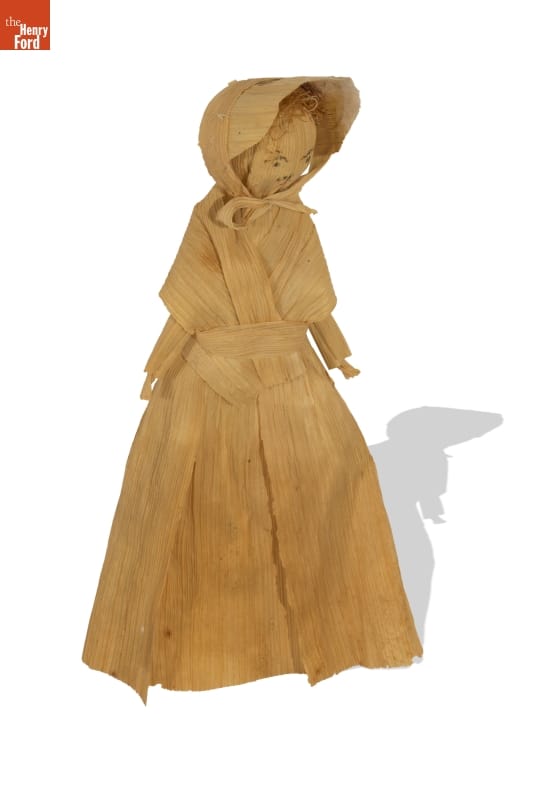
- Cornhusk Doll, 1920-1940 - By 1920, more Americans lived in cities than on farms, and most things were made in factories by machines. People began to appreciate traditional crafts made by hand. During this Craft Revival of the 1920s and 1930s, cornhusk dolls enjoyed renewed popularity. Like dolls played with by 19th century farm children, this doll is made entirely of cornhusks and has corn silk hair.
- 1920-1940
- Collections - Artifact
Cornhusk Doll, 1920-1940
By 1920, more Americans lived in cities than on farms, and most things were made in factories by machines. People began to appreciate traditional crafts made by hand. During this Craft Revival of the 1920s and 1930s, cornhusk dolls enjoyed renewed popularity. Like dolls played with by 19th century farm children, this doll is made entirely of cornhusks and has corn silk hair.
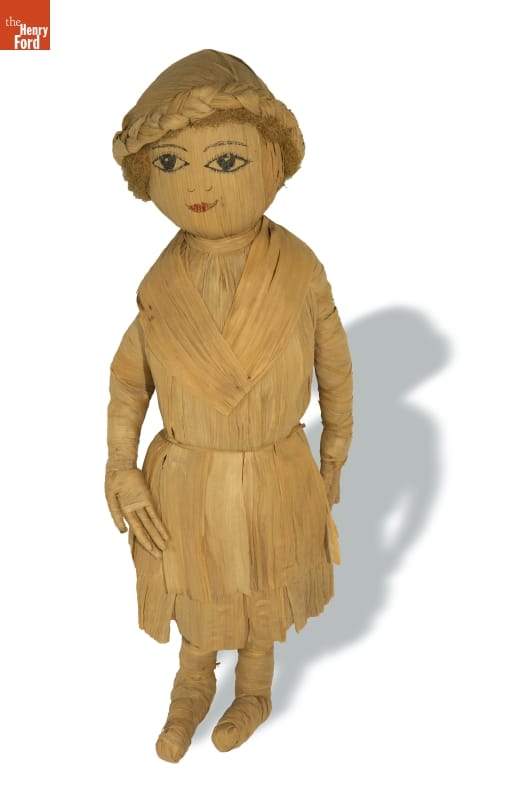
- Cornhusk Doll, 1920-1940 - By 1920, more Americans lived in cities than on farms, and most things were made in factories by machines. People began to appreciate traditional crafts made by hand. During this Craft Revival of the 1920s and 1930s, cornhusk dolls enjoyed renewed popularity. This unusually large cornhusk doll wears a dress and hat that reflect 1920s fashions.
- 1920-1940
- Collections - Artifact
Cornhusk Doll, 1920-1940
By 1920, more Americans lived in cities than on farms, and most things were made in factories by machines. People began to appreciate traditional crafts made by hand. During this Craft Revival of the 1920s and 1930s, cornhusk dolls enjoyed renewed popularity. This unusually large cornhusk doll wears a dress and hat that reflect 1920s fashions.
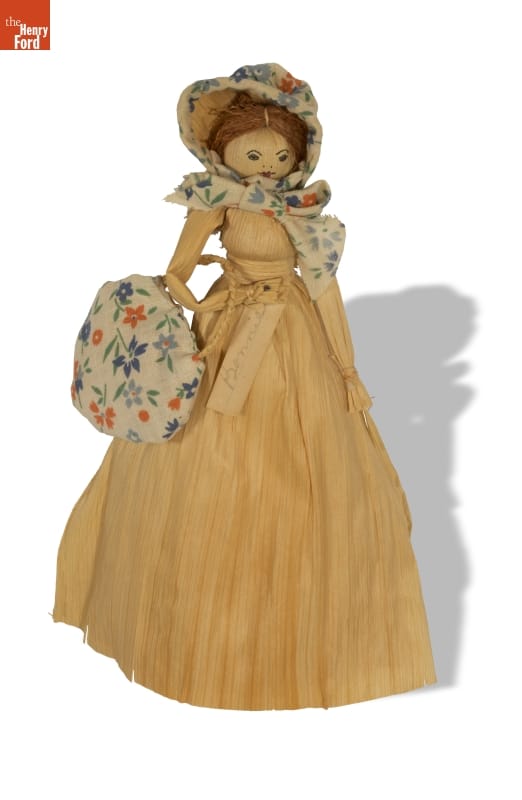
- Cornhusk Doll, 1920-1940 - By 1920, more Americans lived in cities than on farms, and most things were made in factories by machines. People began to appreciate traditional crafts made by hand. During this Craft Revival of the 1920s and 1930s, cornhusk dolls enjoyed renewed popularity. Doll makers began to experiment with different shapes and designs. This doll's bonnet and purse are made of printed fabric.
- 1920-1940
- Collections - Artifact
Cornhusk Doll, 1920-1940
By 1920, more Americans lived in cities than on farms, and most things were made in factories by machines. People began to appreciate traditional crafts made by hand. During this Craft Revival of the 1920s and 1930s, cornhusk dolls enjoyed renewed popularity. Doll makers began to experiment with different shapes and designs. This doll's bonnet and purse are made of printed fabric.
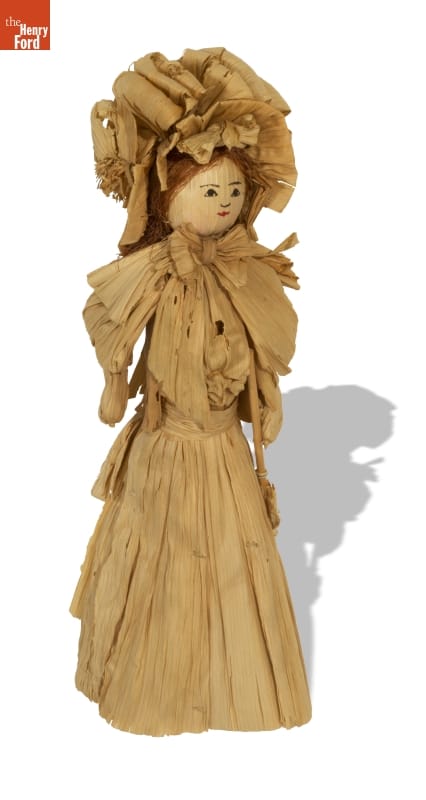
- Cornhusk Doll, 1890-1900 - Cornhusk dolls were popular as everyday playthings for children in rural America into the late 1800s. This doll is a little different. Dressed in the fashions of the 1890s, it may have been made by a milliner (a woman who created women's hats) as a giveaway for customers.
- 1890-1900
- Collections - Artifact
Cornhusk Doll, 1890-1900
Cornhusk dolls were popular as everyday playthings for children in rural America into the late 1800s. This doll is a little different. Dressed in the fashions of the 1890s, it may have been made by a milliner (a woman who created women's hats) as a giveaway for customers.
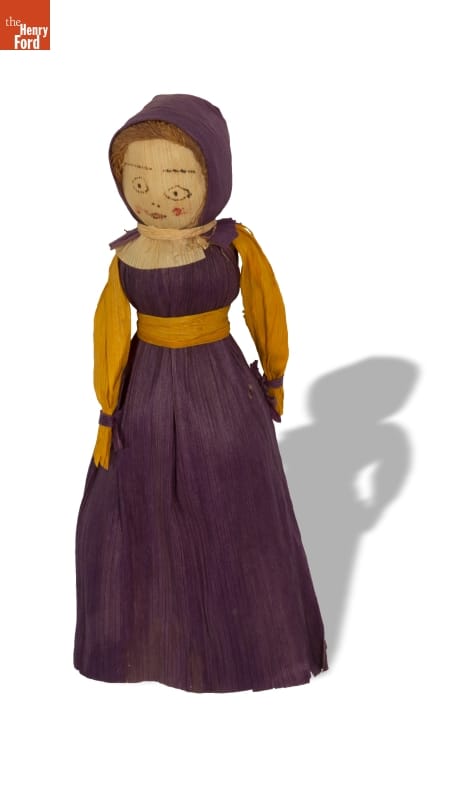
- Cornhusk Doll, 1920-1940 - By 1920, more Americans lived in cities than on farms, and most things were made in factories by machines. People began to appreciate traditional crafts made by hand. During this Craft Revival of the 1920s and 1930s, cornhusk dolls became popular again. Doll makers began to experiment with different shapes and designs. This doll's colorful clothing is made from dyed cornhusks.
- 1920-1940
- Collections - Artifact
Cornhusk Doll, 1920-1940
By 1920, more Americans lived in cities than on farms, and most things were made in factories by machines. People began to appreciate traditional crafts made by hand. During this Craft Revival of the 1920s and 1930s, cornhusk dolls became popular again. Doll makers began to experiment with different shapes and designs. This doll's colorful clothing is made from dyed cornhusks.
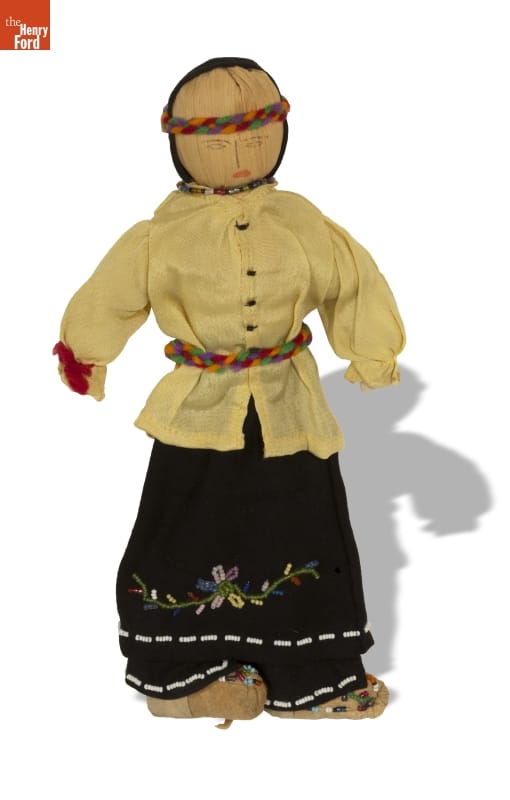
- Cornhusk Doll, 1920-1950 - Native Americans were the first to create cornhusk dolls. Most tribes used the dolls as toys for children. Some also used cornhusk dolls in religious ceremonies. During the Craft Revival beginning in the early 1900s, cornhusk dolls became popular again. Native Americans may have made this doll to sell to tourists. Her clothing and shoes are trimmed with beads.
- 1920-1950
- Collections - Artifact
Cornhusk Doll, 1920-1950
Native Americans were the first to create cornhusk dolls. Most tribes used the dolls as toys for children. Some also used cornhusk dolls in religious ceremonies. During the Craft Revival beginning in the early 1900s, cornhusk dolls became popular again. Native Americans may have made this doll to sell to tourists. Her clothing and shoes are trimmed with beads.
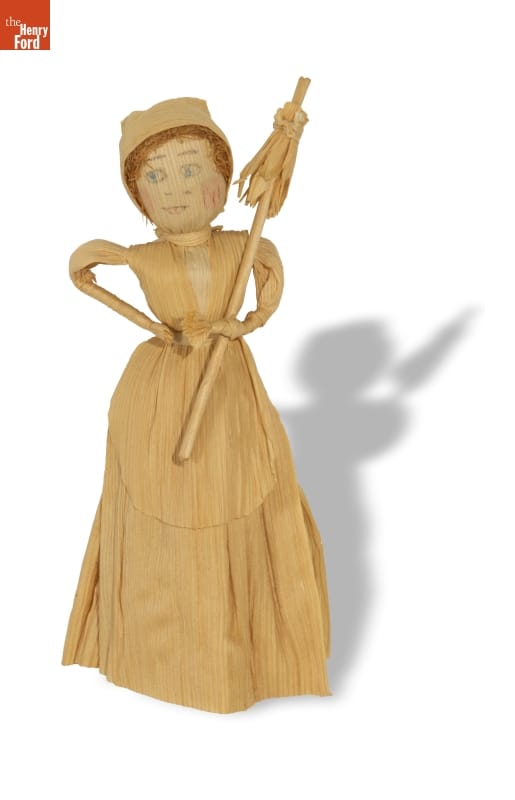
- Cornhusk Doll, 1920-1940 - By 1920, more Americans lived in cities than on farms, and most things were made in factories by machines. People began to appreciate traditional crafts made by hand. During this Craft Revival of the 1920s and 1930s, cornhusk dolls enjoyed renewed popularity. This doll has corn silk hair and holds a cornhusk parasol.
- 1920-1940
- Collections - Artifact
Cornhusk Doll, 1920-1940
By 1920, more Americans lived in cities than on farms, and most things were made in factories by machines. People began to appreciate traditional crafts made by hand. During this Craft Revival of the 1920s and 1930s, cornhusk dolls enjoyed renewed popularity. This doll has corn silk hair and holds a cornhusk parasol.
- Just Added to Our Digital Collections: Cornhusk Dolls - Early American settlers depended on corn as a sustaining food crop, but also tried to utilize every part of the plant.

- April 29, 2014
- Collections - article
Just Added to Our Digital Collections: Cornhusk Dolls
Early American settlers depended on corn as a sustaining food crop, but also tried to utilize every part of the plant.