
Search
- Detective Camera, circa 1889 -
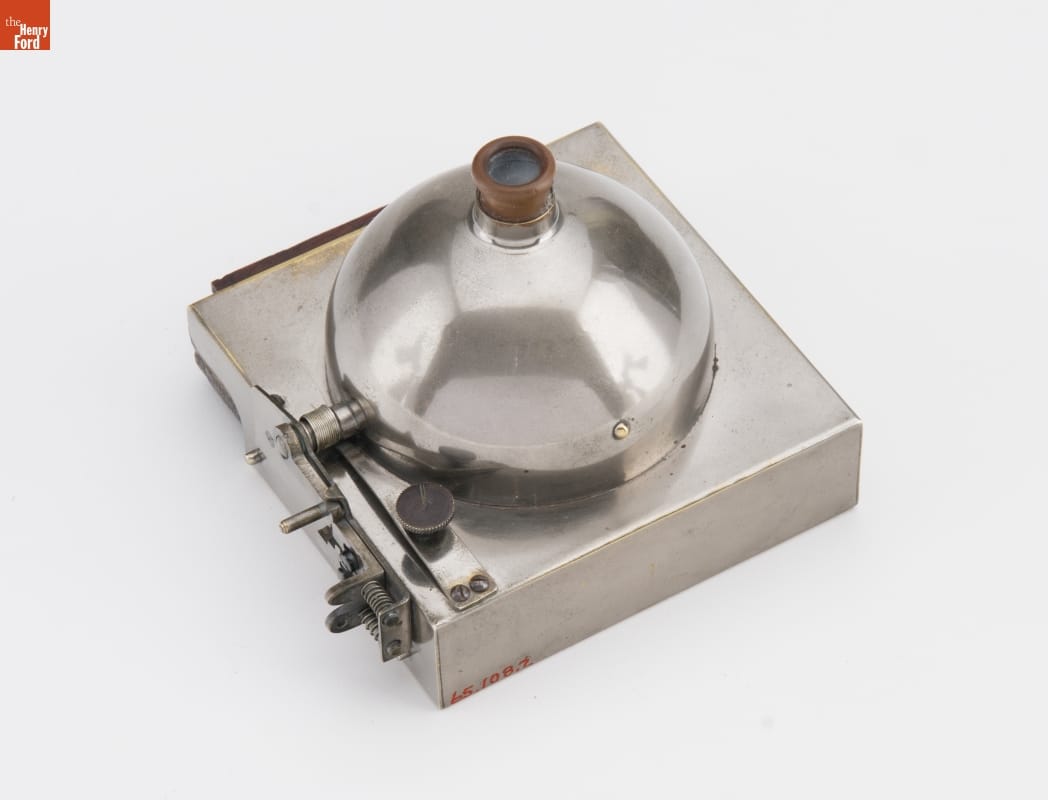
- circa 1889
- Collections - Artifact
Detective Camera, circa 1889
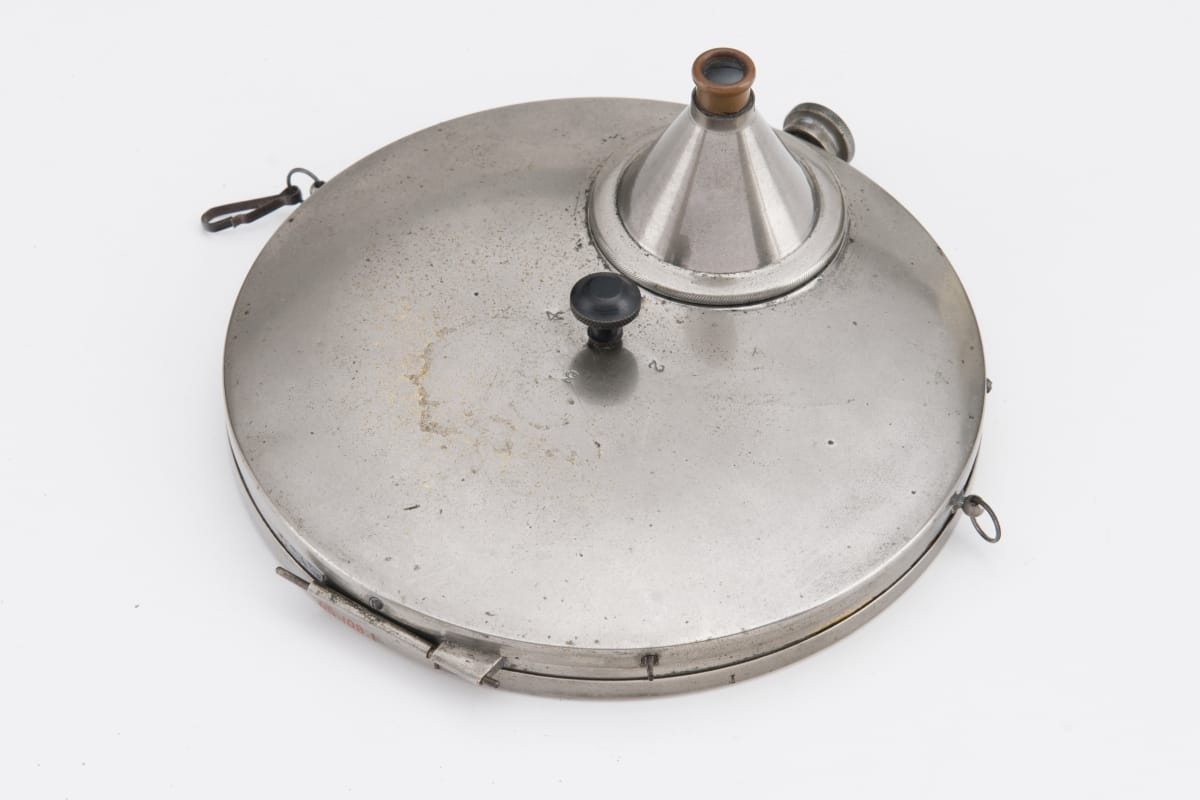
- Detective Camera, 1886-1890 - In 1885, Robert D. Gray created one of the earliest commercial spy cameras. It was designed for concealment: worn under a shirt, with the small lens protruding from a button hole. The spring shutter on the flat disc could be triggered with little suspicion. After each image was taken, the glass plate inside the disc rotated, producing small round photographs.
- 1886-1890
- Collections - Artifact
Detective Camera, 1886-1890
In 1885, Robert D. Gray created one of the earliest commercial spy cameras. It was designed for concealment: worn under a shirt, with the small lens protruding from a button hole. The spring shutter on the flat disc could be triggered with little suspicion. After each image was taken, the glass plate inside the disc rotated, producing small round photographs.
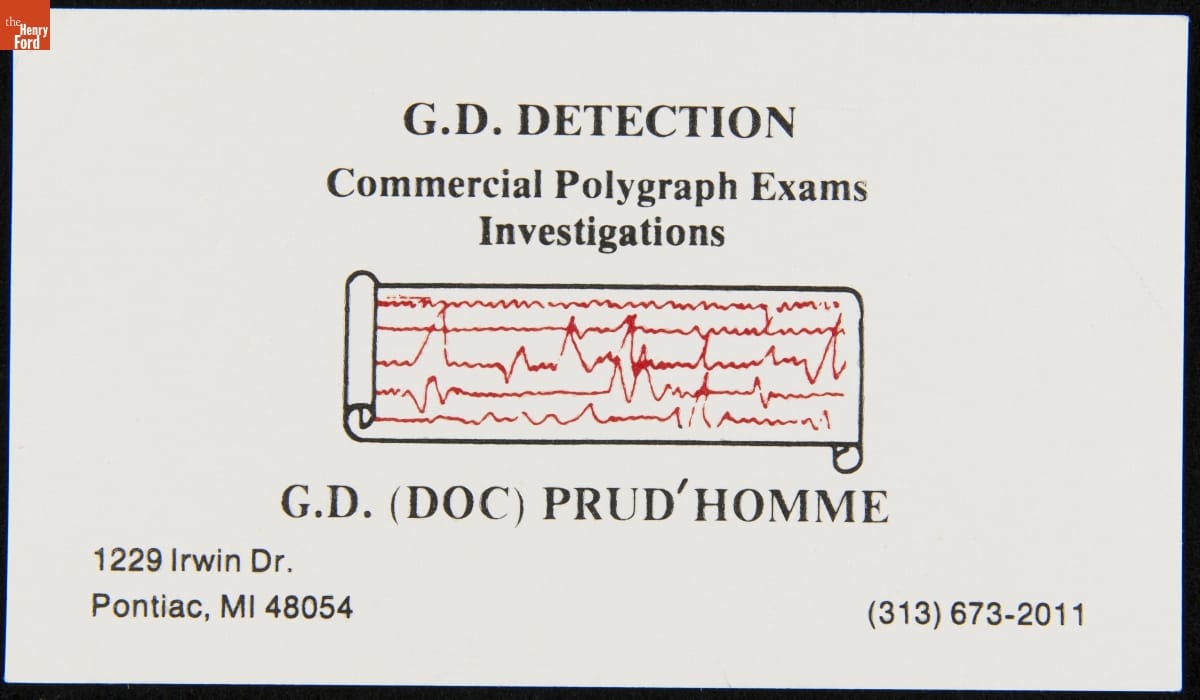
- Business Card for "G.D. Detection," 1974-1990 - "Doc" Prud'homme is the former owner and chief examiner of Polygraph Specialists Company. Polygraphs are more popularly known as "lie detector" machines. Prud'homme trained to use these devices while stationed in Vietnam. Upon returning to Michigan, he established his own business. The mobility of the polygraph machine allowed him to administer tests throughout the Metro-Detroit area.
- 1974-1990
- Collections - Artifact
Business Card for "G.D. Detection," 1974-1990
"Doc" Prud'homme is the former owner and chief examiner of Polygraph Specialists Company. Polygraphs are more popularly known as "lie detector" machines. Prud'homme trained to use these devices while stationed in Vietnam. Upon returning to Michigan, he established his own business. The mobility of the polygraph machine allowed him to administer tests throughout the Metro-Detroit area.
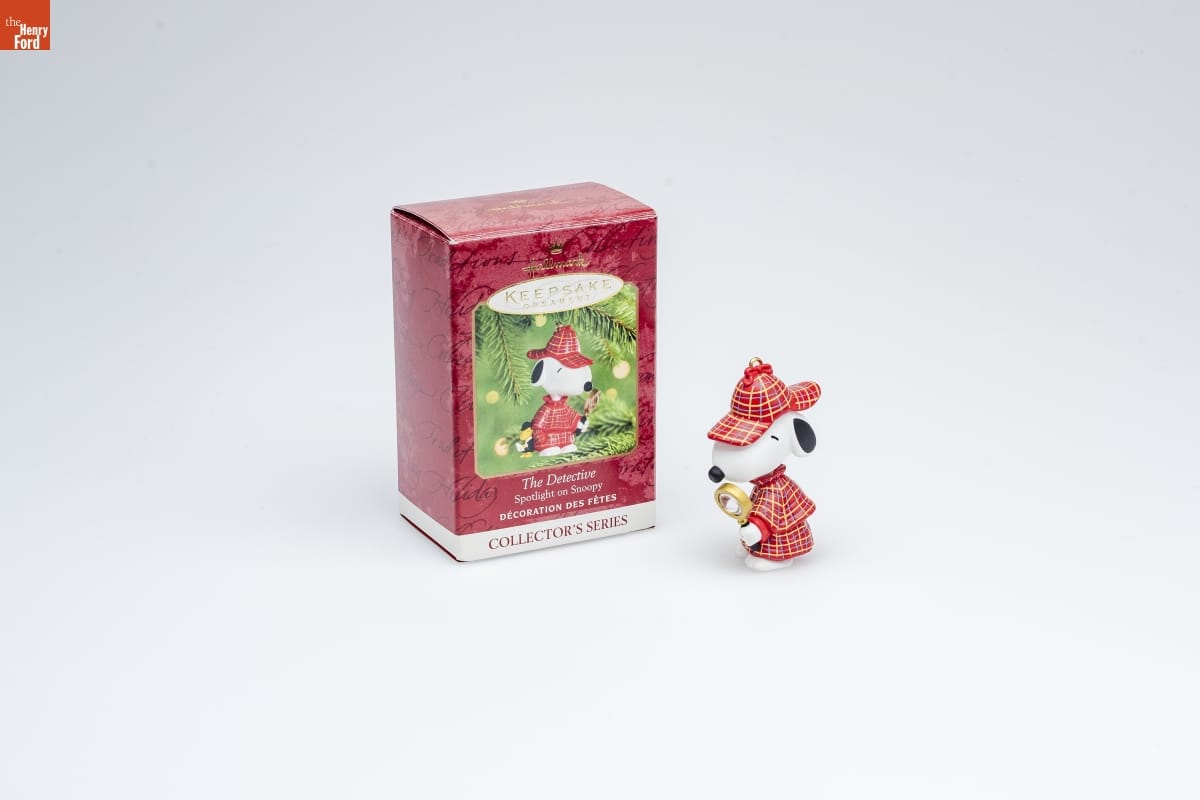
- Hallmark "Spotlight on Snoopy Series: The Detective" Christmas Ornament, 2000 - Already known for greeting cards, Hallmark introduced a line of Christmas ornaments in 1973. The company's annual release of an increasing array of ornaments revolutionized Christmas decorating, appealing to customers' interest in marking memories and milestones as well as expressing one's personality and unique tastes.
- 2000
- Collections - Artifact
Hallmark "Spotlight on Snoopy Series: The Detective" Christmas Ornament, 2000
Already known for greeting cards, Hallmark introduced a line of Christmas ornaments in 1973. The company's annual release of an increasing array of ornaments revolutionized Christmas decorating, appealing to customers' interest in marking memories and milestones as well as expressing one's personality and unique tastes.
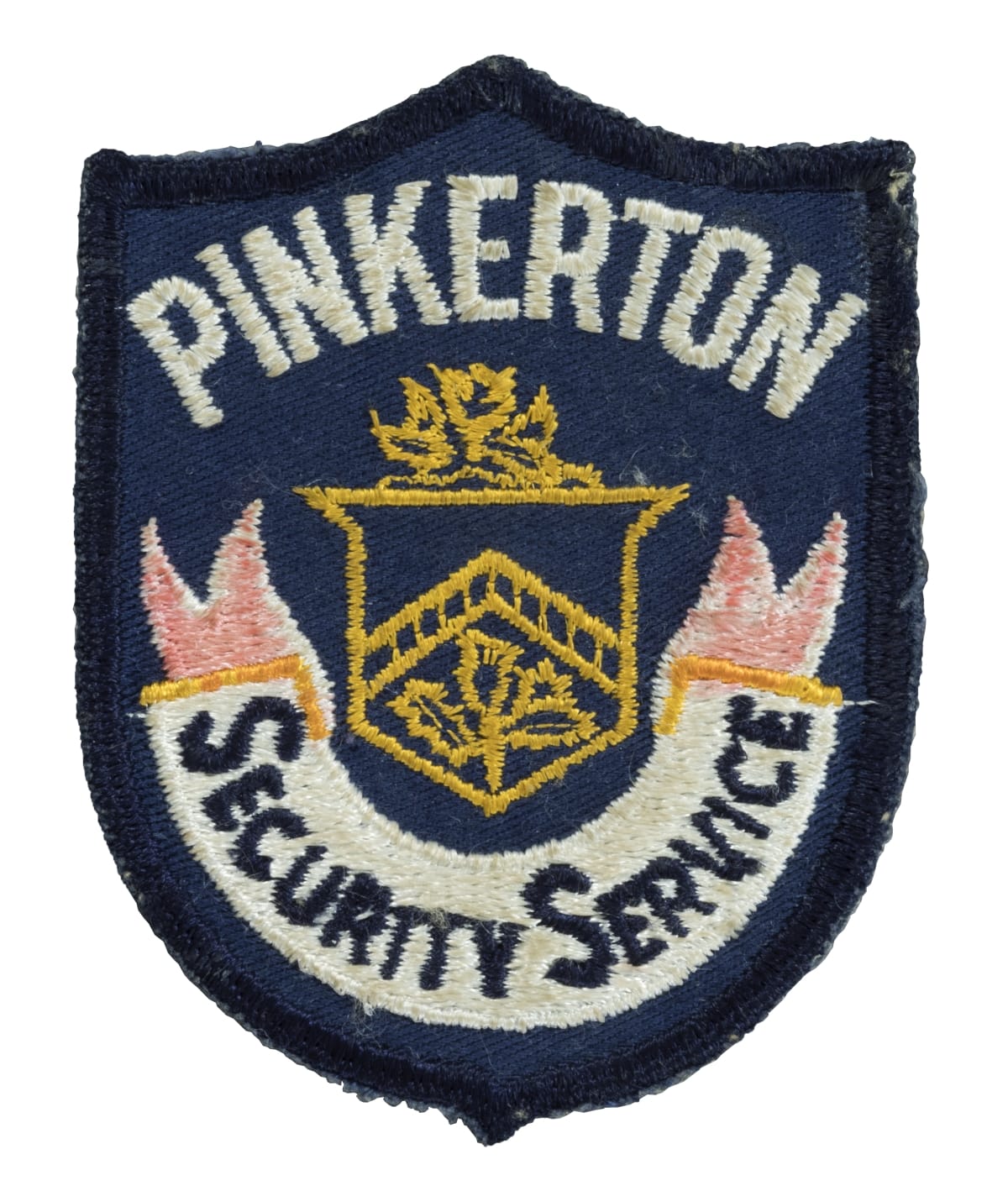
- Pinkerton Security Service Badge, circa 1960 -
- circa 1960
- Collections - Artifact
Pinkerton Security Service Badge, circa 1960
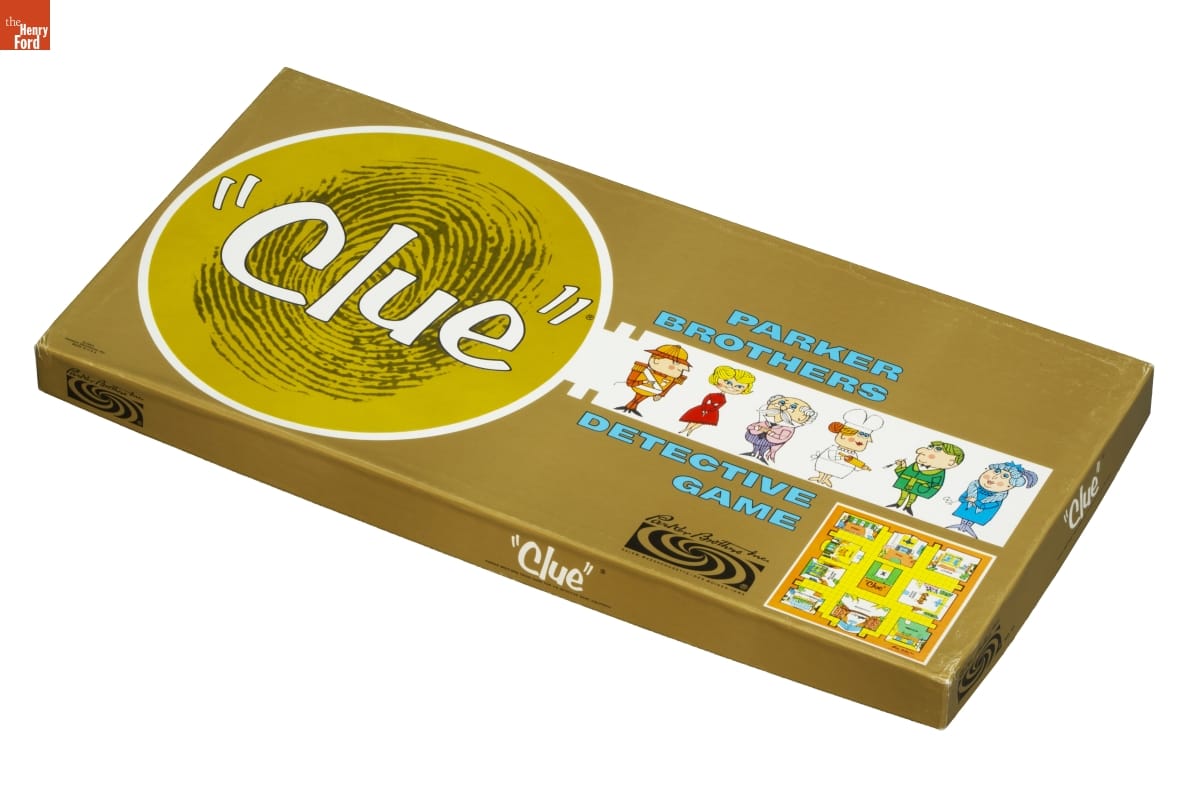
- Clue Board Game, circa 1963 - In the game of Clue, players move around a mansion as they work to solve a murder mystery. The winner eliminates incorrect possibilities to identify the murder weapon, location, and perpetrator. Parker Brothers first published the American version of Clue, which was created in England, in 1949. A classic "whodunit" board game, Clue requires deductive reasoning skills and a bit of luck.
- 1963
- Collections - Artifact
Clue Board Game, circa 1963
In the game of Clue, players move around a mansion as they work to solve a murder mystery. The winner eliminates incorrect possibilities to identify the murder weapon, location, and perpetrator. Parker Brothers first published the American version of Clue, which was created in England, in 1949. A classic "whodunit" board game, Clue requires deductive reasoning skills and a bit of luck.
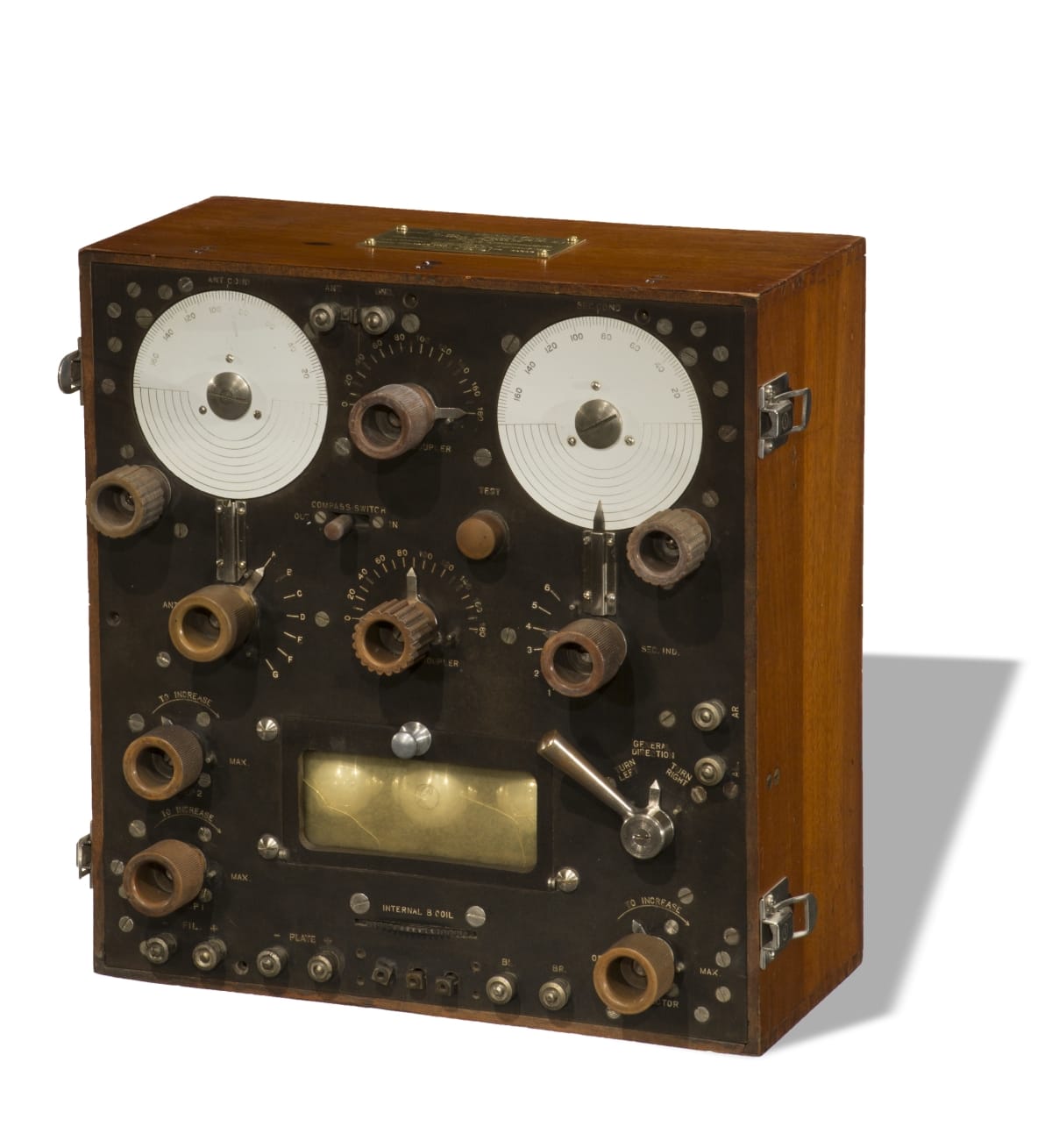
- Radio Receiver, Type SE-950, Used by Charles Francis Jenkins in Experiment Detecting Radio Signals from Mars - The SE950 was produced commercially during WWI as a rugged field radio; its versatile nature allowed it to remain useful in Charles Francis Jenkins' laboratory. The radio was used in a curious 1924 experiment as Mars drew near Earth's orbit. The SE950 was connected to a device capable of photographically recording any "alien communication" broadcast during military-imposed radio silence.
- August 01, 1924
- Collections - Artifact
Radio Receiver, Type SE-950, Used by Charles Francis Jenkins in Experiment Detecting Radio Signals from Mars
The SE950 was produced commercially during WWI as a rugged field radio; its versatile nature allowed it to remain useful in Charles Francis Jenkins' laboratory. The radio was used in a curious 1924 experiment as Mars drew near Earth's orbit. The SE950 was connected to a device capable of photographically recording any "alien communication" broadcast during military-imposed radio silence.
- Playing Detective: Mysterious Transmissions - The Henry Ford’s radio collections hold a variety of strange-looking objects, many with hidden purposes.

- March 30, 2023
- Collections - article
Playing Detective: Mysterious Transmissions
The Henry Ford’s radio collections hold a variety of strange-looking objects, many with hidden purposes.
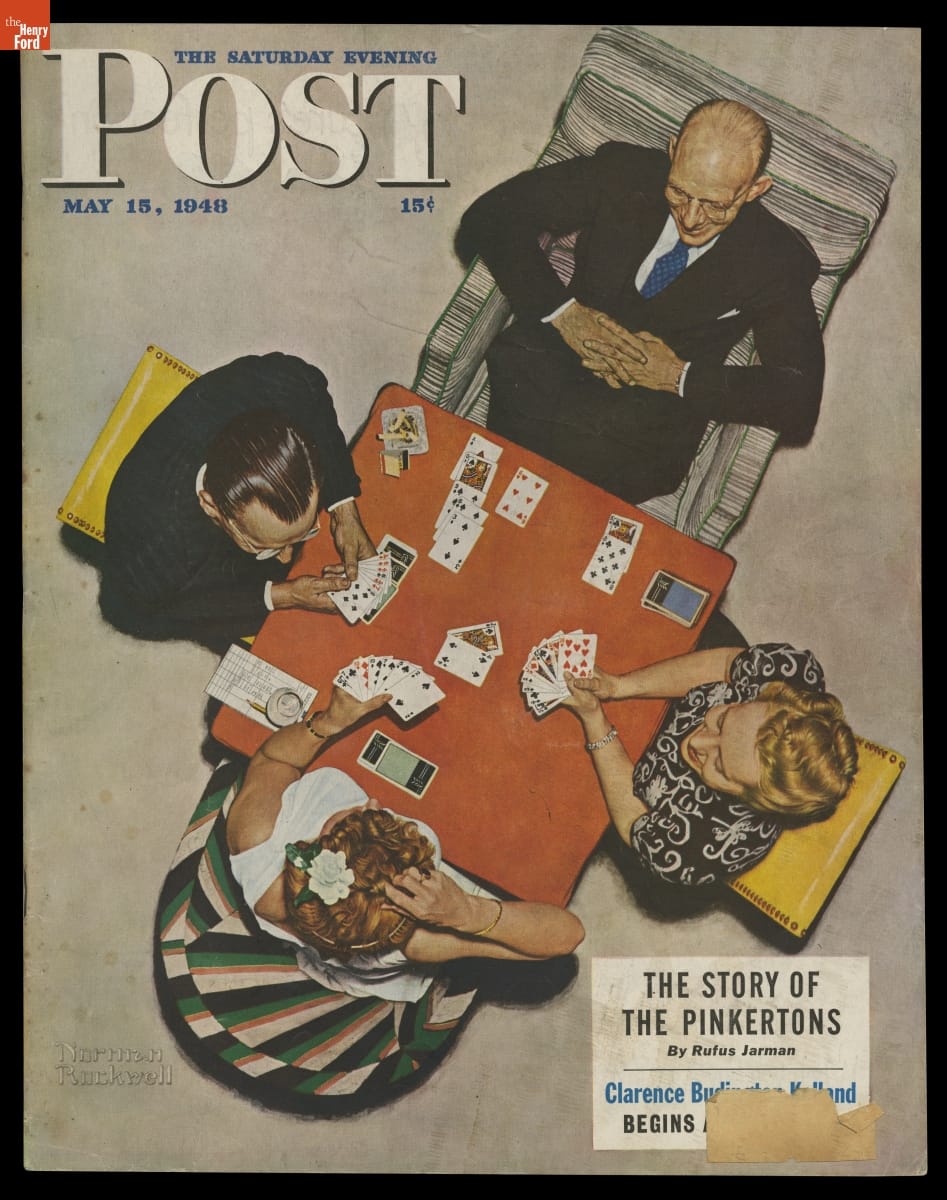
- "The Saturday Evening Post," May 15, 1948 - <em>The Saturday Evening Post</em>, first published in 1821 as a four-page weekly newspaper, became one of America's most popular weekly publications by the mid-1900s. The magazine contained news, commentaries, fiction, and general interest articles. But its most distinctive feature was its front cover illustrations by artists such as George Hughes, John Falter, J.C. Leyendecker, and Norman Rockwell.
- May 15, 1948
- Collections - Artifact
"The Saturday Evening Post," May 15, 1948
The Saturday Evening Post, first published in 1821 as a four-page weekly newspaper, became one of America's most popular weekly publications by the mid-1900s. The magazine contained news, commentaries, fiction, and general interest articles. But its most distinctive feature was its front cover illustrations by artists such as George Hughes, John Falter, J.C. Leyendecker, and Norman Rockwell.
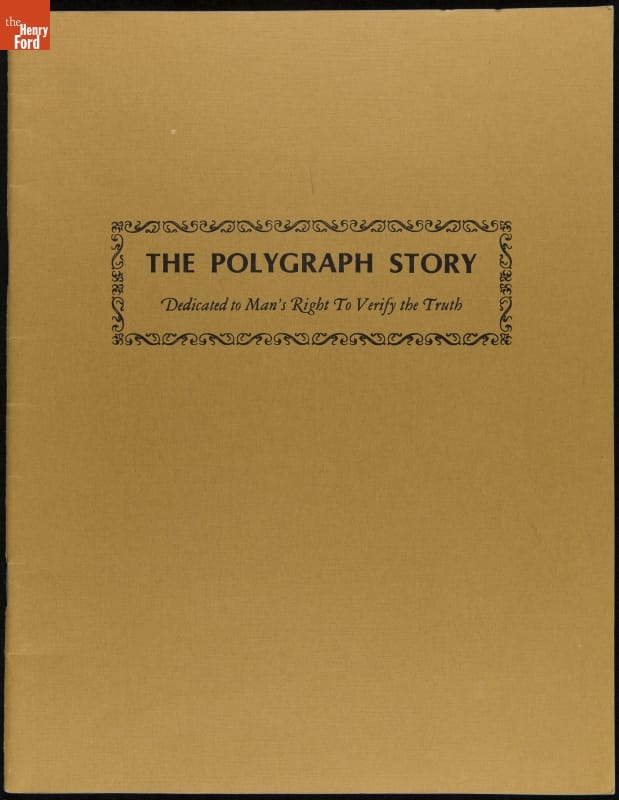
- "The Polygraph Story: Dedicated to Man's Right to Verify the Truth," circa 1974 - Polygraphs are more popularly known as "lie detector" machines. They measure a person's pulse, breathing rate, perspiration, and blood pressure. Polygraphs convert this data into electronic signals; inking arms output this information onto paper charts. Trained examiners interpret the results, to determine guilt or innocence. The polygraph has been called out as unethical and legally inadmissible in some cases.
- circa 1974
- Collections - Artifact
"The Polygraph Story: Dedicated to Man's Right to Verify the Truth," circa 1974
Polygraphs are more popularly known as "lie detector" machines. They measure a person's pulse, breathing rate, perspiration, and blood pressure. Polygraphs convert this data into electronic signals; inking arms output this information onto paper charts. Trained examiners interpret the results, to determine guilt or innocence. The polygraph has been called out as unethical and legally inadmissible in some cases.