
Search
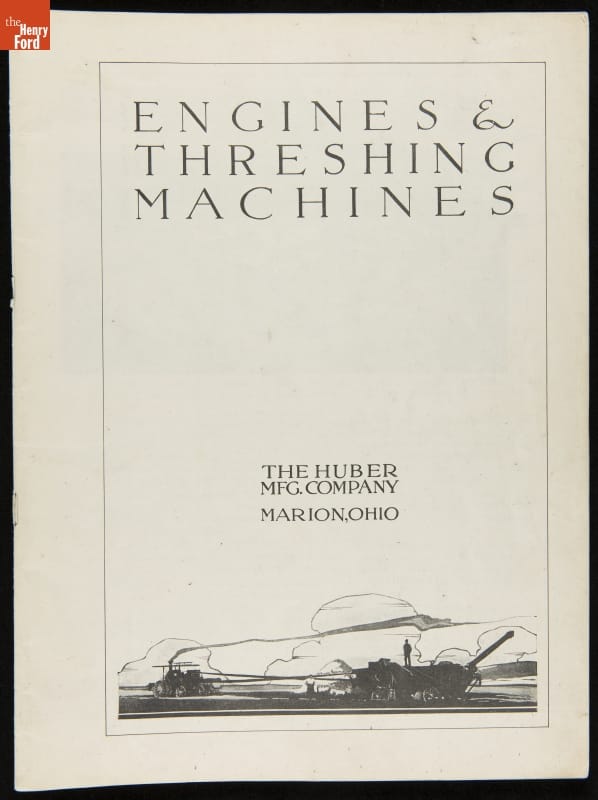
- "Engines & Threshing Machines," circa 1915 -
- circa 1915
- Collections - Artifact
"Engines & Threshing Machines," circa 1915
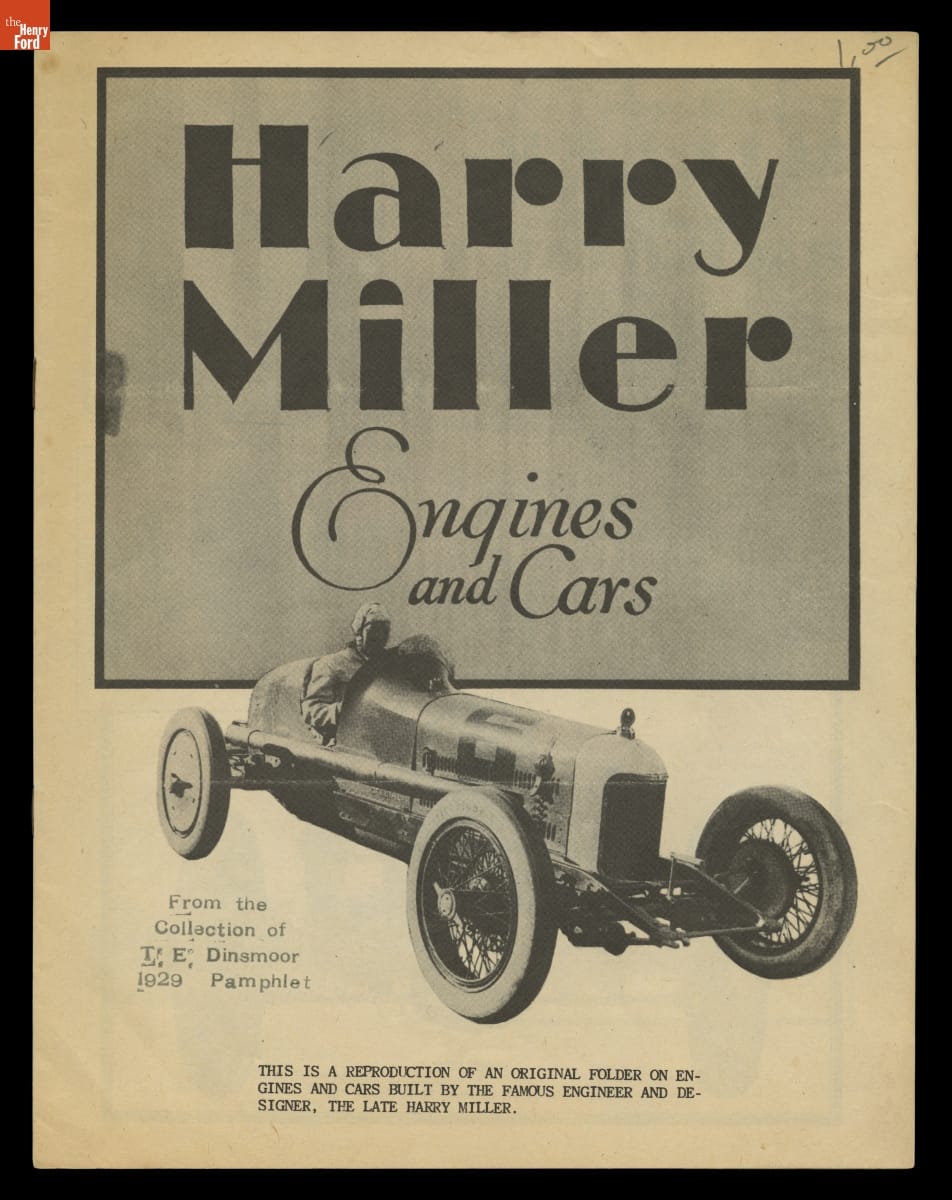
- Harry Miller: Engines and Cars, 1929 - Designer Harry Miller was one of the most influential figures in early American auto racing. He pioneered the use of front- and four-wheel-drive chassis, lightweight metals, and supercharged engines. Miller's innovative automobiles and engines dominated the Indianapolis 500 in the 1920s and 1930s. Miller-designed cars or engines won the race 14 times from 1922 to 1938.
- 1929
- Collections - Artifact
Harry Miller: Engines and Cars, 1929
Designer Harry Miller was one of the most influential figures in early American auto racing. He pioneered the use of front- and four-wheel-drive chassis, lightweight metals, and supercharged engines. Miller's innovative automobiles and engines dominated the Indianapolis 500 in the 1920s and 1930s. Miller-designed cars or engines won the race 14 times from 1922 to 1938.
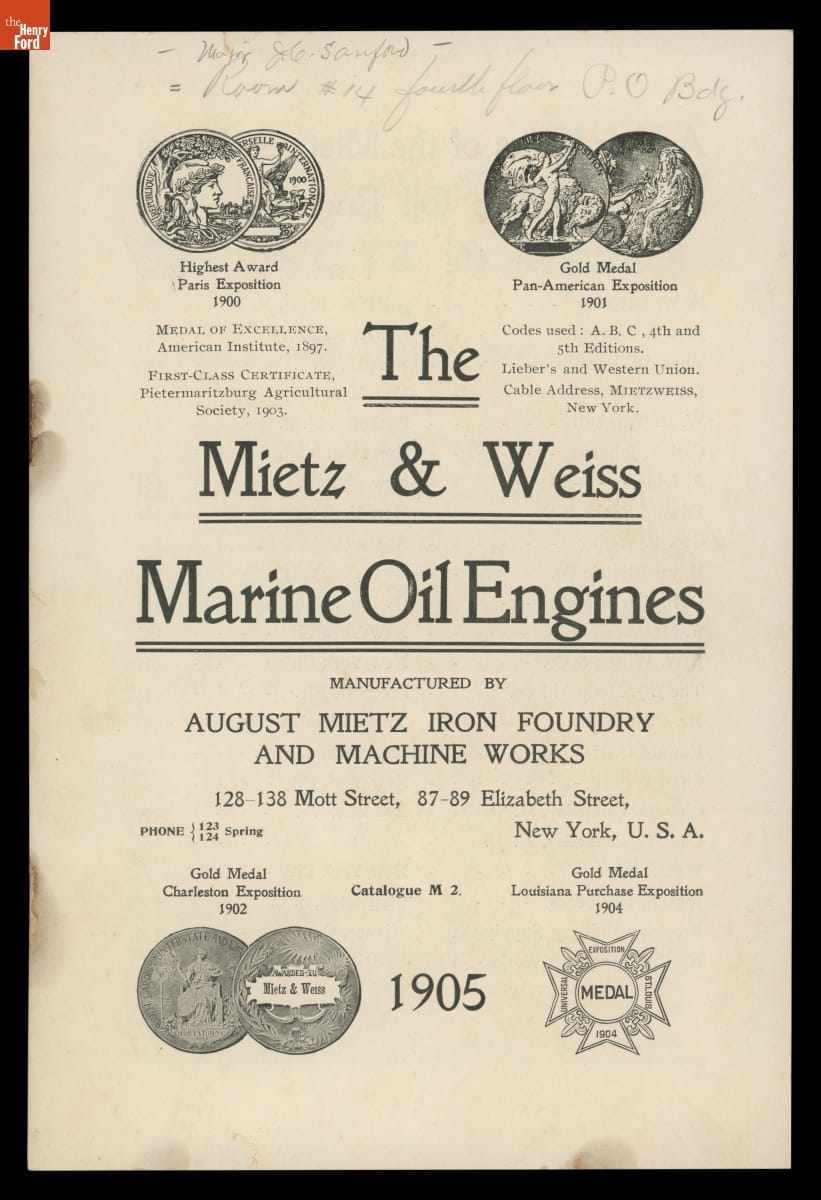
- The Mietz & Weiss Marine Oil Engines, 1905 - August Mietz and Carl Weiss formed their engine manufacturing company in 1894. Rudolph Diesel held tight patents over the ignition system for his engines, so Mietz and Weiss produced two-stroke, semi-diesel engines that depended on a hot bulb to vaporize oil before compression and ignition. This catalog from 1905 featured Mietz and Weiss engines designed for use in watercraft.
- 1905
- Collections - Artifact
The Mietz & Weiss Marine Oil Engines, 1905
August Mietz and Carl Weiss formed their engine manufacturing company in 1894. Rudolph Diesel held tight patents over the ignition system for his engines, so Mietz and Weiss produced two-stroke, semi-diesel engines that depended on a hot bulb to vaporize oil before compression and ignition. This catalog from 1905 featured Mietz and Weiss engines designed for use in watercraft.
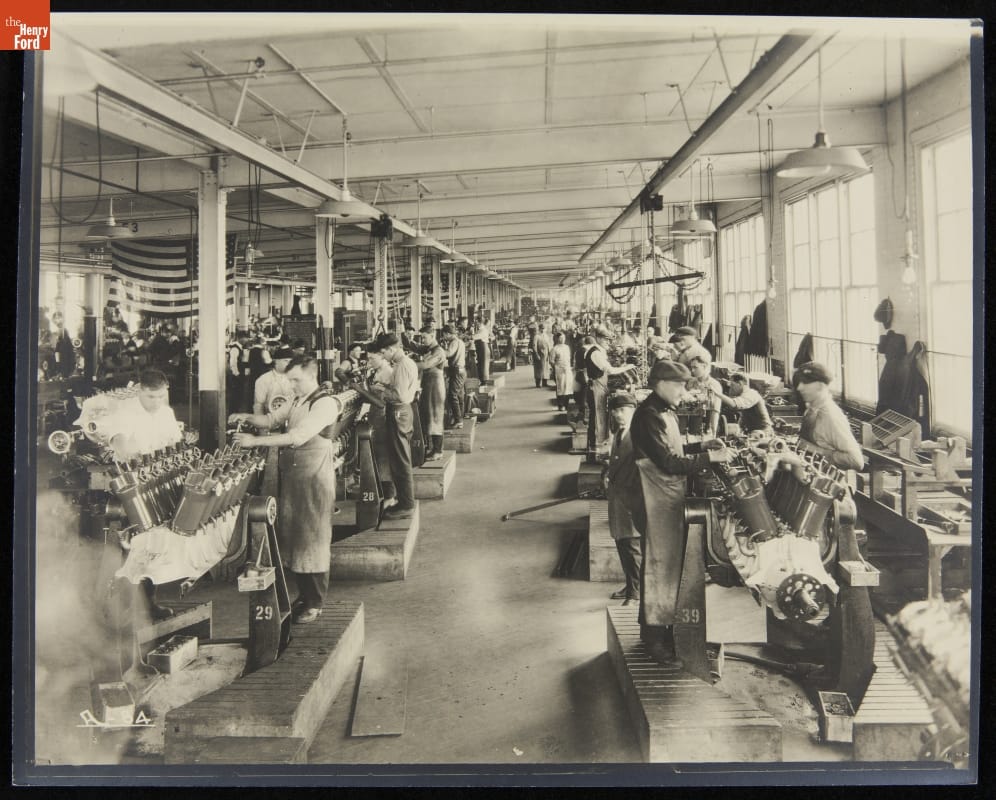
- Assembly of Liberty Engines, Lincoln Motor Company Plant, 1917-1918 - Henry Leland formed Lincoln Motor Company in 1917 to manufacture Liberty aircraft engines for the Allied Powers in World War I. The water-cooled, V-12 engine produced 400 horsepower. Lincoln built 6,500 engines during the war. Packard, Ford, Marmon, Buick, and Cadillac built Liberty engines too. After the war, Lincoln shifted to the production of luxury automobiles.
- 1917-1918
- Collections - Artifact
Assembly of Liberty Engines, Lincoln Motor Company Plant, 1917-1918
Henry Leland formed Lincoln Motor Company in 1917 to manufacture Liberty aircraft engines for the Allied Powers in World War I. The water-cooled, V-12 engine produced 400 horsepower. Lincoln built 6,500 engines during the war. Packard, Ford, Marmon, Buick, and Cadillac built Liberty engines too. After the war, Lincoln shifted to the production of luxury automobiles.
- "Avery Tractors, Plows, Separators and Steam Engines," 1916 - Farmers invested in machinery to reduce the back-breaking labor of agriculture. Two Illinois farm boys, Robert H. and Cyrus M. Avery, incorporated the Avery Planter Company in 1883 to build corn planters, cultivators, and corn-stalk cutters. Avery added steam traction engines and threshing machines in 1891 as grain farms proliferated. This 1916 catalog featured gas, oil, and steam engines at work.
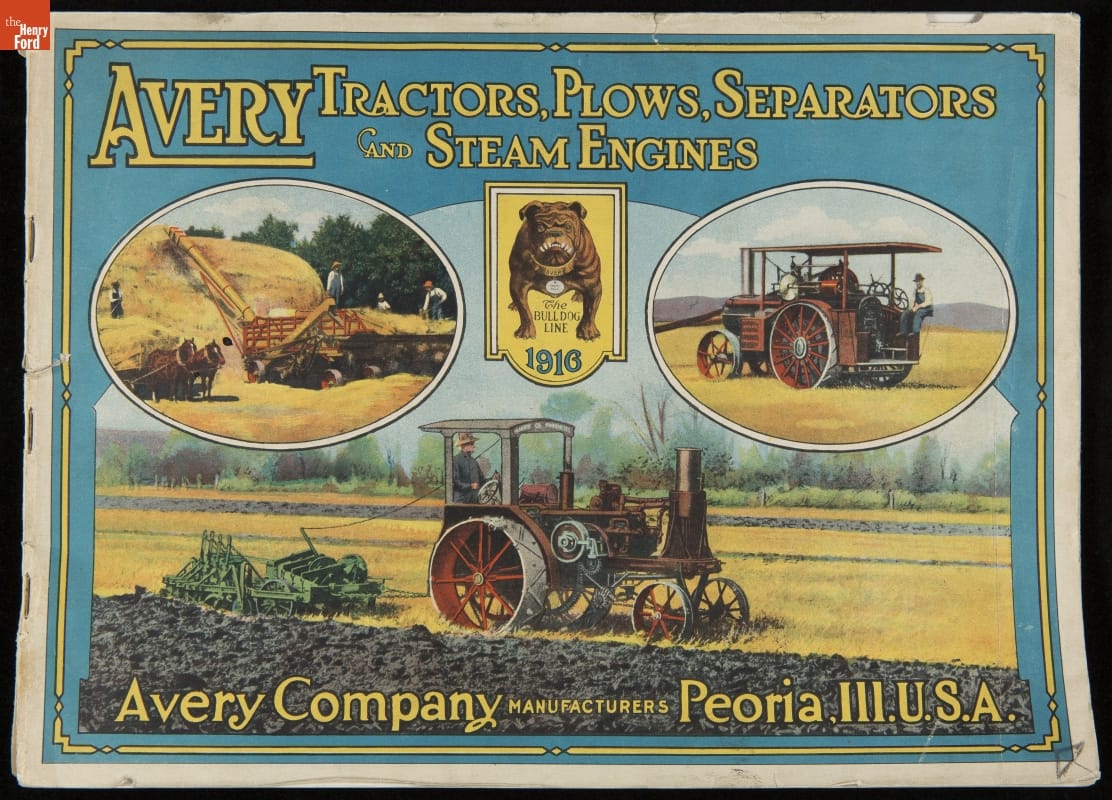
- 1916
- Collections - Artifact
"Avery Tractors, Plows, Separators and Steam Engines," 1916
Farmers invested in machinery to reduce the back-breaking labor of agriculture. Two Illinois farm boys, Robert H. and Cyrus M. Avery, incorporated the Avery Planter Company in 1883 to build corn planters, cultivators, and corn-stalk cutters. Avery added steam traction engines and threshing machines in 1891 as grain farms proliferated. This 1916 catalog featured gas, oil, and steam engines at work.
- Portable Steam Engines in Henry Ford Museum, March 1941 -
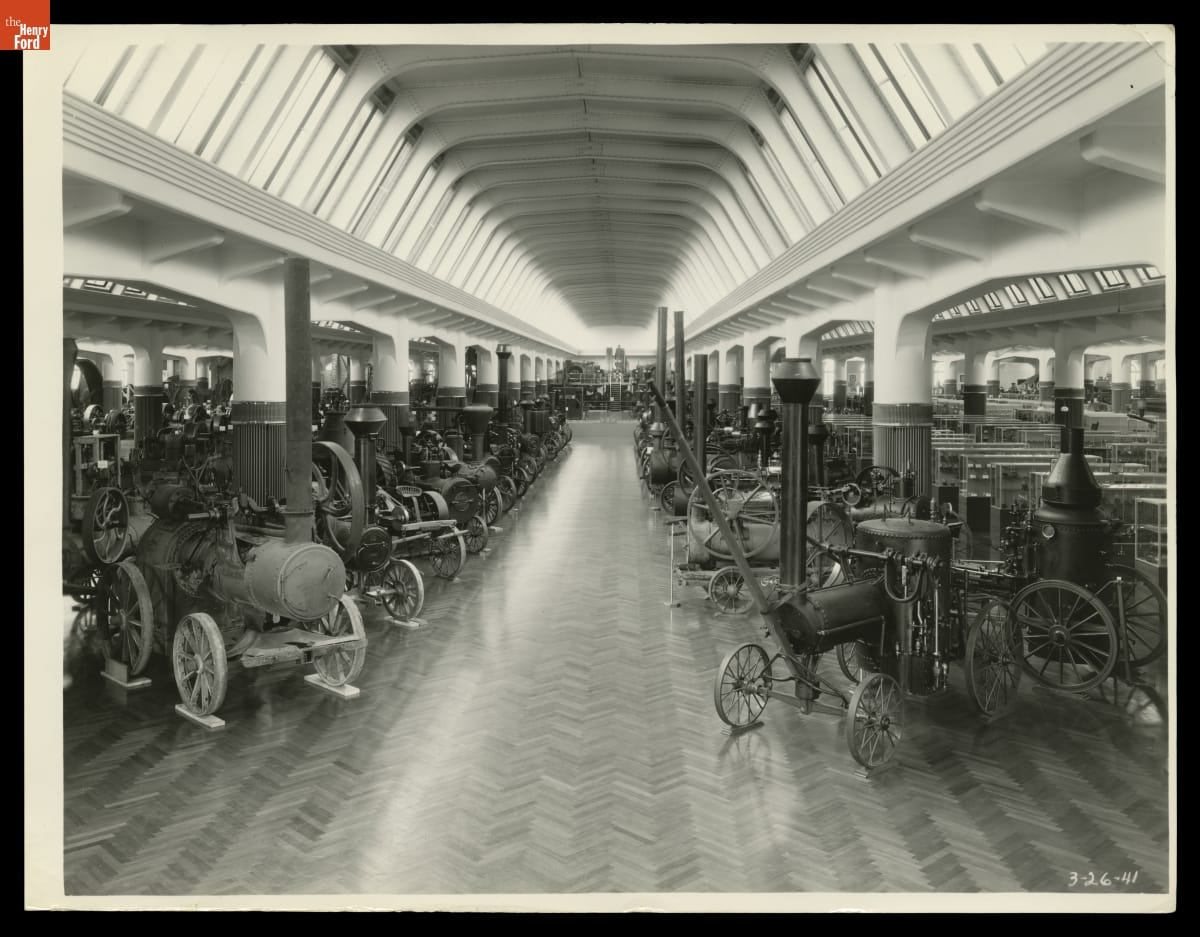
- March 26, 1941
- Collections - Artifact
Portable Steam Engines in Henry Ford Museum, March 1941
- Reconditioning Engines at Hall-Dodds, Detroit, Michigan, October 1940 - Ford Motor Company inaugurated a system of competing dealership franchises in 1914. Dealers sold Ford vehicles, offered repair services, and stocked spare parts and automobile accessories. Dealership parts and service departments lured customers with displays and advertisements. The department also served as a reminder to potential car buyers that the dealership provided extra services after the sale.
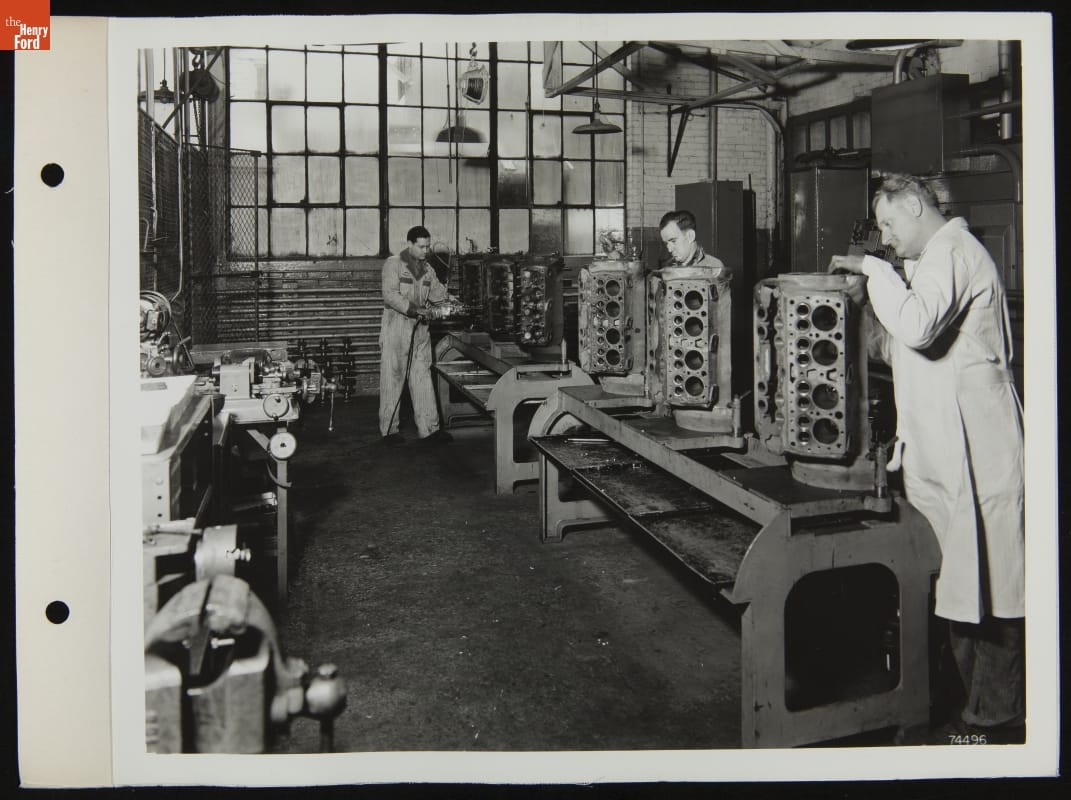
- October 08, 1940
- Collections - Artifact
Reconditioning Engines at Hall-Dodds, Detroit, Michigan, October 1940
Ford Motor Company inaugurated a system of competing dealership franchises in 1914. Dealers sold Ford vehicles, offered repair services, and stocked spare parts and automobile accessories. Dealership parts and service departments lured customers with displays and advertisements. The department also served as a reminder to potential car buyers that the dealership provided extra services after the sale.
- Portable Steam Engines in Henry Ford Museum, circa 1941 - Henry Ford encouraged and appreciated the work of artist and illustrator Irving Bacon. In 1915, Bacon joined the Photographic Department of Ford Motor Company after he returned from studying art in Europe. Over the next thirty years, Bacon painted scenes depicting Ford's life, created portraiture, and illustrated articles for company publications. This drawing depicts a display in the Henry Ford Museum.
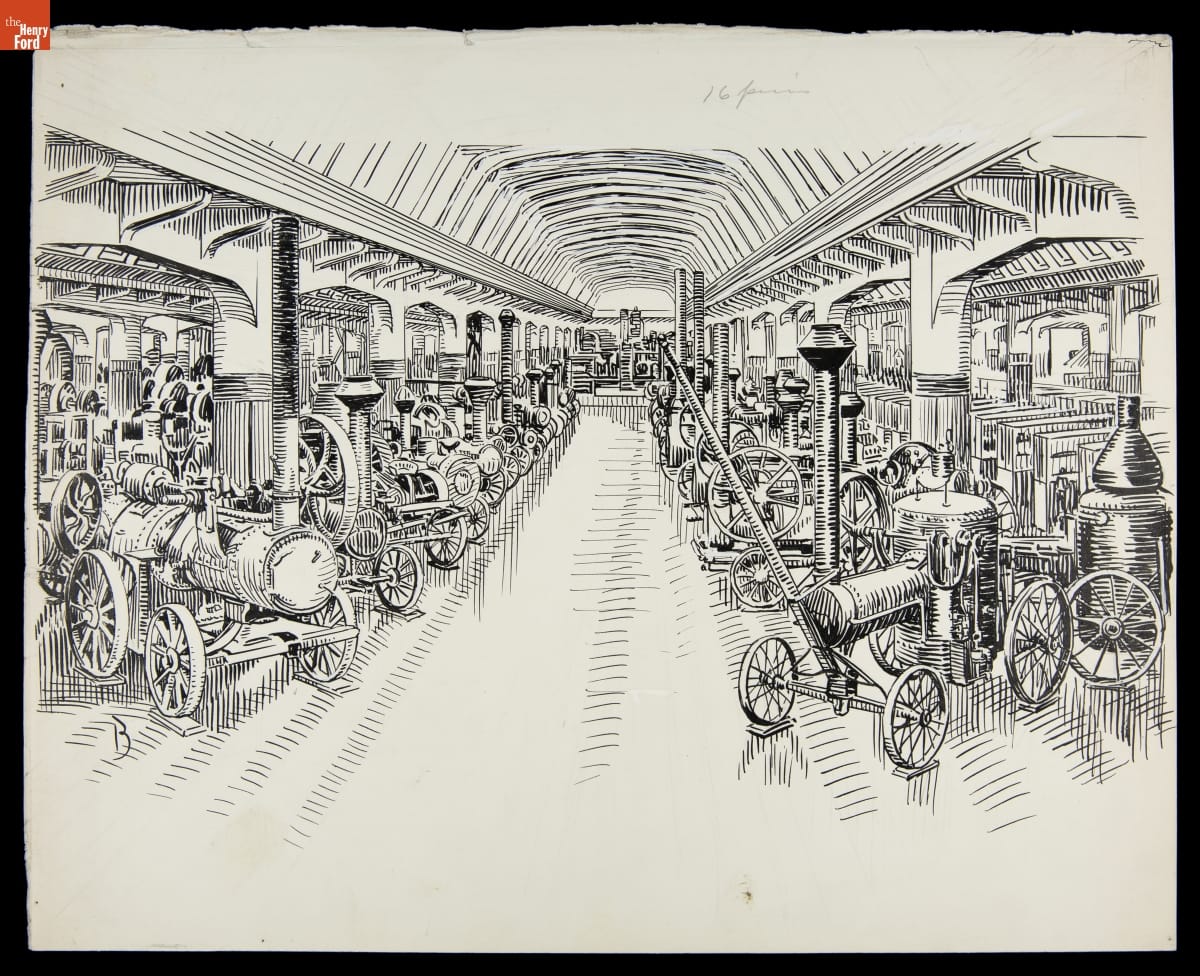
- circa 1941
- Collections - Artifact
Portable Steam Engines in Henry Ford Museum, circa 1941
Henry Ford encouraged and appreciated the work of artist and illustrator Irving Bacon. In 1915, Bacon joined the Photographic Department of Ford Motor Company after he returned from studying art in Europe. Over the next thirty years, Bacon painted scenes depicting Ford's life, created portraiture, and illustrated articles for company publications. This drawing depicts a display in the Henry Ford Museum.
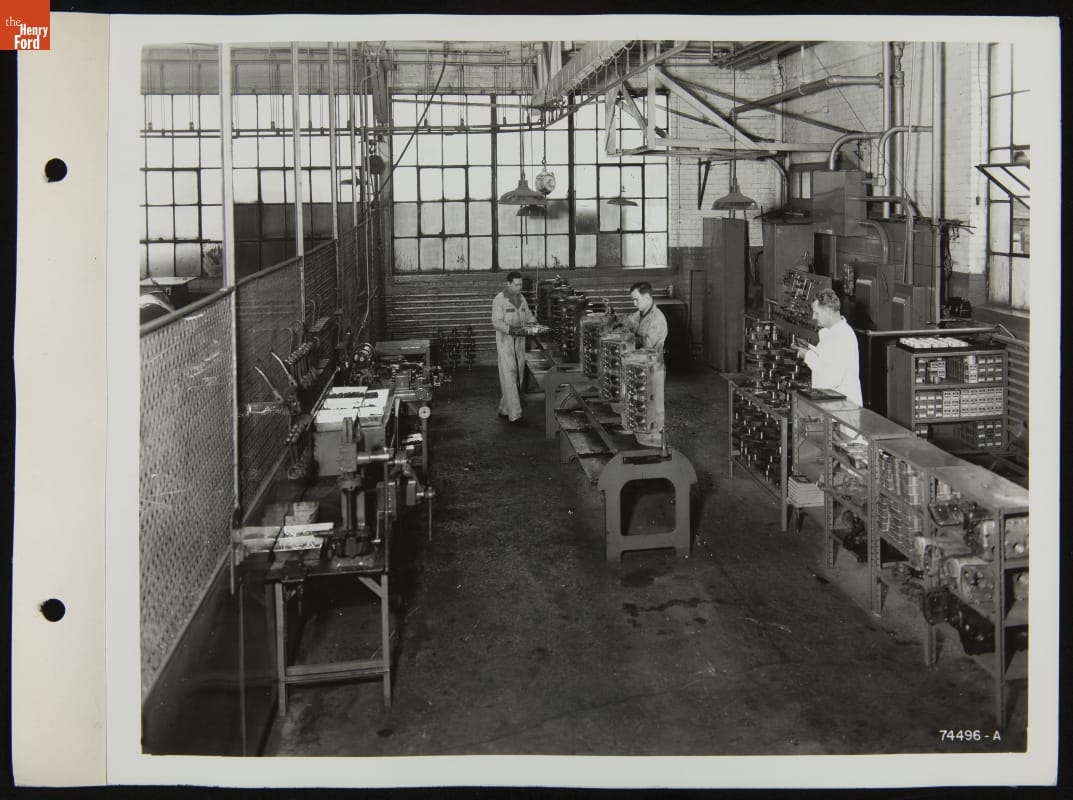
- Reconditioning Engines at Hall-Dodds, Detroit, Michigan, October 1940 - Ford Motor Company inaugurated a system of competing dealership franchises in 1914. Dealers sold Ford vehicles, offered repair services, and stocked spare parts and automobile accessories. Dealership parts and service departments lured customers with displays and advertisements. The department also served as a reminder to potential car buyers that the dealership provided extra services after the sale.
- October 08, 1940
- Collections - Artifact
Reconditioning Engines at Hall-Dodds, Detroit, Michigan, October 1940
Ford Motor Company inaugurated a system of competing dealership franchises in 1914. Dealers sold Ford vehicles, offered repair services, and stocked spare parts and automobile accessories. Dealership parts and service departments lured customers with displays and advertisements. The department also served as a reminder to potential car buyers that the dealership provided extra services after the sale.
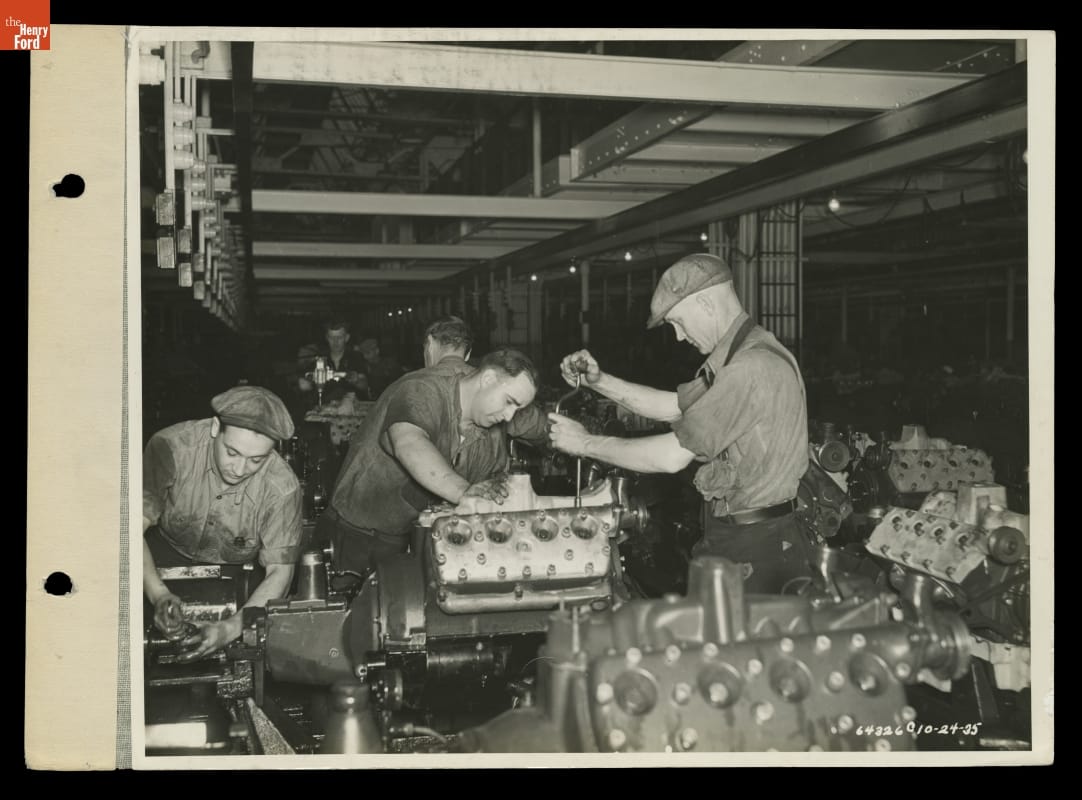
- Testing Ford V-8 Engines, Ford Rouge Plant, 1935 - Henry Ford's last great automotive innovation was his introduction of a low-priced V-8 engine for 1932. Starting under $500, it was an exceptional value. Ford Motor Company's V-8 outsold its four-cylinder engine by a wide margin, and the four-cylinder unit was retired for 1935. The 1932 V-8 engine design remained in production until 1953.
- October 24, 1935
- Collections - Artifact
Testing Ford V-8 Engines, Ford Rouge Plant, 1935
Henry Ford's last great automotive innovation was his introduction of a low-priced V-8 engine for 1932. Starting under $500, it was an exceptional value. Ford Motor Company's V-8 outsold its four-cylinder engine by a wide margin, and the four-cylinder unit was retired for 1935. The 1932 V-8 engine design remained in production until 1953.