
Search
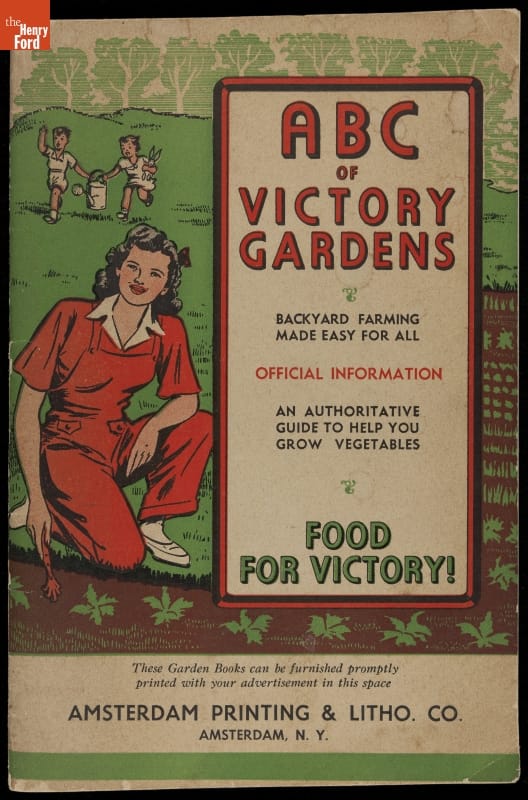
- "ABC of Victory Gardens" - During World War II, Americans supported the war effort by planting "Victory Gardens" in backyards and vacant lots. The vegetables they grew helped feed those on the homefront, leaving commercially-grown food more available for soldiers on the battlefront. By 1943, over 18 million gardeners produced 40% of the vegetables grown in America, aided by booklets like this one.
- 1943
- Collections - Artifact
"ABC of Victory Gardens"
During World War II, Americans supported the war effort by planting "Victory Gardens" in backyards and vacant lots. The vegetables they grew helped feed those on the homefront, leaving commercially-grown food more available for soldiers on the battlefront. By 1943, over 18 million gardeners produced 40% of the vegetables grown in America, aided by booklets like this one.
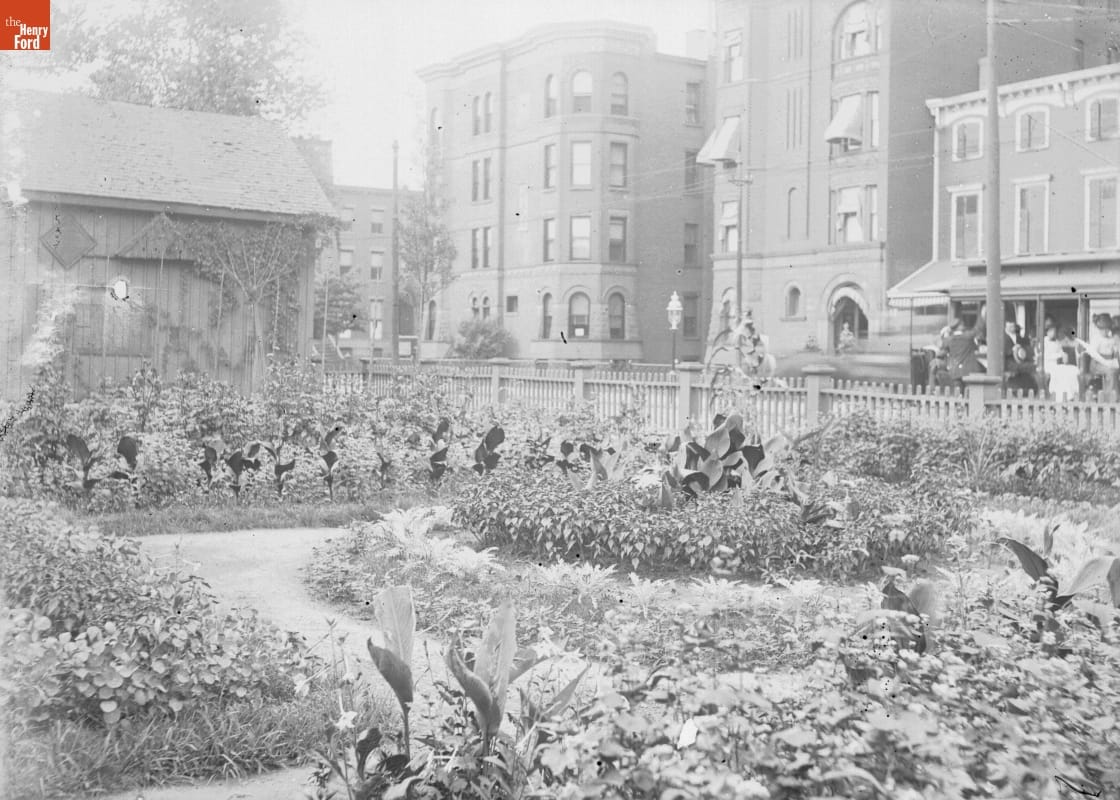
- Gardens, Franklin & Gates Ave., 1890-1915 - In 1890, Jenny Young Chandler, 25 years old and recently widowed, began working for the <EM>New York Herald</EM>. As a photojournalist and feature writer, Chandler captured life in Brooklyn, New York, and vicinity. By 1922, the time of her death, she had produced over 800 glass plate negatives. Her sensitive, insightful photographs depict people from all walks of life and the world in which they lived.
- 1890-1915
- Collections - Artifact
Gardens, Franklin & Gates Ave., 1890-1915
In 1890, Jenny Young Chandler, 25 years old and recently widowed, began working for the New York Herald. As a photojournalist and feature writer, Chandler captured life in Brooklyn, New York, and vicinity. By 1922, the time of her death, she had produced over 800 glass plate negatives. Her sensitive, insightful photographs depict people from all walks of life and the world in which they lived.
- The Young Gardener's Assistant, 1840 -
- 1840
- Collections - Artifact
The Young Gardener's Assistant, 1840
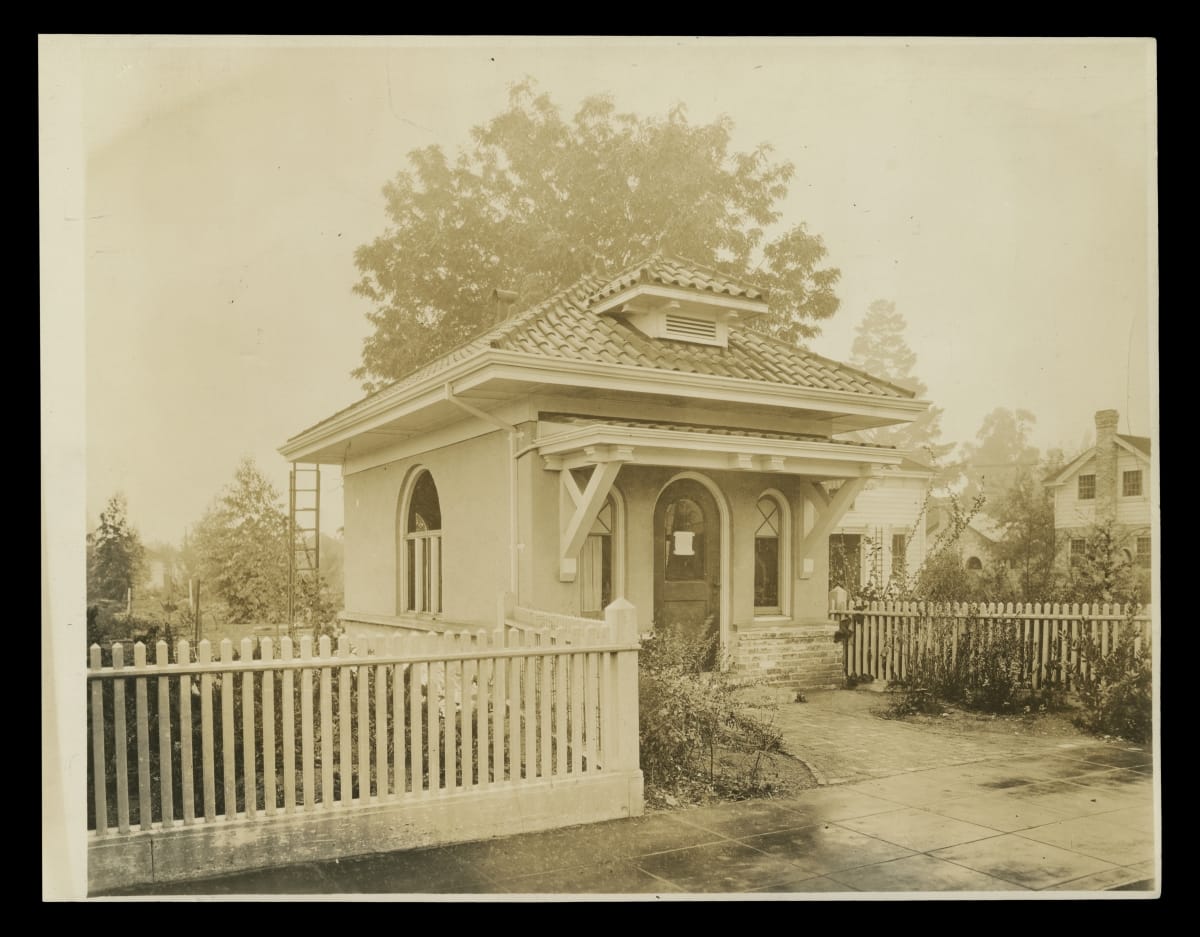
- Burbank Experimental Gardens Information Office, 1928 - Luther Burbank (1849-1926), a much-heralded American horticulturalist, gained a reputation for selectively breeding more than 800 new fruits, vegetables, flowers, and other plants. He opened this building in 1910 to sell seeds and souvenirs to inquisitive patrons. It served many purposes over the years and was moved once before Burbank's widow sent it to Henry Ford in 1928 for inclusion in Greenfield Village.
- May 08, 1944
- Collections - Artifact
Burbank Experimental Gardens Information Office, 1928
Luther Burbank (1849-1926), a much-heralded American horticulturalist, gained a reputation for selectively breeding more than 800 new fruits, vegetables, flowers, and other plants. He opened this building in 1910 to sell seeds and souvenirs to inquisitive patrons. It served many purposes over the years and was moved once before Burbank's widow sent it to Henry Ford in 1928 for inclusion in Greenfield Village.
- Pennant, "Cypress Gardens, Florida," 1940-1965 -
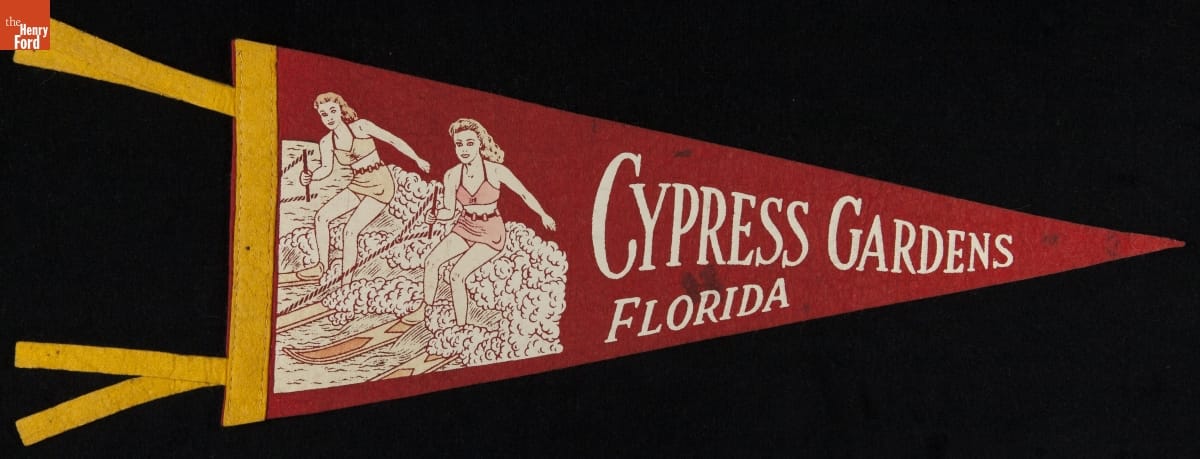
- 1940-1965
- Collections - Artifact
Pennant, "Cypress Gardens, Florida," 1940-1965
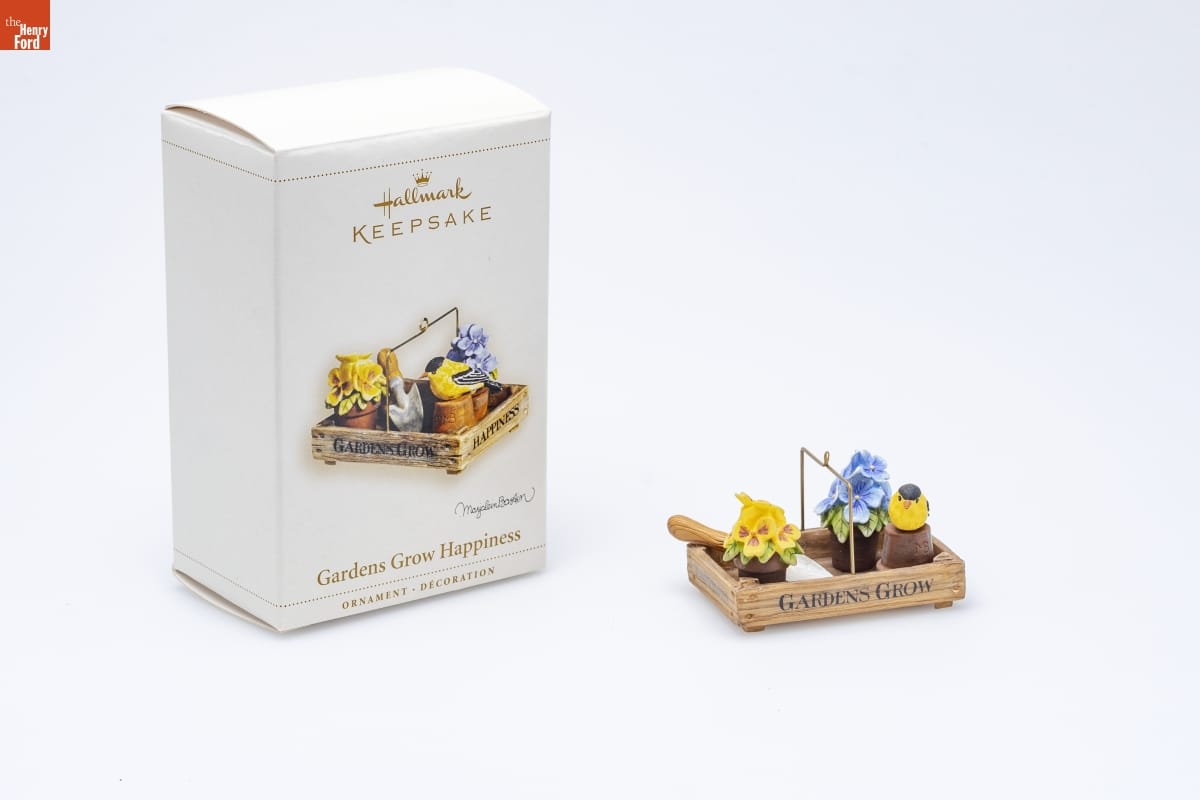
- Hallmark "Gardens Grow Happiness" Spring Ornament, 2006 - Hallmark introduced a line of Christmas ornaments in 1973. These ornaments appealed to customers' interest in marking memories, commemorating milestones, and expressing one's personality and unique tastes. This success led the company to produce ornaments for other holidays. Hallmark marketed and sold Easter and springtime ornaments in several series dating back to the 1990s.
- 2006
- Collections - Artifact
Hallmark "Gardens Grow Happiness" Spring Ornament, 2006
Hallmark introduced a line of Christmas ornaments in 1973. These ornaments appealed to customers' interest in marking memories, commemorating milestones, and expressing one's personality and unique tastes. This success led the company to produce ornaments for other holidays. Hallmark marketed and sold Easter and springtime ornaments in several series dating back to the 1990s.
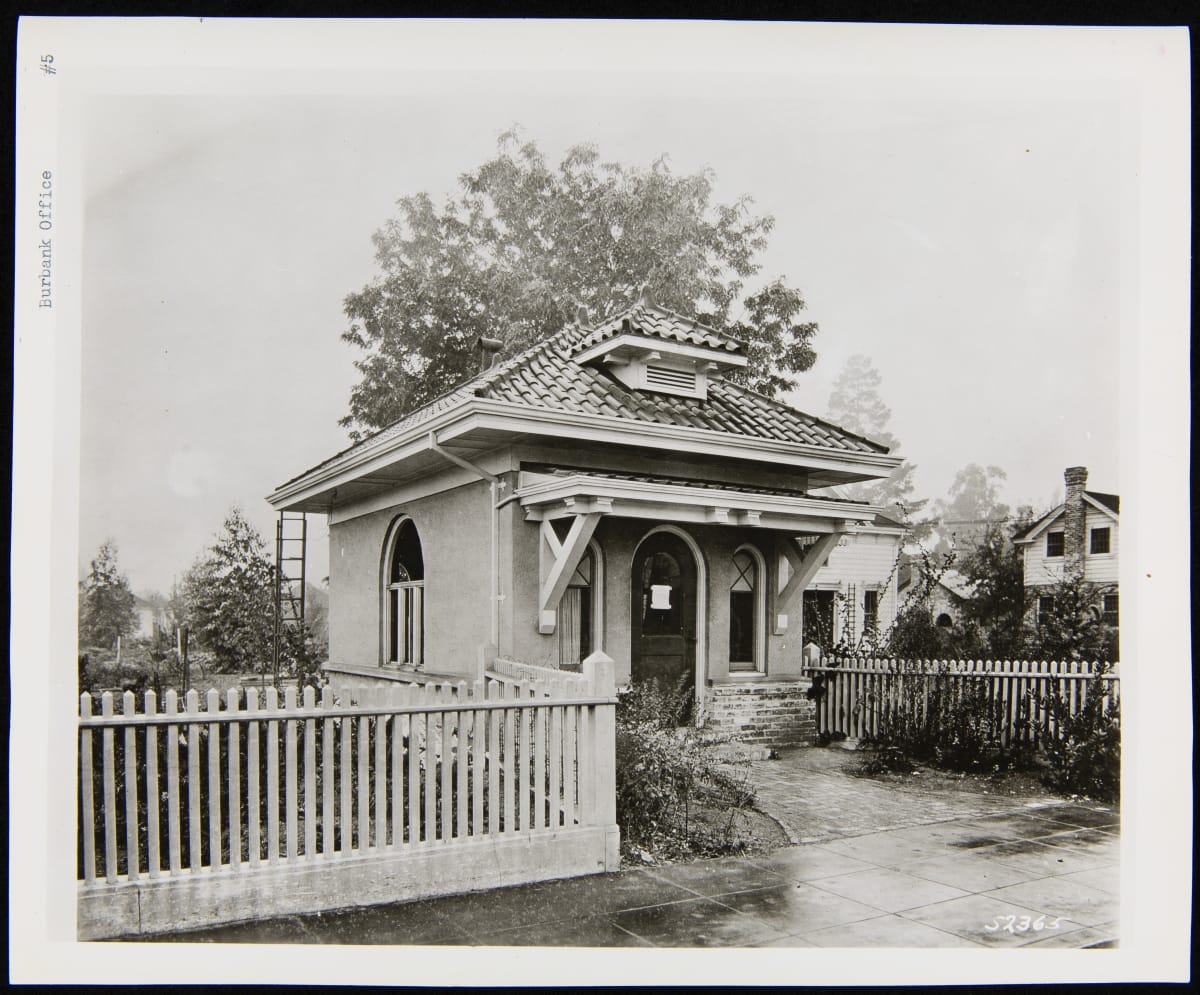
- Burbank Experimental Gardens Information Office, 1928 - Luther Burbank (1849-1926), a much-heralded American horticulturalist, gained a reputation for selectively breeding more than 800 new fruits, vegetables, flowers, and other plants. He opened this building in 1910 to sell seeds and souvenirs to inquisitive patrons. It served many purposes over the years and was moved once before Burbank's widow sent it to Henry Ford in 1928 for inclusion in Greenfield Village.
- 1928
- Collections - Artifact
Burbank Experimental Gardens Information Office, 1928
Luther Burbank (1849-1926), a much-heralded American horticulturalist, gained a reputation for selectively breeding more than 800 new fruits, vegetables, flowers, and other plants. He opened this building in 1910 to sell seeds and souvenirs to inquisitive patrons. It served many purposes over the years and was moved once before Burbank's widow sent it to Henry Ford in 1928 for inclusion in Greenfield Village.
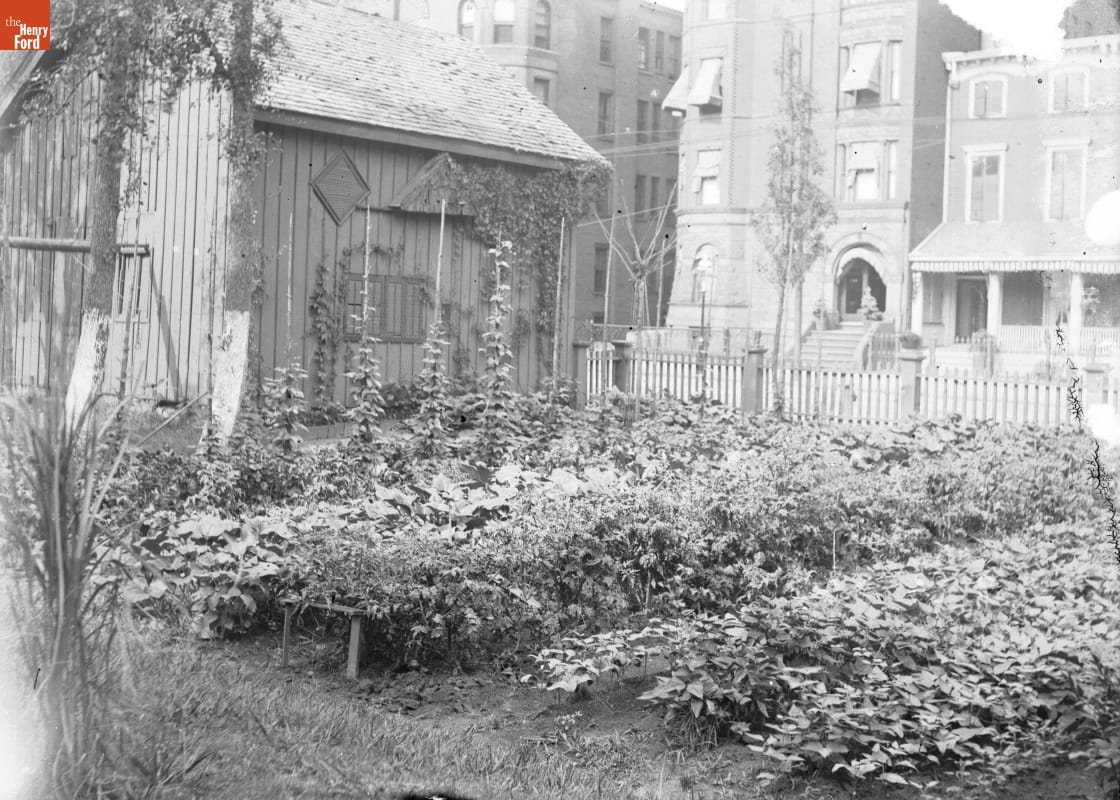
- Gardens, Franklin & Gates Ave., 1890-1915 - In 1890, Jenny Young Chandler, 25 years old and recently widowed, began working for the <EM>New York Herald</EM>. As a photojournalist and feature writer, Chandler captured life in Brooklyn, New York, and vicinity. By 1922, the time of her death, she had produced over 800 glass plate negatives. Her sensitive, insightful photographs depict people from all walks of life and the world in which they lived.
- 1890-1915
- Collections - Artifact
Gardens, Franklin & Gates Ave., 1890-1915
In 1890, Jenny Young Chandler, 25 years old and recently widowed, began working for the New York Herald. As a photojournalist and feature writer, Chandler captured life in Brooklyn, New York, and vicinity. By 1922, the time of her death, she had produced over 800 glass plate negatives. Her sensitive, insightful photographs depict people from all walks of life and the world in which they lived.
- Garden Hat -
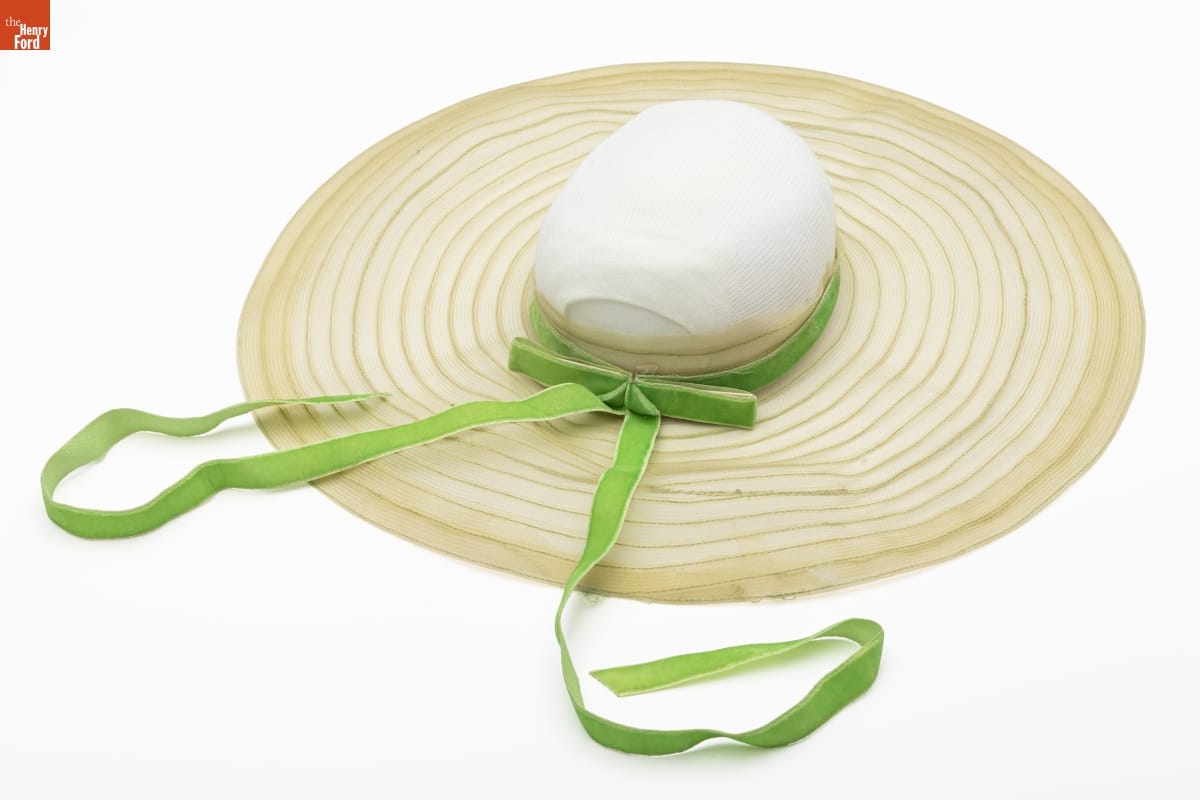
- 1940-1950
- Collections - Artifact
Garden Hat
- Hallmark "Gardener's Paradise" Christmas Ornament, 2005 - Already known for greeting cards, Hallmark introduced a line of Christmas ornaments in 1973. The company's annual release of an increasing array of ornaments revolutionized Christmas decorating, appealing to customers' interest in marking memories and milestones as well as expressing one's personality and unique tastes.
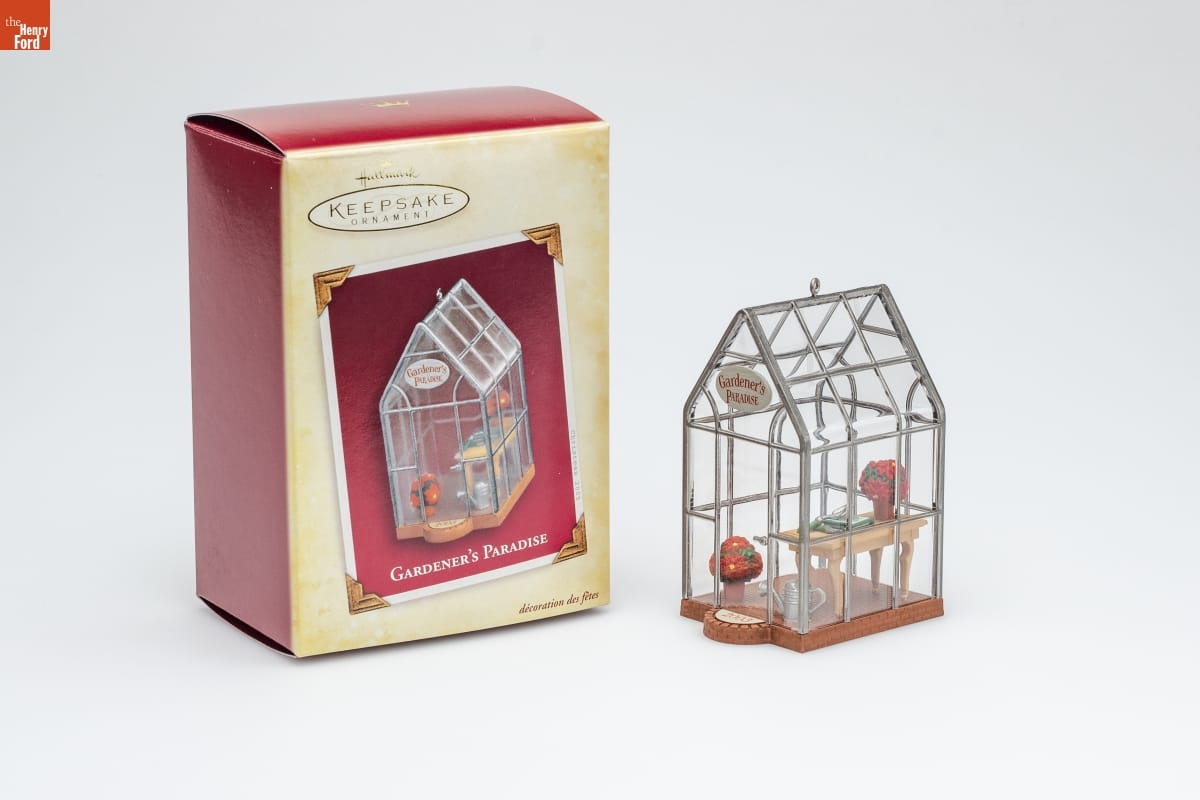
- 2005
- Collections - Artifact
Hallmark "Gardener's Paradise" Christmas Ornament, 2005
Already known for greeting cards, Hallmark introduced a line of Christmas ornaments in 1973. The company's annual release of an increasing array of ornaments revolutionized Christmas decorating, appealing to customers' interest in marking memories and milestones as well as expressing one's personality and unique tastes.