
Search
- Two Helicopters Aloft, circa 1940 - More than 30 years passed between the invention of the airplane and the advent of a practical helicopter. Once it was perfected, though, the helicopter was adopted quickly. Its vertical takeoff and motionless hover abilities lent it to a wide range of applications including traffic control, search and rescue efforts, emergency medical transport, and military operations.
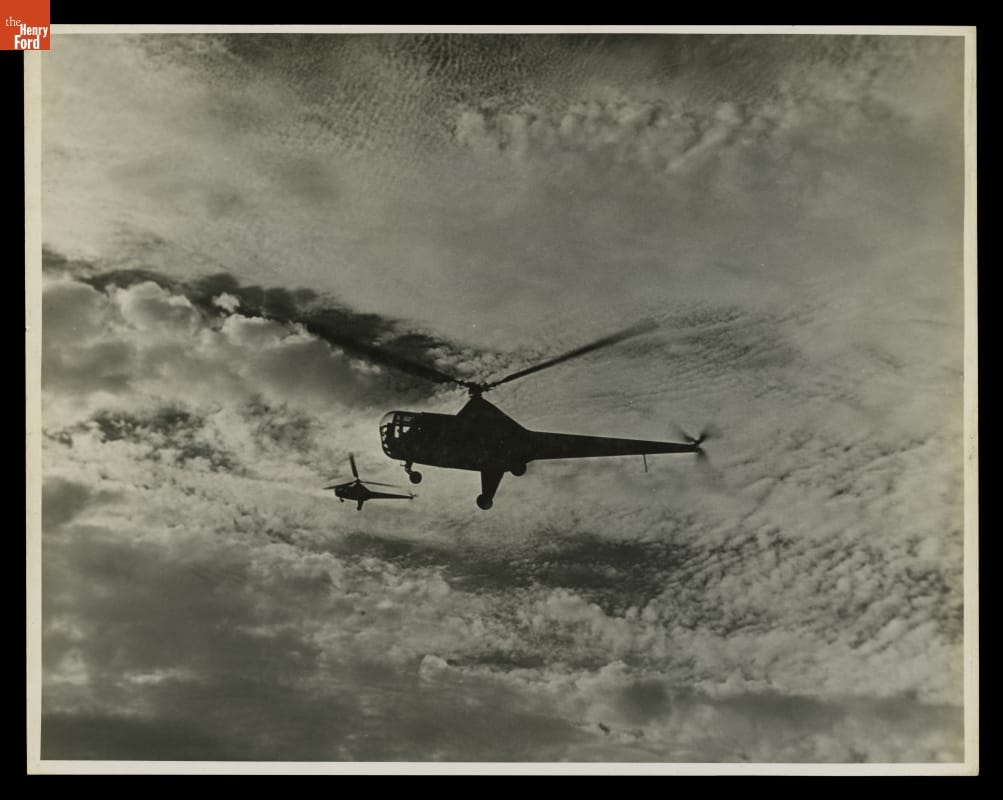
- circa 1940
- Collections - Artifact
Two Helicopters Aloft, circa 1940
More than 30 years passed between the invention of the airplane and the advent of a practical helicopter. Once it was perfected, though, the helicopter was adopted quickly. Its vertical takeoff and motionless hover abilities lent it to a wide range of applications including traffic control, search and rescue efforts, emergency medical transport, and military operations.
- Photography from Small Aircraft and Helicopters, 1966 - Airplanes and helicopters brought with them greater possibilities for aerial photography, which gave people a new perspective on their surroundings. Eastman Kodak Company published this pamphlet in 1966. It included tips for aerial photography -- everything from recommended types of aircraft to preferred films.
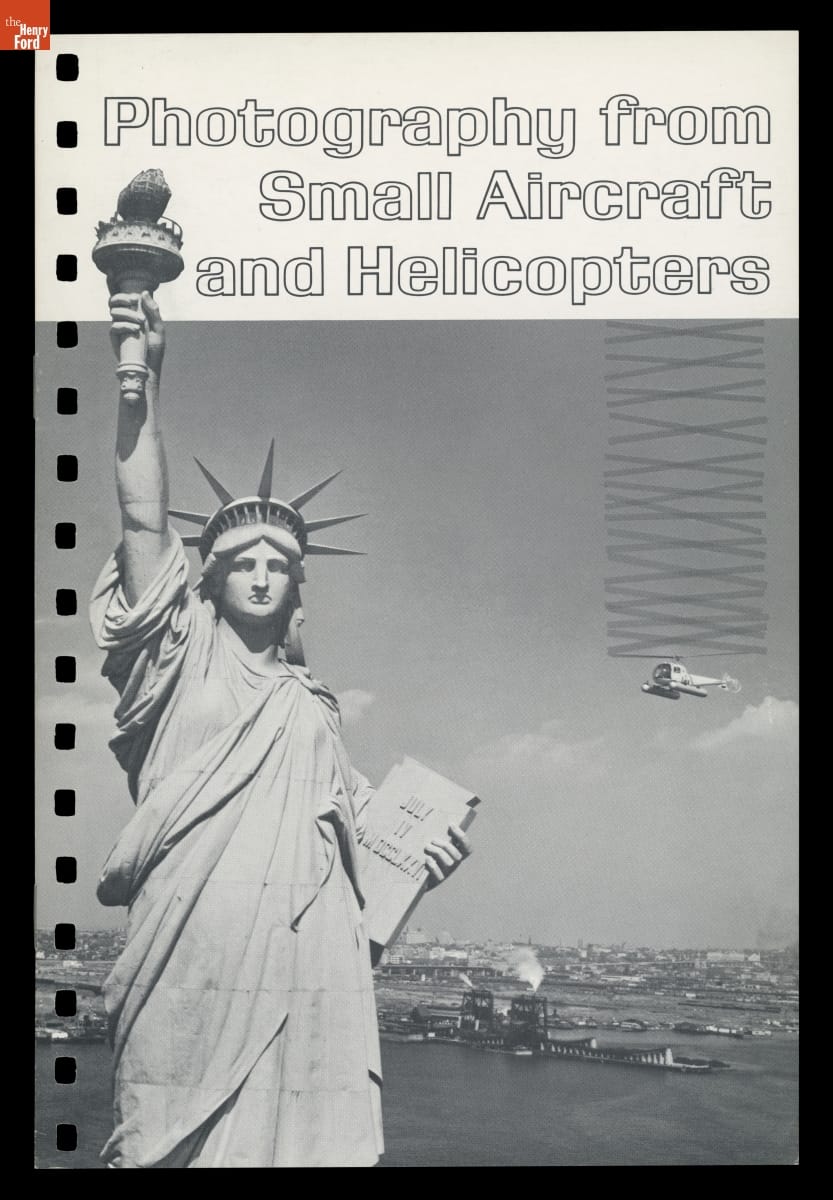
- 1966
- Collections - Artifact
Photography from Small Aircraft and Helicopters, 1966
Airplanes and helicopters brought with them greater possibilities for aerial photography, which gave people a new perspective on their surroundings. Eastman Kodak Company published this pamphlet in 1966. It included tips for aerial photography -- everything from recommended types of aircraft to preferred films.
- Model Helicopter, circa 1991 - Diane Beers joined TWA as a flight attendant in 1965 but left to marry Richard Hill a year later -- a time when many airlines employed only single women in that job. Beers Hill continued her interest in the airline industry and assembled an impressive collection of memorabilia, including models and toys representing various carriers' airplanes and vehicles.
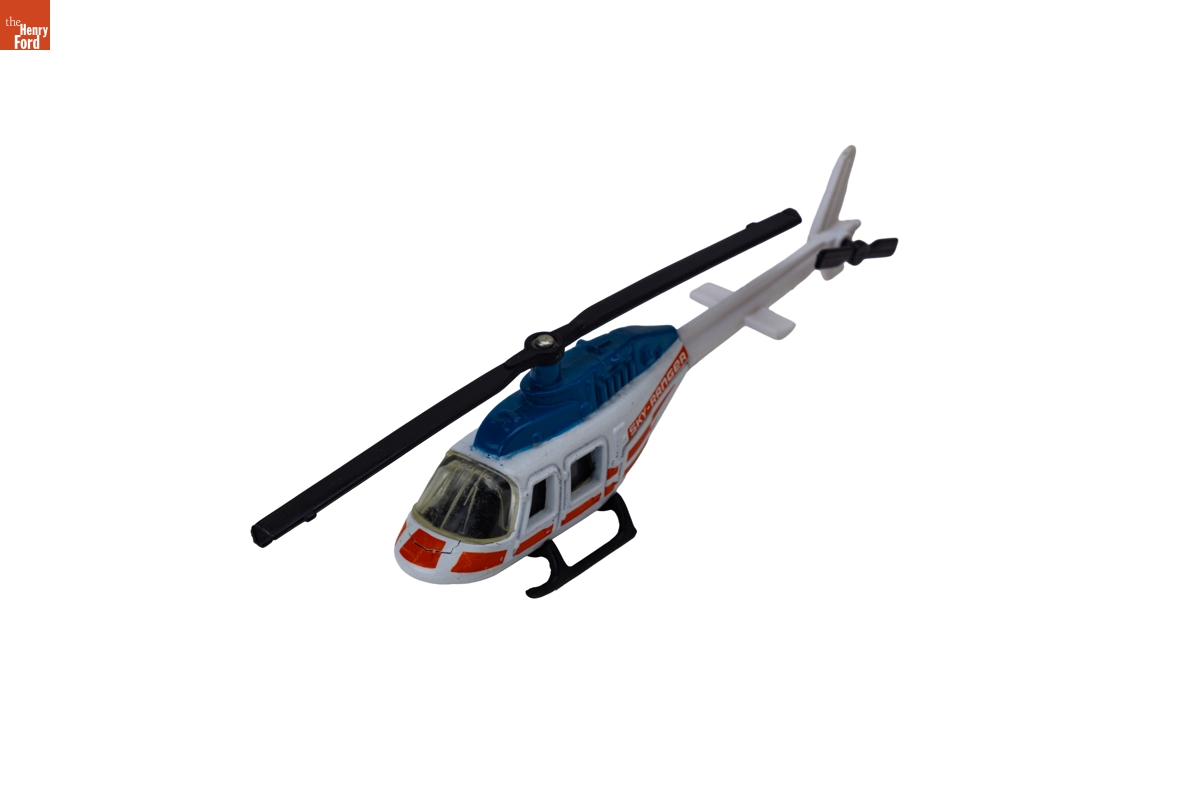
- circa 1991
- Collections - Artifact
Model Helicopter, circa 1991
Diane Beers joined TWA as a flight attendant in 1965 but left to marry Richard Hill a year later -- a time when many airlines employed only single women in that job. Beers Hill continued her interest in the airline industry and assembled an impressive collection of memorabilia, including models and toys representing various carriers' airplanes and vehicles.
- Batman Toy Helicopter & Accessories, circa 1977 -
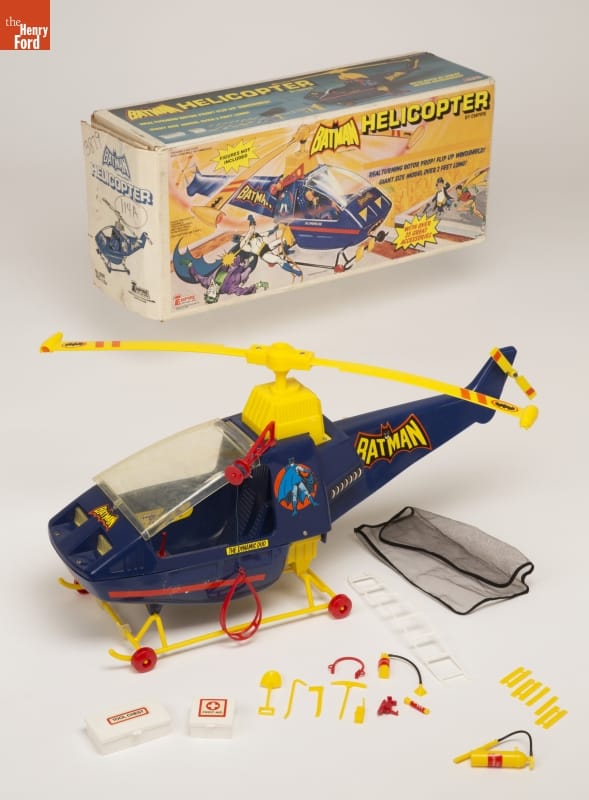
- circa 1977
- Collections - Artifact
Batman Toy Helicopter & Accessories, circa 1977
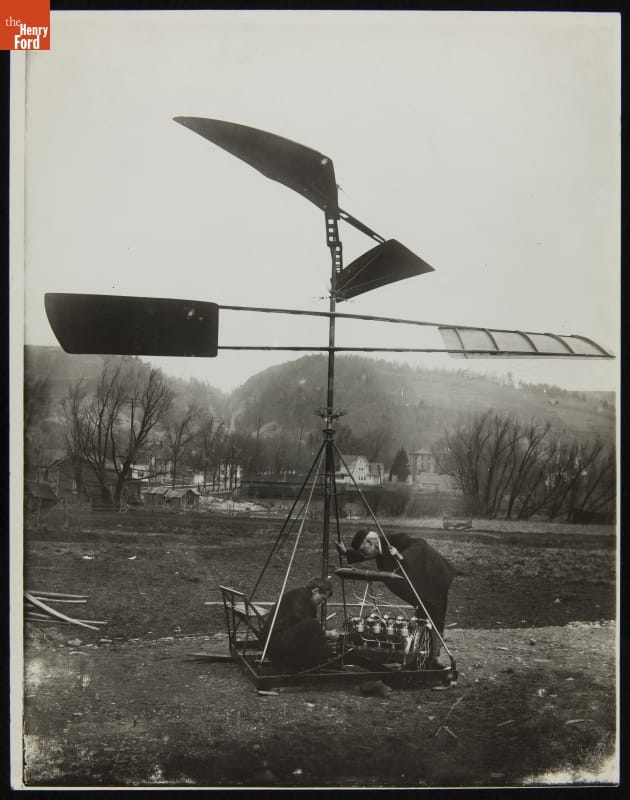
- John Newton Williams with Helicopter, circa 1908 - John Newton Williams, a gifted mechanic, was awarded several typewriter patents, and he formed the Williams Typewriter Company in 1891. After the turn of the century, he became interested in aviation. Williams built a rudimentary helicopter in 1907. His work attracted attention from aviator Glenn Curtiss, who provided Williams with a V-8 engine to use in his helicopter experiments.
- circa 1908
- Collections - Artifact
John Newton Williams with Helicopter, circa 1908
John Newton Williams, a gifted mechanic, was awarded several typewriter patents, and he formed the Williams Typewriter Company in 1891. After the turn of the century, he became interested in aviation. Williams built a rudimentary helicopter in 1907. His work attracted attention from aviator Glenn Curtiss, who provided Williams with a V-8 engine to use in his helicopter experiments.
- 1939 Sikorsky VS-300A Helicopter - Igor Sikorsky, as a young man in Russia, tried unsuccessfully to build a helicopter in 1909. He went on to build fixed-wing aircraft but returned to helicopters in 1938. Within three years, he had developed the first practical helicopter in the United States: the VS-300A.

- 1939
- Collections - Artifact
1939 Sikorsky VS-300A Helicopter
Igor Sikorsky, as a young man in Russia, tried unsuccessfully to build a helicopter in 1909. He went on to build fixed-wing aircraft but returned to helicopters in 1938. Within three years, he had developed the first practical helicopter in the United States: the VS-300A.
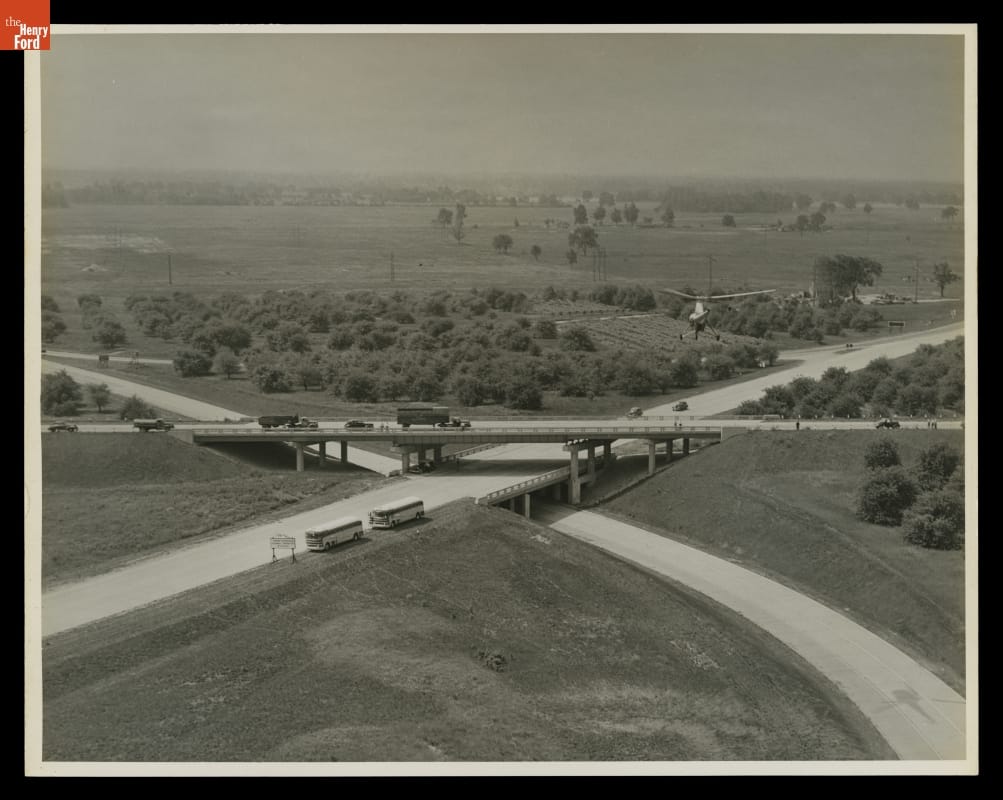
- Helicopter Flying over 3-Level Highway, circa 1940 - Highway improvements helped wartime workers travel between downtown Detroit and Ford Motor Company's Willow Run bomber plant. The tri-level interchange seen here provided direct access to the factory from the Willow Run Expressway, opened in September 1942. The Willow Run Expressway also connected with the Detroit Industrial Expressway, built at the same time. These highways later evolved into Interstate 94.
- circa 1940
- Collections - Artifact
Helicopter Flying over 3-Level Highway, circa 1940
Highway improvements helped wartime workers travel between downtown Detroit and Ford Motor Company's Willow Run bomber plant. The tri-level interchange seen here provided direct access to the factory from the Willow Run Expressway, opened in September 1942. The Willow Run Expressway also connected with the Detroit Industrial Expressway, built at the same time. These highways later evolved into Interstate 94.
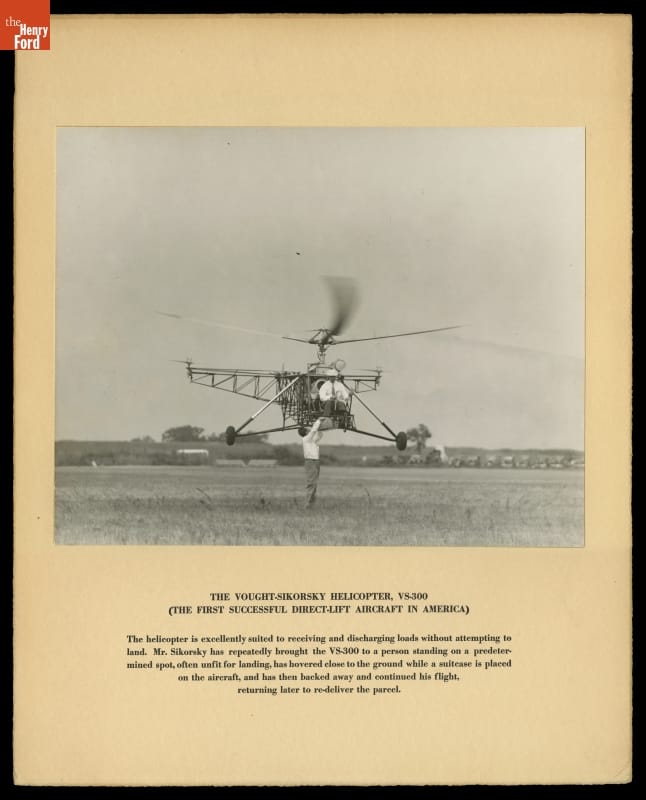
- Igor Sikorsky Piloting the Vought-Sikorsky Helicopter VS-300, Demonstrating Package Delivery, 1925-1940 - Igor Sikorsky built the VS-300, the first practical helicopter developed and flown in the United States, in 1939. Sikorsky demonstrated his aircraft's exceptional maneuverability by repeatedly loading and delivering sample packages to an assistant on the ground. Sikorsky donated the VS-300 to The Henry Ford in 1943.
- 1925-1940
- Collections - Artifact
Igor Sikorsky Piloting the Vought-Sikorsky Helicopter VS-300, Demonstrating Package Delivery, 1925-1940
Igor Sikorsky built the VS-300, the first practical helicopter developed and flown in the United States, in 1939. Sikorsky demonstrated his aircraft's exceptional maneuverability by repeatedly loading and delivering sample packages to an assistant on the ground. Sikorsky donated the VS-300 to The Henry Ford in 1943.
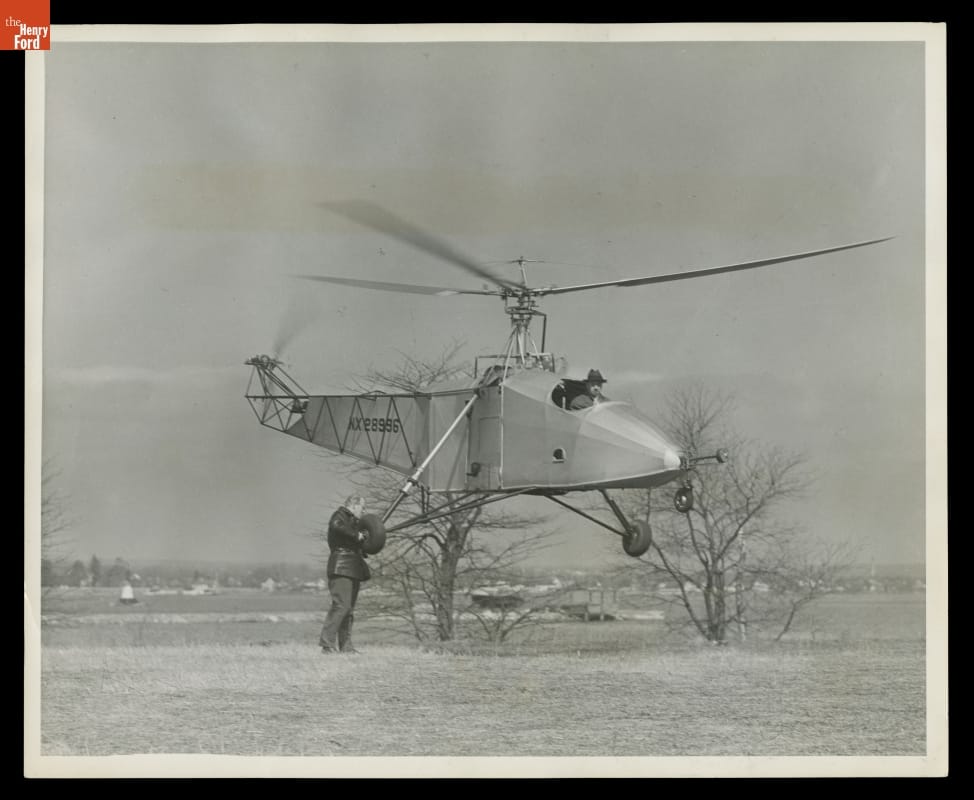
- Igor Sikorsky Piloting the VS-300 Helicopter, Hovering While a Wheel is Removed, circa 1942 - Igor Sikorsky built the VS-300, the first practical helicopter developed and flown in the United States, in 1939. Sikorsky demonstrated the aircraft's exceptional maneuverability by having an associate remove one of the helicopter's landing gear wheels while Sikorsky hovered the craft in place. Sikorsky donated the VS-300 to The Henry Ford in 1943.
- circa 1942
- Collections - Artifact
Igor Sikorsky Piloting the VS-300 Helicopter, Hovering While a Wheel is Removed, circa 1942
Igor Sikorsky built the VS-300, the first practical helicopter developed and flown in the United States, in 1939. Sikorsky demonstrated the aircraft's exceptional maneuverability by having an associate remove one of the helicopter's landing gear wheels while Sikorsky hovered the craft in place. Sikorsky donated the VS-300 to The Henry Ford in 1943.
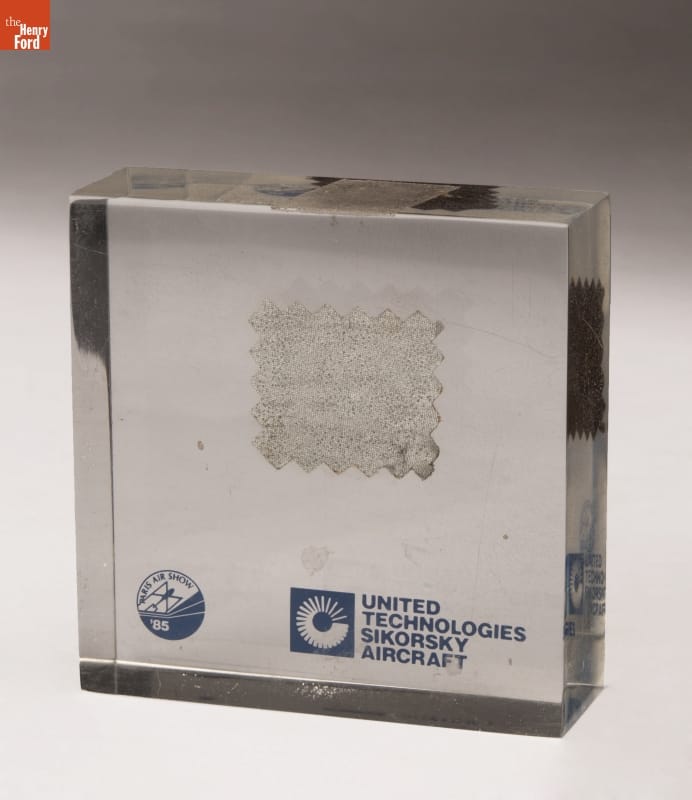
- United Technologies Sikorsky Aircraft Paperweight, 1985 - Igor Sikorsky's VS-300, built in 1939, was the first practical helicopter developed and flown in the United States. Sikorsky donated it to The Henry Ford in 1943. When the helicopter was refurbished by United Technologies Sikorsky Aircraft in 1984, pieces of its original fabric covering were mounted into commemorative paperweights -- symbolic tributes to the VS-300's technological significance.
- 1985
- Collections - Artifact
United Technologies Sikorsky Aircraft Paperweight, 1985
Igor Sikorsky's VS-300, built in 1939, was the first practical helicopter developed and flown in the United States. Sikorsky donated it to The Henry Ford in 1943. When the helicopter was refurbished by United Technologies Sikorsky Aircraft in 1984, pieces of its original fabric covering were mounted into commemorative paperweights -- symbolic tributes to the VS-300's technological significance.