
Search
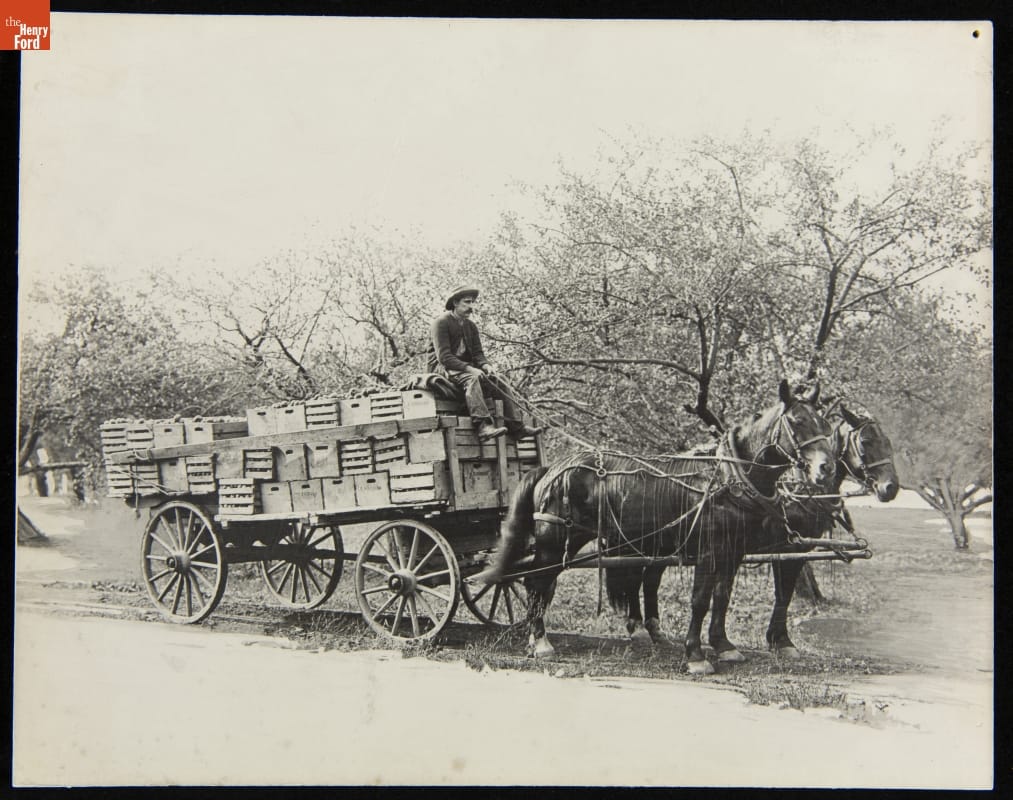
- Horse-Drawn Wagon Transport of Harvested Apples, H. J. Heinz Company, circa 1905 - The H.J. Heinz Company utilized horse-drawn wagons to transport harvested crops from the orchards and fields to the nearby processing factories. In this photograph, a horse-drawn wagon carries apples to be processed in the main plant in Pittsburgh, Pennsylvania.
- circa 1905
- Collections - Artifact
Horse-Drawn Wagon Transport of Harvested Apples, H. J. Heinz Company, circa 1905
The H.J. Heinz Company utilized horse-drawn wagons to transport harvested crops from the orchards and fields to the nearby processing factories. In this photograph, a horse-drawn wagon carries apples to be processed in the main plant in Pittsburgh, Pennsylvania.
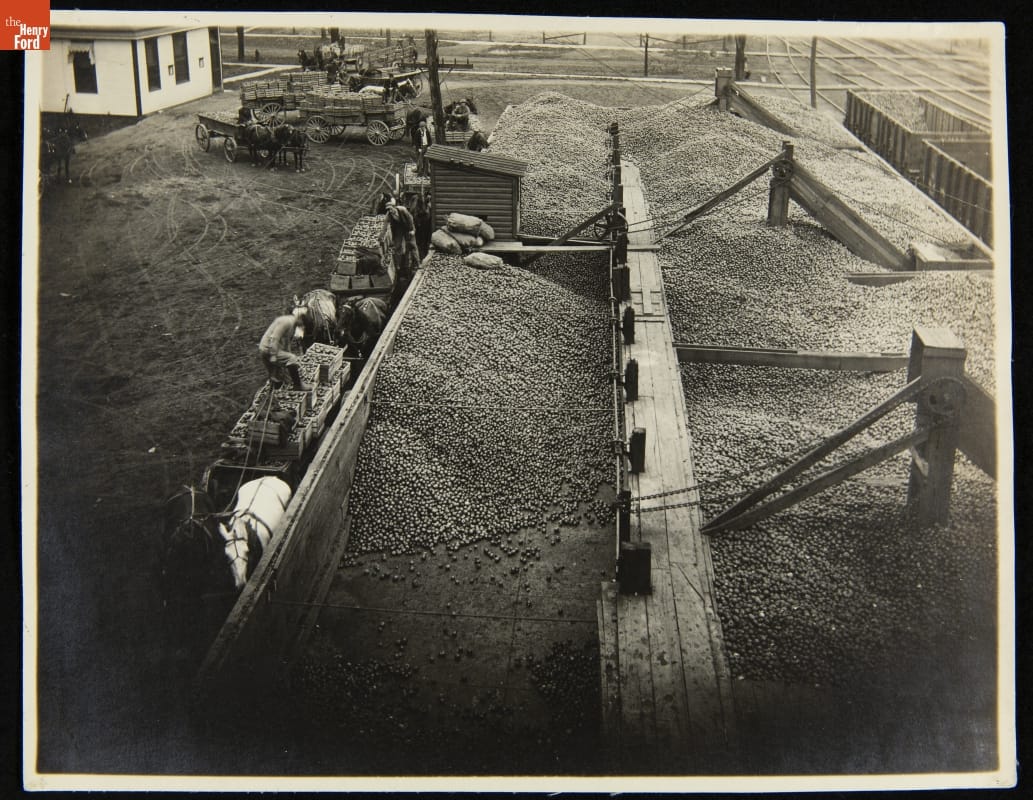
- Transporting Apple Crates Using Horse-Drawn Carts, H. J. Heinz Company, Medina, New York, circa 1910 - Entrepreneur H.J. Heinz recognized that producing high-quality products began with growing the best ingredients. He managed every aspect of the process from seed selection to harvest to ensure that only the best ingredients became Heinz pickled foods, preserves, and condiments. This photograph, apple crates are loaded onto horse-drawn carts to be transported to the factory for processing.
- circa 1910
- Collections - Artifact
Transporting Apple Crates Using Horse-Drawn Carts, H. J. Heinz Company, Medina, New York, circa 1910
Entrepreneur H.J. Heinz recognized that producing high-quality products began with growing the best ingredients. He managed every aspect of the process from seed selection to harvest to ensure that only the best ingredients became Heinz pickled foods, preserves, and condiments. This photograph, apple crates are loaded onto horse-drawn carts to be transported to the factory for processing.
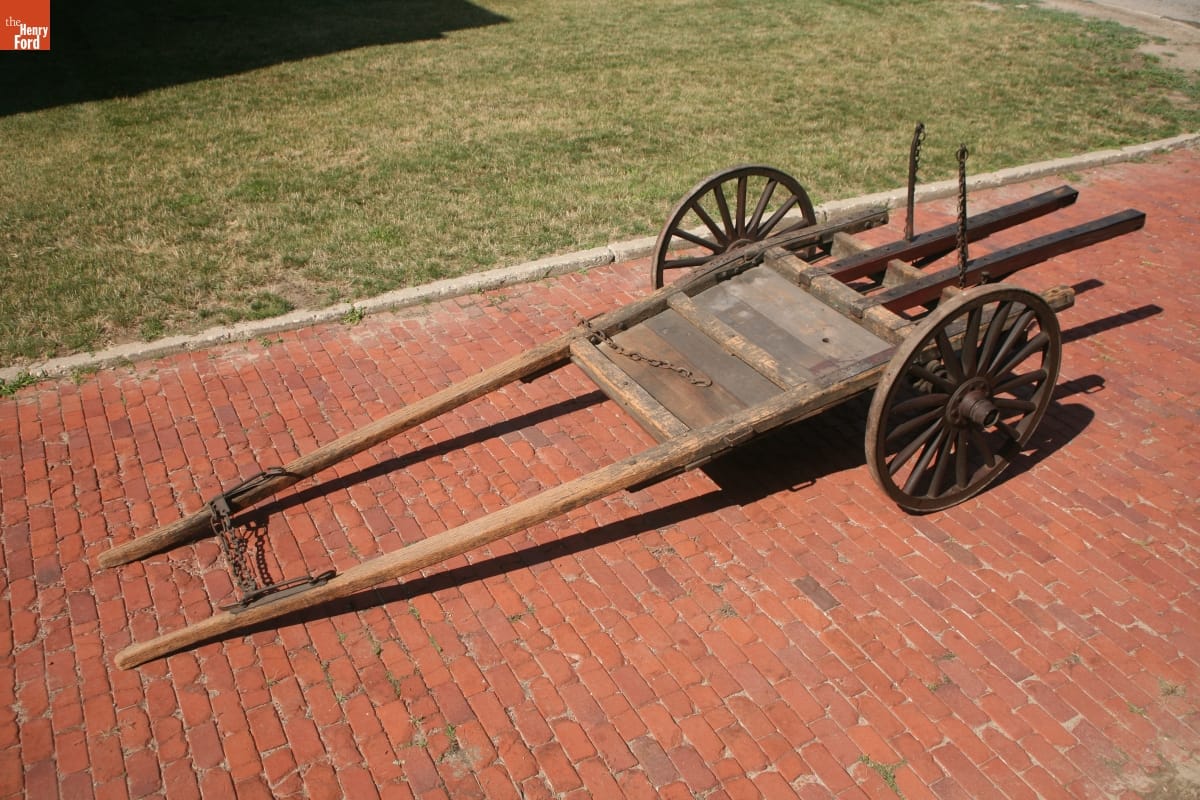
- Horse Drawn Dray, circa 1890 - Simple two-wheeled drays like this were the most common means of moving goods between docks, railroad stations, and businesses in pre-automotive American cities. This dray was made by Studebaker of South Bend, Indiana, once the nation's largest maker of horse-drawn vehicles. Studebaker entered the automobile business in 1902 and became a major builder before ending motor vehicle production in 1966.
- circa 1890
- Collections - Artifact
Horse Drawn Dray, circa 1890
Simple two-wheeled drays like this were the most common means of moving goods between docks, railroad stations, and businesses in pre-automotive American cities. This dray was made by Studebaker of South Bend, Indiana, once the nation's largest maker of horse-drawn vehicles. Studebaker entered the automobile business in 1902 and became a major builder before ending motor vehicle production in 1966.
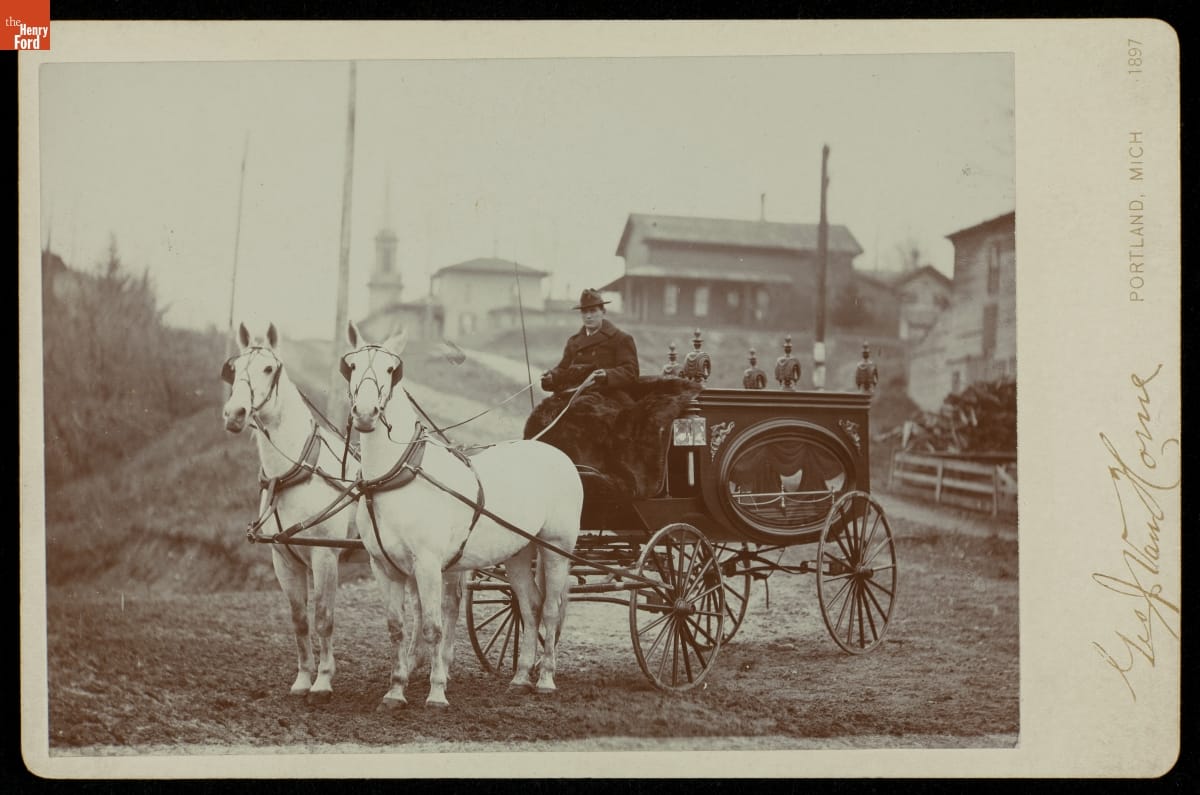
- Horse-Drawn Hearse and Driver, 1897 - Professional photographers began producing cabinet cards in 1867, and people soon preferred these photographic prints on cardboard stock to the earlier, smaller cartes-de-visite. American commonly collected and exchanged cabinet photographs through the early 1900s. This example, made in 1897 by Portland, Michigan, photographer George J. Van Horn, shows a horse-drawn hearse and rider.
- 1897
- Collections - Artifact
Horse-Drawn Hearse and Driver, 1897
Professional photographers began producing cabinet cards in 1867, and people soon preferred these photographic prints on cardboard stock to the earlier, smaller cartes-de-visite. American commonly collected and exchanged cabinet photographs through the early 1900s. This example, made in 1897 by Portland, Michigan, photographer George J. Van Horn, shows a horse-drawn hearse and rider.
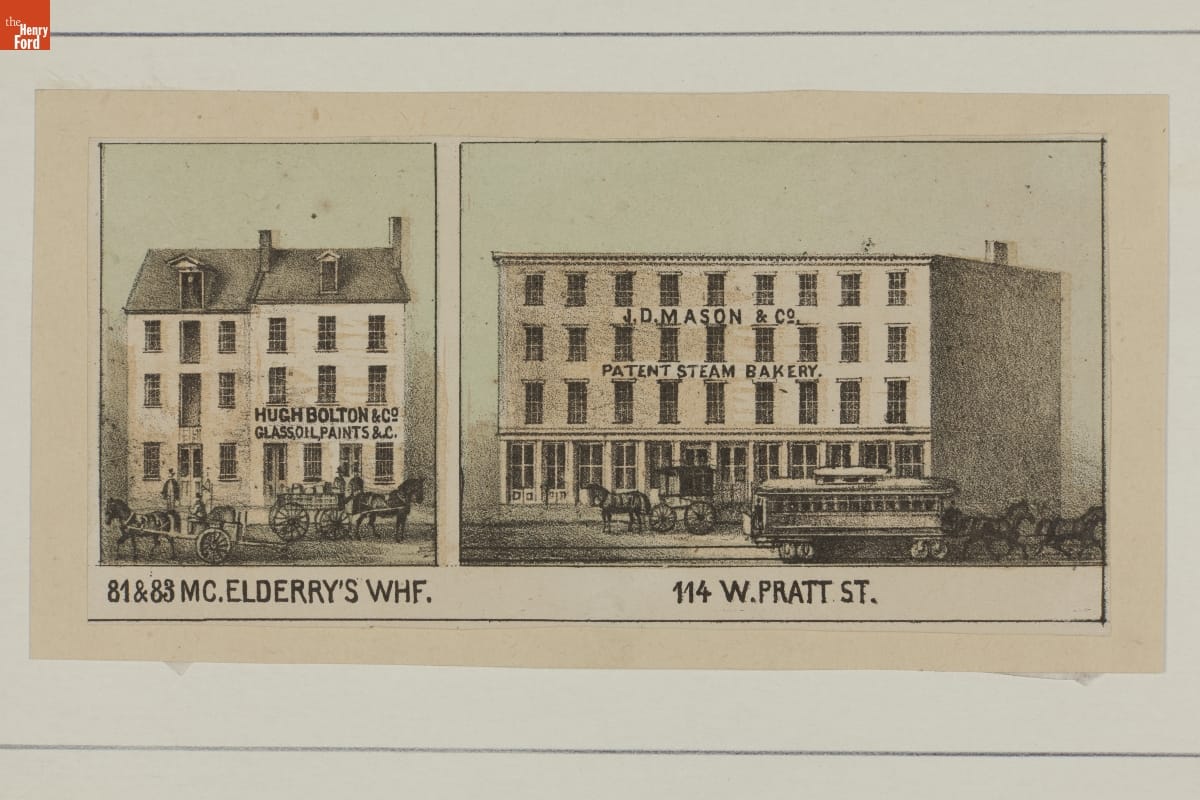
- Baltimore Horse-Drawn Streetcar, circa 1870 - This circa 1870 color lithograph depicts two businesses in Baltimore, Maryland. On the left, two horse-drawn carts are parked in front of Hugh Bolton & Company's glass, oil, and paint establishment, and on the right, a horse-drawn railcar moves swiftly past J.D. Mason & Company's "Patent Steam Bakery."
- circa 1870
- Collections - Artifact
Baltimore Horse-Drawn Streetcar, circa 1870
This circa 1870 color lithograph depicts two businesses in Baltimore, Maryland. On the left, two horse-drawn carts are parked in front of Hugh Bolton & Company's glass, oil, and paint establishment, and on the right, a horse-drawn railcar moves swiftly past J.D. Mason & Company's "Patent Steam Bakery."
- Toy Horse Drawn Wagon, 1900-1910 -
- 1900-1910
- Collections - Artifact
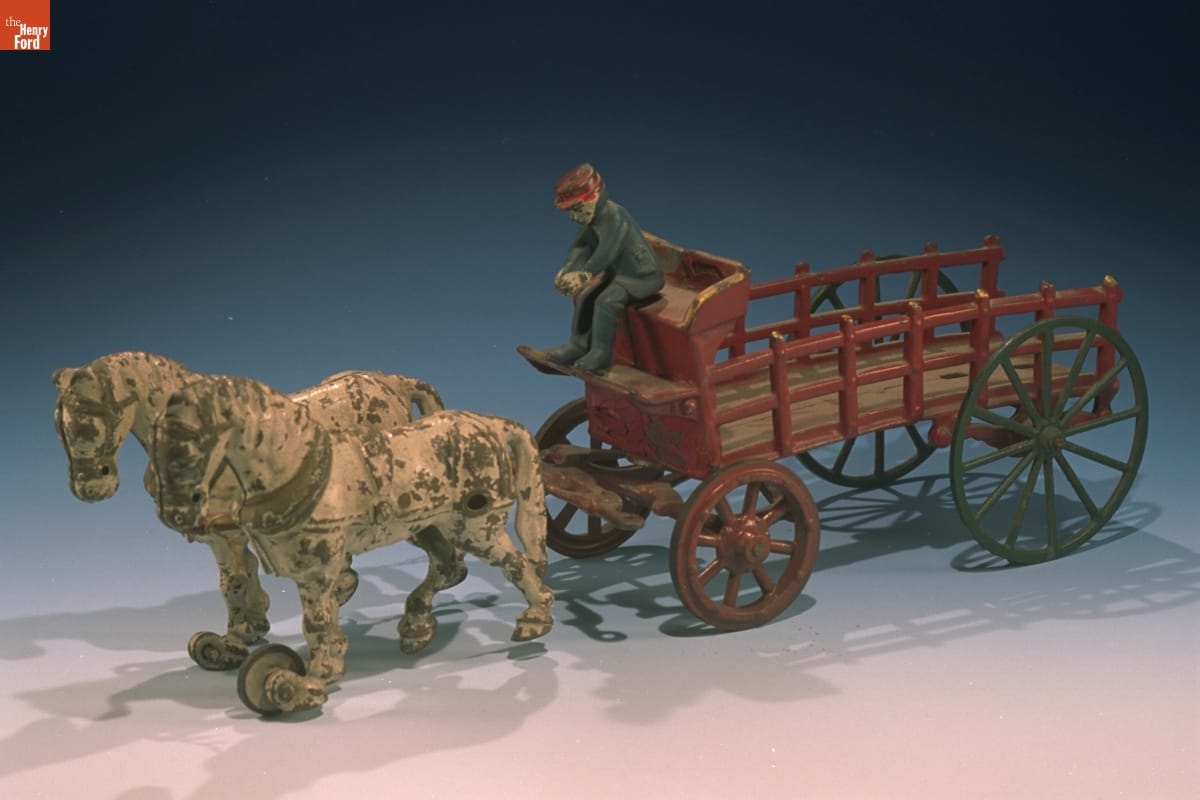
Toy Horse Drawn Wagon, 1900-1910
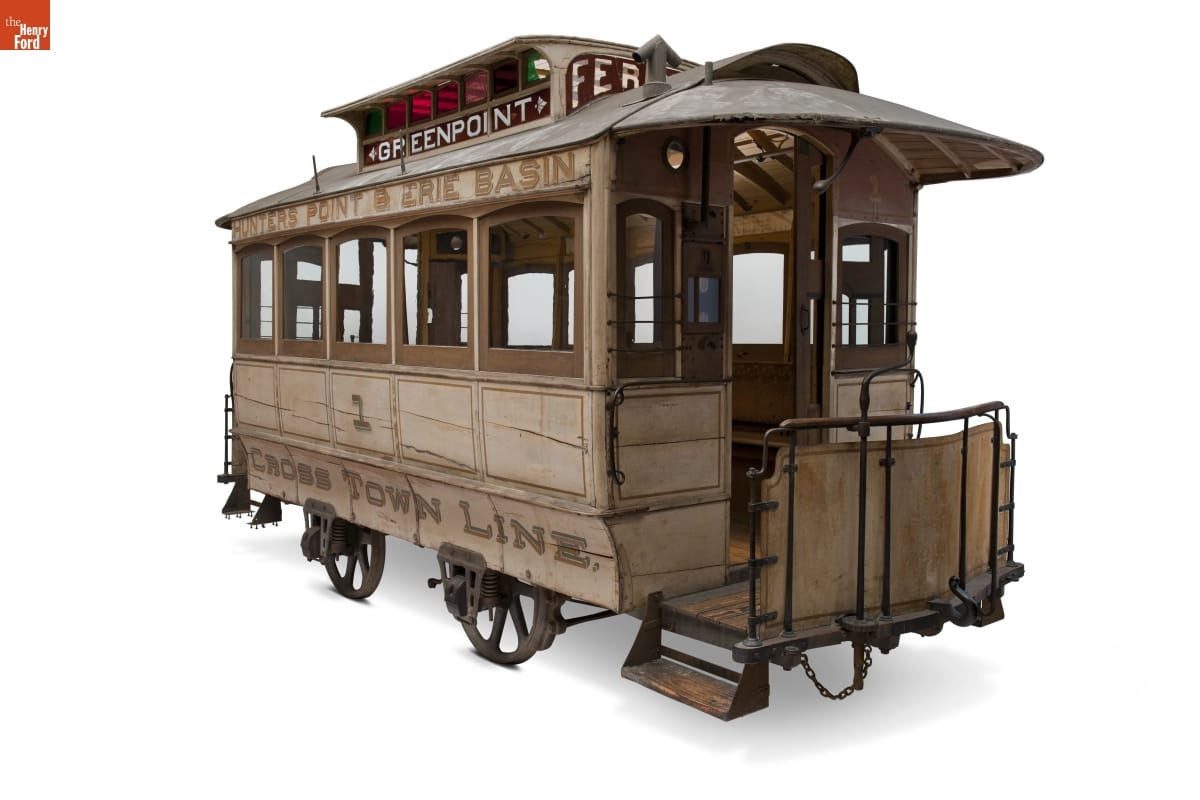
- Jones Horse-Drawn Streetcar, circa 1875 - The horse-drawn streetcar was an important means of public transportation in 19th-century American cities. New York's Brooklyn City Railroad ran this car on its line between Hunters Point in Long Island City, and Erie Basin in South Brooklyn. But horses were expensive to stable and feed -- and messy too. Operators embraced electric streetcars starting in the late 1880s.
- circa 1875
- Collections - Artifact
Jones Horse-Drawn Streetcar, circa 1875
The horse-drawn streetcar was an important means of public transportation in 19th-century American cities. New York's Brooklyn City Railroad ran this car on its line between Hunters Point in Long Island City, and Erie Basin in South Brooklyn. But horses were expensive to stable and feed -- and messy too. Operators embraced electric streetcars starting in the late 1880s.
- Toy Horse Drawn Wagon, 1890-1910 -
- 1890-1910
- Collections - Artifact
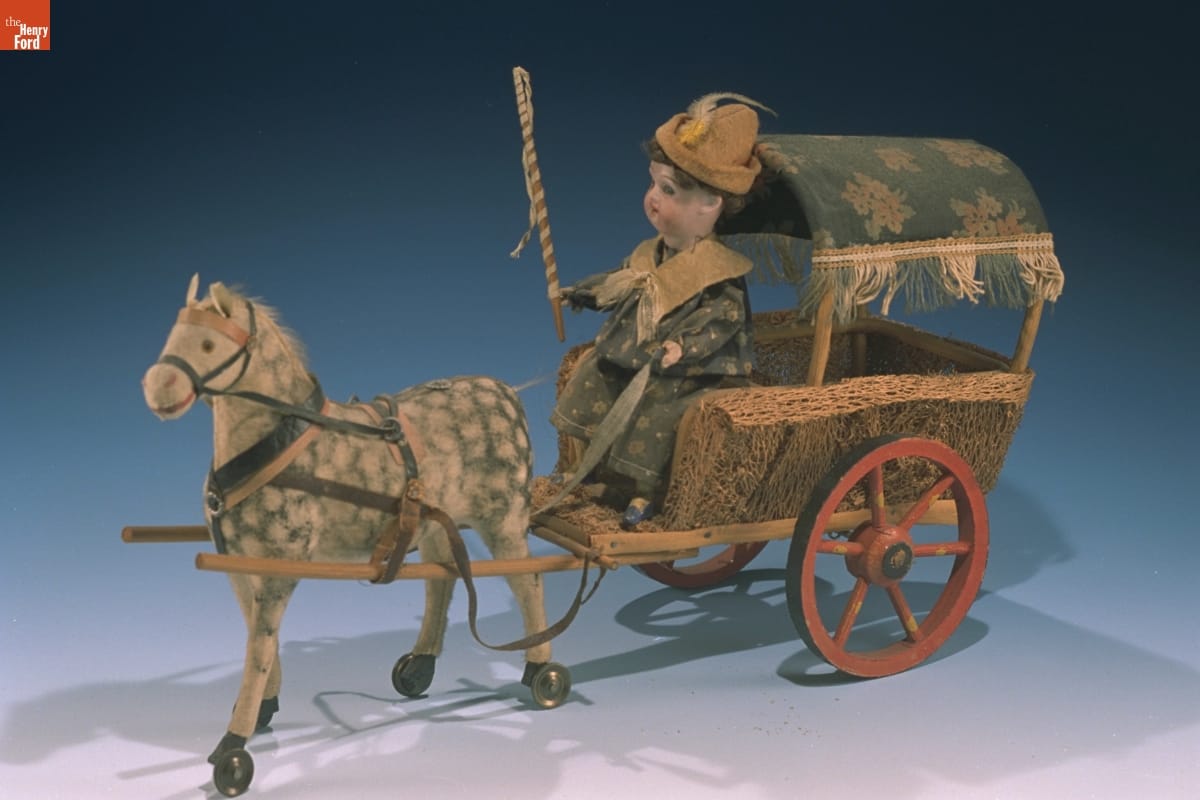
Toy Horse Drawn Wagon, 1890-1910
- Toy Horse Drawn Carriage, 1860-1880 -
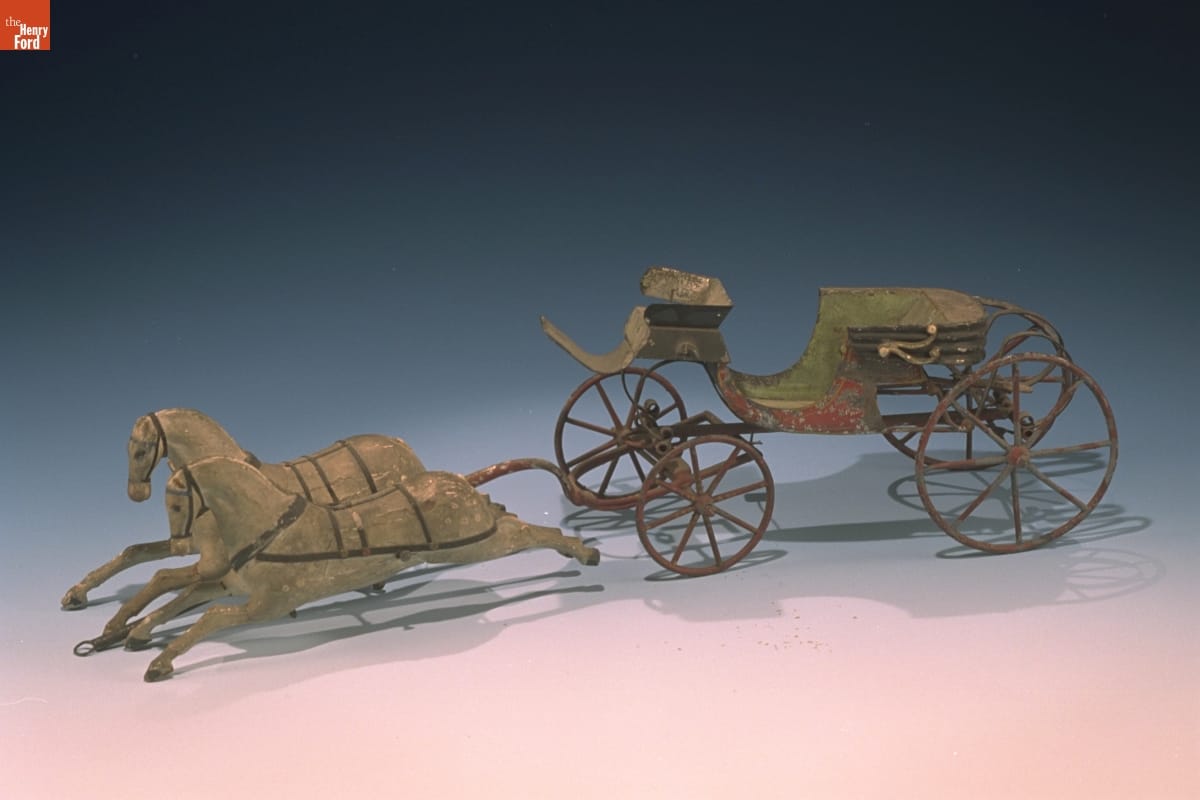
- 1860-1880
- Collections - Artifact
Toy Horse Drawn Carriage, 1860-1880
- Toy Horse-Drawn Buggy, 1860-1900 -
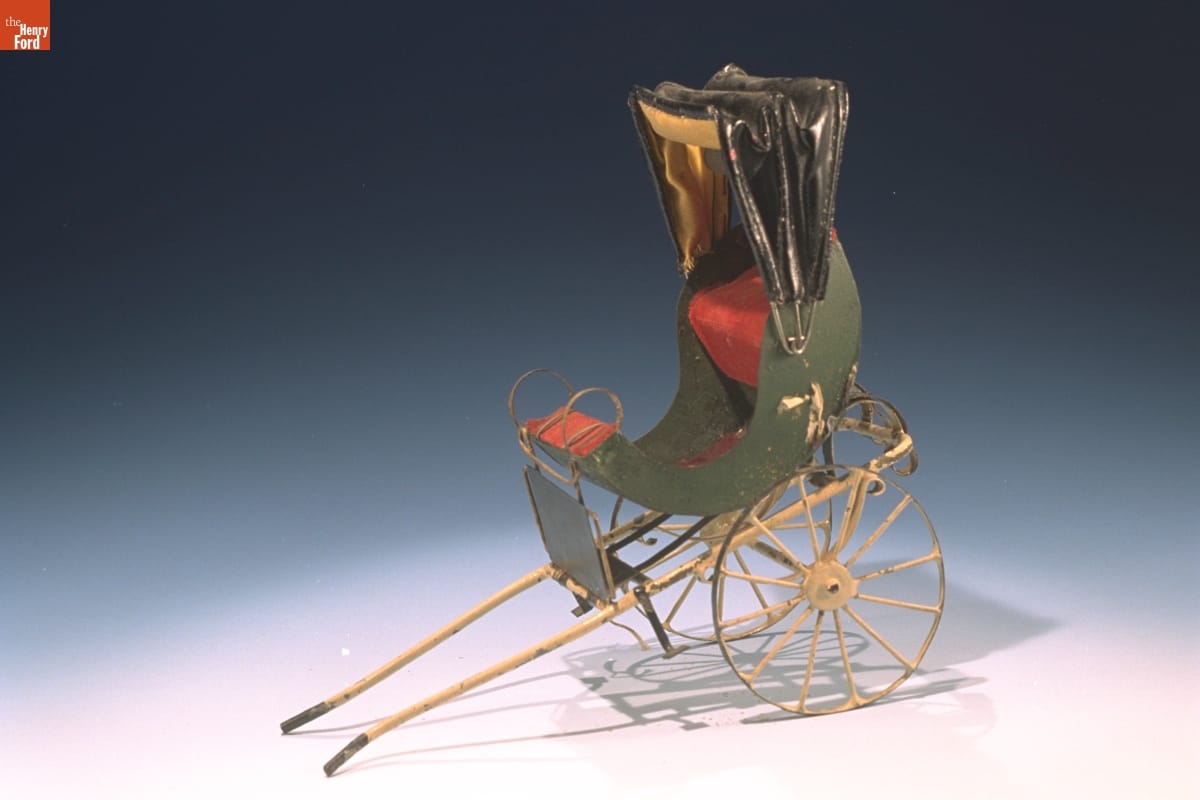
- 1860-1900
- Collections - Artifact
Toy Horse-Drawn Buggy, 1860-1900