
Search
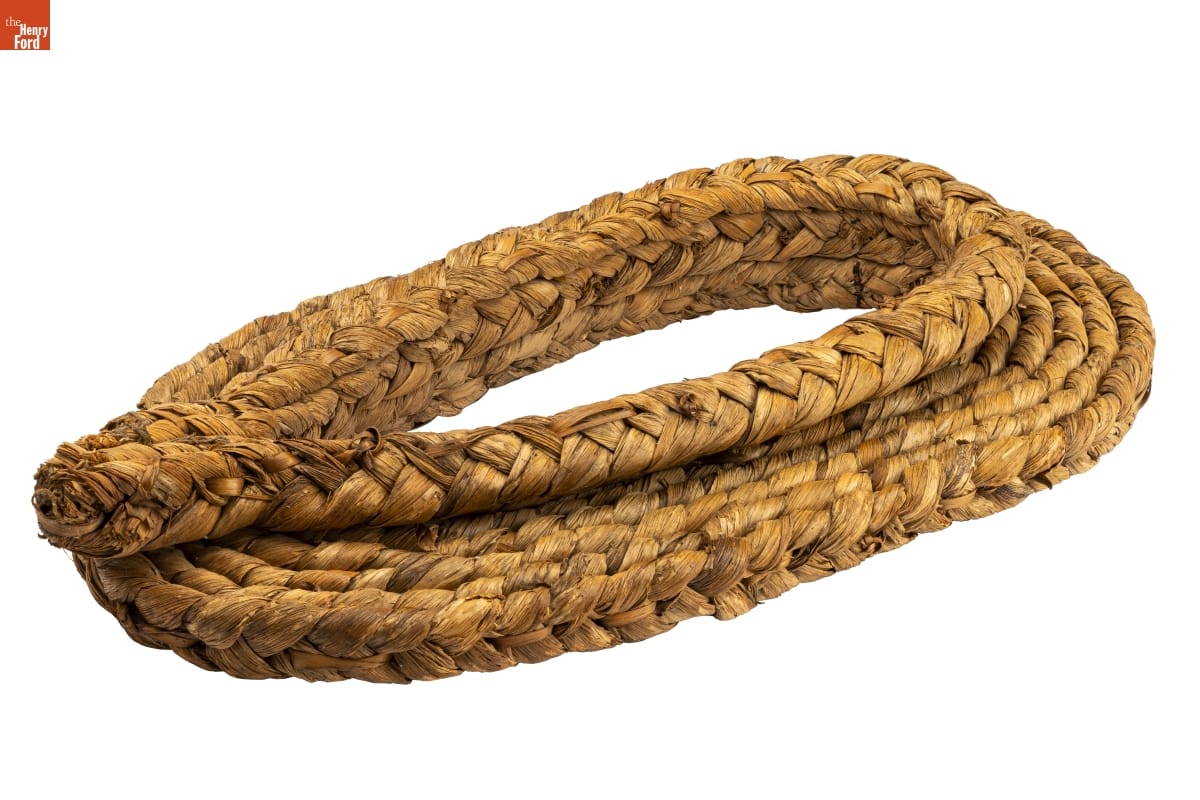
- Horse Collar - Fitted with a padded collar and other tack or harness equipment, a horse can move heavy loads or pull carriages, wagons, plows and other machinery. The collar distributes the weight around the horse's neck and shoulders, while avoiding pressure on the animal's windpipe. With this age-old invention, horses became and remain a valuable engine in non-motorized environments.
- Collections - Artifact
Horse Collar
Fitted with a padded collar and other tack or harness equipment, a horse can move heavy loads or pull carriages, wagons, plows and other machinery. The collar distributes the weight around the horse's neck and shoulders, while avoiding pressure on the animal's windpipe. With this age-old invention, horses became and remain a valuable engine in non-motorized environments.
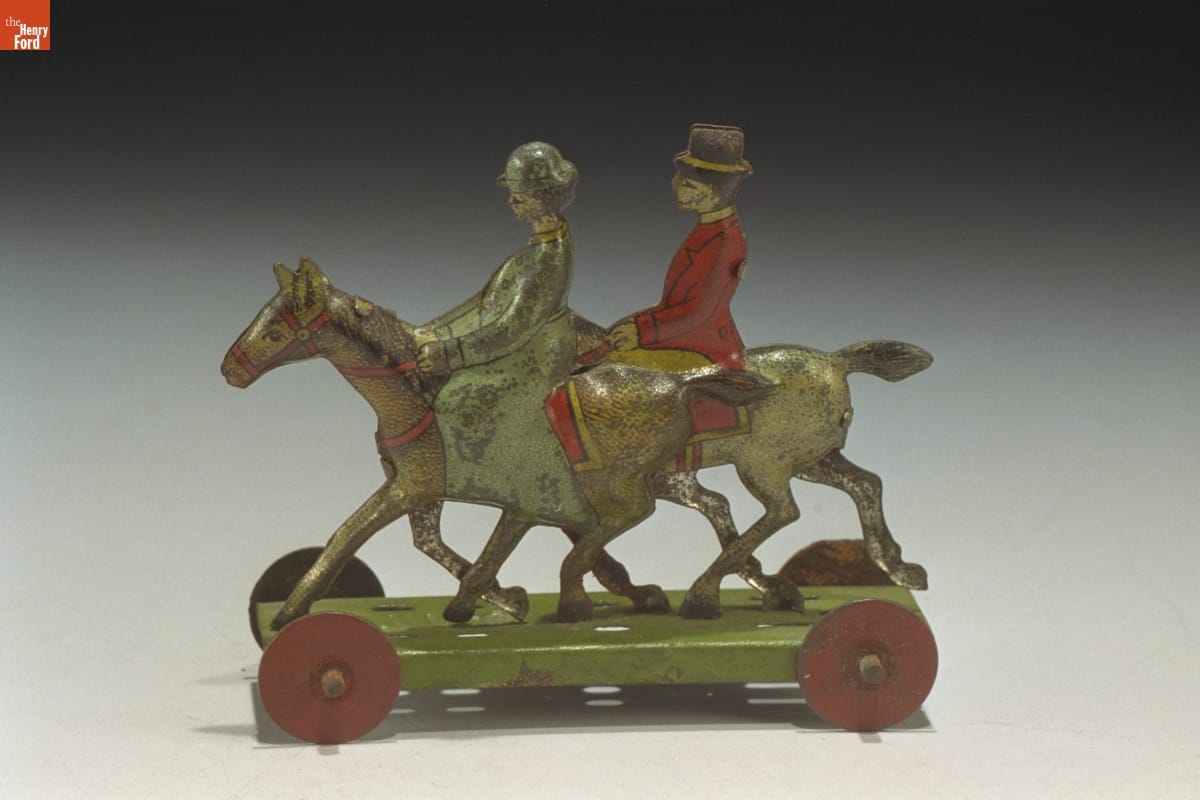
- Horses and Riders Penny Toy, circa 1890 - Toy companies began making small, inexpensive, yet colorful, tin toys in the late 19th century. Over the years, toymakers stamped tin into shapes of animals, trains, boats, soldiers and even this couple riding horses. Children could purchase these low-priced toys from shopkeepers or street vendors. These mass-produced toys -- though not meant to last -- provided fun for just a few pennies.
- circa 1890
- Collections - Artifact
Horses and Riders Penny Toy, circa 1890
Toy companies began making small, inexpensive, yet colorful, tin toys in the late 19th century. Over the years, toymakers stamped tin into shapes of animals, trains, boats, soldiers and even this couple riding horses. Children could purchase these low-priced toys from shopkeepers or street vendors. These mass-produced toys -- though not meant to last -- provided fun for just a few pennies.
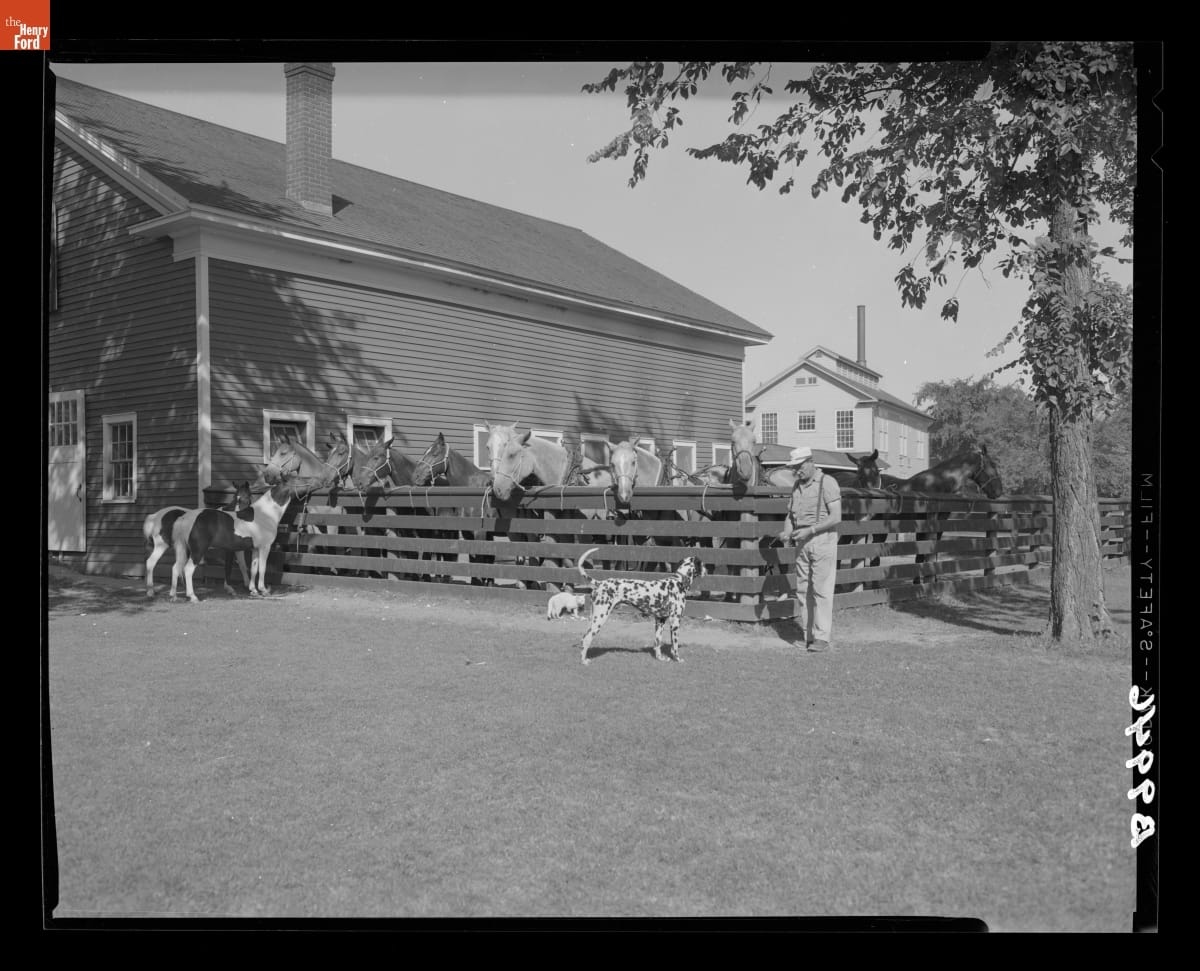
- Horses in Greenfield Village, June 28, 1955 -
- June 28, 1955
- Collections - Artifact
Horses in Greenfield Village, June 28, 1955
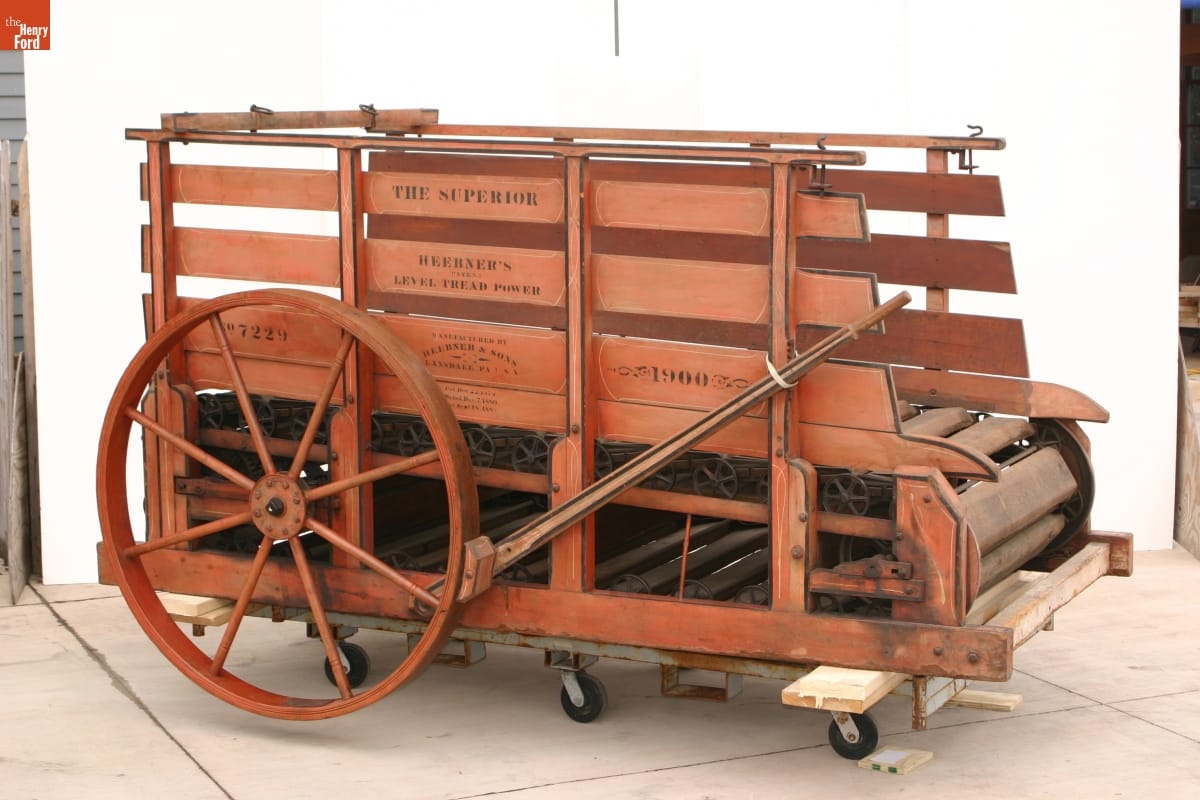
- Two-Horse Treadmill-Type Horse Power, circa 1900 - Farmers began to use stationary power sources in the nineteenth century as they mechanized barn or farmyard work like threshing, winnowing, or corn grinding. Some invested in animal treadmills like this one. Animals walked on an "endless belt," a device similar to those on modern exercise treadmills. A wheel and belt converted the animals' movement to drive a variety of agricultural machinery.
- circa 1900
- Collections - Artifact
Two-Horse Treadmill-Type Horse Power, circa 1900
Farmers began to use stationary power sources in the nineteenth century as they mechanized barn or farmyard work like threshing, winnowing, or corn grinding. Some invested in animal treadmills like this one. Animals walked on an "endless belt," a device similar to those on modern exercise treadmills. A wheel and belt converted the animals' movement to drive a variety of agricultural machinery.
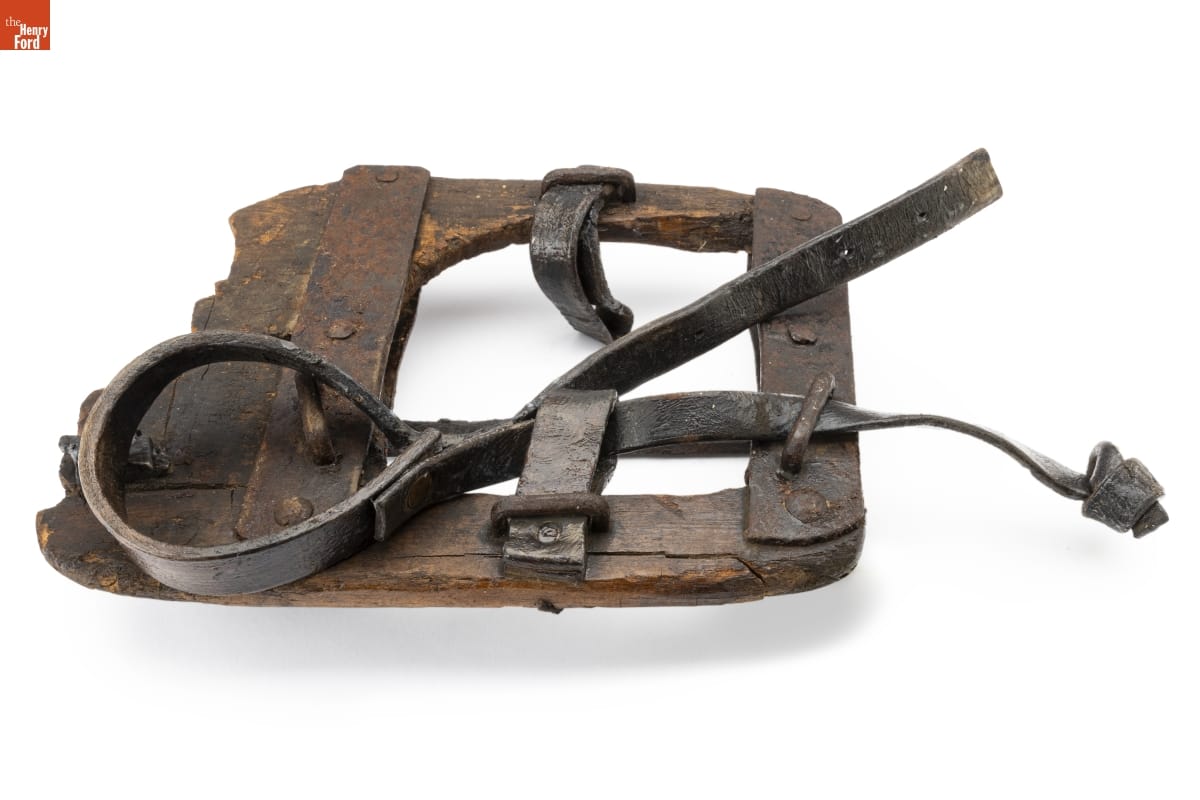
- Horse Bog Shoe -
- Collections - Artifact
Horse Bog Shoe
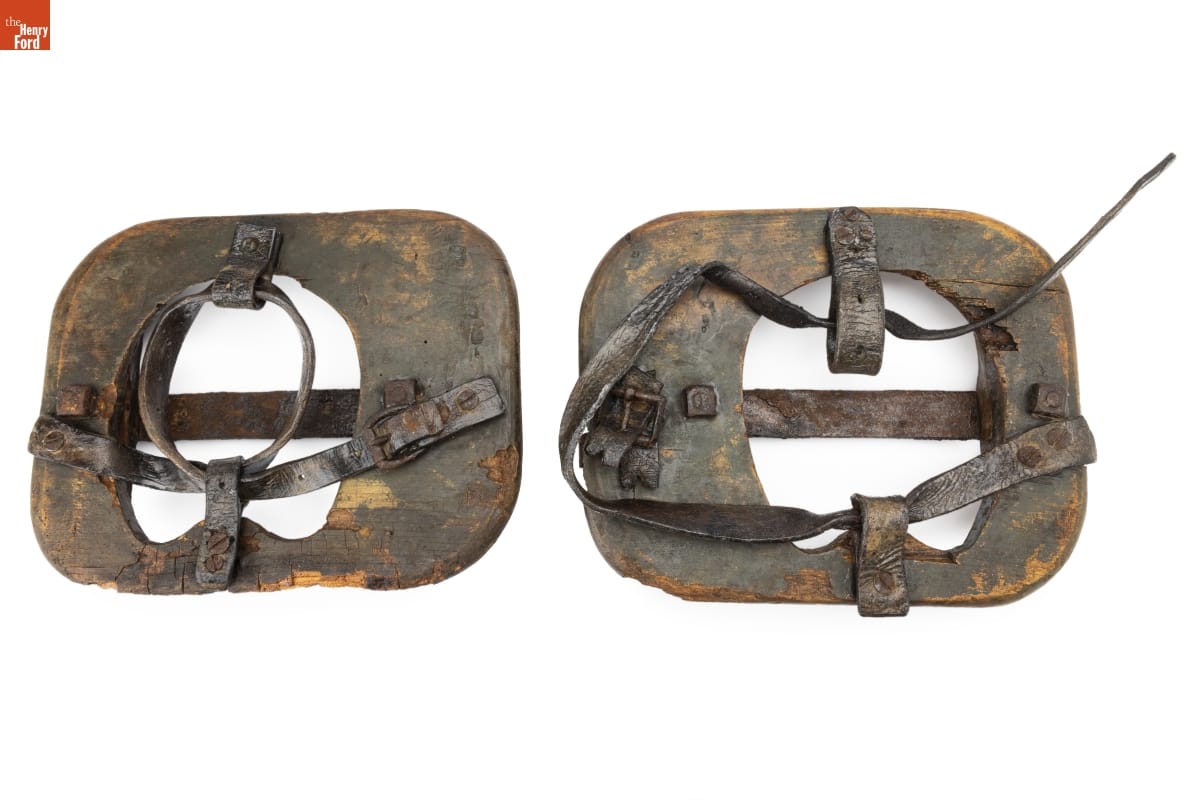
- Horse Bog Shoes -
- Collections - Artifact
Horse Bog Shoes
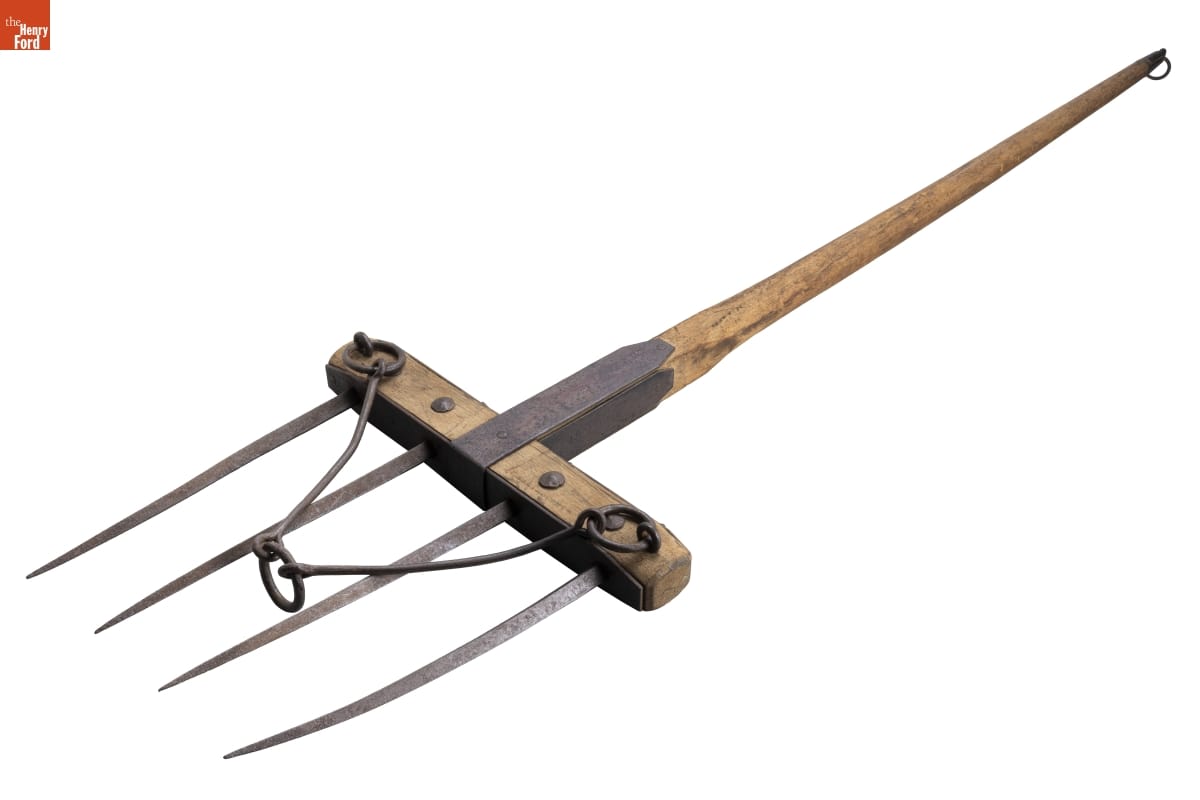
- Horse Hay Fork -
- Collections - Artifact
Horse Hay Fork
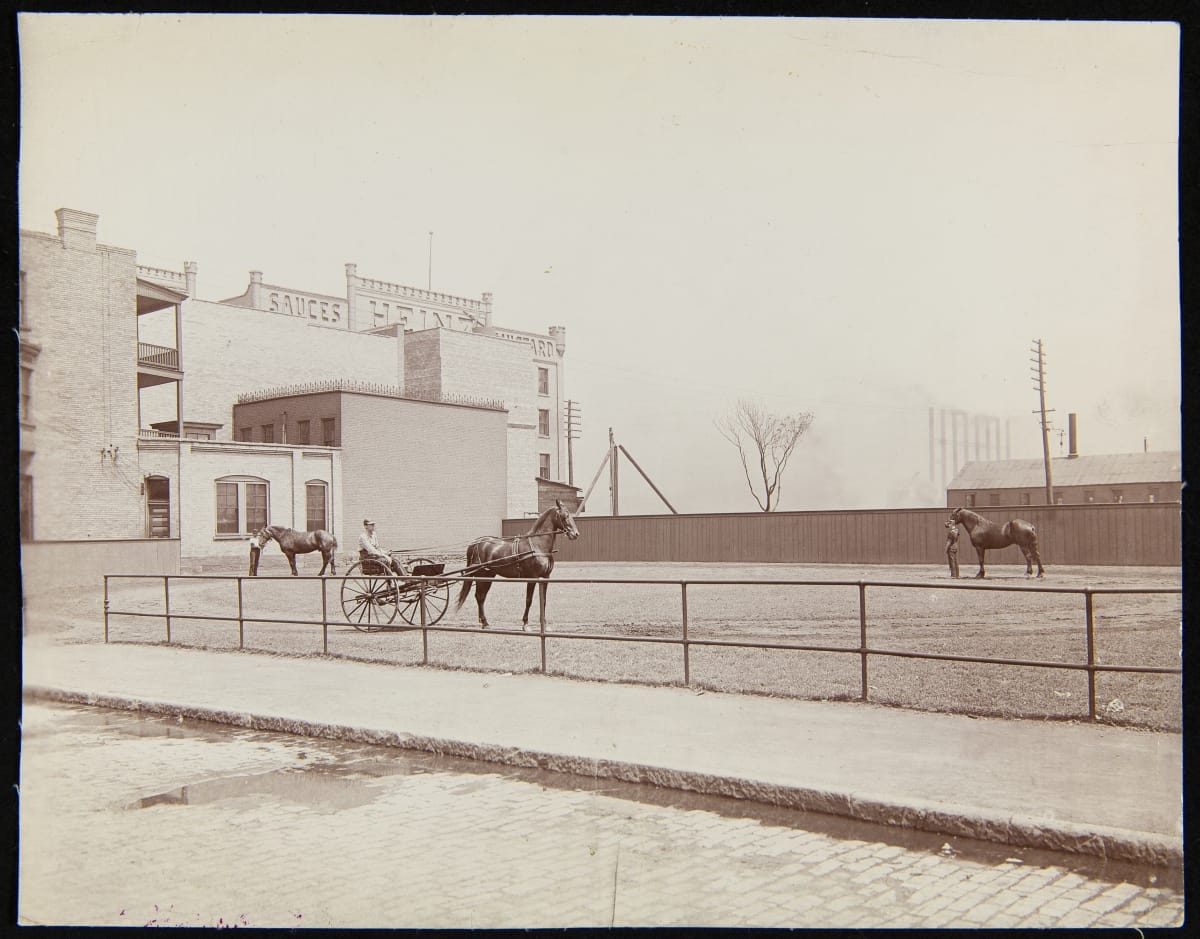
- Employees Exercising Horses, H. J. Heinz Company, Pittsburgh, Pennsylvania, circa 1905 - Before the 1920s, the H.J. Heinz Company transported their goods by rail and by horse-drawn wagons. The main factory in Pittsburgh, Pennsylvania, had top-of-the-line stables, sometimes referred to as "equine palaces," where the horses received only the best feed and care. In this photograph, employees are exercising the horses on the grounds within the factory complex.
- circa 1905
- Collections - Artifact
Employees Exercising Horses, H. J. Heinz Company, Pittsburgh, Pennsylvania, circa 1905
Before the 1920s, the H.J. Heinz Company transported their goods by rail and by horse-drawn wagons. The main factory in Pittsburgh, Pennsylvania, had top-of-the-line stables, sometimes referred to as "equine palaces," where the horses received only the best feed and care. In this photograph, employees are exercising the horses on the grounds within the factory complex.
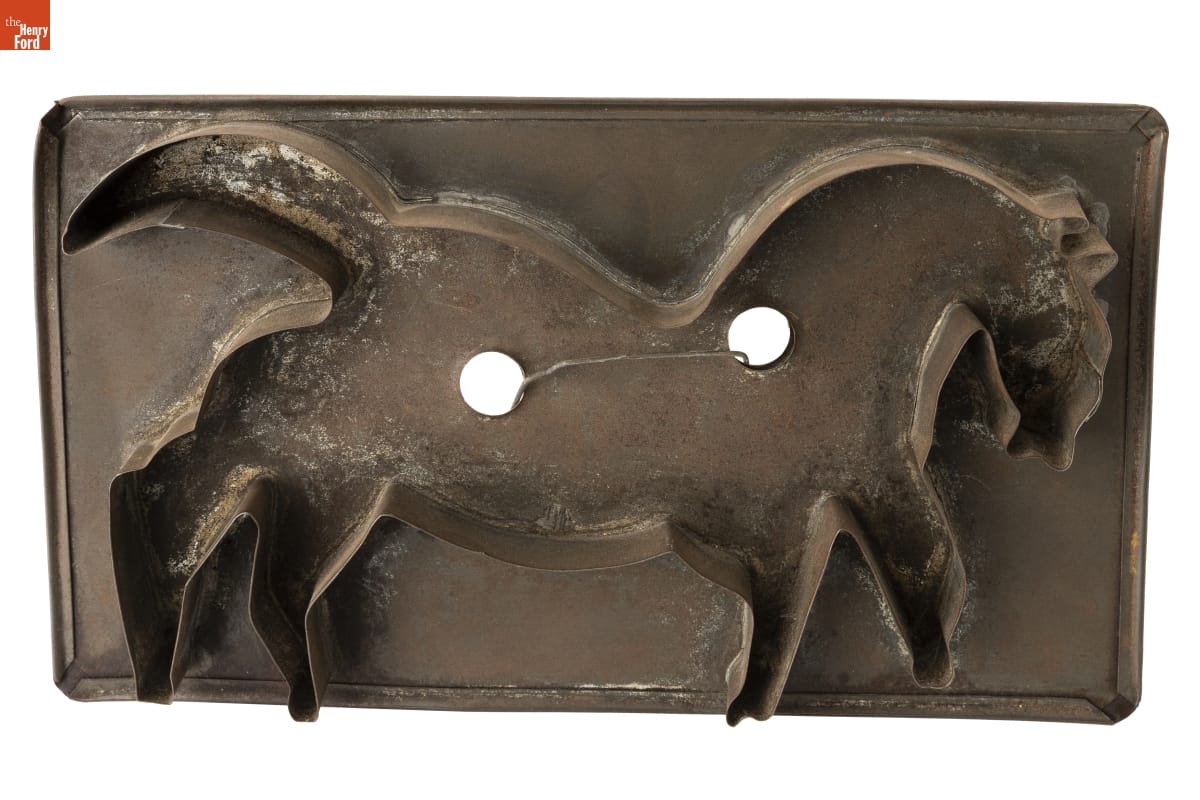
- Horse Cookie Cutter - Tin-plated iron, commonly called "tin," was the dominant material for utilitarian items in 19th-century America. Local tinsmiths produced an almost endless range of goods. But as more durable and lower maintenance materials emerged, handmade tinware came to be considered a folk art or heritage craft. This 20th-century example was produced in the Greenfield Village tin shop using historical tinsmithing tools and techniques.
- Collections - Artifact
Horse Cookie Cutter
Tin-plated iron, commonly called "tin," was the dominant material for utilitarian items in 19th-century America. Local tinsmiths produced an almost endless range of goods. But as more durable and lower maintenance materials emerged, handmade tinware came to be considered a folk art or heritage craft. This 20th-century example was produced in the Greenfield Village tin shop using historical tinsmithing tools and techniques.
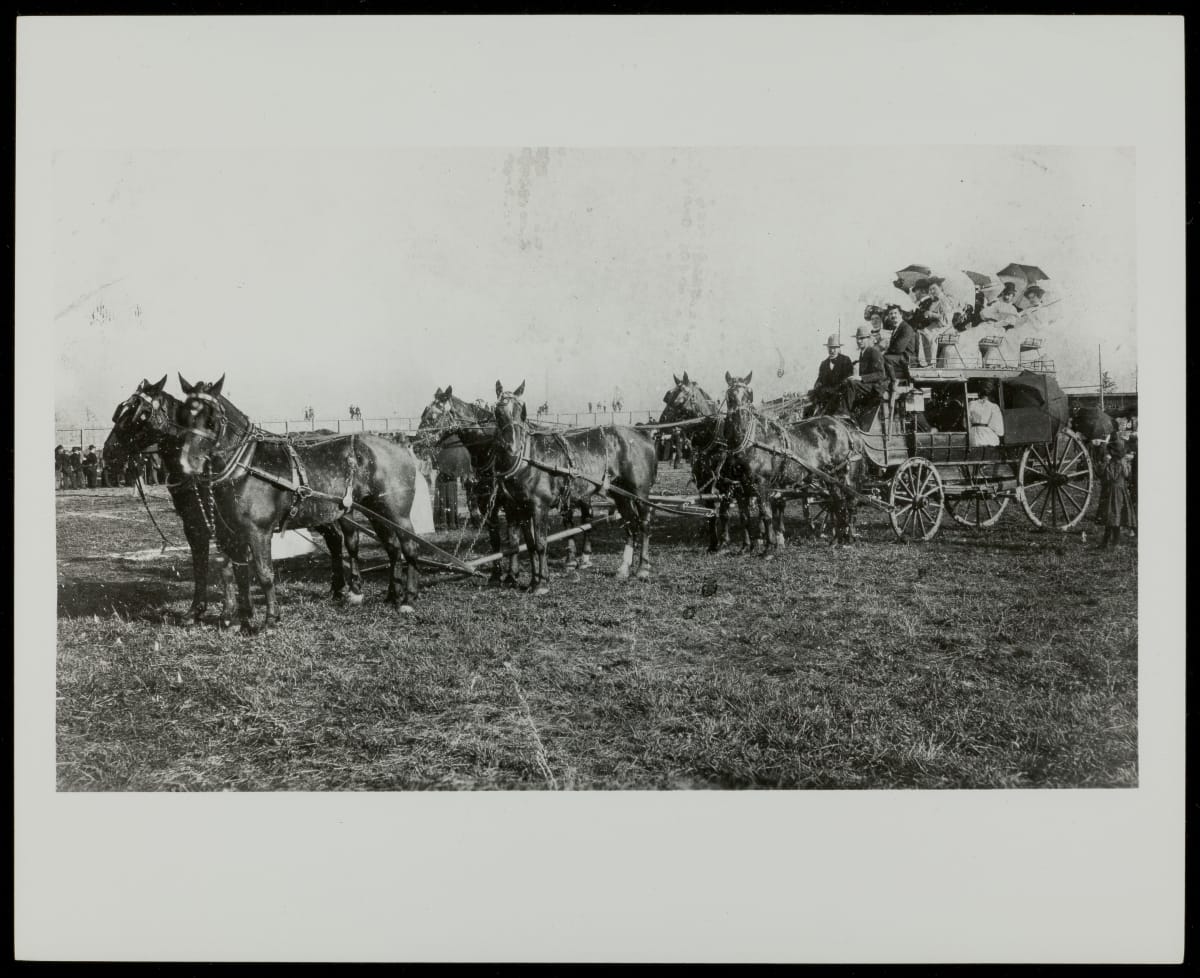
- Six Horses Pulling a Sightseeing Carriage, circa 1900 - Around the turn of the twentieth century, thousands of Americans planned sightseeing vacations. They set aside time to simply look at things, often booking tours that transported them into foreign landscapes. From inside or atop a horse-drawn carriage like this, sightseers could absorb their surroundings and transcend the commonplace realities of their lives back home.
- circa 1900
- Collections - Artifact
Six Horses Pulling a Sightseeing Carriage, circa 1900
Around the turn of the twentieth century, thousands of Americans planned sightseeing vacations. They set aside time to simply look at things, often booking tours that transported them into foreign landscapes. From inside or atop a horse-drawn carriage like this, sightseers could absorb their surroundings and transcend the commonplace realities of their lives back home.